The largest IPO on ChiNext this year is coming.
The countdown has officially begun.
Late on the night of November 12, the official website of the Shenzhen Stock Exchange showed that the IPO application of Super Fusion on the ChiNext Market has been approved by the Listing Committee of the Shenzhen Stock Exchange. From the acceptance of the IPO application to the successful review, Super Fusion took less than half a year.
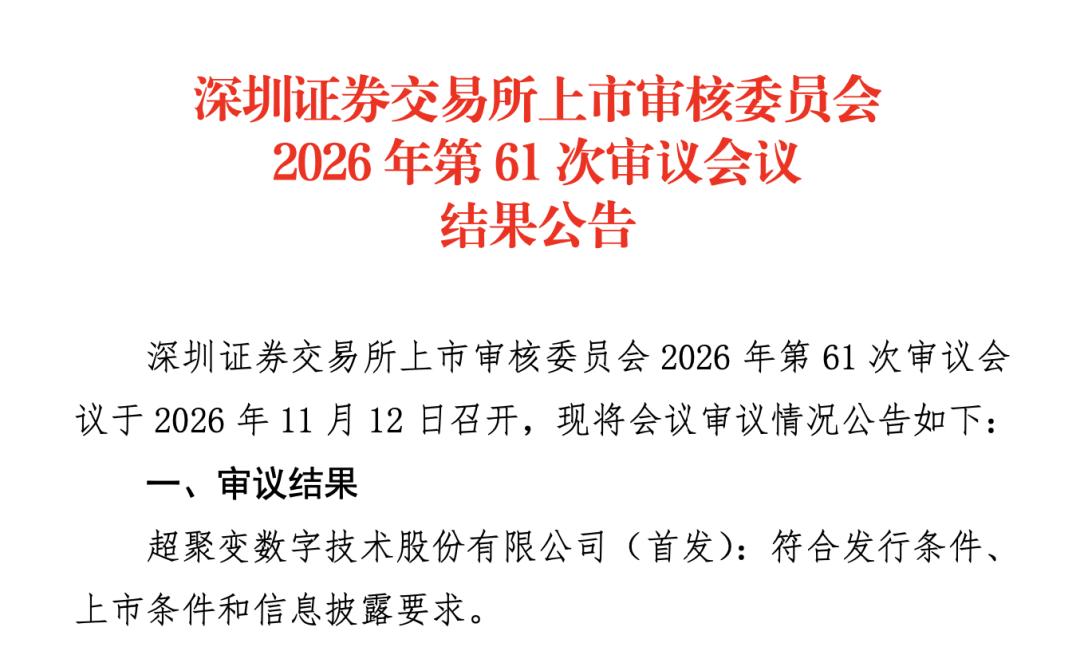
It is worth noting that the planned fundraising amount of Super Fusion in this IPO is as high as 80 billion yuan, which will become the largest IPO on the ChiNext Market within the year.
This is a super IPO that carries the "DNA" of Huawei. In 2021, Super Fusion was spun off from Huawei's X86 server business, and later settled in Zhengzhou with the takeover of state-owned assets of Henan Province. In just five years, Super Fusion has grown into a global computing power giant, backed by a long queue of investors.
This scene is exactly the most vivid epitome of the surging AI wave.
Born out of Huawei, Henan state-owned assets offered timely help
The whole story dates back to 5 years ago.
At the 2021 Shanghai Mobile World Congress, Huawei joined hands with China Telecom to put forward the innovative technology of "Super Frequency Fusion", from which the name "Super Fusion" was born. At the same time, under the influence of the well-known international turmoil, Huawei was in urgent need of exploring a new breakout path for its X86 server business.
Thus starting from the second half of the same year, Huawei successively registered a number of "Super Fusion" series companies in Suzhou, Shenzhen, Zhengzhou, Xi'an and other places. At the end of August of the same year, Henan Super Energy Technology Co., Ltd. was quietly established, with its largest shareholder being Henan Information Industry Computing Power Fund, which laid the groundwork for a heavyweight merger and acquisition soon after.
Two weeks later, Huawei announced a resolute strategic adjustment — the entire X86 server business was divested to the Super Fusion company located in Zhengzhou, and Huawei completely withdrew its shareholding in Super Fusion in November of the same year. Henan Super Energy Technology became the controlling shareholder of the latter, marking that Henan state-owned assets officially took over Super Fusion.
Super Fusion thus officially settled in Zhengzhou, Henan Province. It only took 55 days for the first server to be officially off the production line and achieve mass production, which was praised as the "Henan Speed".
Rooted in Henan, Super Fusion has taken over the core assets of Huawei in the server field, and retained a core team with strong Huawei genes. Among them, Liu Hongyun, the current Vice Chairman and CEO of Super Fusion, is a veteran employee from Huawei. He joined Huawei in 1997, once served as the President of Huawei Asia Pacific Region, and was in charge of Huawei's server business for a long time.
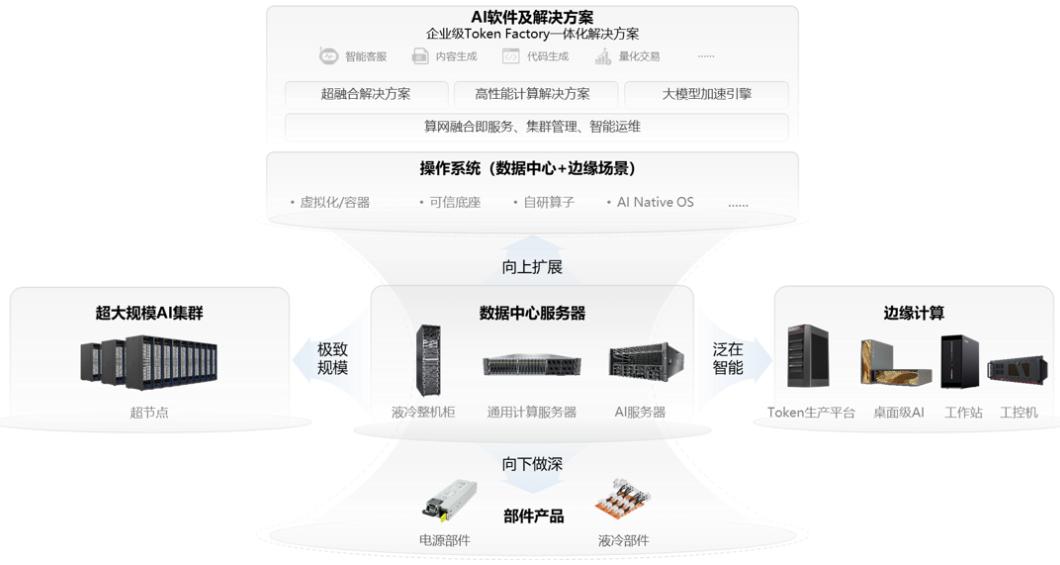
Up to now, Super Fusion has evolved from a single server hardware supplier to a full-stack horizontal solution provider in the AI and data era, providing computing power products such as AI servers and general-purpose computing servers, and exploring emerging business fields such as urban-enterprise digital intelligence business and smart energy solutions.
According to IDC statistics, from 2022 to 2025, the market share of Super Fusion servers in the Chinese market increased from 11.7% to 14.2%, and its shipment ranking rose to the second place.
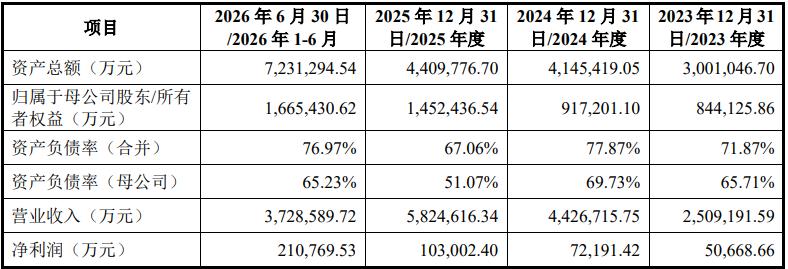
Thanks to this, Super Fusion's performance has also exploded. The prospectus discloses that from 2023 to 2025 and the first half of 2026, Super Fusion achieved operating revenue of about 250.92 billion yuan, 442.67 billion yuan, 582.46 billion yuan, and 372.86 billion yuan respectively; the corresponding attributable net profit was about 507 million yuan, 722 million yuan, 1.03 billion yuan, and 2.108 billion yuan respectively.
I still remember that at the Super Fusion 2025 Explorer Conference, Liu Hongyun reviewed the company's development history and said bluntly that in the past few years, Super Fusion has realized that a company will continue to face major challenges and choices on the road of survival and development. "Super Fusion's development goal has changed from 'survive' to 'forge ahead' now."
Now, five years after the entry of Henan state-owned assets, Super Fusion has not only "reborn from the ashes", but also is expected to become the largest IPO in the history of Henan Province.
VC/PE gather together, Henan state-owned assets contribute both funds and resources
Rising all the way, Super Fusion has left a deep impression on the venture capital circle.
Industrial and commercial information shows that Super Fusion has completed multiple rounds of equity changes since its establishment, with as many as 50 external institutional shareholders. Among them, the role played by Henan state-owned assets cannot be ignored.
As the controlling shareholder of Super Fusion, Super Energy currently holds 31.38% of the former's shares, and its shareholders include Henan Information Industry Computing Power Fund, Henan Information Industry Investment Co., Ltd., and Henan Yuxin Electronic Technology Group. After final equity penetration, the actual controller of Super Fusion is the State-owned Assets Supervision and Administration Commission of Henan Province.
More investment details have emerged. The official website of the State-owned Assets Supervision and Administration Commission of Henan Province disclosed that "in 2021, under the framework of the emerging industry guidance fund of the provincial government investment fund, we successfully introduced Super Fusion and relocated it to Henan through the sub-fund Information Industry Computing Power Intelligent Industry Development Fund, successfully drove the upstream and downstream related enterprises in its industrial chain to settle in our province, and led many enterprises in the province to enter its supply chain."
In addition, the prospectus also clearly marks that the Information Industry Computing Power Fund is a special fund established by Henan Province to invest in Super Fusion, and all LPs are state-owned holding enterprises or investment platforms within Henan Province. It can be seen that Henan state-owned assets has spared no effort to win this "computing power battle".
Last November, Ma Jianping, who was transferred from the post of member of the Standing Committee of Zhoukou Municipal Party Committee, took over as the chairman of Super Fusion, further strengthening the Henan state-owned assets attribute of Super Fusion.
In addition to Henan state-owned assets, there is also a large team of investors behind it.
In December 2021, Super Fusion completed the equity change, adding new institutional shareholders such as China Unicom CICC, China Mobile Capital, Shenwan Hongyuan Securities, Henan Investment Group, CCB Investment, China Internet Investment Fund, and BOCOM International.
A year later, China Telecom joined forces with New Alliance Capital, CICC Qiyuan, China Merchants Capital, PICC Capital, China Insurance Investment, Industrial and Commercial Bank of China, and Henan Asset Fund to complete the investment in Super Fusion in September 2022. After that, Hexie Health Insurance, Shenzhen Special Economic Zone Construction Development Group, Luoyang Yulian Technology, and CETC Cyberspace Security Fund successively became new shareholders of Super Fusion.
Until November 2025, the prospectus disclosed that Super Fusion completed a share transfer of old shares, with the transferees being Guodiao Phase II, Airport Phase II, Airport Phase III, Airport Phase I, Henan Hongkai, Xiamen Huiyou, Jinshi Xizhi, Suzhou Xinlian, Zhuhai Yuqi and other transferees. At this time, the valuation of Super Fusion was 33.7 billion yuan.
Only one month later, Super Fusion obtained another heavyweight financing — BOC Financial, CDB Fund, Artificial Intelligence Fund, Kunlun Gongrong, Shenzhen Huiyou, Gongrong Jintou, Yuanhe Chongyuan, Xiamen Huiyou, Juhe No.5, Honglida, Jianyuan Beigong, Xinshi Luansuan, Juyuan Xiangju, Skyworth Qihang, Kunlun Beigong, Henan Jianyuan, Shenji Hongtu, Juhe Pengfei became new shareholders.
According to the prospectus, the price of this round of capital increase is 53.75 yuan per share. Calculated on this basis, the financing scale exceeds 4 billion yuan, and the latest post-investment valuation reaches about 47 billion yuan.
Looking around, on the Longbei area of North Longhu in Zhengdong New District, the headquarters base of Super Fusion has become a new landmark of Henan's digital economy industry.
Henan Daily once reported that the Super Fusion production park in Zhengzhou Airport Economy Zone, relying on the "airport + high-speed railway" dual hub location advantage and emerging industrial foundation, has built the entire manufacturing process from component incoming materials to finished server output within three years; the R&D center and headquarters base of Super Fusion not only has a superior geographical location, but also is surrounded by a large number of science and innovation resources.
From a broader perspective, since Super Fusion settled in Henan, it has gathered 24,000 ecological partners, driven the leapfrog growth of Henan's computing power industry, and built a 100-billion-yuan advanced computing industrial chain with upstream and downstream supporting facilities covering complete machines, chips, motherboards, memory, hard disks, and peripheral equipment.
Seize the ChiNext Market window
At this moment, the ChiNext Market is attracting widespread attention.
According to the data from Zero2IPO Research Center, in terms of the number of listed enterprises in the first three quarters of 2026, there are 20 new listed enterprises on the ChiNext Market, ranking second in the A-share market; in terms of initial public offering financing amount, the ChiNext Market increased by 12.9% year-on-year. It is worth mentioning that in June this year, the ChiNext Index once rose to around 4380 points, hitting a record high.
Just as its English name — ChiNext Market implies, since its birth, the ChiNext Market has been endowed with the meaning of "the board representing China's future".
Looking back at the year when the ChiNext Market was launched, no company had an annual revenue of more than 2 billion yuan; now the situation is completely different — data shows that in 2025, 413 ChiNext Market companies achieved annual operating revenue of more than 2 billion yuan, and 177 companies achieved annual net profit of more than 300 million yuan.
Up to now, the number of listed companies on the ChiNext Market has reached 1411, with a total market value of more than 15 trillion yuan. Among them, high-tech enterprises account for about 90%, strategic emerging industry enterprises account for about 70%, and four trillion-yuan market value industrial chain clusters have been formed in the fields of new generation information technology, new energy, biomedicine and high-end equipment manufacturing.
Among them, CATL, Sungrow Power, Zhongji Innolight, Eoptolink, TFC, Shenzhen Fast Print, and East Money are called the "Seven Sisters" of the ChiNext Market by the market, and their combined weight accounts for more than half of the ChiNext Index.
At the same time, a number of new industrial leaders have also come to the forefront through the ChiNext Market. In April this year, Shenzhen Dapuwe was officially listed, becoming the first unprofitable IPO on the ChiNext Market. The listing was extremely popular, and the stock price of Dapuwe soared tenfold in only 14 trading days, with the latest market value exceeding 140 billion yuan.
I remember that in April this year, the China Securities Regulatory Commission issued the "Opinions on Deepening the Reform of the ChiNext Market to Better Serve the Development of New Quality Productive Forces", which clearly proposed to add the fourth set of listing standards for the ChiNext Market, introducing indicators such as compound annual revenue growth rate and R&D investment, to better support high-quality enterprises with high growth potential and outstanding innovation capabilities.
Soon, a number of innovative enterprises took action after the release of the policy. Only 24 days after the fourth set of standards was launched, the first enterprise to apply for listing was welcomed — the humanoid robot company Leju Intelligent; shortly after that, the IPO of UAV enterprise Tengdun Kechuang was accepted in June, becoming the second case under the fourth set of standards of the ChiNext Market.
Behind this is the competition of every city for the discourse power of future industries: whoever can identify, cultivate and retain those enterprises that can truly survive through cycles will have more opportunities to take the initiative in the new round of competition.
Now, the ChiNext Market is playing such a channel — it is pushing those companies that have been repeatedly screened and verified by the industrial cycle to a larger stage.
This article is from the WeChat Official Account "Investors" (ID: pedaily2012), written by Liu Bo, authorized for release by 36Kr.