With 8 stores within a 5-kilometer radius, how long can the street-stall style charred chili beef craze last?
8 Stores Within 5km, Another Guizhou Cuisine Goes Viral
Recently, when searching for "roasted chili beef" on Dianping, there are roughly 8 roasted chili beef restaurants within a 5-kilometer radius.
Amei Ji · Street Stall Roasted Chili Beef has a dense store distribution, with nearly 80 stores mostly located in Beijing, and the per capita consumption is over 50 yuan; Guizhou Alan Street Stall Roasted Chili Beef in Chongqing has nearly 60 stores, while Zuo Ajia's Roasted Chili Beef in Yunnan has around 50 stores, with a relatively lower per capita consumption of about 40 yuan...
Public information shows that roasted chili beef is a rice-friendly dish commonly seen in Sichuan, Guizhou and other regions. Street stall roasted chili beef upgrades this dish into a hot pot for cooking meat and vegetables, forming a new type of hot pot that "eats beef first, then cooks vegetables", with a per capita cost of 50 to 60 yuan, focusing on cost-effectiveness.
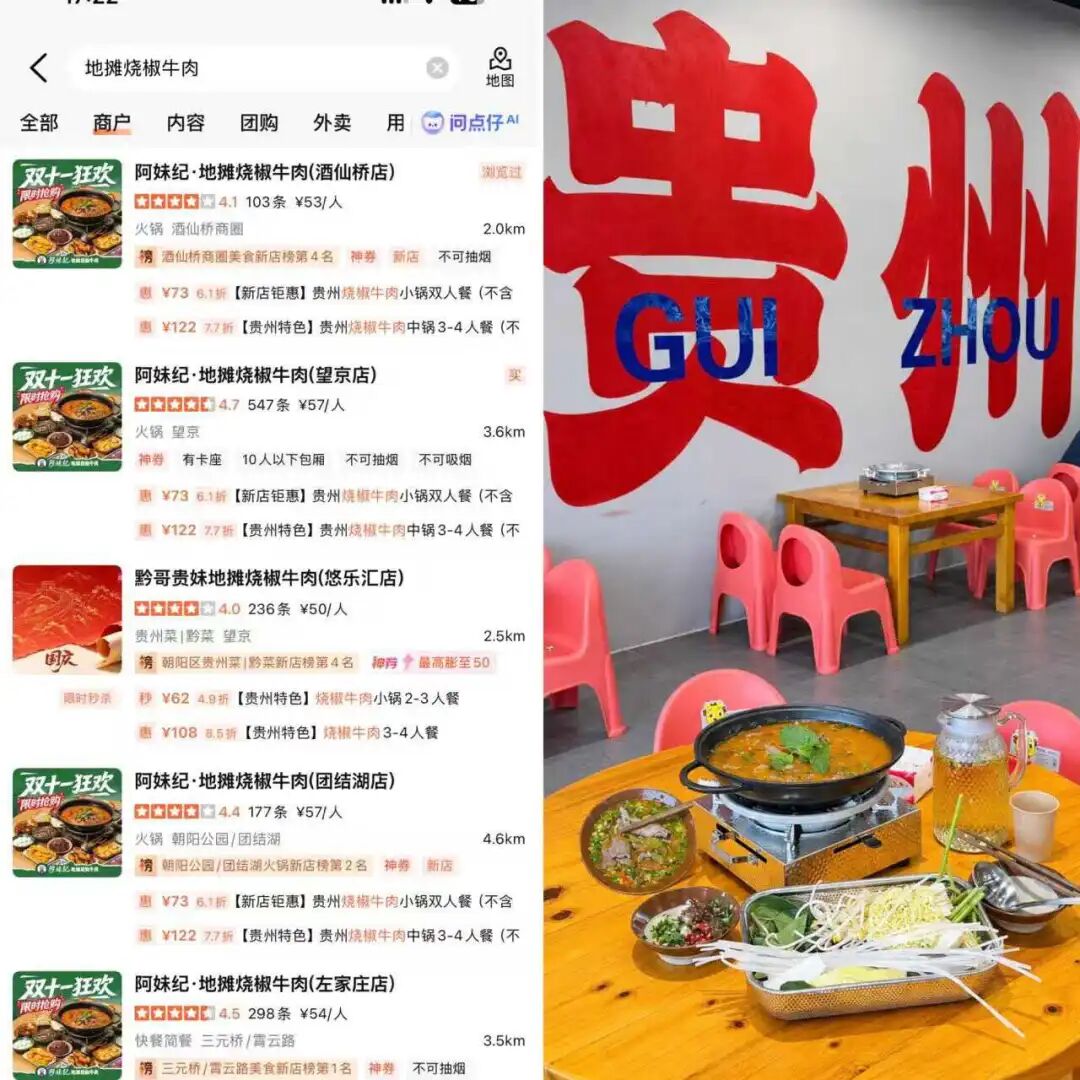
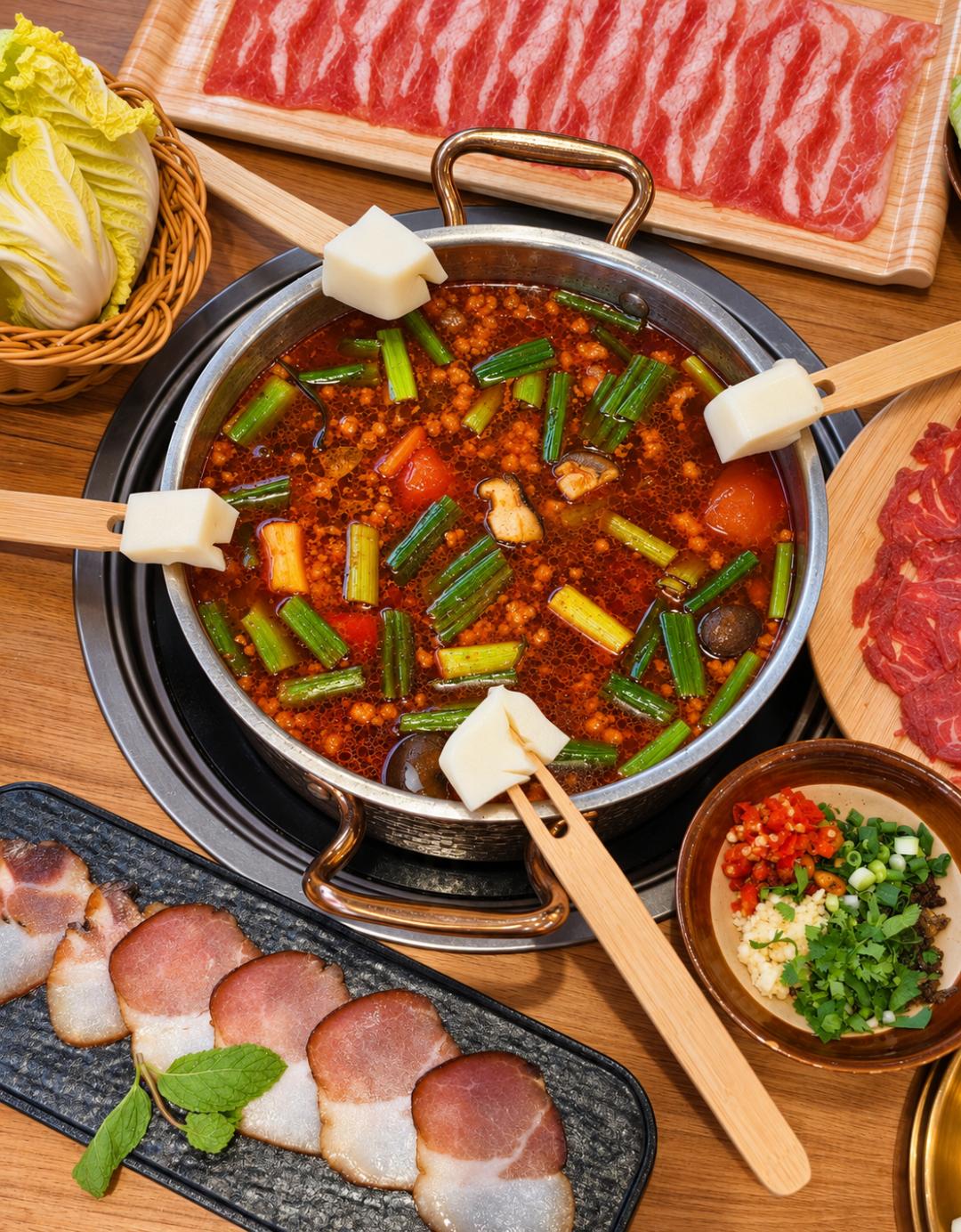
The common practice is to fry roasted chili peppers and other ingredients with beef, and make the main pot with soup; some stores add roasted eggplant and roasted tomatoes to integrate the charred aroma and vegetable flavor with beef, leaving space for further cooking green vegetables later. Most stores adopt a semi-self-service model, providing self-service vegetables, free fruits and unlimited rice, so customers can continue to cook vegetables after finishing the beef.
Beef delivers the value perception of the main dish, while vegetables and rice provide a sense of fullness. A hot pot meal at a per capita cost of over 50 yuan is cheaper than a formal full-course meal, and more substantial than a fast food meal.
In fact, this configuration and popularity path are very similar to the crushed beef hot pot that exploded in popularity in 2023.
Both take beef as the main dish, emphasize pairing with rice and cooking other ingredients, and have a per capita cost of only 50 to 60 yuan. Head brands once emerged in this track, expanding to more than 100 stores in half a year. But before long, the crushed beef hot pot track cooled down, and those brand players disappeared.
Now that street stall roasted chili beef has become popular, can it meet the market demand? How long can this category stay popular? Will it eventually end up the same as crushed beef hot pot?
From Sour Soup, Griddle to Roasted Chili, Guizhou Flavors Have Gained Popularity Round After Round
To a large extent, the popularity of street stall roasted chili beef comes from the "evolution" of regional flavors of Guizhou cuisine.
"Roasted chili" already has a solid cognitive foundation: roasted chili eggplant, roasted chili preserved eggs, roasted chili stir-fries, and roasted chili mixed rice have long existed on restaurant menus.
According to the *2025 White Paper on Chinese-style Catering* released by Nestlé Professional, the number of roasted chili-related dishes increased from about 380 to about 1000 from 2020 to 2024, with a compound annual growth rate of about 27%. When it expands from a single dish to a whole pot, the consumption scenario changes accordingly.
The familiar flavor lowers the threshold for consumers to try, while the new eating method provides a reason for them to visit the stores.
About half a year ago, a number of "bean rice hot pot" stores led the popularity in first- and second-tier cities such as Beijing, Guangzhou and Chengdu. It is also a Guizhou local category, featuring "suitable for drinking soup, cooking ingredients and mixing with rice". At present, the largest chain of this category is Chen's Family Bean Rice Hot Pot with nearly 100 stores nationwide.
Therefore, looking at the changes of Guizhou catering in recent years, the popularity of roasted chili beef has a clearer origin.
From the earliest sour soup hot pot and Duoduo powder hot pot, to Guizhou griddle and bean rice hot pot, these Guizhou-style delicacies are stepping out of their original regional scenarios in different ways, allowing more consumers from other regions to get to know Guizhou flavors.
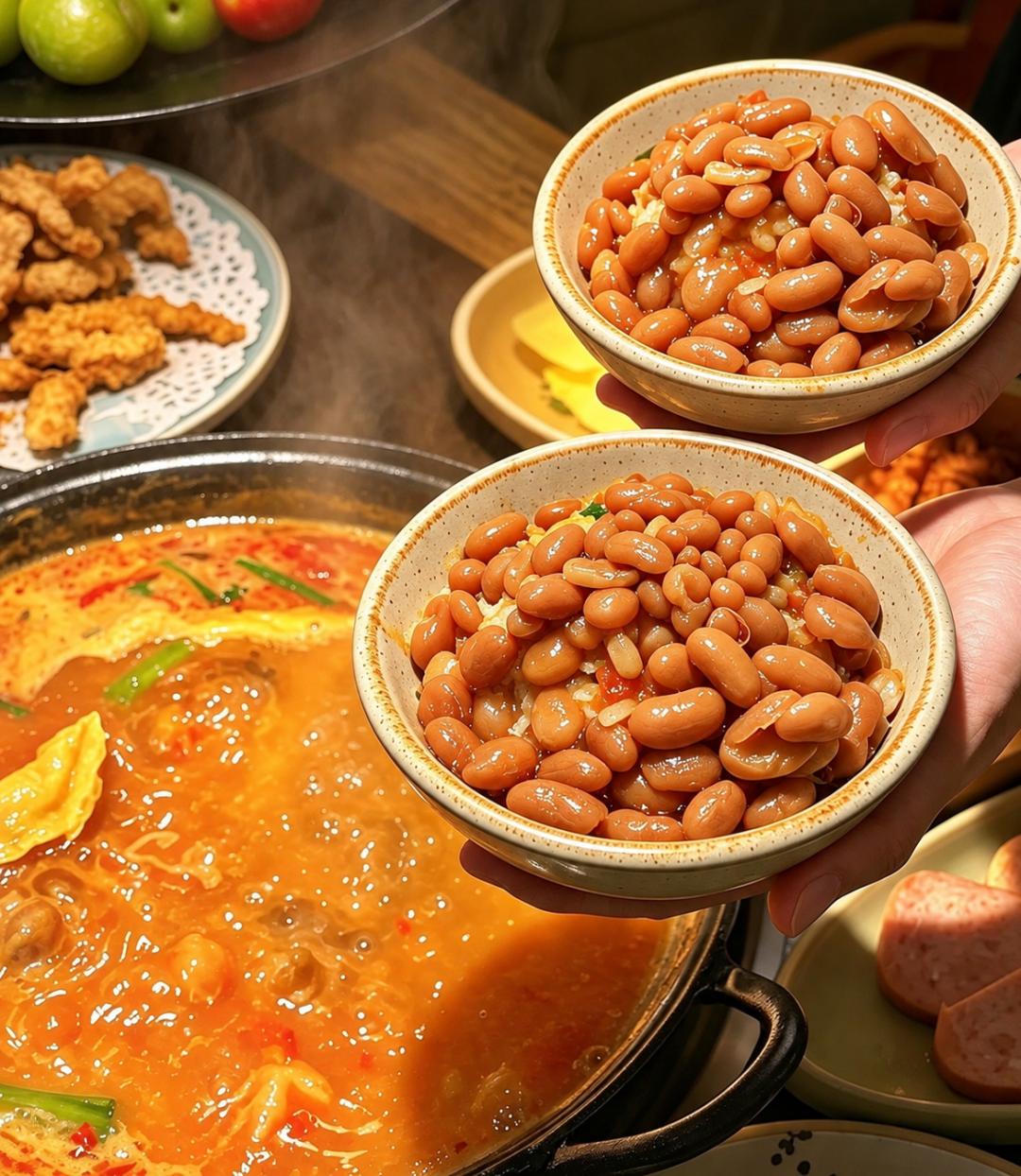
After sour soup hot pot became popular, leading catering players such as Haidilao and Jiumaojiu noticed this trend, quickly followed up to launch new products and even created sub-brands; Duoduo powder hot pot took the path of expanding a snack into a hot pot dish, using the specialty ingredient of jelly powder with the form of cooking and dining together around the table, making a street snack suitable for group meals, giving rise to brands such as Biji Anshun and Qianji Anshun; Guizhou griddle focuses on the experience of the cooking pan and dipping sauces...
Although the flavors and operation processes of these categories are not exactly the same, their paths to go viral are highly consistent: they organize local characteristic eating methods into products easy for customers to understand, combine main dishes, side dishes and dining experiences, and enter new cities as formal brands.
On the one hand, the popularity of local cuisines is driven by consumer demand. Local flavors give consumers a reason to try new things: tourists get to know a dish when traveling in Guizhou, and after returning to their cities of residence, they also have the opportunity to try it at local stores. At the same time, rational consumption has become the mainstream. This kind of experience that combines regional flavor experience and sufficient value sense will quickly set off a check-in boom among consumers.
On the other hand, from the perspective of catering practitioners, the industry needs to develop new products, new scenarios and new categories. In the past two years, Guizhou cuisine has frequently gone viral: from the earliest sour soup hot pot, to Duoduo powder hot pot, then to Guizhou griddle, bean rice hot pot and roasted chili beef hot pot. We can see that catering practitioners are increasingly hoping to dig out and innovate popular categories based on regional flavors, creating "fresh blood" for the catering market while bringing niche local flavors to the public, giving capable operators opportunities to create new businesses.
Summary
However, in the "inward-looking era" of the catering industry, while new categories bring industry popularity and stimulate consumer demand, the actual challenges are not low.
First, roasted chili beef is similar to the previous crushed beef, bean rice hot pot and other categories, with a low replication threshold. After the category becomes a hit, the mature supply chain will quickly cover standardized roasted chili base materials, and merchants can open stores directly by purchasing the materials, so the product formula and operation mode are extremely easy to be imitated.
Second, although cost-effectiveness is an advantage, the operating cost of stores is a practical problem. Street stall roasted chili beef focuses on low prices and self-service vegetarian dishes, making profits through high table turnover rate, leaving very little tolerance for rent, labor and ingredient costs. Once the passenger flow declines, the pressure to break even will rise sharply.
Third, can it survive the "short life cycle of hit categories"? At present, internet celebrity reputation and traffic can no longer support the long-term development barrier of a brand or even a whole category. When it comes to the daily operation of chain brands and stores, stable supply chain and high-quality ingredients are required. Once consumers' novelty fades and repurchase rate drops, the category will disappear quickly like a gust of wind.
Therefore, for operators, category popularity should be used to verify products, improve services and then judge the expansion pace, rather than being packaged as a tool for franchising and trust overdraft.
This article is from the WeChat Official Account "Catering Enterprise Boss Internal Reference", written by Neicanjun, and authorized for release by 36Kr.