China's catering industry is entering the "era of local cuisines"
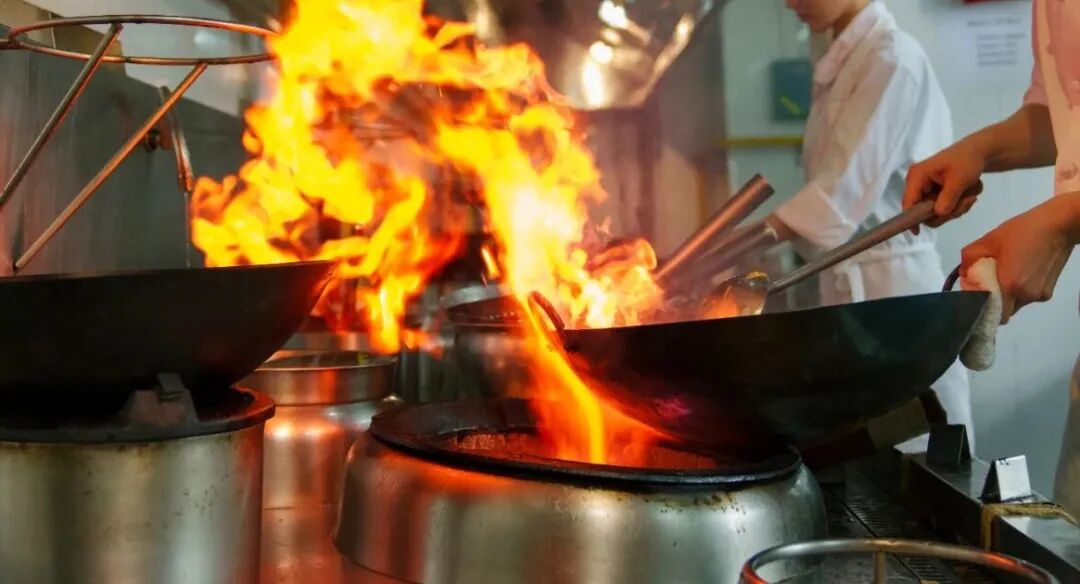
At 12 noon, office workers in the office buildings of Pudong, Shanghai, step out one after another to look for food. Instead of poring over the increasingly complicated set meals, some people walk straight into a Jiangxi stir-fry restaurant. The iron wok on the stove is burning hot, fresh meat, chili peppers and garlic are tossed into it, flames leap up, and the intense wok hei hits you right in the face. Ten minutes later, a plate of steaming stir-fry paired with a bowl of rice makes for a satisfying lunch.
On weekends, in a shopping mall in Wangjing, Beijing, a Guizhou sour hot pot restaurant is fully occupied by young people. The bright red sour soup is bubbling in the pot, freshly sliced beef is blanched until cooked, then dipped in the dipping sauce infused with the unique aroma of litsea cubeba. Some people try this sour flavor for the first time, feeling surprised at first, then can't resist taking a sip of the soup.
When friends get together for a meal, several people are discussing what to eat for dinner. One person suggests: "Let's find a Taizhou cuisine restaurant and have some home-style braised seafood." Another says: "How about trying Yunnan cuisine? I'm craving mushrooms and wild mountain vegetables."
These scenarios taking place in different cities all point to the same change: more and more consumers are actively looking for meals with distinct local flavors.
In the past, when people chose restaurants, the first thing that came to their mind might be a familiar chain brand, or broad categories such as hot pot, barbecue, Chinese food and Western food.
Now, consumer demands are becoming more specific: they want to eat Jiangxi stir-fry today, Guizhou sour hot pot tomorrow, and Taizhou-style small seafood on weekends. People no longer only ask "what good food is nearby", but start to ask "is there any xx cuisine I crave around here".
A profound transformation is taking place in catering consumption. The market pattern previously dominated by major cuisines is loosening; more and more segmented local cuisines are starting to appear on consumers' dining tables.
China's Catering Industry Is Entering the "Era of Local Cuisines"
Over the past decades, Sichuan cuisine, Cantonese cuisine, Hunan cuisine, Jiangzhe cuisine and other major cuisines have built a huge catering supply across the national market, relying on widespread consumer recognition and relatively mature business models.
When shopping malls carry out investment promotion, they give priority to these mature cuisines; when catering enterprises open new stores, they also tend to seek opportunities from these cuisines with large market scale and high consumer awareness.
These mature major cuisines have played a very important role in promoting the modernization, branding and chain operation of China's catering industry. But as development continues to this day, an increasingly prominent problem has emerged.
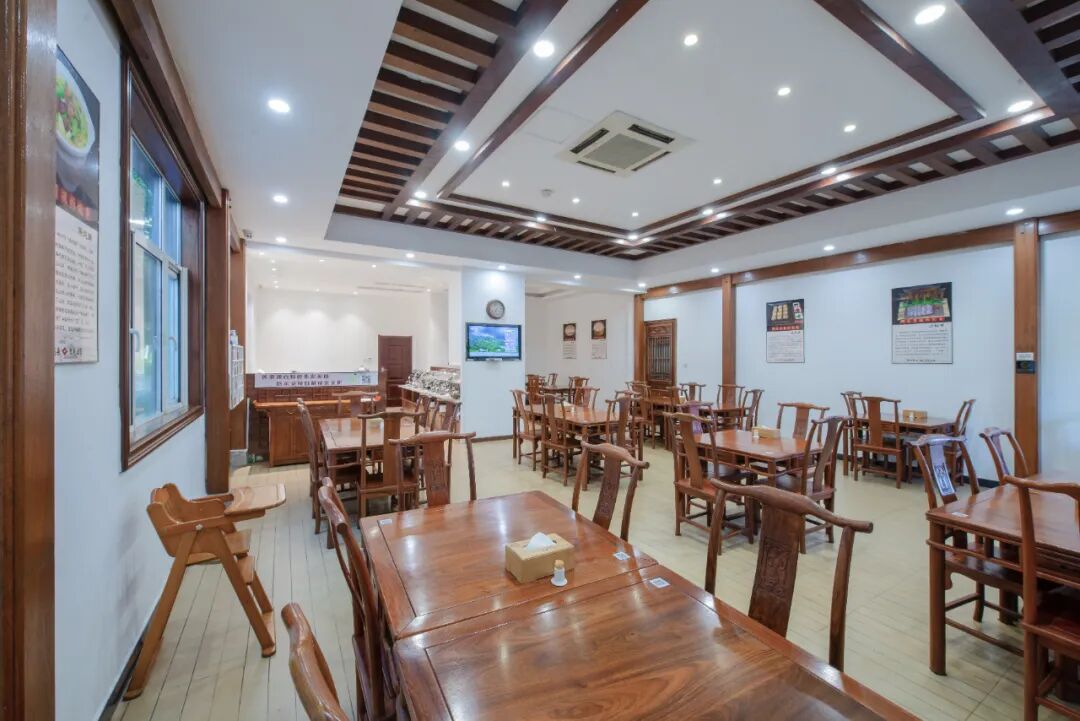
While the names of cuisines are different, restaurants are becoming more and more similar; while brand names vary, the food customers get is increasingly indistinguishable.
The same decoration style, similar menu structure, nearly identical signature dishes, plus increasingly aligned prices and promotional activities, have trapped many restaurants in homogenized competition.
Especially after mature cuisines are continuously standardized and replicated on a large scale, the originally rich regional food culture has been simplified into a small number of popular dishes that are widely available across the country.
A restaurant that positions itself as Sichuan cuisine may not have many truly unique local Sichuan flavors; a Hunan cuisine restaurant can hardly make customers feel the product value that distinguishes it from other Hunan cuisine brands.
Of course, this is not a common problem for all mature cuisine brands. But the growing number of homogenized supplies does make it more difficult for consumers to make choices.
However, when homogenized competition among major cuisines becomes increasingly fierce, some previously overlooked segmented local cuisines have started to gain more and more attention.
Jiangxi stir-fry, Guizhou sour soup, Yunnan wild mountain vegetables, Taizhou home-style dishes, and characteristic flavors scattered across different regions of China are breaking through their original market boundaries.
Market data can also illustrate this change.
According to big data from RedCai, the market size of Yunnan-Guizhou cuisine across the country reached 365 billion yuan in 2025, a year-on-year increase of 7.4%, with its growth rate leading all segmented categories of Chinese formal dining. It is estimated that the national market size of Yunnan-Guizhou cuisine will reach 395 billion yuan in 2026. As of April 2026, there are more than 47,000 Yunnan-Guizhou cuisine stores nationwide, and characteristic delicacies such as Guizhou sour soup and Yunnan wild mountain flavors have stepped out of their original regional markets.
Jiangxi stir-fry has also gradually evolved from common local small street restaurants to a highly concerned catering category. According to the 2025 Jiangxi Stir-fry Development Report, as of December 2025, there are more than 20,000 Jiangxi stir-fry stores across the country.
These data do not mean that major cuisines have fully declined, let alone that all local cuisines are profitable. But they do show that growth opportunities for China's catering industry are opening up to more segmented categories with distinct local characteristics.
Why did such a change happen?
The core reason is that consumers' criteria for choosing restaurants have changed.
For a long time in the past, catering brands that could provide unified store image, stable product quality, standardized service and pleasant dining environment already had an important competitive advantage.
But today, these capabilities are becoming increasingly common, and are increasingly regarded as basic requirements in the eyes of customers.
Many restaurants have nice decoration, clean environment and acceptable service, but their menus are getting more and more similar. Such restaurants have no obvious shortcomings, but it is increasingly difficult to give consumers a compelling reason to visit them.
Because today's consumers already have too many choices.
In a market that has no shortage of restaurants, what is truly scarce is a meal with clear characteristics that can leave a deep impression on customers.
Local cuisines happen to have such value.
When people talk about Jiangxi stir-fry, they think of bright spiciness, freshly cooked dishes and wok hei; when they talk about Guizhou sour soup, they think of unique sour flavor and local spices; when they talk about Taizhou cuisine, they think of seafood, home-style braising and emphasis on the original taste of ingredients; when they talk about Yunnan cuisine, mushrooms, wild mountain ingredients and diverse ethnic flavors come to mind as concrete images.
These characteristics are not temporarily created for commercial marketing, but gradually formed in the long-term local life. They have origins, unique features, and taste memories that distinguish them from other cuisines. In the past, these differences may have been just the daily life that local residents were accustomed to; today, they have the opportunity to become important reasons to attract consumers across the country.

Here, I want to particularly emphasize one judgment:
What is ebbing in China's catering industry is not major cuisines such as Sichuan cuisine, Hunan cuisine and Cantonese cuisine, but homogenized catering that has lost its own characteristics and only retains the standardized shell.
In fact, mature major cuisines themselves contain extremely rich segmented local flavors. Sichuan cuisine is not limited to several popular dishes familiar to consumers across the country, and Hunan cuisine is not limited to several common signature products. They also have a large number of local food resources worthy of re-development inside.
Therefore, the rise of local cuisines today is not simply "small cuisines replacing major cuisines", but that consumers are moving from general perception of cuisines to more specific choices of local flavors.
In the past, people would say "I want to eat Hunan cuisine today". Now, they might say "I want to find a Hunan stir-fry restaurant with authentic wok hei". In the past, people would say "let's eat Jiangzhe cuisine today". Now, they may make more specific choices of Taizhou cuisine, Ningbo cuisine or Shaoxing cuisine.
Consumers' choices for catering are moving from broad cuisine labels to more distinct and specific flavor values.
This also means that the competition logic of China's catering market is changing.
In the past, large categories, big brands and mature chain operation models tended to gain market resources more easily. Today, segmented local cuisines with unique flavors, real product value and clear consumption reasons also have the opportunity to become important competitors in the market.
China's catering industry is entering the "era of local cuisines". This does not mean that local cuisines will replace other catering categories, nor does it mean that labeling a restaurant as "local cuisine" will definitely make money.
What it truly means is that local flavors that previously survived mainly relying on the local market are gaining wider consumer recognition; restaurants that can transform local characteristics into real consumption value are getting more market opportunities than before.
Then the question arises: why is it happening right now?
Why Have Local Cuisines Become Popular Precisely Today?
Guizhou sour soup did not appear recently, and Jiangxi stir-fry did not become delicious only in the past two years. Those local flavors scattered across different regions of China also had long-term stable consumers in the past.
Why did they get new market opportunities precisely at the stage of the fiercest competition in China's catering industry? There are at least six reasons behind it.
From Getting Full and Eating Well to Pursuing Emotion and Experience, a Meal Is Undertaking More Values
In the past, people's requirements for a meal were often getting full, tasting good, being hygienic and reasonably priced. Today, these are certainly still important, but they are not all that matters.
With the long-term improvement of living standards, after meeting basic dietary needs, consumers are paying more and more attention to the feelings that a meal can bring them.
After work, meeting a few friends for a meal is for relaxation; going out to eat with family on weekends is to enjoy precious gathering time; celebrating birthdays or anniversaries is to have a memorable experience.
The value of a meal is extending from the food itself to emotions, relationships and life experiences.
Local cuisines happen to have rich experience value.
Eating a pan-fried meal in Guizhou, ingredients are slowly cooked on the pan, a group of people sit around the pan, chatting while eating with chili powder dip. This is a completely different feeling from eating an ordinary standardized meal.
Walking into a Jiangxi stir-fry restaurant, watching the chef swing the iron wok, listening to the clashing sound of the spatula, smelling the aroma of stir-fried dishes, you will feel totally relaxed as soon as the steaming dish is served on the table.
At a Taizhou cuisine restaurant, the waiter will tell you what fresh ingredients are available today, and why a certain fish is suitable for home-style braising. Customers not only eat the fish, but also gain experience related to ingredients and local food culture.
The reason why these scenarios are attractive is that they provide not just food, but also unique experiences.
From this perspective, the current popularity of local cuisines is closely linked to the development of emotional consumption and experience consumption.
People are not unwilling to spend money, but increasingly hope that each consumption can bring them real satisfaction.
In most cases, this kind of satisfaction does not require a luxurious environment or complicated services. A plate of steaming stir-fry, a pot of local characteristic sour soup, and several friends sitting around together can constitute a satisfying consumption experience.
This is also why local cuisines can exist both in small street restaurants and high-quality restaurants at the same time.
Prices can vary, environments can be different, but as long as they can provide valuable emotions and experiences, they have the opportunity to gain consumer recognition.
Cities Are Becoming More and More Similar, and People Start to Rediscover Local Culture and Life Characteristics
China's urbanization and commercial development in the past few decades have been very fast.
We have more and more modern shopping malls, chain restaurants and mature commercial service systems. Today, no matter which city you walk into, you can find familiar brands, similar shopping environments and standardized dining experiences.
This is tremendous progress in commercial development.
But at the same time, we will also find that the commercial experience of many cities is becoming more and more similar. When you arrive in a strange city and walk into a large local shopping mall, you may find it not much different from the city you live in.
At this moment, people will naturally develop a new interest: What is the truly unique part of this city? What do local people usually eat? Is there any flavor that is easier to experience only when you come here?
This interest actually reflects a cultural and psychological change in modern life.
When people are increasingly familiar with standardized and modern life, they may start to re-appreciate things with distinct local characteristics, including dialects, folk customs, traditional crafts and food culture.
Local cuisine is one of the most easily perceived types. Local culture may be abstract, but local cuisine is concrete.

You can directly feel the living habits of a place through a bowl of rice noodles, a plate of stir-fry, and a pot of sour soup. Behind these flavors are the local climate, local products, history, as well as dietary preferences formed by generations of people.
For local people, this is the most ordinary home flavor. For people who leave their hometown, it may mean memory and belonging. For out-of-town tourists, it may represent a fresh and unique cultural experience.
The same local cuisine can bring completely different emotional values to different people.
A native of Jiangxi working in Shanghai may think of his hometown when eating the familiar stir-fry; a tourist who visits Guizhou for the first time may find the pan-frying cooking method particularly novel when trying local pan-fried food.
The former is looking for a sense of familiarity, while the latter is looking for a sense of freshness. But both of their consumption is related to local culture in some way.
The French sociologist Claude Fischler once studied the relationship between food and individual and group identity. Food can not only meet physical needs, but also carry people's perception of themselves and the culture they belong to. This can help us understand a phenomenon today:
The appeal of local cuisines is extending from "what delicious food does it have" to "what kind of local life does it represent", becoming an entry point for people to understand different regional cultures.
Fresh, Made-to-order and Authentic, Consumers Are Paying More and More Attention to Visible Value
There is another important social and psychological reason why local cuisines are well received today.
We live in an era with extremely rich information and very fast changes. New brands, new products and new consumption concepts emerge every day. There are more and more marketing contents on social media, and the selling points that merchants tell consumers are getting more and more complicated.
Consumers can certainly get more choices, but at the same time, it is increasingly difficult for them to judge which things are really worth trusting.
As a result, some people