It only takes AI 26 minutes and 58 seconds to churn out an incremental game. Are incremental games becoming popular again?
Recently, many incremental games have become a hit, which are games whose core gameplay focuses on numerical growth.
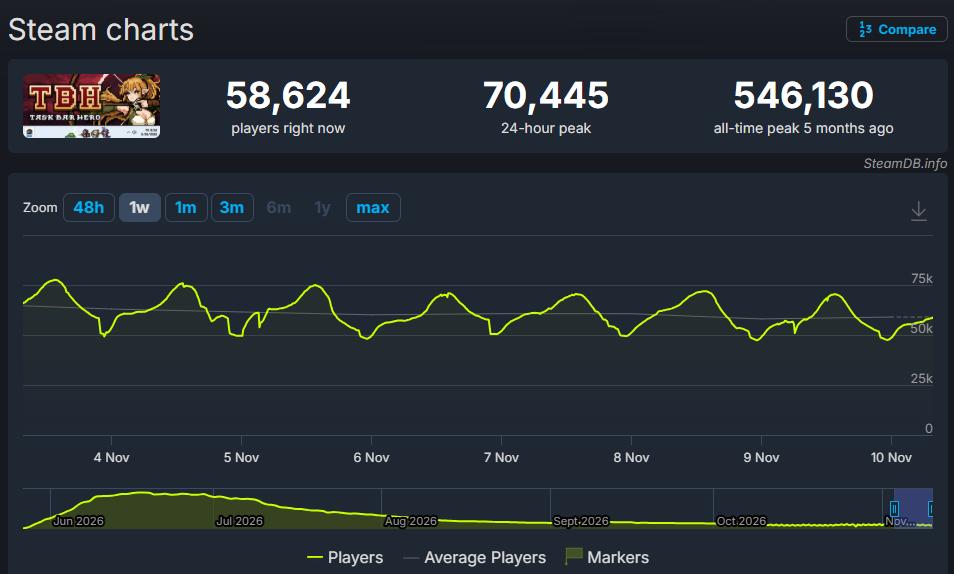
The peak concurrent online players of *TBH: Heroes of Taskba* have exceeded 540,000:
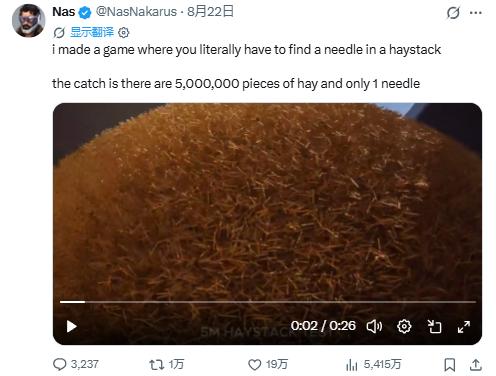
The promotional video of *Find the Needle in the Haystack Simulator* has received over 54.15 million views:
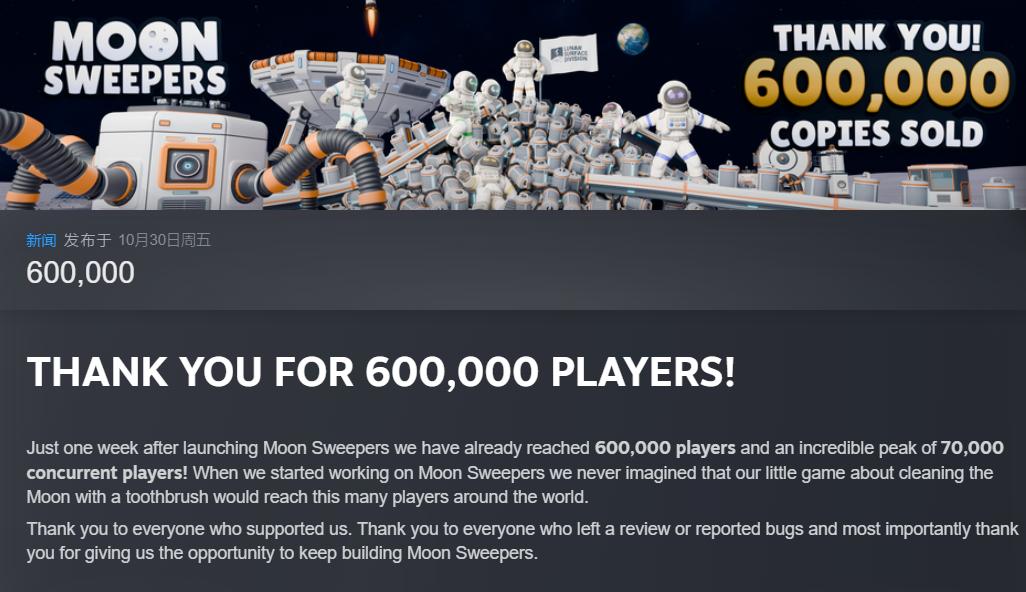
A week after its launch, *Moon Sweepers* has accumulated over 600,000 players:
*Potato, Please* has ranked 25th on the Steam China regional bestseller list (as of press time):

The incremental game genre was popular before. This type of game features simple operations and low cognitive load, making it very easy to attract players. So why are we talking about it again now? Because the recently popular incremental games seem to have taken a "free ride" on AI. Publicly disclosed information shows that both *Find the Needle in the Haystack Simulator* and *Potato, Please* used AI plagiarism as a marketing tactic, while the localization content of *Moon Sweepers* adopted AI for localization translation.
It seems that in the AI era, incremental games are about to become the next hit niche for independent game developers.
Why incremental games?
Let's put AI aside for the moment and talk about incremental games themselves. After playing a lot of incremental games, it's easy to find that the gameplay of this type of game is quite simple. The core gameplay of *Moon Sweepers* is cleaning up dust; *Find the Needle in the Haystack Simulator* requires sorting hay; *Potato, Please* is just a potato peeling simulator. These gameplay mechanics lower the entry threshold of the games, which exactly meets the needs of incremental game players — they don't want to think too much, and only want to watch the numbers keep growing to get a sense of satisfaction.
For example, in the comment section of the incremental game *Fantasy Fish Tank*, players generally have very long playtime, and their comments mostly focus on "this game makes me feel very relaxed".

In fact, as long as the gameplay logic of "work → get improvement → work more efficiently" runs smoothly, incremental games do not require much gameplay innovation from designers. Therefore, the development difficulty of this type of game is not that high, and the corresponding development team size and development cycle are relatively short. The development time of *Potato, Please* is only a few months, and its team size shown on LinkedIn is 2-10 people; *Moon Sweepers* started promotion in August and was officially launched in October, with a development team of only 2 people.
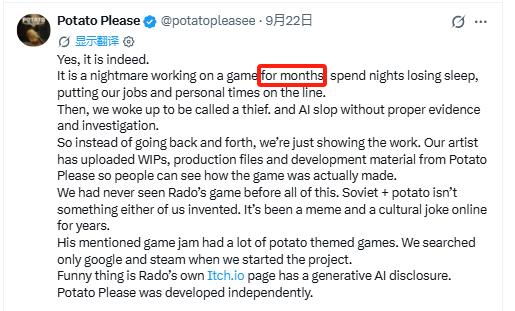
The official team of *Potato, Please* mentioned on social platforms that the development took several months
For this reason, quite a number of incremental games have relatively scarce content and highly homogeneous gameplay with little innovation.
Since there is little room for improvement in gameplay, developers have to come up with sufficiently novel ideas to attract players. The idea of *Potato, Please* is to peel potatoes to supply food for frontline soldiers; *Find the Needle in the Haystack Simulator* is about finding a needle from 500,000 hay stalks; *Moon Sweepers* is about cleaning the moon. Their content sounds very interesting, plus the low entry threshold and low price of this type of game, there will always be some casual players attracted by the novel ideas to give it a try.
But novel ideas alone are not enough, you also need to get your ideas in front of more people. To this end, idea-driven incremental games usually try every possible means for marketing, no matter whether the marketing method is decent or not. In September this year, the creator of another independent game *1,000,000 POTATOES* posted on social platforms, accusing *Potato, Please* of using AI to copy his idea and gameplay, while the latter refuted the accusation with a video of manually making 3D models. This "potato war" on social platforms attracted the attention of a large number of players, and also boosted the popularity of both games. As for another game *Find the Needle in the Haystack Simulator*, it also gained a wave of popularity by making accusations of AI plagiarism.
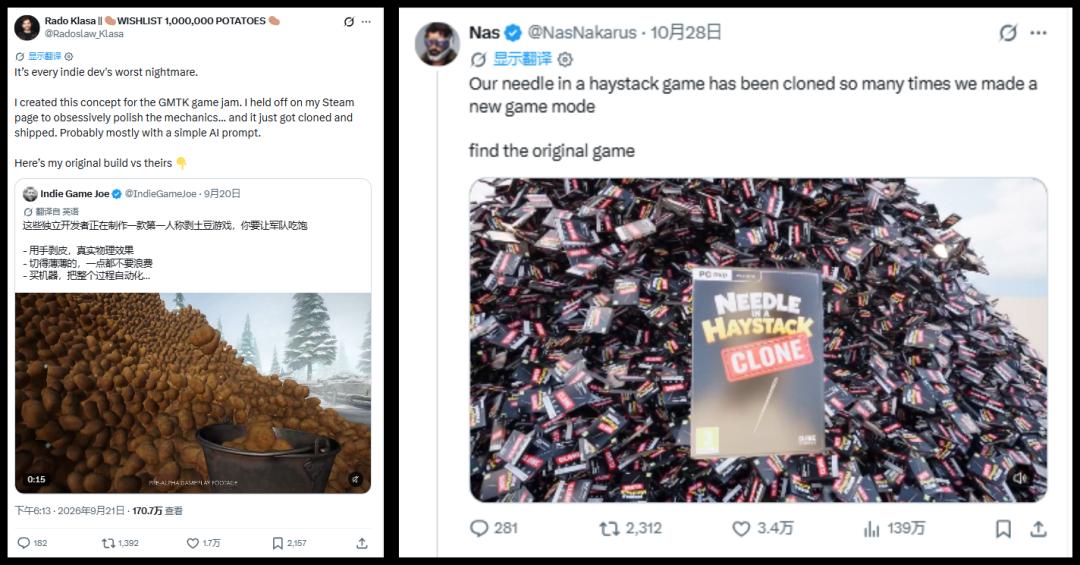
Left: *Potato, Please*, Right: *Find the Needle in the Haystack Simulator*
Not all games want to win purely by novel ideas. Incremental games like *Melvor Idle*, *TBH: Heroes of Taskba*, and *Anti-Matter Dimensions* are more content-oriented. They provide players with richer resources and more diverse ways to obtain resources, so as to enhance the strategy of the games. Different from idea-driven incremental games, content-oriented incremental games attract more hardcore players, and they do not market themselves that aggressively.
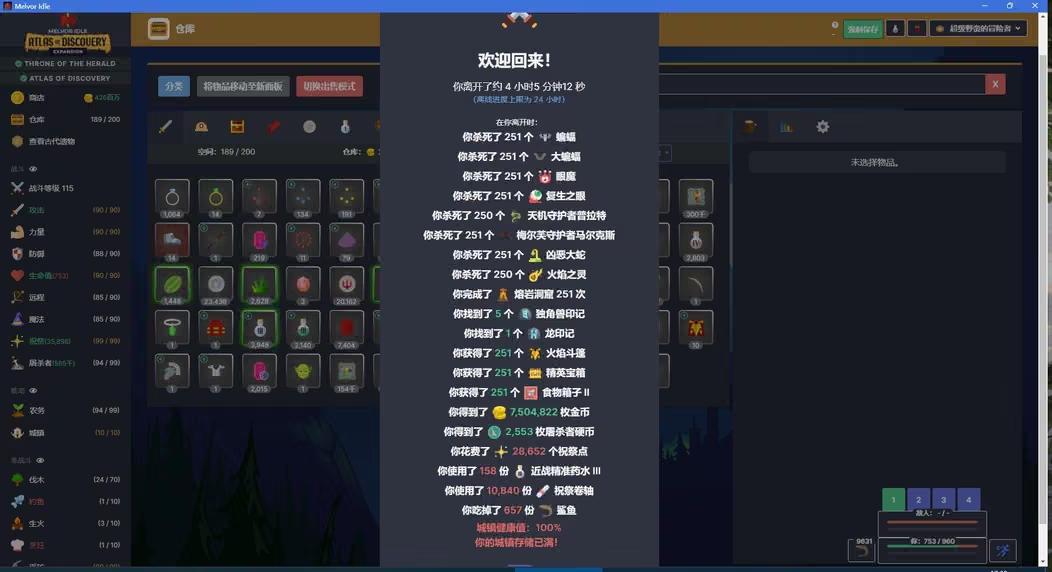
*Melvor Idle* has extremely rich content, Image source: Bilibili user @Smart Kenny
Of course, there is also an incremental game that combines creative gameplay and in-depth content, and has achieved a nearly perfect marketing effect. It is *Legend of Idle Cultivation* developed by 37 Interactive Entertainment. With its online PvP gameplay and the creative "Pig Cutting Trees" marketing campaign, it generated over 1 billion yuan in revenue in the third quarter of 2023. The success of this game also proves the huge potential of incremental gameplay.
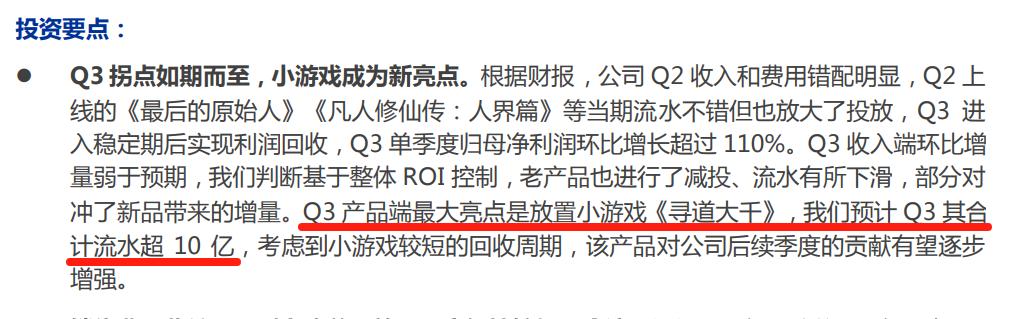
Data source: Research report by Shenyin & Wanguo Securities Research Institute, November 2023
Incremental games are inherently compatible with AI
After introducing incremental games themselves, let's talk about why incremental games can seize the AI opportunity and become the new trend. With the development of AI technology, making incremental games is becoming easier and easier. Most of the recently released incremental games show traces of AI usage. There are 121 AI incremental games on the game platform itch.io, 2927 AI incremental games on Steam (according to SteamDB data), and when you search for "incremental" on TapTap, most of the games displayed on the search page show traces of AI usage.
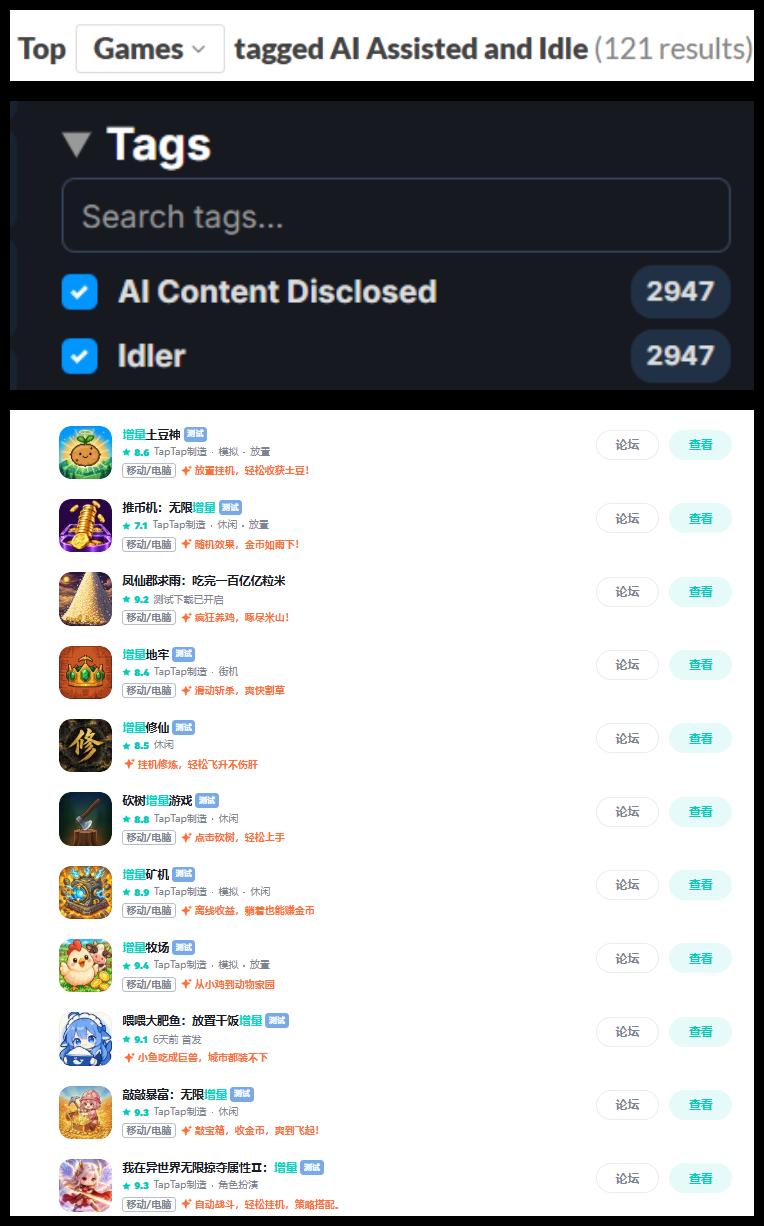
From top to bottom, data from itch.io, SteamDB, and TapTap respectively
In fact, AI is very suitable for making incremental games, as it can solve the biggest design difficulty of incremental games — numerical balancing. As mentioned earlier, the gameplay logic of incremental games is "work → get improvement → work more efficiently", which requires rigorous numerical design to support. Specifically, designers need to consider many questions: How many resources do players need to collect to exchange for the next more efficient tool? What is the expected usage time of a certain tool? If an automation system is added, how high should the efficiency of automatic resource collection be?
Before the emergence of AI, designers needed to manually embed numerical formulas into the games to solve the problems listed above, which was quite a difficult task. With AI, you can just let AI fill in the numbers by following existing templates.
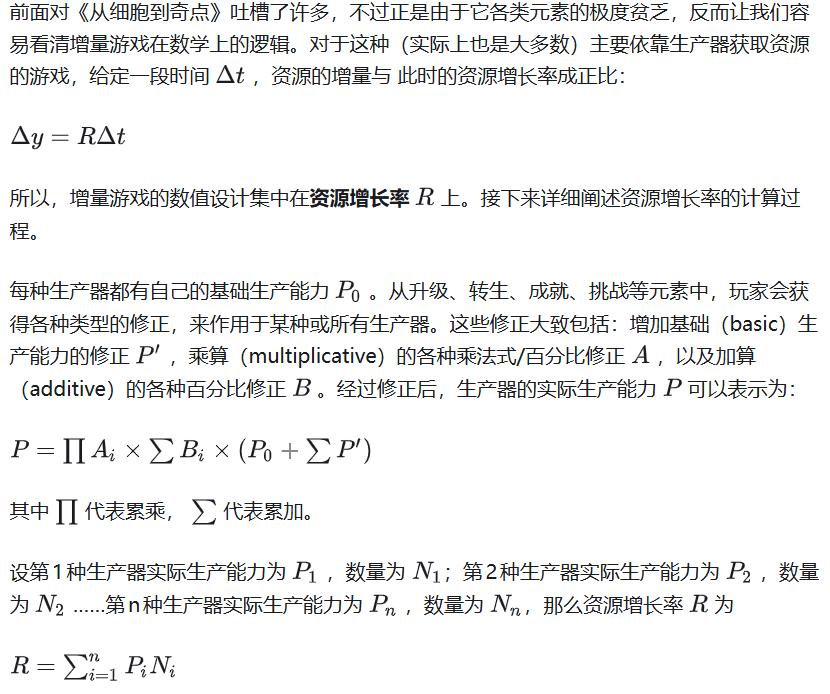
The mathematical logic behind incremental games, Image source: Zhihu user @Calculator A027
There is another slightly less difficult design point — the art part of the game, which is also very suitable to be solved by AI. After all, the core attraction of incremental games for players lies in the numerical growth. Players come to experience the real pleasure of the numbers getting bigger, and the art is at most an added bonus.
Many incremental games have relatively simple art styles: *Melvor Idle* only has some minimalist icons; *TBH: Heroes of Taskba* uses pixel art; *Anti-Matter Dimensions* directly displays numbers in front of players with very few art assets. Since art is not that important, it is very reasonable to use AI to reduce costs and improve efficiency in this aspect.
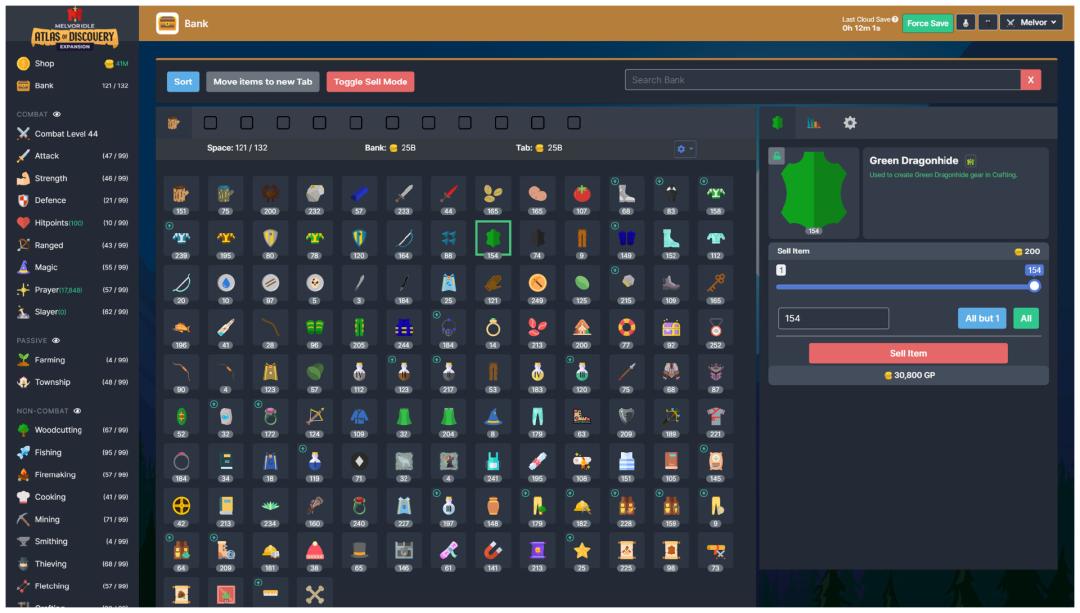
*Melvor Idle*
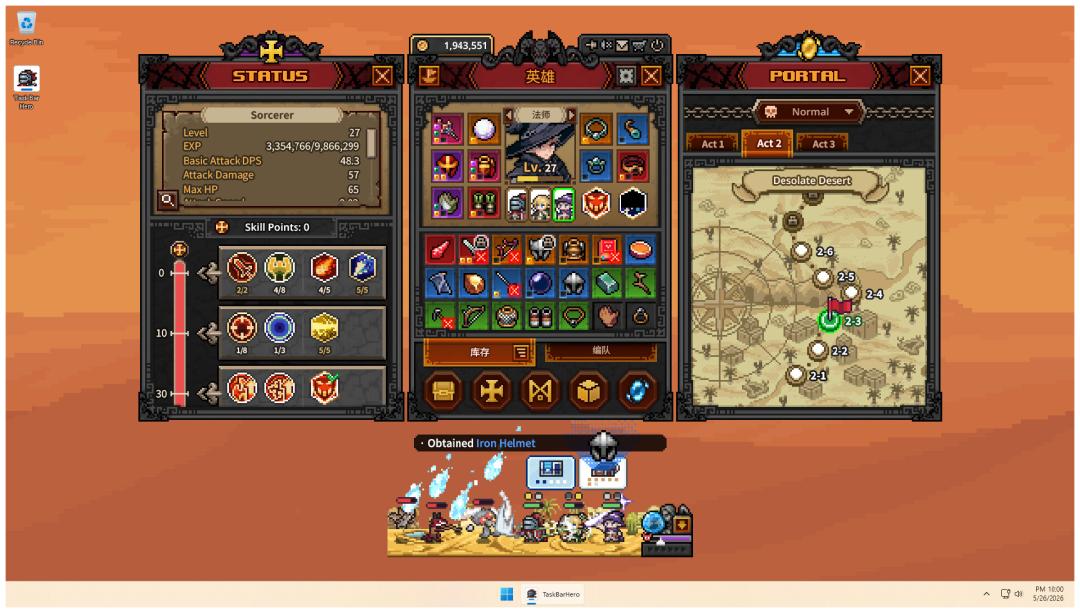
*TBH: Heroes of Taskba*
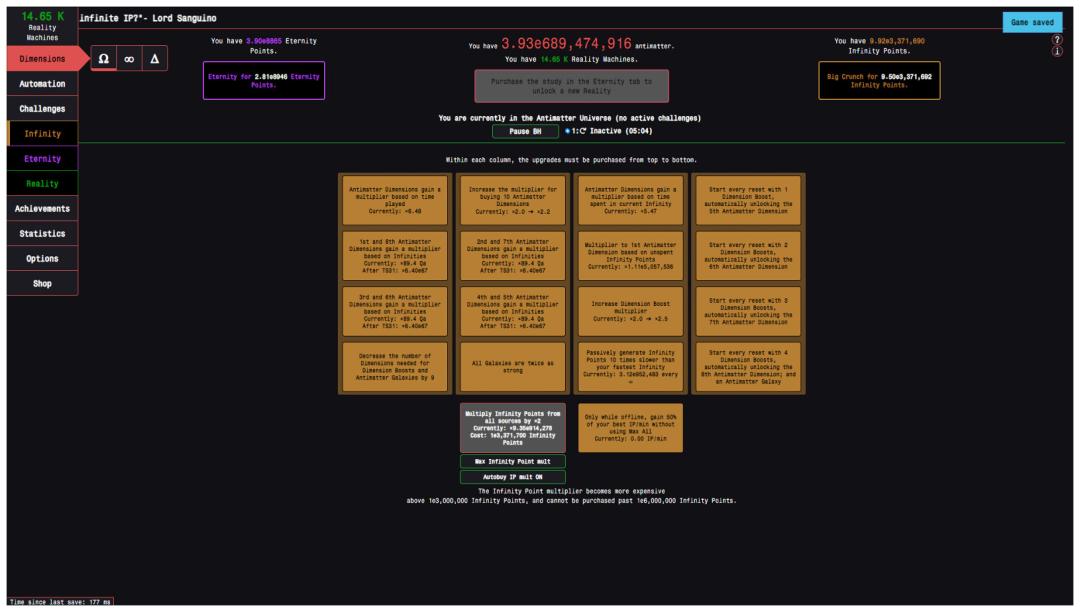
*Anti-Matter Dimensions*
When AI solves the two major problems of numerical balancing and art design, the only thing left to consider is the idea itself. AI can greatly shorten the development cycle, but the premise is that it knows exactly what you are making. Coming up with an idea attractive enough for players is the hardest step in developing AI incremental games — there are too many incremental games, and conventional themes like magic and immortal cultivation have long been overused. Now developers are even making games about cleaning the moon and peeling potatoes in the former Soviet Union, leaving very few new ideas for latecomers. Faced with this situation, some people choose to "copy answers". Although all developers vehemently deny it, it is obvious to all whether *Potato, Please* drew inspiration from another game, and whether other needle-in-haystack incremental games referenced *Find the Needle in the Haystack Simulator*.
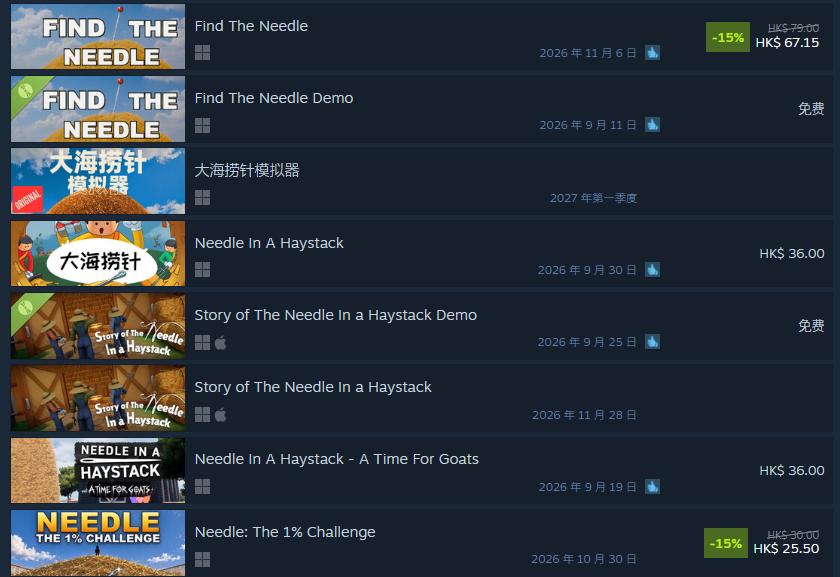
Unfortunately, they are all the exact same idea
This may be the downside of incremental games being overly compatible with AI: while rule-abiding developers want to take their time to polish their own ideas and games carefully, those unoriginal developers who don't care about product quality can use AI to turn the idea into their own game first. Considering this risk, the number of original creators who are willing to announce their ideas in advance is gradually decreasing, which is definitely not a good trend.
Conclusion
While collecting materials, I found that the concept of "incremental + AI" has actually been used by many people. The AI game engine Summer Engine has a dedicated page for making AI incremental games, and it even provides a one-click way to produce AI incremental games.