The song you have been playing on repeat is being squeezed out of your playlist by 300-yuan AI music.
Who wrote the song you've been looping on repeat lately?
Click into the homepages of those singers, most of whom you've never heard of, and you'll find hundreds of their works neatly arranged with a consistent style. Scrolling all the way to the bottom, you still can't find a single photo of a recording studio, nor any record of a live performance.
Behind these voices from "artists that cannot be verified" lies a reality that is reshaping the entire industry:
Over the past year, the number of newly added tracks to domestic music platforms has surged from over 70,000 to more than 100,000 per day, of which more than 20% are AI-generated.
As the total number of songs rises, both the people who make music and the people who listen to it are feeling a little flustered.
This issue of Micro Story tells the story of the music industry that has been intruded by AI:
In the recording studio, a long-term client directly cut the original quotation of 5,000 yuan down to 300 yuan, saying "Others use AI, and for 300 yuan, I can get 10 different versions to choose from."
In a print shop in a county town, a girl who is completely tone-deaf earned her first 3,000 yuan by writing songs.
A music critic who has been listening to music for 11 years gave an AI work the second highest score in a blind listening selection.
He began to doubt how much of the "human touch" he had praised over the years was truly perceived by his ears.
Last month, an AI music MV *Veterans* that made 10 ancient historical figures "speak" accumulated over 120 million views in half a month.
Some people in the comment section asked at that time: Who sang this? But people in the music industry were asking: "Is our industry about to disappear?"
The following are their real stories:
10 versions for 300 yuan, I lost 50% of my orders in 2 years
Zhang Zhang, male, 37 years old, professional musician
Zhang Guangyi has been doing music arrangement for 15 years, and in the past two years, the number of commissions he received has decreased by half.
His resume is quite decent in the industry.
Zhang Guangyi graduated from the Computer English major of a conservatory of music, worked in Beijing for half a year, and arranged nearly a hundred songs for second- and third-tier singers, several of which were hit tracks, and he was also nominated for Best Arrangement in several awards.
In 2018, he ended his life as a migrant worker in Beijing and became an independent musician. He rented a 40-square-meter recording studio in his hometown and took orders from all over the country, including lyric demos, commercial performance accompaniment, corporate theme songs, and custom wedding tracks, he did everything.
His personal best was arranging 22 songs in one month. In those prosperous days, his friends called him "Studio Worm Zhang".
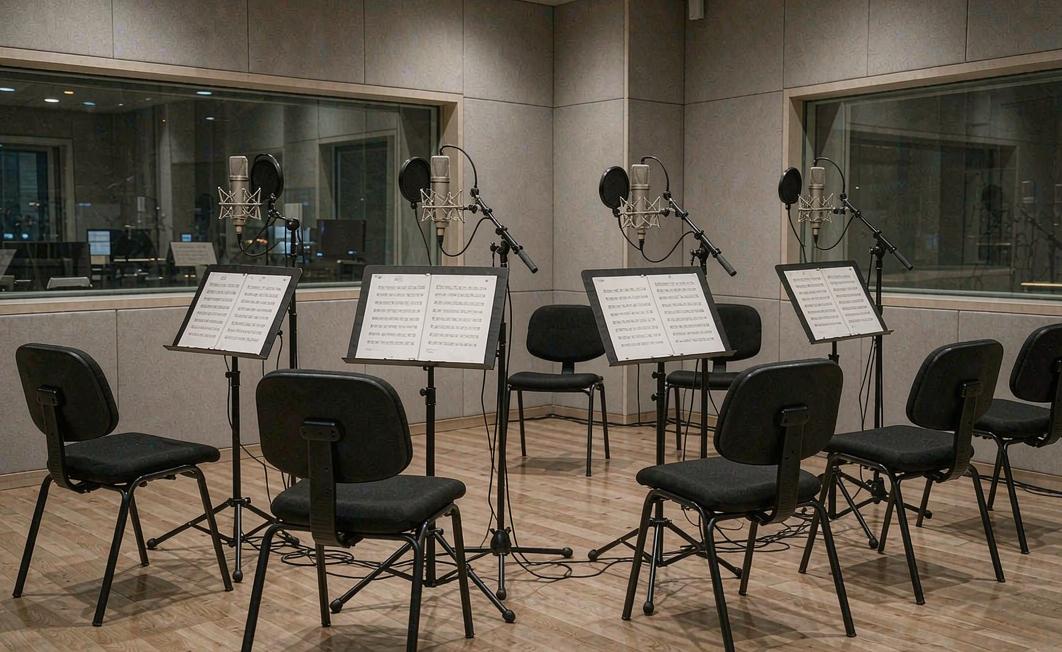
He first sensed the change from the quotation sheets. Since the autumn of the year before last, clients started to haggle over prices, not in a negotiating way, but directly removing a zero from the total quotation.
"Why are you still charging 5,000 yuan? Others use AI for arrangement, and for 300 yuan they can give me 10 versions to choose from".
At first, Zhang Guangyi dismissed it with disdain. He had listened to those AI-arranged tracks too: the drums are overfilled, the strings are padded, the harmonies are copied from templates, all of them are "average values", none of them are alive, and no one will remember those melodies after listening.
As more clients cut prices and fewer orders came in, Zhang Guangyi soon realized things could not go on like this.
Most clients do not care that much about how well AI arranges music, what they need more is "stability", "no mistakes", and "good enough".
After all, for those songs for corporate annual galas, BGM for short dramas, and background music in shopping malls, these tasks do not require much emotion or soul, as long as they sound "like a song".
As a result, such clients are flowing to the AI arrangement market at a speed visible to the naked eye, and Zhang Guangyi's income is decreasing at a rate of 50% every year.
Most of the equipment in Zhang Guangyi's recording studio was saved up when he first entered the industry: monitor speakers, microphone preamps, MIDI keyboards, and the synthesizer covered with a thin layer of dust that he bought after tightening his belt back then, which he now uses less than twice a month.
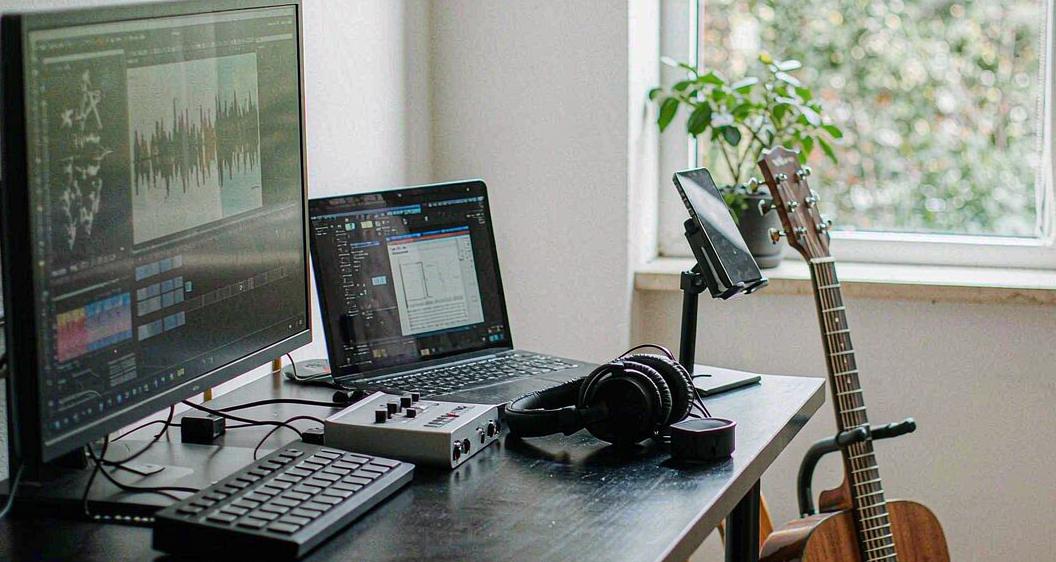
Among his peers, some switched to wedding photography, some went to music stores to teach children to play the piano, and some completely quit the industry.
Last year, an old partner called him, the first sentence was: "Zhang, is our industry gone?" He could not give an answer.
Zhang Guangyi was full of hatred, rejection and disgust towards AI arrangement at the very beginning. He could not accept that these soulless technologies would replace his years of experience, but he was powerless, "No matter how efficient a human is, he can't compare to a calculator that has no emotions and only knows how to work, the efficiency can never catch up with the machine".
What changed his mind was an accident at the end of last year.
At that time, an old client came to him, hoping he could help adapt a melody hummed by his mother before she passed away into a complete piece of music.
"My mother has been gone for three years, I miss her all the time, and I still remember that melody", the client said, but the old lady hummed slightly out of tune, the recording device at that time was just a mobile phone, and the background was full of clattering noises from the kitchen.
Using the old method, this task was impossible to do: the human voice could not be tuned, and the arrangement would sound weird no matter where you pasted it. Zhang Guangyi hesitated for several days, and for the first time opened the AI songwriting software.
He corrected the pitch of the old lady's humming, kept the slight tremors in her breathing and trailing sounds as timbre references for AI, used her melody to set the chord progression, rewrote the string parts himself, laid them in track by track, finally replaced the AI-generated human voice, and found a singer to record the track imitating the old lady's singing style.
On the day he delivered the work, the client's whole family cried in the studio, and he was also teary-eyed standing beside them.
On his way home that day, Zhang Guangyi figured it out: his deepest fear was not AI itself, but the worry that his 15 years of experience would be erased by AI.
But this song gave him the answer: AI is not a scourge, for people in all walks of life, it is a sharp tool that makes craftsmanship more flexible.
Since then, Zhang Guangyi no longer regards AI as an enemy, and his work process has been completely changed.
When taking an arrangement commission, he will first use AI to lay out the structure and style, pick a base from ten versions, and do the work that AI cannot do.
For example, the breathing sense of the bass line, the dynamic layers of the drum set, which bar the strings sneak in from, the half-beat blank space before the chorus — these "imperfect" parts are exactly what make a song have "human touch".
"AI gives me an 80-point rough draft, and my value lies in the last 20 points, the part it can never provide."
His current efficiency is three times that of before, the quotation has dropped by 30%, but the profit is higher than two years ago — there are fewer orders, but each order is handled more deeply.
Zhang Guangyi also figured out another thing: after the emergence of AI, the stratification of the music industry will become more and more obvious.
Those mass-produced arrangement demands that only require average standards will be completely taken over by AI, no one can stop it; for the top tier, music that requires aesthetic judgment, sense of presence and "human touch" will not only not be replaced, but will become increasingly scarce due to the flood of supply.
The most painful group is the mid-tier musicians, who have good craftsmanship but cannot reach the top level, and will eventually be gradually replaced by standardized processes, just like "frog boiling in warm water".
"Just like photography did not make painters disappear, but it did make portrait painters disappear." Zhang Guangyi said, "Among our generation of musicians, some are painters, some are portrait painters. It's cruel, but it's clear to see."
As for AI music itself, his view is calmer than most of his peers.
"I've listened to a lot of AI-arranged tracks, to be honest, the good ones impress me. Half of those on the charts are garbage, but for the other half, if you cover the author information, I may not be able to pick them out. What does this mean? It means that purely competing for 'final listening experience', humans no longer have an absolute advantage."
"But music is never just about the final listening experience. Who wrote the song, why it was written, where the creator was when writing it — these are not written in the audio tracks, but listeners can feel them. When fans buy concert tickets, they are paying for 'that person standing right there', which AI can never give."
Last year, Zhang Guangyi made a decision that all his friends thought was crazy: he started teaching music arrangement, half of his students are kids from conservatories of music, and the other half are zero-experience amateurs who write songs with AI.
Some people scolded him for betraying artisans, and he wrote his response on the enrollment advertisement: "Tools change, but ears and aesthetics do not."
"People who learned to make subtraction 15 years ago survived, and people who learn to divide work with AI today will also survive."
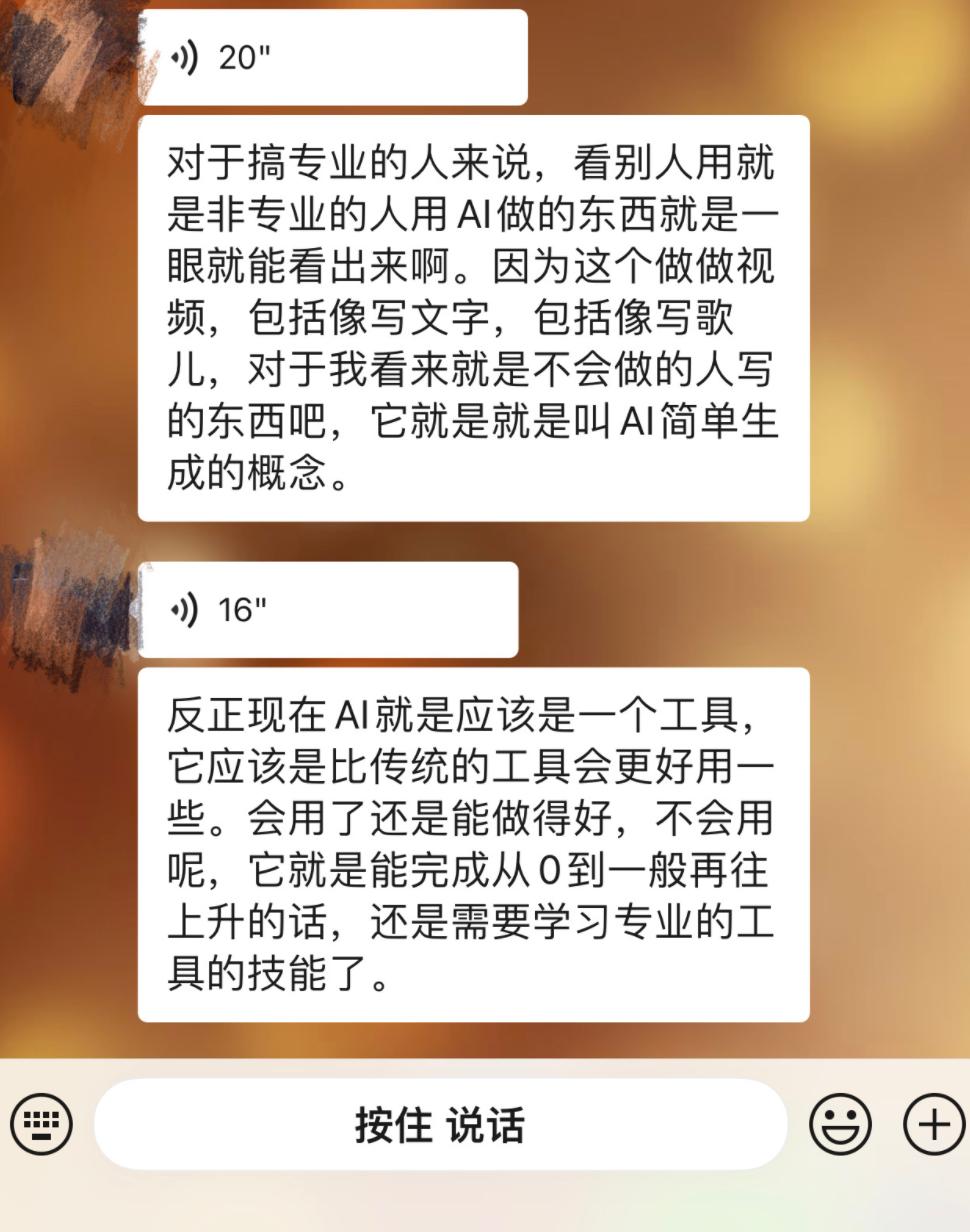
Figure | Zhang Guangyi's chat record with his friend, sharing his insights on AI music appreciation
This summer, Zhang Guangyi took a film scoring commission. The Party A clearly required that AI can be used to generate drafts, but all decisive sections must be recorded with real instruments.
On the day of recording strings, he stood in the recording studio, watching more than a dozen musicians bow their instruments at the same time. The moment the sound gushed out, he suddenly remembered the first time he stepped into a studio at the age of 23.
"At that moment, I felt relieved." He said later, "As long as there are people willing to pay for 'live performance', there will be a place for me in this industry. AI can take away the commissions, but it can never take away the craftsmanship, nor the ears that can appreciate the craftsmanship."
I have never sung in tune, but I earned 3000 yuan by writing songs in the past six months
Xu Jing, female, 21 years old, amateur musician
The first time Xu Jing tried to write a song, she spent 3980 yuan, almost her monthly salary.
That night, she signed up for an online AI arrangement course in a live stream, and downloaded Suno.
The simple thought that made her make up her mind was that a blogger in a short video generated a song in ten seconds on his mobile phone, and the human voice was almost identical to a real person.
She watched that video three times, and a simple thought popped into her mind: she had been in a long relationship that lasted four years with breakups and reconciliations, but it ended in separation eventually.
She always wanted to write a song for this experience, but she was just a migrant worker in a county town, never learned music theory, never touched any instrument, and was even completely tone-deaf. Melody was never something that people like her could get access to.
Xu Jing worked very hard on her first song. She stuffed all the memories and details of the four years into it word by word, but the generated melody made her cringe after one listen — the lyrics were completely changed beyond recognition by AI, the chorus jumped to a fake high pitch, and the human voice had such a heavy electronic taste that it sounded like separated by a layer of glass.
It was the second lesson that made Xu Jing get the hang of it. She checked the prompts in the study group, and realized that there are "tricks" to make AI obey your instructions.
For example, in the style column, you need to use English to accurately describe female voice, breathy voice, folk, 72 beats, acoustic guitar, exclude drums and so on. Mark the paragraphs with square brackets in the lyrics, lay out scenes in the verse, and put the chorus at the highest emotional point.
So she changed the line "I miss you" into "The osmanthus tree downstairs is blooming, but you are not here to share it this year".
After the third version of the track was revised, she put on her headphones and listened quietly for more than 10 minutes in the print shop where she worked.
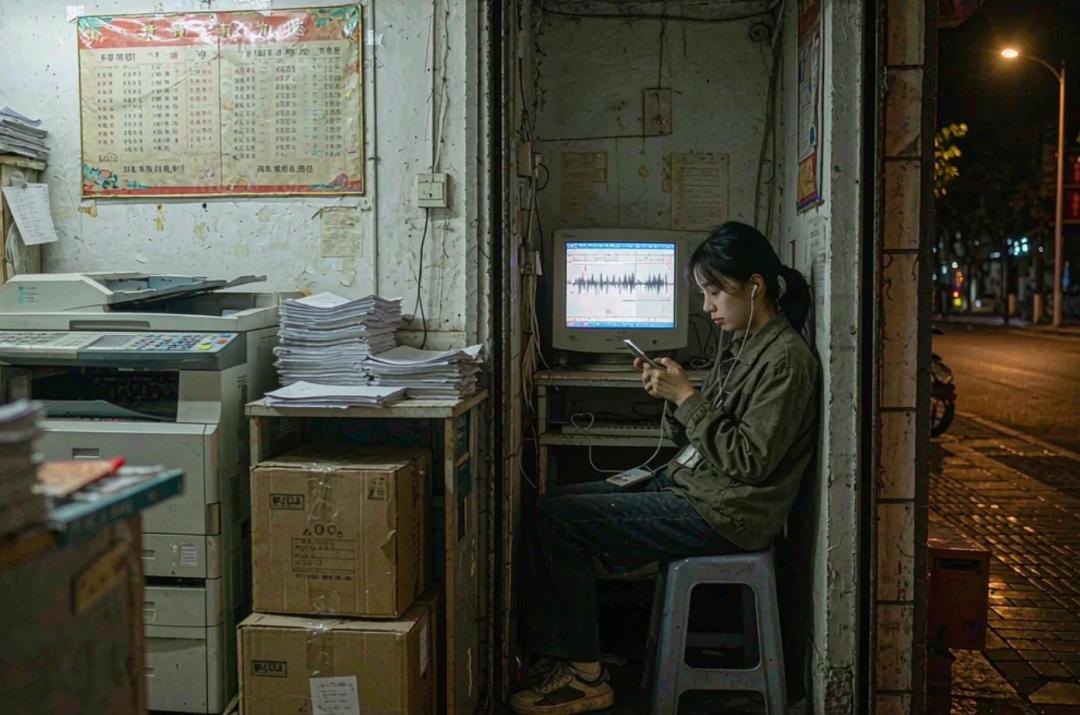
Later, Xu Jing gradually summed up her experience. She spent half an hour writing songs every day after work, writing two songs a week. By the eighth week, she picked 6 songs from the 16 she had written and uploaded them to various platforms.
At first, the play counts were mediocre, the total play count in two months only exceeded 3000, and the revenue was 47.2 yuan. That night, she took a screenshot and posted it in the group, laughing first: "Not enough for a cup of milk tea with an extra egg."
The turning point came in the third month.
A song Xu Jing wrote casually that satirized blind dates in small towns suddenly got hundreds of thousands of views. She stared at the curve on the backend, palms sweating. That night, she uploaded four old works overnight, and even redesigned the account profile and all song covers uniformly — unified style and clear audience positioning are the prerequisites for traffic growth that seniors have repeatedly emphasized.
That month, her revenue exceeded 1500 yuan.
But the good times did not last long, and soon she suffered losses due to lack of industry knowledge.
Someone sent her a private message saying they were willing to pay 800 yuan to buy out the copyright, "transfer the money right away, the contract is a standard one". Xu Jing almost