8 yuan for campus entry, 88 yuan for an accompanying tour: when university campus visits have become a business
39-year-old Lao Wu sat on the subway heading to Nanjing University from the airport, and asked Doubao a question: Can I make a reservation to enter Nanjing University?
Following the AI's instructions, he found the weekday campus entry reservation entrance on Nanjing University's official WeChat account, but stopped halfway through filling out the form — it required verification by an on-campus personnel, and the contact information of that on-campus person also needed to be submitted. He did not get agitated or overwhelmed as he did the first time he encountered such a situation.
It has become a habit for Lao Wu to drop by the famous local university whenever he is on a business trip. "It's not easy to come here once", he does not want to give up easily. At this point, he has visited nearly 30 highly historic university campuses. He skillfully opened Xianyu, searched for "Nanjing University" and "campus entry", and more than a dozen links popped up quickly.
Seeing that there was still more than an hour left on the subway ride, Lao Wu contacted six or seven sellers one by one unhurriedly, and finally picked one that only cost 8 yuan and guaranteed entry.
"How do I need to apply?"
"You only need to tell me which gate you want to enter the campus from."
Lao Wu was not familiar with Nanjing, this was his first business trip to the city, so he asked the seller instead. The other party replied quickly: "Enter from the gate on Tianjin Road, there are fewer people there."
Lao Wu was a little worried. There are many people on Xianyu who sell fake products under false pretenses.
"I am a student of Nanjing University, but I am not on campus today. Don't worry, you will definitely get in."
Lao Wu is not the only one who wants to visit historical and prestigious universities. According to the collation of Caixin Data in May 2026, among the 147 "Double First-Class" universities across the country, 118 have been open to the public through official procedures, accounting for 81%; while in January 2024, this number was 75, accounting for 63%. In more than two years, the number of universities that have opened their campuses through formal procedures has increased by 43.
The number seems optimistic. But "opening through procedures" and "being able to enter" are two different things: limited quotas, all slots taken as soon as they are released, requiring on-campus personnel to guarantee, and only opening on weekends and holidays — every threshold can keep a Lao Wu standing on the subway out of the campus.
The gap thus generates a price. The links on Xianyu for reservation agency and guaranteed campus entry are priced from 5 yuan, 8 yuan to 100 or 200 yuan.
What exactly is this 8 yuan paying for?
It pays for a Nanjing University student's approval right, a security guard from Northeast China turning a blind eye, and a cost that the university has never calculated.
"This is my aunt, she came to visit me"
"There are two ways to enter our university, 8 yuan per person for the ordinary visitor QR code, and 20 yuan for the faculty channel. It seems more expensive, but you don't have to worry about being stopped by security guards."
Xiao Wei, a senior student, replied to Xianyu inquiries very skillfully. The Xianyu account he registered is bound to his mother's Alipay, and the keywords of the link he posted are "no reservation required" and "visit". He has another link with the keywords "campus entry" and "tour guide service".
The first time he had the idea of helping others make reservations to enter the campus was in 2024. Xiao Wei, who was returning to school after tutoring, met an aunt at the school gate with a girl who looked like a junior high school student. The aunt stopped him and asked if he could help find a way — her daughter came to the big city to participate in a competition, and wanted to visit the university she had been longing for before going back.
The first time Xiao Wei helped someone enter the campus, he entered the campus with this aunt. The security guard at the gate glanced at Xiao Wei, then asked the aunt following behind him: "What are you doing here?"
The aunt panicked. Xiao Wei said: "This is my aunt, she came to visit me." The security guard stopped talking. After the aunt entered the campus, she thanked him repeatedly.
After that, Xiao Wei went to Northeast China once, his high school classmates studied at Heilongjiang University and Northeastern University respectively. The campuses in Northeast China are open, the teaching areas are separated from the living areas, and the control is much looser, unlike the universities in Jiangsu, especially the old campuses, which have strict checks.
Posting links to sell QR codes on Xianyu, Xiao Wei said he is not doing this to make a fortune. "Now kindness is not free, you can't dedicate yourself for nothing when doing good deeds. It's less than ten yuan per person, I just don't want to work for free." Later, the competition on Xianyu became fierce, and he reduced the price of the ordinary campus entry QR code to 4.98 yuan.
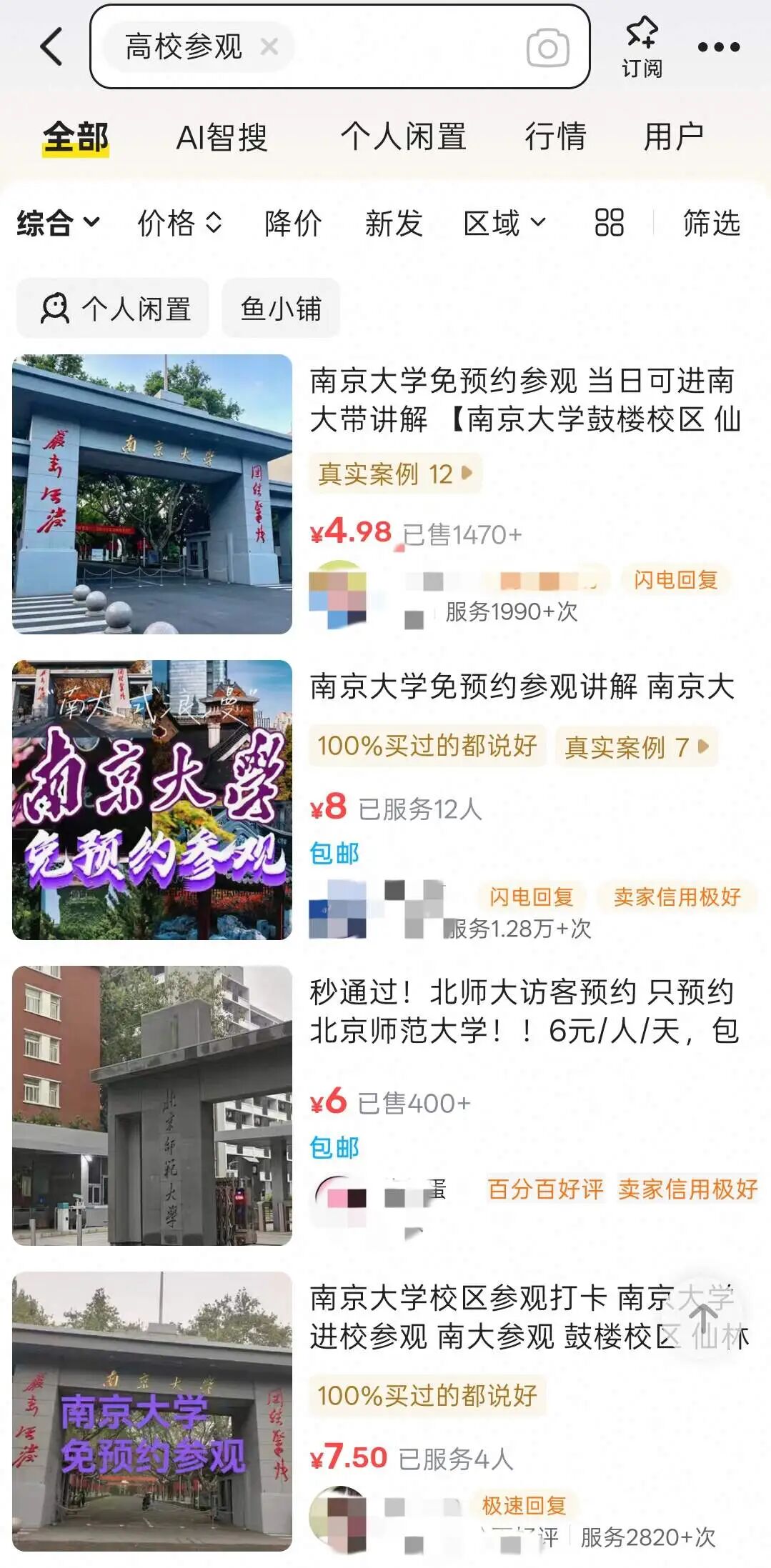
On Xianyu, there are a large number of university visit products, and the best-selling ones have sold more than 10,000 times
"Who is your approver? What are you doing on campus?" The first time Xiao Wei realized that what he was doing might be risky was when he passed the main gate and saw a man and a woman who looked about 30 years old. The two of them begged in front of the security guard, the security guard asked loudly unhappily, but they couldn't answer. Xiao Wei's heart skipped a beat, he quickly swiped his face to enter the campus.
Since then, if any buyer consults, he will recommend gates other than the main gate. More importantly, he has learned to screen buyers: for newly registered accounts and orders on workdays, he must chat a few more words. He prefers parents with children, as the risk is lower. He has read the news that Tsinghua University students were punished for illegally bringing visitors into the campus, and he knows that this matter cannot be publicized. If there is a real problem, he will refund the money directly and never pester.
Troublesome things did not decrease because of this. Once, a parent said in the order that he was alone, but actually brought two children, was stopped by the security guard, and began to send messages on Xianyu urging him to come and solve the problem. Xiao Wei asked the other party to try another gate, but the parent refused, saying that it was too tiring to walk so far with the children. Xiao Wei persuaded: "The security guard already remembers you, you definitely can't get in." The other party kept sending messages. After reading them, Xiao Wei directly refunded the money. After thinking for a while, he temporarily deleted that link.
In the next few months, Xiao Wei completed fifteen or six orders every week, earning about 80 yuan a week.
At 8 p.m. after the last class of that day, Xiao Wei walked out of the campus, and was stopped from behind by a young teacher who had just worked for less than two years. The two are less than four years apart in age. The teacher helped Xiao Wei get a spot in an elective course and he got the credit, so Xiao Wei gave the teacher a cup of milk tea, and the two gradually got familiar with each other after that. At the dinner table that night, Xiao Wei talked to the young teacher about this matter. The young teacher half-jokingly said that as a teacher, the faculty's permission to approve campus entry applications is much easier than that of students. The key is that he can also use the faculty channel without being interrogated by security guards. Xiao Wei's eyes lit up. The young teacher said that the price should be higher. Xiao Wei calculated and said that he would raise the price to 25 yuan per person, and split the profit 50/50 with the teacher. The young teacher said he would give it a try.
During the next small long holiday, the Xianyu orders almost exploded. Sixty or seventy parents or tourists who failed to make reservations came to place orders in one day, bringing in nearly 1,000 yuan a day. Xiao Wei and the young teacher were happy but scared at the same time.
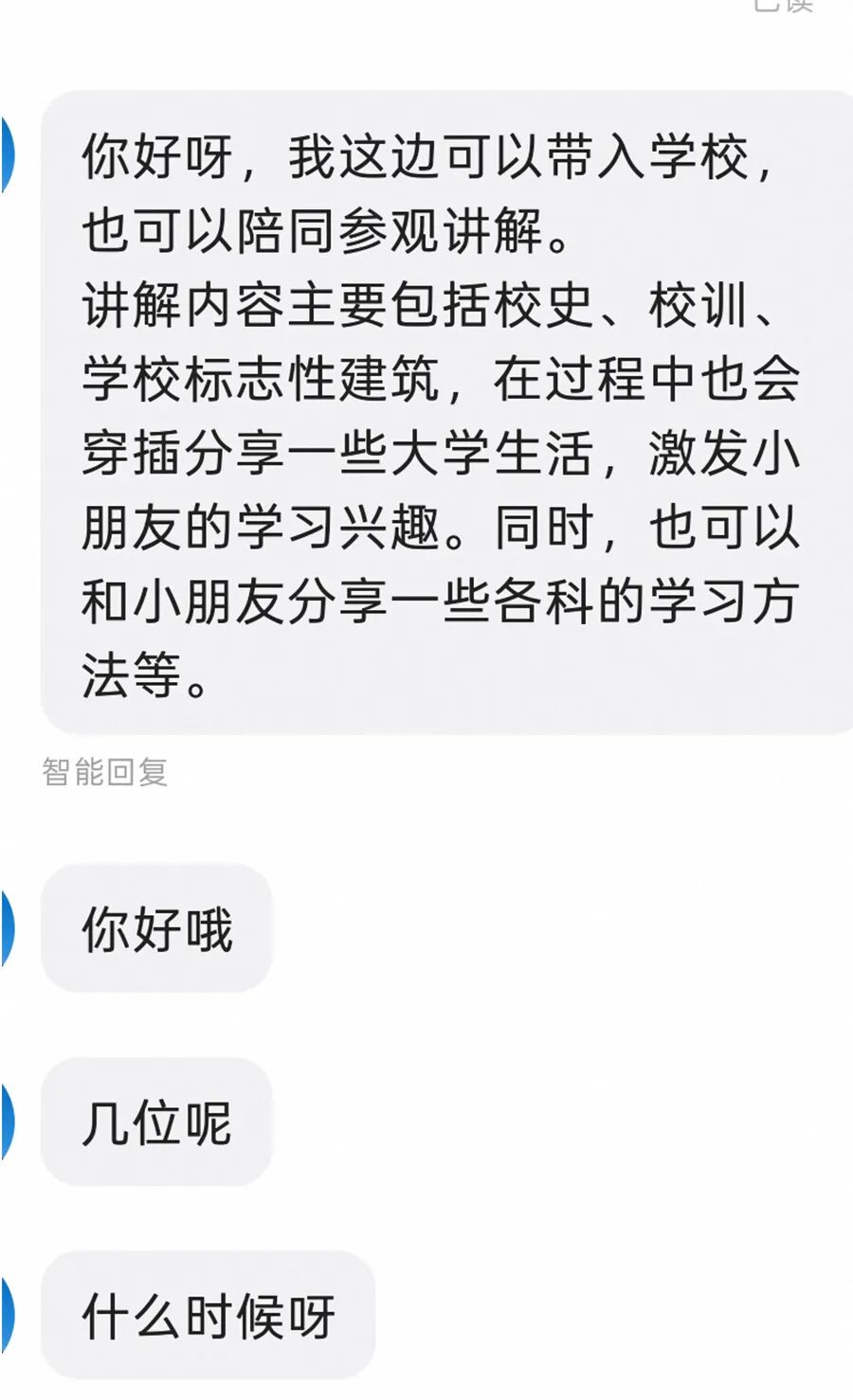
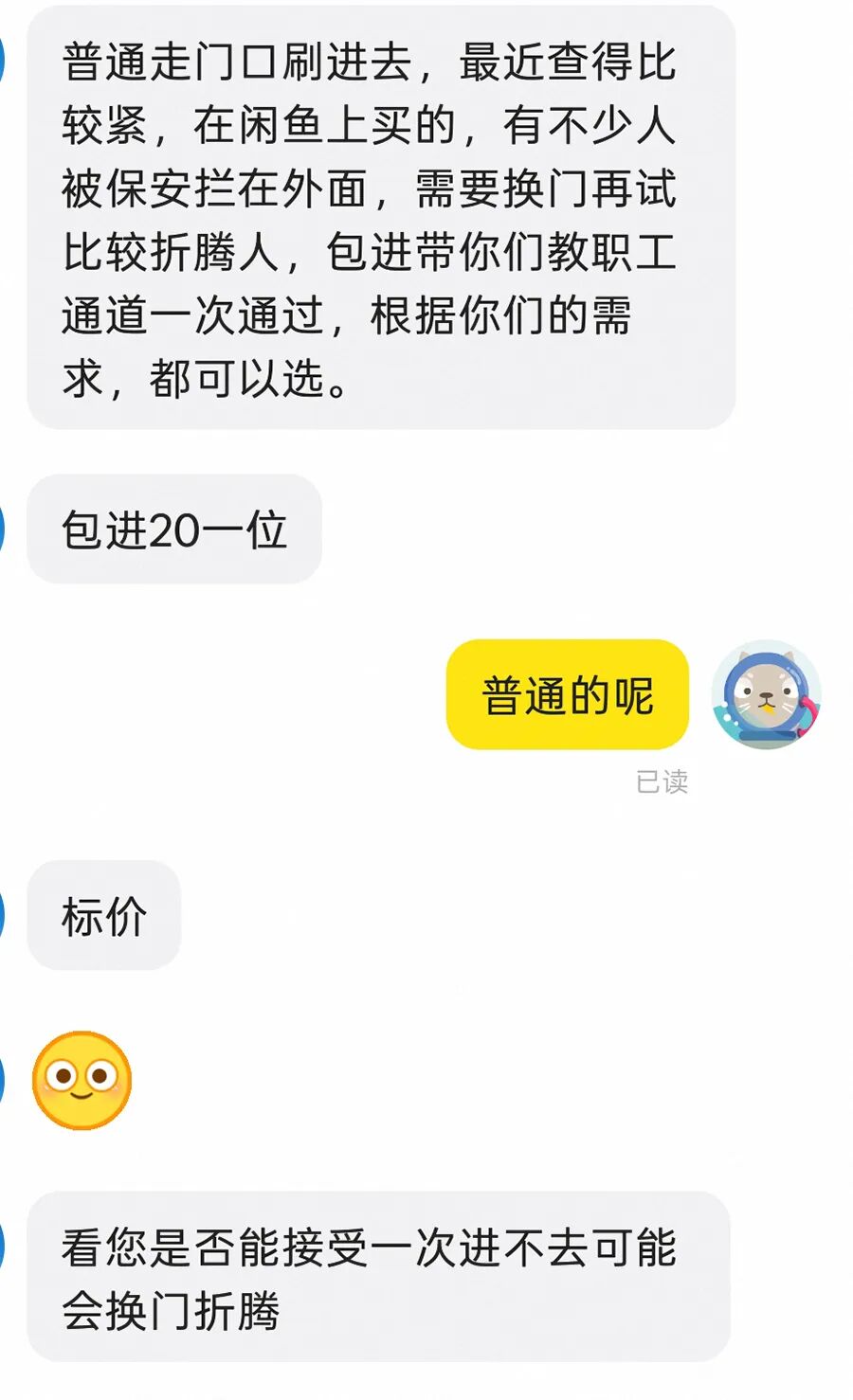
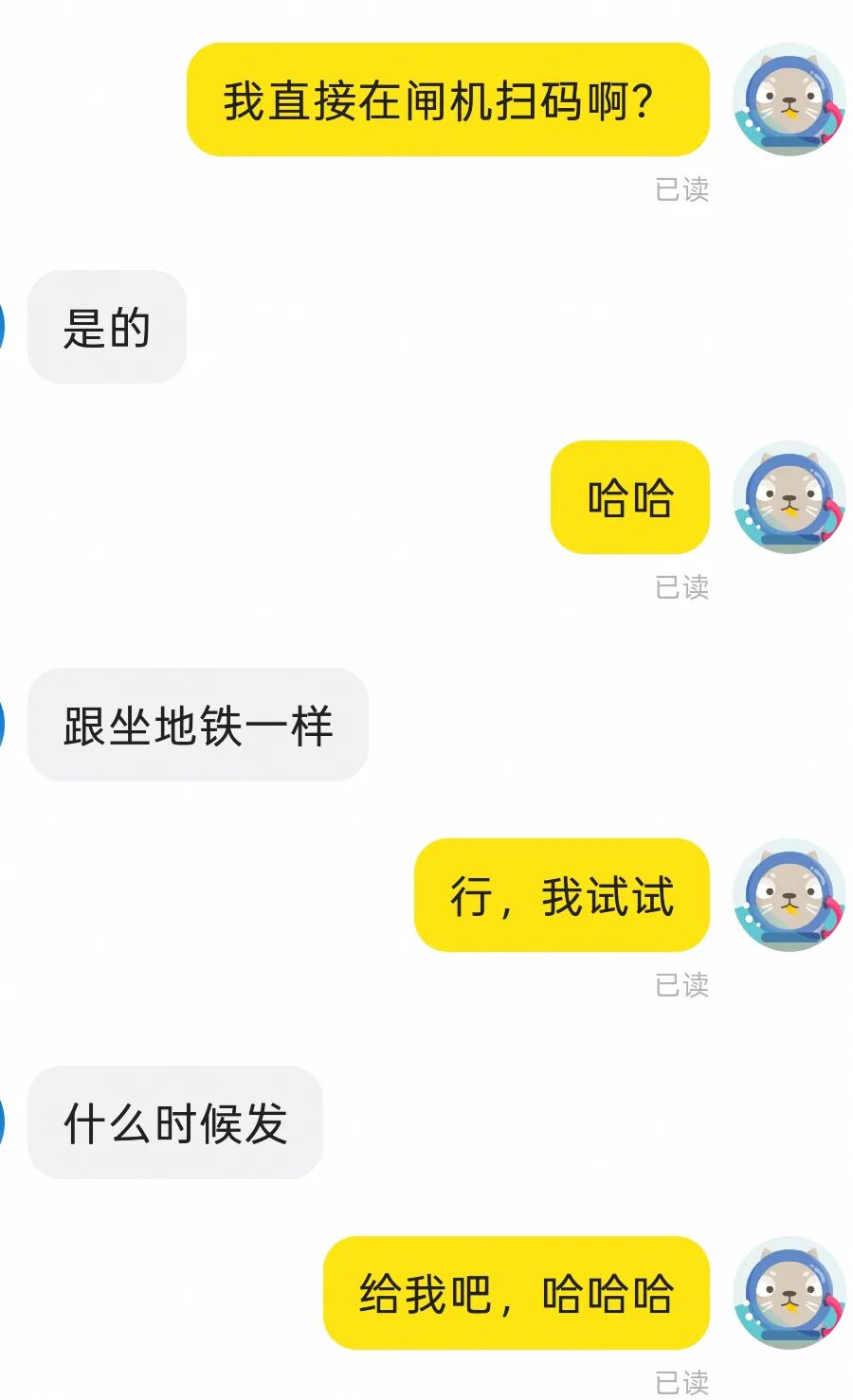
Xiao Wei's communication with customers shows there are two types of "tickets" at different prices
"Keep a straight face on duty, but don't be too meticulous"
Xiao Wei certainly knows that his little tricks are very easy to see through in front of the campus security guards.
Dong Ge is a field security guard at a university in Northeast China. He repeatedly emphasized that he is only under labor dispatch, a bit like the crowdsourced delivery riders for food delivery platforms, which he considers "the kind that can leave at any time". This point was confirmed by the captain's mouth during Dong Ge's onboarding training: keep a straight face on duty, but don't be too meticulous; walk around, but don't stare at teachers and students all the time. The captain also said that when you see suspicious people, you must interrogate them.
When he first joined the job, Dong Ge was arranged to work the night shift, from 8 p.m. to 8 a.m., changing shifts every two hours. In the first half month, a student on campus lost his laptop, and the surveillance showed that it was taken out from the exit where Dong Ge was on duty. Dong Ge thought he was going to be fired, but he was only asked if he had interrogated and registered the person. Dong Ge saw the student who lost the laptop was anxious and distressed, and he felt very guilty.
When Dong Ge really stopped a man in his thirties who wanted to sneak in by following a student's face scan, the man spoke very rudely, saying he was from the university, refusing to scan his face or show his ID card. The man stood at the door and cursed at him, and some students took videos with their mobile phones, which finally led to the captain showing up. Dong Ge thought the captain would support him, but the captain just calmed the man down and let him enter the campus. Then the captain turned around and called Dong Ge a troublemaker, saying that other security guards had not been troubled like this once in two or three years, but Dong Ge caused trouble just one month after he arrived. Dong Ge was confused at that time.
The old security guard taught Dong Ge a self-protection principle: it is better to avoid trouble. In theory, you can manage students bringing people into the campus, but in practice you can't, the students won't listen to you. If you are too strict, you will be the one who gets complained. So Dong Ge had flexible thoughts and confidence. The first gift he received was from a parent with a child, who stuffed a pack of cigarettes and asked him to make an exception. Dong Ge's palms sweated, and he urged the person to enter and exit quickly without lingering. Later, as the number of times increased, he became numb. Parents with children for visits and off-campus couples are regular customers. Then later, the university opened its campus.
There are also tough people. Once a student with dyed hair wanted to bring two drunk men who were staggering into the campus, Dong Ge stopped them, the other party called him a stinky security guard, and he insisted on not letting them in. The next day he was complained, the security office came to question him, he wanted to confront the student, but was not allowed.
During the first year and a half of working as a security guard, the university had not opened its campus. Dong Ge had seen many parents who wanted to enter the campus but did not know what to do, wandering around the school gate, which was obvious at a glance. Whether to stop them and how to stop them depends entirely on his mood. Once a colleague stopped a mother and daughter who wanted to enter the campus, the mother left with the child. After a while, a female student led the little girl from the mother and daughter over, saying that she was the teacher's child, and the colleague did not stop them. Dong Ge found it funny. When it was his turn to be on duty, he nodded at the mother who was still standing by the roadside waiting for her child to come out of the campus, letting her follow other students in. The child was inside alone, and the mother would not feel at ease.
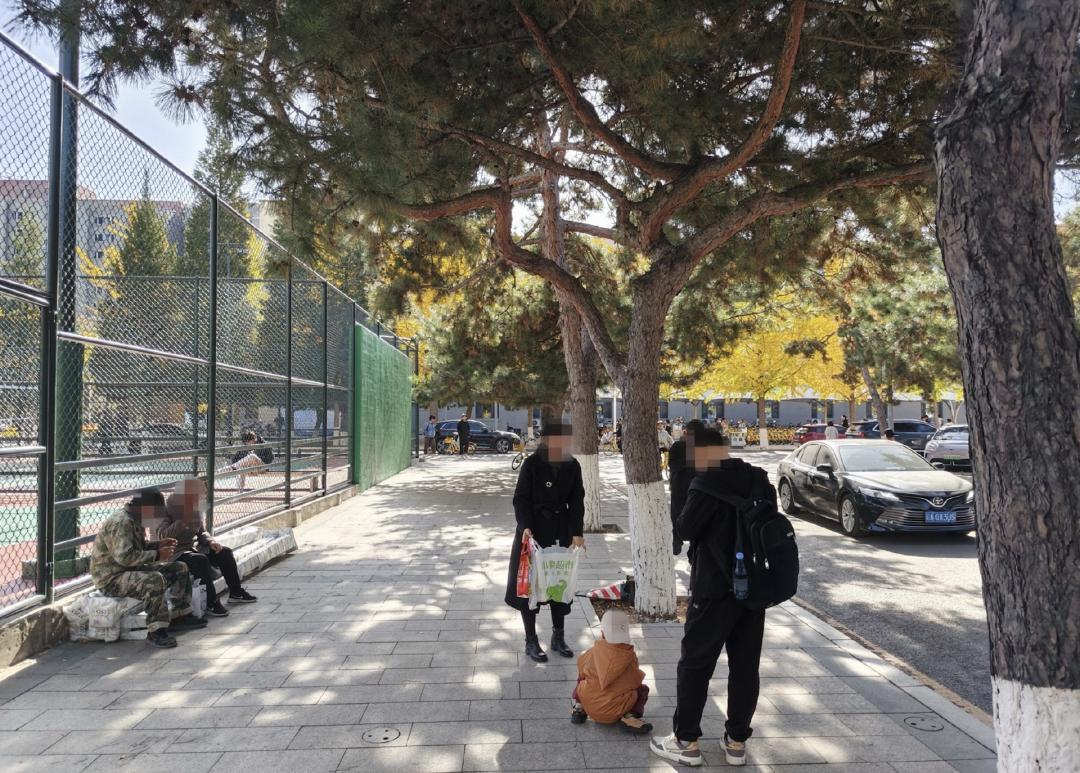
At Dong Ge's university, many "social people" enter the campus on weekends
Dong Ge knows he has no real power, and can't take any real responsibility. The salary is just so-so, there is no need to be too serious. But his eyes became sharp, some people obviously really love the university and want to go in and have a look. Then let them go in! Especially when the other party says with a smile that he forgot his ID card. Even if he knows the other party did not make a successful reservation, Dong Ge will not stop them, just turn a blind eye. Lao Wu is exactly this kind of smooth tourist in Dong Ge's eyes.
When the main gate does not have enough quotas, the side gate develops a market
Lao Wu has visited more than 20 universities, and summed up a folk difficulty classification for campus entry. The easiest ones are universities in Northeast China, Hebei and Inner Mongolia, many of which can be entered by swiping ID cards, and even if you sneak in behind students, the security guards will not ask too many questions. The hardest ones are top prestigious universities in Beijing, Jiangsu, Zhejiang and Shaanxi. If you don't spend money, you can hardly make a reservation through formal channels.
In Lao Wu's eyes, universities are more cost-effective than internet-famous scenic spots. They have historic buildings, historical changes, and you can feel the atmosphere of young people. He summed up a campus entry strategy. Buying the Xianyu QR code is only the first step. Don't panic when you are interrogated by the security guard, just say that the visitor application has been approved, the QR code has expired, and you just need to refresh it. Then lower your head to fiddle with your mobile phone, and ask the Xianyu seller to send a new QR code as soon as possible. The more flustered you are, the easier it is to be kicked out. For universities that do not require a reservation QR code but require face scanning, you can find a student to pick you up at the gate, lie that you are a relative or colleague, and the success rate is not low. Even following behind a student to enter the campus works.
Later, Lao Wu knew about the visit links on Xianyu, and thought it was worth spending some money to get in. Although the success depends on the security guard's attitude that day and the visitor's EQ, this does not prevent this business from having formed a hierarchy long ago. The bottom layer is students like Xiao Wei, earning a few to more than ten yuan as pocket money; the middle layer is on-campus faculty and staff who have the permission to report visitors, charging 30 to 50 yuan per order;