What is Shenyang really after by treating the bathing service industry as a serious core priority?
The ice and snow season kicks off, and Northeast China officially enters the traffic "revenue-sharing" moment.
A few days ago, at the 9th China International Import Expo, Liaoning held a cultural and tourism media briefing for the ice and snow season, with the theme set as "Warm Ice, Hot Snow". Huang Fang, Vice Minister of the Publicity Department of Liaoning Provincial Committee of the Communist Party of China and Director-General of Liaoning Provincial Department of Culture and Tourism, introduced that "warmth" and "heat" are the two core characteristics that distinguish Liaoning from other regions in Northeast China.
One of the footholds of this "warmth" is the bathing industry. As Huang Fang mentioned, as the epitome of Northeast China's bathing culture derived from industrial culture, urban bathing services in Liaoning cover all scenarios: you can find large-scale venues, all-in-one services, high-end options, and full packages integrating food, entertainment and leisure.
Shenyang is the most representative city in this regard, with more than 1,500 bathing and leisure enterprises across the city; in multiple lists released by third-party institutions, Shenyang's bathing industry ranks first across the country, "followed by cities including Beijing, Harbin, Changchun, Tianjin and Shanghai".
This is not only a market behavior, the goal of "building a strong capital of bathing and leisure" has also been written into this year's Shenyang government work report. Different from labels such as "Capital of Gastronomy" and "Capital of Museums" that most cities compete to build, "bathing and leisure" seems so mundane that it hardly looks like a "city card" that a city would spare no effort to build.
Then the question arises: what does Shenyang aim to achieve by taking the "bathing industry" as a key priority?
New Upgrades of the "Bathing Capital"
A few days ago, a bathing center named Yazhi Yunshang launched trial operation in Shenyang, and it attracted huge public attention as soon as it opened to customers. On social media, keywords such as "renovated from a former luxury shopping mall" and "prime location" reveal the reason behind the popularity.
This site used to be the location of Excellence Boutique Pavilion, a high-end shopping mall in Shenyang, and it is connected to Zhanzhan Shopping Center, known as "the first high-end luxury store in Northeast China". The first LV men's flagship store in China, the first Bottega Veneta men's flagship store in China, the first Prada men's boutique in China and other high-luxury brands once settled here.
Since Zhanzhan Shopping Center announced its closure in 2024, "who will take over the site" was once a mystery. Now, the Excellence Boutique Pavilion, which was put up for auction earlier, has found its new operator after all the uncertainties.
The transformation "from luxury mall to bathing center" is not a particularly rare case in Shenyang. In fact, many of the newly opened bathing centers in Shenyang in the past two years were originally well-known shopping malls or supermarkets.
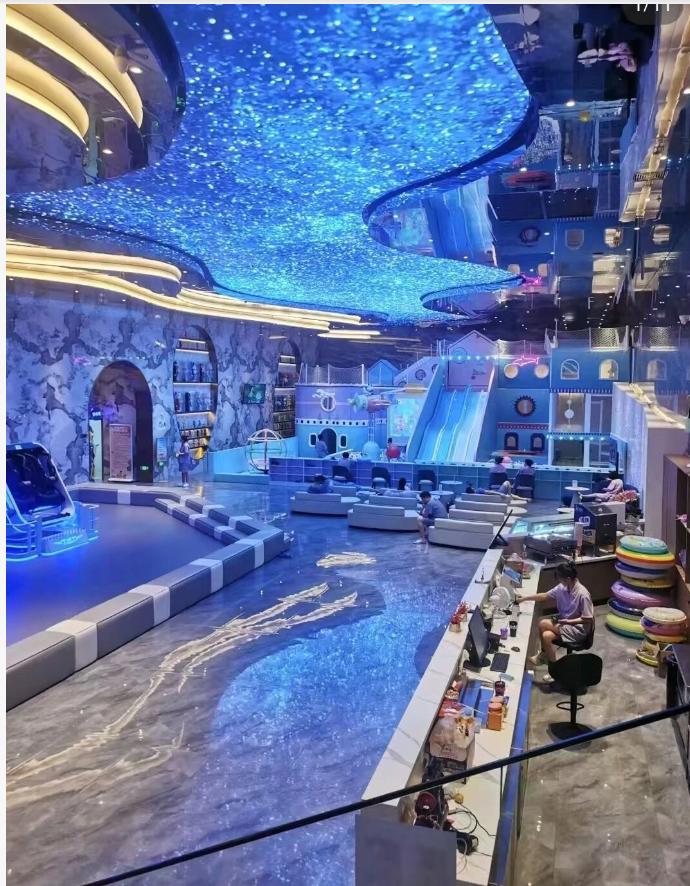
Image source: Shenyang Culture and Tourism Bureau
Tang Lizhong, Executive President of Shenyang Bathing Industry Association, once counted this change: Guangyi Tesco, Carrefour and Vanguard Supermarket in Shenyang have all been transformed into large-scale bathing centers. Traditional supermarkets are "retreating" under the impact of e-commerce and changes in consumption habits, as their locations in core urban areas and key community nodes lead to high rents, while the traditional shelf-based shopping model is outdated, lacks immersive experience and is less attractive to young people; on the contrary, bathing centers are evolving into leisure and social complexes, and are "expanding" with stronger offline customer gathering capabilities.
The rapid development of the bathing industry is obvious to all. Data shows that last year, the scale of China's bathing industry exceeded 1.1 trillion yuan, with a year-on-year growth rate of over 20%, making it one of the few service industries that have maintained continuous growth in recent years. According to the 2026 Bathing Guide released by Meituan, the transaction volume of national bathing services has increased by more than 30% year-on-year since last year, of which cross-regional consumption accounts for more than 30%, presenting a pattern of "southern bathing services expanding northward and northern bathing services expanding southward as a coordinated whole". It therefore points out that 2025 is the "first year of breakthrough development for the bathing industry".
Shenyang happens to be the perfect carrier for this transformation.
In Northeast China where the body scrub culture prevails, Shenyang still stands out with the saying "national bathing industry looks to Northeast China, and Northeast China's bathing industry looks to Shenyang". This is not only derived from the hardware foundation of more than 1,500 bathing and leisure enterprises in the city, but also from the "voting with feet" of Northeast consumers. Data shows that during the "Northeast Super" event, the search volume related to Shenyang's bathing industry increased by more than 30%.
The tourism boom brought by ice and snow has further pushed this local leisure resort into the national spotlight. After southern tourists nicknamed "little potatoes" experience the crystal and colorful ice and snow world and the "speed and passion" on ski slopes, soaking in a hot spring and getting a body scrub at a bathing center has become another popular check-in spot. In the past two years, Shenyang's bathing centers once saw overloaded reservations, and netizens joked about this phenomenon as "southern mud flowing northward".
This year's ice and snow season is no exception. During the recent Mid-Autumn Festival and National Day consumption season, bathing consumption in Shenyang once again became a highlight: it not only ranked first in the top 10 cities with the highest bathing consumption heat across the country during the two festivals, but the turnover of key monitored bathing enterprises during the holidays increased by 1.6% compared with the same holiday period last year.
Alternative Breakthrough Path
Behind the booming market, the local government's active efforts cannot be ignored.
A key node appeared in 2024. In that year, Shenyang was awarded the title of "Capital of China's Bathing and Leisure" by the Asian International Bathing SPA Alliance, giving Shenyang's bathing industry an overall city-level brand.
Shortly after that, in January 2025, the Work Plan for Shenyang to Promote the Brand of "Capital of Bathing and Leisure" was issued. According to the plan, this move aims to "further expand the influence of the city's brand, enrich the supply of cultural, sports and tourism market, and attract more consumers to experience Shenyang's bathing culture", so as to cultivate Shenyang's bathing industry into a new engine driving the development of modern service industries such as culture, sports and tourism.
A clearer signal came in January this year. In Shenyang's government work report, "Capital of Bathing and Leisure" is listed as one of the "Five Capitals" brands together with "Capital of Beer", "Capital of Music Fans", "Capital of Cheongsam" and "Capital of Rowing"; the subsequent issued Key Work Division Plan lists "strengthening the brand of the Capital of Bathing and Leisure" as Item 14, with Shenyang Municipal Bureau of Commerce as the leading unit.
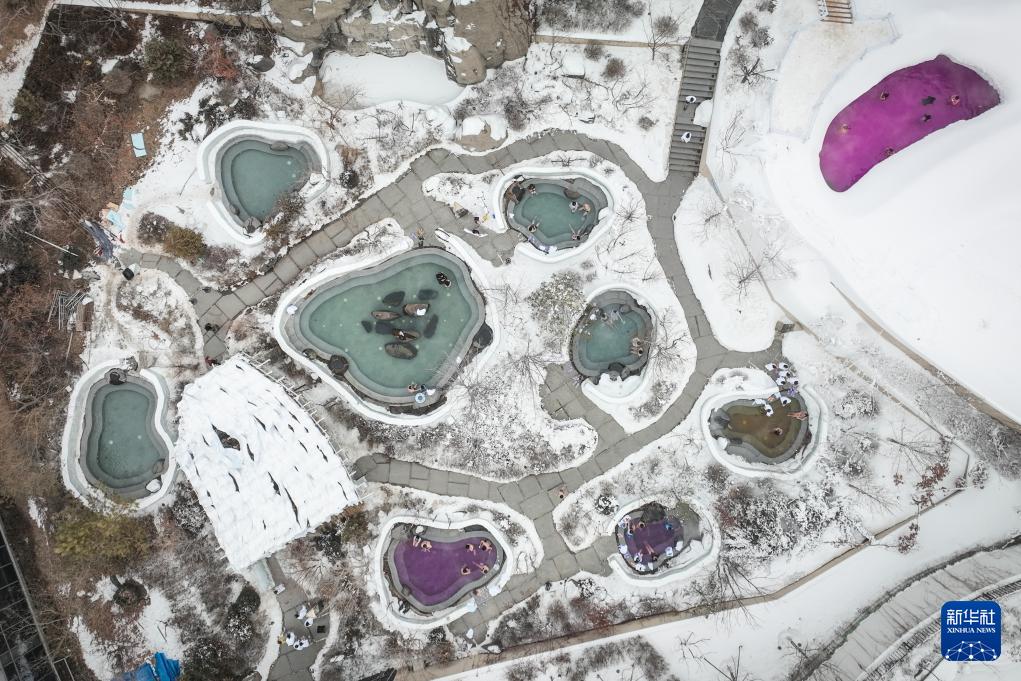
Image source: Xinhua News Agency
One of the reasons is that the bathing industry is no longer the simple form of "washing, scrubbing and soaking" in the past.
The "bathing malls" that have been emerging across the country in recent years are exactly the "urban micro-vacation complexes" mentioned by Tang Lizhong, which integrate bathing, catering, entertainment, leisure, socializing and accommodation, so that consumers can stay in the venue for a whole day and meet all kinds of demands.
New consumption trends have also emerged accordingly. For example, Meituan's 2026 Bathing Guide mentions "staying overnight at bathing centers", whose search volume once increased by more than 60% year-on-year last year, as "hotels are all the same, it is more interesting to follow local customs and stay at a bathing center".
A more recent trend is working in bathing centers. On social media, people who work overtime on weekends and freelancers either combine work and leisure to achieve "balanced work and rest", or enjoy the space in the rest area with "large tables, quiet environment and no need to watch the shop assistants' faces". Some people even describe it as a new type of third space, saying "bathing centers have taken over Starbucks' market".
In the industry, the "bathing + all scenarios" model is called the "Shenyang Model" of the bathing industry; relevant Shenyang officials in charge once described "bathing +" as the characteristic of Shenyang's bathing industry in public occasions.
A local media report in 2010 revealed an early node of the local bathing industry's transformation. According to the report, at that time, "five or six comprehensive diversified entertainment venues with a business area of more than 10,000 square meters" were established in Shenyang in less than three years. These giant venues "invested hundreds of millions of yuan each, integrating spa, catering, guest rooms, health care, tea art and chess, leisure and entertainment and other functions", and promoted the reshuffle of the local bathing industry.
Up to now, Shenyang has further promoted the chained and professional development of the bathing industry chain, with more planning to redefine the whole industry.
Last year, as the first bathing college across the country, the Bathing Leisure and Health Management Industry College was officially inaugurated at Shenyang Polytechnic College. In response to external doubts that "attending classes is just scrubbing bodies", the dean of the college Guo said that the college aims to cultivate professional talents for industry management, operation and bathing technology, and will promote the professional identity certification of practitioners. Subsequently, a brand-new labor brand "Shenyang Bathing Technician" came into being rapidly.
The Professional Committee of Industrial Chain and Supply Chain under Shenyang Bathing Industry Association established this year has filled another short board of the industry. According to the introduction, this committee covers key fields including physical furniture supply, enterprise management, fiscal and tax compliance, intelligent control system and environmental protection operation and maintenance, bringing a more standardized development path for this non-standardized industry.
A Cultural Business Card?
Why is "bathing" enough to be promoted as a city's business card?
When asked about the reasons why Shenyang's bathing industry leads the country, Sun Zhigang, a hot spring bathing designer who has been engaged in bathing center design in Shenyang for nearly ten years, pointed out that in addition to the advantage in quantity, "we also have the bathing tradition and bathing culture sublimated from the 'large factory campuses' of the old industrial base".
One statement is that as an old industrial base, Northeast China had a dense layout of heavy industrial state-owned enterprises in the 1940s and 1950s. The factory campuses were fully equipped with all facilities, and public bathhouses were standard configuration. Workers took baths collectively after work, which gradually became a daily habit and marked the beginning of Northeast China's "bathhouse culture".
Although the conditions of bathhouses were simple at that time, the "acquaintance society" environment in the factory campuses, coupled with the Northeast people's outgoing personality of loving chatting, formed the embryonic form of today's "social space". Colleagues exchanged information and built emotional connections in the bathhouses, forming an equal and shared "cultural atmosphere", and even shaped the unique concept of Shenyang people that bathing is a daily necessity and basic right, rather than a luxury enjoyment later.
As Northeast culture has increasingly become a well-known cultural phenomenon, the cultural attribute behind bathing has also been explored by more people.
One example is the recently popular TV drama *Thriving and Flourishing* set against the background of Northeast culture. The heroine Xiaolongnv sets her law firm directly on the second floor of a public bathhouse, where the bathing area run by Sister Pang on the first floor is full of steam, and the law firm on the second floor is busy solving problems for the people. Clients go upstairs for consultation wrapped in bathrobes and holding enamel mugs, with the sound of body scrubbing mixed with the sound of chatting, presenting a new image of the bathing culture that used to focus on leisure and pleasure.
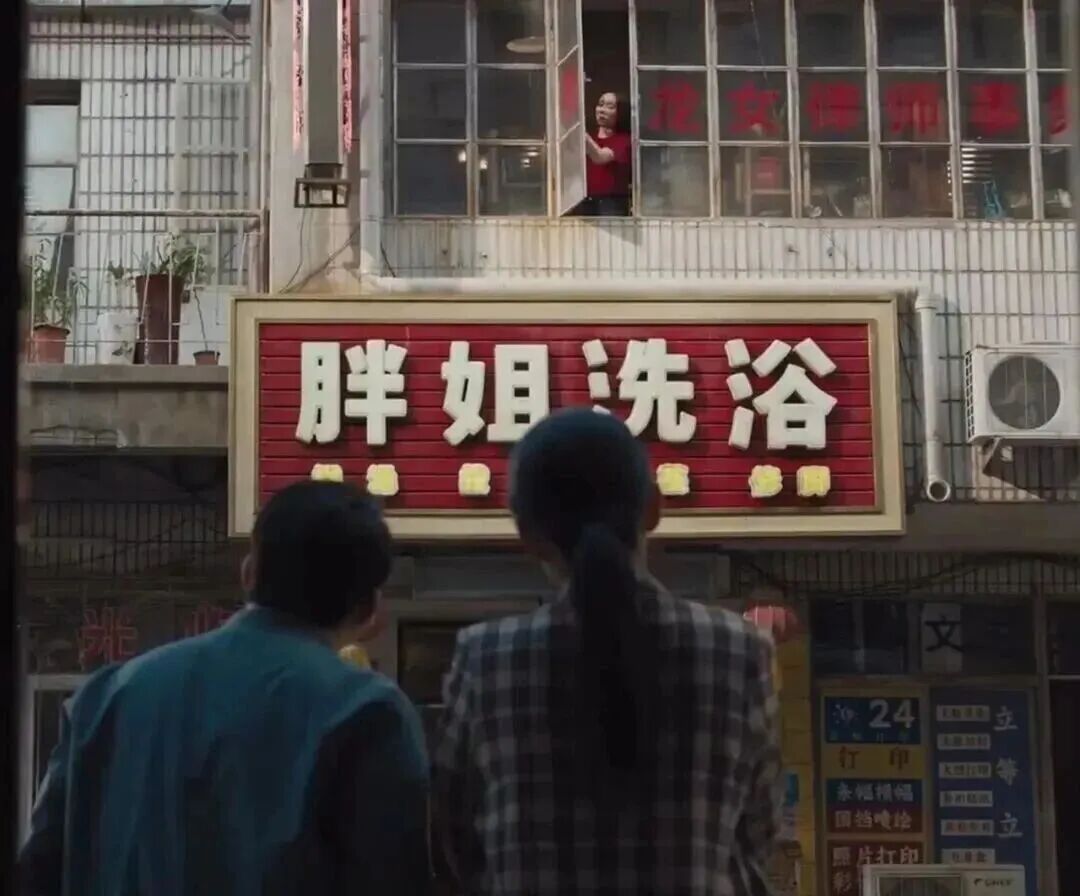
Image source: Shenyang Culture and Tourism Bureau
In this sense, for Shenyang, the bathing industry represents not only a consumption scenario, but also is expected to become a cultural symbol carrying the local lively atmosphere and urban characteristics.
One view holds that Shenyang is not a "typical" tourist city, and the "Oriental Ruhr" full of industrial atmosphere is its most prominent label. From the glory as the "eldest son of the Republic" and the past prosperity to the decline in the transformation period, Shenyang is now taking the lead in the "Northeast Revitalization" initiative, and how to face its urban heritage and find new growth points has become a must-answer question.
Just as Germany's Ruhr District chose to transform from an industrial production area to a commercial and cultural consumption area, one of the answers Shenyang gives also falls on the cultural and tourism industry —
In 2023, Shenyang clarified the three-year doubling target of tourism revenue and tourist arrivals, and at the end of 2025, Shenyang Municipal Bureau of Culture and Tourism replied to the proposal of the Municipal Political Consultative Conference that Shenyang received more than 200 million tourist arrivals in 2024, and achieved a total tourism revenue of 200 billion yuan. "The three-year doubling target of tourist arrivals and tourism consumption has been achieved one year ahead of schedule".
With the initial victory of cultural and tourism development, the traffic and consumption brought by the "Capital of Bathing and Leisure" are undoubtedly very important. For Shenyang, which is stepping into the trillion-yuan GDP city club, new challenges are coming now: how to further iterate the "Bathing Capital" business card to support a higher level of urban energy level?
This article is from WeChat Official Account "City Evolution Theory", written by Yang Qifei, authorized by 36Kr for release.