Two months before the Double 11 Shopping Festival, a second-generation courier business owner sold the delivery outlet he had run for 22 years at a transaction price of 4 million yuan. He said frankly that the more parcels he delivered, the more losses he incurred.
A notice of delivery fee cut issued by the headquarters further reduced the unit price per parcel by 5 cents, which prompted Wang Bing (a pseudonym), the owner of a courier outlet, to finally make the decision to transfer his outlet.
Wang Bing is a typical "second-generation courier operator". In 2005, his mother obtained the first local operating right of this franchise-based courier brand with a franchise fee of 20,000 yuan, starting the business with only one tricycle and three couriers. More than 20 years later, this outlet has grown into the third-largest outlet in the region: it handles about 40,000 incoming parcels and 20,000 outgoing parcels per day on average, with a peak daily order volume of 55,000 during the peak season. It is fully equipped with operation sites, automated equipment and a transport fleet, and has 65 couriers.
Two months before the launch of this year's "Double 11", when the whole industry was stepping up preparations for stocking and recruiting more staff for the peak season, Wang Bing checked the final handover bill, officially handed over the outlet he had operated for exactly 22 years to the new person in charge, with a final transaction price of 4 million yuan.
In an interview with a reporter from National Business Daily (hereinafter referred to as NBD reporter), when asked why he did not wait for the "Double 11" peak season to "strive for a good performance" before leaving, Wang Bing smiled bitterly: "The more parcels we deliver, the more losses we incur."
Wang Bing's choice is a microcosm of the courier industry during the transition period. In the past two years, the "anti-involution" policy in the courier industry has been continuously promoted, vicious price wars have been effectively curbed, and the profit recovery of leading enterprises has been remarkable: in the first half of this year, the attributable net profit of STO Express increased by 128.31% year on year, and the growth rates of Yunda and YTO Express both exceeded 70%. However, at the end of the network, franchise outlets are going through the growing pains of structural adjustment: iteration of delivery fee pricing mechanism, upgrading of service assessment standards, and rising cost of employment compliance. Under the superposition of multiple factors, some traditional outlets are facing the practical pressure of operation transformation.
When the industry bids farewell to the high-growth incremental era, the cargo volume dividend of "Double 11" can no longer cover all structural problems. A group of old franchisees who have been deeply rooted in the industry for many years are standing at the crossroads of their careers and making new choices.
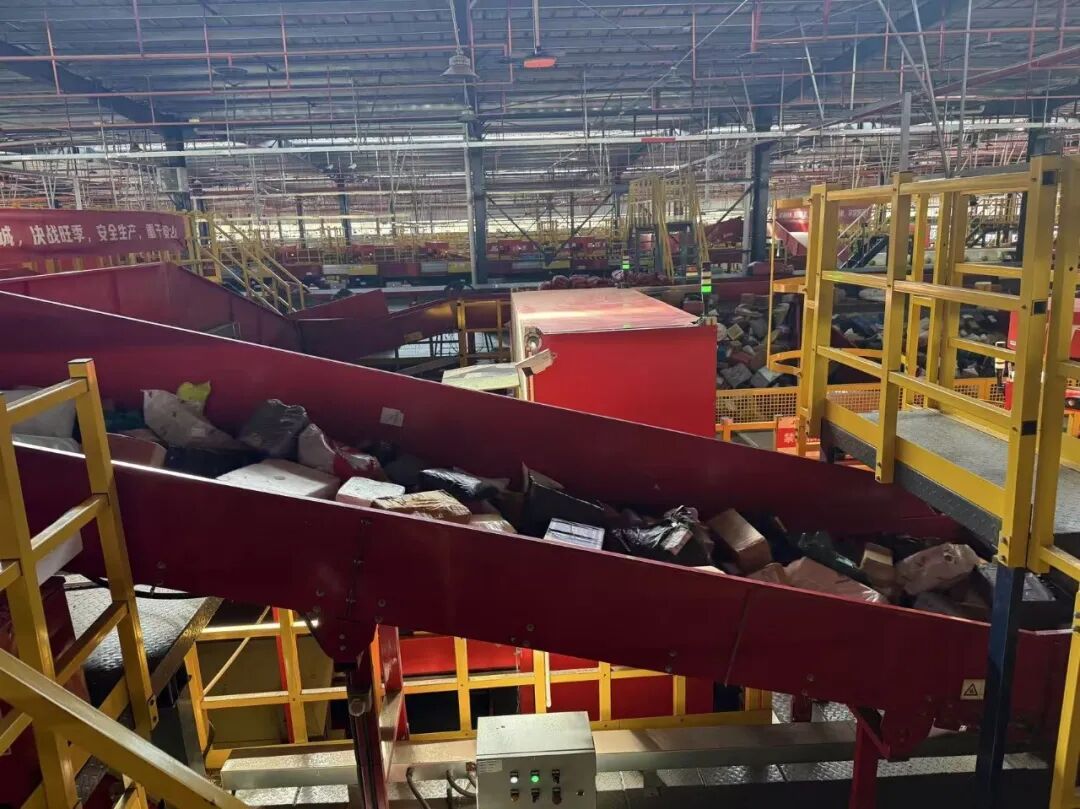
Courier transfer center. Image source: Photo by NBD reporter Zhao Wenqi (file photo)
Two generations over 22 years: from 20,000 yuan franchise fee to 4 million yuan exit
The starting point of the courier outlet sold by Wang Bing bears the era mark of the reckless entrepreneurial period of China's courier industry.
In 2005, when the e-commerce wave just emerged, Wang Bing's mother seized the opportunity to get the first franchise right of a franchise-based courier company in the local area. At that time, courier service was widely recognized as a tough job, and there was no second courier outlet in the whole street. No one expected that this business of running around the streets would later become the logistics foundation supporting the trillion-yuan e-commerce industry.
The period from 2011 to 2017 was the rapid growth period of the courier industry, and this outlet also ushered in its golden development period. Relying on the e-commerce dividend, the parcel volume of this outlet doubled year by year, and the annual profit remained stable at more than one million yuan.
In 2022, Wang Bing officially took over the management right from his mother. At that time, many people around him advised him not to take over, saying that the industry was no longer a place where you could make easy profits, but his mother was reluctant to let go. "She always says that this outlet is like a child she has raised for 18 years, and we can't abandon it just because it's not easy to run after it grows up." Wang Bing understands his mother's feelings, and he also thinks that with his years of experience in the industry, he can stabilize this family business through refined operation.
The days just after taking over were not easy. The pressure of falling delivery fees and stricter assessment had been transmitted layer by layer to the grassroots outlets. However, last year, the "anti-involution" wave set off in the courier industry once made him see hope. Wang Bing told the NBD reporter that in the first few months after the price limit policy was implemented, peers around him all said that life would get better. Wang Bing also got the idea, invested nearly 1.3 million yuan to install automated sorting equipment. On the one hand, he wanted to improve the operation efficiency with the help of the policy, on the other hand, he thought that even if he transferred the outlet in the future, the equipment could be sold at a good price together with the outlet.
However, the operating pressure still exceeded his expectations. Wang Bing told the NBD reporter that during the Spring Festival in February this year, the service requirement of "no closure during the Spring Festival" was implemented as usual, and the headquarters required a 90% service compliance rate. Most couriers had returned to their hometowns, so Wang Bing drove a tricycle to deliver parcels by himself, running around in the cold wind all day, hoping to reduce one complaint and one fine. But in the end, two indicators failed to meet the expectations, and he was fined 270,000 yuan in the single month, which is equivalent to losing 10,000 yuan a day. According to Wang Bing's communication with his peers, many courier outlets in his province faced varying degrees of staffing pressure that month, and the fine was not an isolated case.
According to Wang Bing's statistics, his outlet lost about 1.2 million yuan in the whole year of 2025, including a loss of 1.6 million yuan in the first half of the year (including fines and loss-making parcel collection), a temporary profit of 500,000 yuan in the second half of the year benefited from the "anti-involution" policy, but a loss of 100,000 yuan again at the end of the year.
In July this year, the headquarters issued a notice reducing the delivery fee by 5 cents per parcel (from 0.99 yuan to 0.95 yuan). Wang Bing calculated that for his outlet with a monthly delivery volume of 1.2 million parcels, the annual income would be reduced by at least 720,000 yuan. After comprehensively evaluating the long-term operation risk, profit margin and personal career plan, Wang Bing finally decided to transfer the outlet.
Wang Bing confessed that on the day he signed the transfer agreement, his mother stayed silent at home for a long time, after all, she was reluctant to part with the business she had guarded for 22 years. Wang Bing is more rational. In his opinion, adjusting the track in time is not admitting defeat, but a pragmatic choice made during the industry transition period.
"Losing 50 cents is always more cost-effective than being fined 1 yuan": Parcel collection competition in the stock market has become a cost game between outlets
Among many operating variables faced by outlets, the periodic mismatch between regional market capacity and the headquarters' task target is a common feeling of many franchisees.
Wang Bing and the heads of several surrounding peers sat together and did the math: the total daily outgoing parcel stock of the local market is about 80,000 parcels at most, while the sum of the daily parcel delivery tasks set by five mainstream courier brands for their respective outlets is close to 120,000 parcels. Each of them has a monthly parcel volume indicator of more than 20,000 parcels. "The total stock is just this size, we can't make parcels out of thin air." Wang Bing sighed. The headquarters' task indicators are broken down layer by layer based on the national network growth target, and when they fall to the regional level, there will be a gap between the overall target and the local market capacity.
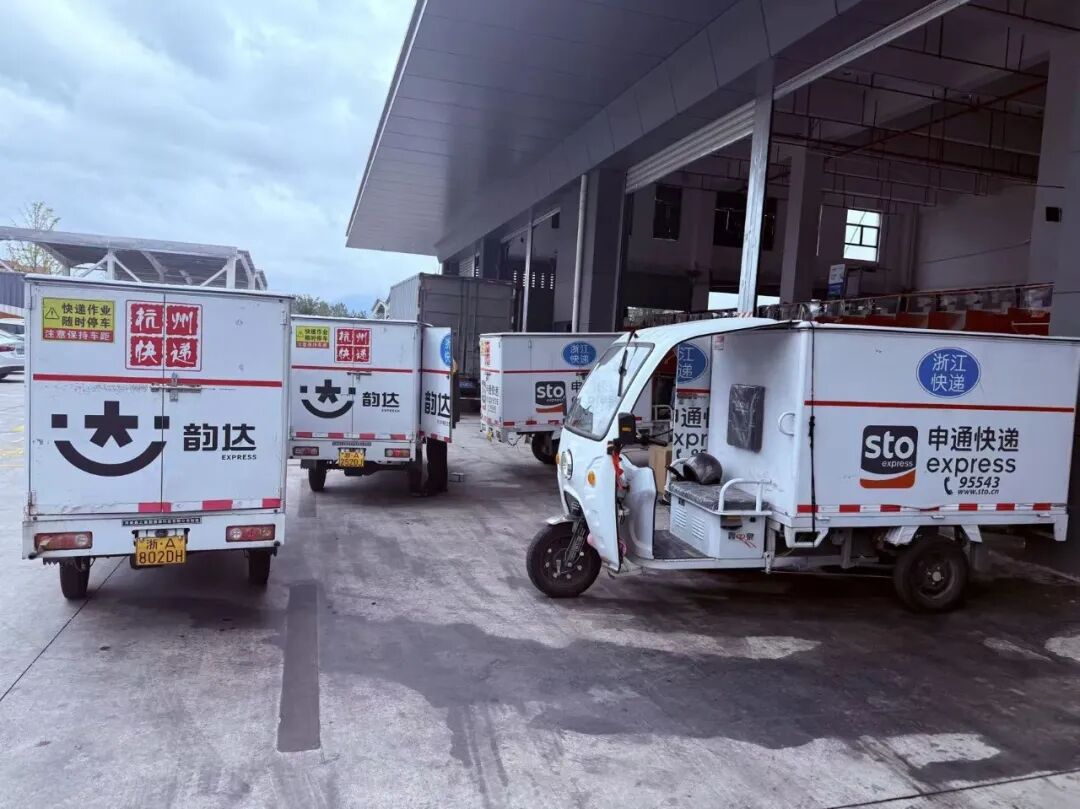
Courier transfer center. Image source: Photo by NBD reporter Zhao Wenqi (file photo)
The rules of task assessment are directly linked to the parcel collection price: if you fail to reach 80% of the task baseline, you will be fined up to 1 yuan per parcel; if you reach more than 80%, you will be fined 50 cents per parcel. Wang Bing's outlet receives about 14,000 parcels per day on average, which is 10,000 parcels less than the task of 24,000 parcels. Calculated at the full fine, it will lose 300,000 yuan a month.
Therefore, many outlet owners calculated that instead of waiting for the full fine, it is better to give proper concessions to collect parcels to boost the volume. Losing 50 cents is always more cost-effective than being fined 1 yuan, and losing 80 cents also means losing 20 cents less than being fined 1 yuan. At first, everyone only dared to reduce the price slightly, but later, you give 5 cents off and I give 10 cents off. The parcel collection competition in the stock market has become a cost game between outlets. "Everyone knows that they are losing money, but no one dares to stop. If you don't grab the parcels, others will take them away, and you will lose more in the end." Wang Bing told the NBD reporter.
This long-term competition pattern of seizing the market by lowering prices has also attracted the attention of regulatory authorities. In the third quarter of last year, the courier industry continued to promote "anti-involution", the situation of vicious price slashing was greatly reversed, and leading enterprises have achieved profit recovery one after another. However, in some local regional markets, after the growth of parcel volume slowed down, the parcel collection pressure of outlets still exists.
Entering the "Double 11" peak season, this pressure will be further amplified.
Different from previous years, the service assessment standards during the "Double 11" period have not been relaxed due to the increase in parcel volume. On the contrary, as consumers have higher expectations for timeliness and service, it has become a key node to test the operation capability of outlets. Another owner of a franchise-based courier outlet told the NBD reporter that the biggest change of this year's "Double 11" is that the courier headquarters did not implement extension protection for outlets during the peak period in order to ensure service quality. All parcels arriving on the same day must be delivered on the same day, which also brings great pressure to the outlets.
Leading brands have raised service standards one after another. The parcel volume doubles while the standards do not drop, which is a big test for the sorting efficiency, personnel scheduling and end delivery capability of outlets. Outlets with weak operation capability are prone to face the dual pressure of rising costs and increasing assessments.
Wang Bing did the math for the NBD reporter: the delivery fee per parcel for couriers of direct-sale brands is about 1.7 yuan, while the delivery fee given by franchise outlets to couriers is around 0.9 yuan. The income of a direct-sale courier delivering 100 parcels is equivalent to that of a franchise courier delivering 200 parcels. However, consumers' requirements for door-to-door delivery, phone notification and standard signing for receipt are unified, so franchise couriers are more likely to be complained.
In response to the controversy over end-point assessment, a management staff from the headquarters of Tongda group courier companies told the NBD reporter that the core goal of the headquarters' service assessment is to ensure the consistency of service quality across the whole network, and fine is a constraint means rather than the business purpose, because the headquarters also needs to consider the stability of outlets.
It is worth mentioning that at the beginning of November, Lai Meisong, Chairman of ZTO Express, publicly stated in an interview with the media that if an enterprise makes money by fines, it will not go far. He also mentioned that next year, more efforts will be made to take practical actions to further change the misunderstanding and perception that "courier companies make money by fines".
Franchise system quality improvement: network reconstruction and industry upgrading in the stock era
Wang Bing's exit is a microcosm of the structural adjustment of the industry's end network.
According to public data, in the past year, the number of franchise outlets and franchisees of enterprises including STO, Yunda, YTO and J&T Express have been optimized and adjusted to varying degrees: the number of STO outlets decreased by 38 net to 5044; the number of YTO outlets decreased by 83 net to 4944; the number of first-level franchisees of Yunda decreased from 4744 to 4267, with a net decrease of 477 within the year; the number of network partners of J&T Express China decreased by 300 to 5100, and the number of outlets decreased by 400 to 6300.
The number of outlets is also one of the results of courier companies' active optimization of network structure. Yunda's executives once told investors in April this year that the company is focusing on adjusting the network structure, integrating some weak outlets, and gradually building an "olive-shaped" service network with more reasonable radiation, more balanced flow, better service and stronger competitiveness. J&T Express also mentioned in its financial report that the adjustment of the number of network partners and outlets is a measure for the company to optimize the network structure and improve the operation capability of a single outlet.
After transferring his outlet, several outlet owners who are familiar with Wang Bing congratulated him on "escaping from the sea of suffering". Wang Bing smiled and replied: "I'll leave first, you guys take your time to endure." Behind the joke is the common situation of a group of old franchisees: they stick to their feelings and family business, bear costs and risks, and are in a dilemma at the turning point of industry transformation.
Zhao Xiaomin, a courier industry expert, said in an interview with the NBD reporter that Wang Bing's experience is universal in the industry, and it is already very lucky to successfully transfer the outlet at 4 million yuan under the current market environment.
He concluded that the current franchise outlets can be roughly divided into four categories: the first category is new franchisees with local industrial resources and upstream and downstream integration capabilities, who are high-quality partners supported by the headquarters; the second category is old outlets that have been deeply rooted in the industry for many years and have enjoyed the dividends of the times, but some operators' operation concepts and capabilities need to be iterated; the third category is outlets whose operating pressure is gradually increasing due to the rising compliance cost and technology investment; the fourth category is outlets with relatively weak capital, resources and capabilities, which are the main body of natural market elimination.
"The franchise system has supported the rapid expansion of China's courier industry in the past two decades, and its historical contribution is obvious to all, but any model needs to be iterated and upgraded with the development of the industry." Zhao Xiaomin analyzed that during the period of rapid industry growth, the incremental parcel volume can dilute many contradictions, and both the headquarters and outlets can share the growth dividend; entering the stage of stable development, the traditional franchise model is facing adjustment, and the path for outlets to make profits solely relying on delivery fees is getting narrower and narrower, so they must transform into local comprehensive service providers. In this process, outlet differentiation and survival of the fittest are normal market phenomena, and the core driving factor is the requirement for high-quality development of the industry, rather than the unilateral pressure from the headquarters.
In his opinion, the core competitiveness of courier outlets in the future lies in their ability to integrate local market resources. When selecting partners, the headquarters will pay more and more attention to the local industrial resources, capital strength and comprehensive operation capability of the other party. Only outlets that can deeply integrate into the local economy can gain more say in cooperation.
As for the development prospect of the industry, Zhao Xiaomin believes that after bidding farewell to high-speed growth, the courier industry is shifting from "quantity expansion" to "quality improvement". In the long run, the concentration of the courier industry will continue to increase, mergers and reorganizations are important paths for network integration, and the mixed model of direct sales and franchise will be more common, which will eventually promote the whole industry to develop in a more standardized and efficient direction.
Now, Wang Bing has transformed into the freight forwarding industry to serve as a network management, and continues to deeply engage in the logistics field from a new perspective. Talking about his old