Ceasing production of the Cybertruck, what exactly is Elon Musk thinking?
Recently, Elon Musk has been facing a string of headaches.
The once highly anticipated Cybertruck is about to be discontinued. With actual sales figures far lower than initial expectations, the move is widely interpreted by the public as a commercial failure.
But Musk does not agree with this statement. He responded today (November 9) that the Cybertruck is not unprofitable, but its complexity brings high opportunity costs, which are far less valuable than diverting its production capacity to the fully autonomous ride-hailing vehicle Cybercab.

According to the previously announced plan, Tesla will dismantle the Cybertruck production line at its Texas factory between June and July next year, and renovate the relevant facilities to produce the fully autonomous taxi Cybercab.
Musk also mentioned that the current number of Cybertruck orders has exceeded the output that can be completed before the production line is shut down. Although an additional production shift has been added for this purpose, it still cannot meet all orders, and the company has to refund deposits to a large number of reservation users.
For Tesla, the Cybertruck is indeed a product of special significance.
In November 2019, the Cybertruck drew widespread attention with its stainless steel body that broke the traditional pickup design, and the estimated starting price of 39,900 US dollars also attracted a large number of consumers. In October 2023, Musk claimed that its reservations had exceeded 1 million units.
However, at that time, customers only needed to pay a 100-dollar deposit to place an order, which could be cancelled at any time for a full refund.
But at the delivery event at the end of November the same year, the official starting price was raised to 60,990 US dollars, and the price of the first batch of delivered models was even close to 100,000 US dollars. The sharply increased price obviously raised the purchase threshold for reservation holders.
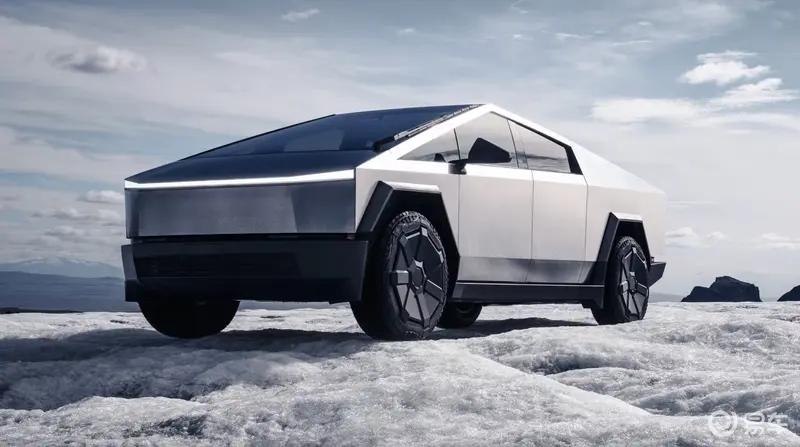
According to statistics from Kelley Blue Book, a U.S. automotive market research institution, 38,965 Cybertruck units were sold in the U.S. market in 2024, and 20,237 units in 2025. Musk had previously set a target of an annual output of 250,000 units.
In terms of actual sales, the Cybertruck obviously failed to reach the market size expected at the very beginning. But Tesla's decision to discontinue this model is more related to the change in its strategic focus in recent years.
Under Musk's plan, Tesla is transforming from an electric vehicle manufacturer to a technology enterprise centered on artificial intelligence. The Cybercab autonomous taxi and the Optimus humanoid robot are expected to deliver greater growth than the traditional automotive business.
Among them, Cybercab can continuously pick up and drop off passengers without a driver, allowing a car to generate income continuously on its own; as a general-purpose humanoid robot, Optimus is expected to adapt to different work and life scenarios and undertake various tasks in the future just like humans.
In fact, this is also a direction that investment institutions are very optimistic about. Goldman Sachs predicts that by 2035, the global market size of fully autonomous taxis will reach 415 billion US dollars; Morgan Stanley predicts that by 2050, the market size of the global humanoid robot and related industries may exceed 5 trillion US dollars.
Tesla is also reallocating manufacturing resources for this purpose. In May this year, Tesla discontinued the Model S and Model X, and the Fremont factory where they were originally produced has been renovated to manufacture Optimus. Now, the Cybertruck will also make way for Cybercab.
However, the huge potential market does not mean that Tesla can quickly obtain corresponding revenue. There are still many challenges to be solved before these two businesses can truly become new growth pillars.
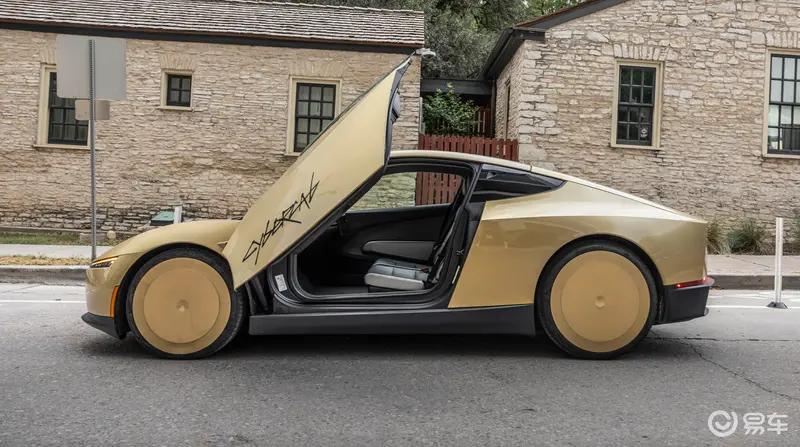
Cybercab is closer to commercialization, and it is currently carrying out limited-range paid passenger-carrying services in Austin, USA. But moving from small-scale pilot operations to large-scale commercial operations requires not only proving technical feasibility, but also building advantages in vehicle scheduling, maintenance and operating costs.
Tesla's Chief Financial Officer Vaibhav Taneja revealed at the third-quarter earnings call in October this year that Robotaxi has not yet achieved the cost target of 0.30 US dollars per paid mile.
At the same time, Cybercab is also facing regulatory issues.
In September this year, the National Highway Traffic Safety Administration (NHTSA) launched a compliance review, requiring Tesla to provide relevant technical and test materials to explain how this vehicle without a steering wheel, brake pedal and traditional rearview mirrors meets current safety standards, and whether it has completed compliance certification by temporarily installing a manual driving device.
Tesla submitted its response at the end of October, but applied to keep the relevant technical materials confidential. Up to now, this investigation has not been completed, and the regulatory authority has not yet made a final determination.
As for Optimus, Musk also admitted at the third-quarter earnings call this year that the dexterous hand is currently one of the most difficult hardware problems to solve.
In addition, it also takes time to enable the robot to adapt to different working environments and achieve low-cost mass production.
Of course, neither fully autonomous taxis nor general-purpose humanoid robots are businesses that can achieve large-scale commercialization in a short period of time. For Tesla, choosing to invest a large amount of resources at this stage does not mean that it considers the automotive business no longer important.
Just last month, Tesla also showcased the new generation Roadster, which is equipped with thrusters and can take off briefly into the air. But compared with the past, Musk has placed greater expectations outside the traditional automotive business.