JD is conducting internal testing of "JD Drama Binge", stepping into the short drama-driven goods sales track.
So, is short drama the ultimate end of the internet?
DuJia has learned that a new heavyweight player has joined the short drama track, JD is conducting a low-profile internal test of its independent short drama product "JD Drama Welfare Club", which adopts a free model. Different from Douyin and Kuaishou that focus on scrolling through dramas in information feeds, JD's product logic is deeply embedded with e-commerce genes from the very beginning. According to the product introduction, "JD Drama Welfare Club" supports users to get benefits and discounts by watching dramas.
Products of the same style as shown in the dramas can be purchased directly and delivered by JD, but no relevant e-commerce entry was found in actual experience, indicating that it may still be in the testing and improvement phase.
01
Actual Test of JD's Independent Short Drama Product with Goods Selling Function
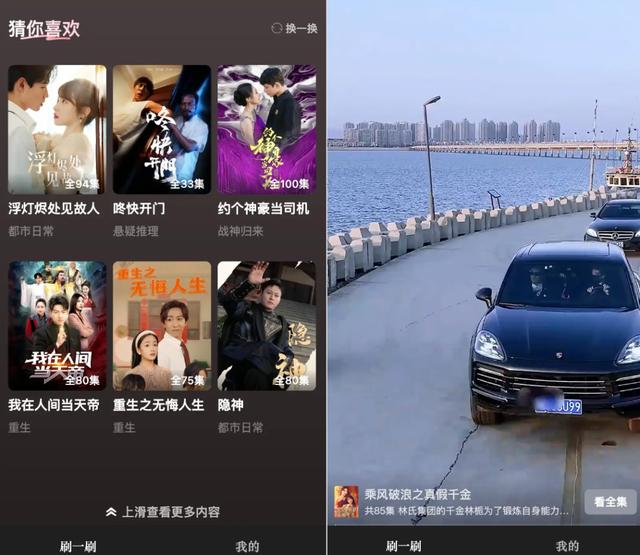
DuJia's actual test found that the product form of this short drama is similar to the mainstream short drama products on the market, but more concise.
The home page has a built-in "Recommended for You" section, with mature short drama tags including Daily Urban Life, Suspense and Reasoning, War God Returns, Rebirth, Humiliating the Unscrupulous, etc. For example, short dramas such as "Old Acquaintance Seen at the Fading Lantern" and "Hidden God" have dozens to hundreds of episodes per drama, and users can scroll up and down directly to watch dramas.
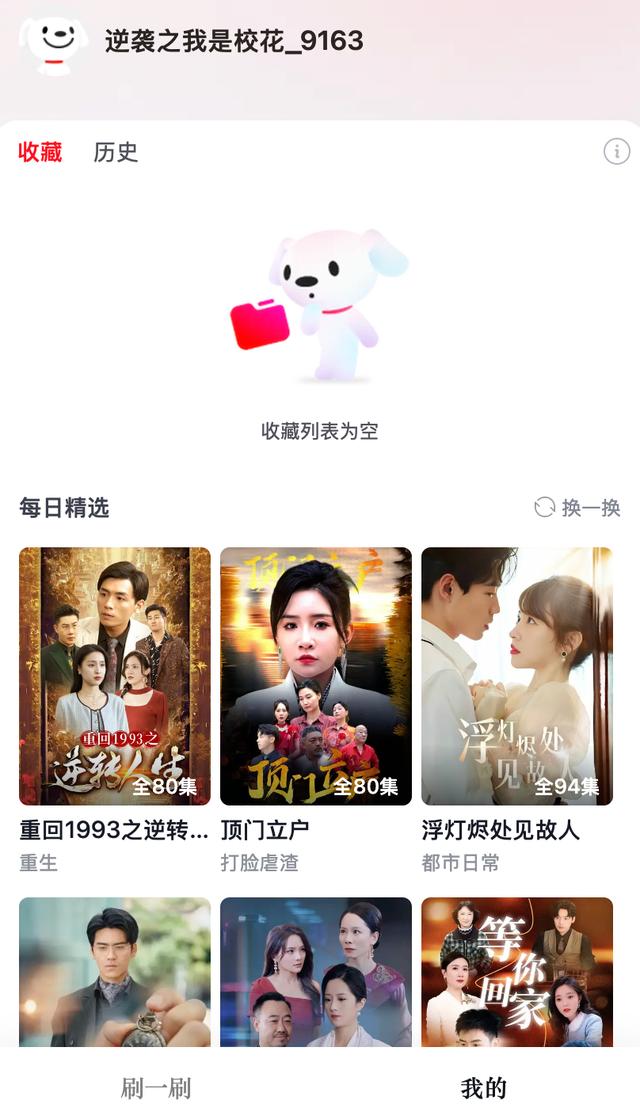
A prominent "Watch Full Episodes" guide button is placed at the lower right corner of the content, which is highly similar to the interaction mode of short dramas on short video platforms. At the same time, it has built-in functions such as favorites, watch history, and playback speed adjustment, which is convenient for users to review the content, and all basic capabilities of short drama products are fully equipped.
The core difference lies in the monetization model. According to the official introduction: A collection of all free short dramas, get benefits and discounts by watching dramas, buy the same style products in the drama directly, with delivery by JD. For other platforms that make short dramas, the core goal is to occupy users' time and monetize through advertisements or paid episode unlocking; for JD, the underlying goal of making short dramas is not to sell dramas, but to drive product conversion by leveraging the strong emotional engagement of short dramas.
02
The Logic of JD's "Drama-Goods Binding" Model
The business model of selling goods through short dramas has long been verified by Hongguo Short Drama under ByteDance.
Hongguo has set up an independent e-commerce department, relying on AI image recognition to embed a search for same-style products entry on the playback page. When the drama is paused, products will pop up, leading users directly to Douyin stores. Based on content, Hongguo first gathers a huge amount of drama-watching traffic, then embeds shelves in the content. The platform does not undertake the supply chain, and is only responsible for diverting the short drama traffic to e-commerce merchants on Douyin.
The logic of "JD Drama Welfare Club" is completely opposite. Hongguo diverts content traffic to sell goods externally, while JD, with its self-operated supply chain, can take free short dramas as a shopping guide tool, retain users through dramas, and then guide them to directly place orders for self-operated products, turning drama-watching audiences into platform shopping users. Both of them eliminate the jump link, realizing placing orders while watching dramas, and are also matched with coupons obtained by watching dramas, binding entertainment with consumption benefits.
Compared with that, JD's shortcomings are very prominent. Hongguo already has 100 million daily active users, and users' habit of watching short dramas has long been solidified, making it difficult to get users to go to JD specifically to watch dramas. JD is good at order fulfillment and transactions, but short drama copyright procurement and content operation are its weak points, and the cost of continuously producing popular dramas is very high. At the same time, it needs to balance commercialization and viewing experience, as too many pop-ups will break the immersive experience of watching dramas, which is also a problem that Hongguo is currently facing.
Although there are shortcomings, these shortcomings only arise when compared with Hongguo, the leading player in the short drama track. For JD itself, short dramas bring incremental traffic, and it may not need to achieve the ultimate performance as Hongguo does.
On the whole, JD has no intention of competing with Hongguo for the overall short drama traffic, but only complements its content shopping guide scenario. At present, the monetization of short dramas purely through payment and advertising has reached its ceiling. Hongguo has verified that selling goods through traffic is feasible, and JD tries to cut into the content field from the e-commerce side. It is not ruled out that other e-commerce and short drama platforms will also enter this field for trials.