Want to build a data center? Europeans disagree.
On November 6, chaos broke out at the Microsoft data center construction site on the outskirts of Amsterdam.
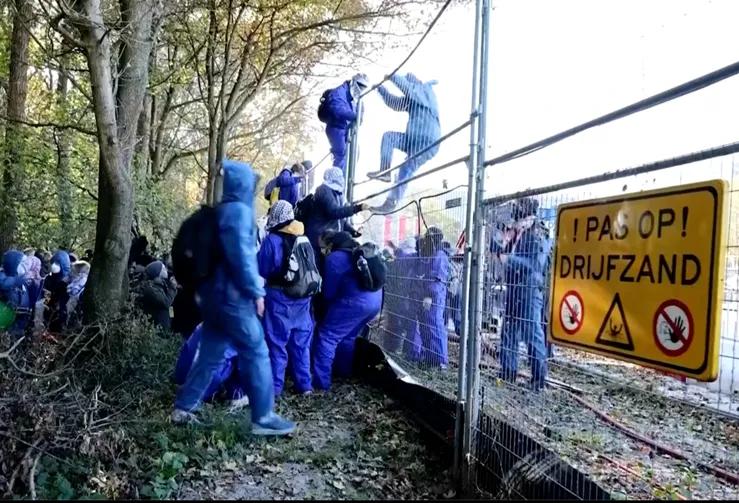
The photo shows protesters breaking into the construction site of Microsoft's AI data center in the Netherlands. Source: Screenshot from social media
Hundreds of protesters broke through the fences and stormed into the construction site. Some climbed onto the crane boom to hang slogans, while the police intervened at the scene and detained more than 150 people.
This conflict is not an isolated incident.
In just a few days, demonstrations broke out simultaneously in many European countries. The US midterm elections have pushed the construction pace of data centers onto the campaign agenda, and the capital market has begun to re-examine the risks of computing power projects.
On the grasslands and loess plateaus of western China, computing power clusters are being deployed at a speed far exceeding that of Europe and the United States.
01 European Computing Power Expansion Is Hit by Deforestation Scandal
The conflict in Amsterdam kicked off a wave of resistance against the unordered expansion of data centers across many European countries.
The leading coalition "Stop Dirty Data Centers" has connected hundreds of social organizations from 15 European countries and organized street rallies in Dublin, Helsinki and other places.
The core demand of the participants is: Suspend all new large-scale data center projects before a complete regulatory system is established.
The reason why this protest gained momentum in a short period of time can be traced back to the deforestation scandal that Google exposed in Finland a month ago.
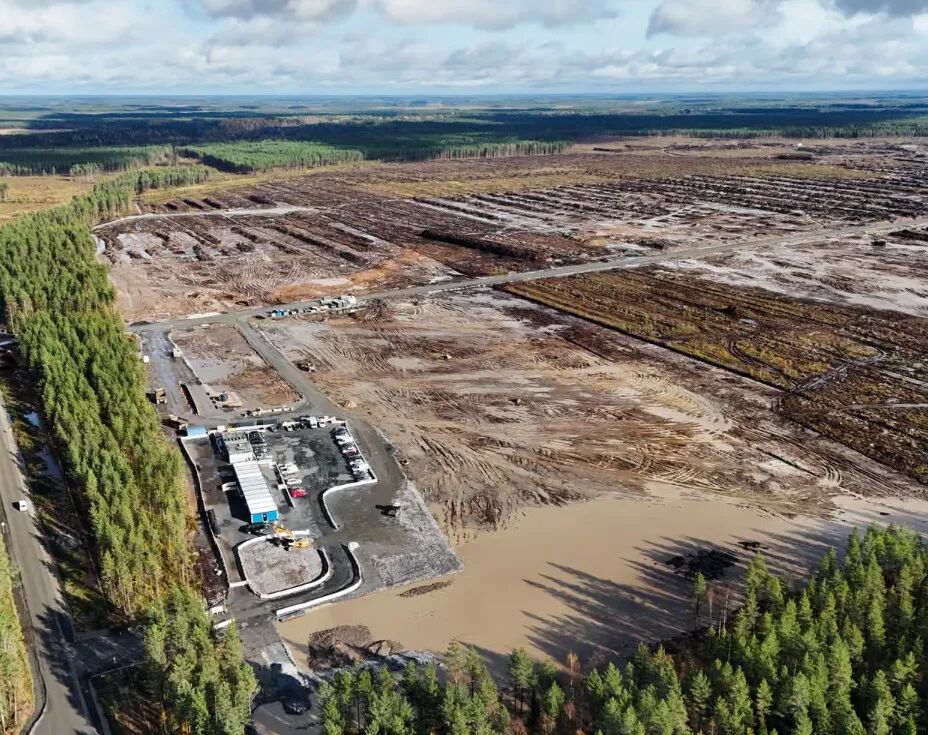
The photo shows the under-construction site of Google's AI data center in Muhos, Finland. Source: Agence France-Presse (AFP)
In October this year, on the outskirts of the small town of Muhos in northern Finland, contiguous forest land was leveled by construction machinery.
This messy construction site is part of Google's AI infrastructure plan with an investment of up to 13 billion euros.
According to Finnish law, such large-scale industrial projects must complete a full environmental impact assessment before they can enter the site for land clearing.
However, Google's Finnish subsidiary dispatched logging equipment and bulldozers before the approval process was closed. In Muhos alone, 330 hectares of forest land were cleared, and about 250,000 trees were felled. Together with another project plot in Kajaani in the south, the total cleared forest area of the two sites exceeded 500 hectares.
After receiving environmental complaints, the regulatory authorities verified the violation and issued a work suspension order in early October, requiring all construction operations that change the landform to be fully suspended.
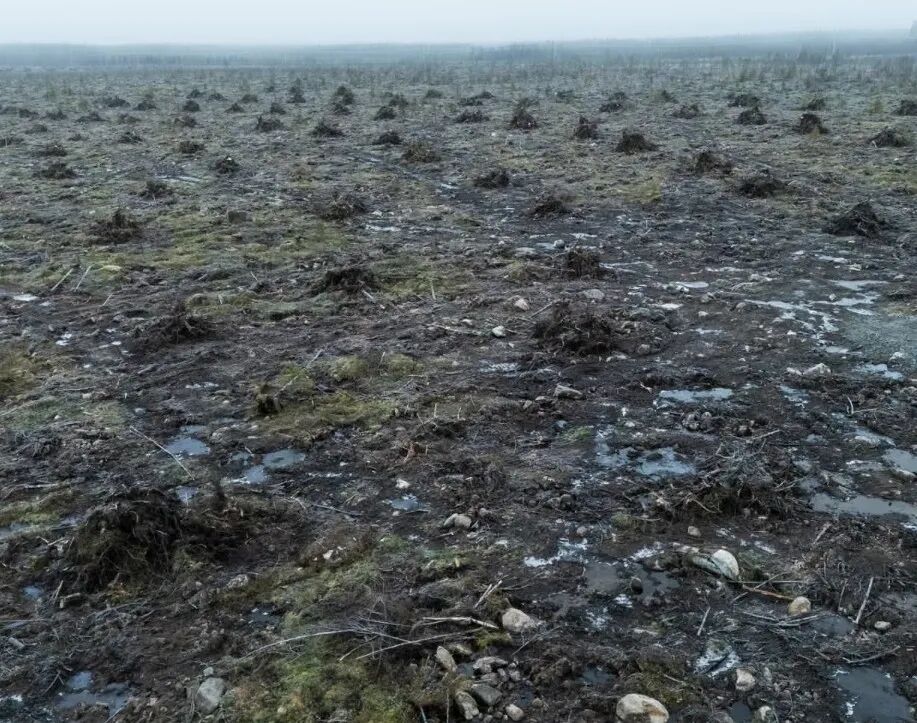
The photo shows the cleared peat bog plot in Muhos, Finland (the site selected for Google's data center). Source: The Guardian
By the end of October, the Finnish police officially launched a criminal investigation, focusing on verifying whether the damage to the water environment caused by construction drainage violates the Water Resources Act. After the incident was exposed by the media, it quickly escalated. A domestic citizens' initiative in Finland calling for stronger regulation of data centers collected 50,000 signatures in only three days.
Google soon publicly apologized, stating that the project implementation did not meet its internal environmental protection standards, and at the same time proposed a restoration plan to replant 130 hectares of trees locally, but this statement failed to quell public anger.

The photo shows the scene of the press conference where Google announced its investment in data center projects in Finland. Source: Google
Public dissatisfaction is not limited to the few felled trees, because Google has also signed a 22-year nuclear power procurement agreement, directly locking in half of the power generation of the Loviisa Nuclear Power Plant.
Low-carbon electricity in Northern Europe has long been regarded as a scarce public resource. After multinational enterprises enclose electricity on a large scale, local residents first feel the upward pressure on electricity prices.
According to estimates by Nordea, if data centers such as Google are implemented at the current pace, the wholesale electricity price in Finland will rise by about 31% by 2030, and a household with electric heating will pay nearly 400 euros more per year; NVE, the Norwegian regulatory agency, also warned that without new power sources, electricity prices in 2035 may be 35% to 55% higher than expected.
Moreover, the tangible benefits the project can bring to the local area are very limited. Most of the construction jobs during the construction period are temporary, and there are very few long-term operation and maintenance jobs after it is officially put into operation.
Computing power services are targeted at global customers, and profits eventually flow back to the Silicon Valley headquarters. Finland pays the costs of forests, electricity and the environment, but the industrial value it can get in return is extremely thin.
This wave of dissatisfaction has spread across Europe, forcing countries to rapidly tighten regulations.
Amsterdam in the Netherlands has drawn a red line, suspending the acceptance of new large-scale data center applications before 2035. The province of North Holland restricts all projects to designated industrial clusters, and drinking water safety is a hard indicator for pre-review. Italy and Portugal have successively raised the threshold for environmental approval, requiring new computing power projects to match a corresponding proportion of renewable energy and issue a complete long-term water resources impact assessment.

The photo shows Yassamin Ansari calling for a suspension of advanced AI development. Source: X (formerly Twitter)
Looking across the Atlantic to the United States, in the just-concluded midterm elections, many Democratic candidates who focused on "restricting the unordered expansion of data centers" were successfully elected.
This directly led to the crash of US tech stocks this Friday. The Nasdaq plummeted 5.5% in a single day, the Philadelphia Semiconductor Index fell by more than 12%, and the total market value of S&P 500 constituent stocks evaporated by more than 3 trillion US dollars. Data center operators and individual stocks in the computing power industry chain generally recorded double-digit declines.
Tech giants continue to announce hundreds of billions of dollars in capital expenditure for computing power, but due to continuous tightening of regulations, not many projects can be put into operation and delivered on schedule. The rapid expansion of computing power has thus been stuck at the stage of implementation.
02 Booming Computing Power Construction in a Small City in Inner Mongolia
Different from Europe and the United States, on the grasslands of Inner Mongolia, China, the tower cranes for building data centers rarely stop.
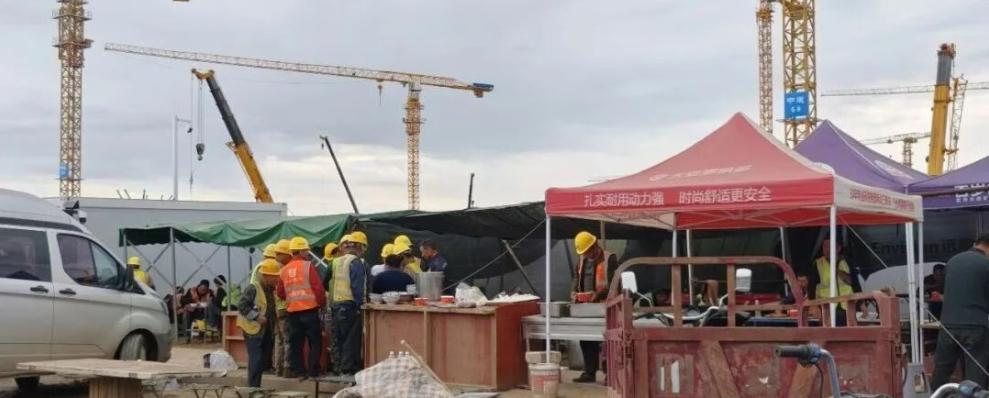
The photo shows the construction site of a data center in Ulanqab. Source: QbitAI
In the Chahar High-tech Industrial Development Zone of Ulanqab, the construction of computing power projects is fully underway in full swing.
Engineering vehicles shuttle around the park day and night, vehicles with non-local license plates can be seen everywhere, non-local technical personnel and migrant workers continue to pour in, and the rent of houses in surrounding towns has risen accordingly.
The government reception exhibition hall receives more than a dozen batches of visiting teams on average every day, driving the rapid growth of retail formats such as catering on the streets.
This grassland city, which was once famous for its potato industry, has now launched more than 80 data centers, with 109 signed computing power projects, and the proportion of intelligent computing power exceeds 90%.
Huawei, Alibaba, ByteDance and other enterprises have successively taken root here, and the industry directly calls it the "Capital of Token".
They are all computing power infrastructures with high power consumption and high water consumption. Why is there no implementation deadlock like that in Europe and the United States in China?
The answer lies in the pre-planning of top-level design.
In February 2022, four departments including the National Development and Reform Commission officially launched the "East Data, West Computing" project, deploying 8 national computing power hub nodes and 10 data center clusters across the country. The core logic is to guide the strong computing power demand in the east to the west where land and energy resources are more abundant in an orderly manner, and complete the overall layout of the computing power industry from the national land space level.
Ulanqab is a typical sample of this logic.
As the core bearing area of the Inner Mongolia hub, all computing power projects are fully gathered within the scope of the Chahar High-tech Industrial Development Zone. The park site is far away from the main urban area and residential settlements, with unified delineation of construction land, supporting power grid and water supply facilities, without touching the ecological red line and not competing for land with residents.
The entire city's computing power expansion has clear boundaries and planning, and will not be scattered around communities or in natural forest lands like in Europe and the United States.
China's electricity price mechanism also cuts off the path for computing power costs to be transmitted to residential electricity costs.
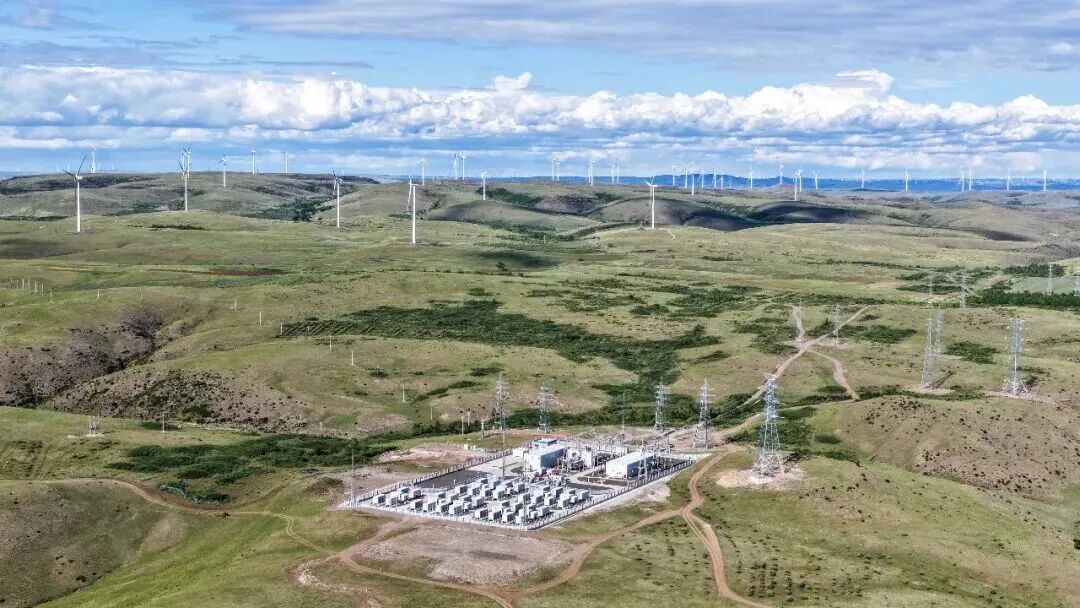
The photo shows wind farms and wind-solar energy storage power stations in Ulanqab, Inner Mongolia. Source: Xinhua News Agency
First of all, Ulanqab is rich in wind power and photovoltaic resources. The industrial electricity price to users is stable at 0.32-0.36 yuan per kilowatt-hour, nearly half lower than that in first-tier eastern cities, which is the core driving force for computing power enterprises to gather here.
More critically, in accordance with China's electricity price management rules, residential electricity consumption implements the government-priced catalog electricity price, and the price is rigid and stable for a long time.
Data centers fall into the category of large industrial electricity consumption, all of which are traded through the market. The cost is borne by enterprises and power generators themselves, completely isolated from residential electricity prices. Unlike European and American markets, the power cost of computing power expansion will not be passed on to ordinary families' electricity bills.
The dual advantages of power cost and price mechanism support the rapid rise of multiple computing power hubs in western China.
As the core bearing area of the Ningxia hub of the "East Data, West Computing" project, Zhongwei has also attracted 26 data center enterprises including Amazon, Meili Cloud, and China Communications Construction to settle in, built 9 data industrial parks, and its intelligent computing scale ranks among the top three of the top ten clusters in China.
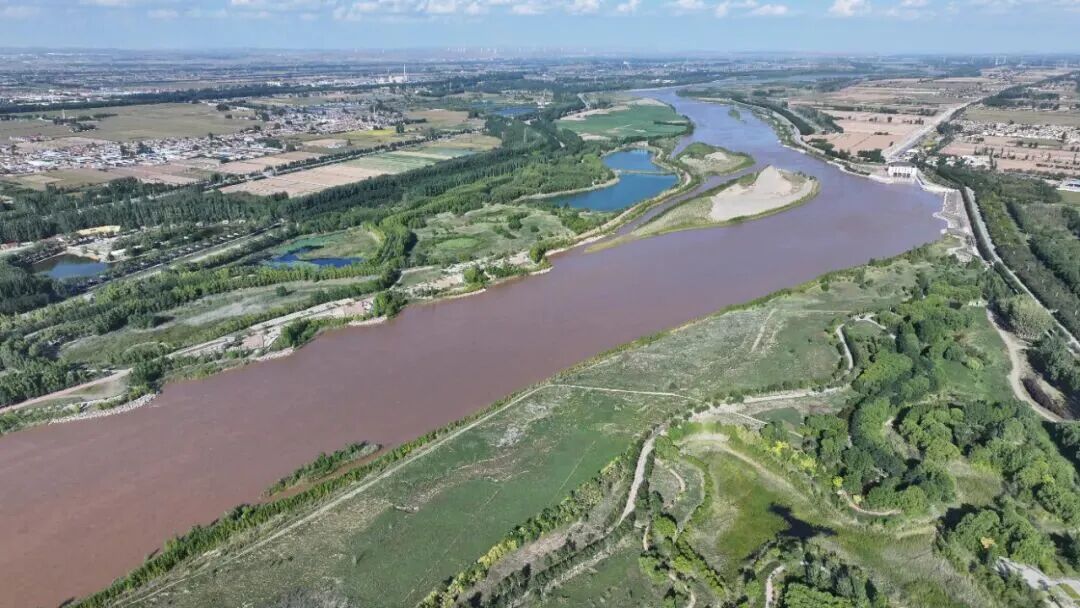
The photo shows the Yellow River channel and coastal wetlands in Zhongwei, Ningxia. Source: Screenshot from social media
However, located in the arid zone of northwest China and drawing water from the Yellow River, water resources are an unavoidable hard constraint for computing power expansion in Zhongwei.
Local industrial water intake is subject to dual rigid controls of the "87 Water Allocation Plan" and the Yellow River Protection Law. The industrial water quota during the 14th Five-Year Plan period is only 56 million cubic meters.
Traditional data centers rely on evaporative cooling towers for heat dissipation. Evaporation loss, water drift and sewage discharge will continuously consume water resources. The faster the computing power scale expands, the more prominent the water supply pressure will be.
However, these pressures are digested within the industry through technical selection and standard constraints.
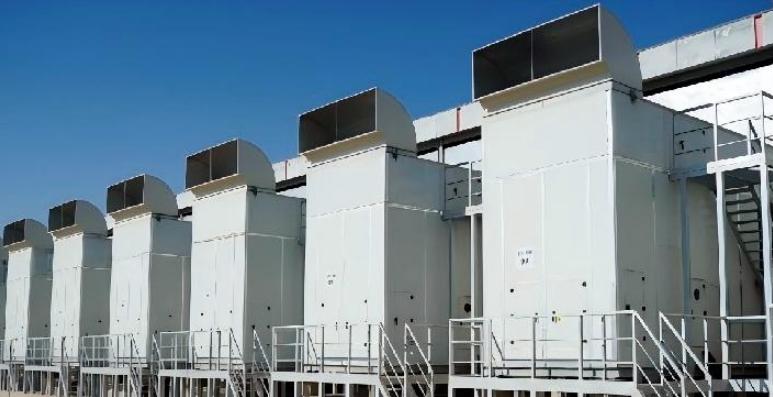
The photo shows the indirect evaporative cooling air conditioning unit in the data computer room building of Meili Cloud Zhongwei Data Center. Source: Ministry of Industry and Information Technology
For example, the first phase of Meili Cloud Zhongwei Data Center adopts an air-cooling scheme with indirect evaporative cooling units for refrigeration, no need to configure traditional water systems such as chillers and condensation towers. It relies on natural cold sources for most of the year, and only uses compressor refrigeration to supplement cooling capacity during the high temperature period in midsummer, which significantly reduces evaporative water consumption.
WUE measures the water consumption corresponding to each kilowatt-hour of electricity consumed by the data center. The lower the value, the less water resources are consumed per unit of computing power. It is the core indicator for evaluating the water-saving capacity of computing power projects.
