Americans are rebelling and resisting AI with unprecedented actions.
At first, no one paid attention to this transformation.
It was nothing more than an algorithm upgrade, an auto-generated illustration, a layoff of customer service staff, and the collapse of a traditional company... Until this transformation burned through the power grid, drained the wells, and became closely related to everyone's life.
Has the AI bubble burst?
Burst? Not burst?
It has burst.
Just on Thursday night, the US stock market AI myth that had dominated the global capital market for two full years ushered in an epic crash.
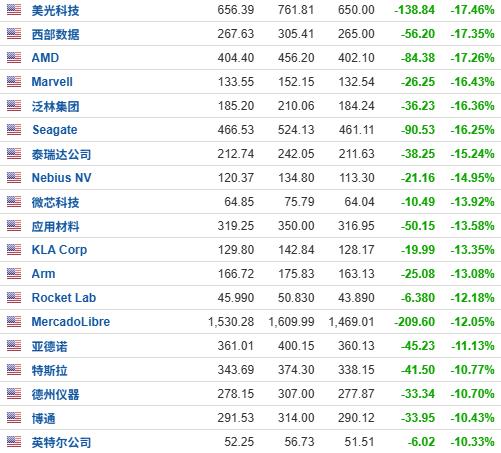
As far as I can remember, Chapingjun hasn't seen the US stock market fall this badly for a very long time.
How tragic is it?As of Thursday's close, the three major U.S. stock indexes all slumped across the board, wiping out all the gains accumulated in the second half of this year overnight; the Nasdaq Composite Index plummeted by 5.52%, marking the largest single-day drop in 18 months, with a single-day market value evaporation of as high as 2 trillion to 2.5 trillion U.S. dollars.
What's the concept of 2.5 trillion U.S. dollars? It's equivalent to one and a half Saudi Aramco, or several Tencent.
(Fun fact: In the U.S. stock market, rising is marked in green and falling in red, which is the opposite of China's A-share market)

In this crash, the sectors that suffered the most severe losses were the AI and semiconductor sectors that had been thriving for the past two years.
Nvidia, the king of graphics cards, fell 9% overnight, and its stock price went straight back to the level of 2025.
As for the major storage manufacturers that supply memory sticks and hard drives to data centers, such as SanDisk, Western Digital, Micron and others, all of them plunged without exception.
Even nuclear power stocks, power companies and transformer manufacturers that had been reaping benefits along with the AI boom all went down together on Thursday night.
Some netizens joked: "I used to always ask my grandma what it felt like to experience the Great Depression in 1929? After today, I never need to ask anyone again."
So here comes the question: How did the U.S. stock market, which was still advancing triumphantly just a few days ago, suddenly crash like this?
This has to be attributed to the U.S. midterm elections that just settled a few days ago.
Let's start with some background information. Two years ago, when Trump took office for his second term, everyone said he had a perfect game.
Because the Republicans not only sent Trump to the White House, but also took full control of the Senate and the House of Representatives. In addition, the conservatives hold the majority in the Supreme Court, and 3 of the justices were personally selected by Trump.
Therefore, the United States, which advocates the separation of three powers, achieved quasi-unification of three powers under Trump, but this midterm election fixed this bug.
The so-called midterm election is like a mid-term exam for the president, and the Republican Party led by Trump failed the exam.

The Democratic Party not only easily recaptured the House of Representatives, but also achieved an epic comeback in the Senate, seizing the seats of 7 red states (states where voters have long tended to vote for the Republican Party) and swing states including Texas and Kansas in one go.
According to the history of U.S. politics, a president who loses both houses of Congress in the midterm election of his second term is basically declared to enter the lame-duck period of his term.
The upcoming situation may be that domestic legislation is basically stalled, and everyone's attention is fully shifted to the next presidential election. Even if the president insists on pushing policies through executive orders, these policies are likely to be revoked with one click when the next president takes office.
And Trump is a typical president who lost both houses in his second term.
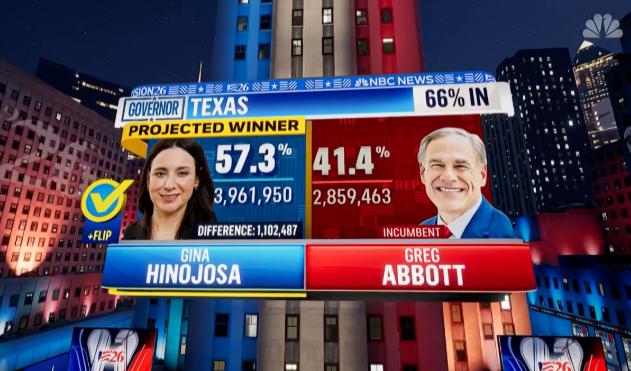
What's even more outrageous is that in the Republican strongholds like Texas, the Democratic Party even took away the governor's throne.
This region has been occupied by Republicans for 36 full years, and Greg Abbott on the right has served as the governor of Texas for 12 years.
Seeing this, some readers may ask: Why are you talking about U.S. partisan struggles here, what does it have to do with the crash of the AI sector?
That's the reason why the Democratic candidates were able to win overwhelmingly in red states and swing states, the core change is the public's discontent with the rapid development of artificial intelligence.

In the past two years, ordinary American people have been full of grievances facing the rapidly expanding AI infrastructure.
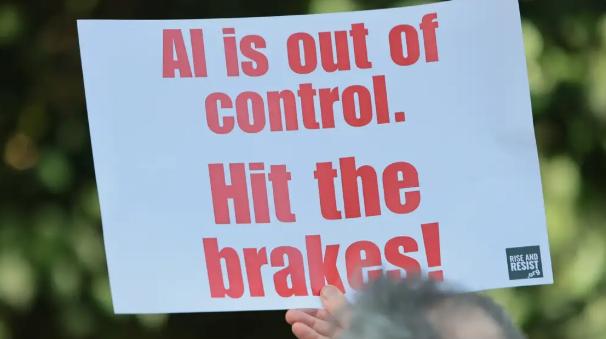
During this campaign, in addition to the usual old tactics, the Democratic candidates also held high the anti-AI banner, and promised one after another that once they took office, they would definitely press the pause button for the booming era of large-scale AI infrastructure construction.
Once this big sign was put up, it immediately excited American voters.
It doesn't matter whether you are a red voter or a blue voter, I'm just an ordinary farmer/worker/office worker, I can't understand what AGI means or the so-called "future is coming", you can talk about that to my vote.
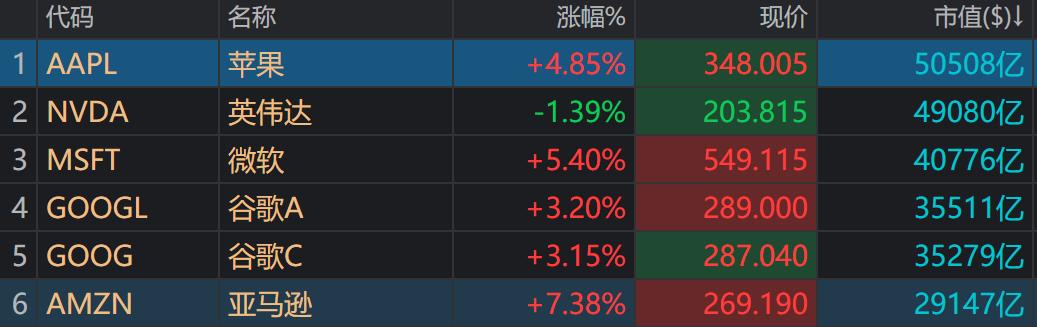
But there is also a humorous twist to this incident. The day before the election results were officially released, when the election situation was basically clear and everyone knew that the Democratic Party had won a big victory, Wall Street's first reaction was to frantically buy large-cap tech stocks.
The day before the crash, Amazon surged, Apple surged, Google, Meta and Microsoft all kept rising. The five tech giants saw their market value rebound violently by more than 750 billion U.S. dollars in one day.
According to Bloomberg's reports, Wall Street investors had a rather peculiar train of thought at that time, thinking that the Democratic Party coming to power to cool down AI seemed pretty good.
In the past six months to a year, Silicon Valley giants have more or less been put on the fire by the AI wave. In order to develop AI, they have made infrastructure investments of hundreds of billions or even trillions of dollars at every turn.
What was originally a money printing machine has been turned into a heavy-asset contractor against their will.
Therefore, their initial calculation was: the big companies can't stop on their own, right? Wait for the Democratic Party to take office and step on the brakes for AI, and use the external regulatory force to force them to quit the over-investment craze. In this way, capital expenditure will decrease, free cash flow will recover, and the financial reports will naturally look better, won't they?
But in less than 24 hours, everyone came to their senses, something is wrong, very very wrong.
Behind the great good news of U.S. GDP growth, corporate earnings and the U.S. stock bull market in the past two years, there was almost only one driving force: the rapid development of AI, and the large-scale infrastructure construction carried out to support AI development.
What do the Democrats want to do? On the night of their victory, Democratic Congressman Yasmin Ansari stated that the top priority agenda on the first day of the new Congress should be to suspend the development of cutting-edge AI.

Veteran Senator Bernie Sanders also spoke overnight, calling for "immediate implementation of a national data center moratorium". The "Artificial Intelligence Data Center Moratorium Act" he and well-known congresswoman AOC strongly promoted directly requires a total ban on the new construction or upgrade of any large AI data center with a capacity exceeding 20 megawatts in the United States.
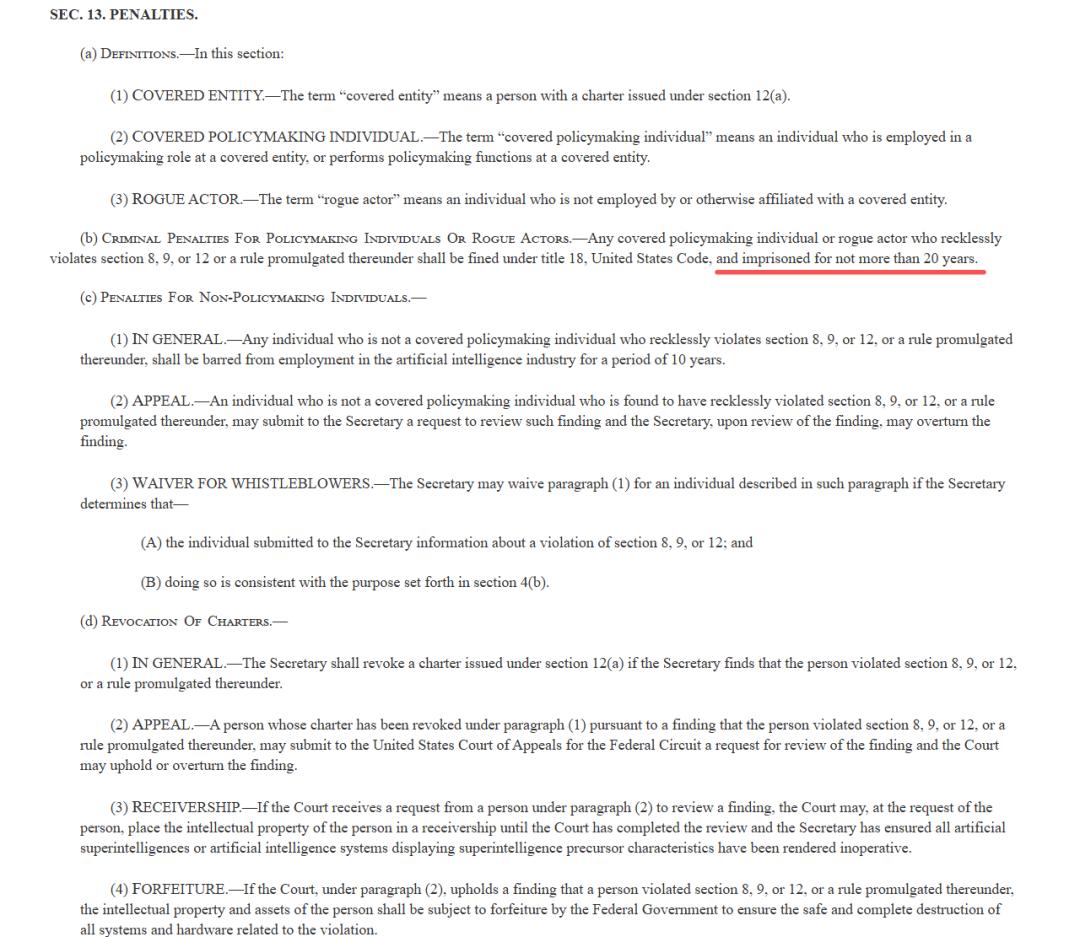
The Congressional Progressive Caucus went even further, launching the "Ban Artificial Superintelligence Act", which requires a mandatory suspension of training high-computing-power models, and even stated that if anyone insists on acting against the regulation, the responsible person can be sentenced to up to 20 years in prison, and the company's intellectual property rights will be confiscated directly...
In addition to the members of Congress who took action at the legal level, the new Democratic governors of various states also acted extremely quickly and fiercely.
These people will not officially take office until January next year, but they can't wait to promise voters now that they will properly curb the reckless large-scale construction of data centers.
Many readers may not have a clear concept: among the red states and swing states mentioned earlier, the three states that just turned blue, Texas, Georgia and Ohio alone hold a full one-third of the planned data center capacity in the United States, which is 156 gigawatts, accounting for one-third of the total planned capacity across the country.
What's worse, only 15 gigawatts of that has been built, and more than 90% of the rest are still in the blueprint approval stage, which are all about to hit the new governors' regulatory restrictions.
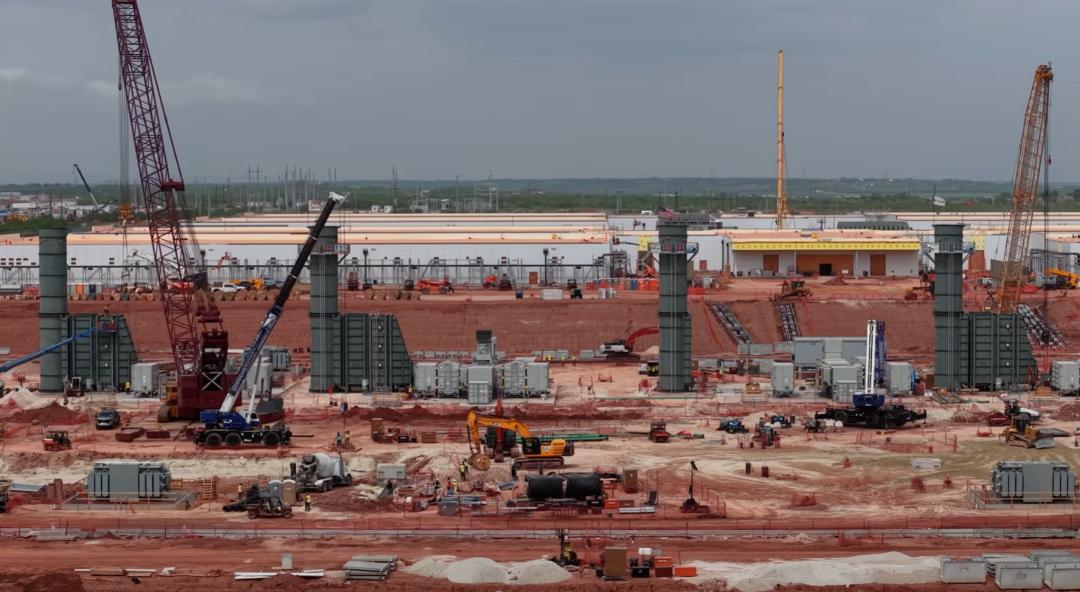
Therefore, Goldman Sachs warned overnight that this wave of moratorium may affect about 45% of the data center expansion plans across the United States; UBS also estimated that by 2028, 30% of the country's expected new computing power capacity will face the risk of being stranded.
If the construction of data centers is physically stopped, the so-called AI-era "shovel sellers" like Nvidia and memory giants will not be able to realize the pie they drew. Who will take over the graphics card and memory orders scheduled for the year after next?
Can those AI computing power cloud vendors who are heavily in debt and expect to recoup their costs by renting out the built computer rooms survive this?
If there are no data centers, will the iteration of AI models come to a halt? Then how much of the attractive growth stories that these tech giants have tied to AI will remain?
After realizing this point, everyone slapped their thighs: why are we still looking at financial reports and talking about cash flow, hurry up and run away.

Talking about this, many readers may still wonder: You Americans are using models like GPT and Claude, many people in other regions can't even get access to them even if they want to pay for them, so why are Americans so unwilling to embrace AI?
To put it bluntly, it's not that the models are bad. You can use AI to slack off at work and go home without any trouble, but ordinary Americans are suffering a lot.
Because the data centers running these large models are all built right at their doorsteps, and they consume extremely huge amounts of electricity. Everyone knows how backward and fragile the old U.S. power grid is.
So the most direct blow to them is the surge in electricity bills.