The era of AMD's CPUs is drawing to a close.
Produced by | Silicon Carbon Variable
Written by | Hu Yidao
Recently, AMD released its financial report for the third quarter of fiscal year 2026, which is labeled as "the best quarter in history" on paper: revenue reached 13.377 billion US dollars, a year-on-year increase of 45%; the data center business hit 8.546 billion US dollars, up 97% year on year.
What is more worth analyzing than the figures is the structural forecast given by the management at the conference call: the fourth quarter will be the first quarter in which the revenue of AMD's data center AI business exceeds that of the server CPU business; the overall revenue in 2027 is expected to increase by more than 80% year on year, and the revenue of the server business will double.
For a company that has been rooted in CPU business for half a century, this is not an ordinary upward revision of performance, but a timetable for the transformation of its business foundation.
The shape of the watershed is not growth, but thorough business restructuring
Many people simply attribute the highlight of AMD's financial report to the nearly doubling high growth rate of its data center business, but the qualitative change is hidden in the continuously shifting revenue structure.
The market is divided on this: some regard it as a replacement of the basic business, while others remind that this reshaping is still rooted in the capital expenditure cycle of AI computing power, and it is difficult to completely get rid of cyclical fluctuations.
Wall Street CN noted that after U.S. stock market closed on Tuesday, the 3rd of Eastern Time, AMD announced that its revenue in the third quarter of 2026 increased by 45% year on year to 13.377 billion US dollars, hitting a new single-quarter high, about 2.3% higher than analysts' expectations. On a non-GAAP basis, earnings per share rose 74% year on year to 2.09 US dollars, more than 6% higher than analysts' expectations.
Non-GAAP operating profit reached 3.923 billion US dollars, up 75% year on year, and the operating profit margin reached 29%, 5 percentage points higher than 24% in the same period of the previous year, and also expanded compared with 27% in the previous quarter.
Driven by the demand for EPYC server processors and the launch of the Instinct MI450 series GPU, AMD's data center revenue reached 8.546 billion US dollars, up 97% year on year and 27% quarter on quarter, accounting for about 64% of the company's total revenue.
At the same time, the operating profit of this department reached 2.882 billion US dollars, up 168% year on year, and the operating profit margin increased from 25% in the same period of the previous year to 34%.
The company expects revenue of about 17 billion US dollars in the fourth quarter, with a fluctuation of plus or minus 3%, and the median value corresponds to a year-on-year increase of about 66% and a quarter-on-quarter increase of about 27%, which is significantly higher than the average analyst expectation of about 16.2 billion US dollars.
Lisa Su, CEO of AMD, and Jean Hu, CFO, clearly stated at the conference call that the fourth quarter will be the first quarter in which the revenue of AMD's data center AI business exceeds that of the server CPU business.
At the same time, Lisa Su also gave a more positive long-term outlook at the conference call: AMD expects the overall revenue in 2027 to increase by more than 80% year on year, the revenue of the server business will double, and the revenue of the data center AI business will grow by more than twice, which is significantly higher than the expectation 90 days ago.
In contrast to the upward curve of the data center, the traditional business that once supported AMD's overall performance is gradually receding. The combined revenue of the client and gaming segments was 3.7 billion US dollars, down 8% year on year, dragged down by weak demand for PC terminals and the downward cycle of game consoles.
The embedded business is one of the few bright spots in the traditional segments, with revenue of 1.1 billion US dollars this quarter, up 29% year on year. However, due to its limited scale, it is difficult to offset the downward pressure of the PC and gaming businesses.
In the context of AMD's development history, this is not the first time it has transformed its business foundation, but the core of the two transformations is completely different.
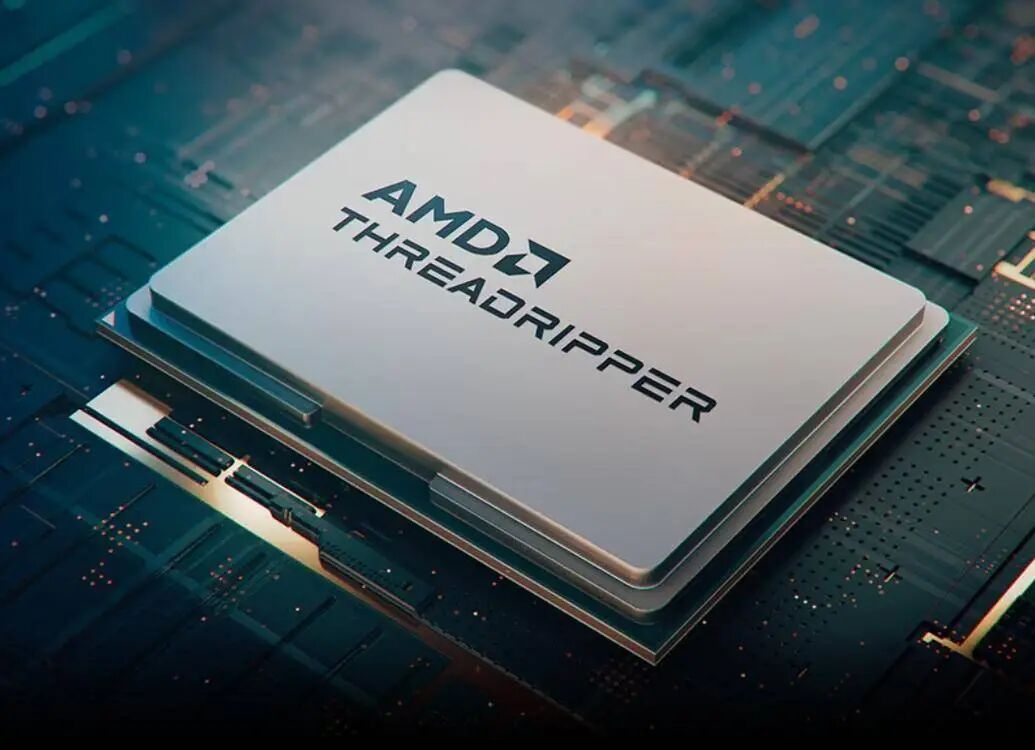
Before the launch of Zen in 2017, AMD had long been a passive follower in the PC CPU track. With the breakthrough of products based on this architecture, AMD raised the revenue share of server CPUs from nearly single digits to more than 40%, completing its first turnaround.
That victory was about seizing positions in the mature x86 server market. The underlying framework of the track did not change, only the scoring criteria were gradually rewritten, and AMD moved from the back row to the front row.
This round, it is shifting from a CPU manufacturer to an AI computing power player at a faster pace, with more unknowns ahead.
From the stable mass production of MI300 to the expected revenue of AI GPU exceeding that of server CPU, the whole process took less than three years. Both leaps caught up with a round of computing power expansion cycle: Zen seized the server expansion dividend brought by cloud computing, and the MI series caught up with the computing power arms race triggered by large models.
The difference is that last time AMD only changed its ranking, but this time it has stepped into a completely new game. Its opponents are no longer just Intel, but also NVIDIA with a deep-rooted ecosystem, and cloud vendors that hold huge computing power budgets and develop self-developed chips.
The rules, supply chain and customer game have all been rewritten, and the risk has no clear boundary, which is far more complex than the competition in the server CPU market in the past.
Under the high-growth narrative, AMD is stripping off its old identity.
When the data center business dominates the overall performance, and PC and gaming businesses gradually move to the edge, its valuation will be firmly tied to the prosperity of AI computing power.
The strong guidance sets upward expectations, but all optimistic deductions in the restructuring cycle are based on a series of uncertain conditions: no supply chain disruptions, continuous order implementation, and gradual improvement of ecological shortcomings.
Standing at this watershed, growth is only a superficial signal, and the real tough battle has just begun.
Chain Notes on Growth
The situation where demand exceeds supply, which is regarded as good news, is not only an optimistic signal, but also the opening of a risk list.
The first variable lies in the supply side. Wafer substrates, HBM, advanced packaging, every link in the whole chain has capacity speed limits.
According to financial data, AMD's inventory increased by about 3 billion US dollars quarter on quarter to 11.5 billion US dollars, which includes both the active stocking for the ramp-up of Helios and Venice in the fourth quarter, and the pre-hedging against supply chain tensions.
Free cash flow in this quarter was 554 million US dollars, down 64% year on year, and the free cash flow margin shrank from 20.6% in the same period of last year to 4.1%.
The expansion of supply chain capacity is a typical upfront investment: every round of capacity ramp-up requires cash to be invested in stocking of wafers, HBM, advanced packaging and production line construction, and the revenue can only be realized after delivery.
The market's pricing for AMD's high growth rate in 2027 is based on the premise that the supply chain expands capacity simultaneously. If the supply rhythm of HBM4 or advanced packaging is delayed, the difficulty of achieving performance targets will increase significantly.
The second variable lies in the balance between cost and gross profit margin. In response to the price increase of components such as HBM, Jean Hu said that the company has signed long-term agreements with some suppliers and customers, and is negotiating with customers to share the rising costs together.
However, there is no fixed paradigm for cost sharing, which highly depends on the terms of long-term contracts and the bargaining power of customers. Whether the gross profit margin center of around 55% can be maintained in 2027 is still an unsolved proposition.
In particular, when the proportion of AI GPU in data center revenue continues to rise, the traction effect of revenue structure on gross profit margin will be further amplified, and the profitability will become more sensitive to changes in supply chain, pricing and order structure.
The third variable is hidden in the fluctuations caused by accounting standards.
Data shows that GAAP net profit was 2.428 billion US dollars, and non-GAAP net profit was 3.471 billion US dollars. The differences mainly come from: 523 million US dollars of equity incentive; 534 million US dollars of amortization of acquisition-related intangible assets; 1.097 billion US dollars of loss from fair value change of customer warrants; normalization adjustment of income tax, etc.
This change does not affect non-GAAP profit and free cash flow, but it will continuously cause fluctuations in book profit. In key pricing windows such as financial report release, it is easy to disrupt the market's judgment of the real earnings quality.
The fourth variable is the dual test of ecological barriers and customer structure.
NVIDIA's competitive pressure always exists: the CUDA ecosystem, product iteration rhythm, and large-scale supply chain capabilities jointly form a thick barrier. For AMD, whether it can convert the current backup orders into regular repeat purchases and maintain stable and continuous shipment is the key to verify its long-term competitiveness.
Relying on ROCm 10, AMD continues to make up for shortcomings in cluster stability and load optimization for agent scenarios. But this catch-up is a long-term engineering investment, and the ramp-up of hardware shipments does not necessarily narrow the ecological gap at the software layer simultaneously.
A more subtle contradiction is hidden in the customer structure: OpenAI and Meta are the first batch of landing parties of Helios, and they are also promoting self-developed ASIC respectively. For such leading computing power players, AMD is an important computing power supplier, but it is difficult to become the only solution.
Lisa Su has bet AMD's chips on the interchangeability and co-design of computing power hardware, but this positioning has inherent shortcomings: once the self-developed chips of leading manufacturers ramp up smoothly, the stability of AMD's orders will continue to be tested. Concentrated customers who are also potential competitors is the part of this high-growth guidance that most needs time to verify.
If we expand our vision to the entire server market, we can also see an external constraint. The expected doubling growth of AMD server CPU will not be completed in an incremental blue ocean market.
Intel still holds the existing market, and at the same time, the boundary of the track is continuously loosening: NVIDIA is trying to enter the general-purpose CPU track, and ARM architecture chips self-developed by cloud vendors are also continuously diverting server computing power orders.
The ceiling of its share growth depends not only on how much stock it can seize from Intel, but also on how much increment will be digested by the final self-developed route of AI giants.
All optimistic narratives are built on a long list of chain assumptions: supply matches the order rhythm, the cost-sharing mechanism remains stable, leading customers continue to adopt a multi-supplier strategy, and self-developed chips will not divert the demand for outsourced computing power too quickly.
As long as any one of the links deviates, the narrative rhythm of this fundamental restructuring may be rewritten.
Old measurement standards fail, new story to be verified
Looking at the timeline in a longer term, the core significance of the watershed marked by this financial report is that the set of evaluation frameworks that the market used to measure AMD in the past is failing.
Under this old narrative, the logic of judging victory or defeat is very clear: the competition lies in the comparison of architectural design and advanced foundry rhythm, the core competitors are clear, and the underlying rules of the track have not changed drastically for a long time.
As long as the product performance keeps up and the process node is accurately seized, there is an opportunity for the share to rise steadily.
When AMD transforms from a chip company with server CPU as its basic business to an AI computing power supplier, the competitor landscape it faces has undergone fundamental restructuring.
Now it is faced with three problems in different dimensions: NVIDIA's long-standing software ecological barrier, the continuous vertical self-development of leading cloud vendors and AI enterprises, and the upper limit of supply chain capacity jointly defined by wafers, HBM and advanced packaging.
These constraints have one thing in common: it is difficult to achieve a fundamental breakthrough by relying only on a single generation of chips.
While the new growth main line is expanding rapidly, the traditional business is also entering a track of active contraction. Lisa Su gave a relatively cautious market forecast at the AMD third quarter 2026 earnings call: the company's internal planning has been prepared for the scenario where global PC shipments will decline by double digits year on year in 2027.
Lisa Su also revealed that AMD's gaming business revenue in this quarter was 773 million US dollars, down 40% year on year, mainly due to the reduction of semi-custom chip shipments in the downward stage of the console cycle, which is in line with the company's previous expectations.
Facing this stock red ocean market, AMD's choice is to adjust the focus of resources, bet on commercial and high-end product lines, and actively avoid the brutal price war in the low-end market.
From the business perspective, this is a rational resource tilt, directing capital and R&D to the data center business with higher return rate, but the cost is also clear: if the growth of the data center loses momentum, the PC, gaming and embedded segments can hardly form a hedge of sufficient scale.
This also means that the upward space of the company's valuation has been highly anchored on the AI computing power growth main line.
This also explains why, compared with the 80% growth rate figure that the market is hotly discussing, what is more worthy of long-term tracking are four key fulfillment nodes that support this set of high expectations.
First, the actual confirmed revenue scale of AI GPU in the fourth quarter, to verify the commercial maturity of rack-level delivery; second, whether the Non-GAAP gross profit margin can stabilize at the guidance center under the structural pressure brought by the rising proportion of AI GPU revenue; third, the implementation rhythm of the entire computing power supply chain expansion, to judge whether the production capacity can keep up with the order expansion; fourth, the order conversion of the next-generation MI500 and related cooperation of Frontier Labs.
The four nodes are interconnected and jointly support this growth narrative.
If any of these items falls significantly short of expectations, the outside world's judgment on this transformation may shift: what was originally interpreted as a long-term structural transformation may be reclassified as a phased boom under the strong computing power cycle.
A more restrained interpretation is to regard this 80% growth rate guidance as AMD's optimistic bet based on current order visibility. It outlines the theoretical upper limit of growth, but there is still a considerable distance between the upper limit and the lower limit of reality that needs to be verified gradually through consecutive quarters of financial reports.
The performance of the secondary market also reflects this game at the expectation level.
After the financial report was released, AMD's stock price rose significantly after the market closed. The market's willingness to give a premium for the structural story of the fundamental business restructuring means that the part exceeding expectations in this guidance has been quickly digested and priced by the market.
This kind of pricing has two-way risks by nature: if the subsequent quarterly performance fulfillment weakens