Apple's best-ever financial results have been dragged down by the memory business.
Apple has delivered a rather impressive earnings report.
Revenue reached 114.5 billion US dollars, up 12% year on year; net profit hit 30.7 billion US dollars, growing 12% year on year; iPhone revenue stood at 57.58 billion US dollars, a 17.5% year-on-year increase. Both revenue and profit have set new records.
This is the first earnings report after John Ternus took over as Apple's CEO, marking a fairly solid start.
Yet interestingly, the market does not seem to buy it. After the earnings report was released, Apple's after-hours stock price once fell by nearly 3%.
The reason is not that the revenue is not good enough, but that the future cost pressure is rather high.
Apple's gross margin guidance for the next quarter is only 45%-46%, lower than the 47.9% in this quarter. The management even stated straightforwardly that current memory prices are at "unprecedented" levels.
A tech giant renowned for its supply chain management capabilities has unexpectedly started to worry about memory supplies.
Behind this, it is clearly not just a cost issue for a single company.
The iPhone still performs strongly, but Apple faces new growth challenges
Let's start with this earnings report.
With 114.5 billion US dollars in revenue and 30.7 billion US dollars in net profit, both up 12% year on year. For a company of Apple's size, maintaining double-digit growth still proves that its core business fundamentals are sufficiently solid.
It is still the iPhone that truly underpins this impressive report card.
iPhone revenue reached 57.58 billion US dollars this quarter, up 17.5% year on year. Against the backdrop of sluggish growth in the global smartphone market, Apple still boasts strong product appeal.

Revenue from Greater China reached 17.539 billion US dollars, up 21% year on year, showing improved performance but still falling short of some market expectations. The Japanese market, by contrast, saw a 1.4% year-on-year decline.
This indicates that Apple's performance across different regional markets is not entirely consistent. Although the Chinese market has rebounded, it cannot be simply interpreted as a full-scale recovery.
In addition, the ramp-up of iPhone Duo production also creates opportunities for Apple to explore new growth space in the mature smartphone market.
However, Node AI believes that what truly deserves attention at the moment is no longer how many more phones Apple can sell, but how much profit it can retain after selling those phones.
Because cost pressure is approaching.
With a $33 billion procurement commitment, Apple also starts to worry about memory
The most noteworthy point in this earnings report is memory.
Ternus stated on the earnings call that current memory prices are at unprecedented levels, and procurement costs are expected to continue facing upward pressure for some time to come.
Meanwhile, Apple disclosed that the company's manufacturing procurement obligations increased by 33 billion US dollars from June to September 2026.
It should be noted that this 33 billion US dollars does not equal the extra memory procurement expenses Apple has spent, but rather the increase in manufacturing procurement commitments. Yet this figure still sends a clear signal: Apple is ramping up its efforts to lock in supply chain resources.
Why is that?
The answer is inseparable from AI.
In the past few years, the most talked-about parts of the AI industry have been GPUs, NVIDIA, and computing power centers. But in addition to a large number of GPUs, AI data centers also require massive amounts of storage resources such as high-bandwidth memory and server DRAM.
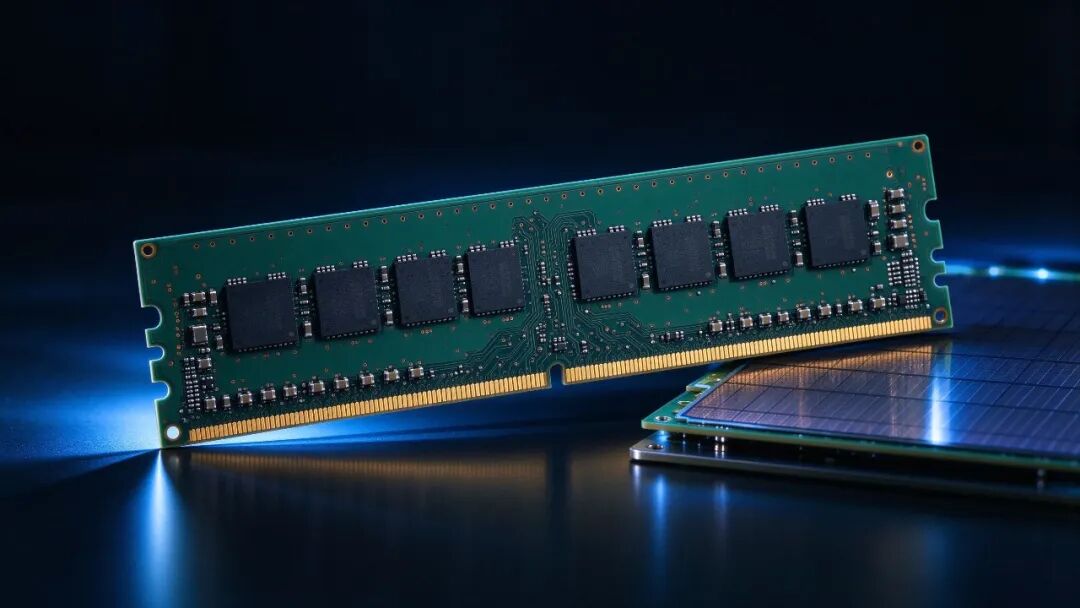
As the demand for large model training and inference grows, storage resources are becoming a key component of AI infrastructure.
The problem is that the production capacity and capital expenditure of storage manufacturers are not unlimited. When more resources are tilted toward high-value-added AI storage products, the memory required by traditional servers, PCs and consumer electronics may also face supply squeeze.
Thus, an interesting scenario emerges:
AI companies are competing for computing power, phone makers are competing for memory, and consumers may end up paying for the higher costs.
Apple certainly has its own advantages. Long-term supplier partnerships, advance procurement, inventory management and its huge procurement scale all help it buffer cost pressures.
But these measures can only ease the pressure, they cannot create production capacity out of thin air.
Node AI believes that the truly alarming part of this round of memory price hikes is that it is changing the original cost structure of the consumer electronics industry. In the past, people paid more attention to chip performance and product innovation, but now the supply and price of basic components may also become important factors determining corporate profits.
Apple's gross margin is under pressure, will consumers end up footing the bill?
Why is the market reacting lukewarmly to Apple's strong earnings report?
Because the capital market does not only look at how much money the company made in the past quarter, but also cares more about how much it can earn in the future.
Apple's gross margin reached 47.9% this quarter, but the guidance for the next quarter has dropped to 45%-46%.
There is another detail worth noting: this quarter's gross margin was positively impacted by factors such as tariff refunds. Excluding this impact, the actual cost pressure Apple faces will be even more pronounced.
Faced with rising memory prices, Apple has no more than several options.
First, absorb the costs on its own and accept lower gross margins; second, pass part of the pressure on to consumers by raising product prices; third, continue to optimize the supply chain and minimize the impact of costs through bulk procurement and product mix adjustments.

But every option comes with a cost.
Raising prices may hurt sales, while not raising prices means sacrificing profit margins. As a premium brand, Apple has relatively high consumer price tolerance, but it is not without limits.
More importantly, this problem is not exclusive to Apple.
PC makers, Android phone vendors and tablet manufacturers may all face similar cost pressures.
For vendors with insufficient brand premium and weak bargaining power, the situation could be even more difficult. Apple can still rely on its brand and scale to absorb part of the costs, but other companies may not have such conditions.
From this perspective, Apple's earnings report actually serves as a reminder to the entire consumer electronics industry: the industrial changes brought by AI are no longer just stories of computing power companies, but are being passed down the supply chain to downstream players.
Closing Remarks
I do not think this earnings report means Apple has run into any major problems.
On the contrary, the growth of the iPhone, profit scale and product innovation capabilities all show that Apple still has strong operational resilience.
Yet it also exposes a new reality: the rapid expansion of the AI industry is reshaping the resource allocation of the global semiconductor industrial chain.
In the past, when people discussed AI, they mostly focused on who had more powerful GPUs and who had more advanced large models.
Now, even basic components like memory have become important variables affecting the profits of tech giants.
When AI giants compete for computing power, storage manufacturers are busy expanding production, and phone makers have to pay higher prices for memory, it is very likely that consumers will ultimately bear part of the costs.
So here comes the question:
If even Apple starts to worry about memory costs, can you still expect your next phone to get cheaper?
This article is from the WeChat Official Account "Node AI Perspective", written by Node AI, and published with authorization from 36Kr.