The major sulfur market rally is sparking a "cost storm" in the chemical industry.
It is understood that since the beginning of this year, domestic sulfur prices have surged sharply at one point, peaking at 11,600 yuan per ton with a maximum increase of over 210%. Although the price has fallen back at present, its year-to-date gain still remains nearly 100%.
As a major sulfur importer, affected by the international situation, China's sulfur import volume has decreased significantly, and the sulfur inventory at major ports along the Yangtze River once dropped to only about half of that in the same period last year.
This round of drastic fluctuations is reshaping the cost accounting of downstream chemical enterprises.
By-product capacity expansion is never entirely under one's own control
In this round of sulfur market rally, many industry participants fell into the same judgment error: directly applying the cycle logic of conventional bulk commodities to deduce the supply elasticity of sulfur.
After the profits of targeted main products such as phosphate fertilizer and titanium dioxide improve, enterprises can increase the operation load within the upper limit of their facilities, and are also motivated to invest in new production capacity, so as to ease the price rise pressure through incremental supply in the medium and long term.
However, the commercial logic of sulfur is completely different: it is not a commodity produced by targeted production facilities, but only a by-product of oil and gas refining and natural gas desulfurization processes. The supply side is naturally subject to strong rigid constraints, which is the underlying reason for this round of price surge.
The primary goal of refineries and natural gas processing stations equipped with supporting sulfur recovery units is not to make profits by selling sulfur, but to meet mandatory environmental protection emission standards.
If the sulfides naturally contained in crude oil and natural gas are not recovered, on the one hand, they will corrode pipelines and process equipment, and on the other hand, they will form toxic pollutants after discharge. The sulfur recovery units using the mainstream Claus process in the industry have both pollution control and resource conversion functions, and sulfur is only the by-product produced incidentally in this process.
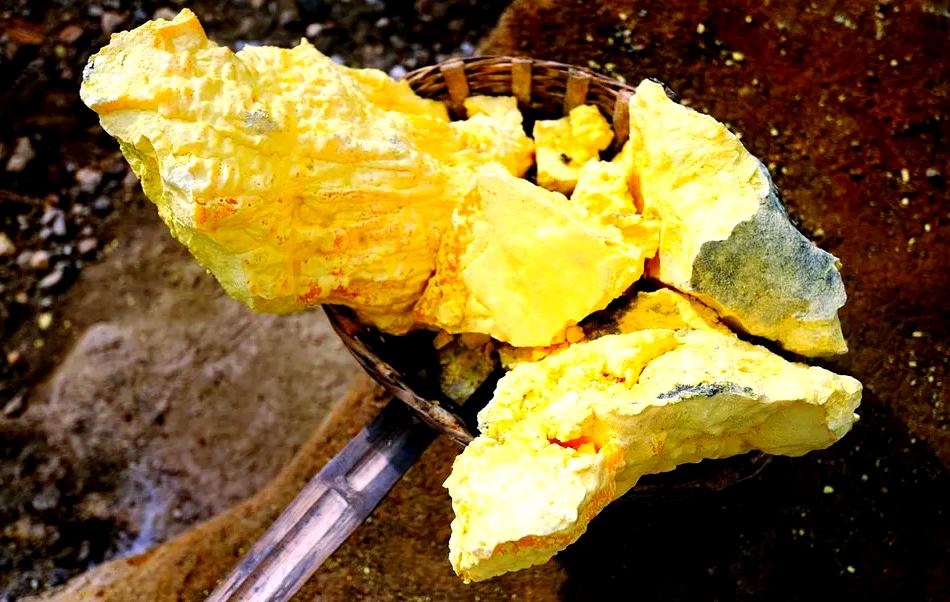
This means that the output scale of sulfur mainly changes with the upstream oil and gas processing plan, rather than being driven by the spot quotation of sulfur. Even if the sulfur price breaks through the 10,000-yuan threshold, it is difficult for refineries to actively increase the total processing volume of crude oil or natural gas just to increase sulfur production.
The entire decision-making system of refineries, including crude oil procurement, operation load, maintenance plans, and long-term gas supply agreements, serves the profit pool of refined oil products and chemical raw materials. The revenue from sulfur is too small to leverage the operation rhythm of main production units, and it can only be taken into account incidentally in marginal options such as raw material selection at most.
From another perspective, sulfur does not have its own independent production capacity curve, and cannot form the price-rise-driven capacity expansion cycle common for bulk commodities. The supply ceiling of domestically produced sulfur is mainly determined by refinery maintenance plans, sulfur content structure of crude oil, and overseas gas supply status. Even if the sulfur price rises sharply, the incremental space that can be tapped is very limited.
Constrained by this logic, the domestic sulfur supply is very insensitive to price signals, and the short-term supply elasticity remains at a very low level. The only marginal adjustment means is not enough to fill the large supply-demand gap.
For a long time, the supply ceiling of domestic self-produced sulfur has been difficult to break through, and the supply-demand gap is mainly filled by imports, making China a core global sulfur inflow market. For a long period of time, the downstream industrial chain regarded the stable overseas arriving cargoes as a supply base that does not need to be worried about, and underestimated the uncertainty of this supply chain.
This also means that China's sulfur supply chain is deeply bound to the global trade chain. Remote variables such as geopolitics, shipping, and overseas facility maintenance can directly affect the spot market at ports along the Yangtze River without multiple layers of transit.
Disturbed by the external situation, the supply of overseas cargoes has shrunk, and the pace of import arrival has been continuously restricted. Reflected in the circulation market, port inventories have been depleted rapidly, and the sulfur inventory at core domestic ports along the Yangtze River once dropped to half of that in the same period last year, thinning the buffer and further amplifying the tension expectation in the spot market.
Low inventory is an important fluctuation amplifier in the chemical raw material market. When the safety buffer inventory at ports is consumed rapidly, the supply-demand fault tolerance space disappears, the rigid downstream inventory replenishment demands emerge intensively, coupled with the reluctance to sell in the trade link, which will further push up the spot price.
The storage resources of many bulk commodities are scattered in multiple locations with higher fault tolerance space; the spot circulation of sulfur is highly bound to ports along the Yangtze River, and the inventory pool is concentrated. Once the volume of arriving cargo shrinks, the expectation of supply tension will spread rapidly in the industrial chain and amplify price fluctuations.
The market is easy to fall into such a cognitive misunderstanding: when the price rises to a high level, can we quickly release increments through local projects to fill the gap?
In the reality of the industry, this path is difficult to implement. The new domestic sulfur output is still dependent on the commissioning rhythm of new refining and chemical and natural gas processing projects. Such heavy-asset projects have a long construction cycle, and it is difficult to land and release increments within the market window of just a few months.
In the short-term dimension, the available supply sources are very limited: on the one hand, there is the output ceiling of existing refineries, and on the other hand, there are the established import cargoes, both of which are difficult to expand rapidly.
This distinctive supply logic is revising the industrial chain's pricing and risk perception of sulfur.
For a long time, the industrial chain has defaulted that sulfur is a low-cost, stable and sufficient auxiliary material, and rarely included it in the high-risk supply chain list.
This round of market rally has broken this inertial perception: sulfur supply is attached to the energy industrial chain, and rising prices cannot quickly leverage incremental supply. Once the cross-border supply chain is blocked, it is difficult for local short-term production capacity to fill the gap.
However, the rigid constraint is not a permanent state, and the repair of the supply side only needs to wait for a longer period of time.
A cost shock has widened the resilience gap across the industrial chain
The pressure of shrinking upstream supply and rising prices is transmitted layer by layer along the industrial chain. Affected by the differences in their own supply chains and asset structures, the shocks and benefits borne by different enterprises have shown obvious gaps.
This round of price rise has not put all enterprises in trouble at the same time, and the differences in risk resistance that were originally hidden under the stable market have been fully amplified by the market.
Refineries that hold by-product sulfur output have become the direct beneficiaries of this round of market rally. Such enterprises have no rigid demand for spot procurement, and once there is surplus for sale, they can realize the spread dividend with the help of the high market price.
However, the dividends are only concentrated in the upper reaches of the industrial chain, and the upward pressure on prices continues to be transmitted to the middle and lower reaches. For most downstream chemical manufacturing enterprises, the rising cost of raw materials has become an unavoidable challenge, but the impact on each enterprise varies greatly.
Phosphorus chemical industry, titanium dioxide, and rubber additives are the main consumption directions of sulfur, and this round of cost shock first fermented in these industries. Under the same impact, the bearing capacity of enterprises has shown a gap: integrated manufacturers with complete supporting industrial chains and processing enterprises that purchase all sulfuric acid from external sources present completely different operating states.

Most integrated manufacturers are equipped with their own acid production units, and some have locked in supply sources through long-term agreements in advance. The price fluctuations of sulfur and sulfuric acid can be hedged and mitigated within the industrial chain, and their profit performance has stronger resilience in this round of market.
Such enterprises are less sensitive to the spot sulfur market, and do not need to frequently adjust their production plans following the drastic fluctuations in spot prices. In contrast, small and medium-sized factories that only engage in back-end processing and purchase all sulfuric acid externally are completely exposed to market risks.
The sulfuric acid market follows the fluctuation of sulfur, and the cost of raw materials rises rapidly, while the price adjustment of downstream finished products has an obvious time lag due to the constraints of contracts and customer negotiations. Under the dislocation of cost transmission, the gross profit of enterprises is continuously eroded.
In order to avoid continuous losses and maintain cash flow, many processing plants can only reduce the operation rate and restrict output in stages, and passively shrink production capacity investment.
This round of market volatility has also boosted a long-term unpopular track: sulfur recovery equipment and new acid production process service providers. After the expectation of stable spot supply is broken, downstream enterprises no longer only focus on spot supply sources, and begin to adjust their supply chain response ideas.
Previously, most of the ideas for enterprises to deal with supply fluctuations were concentrated on the trade side, competing for the channels and ability to obtain spot goods; now, many entities begin to tilt resources to facility transformation and process route iteration.
Whether it is the upgrading and transformation of sulfur recovery for existing production lines or the development of acid production paths that do not rely on sulfur raw materials, relevant technology and equipment service providers have received more orders. The impact of raw material supply has brought new opportunities to this alternative track that has long received low attention.
However, the dividends of this track are inherently fragile, and the alternative process is not a once-and-for-all solution, which can never avoid the core economic threshold.
The commercial feasibility of such alternative solutions is highly dependent on the spot price window of sulfur. Only when the sulfur price is in a high range, the cost advantage of the new process will appear, and enterprises will be willing to invest capital in transformation or new projects.
If the subsequent sulfur supply recovers or the price falls, the relative cost advantage of many alternative routes will fade quickly, and the profit logic supporting project investment will also face tests.
In other words, the downstream layout of process substitution is more of a commercial choice made under the current price difference conditions, and it is difficult to obtain long-term stable cost advantages through this path.
Process upgrading and equipment purchase both require capital investment. If the investment decision is only based on the spread dividend generated by this round of high prices, once the market falls, the project return will easily fail to meet expectations.
Such stratification also reveals a simple logic in the chemical cycle: the raw material price rise market is equivalent to a centralized stress test on the supply chain risk control capability of the industrial chain.
Under the same cost shock, short-term bargaining can only play a limited buffering role. What really widens the gap is the long-term accumulated supply chain layout, asset structure and process route selection of enterprises.
Spread dividends come and go with the cycle, but the cognitive changes brought by this round of market to the industrial chain have longer continuity.
Is the industry saying goodbye to single-source dependence?
Affected by the shrinking import supply, the original response logic of China's sulfur industrial chain is changing.
In the stable market period, the focus of the industrial chain is on spot purchase and earning spread. Now many enterprises are no longer limited to this idea, and begin to layout decentralized supply schemes to improve the fault tolerance space of the supply chain.
A small number of enterprises that identified risks earlier chose to lock the basic procurement volume through long-term agreements to stabilize the supply bottom line.
By locking the procurement scale and pricing in advance through long-term agreements, part of the raw material cost can be separated from the drastic fluctuation of the spot market, mitigating the risks brought by the sharp rise and fall of sulfur prices. Of course, long-term agreements are not a panacea, they cannot block all market fluctuations, and their value lies more in supporting basic supply and reducing the passive situation of high-price position replenishment under supply shortage.
At the same time, many downstream factories are actively exploring alternative sources of sulfur resources and exploring new raw material routes, so as to reduce their dependence on the single supply chain of imported sulfur. Broadening supply channels and building a diversified sulfur resource security system is becoming a consensus direction formed by the industrial chain.
A number of domestic sulfur recovery and comprehensive utilization projects of associated sulfur resources are being implemented and promoted to enrich the supply sources of local sulfur resources.
Many insiders hold a cautiously optimistic view. When such projects are gradually put into operation and release output, the self-sufficiency level of domestic sulfur resources is expected to rise, and there is a possibility that the sulfur market will fall back steadily.
However, the repair rhythm of the supply side is full of uncertainty, and this optimism is subject to a series of external and project-side variables.
The commissioning progress of new projects, the long-term operation stability of facilities, as well as remote variables such as overseas supply rhythm, shipping conditions, and geopolitical situation, jointly determine the speed of new supply release.
Even if the supply gradually loosens and the price returns to a moderate range, downstream manufacturers will hardly resume the past procurement mindset of defaulting that supply is sufficient and no precautions are needed.
For a long time, downstream chemical enterprises have defaulted that imported sulfur is a low-cost, stable and reliably available raw material.
This mature marine supply system has long been integrated into the cost accounting logic of industries such as phosphorus chemical industry and titanium dioxide as an established raw material foundation, and enterprises rarely reserve alternative buffers for sulfur in supply chain risk control.
In the inertial cognition of the industry, it is just an inconspicuous auxiliary material, not a key risk point that can affect operations and erode profits. This round of extreme market has broken this long-formed path dependence.
This adjustment is not an active supply chain upgrade initiated by enterprises, but essentially a passive desensitization process driven by the external supply crisis.
The so-called desensitization essentially means reducing the supply dependence on a single import channel. Once this chain is blocked, enterprises also have alternative resources, processes and procurement options to alleviate the production shutdown risk caused by raw material supply interruption.
However, the implementation of diversified supply is not without thresholds. Whether it is investing in sulfur recovery facilities, tapping associated sulfur resources or transforming alternative acid production routes, capital investment and process running-in are required, and the return logic of projects is always bound to the spot price difference of sulfur.
In other words, the reshaping of the supply structure cannot be achieved in one step. This is a continuous trial and error and gradual adjustment, not a short-term trend rising with the short-term market.
When discussing this round of sulfur market, many focuses only fall on surface indicators such as price and port inventory. However, price volatility is only a superficial phenomenon. The deeper impact brought by this round of shock is the reshaping of the industrial chain's risk perception.
More and more entities find that relying entirely on a single cross-border chain for raw material supply security implies hidden risks.
This round of price fluctuation is equivalent to a centralized stress test on the entire chemical raw material supply chain.
This shock has not destroyed the industrial chain, but only torn apart the fragile side of the original supply structure, forcing the chemical chain to gradually complete supply chain desensitization: get rid of passive dependence on a single source, actively reserve alternative solutions, and build a more resilient raw material supply network.
Under the cycle, the rise and fall of commodity prices is the norm, and the fluctuation of raw material market will continue to appear.
This article is from the WeChat official account "Deep View Business", author: Chen Chen, published with authorization from 36Kr.