The data centers that have been in the eye of the storm have begun to lower their profile.
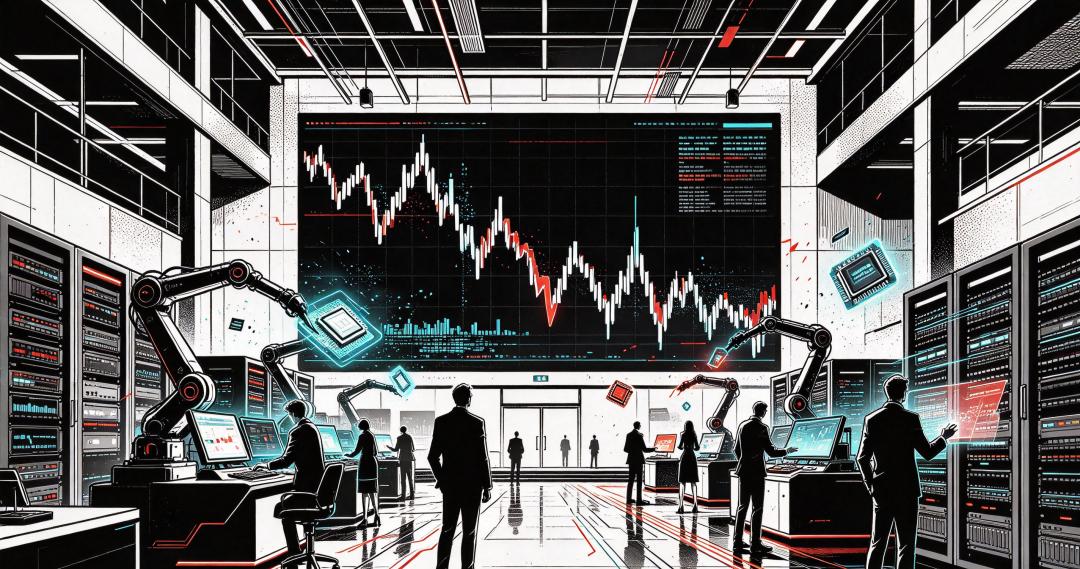
In the early morning of November 6, Beijing time, the Nasdaq closed down 5.52%. AI chip stocks were sold off, and several companies engaged in the data center business posted double-digit declines. The market is worried that the originally planned data centers may not start construction on schedule.
Tech giants are still spending huge sums to compete for computing power, but as data centers advance projects across regions, resistance is growing. Projects that cost billions or even tens of billions of US dollars were once eagerly sought after by local governments. What unwritten rule have data centers violated exactly?
At first, data centers were like Cthulhu monsters that suddenly emerged from the sea. People looked at them with both fear and curiosity. As time passed, the unknown became known, the "information gap advantage" of these Cthulhu monsters gradually faded, and people organized again, picked up spears and prepared to hunt, just as humans have been good at doing for hundreds of thousands of years.
Problems in data centers make the entire AI industry nervous
On November 5, the Nasdaq Composite Index fell by about 5.5%. One important reason for this round of plunge in AI stocks is that data centers may not be so easy to build.
The market is worried that stricter restrictions will be imposed on data center construction across regions. UBS analysts estimate that potential construction suspension measures may affect about 30% of the estimated new data center capacity to be added in the United States by 2028.
The newly elected governor of Texas previously proposed to suspend new data center projects before the state legislature formulates rules for the industry.
This is more than enough to give a large number of AI companies a headache.
If data centers cannot be put into operation on schedule, operators will have to postpone the delivery of computing power, and it will take longer to recoup their costs. Tech giants that originally planned to use this batch of computing power to carry out their business may have their plans affected. The slowdown in construction will also spill over to chip suppliers, as the originally planned procurement orders may be adjusted accordingly.
What cannot afford more delays are those companies that expanded with borrowed money and are waiting to rent out computing power to recoup their costs.
On the same day, several companies directly engaged in the AI computing power business fell more than the broader market. IREN fell by about 17%, Nebius by about 15%, CoreWeave by about 10%. NVIDIA, which sells chips, also fell by about 9%.
Looking at a longer time frame, from the record high of the Nasdaq on October 6 to the close on November 5, the share prices of CoreWeave and Nebius have both plummeted by at least half. On November 5, the quote for five-year default protection on CoreWeave's debt also hit a record high.
Companies like IREN, Nebius, and CoreWeave are often called "new cloud" players. They build or rent data centers, install a large number of GPUs, and then sell computing power to large customers like Microsoft. The shortage of computing power has brought them large orders. However, no matter how attractive the contract amount is, most of them are earning "future money". Once there are variables, the outside world will doubt whether the transaction amount can finally be fulfilled.
Even Microsoft, the big paying customer, has recently started to personally supervise the construction sites.
According to media reports, in recent months, Microsoft has sent personnel to some project sites of Nebius, IREN and Nscale to check whether the facilities are built according to its requirements and whether they comply with regulatory provisions.
The report also said that Microsoft is pulling out of some projects deemed too risky, and internally it is discussing whether to continue signing new "new cloud" contracts.
In March this year, Nscale announced during NVIDIA's GTC conference that Microsoft had signed a letter of intent to rent up to 1.35 GW of computing power from its campus in West Virginia. At that time, Nscale also called the campus a flagship project equipped with NVIDIA's next-generation chips. By November 5, Bloomberg reported that Microsoft had withdrawn from this cooperation intent.
Amy Hood, Microsoft's chief financial officer, has repeatedly mentioned on earnings calls that the delayed delivery of third-party computing power has disrupted the company's spending plans.
On the same day, IREN revised the delivery timeline in its financial report. Microsoft requested adjustments to the network design, and some equipment has not yet arrived. A batch of computing power originally scheduled to go online before the end of the year will now be delayed to January next year, and may even be postponed to the end of February. Converted at the contract price, the company's originally targeted annualized revenue of more than 4 billion US dollars to be achieved before the end of the year is now at risk. At the same time, IREN plans to spend 15 billion US dollars in the remaining time of this fiscal year, of which 6 billion US dollars will rely on funding sources such as unimplemented financing and customer prepayments.
At this point, the future of data centers is becoming increasingly uncertain.
Beneath this publicly visible plunge, outside the construction sites of data centers, more and more residents have long opposed these projects.
What exactly unwritten rule have these investments, which cost billions or tens of billions of US dollars, violated?
Some get rich overnight, others want to drive them away
Data centers are no longer very popular. But that was not the case when the projects were first announced.
It is hard for local governments not to be tempted by investments worth billions or tens of billions of US dollars, especially when companies also promise to bring jobs and tax revenue. Residents also hoped to find a job or do more business thanks to this large project. As for what a data center is and what it means, who really knew?
Some people did change their lives because of this.
There was once media report that Marylee and David Keilty, a couple in Pennsylvania, sold their pig farm to a data center developer for more than 22 million US dollars. When they first heard the offer, the two thought the other party was joking.
People who missed the chance to sell land also had the opportunity to make money from the construction sites.
National Jobsite Catering, a construction site catering company, has provided services at more than a dozen data center construction sites across the United States, supplying an average of about 1,500 meals per day at a single site.
However, construction is only the beginning. After the data center is settled, the number of jobs it provides and its driving effect on the local economy seem to be far less than those of traditional large factories.
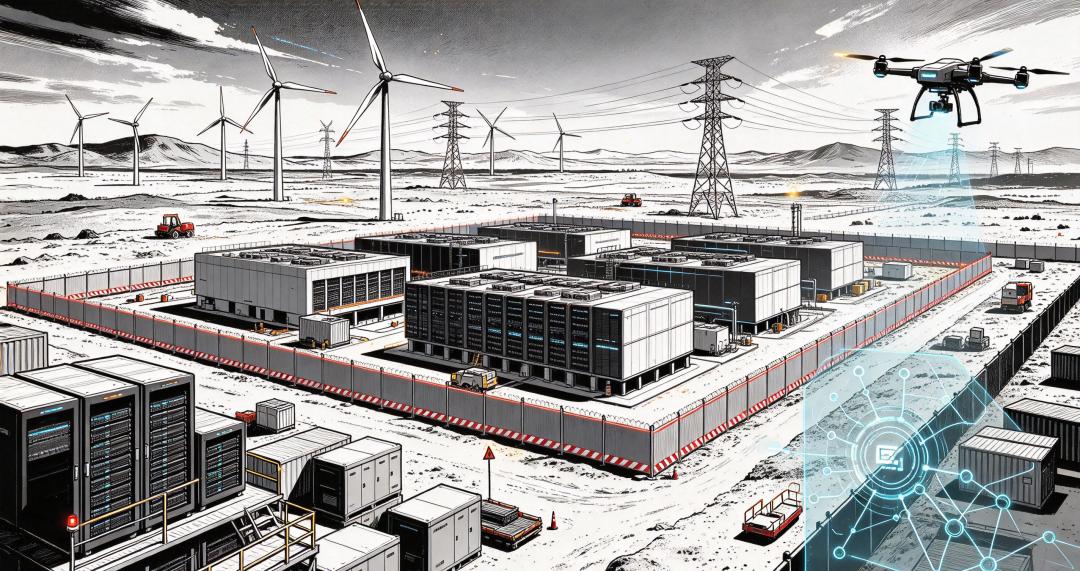
A report from the Joint Legislative Audit and Review Commission (JLARC) of the Commonwealth of Virginia mentioned that a single data center may have about 1,500 on-site personnel at the peak of construction. However, a typical data center covering about 23,000 square meters may only have about 50 full-time staff during operation, about half of whom are contract workers.
Meta's recently announced expansion plan in Louisiana promises an investment of more than 50 billion US dollars. It is expected that more than 7,500 workers will be needed at the peak of construction, and there will be about 1,000 operation positions after completion.
As a large project that local governments also actively compete for, the Tesla Gigafactory brings a completely different scale of employment. By the end of 2025, Tesla had 16,506 employees in Austin, where both the Texas Gigafactory and the company's headquarters are located.
A considerable part of the large investment in data centers is spent on equipment such as chips and servers, as well as supporting facilities. During operation, they do not need to hire as many people as large manufacturing factories. If local governments directly take the investment amount as a guarantee of future employment, they are easily disappointed.
If this is just the failure of expectations, then after the data center is put into operation, the surrounding residents will face real disturbances. Low-frequency noise, high electricity bill pressure, and air pollution have sharply deteriorated residents' perception of data centers.
What angers residents the most is the lack of transparency throughout the whole process of data center project implementation. Residents have extremely low participation in the early stage, but they have to bear the consequences.
Lack of transparency creates an information gap, which is exactly the "benefit" that the earlier batch of data centers were happy to take advantage of.
The most typical example is Elon Musk.
In order to get the Colossus data center of xAI in Memphis up and running first, Musk installed a number of natural gas-fired turbine generators on site. This took advantage of a local regulation that facilities running for no more than 364 days can be treated as "temporary equipment".
By April 2025, 35 turbine generators had been placed on site. When facing public doubts, the mayor of Memphis said that only 15 were in use, and the rest were spare. Later, environmental organizations flew over to take thermal imaging photos and found that 33 units were generating heat, indicating that they were running at that time. The Southern Environmental Law Center estimated based on the parameters provided by the manufacturer that the annual nitrogen oxide emissions of these equipment could reach thousands of tons. Such pollutants will aggravate the local smog problem.
The large project that the local area had been looking forward to has thus become a neighbor that some residents want to drive away.
The "newcomer benefit period" for data centers is over
As time goes by, the voices of residents opposing data centers are getting louder and louder.
According to statistics from the research institution Data Center Watch, from the end of 2025 to the end of the first quarter of this year, the number of active opposition groups in the United States increased from 396 to 833, distributed across 49 states.
By the second quarter, some localities had suspended data center development even before receiving applications from developers. Data Center Watch recorded at least 45 blocked or delayed projects in this quarter, involving an investment of about 68 billion US dollars.
State governments have also started to tighten approval. On August 3, the governor of Texas required a comprehensive audit of data centers that are applying for grid access, and no further progress can be made before the audit is completed. On August 18, Pennsylvania removed AI data centers from the fast-track approval channel, and required developers to bear the cost of new power supply facilities for the projects themselves.
Among the local referendums tracked by the consulting firm Redbud, 45 have completed vote counting, and 44 of the results are in favor of restricting data center construction.
The opposition from residents is increasingly impossible to ignore, and state governments have also found that the preferential policies given out in the past may not bring the expected results.
Texas previously estimated that the sales tax exemption for data centers in two years would reach 3.2 billion US dollars. According to The Texas Tribune, as of July this year, 20 out of 138 data centers that obtained preferential qualification have undergone audits. Among them, 6 failed to meet the requirements, and at least 4 did not create the required number of jobs. The tax has been exempted, but some projects failed to deliver the promised jobs, so the state naturally has to re-evaluate data centers.
Water and electricity supplies are also increasingly difficult to arrange. Local governments need to reserve capacity for new projects, and also take into account the needs of residents and other enterprises. In particular, some electricity demand applications may be submitted repeatedly, and some applicants lack the funds and experience required to complete the projects.
It is uncertain whether the project can be built successfully, but power companies have to make decisions in advance. If the demand is underestimated, the power grid may not be able to supply power after the data center is completed. However, if the power grid is expanded according to the applied volume, and the project is not finally implemented, the cost may be passed on to residents' electricity bills.
This also explains why the market is so sensitive to tighter approval. When investors value these companies, they have already included the profits that can be earned after the new data centers are put into operation. But if the project cannot get approval for a long time, it will have to re-apply for power connection even if it moves to another location. By the time the data center can actually start operation, the company may have spent a lot more money than originally planned.
All this shows that the "newcomer benefit period" for data centers is almost over.
With the end of the "benefit period", related companies are trying to change their practices and show their attitudes.
Both Microsoft and Google have announced that they will stop using relevant non-disclosure agreements with local governments, so that the public can learn about projects earlier, while retaining limited protection for commercial secrets and security information.
On November 5, OpenAI also released new community commitments. For the campuses that it will own and operate in the future, the company promises to bear all the costs of electricity consumption and required supporting facilities by itself, and will provide financial guarantees before large expenditures are incurred. In this way, even if the project is delayed, scaled down or canceled, other power users will not have to bear the cost. OpenAI also promises to let residents participate in discussions when the plan can still be adjusted, and disclose the water, electricity and noise information of the campus.
Next, it remains to be seen whether these commitments can be implemented in the agreements of specific projects, and whether the current crisis can be safely overcome.
This article is from the WeChat Official Account "Letter AI", written by Xiao Jinya, and published with authorization from 36Kr.