Evolution of Targets for Globally Approved and Launched Drugs Over the Past 25 Years
In 2000, the working draft of the Human Genome Project was released. Back then, the industry was optimistic that once the genetic code was decoded, disease targets would line up in front of pharmaceutical companies just like goods on store shelves.
25 years later, the answer turns out to be far more complex than imagined.
In 2026, Nature Reviews Drug Discovery published a landmark review titled The evolving landscape of drug targets. Researchers re-inventoried targets using a set of extremely strict criteria: as of June 2025, 1702 drugs approved by the world's three major regulatory agencies (FDA, EMA, PMDA) only act on 686 truly validated "pharmacodynamic targets", of which 610 targets are human-derived molecules and 76 targets are from pathogens.
In addition, 79% of drugs are small molecules, 19% are biologics, and 2% belong to other modalities.
The figures are not staggering, but behind them lies a clear curve of the times: the focus of drug R&D is shifting from "finding proteins with binding pockets" to "developing technologies that can intervene in important proteins".
01
Definition and Classification of Targets
Targets are never objective constants, but products of statistical calibers.
In 2006, Overington's team stated that there were 324 drug targets worldwide, and in 2017, similar studies raised the number to more than 800. Part of the reason for this inflation is that each subunit of large protein complexes was counted separately: Mitochondrial Complex I has 50 subunits, voltage-gated potassium channels have 40 subunits, and these two complexes alone account for 15% of the total number of human targets.
This new review made a "subtraction": it only counts molecules that drugs directly bind to and mediate therapeutic effects, large complexes (≥5 subunits) are counted as 1 functional unit, pathogen targets are merged across strains, and RNA drugs are mapped to their associated regulated proteins (e.g. TTR mRNA → TTR protein).
Thus the number 686 was obtained. This does not mean "fewer targets", but that after draining the excess water, we see the real riverbed.
It answers a neglected question: among what we call the "innovation boom", how much is real breakthrough, and how much is just the dividend of counting methods?
Among human-derived targets, the structure is highly concentrated: 209 enzymes (34%), 101 GPCRs (17%), 92 ion channels (15%), and 73 catalytic receptors (12%).
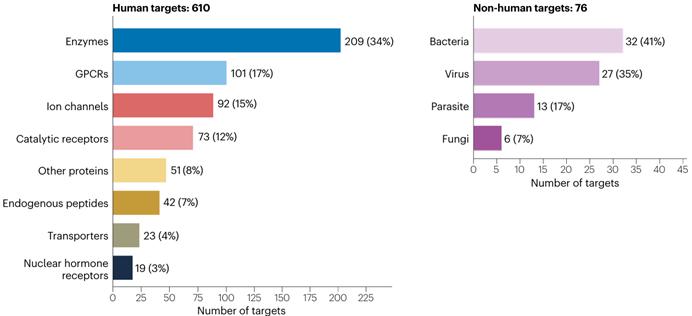
The four categories add up to 78% of the total. The remaining targets are transporters, nuclear receptors, endogenous peptides, and other immune-related "other proteins".
Small molecules and antibodies occupy separate territories: small molecules act intracellularly on enzymes, GPCRs, ion channels, nuclear receptors, and transporters; biologics act extracellularly on catalytic receptors, cytokines, growth factors and other endogenous peptides.
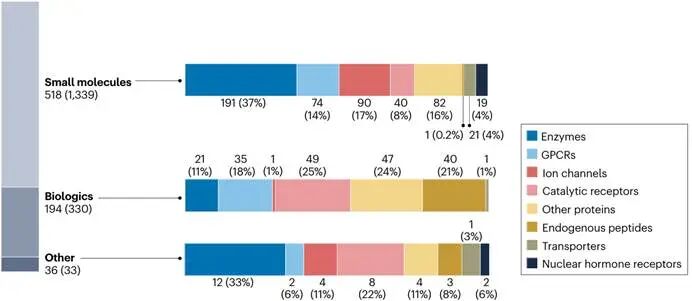
Among the 43 endogenous peptide targets, 40 are covered by biologics, small molecules can hardly access this space, and the only exception is voxelotor that binds to hemoglobin.
This illustrates one point: "druggability" depends half on biology, and half on whether technology can reach the target.
02
The Shift of the Center of Gravity on the Target Map
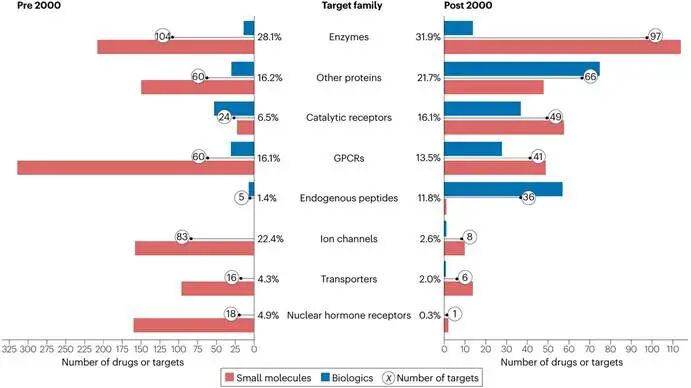
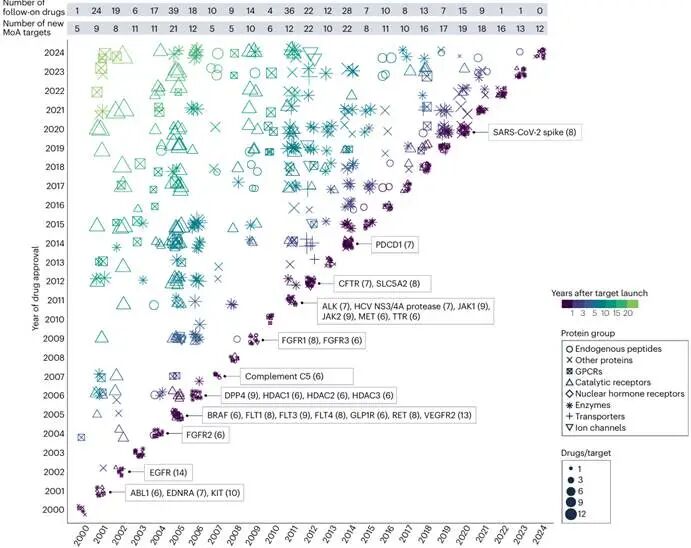
Taking the year 2000 as the dividing line, there were 375 targets before that, and 312 new targets were added in the 25 years after, representing an 84% increase, with an average of about 12 new targets per year, and the growth accelerated to 15 per year after 2010.
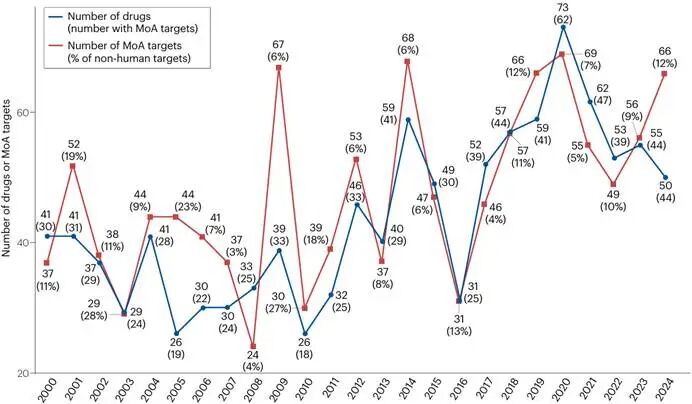
But the increment is extremely uneven.
1. Rapidly growing categories: kinases, extracellular peptides, catalytic receptors
Kinases: 136 inhibitors targeting 67 kinases. After imatinib, BCR-ABL, EGFR, HER2, JAK, and CDK4/6 have underpinned the entire era of targeted oncology therapy;
Endogenous peptide targets: increased 7.2 times in 25 years;
Catalytic receptors: the number has doubled.
Since gefitinib was launched in 2002, 14 drugs targeting EGFR had been approved by 2024 (10 small molecules + 4 antibodies); HER2 is repeatedly covered by small molecules, monoclonal antibodies, and ADCs; VEGFR2 has 13 approved drugs.
2. Stagnant categories: ion channels, nuclear receptors, GPCRs
Ion channels: the number increased from 83 to 91;
Nuclear receptors: the number increased from 18 to 19;
- GPCR
The proportion of new targets dropped from about 29% to 13%.
This does not mean they are unimportant, but that "all easily druggable members have been explored". The remaining subtypes either lack selective pockets, have high off-target risks, or show ambiguous clinical benefits.
3. Small molecules have become more powerful, but are no longer the only leading role
Before 2000, the average in vitro potency of small molecules was about 50 nM, and after 2000 it was about 6 nM.
Structural biology, high-throughput screening, and rational design have improved the precision of "targeting the same class of targets" by nearly an order of magnitude.
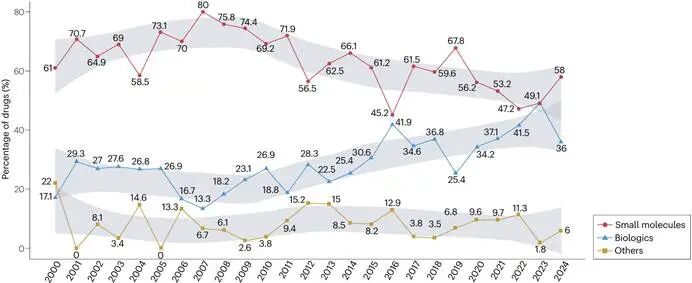
Before 2000, the ratio of targets covered by small molecules to biologics was 6:1.
After 2000, the ratio dropped to 1.35:1.
In 2023, the number of newly approved biologics per year drew level with that of small molecules for the first time.
Monoclonal antibodies have turned "extracellular signals" into the main battlefield: they fully penetrate the fields of cytokines, growth factors, immune checkpoints, oncology, autoimmune diseases, and endocrinology.
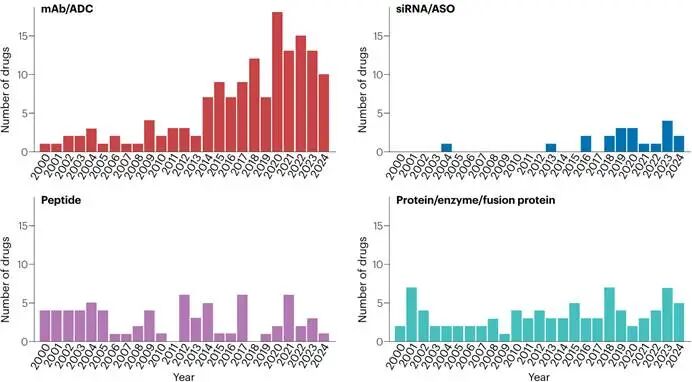
ADCs connect antibodies and small molecules, giving "old receptors" new weapons: HER2 has both monoclonal antibodies and ADCs, and parallel development of multiple modalities for the same target has become a standard practice in modern drug R&D.
RNA drugs represent the third path: 22 oligonucleotides have been approved (siRNA, ASO, etc.); they do not target proteins, but target mRNA, splicing processes, and translation processes, turning "pocketless targets" into "sequence-intervenable targets".
But the complementary relationship remains solid: antibodies cannot enter cells, there are zero biologics targeting nuclear receptors to date, only 1 peptide drug targets transporters, and only 1 drug ziconotide targets ion channels.
The boundary of technology is the current boundary of druggability.
03
The Speed and Boundary of New Drug Development
From compound disclosure to approval: the median duration is 11 years for small molecules, 6 years for biologics, and the average duration for first-in-class target drugs is 10 years, with 80% of them approved within 15 years.
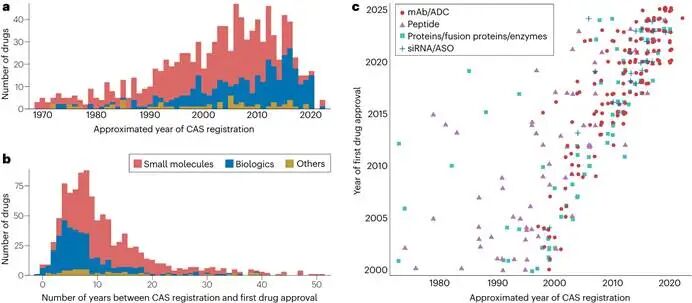
Biologics are developed faster not because they are simpler, but because they have high target specificity, predictable pharmacology, mature regulatory pathways, and can be disclosed in later stages and submitted for approval quickly.
But "fast" does not equal "easy".
First-in-class drugs always need to prove two things at the same time: the target biology is valid, and the clinical benefit is real.
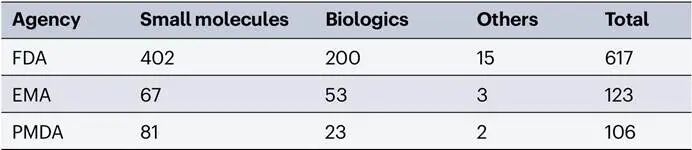
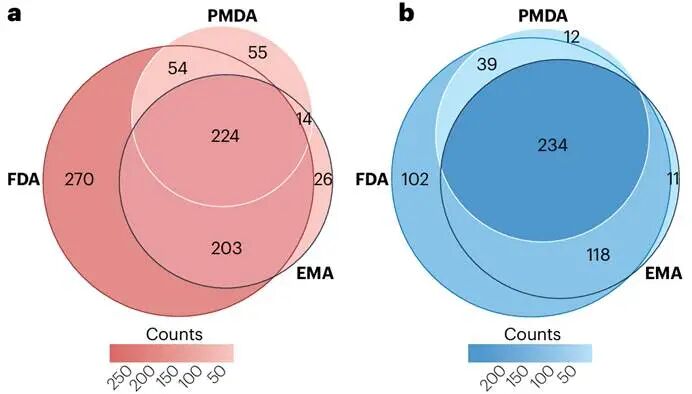
Among the 312 new MoA targets since 2000, 78% were first validated by drugs approved by the FDA, EMA and PMDA each accounted for about 11%. Among the 845 unique drugs, over 80% were first launched in the United States, and 83% of kinase inhibitors were first approved by the FDA.
The situation in China is more complex: the number of new drugs approved by NMPA from 2019 to 2023 has exceeded that of the FDA by 5.4%, but for the first validation of new targets in the same period, the United States had 59, while China had 0 (based on the caliber of this review). Most domestic drugs are "new dosage forms, new combinations, new populations", and only a few are global first-in-class mechanism drugs. On the bright side, 63 unique drugs in China have introduced 6 new targets, and the approval lag has been shortened to within 4 years.
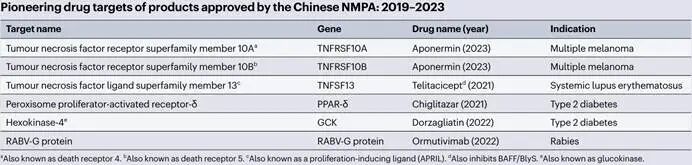
China has caught up in terms of "quantity", but the "right to define targets" is still in the hands of others.
For innovative Chinese drugs to go global, shifting from "following existing targets" to "validating new targets" is an inevitable threshold to move from generic innovation dividends to the upper reaches of the global value chain.
Oncology/Immunology (ATC L): 210 targets, 322 drugs, the largest sector; Neurology: 122 targets, 94% are small molecules, dominated by GPCRs and ion channels; Cardiovascular: 105 targets, a mix of GPCRs, enzymes and channels.
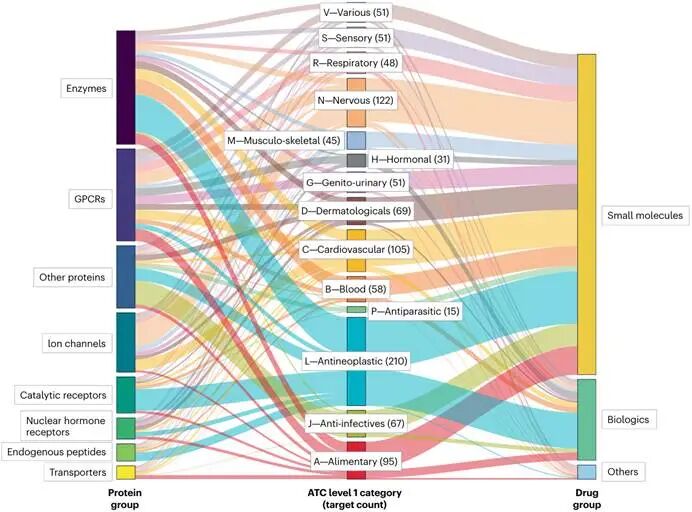
Oncology integrates "kinases + extracellular receptors + immune peptides" together: small molecules target driver mutations, antibodies target checkpoints and growth factors, and ADCs target antigen enrichment.
This is also why almost all the most remarkable new drug success stories in the past 25 years are in the oncology field.
In the past, the term "undruggable" usually referred to targets that: have no ATP pockets, no hydrophobic binding cavities, are transcription factors, scaffold proteins, PPI interfaces, or RNA.
Now the boundary is shifting: PROTACs/molecular glues do not inhibit, but directly degrade targets; macrocycles enter cells and act on interfaces; ASOs/siRNAs silence targets at the translation level; gene editing modifies DNA; CAR-T/CGT opens up 14 targets that traditional drugs cannot reach (such as HBB, RPE65, BCL11A).
"Druggability" is not a static property of proteins, but a dynamic boundary determined by technological capabilities.
Take MYC (MYC proto-oncogene, bHLH transcription factor) as an example: it was undruggable in the small molecule era, but gaps to target it have emerged in the era of degraders, oligonucleotides and epigenetic editing.