When Domestic Chinese Beauty Brands Become "Buyers", First Master the M&A Tactics of Industry Giants
In two months, L'Oréal has made three consecutive strategic moves in the Chinese market.
In September, Cathay Beauty Future Fund, jointly established by L'Oréal Group, Cathay Capital and the People's Government of Jing'an District, Shanghai, successively invested in Shanghai Moyang Biotechnology Co., Ltd. and Shanghai Xinji Tuyu Technology Group Co., Ltd., the parent company of the makeup brand Tilove. In October, Shanghai Meicifang, L'Oréal's local investment platform in China, was added to the shareholder list of Shenzhen Baiyin Biotechnology Co., Ltd. The latter completed a Series A financing of over 200 million yuan in the same period.
The three enterprises represent three distinct capabilities respectively: Tilove, which grew out of the Douyin ecosystem, excels in content conversion and local consumer insight; Moyang Biotechnology focuses on the layout of regenerative biomaterials; while Baiyin Biotechnology develops innovative biomaterials with synthetic biology and artificial intelligence. L'Oréal is leveraging minority equity participation and industrial funds as interfaces to engage with the emerging new brands, new channels and new technologies taking shape in the Chinese market simultaneously.
When Cathay Beauty Future Fund was established, Vincent BOINAY, President of L’Oréal North Asia Zone and CEO of L’Oréal China, once stated: "Investing in China is investing in the future." The fund is explicitly targeted at a new generation of enterprises that have both scientific efficacy and the capability to define aesthetics with Chinese characteristics.
On the other side, Chinese beauty enterprises are also taking proactive actions. Proya Holding took over Huazhizhi and acquired a stake in Bishengzhiyan; Ruoyuchen fully acquired Erno Laszlo; Huanxi Group became the largest shareholder of the parent company of South Korean makeup brand Lilybyred, while Intron Holdings extended its channel management capabilities to self-owned brand assets by taking a stake in Full Aroma.
It is quite obvious that Chinese innovation is entering the investment portfolios of international giants, and domestic Chinese beauty brands are starting to acquire brands, technologies and market access at home and abroad. The core issue of the industry has shifted from "who acquired whom" to "what capabilities exactly this transaction has brought in".
The "Actuary-style" M&A of International Giants: Identify Capability Gaps First, Then Determine the Depth of Equity Participation
In 2026, international beauty groups still make frequent investment moves, but their investment logic has changed.
Most of these groups have relatively complete brand, category and regional layouts, so the marginal value brought by simply adding one more brand is limited. They pay more attention to whether the target can supplement missing technologies, channels, niche categories and regional markets, and attach greater importance to post-transaction integration efficiency. Acquisition has shifted from a tool for scale expansion to a tool for capability allocation and asset optimization.
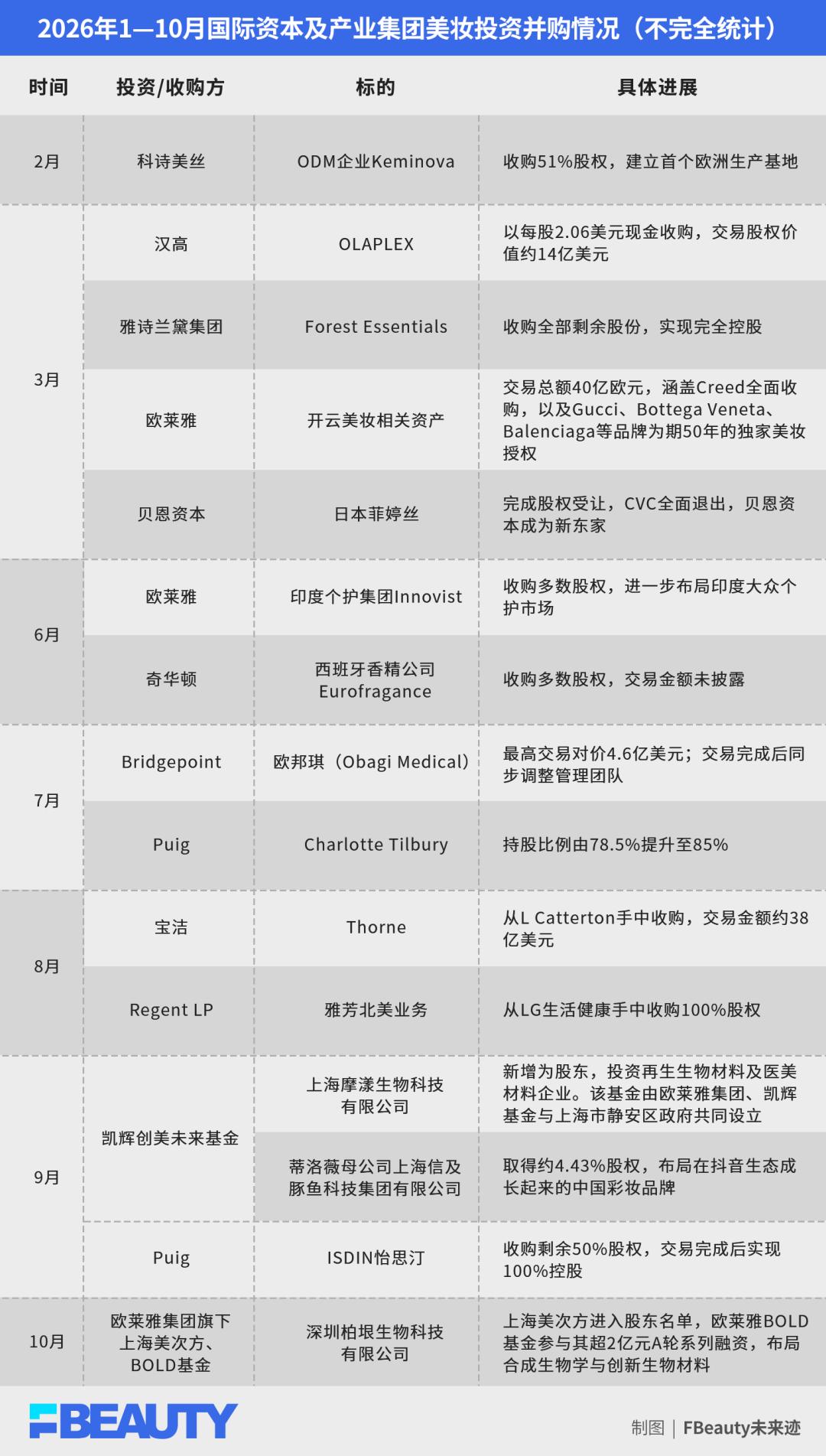
L'Oréal's three recent investments in China cover different links of the industrial chain. The investment in Tilove allows L'Oréal to access a sample of Chinese makeup brand that mainly grew up in the Douyin ecosystem; Moyang Biotechnology and Baiyin Biotechnology provide regenerative biomaterials and synthetic biology capabilities respectively.
In particular, for Baiyin Biotechnology, from being selected into L'Oréal North Asia's "BIG BANG Beauty Tech Co-creation Program" in 2024 to receiving capital investment now, the relationship between the two sides has gone through a progressive process of project verification, industrial collaboration and then equity connection.
This approach reduces the integration risk of direct acquisition. Minority equity participation allows the group to continuously observe new technologies and new business models, and also reserves possibilities for subsequent joint R&D, product transformation and even further investment. The investment targets of L'Oréal cover emerging brands, technology and biotechnology enterprises, and its investment platform itself undertakes the function of discovering external innovations for the group.
Another type of transaction is to continue to deepen around existing advantages.
Henkel has continuously increased its investment in professional hairdressing and high-end hair care in recent years. Following the acquisition of Shiseido Professional Hairdressing business and Vidal Sassoon's Greater China business, it completed the acquisition of OLAPLEX in 2026. Henkel specially emphasized in the announcement that OLAPLEX has science-driven products, professional hairdressing foundation, global revenue structure and relatively high gross profit margin, which can supplement its professional channels, retail and e-commerce layout.
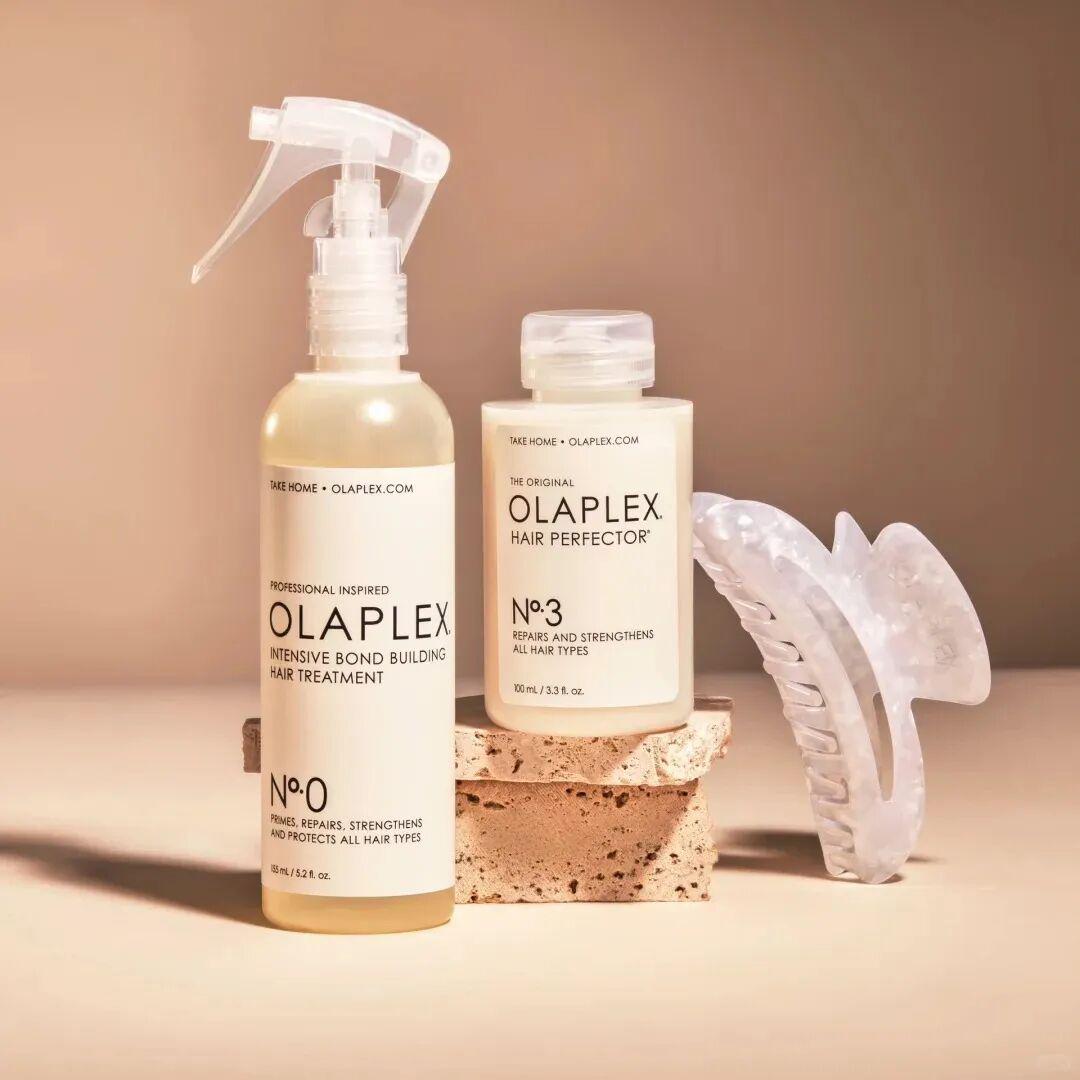
What it purchased is an asset highly compatible with its existing strengths. After the acquisition is completed, Henkel further consolidates its position in the professional hairdressing business, and its R&D, channels and global distribution system can more easily form synergy. Compared with entering a completely unfamiliar track, this kind of vertical deepening usually has a clearer integration path.
Puig's acquisition of Isdin embodies the idea of gradually increasing shareholding in stages. The two sides have cooperated for more than 50 years. After fully understanding the brand and business, Puig acquired the remaining 50% equity to achieve full holding. Jose Manuel Albesa, CEO of Puig, clearly stated that expanding the dermatological grade cosmetics business is the group's strategic priority.
From long-term joint venture to full holding, this progressive transaction reduces information asymmetry, and also gives the acquirer sufficient time to verify brand growth, organizational running-in and strategic value before adding capital.
These cases provide a relatively mature investment framework:
1. First clarify what the group lacks, then find targets that highly match the strategy;
2. Minority shareholding, phased increase of shareholding or full holding depends on the required depth of synergy;
3. Before the transaction is signed, the boundary between the group's shared capabilities and the independent operation of the brand should be delineated in advance;
4. Emphasize dynamic management. M&A and shareholding increase are only part of portfolio management, and merger, contraction and divestment of inefficient assets are equally important. If the number of brands continues to increase while resources cannot be concentrated, capital operation will reduce the overall efficiency instead.
It is obvious that international beauty groups are shifting from "buying more brands" to "allocating capabilities with different capital tools". Now, this set of actuarial logic has also begun to become an important reference for Chinese beauty enterprises when they grow from single brands to collectivization.
Domestic Chinese Beauty Brands Take the Initiative: Compress Growth Time with Capital
If international giants currently pay more attention to improving asset density, Chinese beauty enterprises are still in the stage of expanding business boundaries. The difference is that this round of expansion has gone beyond the simple "brands sweeping" mode, and has begun to make targeted investments around categories, technologies, channels and internationalization capabilities.
In 2026, brand enterprises begin to choose holding or minority shareholding according to the depth of synergy; channel service providers accelerate to become brand owners; leading companies expand the scope of resources they can mobilize through overseas M&A, industrial funds and strategic capital.
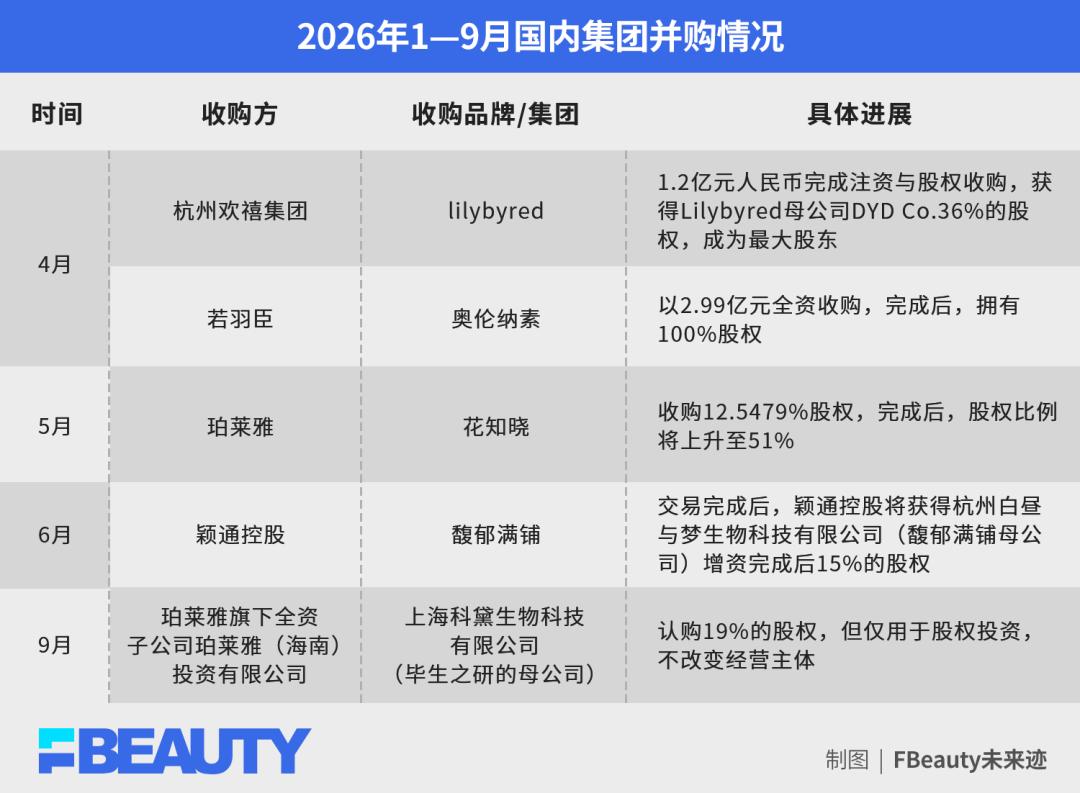
The two transactions of Proya can best illustrate this change. Huazhizhi can supplement the young makeup matrix, and has large synergy space with the group's R&D, supply chain and overseas business, so Proya increased its shareholding to 51% in stages; it maintains 19% minority equity in Bishengzhiyan, and the founding team continues to lead the operation.
Hou Juncheng, founder and chairman of Proya, once said frankly at the 2025 general meeting of shareholders: "Relying only on self-owned brands cannot achieve the 'Double Ten Strategy'." He pointed out that potential M&A directions cover areas not fully covered by the existing matrix, such as baby care, perfume and men's skin care. Domestic Chinese beauty brands begin to identify growth gaps first, and then use investment to shorten the time to enter new tracks.
Later, during the acquisition of Huazhizhi, Hou Yameng, general manager of Proya Co., Ltd., further stated that the company will provide support when the brand needs it, and at the same time "respect the brand's development ideas and product development rights".
Channels and operation service providers are also changing their identities.
Ruoyuchen fully acquired Erno Laszlo for about 299 million yuan, extending its e-commerce operation capabilities to high-end brands, global trademarks and intellectual property rights; Intron Holdings acquired 15% equity of Full Aroma for 97.5 million yuan, converting its fragrance channels, membership system and brand management experience into long-term equity value.
Lin Jing, Chairman and Executive Director of Intron Holdings, said that the group will support Full Aroma in channel resources, brand expansion and market penetration. For this kind of service providers, taking stakes in brands means moving from earning agency and operation income to sharing the long-term growth of brands.
In addition, besides Ruoyuchen, more domestic Chinese beauty brands are also turning their attention to mature overseas assets. According to incomplete statistics, from 2021 to 2026, Chinese enterprises have successively acquired or invested in brands such as Dr.Wu, Eve Lom, Augustinus Bader, Filorga, RéVive, PAYOT, Foltene, Lilybyred, Erno Laszlo and AHAVA, covering high-end skin care, professional makeup, salon care and tech hair care.
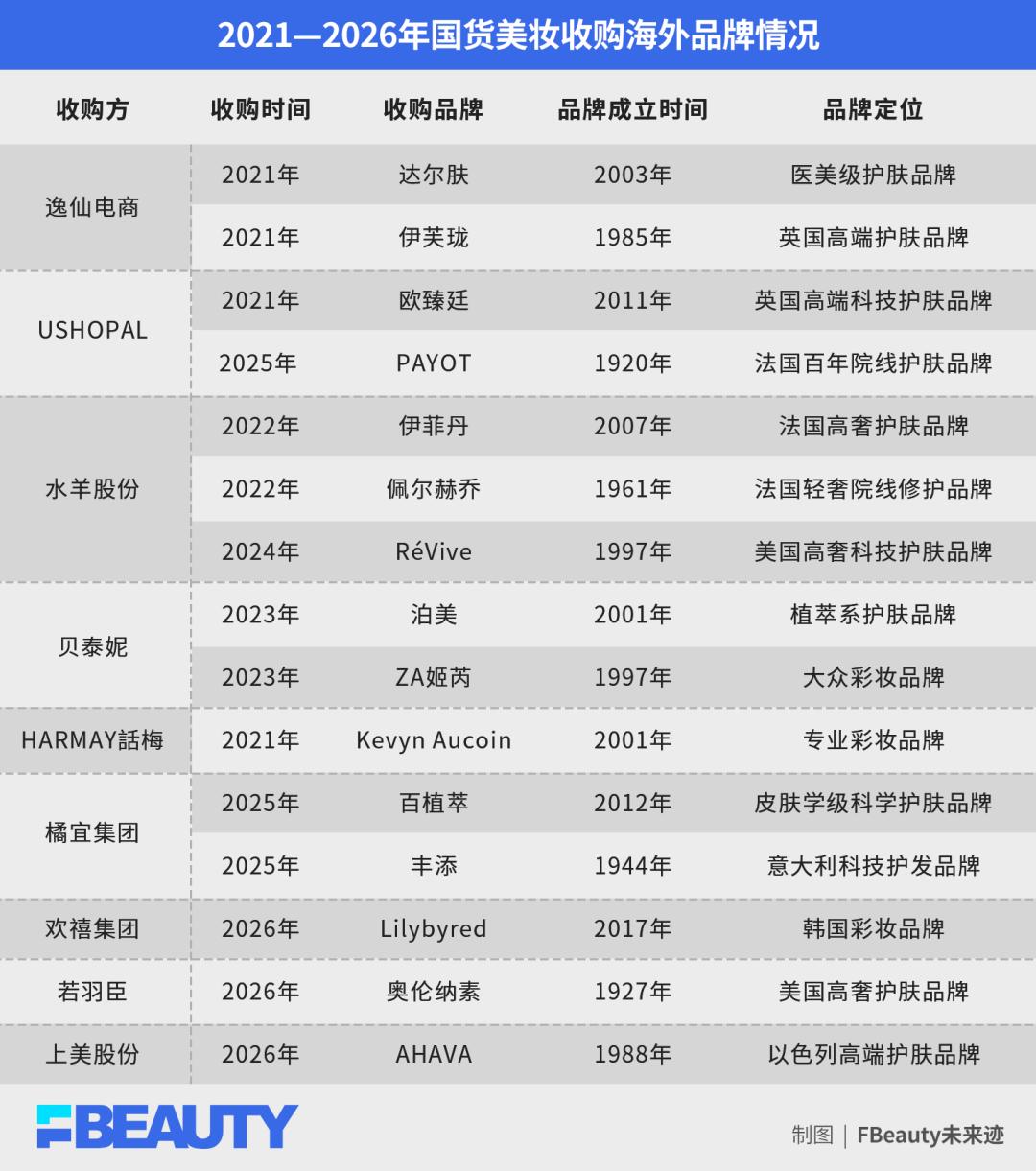
Compared with incubation from scratch, these mature overseas brands already have product systems, trademark assets, user awareness and supply chain foundations. Chinese enterprises can connect their good capabilities in content e-commerce, channel operation and rapid iteration to them, and use capital to exchange for time to enter new categories, new price bands and overseas markets.
However, it is worth noting that the tension between the original brand tone and localized transformation is always the core proposition in the integration process.
At the same time, domestic Chinese beauty brands are also expanding capital tools. Proya has begun to look for opportunities in the fields of technology manufacturing, biomedicine and consumer goods through industrial funds; while Mao Geping has cooperated with L Catterton in global market expansion, strategic investment, talent introduction and corporate governance.
Dai Yuefeng, founder and chairman of Syrinx, once said that the company will "firmly concentrate resources on core high-end business" and strategically shrink mass brands. This shows that domestic enterprises have begun to shift from simply adding brands to actively adjusting the position of different businesses in the group.
The deeper change of domestic beauty M&A lies in the transformation of enterprise identity.
Brand companies, channel service providers and industrial capital are moving from single business operators to resource organizers across brands, categories and even regions.
This change means that Chinese beauty enterprises are no longer just investment targets sought by international capital, but have begun to actively participate in the reallocation of global brand assets and industrial resources. The value of domestic Chinese beauty M&A will ultimately be reflected in whether a number of new groups with multi-brand management capabilities, global resource scheduling capabilities and long-term capital vision can be formed.
Two Paths, One Destination: Value Integration
Why do such distinct choices appear? The fundamental difference lies in the stage of industrial development.
From the perspective of the domestic market, China's beauty industry is still in a critical growth period of centralization, branding and high-end transformation.
According to the 2026 industry research report data of CITIC Securities, in 2025, the CR10 concentration of China's beauty market at the brand level was 20.8%, and the CR10 concentration at the group level was only 41.9%, significantly lower than the concentration level of mature beauty markets such as Europe, America, Japan and South Korea. Market players are still dominated by small and medium-sized brands and white-label products, and there is still much room for improvement for leading domestic beauty brands in matrix layout, high-end positioning and technology accumulation.
In addition, most local beauty enterprises still rely on a single main brand to generate revenue, with limited category coverage, single price band and weak anti-risk capability. In the current situation of continuously rising traffic cost, extremely differentiated consumer demand and intensified involution competition, the growth ceiling of single brand is emerging rapidly.
Against the background of intensified stock competition, to break through the growth bottleneck, extensional M&A is the fastest way. Through acquisition to enter new tracks and new categories, improve the brand matrix and seize niche market share in a short time, which is a typical growth path for enterprises in the growth period.
For Chinese beauty groups, M&A opens a shortcut to quickly make up for the gaps in categories, brand hierarchy and overseas technologies, but shortcut does not equal smooth road.
The test comes from integration capability. Many brands themselves have good product power and brand mind, but completion of acquisition does not mean automatic realization of value.
The core strength of domestic Chinese beauty brands lies in domestic traffic, e-commerce channels and localized marketing; while the shortcomings are concentrated in brand tone maintenance and cross-cultural operation. Buying a high-end brand does not mean that you have the operation capability of high-end brands. The brand accumulation and user awareness of overseas high-end brands are accumulated over decades. Relying only on domestic channels to drive sales can boost revenue in the short term, but there is still great uncertainty about whether we can keep the brand positioning and achieve continuous profitability in the long run.
The mature beauty markets in Europe and the United States have entered a highly concentrated mature stage. Leading giants have already completed the layout of full categories, full price bands and full channels, and it is difficult to drive growth only by horizontal expansion. For them, the current core task is not to expand territory, but to improve the operation efficiency and profitability of existing assets. Therefore, the goal of M&A has shifted from "doing addition" to "doing optimization", from pursuing scale expansion to pursuing value improvement.
It is worth noting that although the paths diverge, the two roads eventually lead to the same set of evaluation criteria. When M&A enters the fine operation stage from extensive expansion, no matter overseas giants or Chinese capital, the consideration dimensions are converging in the same direction: whether the cash flow is stable, whether the channel efficiency can be improved, whether user loyalty is sustainable, and whether the assets are integrable.
In the final analysis, M&A is only a means, which does not create value by itself. What really creates value is whether the enterprise can do a good job in resource synergy, keep the brand core after the acquisition is completed, and convert the purchased technologies and brand assets into continuous and stable operating results. The traffic era has come to an end. Capital can buy brands, but cannot buy long-term brand power. This is a common exam question for both Chinese and foreign beauty groups.
This article is an original work of FBeauty Future Trace. Without written authorization, no reproduction or technical crawling for AI training is allowed.
This article is from the WeChat official account "FBeauty Future Trace", author: Liu Jiahui, editor: Wu Sixin, 36Kr is released with authorization.