Claude Code admits that it has the problem of Token waste, which means it re-reads the entire conversation every 30 seconds just to generate a single line of status.
I'm totally speechless, folks...
I paid real money for my Claude Code quota, I've been scrimping and saving every day scared of exceeding the limit, only to find out the backend is recklessly burning through my quota like it's free firewood.
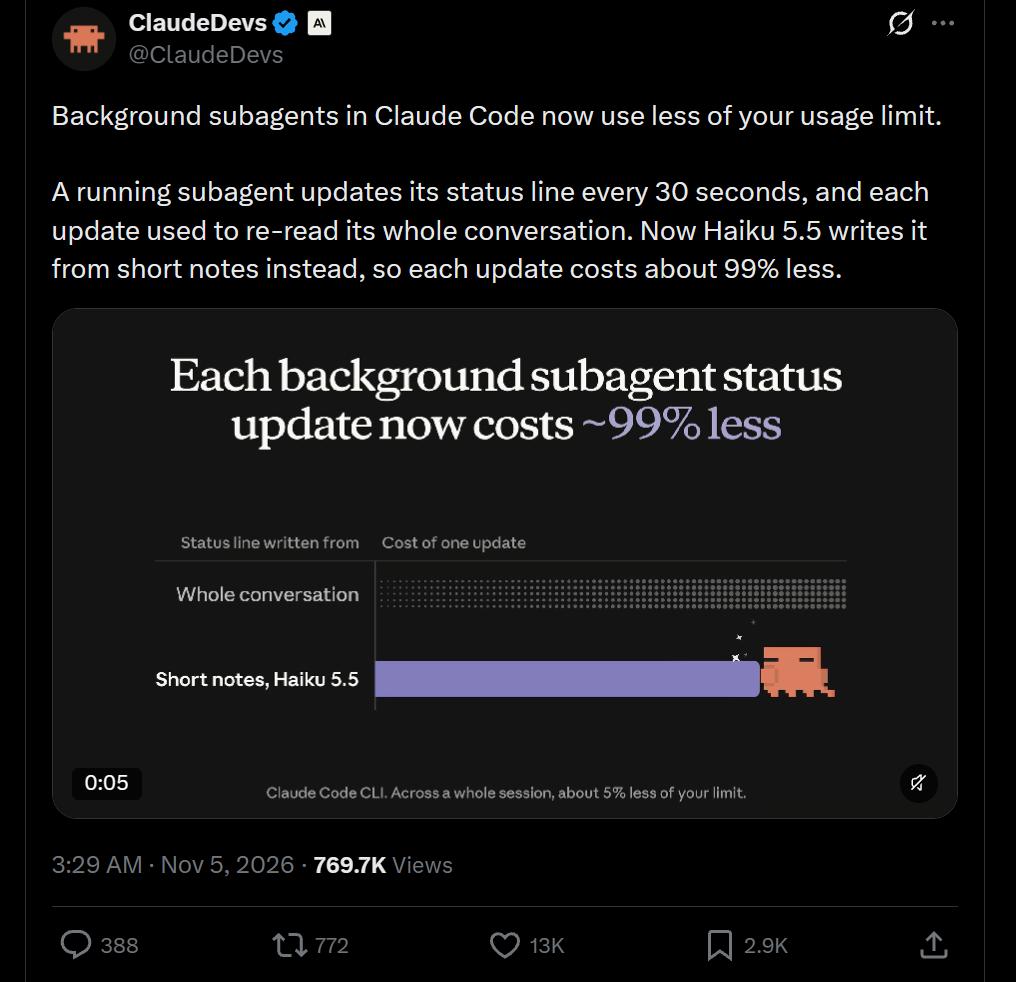
Just now, the official Claude Code account posted a tweet in a rather proud tone, announcing that they had rolled out a major performance optimization:
The status line update of the backend subagent in the terminal has cut costs by a whopping 99%.
Everyone initially thought it was a widely celebrated technical breakthrough, but when people clicked into the details, they were completely stunned.
After digging in, it turns out the backend subagent in the terminal used to refresh its status line every 30 seconds —
Every single time, and I mean every single time, it would re-read the full entire context of the whole conversation from start to finish.
So my precious quota was all spent on popping up a few words of status prompt at the very bottom of the terminal?!
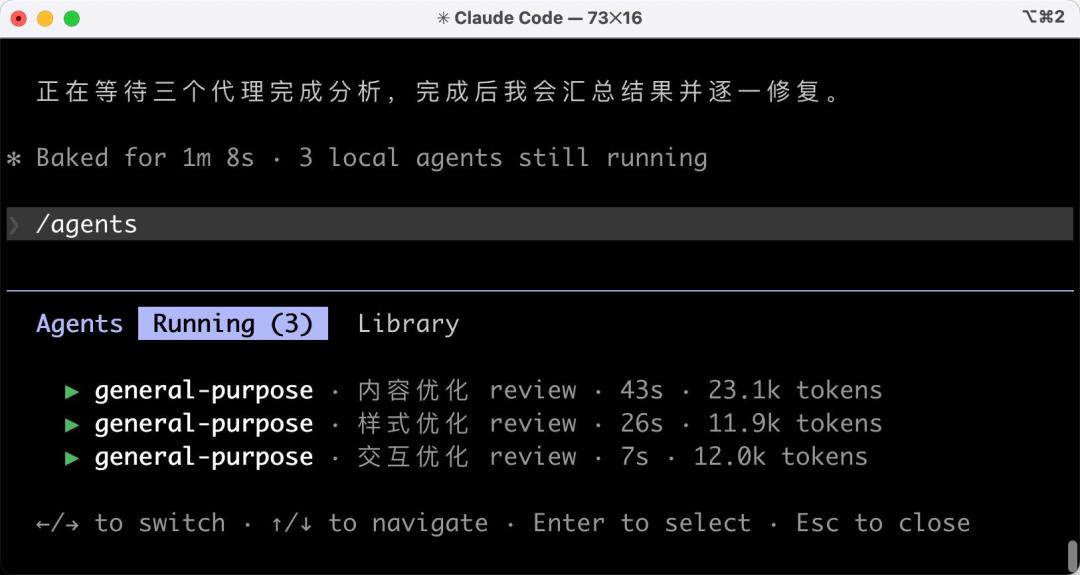
Wouldn't you be furious if this happened to you?
All netizens are obviously seething with anger.
Reading the full context every 30 seconds
C'mon guys, when you are deep in coding, it's totally normal for a complex project task to run for dozens of minutes, right?
The context easily amounts to tens of thousands, even hundreds of thousands of tokens.
So what was Claude Code doing before?
As long as the backend subagent is running, every 30 seconds it has to update the status line at the bottom of the terminal for users.
To generate this short one line of text, it directly re-read the entire conversation history from the very beginning up to now, in full.
Once every 30 seconds, twice a minute, 120 times an hour.
Who isn't feeling their heart bleed right now?!
This is not coding at all, this is literally a money shredder set up inside the terminal.

The official solution this time is even more absurd: now Haiku 5.5 generates this status line based on short notes —
No need to read the full context anymore, it just looks at a few short notes and spits out the line immediately.
The official did the math, the cost of a single status line update has been reduced by roughly 99%.
Seeing the 99% figure, many people's first reaction is probably the same as mine:
Great, so we can save more than half of our quota from now on, right?
Don't get too excited just yet.
The development team added a note in the comment section:
The subagent itself retains its original model. For sessions with a background subagent, the consumption limit reduction is around 5%, and the same quota will let you run roughly 6% more prompts. You can access this feature after updating to version v2.1.316+.
To put it another way: when the backend subagent is actually doing heavy work and running tasks, it still uses the original model it was calling before. The only part that was modified is the polling generation of the status line itself.
When converted to the overall actual session with a background subagent, the quota consumption is only reduced by about 5%.
For the same amount of quota, you can only run roughly 6% more prompts in total.

Lydia Hallie, who is in charge of Claude Code developer experience, even came out specifically to explain:
This change only affects the CLI (Command Line Interface). The desktop app never generates this subagent status line at all, so there is no need for any modification for it!

Mystery solved.
Desktop users are living the easy life, while heavy CLI developers have all been made suckers.
As someone who likes casual vibe coding on a daily basis, I'm just like:

Update on the false interception incident for game development
Claude Code's absurd operations don't stop there.
Another equally jaw-dropping issue is the nearby false interception incident for game development.
A while back, many developers using Claude Code to write games found that the AI would stop working and refuse to respond for no reason very often.
Digging into the reason is even more laughable and frustrating:
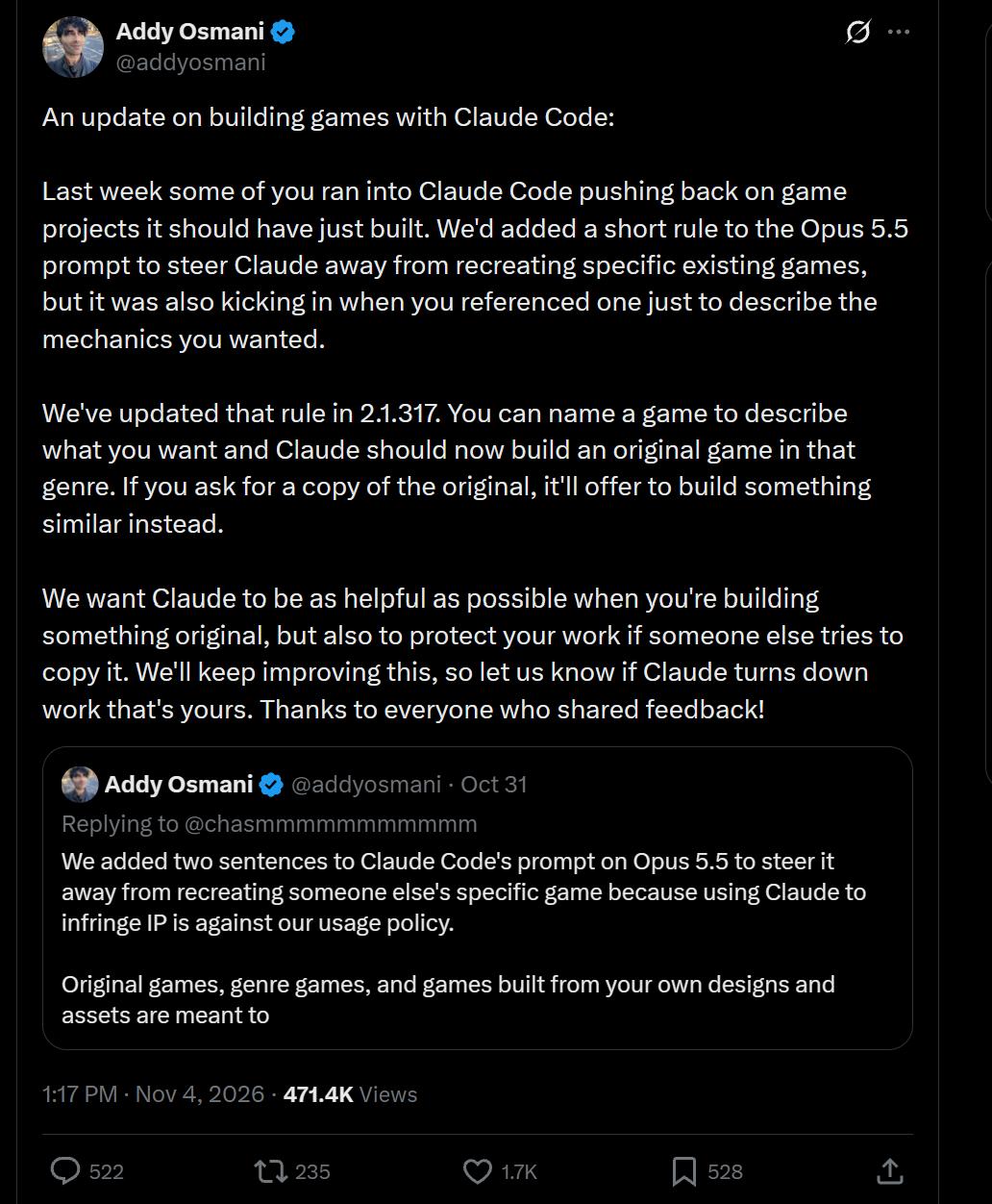
Anthropic previously added a rule in the system prompt, which was originally intended to prevent users from asking Claude to maliciously pixel-copy and replicate existing well-known games.
But the security rule was implemented with excessive force, and directly turned into a "better kill a thousand innocent people than let one guilty person go" policy.
When developers casually mentioned a game name to describe a gameplay mechanic, for example, "Help me make a jumping mechanic similar to Flappy Bird", or "Refer to the drop logic from Diablo", the system would immediately trigger risk control, mark it as "infringement and plagiarism", and refuse to write code on the spot.
This completely stumped developers who were doing legitimate original development...
Later, they must have gotten roasted so badly that the official had to urgently release a patch to fix this in the immediately following v2.1.317 version:
Now when developers mention game names to describe mechanics, they will no longer be directly rejected. Claude will build original games of that genre based on the description; if users insist on copying the exact original work, Claude will suggest developing an original version with similar mechanics instead of rejecting the request outright.
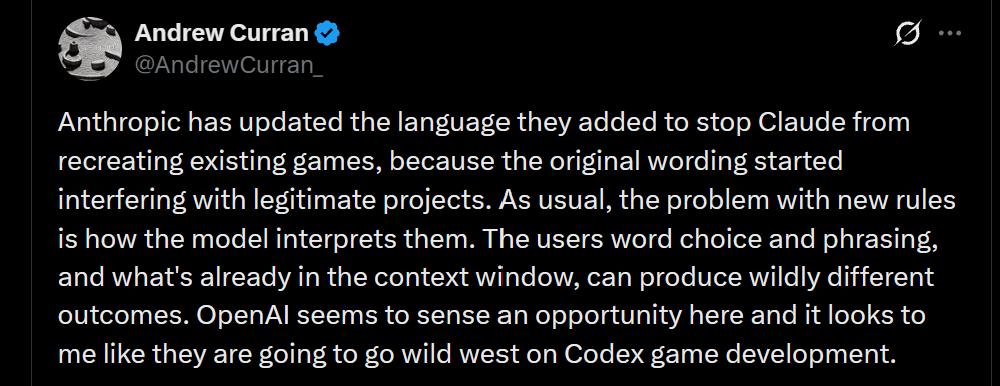
Tech blogger Andrew Curran shared a sharp comment on this:
The core pain point of these kinds of rules is how large language models actually interpret them. User's wording, sentence structure, and existing information in the context window can all cause huge deviations in the model's judgment. This move from Anthropic has made everyone anxious, and may very well push game development developers straight over to OpenAI.
Leaving aside whether OpenAI can take these users in, netizens are already completely fed up.
The most absurd part of this whole thing is that the official even publicized these issues as a major version optimization campaign.
You fixed a huge critical bug, you wanted to take credit for it, but you just exposed your own terrible engineering flaws completely.
Netizen Mason Geloso's rant hits the nail right on the head:
This should have been a silent patch pushed out quietly, I'm embarrassed for you that you made such a big public announcement about it.

Paying users in the comment section are completely driven to amused anger.
Netizen Peter Petrash called them out directly:
Are you guys planning to issue 10 free quota resets for everyone? This is an absolutely outrageous abuse of token usage.

Netizen Hashim is also full of frustration:
Are you going to reset our quota? This is absolutely absurd token waste in our paid subscription plans that we paid real money for.

Everyone who uses these tools is careful with their usage on a daily basis.
Many people even when they encounter lags or quota limits, their first reaction is to blame themselves:
Did I write my prompt too long? Did I open too many concurrent sessions?
Who could have imagined that the tiny, unnoticeable status line at the bottom of the terminal has been secretly eating up all my tokens this whole time.
Honestly, sometimes I really feel that the current AI tool ecosystem is completely surreal.
The frontend space is developing extremely fast, all kinds of cool concepts keep popping up, all benchmark tests show they are far ahead, but when you look back at the underlying engineering implementation, they haven't even nailed the most basic context reuse and lightweight monitoring.
This brute force "full context re-read" thing has a really terrible return on investment...
Anyway, I think even if Anthropic doesn't refund everyone's money, they should at least give all affected users a free one-time quota reset.

References:
[1]https://x.com/ClaudeDevs/status/2118063143167693011
[2]https://x.com/CobaltHere/status/2115838594585616503
[3]https://x.com/vibelancer/status/2115756756634673170
[4]https://x.com/AndrewCurran_/status/2118090040383254605
This article is from WeChat Official Account "QbitAI", author: Yi Shui, published with authorization from 36Kr.