The "vestibular-friendly" product became a smash hit on Taobao Tmall during the Double 11 shopping festival, will it be the next popular fashion item for middle-class kids?
After the middle class paid for "prefrontal cortex wellness", the concept of "letting children have a 'well-functioning' vestibular system" has spawned a new explosive hit for the Double 11 shopping festival.
On Taobao, a product named "Stepping Stones" is selling extremely hot. As one of the top popular brands, Springbuds has achieved annual sales of over 10 million yuan relying on this core product, and its sales have doubled during this year's Double 11.
You can hardly imagine that the prototype of "Stepping Stones" is the familiar childhood game for the public — "stepping on stones and hopping across the single-plank bridge" — this gameplay got a formal product name, and thus gained commercial value.
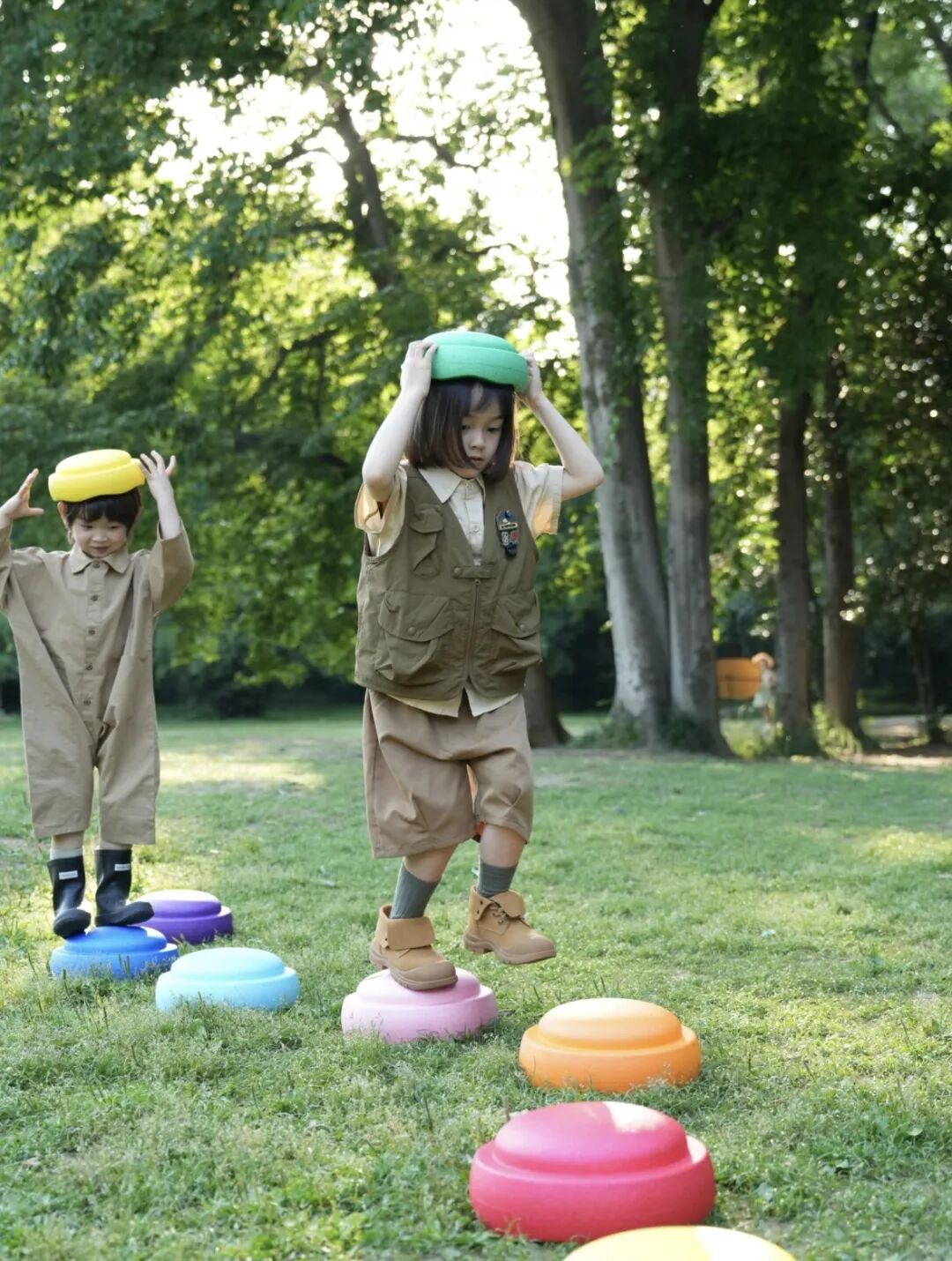
Springbuds Stepping Stones
There are many similar products on Taobao. Usually the price of a set starts at 100 yuan, and with additional accessories the price can reach 400 to 500 yuan, and the final price after discounts still costs 300 to 400 yuan. The German brand Stapelstein is even more expensive, with a "10 times premium that all goes to the postage", but there are still parents willing to pay for it.
The huge popularity of "Stepping Stones" partly benefits from the "vestibular system" trend. Simply put, the vestibular system is located in the inner ear, which can be understood as a "motion sensor" that assists the brain in making judgments; many parent-child bloggers share content that links it to balance, coordination, physical strength, and concentration.
Therefore, to exercise their children's vestibular system, parents have quietly started "competing" at home with their kids: buying all kinds of sensory integration toy "equipment", and transforming the living room into a "challenge game amusement hall".
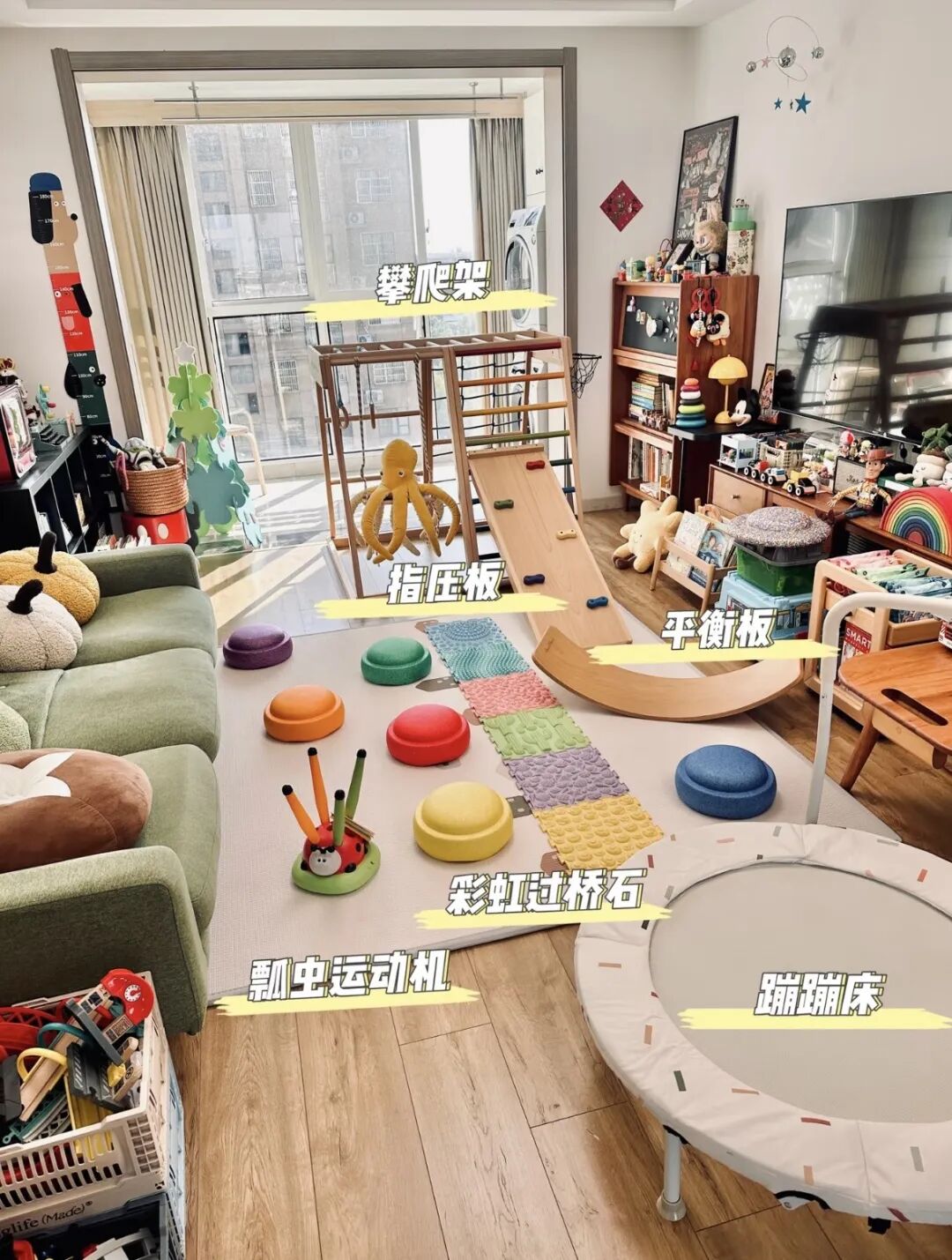
@YeahHeyAh
Some people may say that this is just a "gimmick". But digging deeper, the truth of the demand is not exactly that.
"Vestibular-friendly" products have become trendy parent-child home fashion items
As one of the most popular new products in the parent-child circle this year, "Stepping Stones" is definitely on the list.
On Taobao, the gross motor category for children that Stepping Stones belongs to has continued to grow since the beginning of this year, among which "vestibular toys" have been split out as an independent sub-category. The top best-selling product in this category, the flagship "Rainbow Stepping Stones" of brand Springbuds, has sold 1.5 million units in just two years. On Xiaohongshu, the related tags of "Stepping Stones" have gained 9 million views.
In fact, "Stepping Stones" looks very simple, which is a set of colorful stepping stones with the same shape. Each stepping stone is like a basic module that can be placed separately, stacked, or combined with accessories such as wooden boards. By laying out a route, children can step and jump on the stones to keep balance, so as to achieve the purpose of vestibular training.
This is just like the "prefrontal cortex three-piece suit". Take fuse beads as an example, you may not be able to clearly explain what connection it has with the prefrontal cortex, but real players know very well that focusing on piecing them together for an hour or two can indeed bring a mental relaxation effect.
The same goes for Stepping Stones. Its core selling point is turning abstract abilities such as balance and coordination into fun and diverse gameplay.
"Let kids move around without stepping out of home", "see their abilities improve while they are playing" — these are irresistible attractive reasons for parents.
Some people mix the "stepping stone game" with color cognition; some people directly use it as a "energy-releasing tool" for children, "in winter when outdoor activities are reduced, placing a few stepping stones at home can start the game immediately".
A parent who bought the rainbow stepping stones told me that the gameplay of Stepping Stones is more flexible and open than that of dolls or toy cars. By changing the gameplay and increasing the difficulty, it can meet the interests of children of different ages, thus extending the usage period. Therefore, many bloggers define it as a "long-term value toy" in their sharing content.
And this is exactly the original intention of product R&D. The Springbuds brand, which has sold 1.5 million sets of Stepping Stones, pointed out that children's growth requires physical movements involving various large muscle groups, but simple, repetitive and pre-defined training movements do not conform to children's nature. Therefore, they focused their products on family-accompanied open-ended toys, simplified the industrial design, and paid attention to details such as color, shape and gameplay.
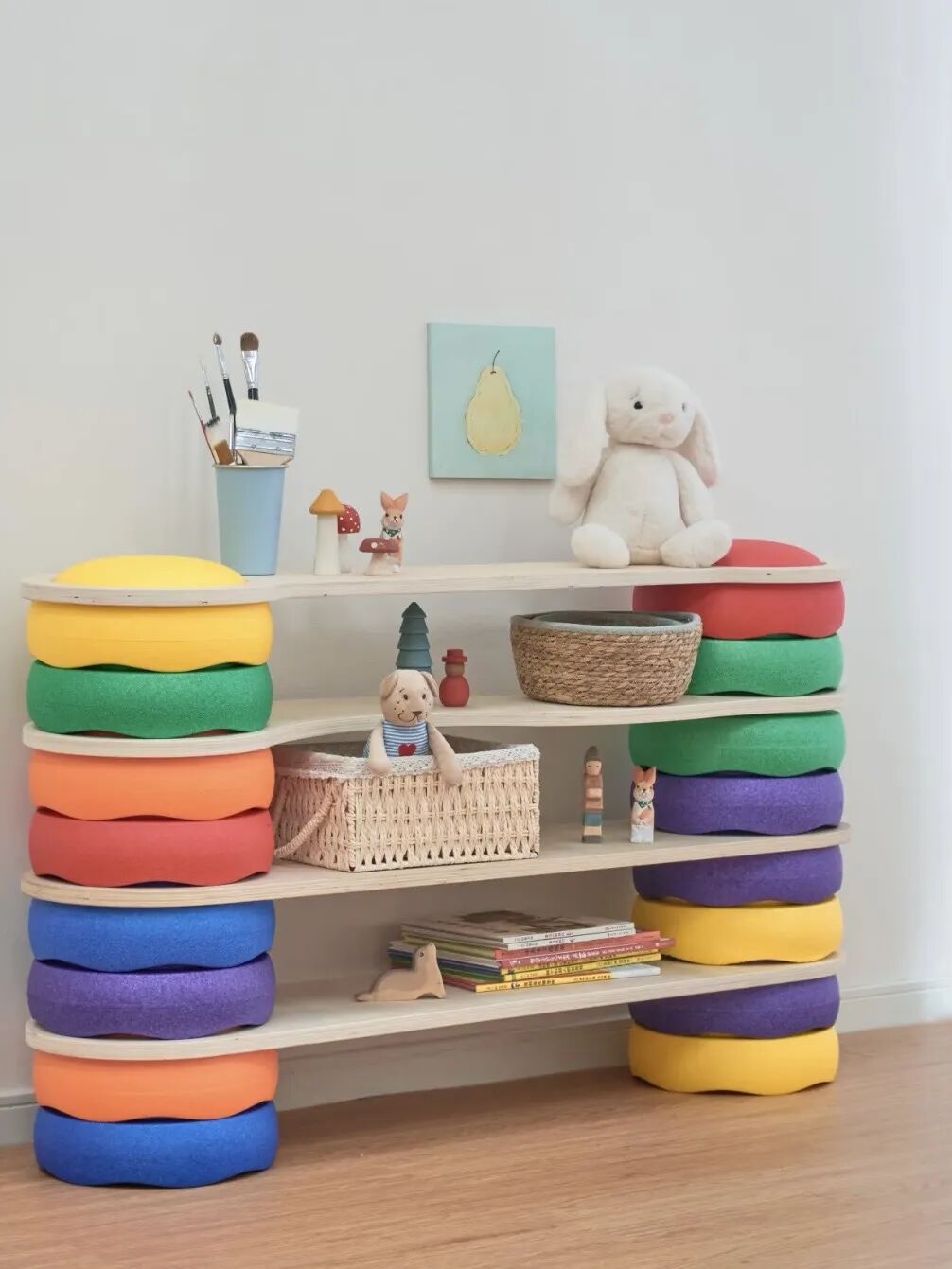
Usually the recommended age range of "Stepping Stones" is under 6 years old. But in fact, there are many "over-age" players. There is even a case shared on social media that "a 75-year-old grandmother plays with the kid together". It can be said that this toy integrates the maximum common divisor of happiness for the whole family.
However, the hidden factor that really makes Stepping Stones evolve from "worth buying" to "popular in the circle" is its high appearance level.
The simple outline and dopamine color matching of Stepping Stones make it possible to become part of home aesthetics. Springbuds puts aesthetic design on the same level as material and function in product R&D.
"Toys not only serve children, but also belong to the family space" — this product concept brings more variable combinations and reusability of the product. The stones can be turned over to be used as storage bowls, stacked to be used as stools, and assembled with wooden boards to quickly form a small storage display rack. All in all, the diverse shapes "fit any home decoration style".
It is precisely because of its aesthetic value that it easily arouses people's desire to share. The second-generation Stepping Stones launched by the Takbebe brand adopts multicolor matching, which unexpectedly forms a wonderful resonance with Mayday's derivative IP "Five Balls". Some fans posted a set of "dopamine-style fun home decor", where the Stepping Stones match perfectly with 'Bubu' (the derivative IP of Mayday's lead singer Ashin), and immediately received a lot of praise from netizens, saying "this is the home I envy".
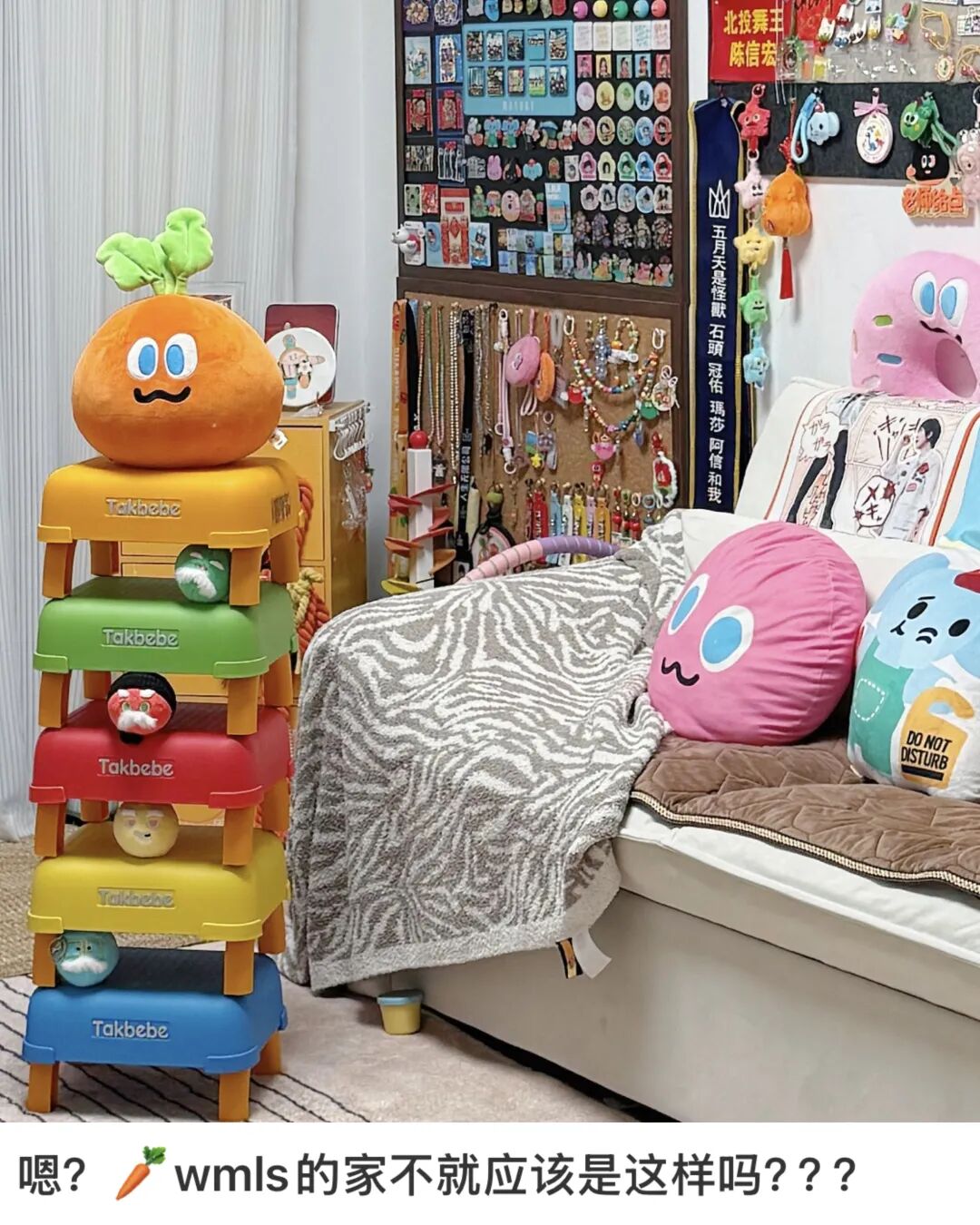
@Orin Milan
Toys loved by children are also practical good items and trendy home fashion items in the eyes of parents — it can be said that the hot-selling logic of Stepping Stones is hidden in these specific product experiences.
The new business of "competing for gross motor development" at home
A scenario migration is taking place in children's toy consumption.
Products such as Stepping Stones, balance boards, small climbing frames, acupressure mats, and foldable trampolines have started to enter family shopping lists.
The best-selling product data of Double 11 draws a clear trend line — parents who know how to live a good life are gradually turning their homes into a "miniature training amusement park". Filling the space with various gross motor game toy equipment has become the new normal.
The Taobao Tmall toy industry has observed that children's gross motor products are developing towards indoor use, miniaturization, home-style design and environmental protection.
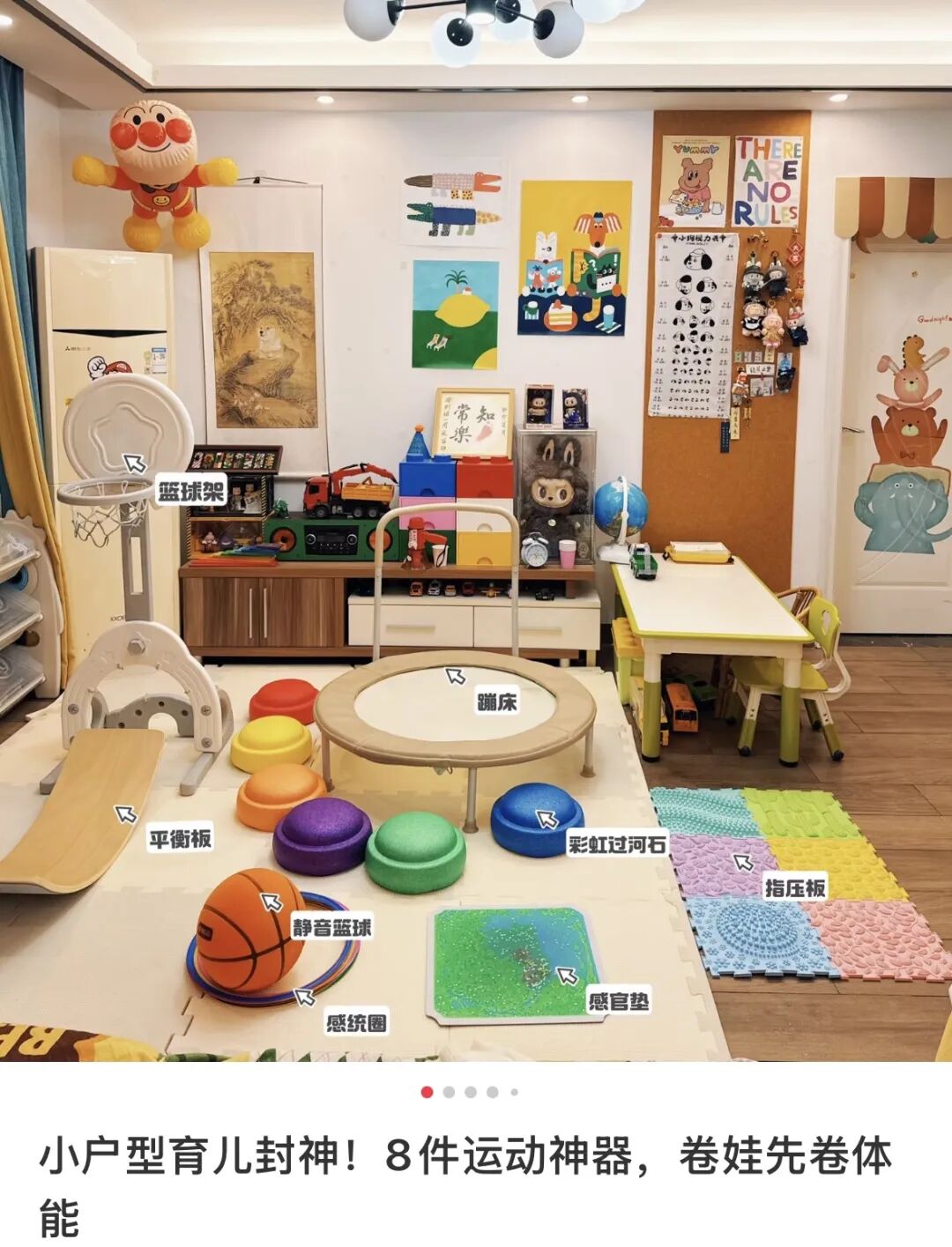
@Little Kid With Glasses
The so-called "gross motor" refers to physical movements that mobilize the trunk and limbs, including crawling, running, jumping and keeping balance. In the past, the equipment designed around these movements mostly appeared in kindergartens, early education centers and children's amusement parks. Items such as balance beams and swings are common equipment. Institutions organize sports, music and parent-child games into courses, and the concept of "sensory integration gross motor" has thus taken deep root in parents' minds.
In recent years, with the contraction of commercial institutions such as My Gym and Gymboree, equipment merchants that rely on order procurement have also been impacted. But market demand still exists.
Bringing gross motor activities into daily family life has become a new direction targeted by industrial zone merchants.
Xiaqiao Town, Yongjia, Wenzhou is known as the "Capital of Educational Toys in China", which is good at non-power amusement facilities widely used in amusement parks, shopping mall ball pits and kindergartens, and its market share accounts for more than 60% of the national total. Some merchants here are seeking transformation, shifting from large amusement equipment to small indoor sports equipment.
However, the transition from "equipment" to "toy" is not as simple as selling through a different channel.
The Springbuds brand found that most of the sensory integration products on the market still stay at the stage of professional institutions or low-age teaching aids: bulky shape, abrupt color, single gameplay, children will gradually lose interest after they turn 4 or 5 years old, and it is difficult for these products to really integrate into the family space. There is a supply-demand gap in this field.
Therefore, they cut into the market by creating flagship products. In the past two years, under the guidance of Taobao Tmall's industry operation strategy, the Springbuds team quickly made "Rainbow Stepping Stones" a best-selling product. In just over three years, Springbuds' annual sales have exceeded 30 million yuan, growing at a rate of 100% every year, among which Taobao Tmall contributes more than half of its online sales.
During this year's Double 11, Springbuds started to sprint for a larger sales scale. Through the offline influencer product selection meeting organized by Taobao Tmall Toys & Pop Culture Industry, the brand connected with top live streamers such as Li Jiaqi, and the overall sales scale reached a new level. The Double 11 event has not ended yet, but the brand's sales have already doubled year-on-year.
Although the consumer-grade sensory integration gross motor category has a short development history, more families have become consumers of gross motor products in this Double 11.
This represents the dividend of category innovation, and it is also a trend breakthrough of the Taobao Tmall platform.
This year, the platform has successively held merchant conferences in Chenghai, Lishui, Ningbo and other places, transmitting trend judgments to the industrial end, helping mature production capacity align with the demand side. Merchants in the industrial zones have also launched original products to deliver new supplies to the market. Takbebe mainly produced trampolines before, and later expanded to the Stepping Stones category, which also received very good sales feedback.
If you browse social media sharing content, you will find that the new domestic children's toys nowadays are increasingly design-oriented and stylish, refreshing people's impression. They have taken off the coat of "factory assembly line products", with excellent product quality and attractive selling points, which truly meet the needs of "Chinese children".
Of course, parents are also recalculating the cost. "Instead of spending thousands of yuan on sensory integration training courses, it may be better to buy a satisfying toy and play with it at home for 10 minutes every day". The best-selling domestic products are very cost-effective and reassuring to buy.
It is a misreading that children's consumption is only restricted by the population bottleneck
When discussing children's toy consumption, the number of newborn population is an unavoidable topic. But only focusing on the population size will easily miss a key point: the new generation of parents has changed, and their logic and standards for selecting products are also changing.
"Scientific parenting" is still important, and the concept of "learning through playing" is penetrating into daily life. Parents gradually realize that "the value of toys" can also contribute to their children's growth. Accordingly, the logic of toy consumption has changed.
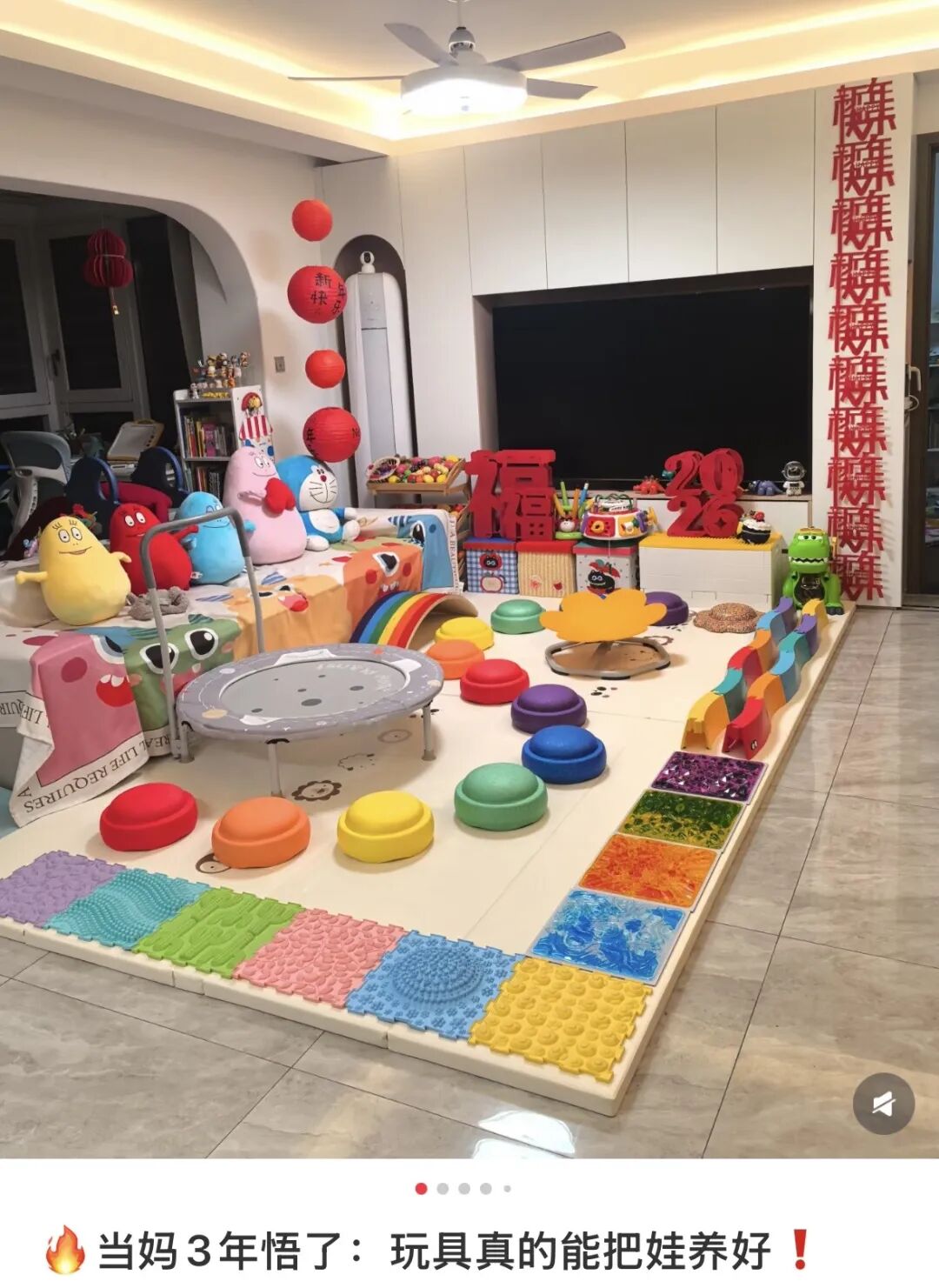
@Tuntun Mama+
They are willing to study the latest trends, understand new concepts and new products, and are willing to pay for them. However, in the era of "everyone lives a thrifty life", the post-90s and post-00s parents are more pragmatic and pay more attention to cost performance.
Compared with relying on word of mouth in mom groups and "copying homework" to place orders according to shopping lists, this generation of parents is more accustomed to searching and comparing: from social search, comparing product functions, learning about user reviews, to judging whether the product is worth buying. The entire purchase decision-making link has stronger autonomy.
At the same time, consumers have gradually removed the filter for international big brands. The "blind following era of 'expensive means right'" is over.
For example, many overseas big brands' track toys are good at adding more components and making the products larger, the core reason is that they are designed for overseas living environments. However, Chinese families have strong storage demands, and toys need to balance tidiness and play needs to adapt to the limited living space.
In addition, creating a sense of novelty and making flexible innovations based on the regional market are things that international big brands can hardly respond to quickly. For example, combining the Snake game with a magnetic track brings high entertainment value and is very popular for spreading on social media. Another example is turning traditional puzzles into readable picture books; introducing ancient business concepts into board games to convey economic ideas... Fresh and practical product innovations also have market demand.
These changes seem tiny, but they are the most specific needs of Chinese families, which are closely related to "hundreds of millions of children".
The Taobao Tmall Toys & Pop Culture Industry pointed out that the toy industry has entered an all-age stage, with opportunities for capacity expansion and upgrading. At this stage, the iteration of parenting concepts and consumption trends is also spawning new segmented tracks.
Chinese merchants are familiar with manufacturing and have sufficient product capabilities to quickly respond to the market. The key is to take refinement and quality as the foundation, and lead the market with micro product innovations. This is exactly the business opportunity that merchants should seize the most.