Is Physical AI heating up, or "cooling down"?
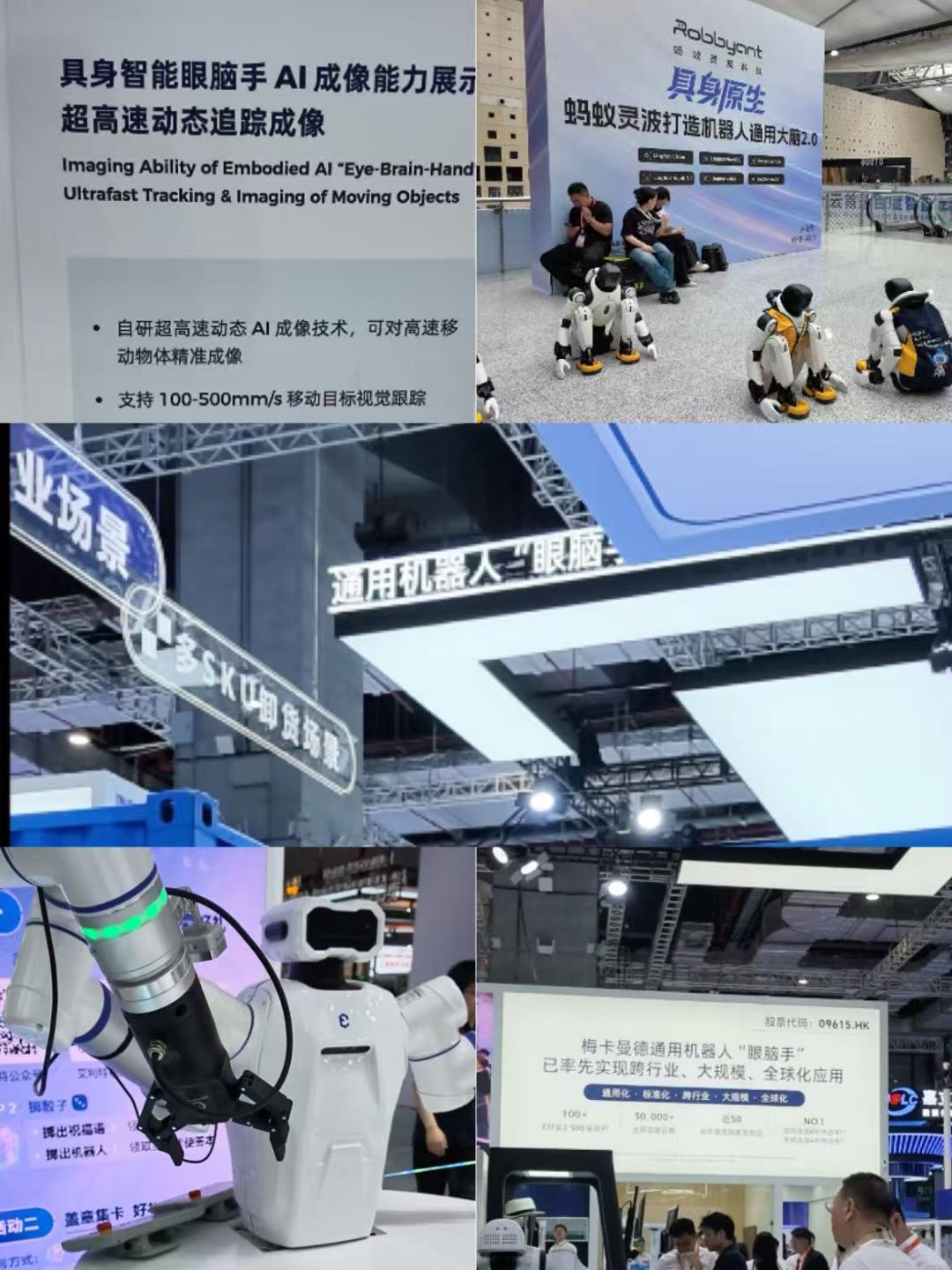
From the past era of "showing off athletic muscle" to today's "showing off brainpower", Physical AI definitely occupies a place among the most popular buzzwords in the AI industry this year. Looking at this year's robot exhibitions, brain-centered concepts including "world model", "one brain for multiple morphologies" and "eye-brain-hand" have been brought to the forefront as core selling points by all major enterprises.
At the World Physical AI Conference held in October, Wang Xingxing, founder of Unitree Robotics, stated that with the release of GPT-6, Physical AI has already shown signs of a breakthrough, and key breakthroughs are likely to be achieved in the next 1-2 years or 2-3 years. At present, the core challenge for embodied intelligence to cross the ChatGPT moment lies in the alignment between the input and output of AI models and real robots.
When "deployment feasibility" and "work execution capability" become the focus of the industry, the relevant concepts around "Physical AI" carry extremely high expectations from the industry, and the world model is one of them. As the "brain" for robots to understand the physical world and interact with the external environment, the world model is highly anticipated.
However, the flip side of high expectations is the risk of underperformance. Since the second half of the year, many "brain"-related companies have still received large single-round financing, but there have been increasing news about the cooling of the entire embodied intelligence primary market, and the risks, bubbles and anxiety around Physical AI have followed.
Is Physical AI heating up or "cooling down"? Reporters found that under this boom, the primary market capital, start-ups, tech giants and the A-share industry chain are presenting completely different operating statuses.
2026 is the year of "brain": Hot money flows to "Physical AI"
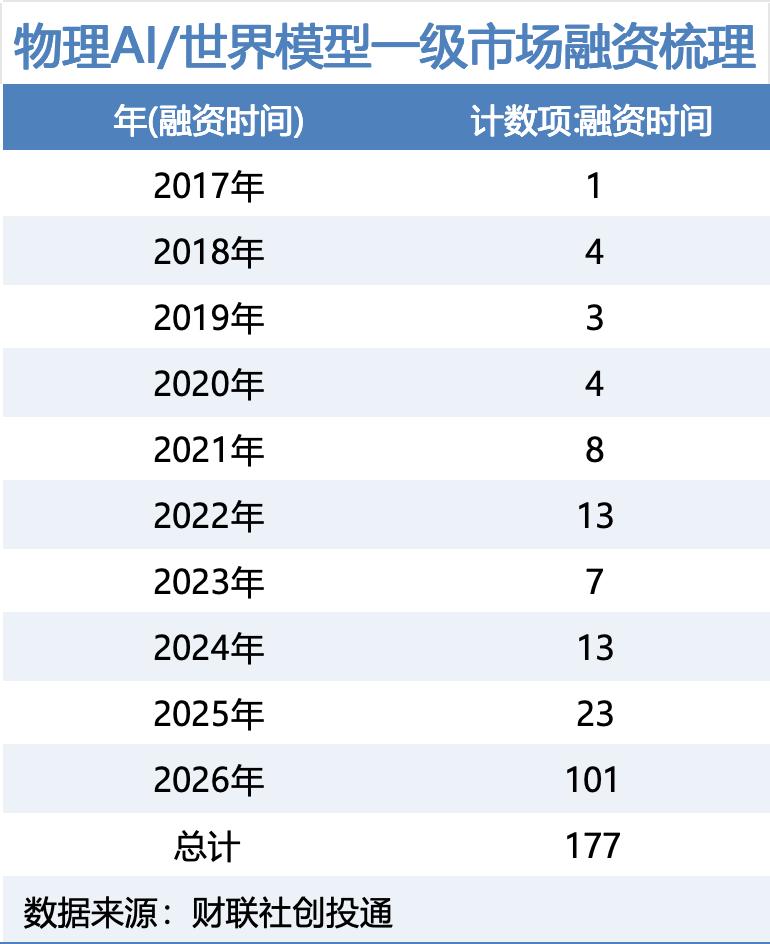
According to incomplete statistics from the data of CLS Venture Capital, before 2025, the number of primary market financing events for Physical AI/world model was mostly in single digits, and the number rose to 23 in 2025. As of now, the number has reached more than 100 in 2026, and multiple rounds of financing for a single company have become the norm.
From the perspective of financing time distribution, the period from June to September 2026 is the most intensive period for the track to attract large amounts of capital. For example, LiberAI, which focuses on physical world models, completed four rounds of financing from May to September, with a total amount of nearly 10 billion yuan. Liu Songming is considered to have the "top-tier" founder profile among the "young geniuses" that VCs are currently chasing. Manifold Space has completed 6 rounds of financing in total in one year, from the seed round in July 2025 to the Pre-A+ round in June 2026, and the total financing of the Pre-A series is nearly 10 billion yuan.
In the field of world models, it is not uncommon for start-ups to achieve "several jumps" in financing in a short period of time. Although projects before Round A, including seed round, angel round and Pre-A round, currently account for more than 70% and most of them are early-stage projects, there are many cases where the single financing amount exceeds 100 million yuan or even 10 billion yuan.
These large-scale financings are concentrated in several types of companies: the first type is companies that develop world model/embodied brain base, such as LiberAI, Octopus Dynamics, Inverse Matrix Technology, Manifold Space, DeepEyes Intelligence, West Lake Digital Intelligence; the second type is companies that develop data infrastructure and simulation engines, such as LightWheel Intelligence, Hive Interconnection, FlyJet Core, Songying Technology.
There is also a type of company that focuses on the combination of brain and dexterous tactile software and hardware, or has core hardware mass production barriers. For example, Lingchu Intelligence completed angel round and Pre-A round financing in March 2026, announcing that a total of 2 billion RMB had been received; in April, state-owned capitals including SDIC Leading and Jingxi Ruiling increased their investment again; in July, it completed a Series A financing of over 100 million USD. Another example is Pacini, which focuses on tactile sensors and dexterous hands. It won a Series B financing of over 1 billion yuan in March 2026, completed a 1 billion yuan strategic financing in August, and obtained several hundred million yuan of B++ round financing in September. Its accumulated financing has exceeded 4 billion yuan.
The primary market in the second half of the year: Financing cools down, LPs start to inquire about real scenarios
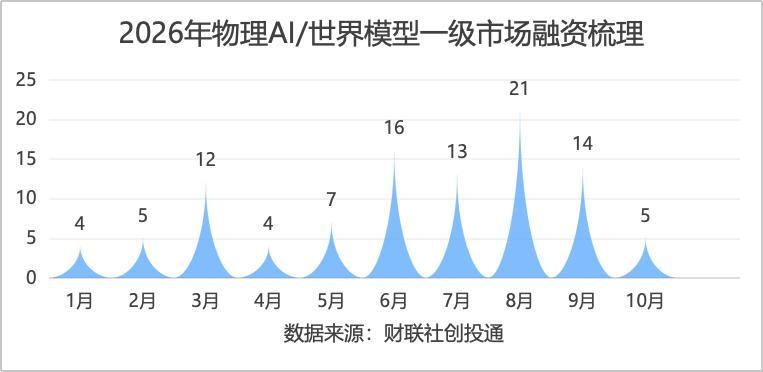
According to incomplete statistics from the data of CLS Venture Capital, there were 5 primary market financing events for Physical AI/world model in the single month of October, which did decrease compared with before. Entrepreneurs and investors active on the front line have already felt the cooling trend in advance.
"Everyone spends their ammunition too fast." Wang Sheng, Angel Partner of Inno Fund, sighed like this. He said that many leading VCs emphasized in May and June that the market was too hot and they needed to slow down. "But this is a train, it won't stop immediately when you step on the brakes. Due to inertia, the number of projects delivered in July decreased by about 20% to 30%, and the number in August decreased by another 20% compared with July. The outside world feels that there was a cliff-like drop in September, but in fact the braking process had already started before."
"Generally speaking, when the tide recedes, we can see who is swimming naked. There is a lot of money in the market, which is the truth. It's just that people may feel that the pace is a little slower, but it doesn't mean there is no money in essence." Yu Kaicheng, director of West Lake World Model Research Center, holds this view. In his opinion, the commercialization of new technologies is a long process. "A group of players rush in, then the market cools down for a while, then a larger group of players rush in, which is very normal." This year, West Lake Digital Intelligence Awomo, where Yu Kaicheng works, was established and launched the "conceptual world model". Recently, this start-up has obtained more than 100 million yuan of accumulated financing from seed round and angel round, becoming a member of the world model entrepreneurship boom.
Looking back on the past three years, the financing of embodied intelligence in the primary market has achieved great leaps, and capital has been continuously released. In 2024, the financing amount of embodied intelligence was 140.5 billion yuan; by 2025, the total financing amount of domestic embodied intelligence and robot sectors was 735.43 billion yuan, with 744 annual investment and financing events. In the first half of 2026 alone, the total financing amount of the domestic embodied intelligence track has reached 935 billion yuan, 5 times higher than that in the first half of 2025; the number of financing events reached 322, a year-on-year increase of 137%.
Many investors also said that they are indeed more cautious in making moves recently, the pace has slowed down, and the investment focus has shifted from the imaginative space of technology to investment risks and business realization capabilities. However, the slowdown of investment moves will be reflected in the paper financing data with a certain lag.
In the first half of the year, a joke circulated in the investment circle: "Young genius + Physical AI + top journal paper = direct capital injection". Now when the market is cooling down, the "young genius" in the joke is being re-examined. But in communication, some investors reminded that "young genius" is not a derogatory term in the AI era, and being labeled with this tag does not mean that the project is not a good project.
Fan Chenchao, deputy general manager of Zhechuang Technology, believes that compared with the last generation of mobile Internet era where most startups were based on new business models, most of this generation of AI startups are technology-oriented. Moreover, "young genius" is only one of the concerns in investment decision-making, which belongs to the "human" factor. The final success of entrepreneurship depends on the superposition of many factors.
He summed up a portrait formula for a basic model entrepreneurial team: The core founder's sensitivity to advanced technology routes × team leadership/organizational capability × talent density (industry influence) + (capital + computing power + engineering capability, etc.). He believes that "as long as one of the first several capabilities is a short board, or equals zero, the final result will be very poor, even directly zero." Many parts of the "addition" part in parentheses can be solved with capital.
At the capital roundtable of the founding conference of West Lake World Model Research Center, Wang Sheng, Partner of Inno Fund, said bluntly that the biggest challenge for "young geniuses" comes from "the future governance and operation of the company, as well as the ability to grasp business in the process of development and change, which is indeed what they need to learn."
Tech giants rush in: Focus on base model and ecology
If we turn our sight to tech giants, the situation is quite different. Google, NVIDIA, AMD, ByteDance, Alibaba and other companies are moving fast in the layout of world model and Physical AI related fields. Compared with start-ups, tech giants pay more attention to the layout of base model and ecology, as well as finding new combinations between Physical AI and existing businesses, rather than directly cutting into the embodied intelligence "brain" track.
The first is to compete for the next-generation interaction "entry". Taking the world models of Google and ByteDance as examples, the core is real-time interaction with the virtual world.
At the end of October, Google DeepMind officially announced the latest generation world model Genie 4, and demonstrated its experiment of simulating humanoid robots to perform tasks in cooperation with the large model Gemini 4 Argon.
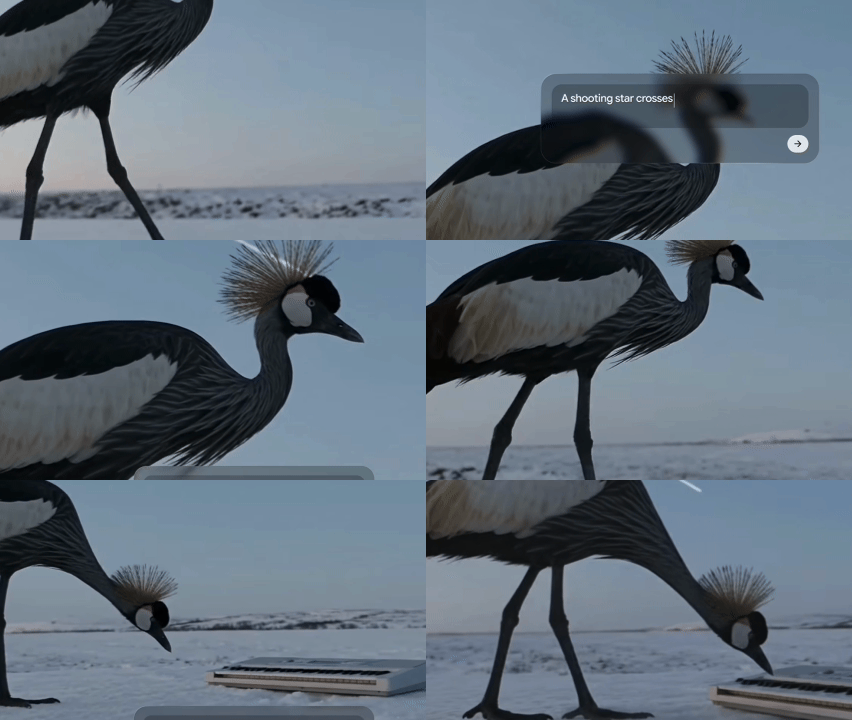
News about ByteDance's world model, which targets Genie, has also come out frequently. For example, in June, there were reports that Wu Yonghui set a goal for the world model, to release at least one version of model targeting Genie 3 before the end of the year; in September, Zhang Yiming, founder of ByteDance, personally took the lead in promoting this project, coordinating internal cross-departmental teams, and investing computing power and AI R&D resources.
It is understood that the core of this R&D is to try to connect ByteDance's AI models, cloud computing, content platforms and Pico hardware, so that the world model can become a new growth flywheel. In October, Tim, founder of Storm Vision, has demonstrated ByteDance's world model in advance, and ByteDance has not officially released it yet.
The second is that hardware giants are starting to "build computing platforms for next-generation AI", taking AMD and NVIDIA as examples.

On September 28, AMD announced the acquisition of World Labs founded by Li Feifei with all-stock for about 8.2 billion USD. Li Feifei will join AMD as Executive Vice President and Chief Scientist. This is also regarded as a landmark event that Physical AI has become a new battlefield for computing power.
Su Zifeng, Chairman and CEO of AMD, positioned this as a long-term bet for the next decade: "Building a computing platform for next-generation AI requires a deep understanding of how models evolve. We can use this insight to develop hardware, software and systems."
As another hardware chip giant, NVIDIA officially released the open world foundation model NVIDIA Cosmos 3 for Physical AI in June this year. At the same time, NVIDIA has cooperated with Unitree Robotics to launch the new generation humanoid robot reference design H2+, also known as the Isaac GR00T system. In October, NVIDIA announced to expand the Cosmos world model platform, adding new training tools, simulation checkpoints and Cosmos Data Factory blueprint to help Physical AI developers accelerate the construction of data pipelines.
At this year's GTC conference in Berlin, Jensen Huang, CEO of NVIDIA, clearly stated that "the next wave is Physical AI", which also triggered a wave of heated discussions on Physical AI in China at that time.
The third is that the base models laid out by tech giants are beginning to move towards the physical world.
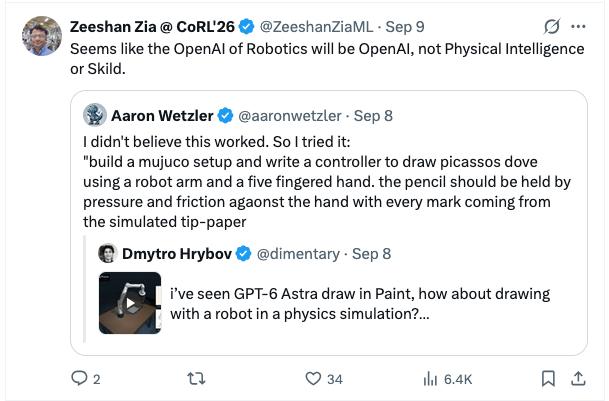
In September, OpenAI released GPT-6 Astra. Its focus is not to build a dedicated embodied model from scratch, but to introduce the accumulated capabilities of general models in perception, reasoning and planning into the robotics field, which has triggered discussions in the industry about "whether general models will form a dimensionality reduction strike against dedicated models".
For a while, the core barriers and living space of dedicated embodied intelligence models have been examined. The core of this impact is not that Astra can immediately replace dedicated models, but that it has shaken the logic that previously supported the valuation of independent embodied "brain" companies. Overseas comments said: "The OpenAI in the robotics field will be OpenAI itself, not Physical Intelligence or Skild."
Other tech giants also have relevant layouts. Alibaba released three models: VLA manipulation model Qwen-RobotManip, VLN movement model Qwen-RobotNav and world model Qwen-RobotWorld, trying to cover the operation, navigation and physical law prediction of robots of different forms with one model system. In addition, Anthropic released the "Model Hardware Standard" (MHS), which is interpreted by overseas media as its first public entry into the field of embodied intelligence and Physical AI, with its entry point being formulating interface standards for AI to control physical devices.
A-share Physical AI industry chain: Most are still "shovel sellers"
In terms of the secondary market, in the just-passed October, the A-share Physical AI industry chain set off multiple rounds of limit-up surges. At present, the layout of A-share companies in Physical AI is basically carried out along the chain of "perception - physical simulation/world model - computing power - embodied ontology and supporting facilities - industrial AI/industry scenario application". Most companies are still in the position of "shovel sellers". There are very few A-share companies that actually develop Physical AI simulation platforms and world models, and Suochen Technology is one of them.
In March this year, Suochen Technology released the world physical model "Yingzao · Wanxiang" and the agent "Dasheng", targeting NVIDIA Omniverse / Isaac Sim system. In the first half of 2026, the "Kaiwu" Physical AI business achieved a revenue of 6.59 million yuan, accounting for 9.06% of the total; R&D investment reached 84.8 million yuan, a year-on-year increase of 67.53%, accounting for 116.59% of the operating revenue. It is worth noting that the company's total revenue in the first half of the year was