Young people are no longer buying cars.
"At the very beginning, our budget for buying a car was 300,000 yuan, but later it was cut down to 250,000 yuan."
When asked why she targeted this price range, Li Yu, who was wearing a pure white cotton knit sweater from Ralph Lauren under a wool coat from less, paired with a light blue scarf from COS and a black Celine Triomphe canvas tote bag, answered straightforwardly: "Just to show off."
After graduating last year and in the first few months of starting work, Li Yu and her boyfriend Ding Ye had a surging urge to buy a car. At their most impulsive, the two shuttled frequently between various mid-to-high-end 4S stores in Chongqing and Chengdu. They not only learned about the configurations of new cars, but also collected information on nearly-new used cars through various channels, and even considered buying two separate cars for each of them.
Having worked for more than a year, Li Yu has gained a more tangible perception of money. After several short-distance car rental trips and calculating the costs of commuting, hailing rides, as well as purchasing and maintaining a car, their urge to buy a car gradually faded away.
"Now I think there is no need to spend so much money on a car just to save face and show off."
In megacities, high rents and steeper living costs have brought huge financial pressure. Coupled with frequently congested roads, strict traffic restriction and license plate policies, and uncertain future plans, buying and maintaining a car is essentially a false proposition for young people aged 25 to 30.
Looking at lower-tier cities, young people who marry and have children earlier in third- and fourth-tier cities do contribute part of the car purchase demand, but this contribution is quite limited when viewed against the overall market. Data from J.D. Power shows that the post-2000s generation accounts for only 9% of car buyers, more than 70% of whom focus on models priced below 200,000 yuan, and cost-effective small cars at the 100,000-yuan level have become a more prudent choice.
In the narrative of car companies, young users, especially first-time buyers aged 25 to 35, are almost the most frequently targeted group. No matter new EV forces, joint-venture brands shifting to electrification, or new sub-brands launched by traditional original equipment manufacturers, all of them have shouted the slogan of youthfulness without exception.
But the problem is that young people facing huge financial pressure are rapidly reducing their willingness to buy cars. Even if they do purchase a vehicle, they mostly turn their attention to the market segment below 200,000 yuan with thin profit margins.
01
Cannot afford a car, nor can they afford to maintain it
"I had no clear concept of money." This is Li Yu's evaluation of herself before starting work. In fact, even now, her tangible sense of money is not particularly strong.
Not long ago, she rented a car for a short self-driving trip in Western Sichuan, and brought three tops from Ralph Lauren alone. The price of one set of outfits and accessories she casually posted on WeChat Moments was three to four times her monthly salary.
When she first started working, she wanted to buy a 300,000-yuan car, but when all kinds of fees were added up, the final on-road price exceeded her expected upper limit, so the budget was fixed at 250,000 yuan. "At that time, I just wanted to show off by buying a car. If I bought a car priced below 200,000 yuan, I thought it was better not to buy it, because it was not enough to show off."
The first two or three months at work was the period when Li Yu's desire to buy a car was the strongest.
On the one hand, the school where Li Yu works is located in the suburbs. To go home on weekends, she needs to walk a long distance to the bus station first, then take a one-hour coach to the urban area, and then take the subway for 40 to 50 minutes. Repeating this way, the commuting cost alone costs 700 yuan per month, and a lot of time is wasted.
On the other hand, most of her colleagues have similar backgrounds: local residents in Sichuan, the only child in the family, with overseas study experience and well-off family conditions. Several colleagues who joined the company a few years earlier have already driven new cars allocated by their families, including Audi Q5L, Mercedes-Benz C-Class Coupe, Li Auto and so on. The competitive environment also had a huge impact on Li Yu.
During that period of time, Li Yu spent almost all her spare time going to 4S stores with her boyfriend. When she had no time to go offline, she used her mobile phone to browse various car introduction videos.
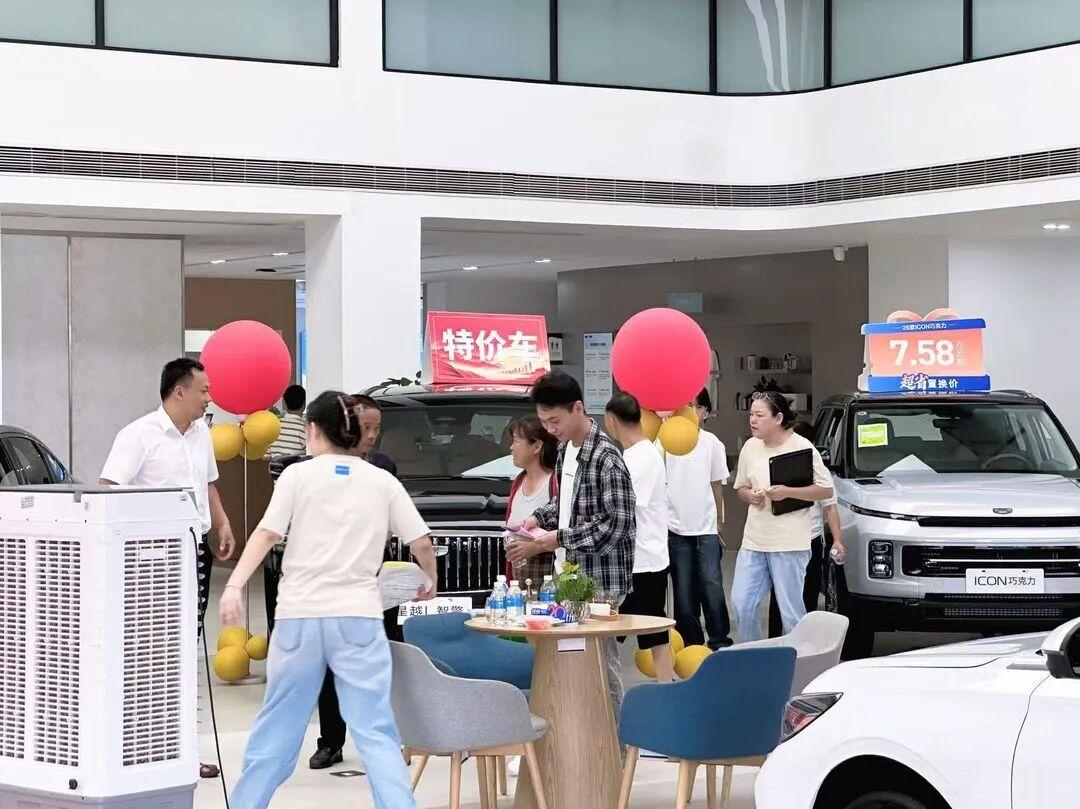
When they first started looking at cars, they were drawn to the intelligent driving function of AITO M7. After that, the two test drove many models one after another, including Xiaomi YU7, Luxgen R7, Li Auto i6 and so on. Li Yu, who prioritizes appearance when buying a car, was impressed by YU7, while Ding Ye, who focuses on practicality, thought Luxgen R7 was a well-rounded model with no obvious shortcomings.
Later on while browsing videos, Li Yu even started looking at nearly-new used cars. At their most impulsive, Li Yu and Ding Ye once planned to buy one car each, and several times they almost paid the deposit under the persuasion of salespeople.
Lin Han in Shanghai and Xiao Nan in Beijing, who have worked in first-tier cities for many years, have no intention of buying a car. In the three or four years after graduation, both of them have changed many jobs, and the former even took on a small amount of debt due to an excessively long gap between jobs. In this case, they have to budget carefully just to support themselves, let alone buy and maintain a car. What's more, purchase restriction conditions and license plate lottery policies have kept them out of the eligibility to buy a car.
"We don't have much pressure, and we don't have pressure on housing, so we will increase the budget for cars, food, drink and entertainment. But it might be different if we were in Shanghai. If we lived in Shanghai, we would also consider Xingyuan when buying a car. Just like when we were studying in the UK, we never thought about buying a car, and we never took a taxi."
Li Yu admitted that going home to work and venturing out to big cities face completely different environments, and the state of mind and purchasing power will also be very different. Recently, because they have been a little indulgent in eating and drinking every day, the two are more worried about whether they will get diabetes.
Shen An, Li Yu's college classmate who is a local Shanghai resident with a well-off family, also had the idea of buying a car before, but the local congested traffic, frequent business trips, the pressure brought by parents paying for the car and the resulting sense of restraint all made him shelve the plan.
Xiao Zhu, a Zhejiang native working in Shanghai, took over his family's old BMW from his father not long ago. But for this young man who has worked for less than two years, if he wants to buy a car at this stage, he still has to "see if I have money first, maybe my parents will contribute a part later, and I will make up the rest myself."
Without the excessive expenses in megacities and first-tier cities, most young people who return to their third- and fourth-tier hometowns to take root have already purchased their own vehicles and even real estate under the arrangement of their families in a familiar and stable environment.
When he got engaged last November, Xiao Cui was just 25 years old. Before the engagement, with the help of his parents, Xiao Cui bought a Leapmotor C11 for the convenience of future travel.
Almost at the same time, the author's childhood friend Xuanxuan back in hometown also started her career gradually. It just so happened that the old Ford of her family was in an accident, so she took the opportunity to buy a Xpeng MONA M03 with her savings and funds contributed by her parents.
It is not difficult to see that the environment has a great impact on young people's car purchase decisions. Young people in megacities and first-tier cities have higher requirements for vehicles, but their purchasing power is limited for the time being. Although young people in lower-tier cities have the ability to buy cars, cost performance is an important consideration, and they mainly focus on entry-level models.
This is also consistent with the overall survey data. According to estimates based on urban population distribution, income/consumption level and existing private car ownership, new cars will contribute 58% to the overall sales, and new car sales are sinking to third-tier and lower-tier cities (accounting for 65%).
Meanwhile, according to data from J.D. Power, although the post-1995 generation, accounting for 32%, is still the largest single age group of car buyers, the post-2000 generation accounts for only 9% of car buyers, and more than 70% of them focus on models priced below 200,000 yuan.
02
Tightening their belts to get by
No need to "show off" anymore
Economy and actual usage scenarios are the top considerations for young people when buying a car.
It is not difficult to find in interviews that the one-time car purchase cost and the daily vehicle usage and maintenance costs greatly affect young people's car purchase decisions.
For example, Li Yu once seriously considered Xiaomi YU7, but at that time she missed the window of exemption from new energy vehicle purchase tax. "At that time, a standard version plus a color option, without any other additional configurations, would cost 280,000 yuan to get the car, which is much more expensive than the first batch of car owners. The first batch of buyers paid about 20,000 yuan less than that, so I thought it was a total rip-off."
Although young people like Li Yu who pursue high quality have higher price acceptance, they also have extremely sensitive pain points: for the same product, they cannot pay a higher price than others. Just like Li Yu mostly buys brand clothing at outlet stores and through daigou (overseas purchasing agents) instead of at more expensive brand counters, for the same car model, she also hopes to enjoy the same selling price as other car owners.
Since the price of new cars was not suitable, Li Yu turned to nearly-new used cars, but the subsequent vehicle usage and maintenance costs became a new obstacle.
"After starting work, you will find that money is hard to earn, and later you will find that the cost performance of buying a car is really too low." After working for a year, Li Yu and Ding Ye's desire to buy a car gradually faded away. Without looking up any information, they calculated all the subsequent vehicle usage costs they knew by heart: "The parking fee here is 5,000 yuan a year, the insurance is 6,000 yuan a year, electricity fee is the cheapest, maintenance can be free for two years, and it still costs more than 1,000 yuan every year, adding up to more than 10,000 yuan a year."
Shortly after they started working, Chongqing launched convenient public shuttle buses, which greatly reduced Li Yu's round-trip time on weekends, and the commuting cost also dropped to about 400 yuan per month.
In addition, several low-cost and high-quality car rental experiences also strengthened their decision not to buy a car. It is understood that since the beginning of this year, Ding Ye has rented cars four times in total: the first time he rented a Nissan NX8 for short-term local use in Chongqing, with a daily rental cost of more than 200 yuan; the second time he rented a Deepal S07 in Chengdu for 190 yuan per day; the third time he rented a Xpeng G7, with a daily rental cost of more than 200 yuan; the fourth time, because he used a coupon for "rent 5 days get 2 days free", the daily rental cost of Xpeng G7 was only more than 100 yuan.
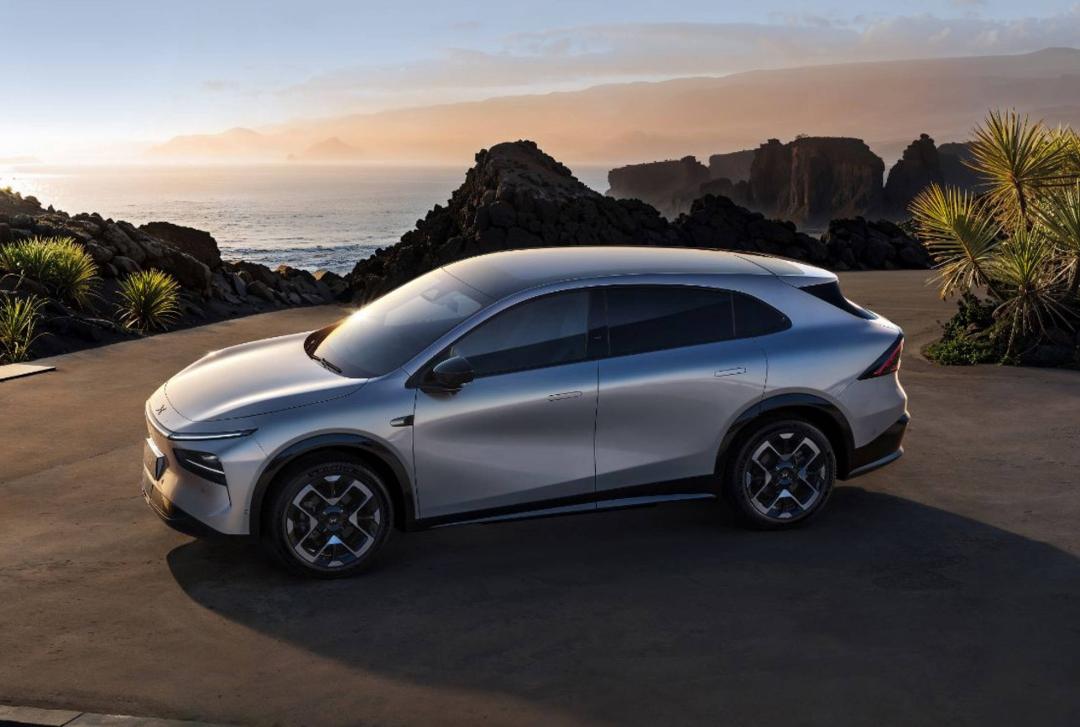
More convenient transportation plus not-so-expensive car rental and ride-hailing costs make car purchase unnecessary. "Now I think there is no need to spend so much money on a car just to save face and show off," Li Yu said. "I will buy a car after getting married, but that is too far away, and I haven't considered it yet."
In Shanghai, Xiao Zhu, who drives to and from work, is not a potential new car buyer either. Not long ago, Xiao Zhu's father, who is keen on domestic new energy vehicles, bought a Leda car for economic reasons, and the BMW X3 that he had driven for many years naturally went to Xiao Zhu.
"There are no traffic restrictions on the roads between my residence and my workplace, and I have evaluated the feasibility of driving to commute, including cost comparison." Xiao Zhu calculated carefully that before, he basically took a taxi to commute every day, which cost about 110 yuan, but sometimes there was insufficient transport capacity during morning and evening rush hours, so he could not get a taxi, which might even lead to being late for work.
After driving to commute, the parking fee in the community is 20 yuan a day, the parking fee at the company is 56 yuan a day, and the round-trip fuel cost is 30 yuan a day. The total cost is almost the same as the daily taxi fare.
Although the car will probably be scrapped after a few years, Xiao Zhu has no intention of switching to a new energy vehicle. "Domestic new EV forces focus too much on a single group for marketing. The old BMW 3 Series was suitable for people of all ages, and it attracted customers through products, with a universal appeal. Now, the Xpeng MONA series and AITO M9 are clearly polarized, targeting specific groups for marketing, which is a product of the involution environment. A car should not be a product for a single group. For example, a person buys a Xpeng at the age of 25 and drives it for 5 years, the car is still in its prime, but according to the logic of defining products for a single group, this car will soon become outdated."
In lower-tier cities, the practical and economical demand for car purchase is more prominent.
On the one hand, young people in third- and fourth-tier cities are under less pressure. "If you come back, I will buy you a car and a house." This is the persuasion most parents use to persuade their children to come back to work.
With lower living costs and relying on resources accumulated by their elders, young people aged 25 to 30 have more sufficient funds to buy cars. The car maintenance cost is also lower: parking fees can almost be ignored, home charging piles can be used for charging, and the price of commercial charging piles is below 0.7 yuan per kWh. They only need to consider charging, maintenance and insurance costs.
On the other hand, public transport in lower-tier cities is less convenient, so private cars are a necessary means of travel and also an important part of socializing.
Although some families will take out loans to buy high-end models priced above 200,000 yuan to save face for young people, more young people will buy practical models priced below 150,000 yuan with family support.
According to Bitauto's terminal sales data, the top 3 best-selling models in first-tier cities in the first half of the year are Model Y, Xiaomi YU7 and Li Auto i6 respectively; the top 3 in second-tier cities are Xingyuan, Model Y and Li Auto i6 respectively; while in third- and fourth-tier cities, the top 3 are Xingyuan, Sylphy and Lavida, and the top 3 in fifth-tier cities are Xingyuan, Sylphy and Changan CS75PLUS.
Although the main young car buyers are concentrated in low-end models, new EV forces, traditional car companies and joint-venture brands almost all regard young people as the most important target to compete for, and the youth-focused track is crowded with a large number of brands.
However, the fact is that middle-aged users who are trading in their old cars for new ones actually have greater consumption potential. Data shows that the current market has shifted from being youth-dominated (accounting for 45%-50%) in 2020 to being