Cambricon, bets all its chips on 2027
At Cambricon's Q3 earnings briefing, Chairman Chen Tianshi was repeatedly pressed on the same question: of the 11.6 billion yuan inventory, what are the respective proportions of raw materials, work-in-progress and finished goods.
He gave no clear answer, only repeating the line from the Q3 financial report: "We made strategic stockpiles of raw materials in the early stage. As the inventory age of raw materials rises, the accrued inventory impairment provision increases accordingly."
When asked about the market rumor that "shipments will exceed 1 million units next year", his answer was even shorter: "The company has never made any relevant communication on this."
This scene encapsulates the tension of the Q3 report: profits have doubled, while the management is busy explaining the inventory situation and market rumors.
The highlight of Cambricon's Q3 report does not lie in the income statement, but in the balance sheet.
01
14.7 Billion Yuan "Capacity Deposit"
Cambricon is an AI chip design company that develops cloud intelligent chips, boards and complete machines. However, Cambricon does not manufacture chips on its own, it outsources the manufacturing process to SMIC, and is only responsible for design and sales itself.
The "Fabless" model is the mainstream model for chip manufacturers at present, which allows enterprises to concentrate resources, but the problem lies in the constraints from the upstream supply chain.
The performance indicators in the Q3 report are almost impeccable. Q3 revenue reached 3.531 billion yuan, a year-on-year increase of 104.5%. Net profit was 1.404 billion yuan, a year-on-year increase of 147.7%. The net profit margin reached 40%, and the gross profit margin also reached 59%, its profit model is getting closer and closer to that of mature chip companies.
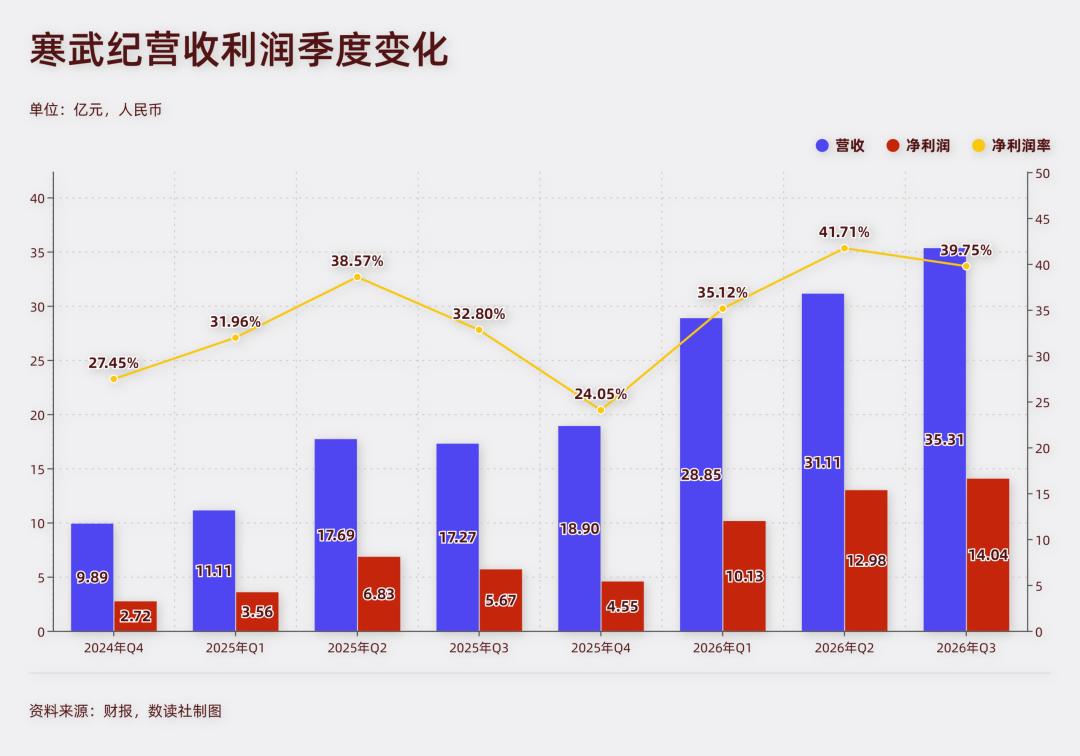
But the feedback from the market is completely different: on the last trading day before the report disclosure, the stock price was 932.2 yuan, with a total market value of 586.2 billion yuan, which has retreated by more than 40% from the trillion-yuan high point more than three months ago.
One month earlier, Reuters exposed that Cambricon's intended quotation for its next-generation chip "690" had been raised by 20% to 30% compared with two months ago, the company's public response was: "We have not released any news related to price increases, please refer to the official announcements."
Profits are growing, which would normally lead to price cuts, but the market is more worried about price hikes. The doubled growth would normally boost the stock price, but it ended up with a sharp pullback.
The market's concern is not the performance, but the continuously pressured balance sheet.
By the end of Q3, Cambricon's inventory on the asset side stood at 11.665 billion yuan, an increase of 6.721 billion yuan over the beginning of the year. Prepayments amounted to 3.044 billion yuan, up by 2.299 billion yuan.
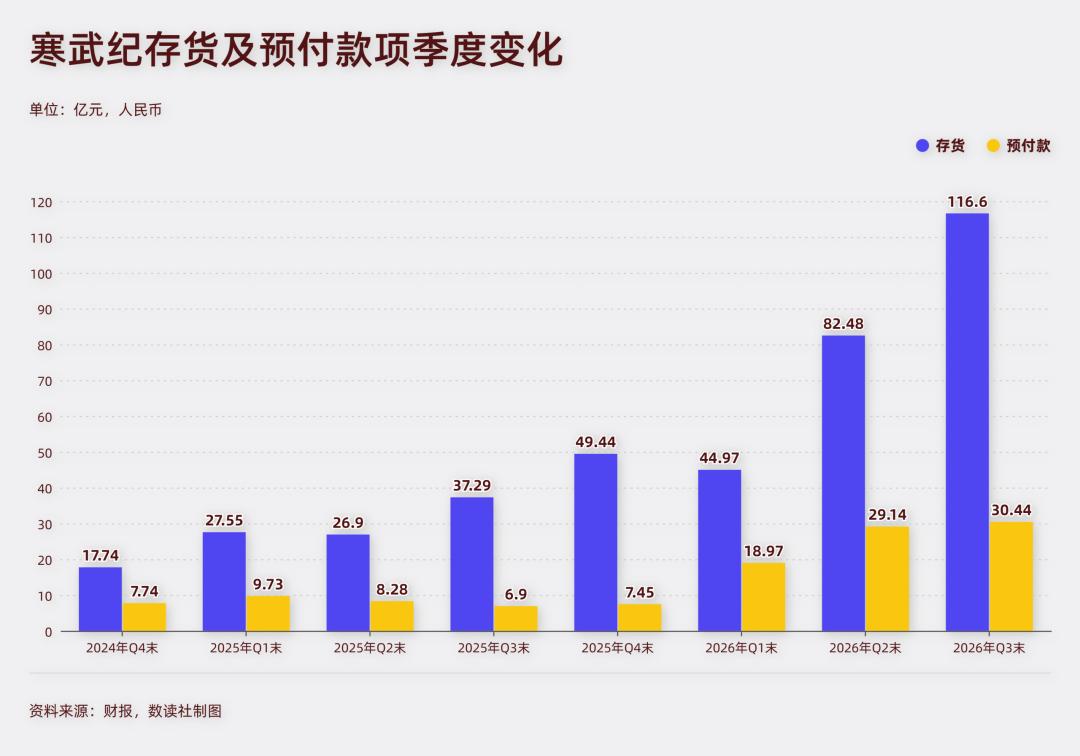
The newly occupied funds from inventory and prepayments combined exceeded 9 billion yuan. In the same period, monetary funds only stood at 555 million yuan, trading financial assets at 3.81 billion yuan, the total self-owned liquidity was 4.365 billion yuan, far lower than the sum of inventory and prepayments.
Looking into the internal structure of inventory, the Q3 report does not disclose the inventory details. Combined with the structure at the end of June: among the 8.248 billion yuan inventory, raw materials were 5.278 billion yuan, consigned processing materials were 2.418 billion yuan, the two items accounted for 93.3% in total. Finished goods inventory was only 85 million yuan, a sharp drop of 76% from 353 million yuan at the beginning of the year, while goods in transit increased from 130 million yuan to 465 million yuan.
The fact that finished goods are nearly zero, goods in transit doubled, and raw materials and work-in-progress take absolute dominance indicates that the backlog of finished products is very light. The real "inventory" is wafers, bare chips that have not completed packaging and testing, and silicon that has been circulating on the production line but has not yet become deliverable acceleration cards.
Prepayments increased from 745 million yuan at the beginning of the year to 3.044 billion yuan, an increase of more than 300%.
In the domestic AI chip industry chain in 2026, advanced process logic production capacity, HBM3e memory particles, and 2.5D packaging schedules are all in short supply at the same time. Chip design companies must pay large prepayments to foundries and memory suppliers in advance to lock in the production scheduling window.
Therefore, in the Q3 report, the money earned by Cambricon does not stay in the bank account, but is almost all invested in inventory and prepayments.
Part.
02
The Second Place on the Quota List
On the liability side, by the end of Q3, Cambricon's notes payable stood at 4.966 billion yuan, accounts payable at 1.827 billion yuan.
Supply chain leverage is not leverage from bank loans, but using the account period and commercial credit given by suppliers to support upstream procurement that exceeds its own cash capacity.
The reason why Cambricon dares to press its own liquidity to 4.3 billion yuan and raise supply chain liabilities to 6.793 billion yuan is not that banks are willing to lend money, but that it ranks second on SMIC's N+2 quota list in 2026.
According to industry research estimates, SMIC's annual N+2 AI chip production capacity in 2026 is about 2.6 million units, domestic demand is about 4.2 million units, leaving a gap of 1.6 million units. Under the same estimation standard, Huawei accounts for about 43%, Cambricon accounts for about 11%, and Cambricon still has a monthly demand of 30,000 7nm+ wafers at SMIC North.
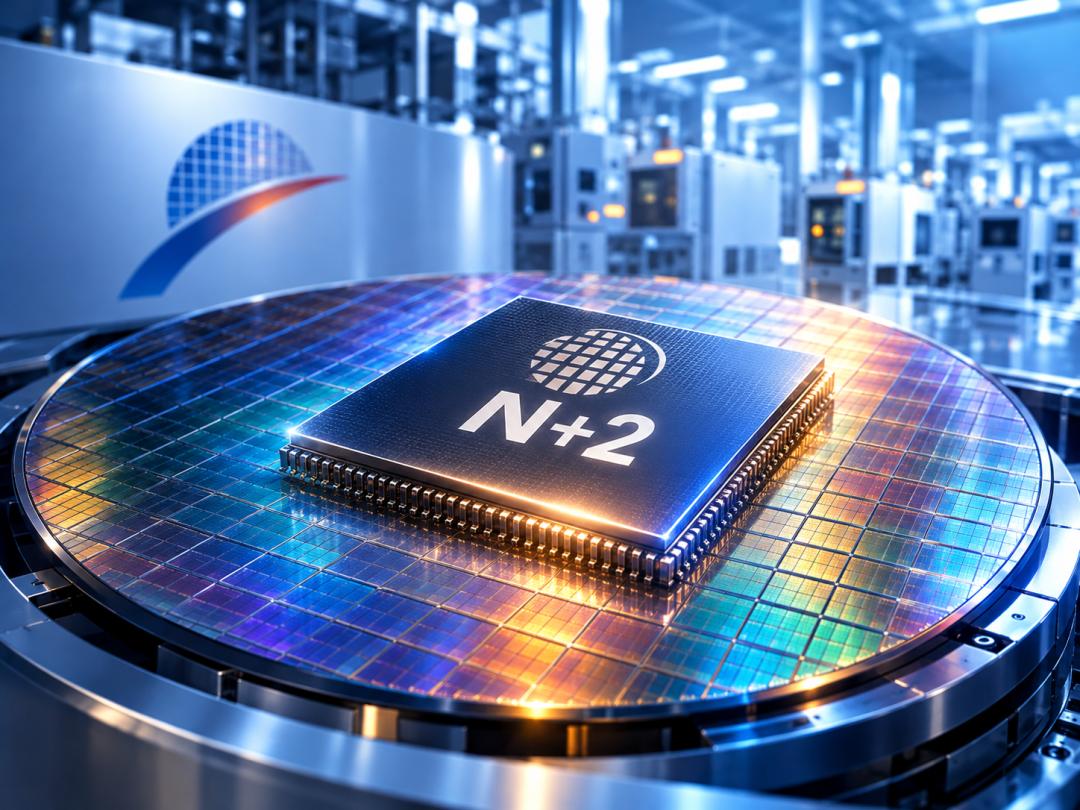
In a market where "about one in every three demands cannot be met", 11% is not a small number, Cambricon is the top-ranked customer on the production line besides Huawei.
HBM3e is the other half of this admission ticket.
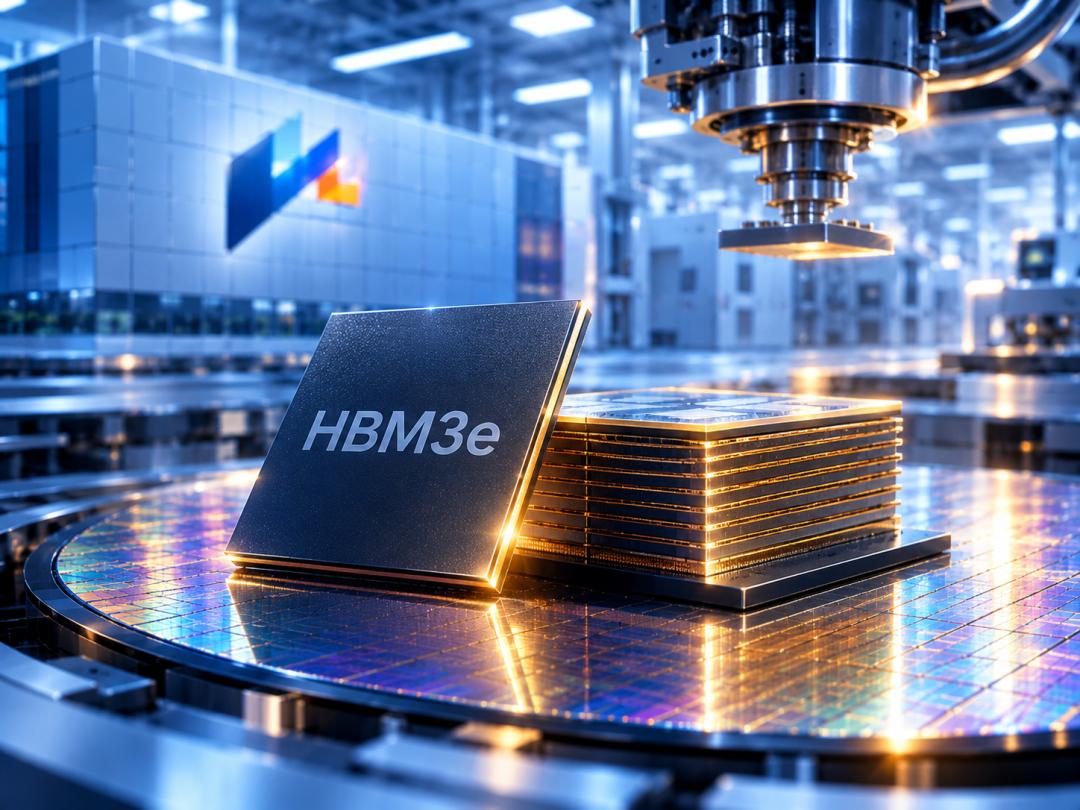
CXMT has launched risk mass production of HBM3e in 2026, manufacturers including Cambricon are conducting evaluation and certification with their own processors. If the certification goes smoothly, it will enter commercial products as early as 2027.
The 3 billion yuan prepayment is mainly used for advanced process production capacity, HBM3e memory particles and 2.5D packaging schedules, the turnover rhythm is particularly critical.
The structure of supply chain liabilities is more noteworthy than its scale: notes payable of 4.966 billion yuan and accounts payable of 1.827 billion yuan account for about 94% of the total liabilities, and interest-bearing liabilities are almost zero.
This shows that the main risk is not the debt repayment risk of interest-bearing liabilities, but the liquidity risk when supply chain notes mature. If the notes cannot be redeemed at maturity, it will still turn into debt repayment pressure. Once the delivery rhythm is slower than the note maturity rhythm, the pressure will switch from "suppliers are willing to wait" to "suppliers start to press for payment" within two quarters.
From an industry perspective, peers are all locking production capacity, but Cambricon is one of the most aggressive players in using leverage. This strategy shows that it does not stock according to the conventional "production based on sales" rule, but has strong confidence in market expectations and dares to make heavy bets.
Hygon Information's stocking logic is similar to that of Cambricon, but its narrative certainty is stronger. At the end of Q1 2026, Hygon's prepayment was 3.44 billion yuan and inventory was 7.333 billion yuan (the reporting period is different from Cambricon's, only for directional comparison), it is also carrying out "large-scale strategic stocking + capacity locking".
The difference is that Hygon has a larger scale, and its customer structure is more focused on the government and information technology security basic market, so its stocking is more easily understood as advance arrangement for confirmed orders.
Huawei Ascend represents the "quota priority" route, which cannot be replicated by Cambricon. Huawei locks in about 43% of SMIC's advanced production capacity, with annual delivery expectation of more than 1.3 million units, relying on its full-stack capabilities and production capacity allocation priority brought by main battlefields such as operators.
Alibaba T-Head and Baidu Kunlunxin are more like "driven by in-system demand", their customer base is different from that of Cambricon.
T-Head's shipments in H1 2026 were about 141,000 units, with a 7% market share, Kunlunxin's shipments were about 80,000 units, with a 4% market share. Their capacity strategies are not transparent, but they have demand synergy within the internet or Baidu system behind them.
As a third-party independent chip vendor, Cambricon lacks such in-system synergy, so it can only push supply chain leverage to the extreme.
Looking at the four players together, in the absence of Huawei-style quota priority and T-Head and Kunlunxin-style in-system demand, Cambricon is seizing the opportunity window in 2027 with the pressure on its balance sheet.
Part.
03
The Two Sides of Inventory
The problem is that this opportunity window is fleeting, and it needs to be quickly converted into revenue. If it cannot be realized in time, it will face the impairment risk brought by rising supply and falling prices.
Morgan Stanley expects China's AI chip self-sufficiency rate to rise from 45% in 2026 to 68% in 2027, and the direction of supply release is certain. After the production capacity gradually increases from 2027 to 2028, the scarce quota of SMIC's N+2 "admission ticket" will become queuable production capacity, and Cambricon's priority will be diluted.
Within the window period, inventory is a strategic asset. After the window closes, the rising supply leads to falling prices. If the same batch of inventory cannot be converted into revenue in time, it will turn into high-priced inventory and a source of impairment.
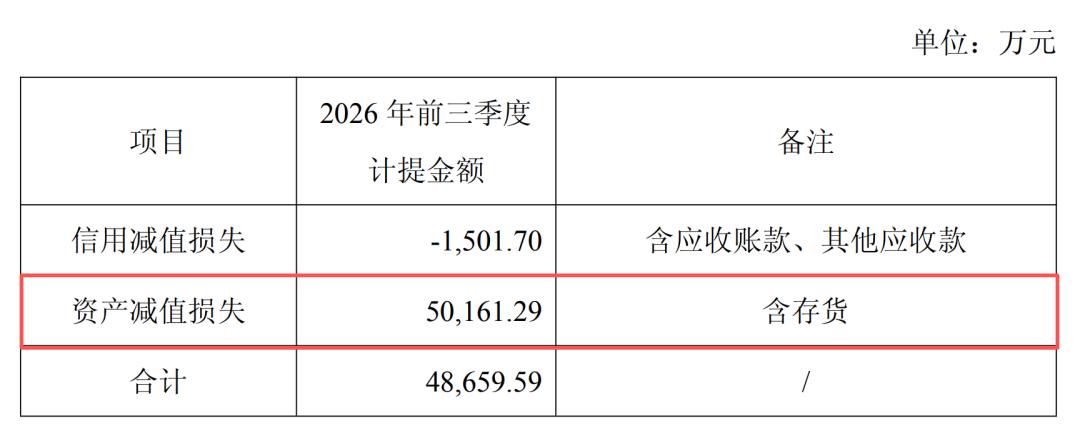
In the first three quarters of 2026, accrued asset impairment losses have reached 502 million yuan, compared with only 87 million yuan in the same period of last year. If price fluctuations become more intense, such impairment will continue to occur.
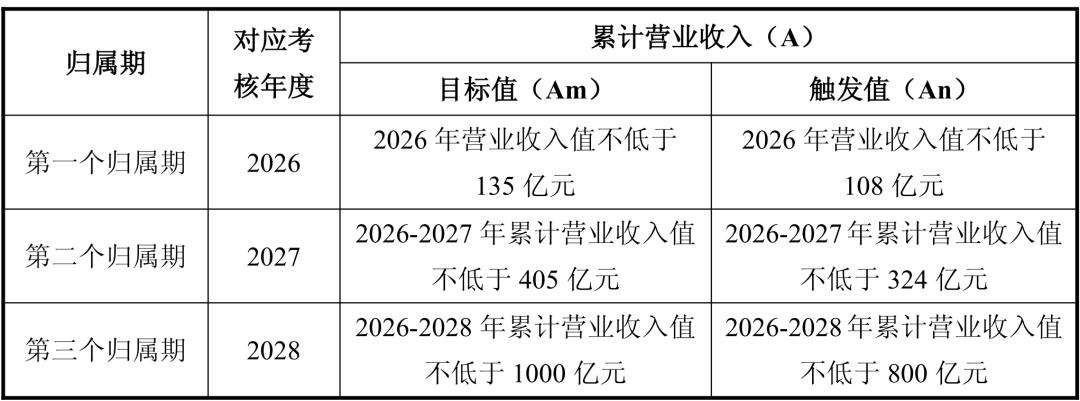
In July this year, Cambricon launched a 13.5 billion yuan equity incentive plan. Q4 is the first checkpoint. According to the target, the operating revenue in 2026 shall not be less than 13.5 billion yuan, which means that Q4 revenue needs to exceed 3.974 billion yuan. Q3 revenue was 3.531 billion yuan, with a quarter-on-quarter increase of 13.50%. At this pace, it is a high probability event that Q4 revenue will reach 3.974 billion yuan. But last year, Q4 revenue saw a quarter-on-quarter decline.
Moreover, reaching the revenue target itself does not prove that leverage is being recycled. The more critical observation item is whether the quarter-on-quarter growth rate of inventory can significantly narrow from the 41% growth in Q3.
If Q4 revenue barely meets the target and inventory continues to expand at a quarter-on-quarter rate of more than 30%, it means that the stocking speed is still faster than the delivery speed, and leverage is still increasing.
The path specified in the equity incentive plan is 13.5 billion yuan in 2026, 27 billion yuan in 2027, and 59.5 billion yuan in 2028. The Q4 target is only the admission ticket. In 2027, the revenue needs to double on the basis of 2026. As the base becomes larger, the revenue pressure in the future will be greater, and the risk of stocking will continue to increase.
At the same time, the HBM3e certification cannot fail, the SMIC quota cannot be further squeezed, and the acceptance rhythm of cloud vendors cannot be postponed collectively.
Since the delivery rhythm is never only determined by Cambricon itself, if any of these conditions loosens, the risk will rise.
Within the window period, leverage represents confidence, which is an advance prepayment under the market rising cycle. Cambricon is betting that the market will be in short supply in the short term, and production capacity equals orders. But this requires the art of balance, risk control, and more importantly, slowing down the pace at the right time. Once the window closes, leverage will become a burden, which is also the biggest concern of the current market for Cambricon.
This article is from the WeChat official account "Shudu She", the author is Hou Yu, and 36Kr is authorized to publish it.