Hunting for the existing hotel stock, the "Select" series brands under international hotel chains have already been fighting tooth and nail for the market.
Recently, Marriott has quietly made a major move in the Greater China market.
It replaced the Chinese name of its luxury soft brand The Luxury Collection, previously known as "Haohua Jingxuan", with the new name "Feishi Zhixuan".
The first hotel to complete the name change is Nanning Longguang Nalian Luxury Collection Hotel, which is now renamed Nanning Nalian Feishi Zhixuan Hotel;
The newly opened THE AMNIS in Kaohsiung, Taiwan Province, also debuted on its official website under the name "Kaohsiung Ranyi Feishi Zhixuan Hotel";
The Londoner Macao Luxury Collection has also recently completed its name change.
It is worth noting that Marriott has kept this name change extremely low-key, with no official announcement or marketing promotion activities, and only quietly updated the names on its official website, channel materials and OTA platforms.
Interestingly, in recent years, major international hotel groups have launched an increasing number of soft brands with the Chinese character "Xuan" (meaning "selection") in their domestic layouts in China.
Brands named XX Selection, XX of Choice, XX Premium Selection, XX Luxury Selection are everywhere, making it hard for consumers to distinguish between them.
This name change incident directly reflects the practical difficulties that international hotel soft brands are facing in the Chinese market:
Although a large number of soft brands with the "Xuan" label have entered the market to compete for the stock market, many problems such as brand homogenization, brand mindshare building, and trademark registration risks have always hung over their heads.
01
The "High Start but Low Trajectory" Luxury Collection
Speaking of The Luxury Collection, this brand has a very profound heritage.
More than a hundred years ago, it was CIGA (Gruppo Italiano Alberghi di Lusso), the highly favored pearl of Italy, and almost all of its properties were century-old classic European hotels.
In 1994, CIGA was acquired and integrated by ITT Sheraton, and was officially established as the The Luxury Collection system;
Only three years later, ITT Sheraton was acquired by Starwood. After Marriott merged with Starwood in 2016, the brand was officially incorporated into Marriott's global luxury portfolio.
Unfortunately, this seemingly "marriage into a wealthy family" ended up in an awkward situation of "high start but low trajectory" in the Chinese market.
In 1997, the Beijing International Club Hotel was branded as The Luxury Collection, which was regarded as the benchmark of luxury hotels in China at that time, and received many dignitaries and celebrities.
In 2000, this hotel was rebranded to St. Regis, Starwood's top-tier brand at that time, becoming the first St. Regis hotel in Asia.
It was not until ten years later that The Luxury Collection opened its next hotel in the Chinese market.
In 2010, Tianjin Astor Hotel, which was first built in 1863, reopened under the name "Tianjin Astor Hotel, The Luxury Collection" after nearly 300 million yuan was invested in its renovation.
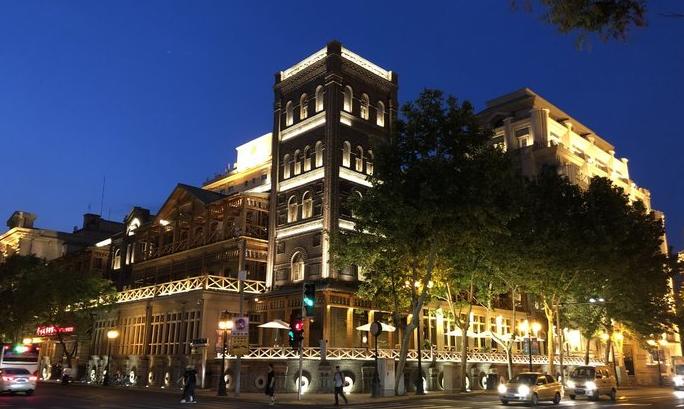
Source of image: Internet
In the following years, The Luxury Collection ushered in its highlight period of expansion:
In 2012, the Imperial Hot Spring Resort The Luxury Collection Sanya opened, and in the same year, The Luxury Collection Shanghai Hongta and The Luxury Collection Shanghai Hengshan 12 opened one after another.
Subsequently, The Azure Qiantang, a Luxury Collection Hotel Hangzhou, The Castle Hotel, a Luxury Collection Hotel Dalian, The Luxury Collection Changsha Meixi Lake, and The Luxury Collection Nanning Longguang Nalian were launched one after another. At its peak, The Luxury Collection had a total of 8 operating hotels in China.
However, after the highlight period, the brand's development gradually entered a bottleneck period.
In 2018, Tianjin Astor Hotel was de-branded and operated independently by the property owner; in 2019, the Imperial Hot Spring Resort Sanya was rebranded to JW Marriott; in 2020, Shanghai Hengshan 12 and Nanjing Shenghe Mansion were successively de-branded.
At this point, The Luxury Collection only had 5 operating hotels left in Chinese mainland, and it was not until 2025 that a new hotel The Londoner Macao was added.
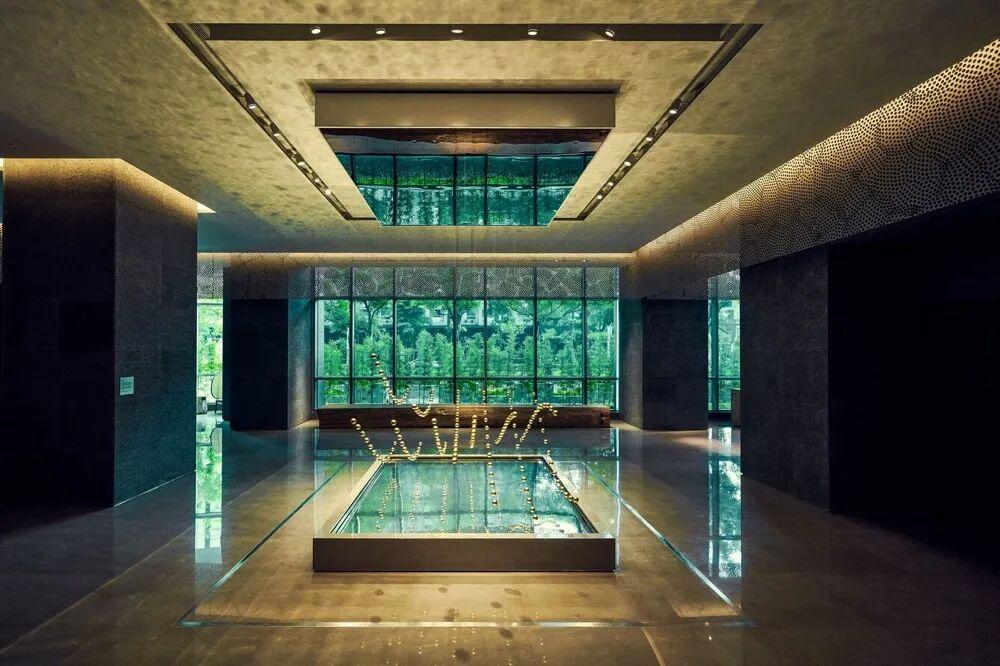
Source of image: Internet
Why did such a luxury soft brand stumble so much in the Chinese market?
The reason may be related to its brand connotation and historical legacy issues to a certain extent.
As a soft brand, it does not have the prefix endorsement like Marriott Fairfield, so its brand recognition is relatively insufficient in China.
For consumers, most of them only remember the word "luxury", but easily ignore the selection and collection attributes behind the word "collection", so the brand memory is very easy to be diluted.
In addition, this brand has changed owners several times in the past 30 years. Every time it changes hands, the brand positioning and resource investment have to be reshuffled.
Before being acquired by Marriott, Starwood applied for the trademark of "The Luxury Collection" as early as 2012, specifying its use on Class 43 hotel and restaurant services, but the application was rejected by the Trademark Office.
The reason is that the term "Luxury Collection" used in hotel services lacks the distinctiveness that a trademark should have, and it is a general descriptive term that cannot be monopolized by a single enterprise. Up to now, no relevant brand logo can be found on the China Trademark Network.
This means that Marriott can use "Luxury Collection" as a brand name, but cannot monopolize it.
For example, The Luxury Collection Nanjing Shenghe Mansion was de-branded as early as 2020 and separated from the Marriott system.
But until today, its name on many OTA platforms is still "The Luxury Collection Nanjing Shenghe Mansion".
The reason is very simple: Marriott cannot register the "Luxury Collection" brand trademark, but the property owner Nanjing Shenghe Investment Group registered "Shenghe Mansion Luxury Collection" as a combined trademark, which is protected by law.
You can imagine how uncomfortable Marriott feels about this.
For a luxury brand that urgently needs to increase its market presence, a Chinese name that cannot stably hold the trademark right is a major hidden danger.
For this reason, this name change is more like Marriott's active calibration, and adopting a more flexible and down-to-earth attitude to face the Chinese market is probably the attitude it wants to convey.
02
Why do international hotel groups launch a large number of "Xuan" series brands?
Looking at the name change of The Luxury Collection, the "Xuan" series soft brands launched by international hotel groups in China over the years are no longer just a few sporadic ones.
Marriott has the largest number of such brands and was also the first to make layout in this field, with The Luxury Collection, Autograph Collection, Tribute Portfolio, and Marriott's new Select brand under its portfolio.
Hilton has the Curio Collection by Hilton, which focuses on literary and light luxury positioning, and the Tempo by Hilton, which is more youthful and focuses on mid-range business travel and light vacation.
Hyatt also has many "Xuan" series brands.
Among them, Hyatt Unbound Collection belongs to the luxury boutique segment, Hyatt JdV by Hyatt belongs to the lifestyle segment, Hyatt Destination by Hyatt belongs to the classic style segment, and Hyatt Caption by Hyatt is positioned for the existing mid-range hotel market.
InterContinental started relatively late, and its most representative brand is the Vignette Collection, which focuses on luxury positioning.
The most well-known brand under Accor is the MGallery Collection, which is positioned as high-end luxury, and 10 of them have been opened in the Greater China region.
In addition, there are two other brands: Handwritten Collection and Peacock Collection.
In addition to the above major international giants, there are also some relatively niche "Xuan" series soft brands.
For example, Radisson, which was acquired by Jin Jiang, has Radisson Collection under its portfolio; Wyndham has Days Collection positioned in the mid-range segment, which also has layout in China.
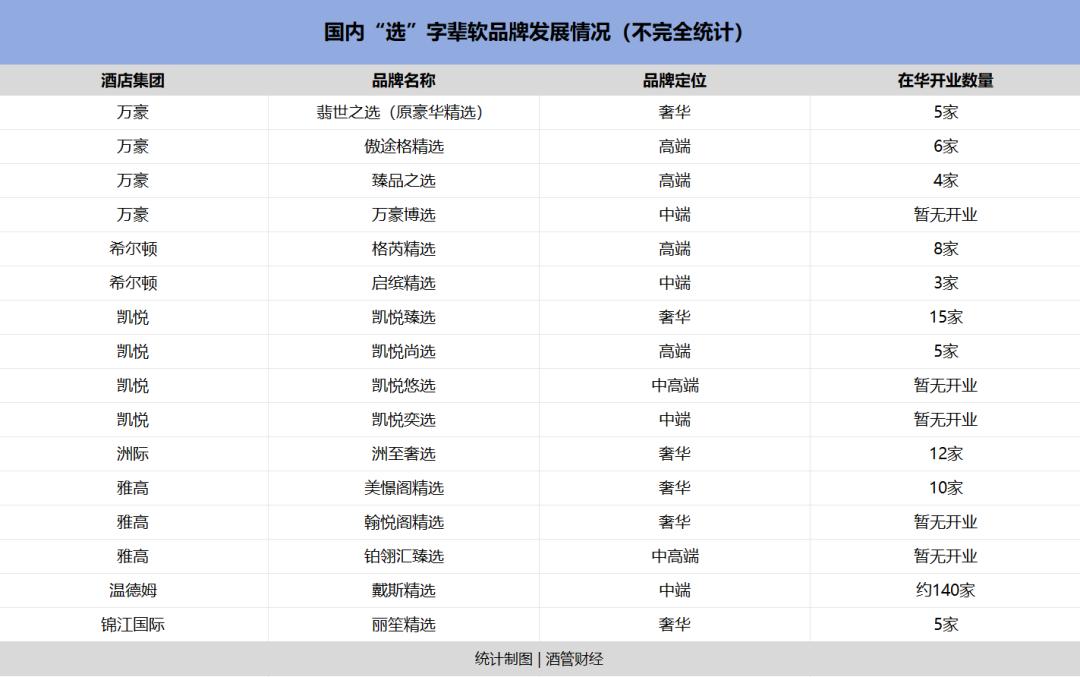
Status quo of positioning and development in China of international hotel groups' "Xuan" series soft brands
Have you noticed that most of the English names of these "Xuan" series soft brands contain the word "Collection", which means "collection" in Chinese.
What are they collecting? They are collecting existing, story-rich, non-replicable existing stock hotels.
It is not difficult to see that international hotel groups are trying to use soft brands to quickly absorb high-quality existing properties in the domestic market.
They used to focus on promoting hard brands in the past, so why are they collectively betting on soft brands now?
The most direct reason is that China's hotel market has bid farewell to the incremental era and entered the stock era.
According to the research of the blue book *Stock Era: Reconstructing Hotel Property Asset Value Through Empowerment* released by HHM Consultants, by the end of 2025, there are 19 million hotel rooms in China; in the next three years, 732,000 hotel rooms that are more than 15 years old will enter the centralized renovation period, and the scale of the stock renovation market has exceeded 100 billion yuan.
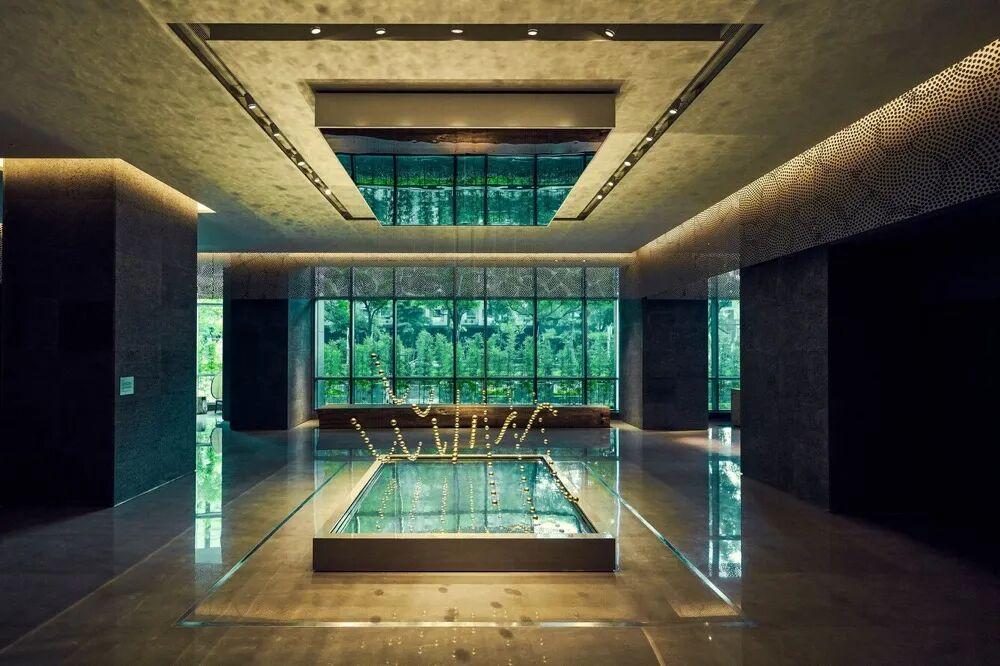
Source of image: HHM Consultants
And soft brands happen to be one of the perfect choices to revitalize the stock assets.
The deeper reason is hidden in the financial reports of major international hotel management groups.
In 2025, Marriott's full-year ADR in Greater China decreased by 0.2% year-on-year, making it the only region with declining average room rate among its major global markets;
Hyatt's ADR in Greater China decreased by 1.8% year-on-year;
InterContinental's RevPAR in Greater China decreased by 1.6% year-on-year;
Although Hilton achieved growth in all three core indicators in the Asia-Pacific region, it specifically pointed out that "the decline in RevPAR in the Chinese market partially offset the above growth".
Average room rate and revenue have all encountered bottlenecks, and the ceiling of international hotel groups in the domestic market is clearly visible.
With the fading of real estate dividends, property owners are more cautious about acquiring land to build new hotels, so international hotel giants are in urgent need of developing new product lines.
In addition, for property owners, the cost of choosing a soft brand is relatively low.
Hard brands such as JW Marriott and The Ritz-Carlton have very strict rigid standards, with standardized requirements for hard decoration materials, bedding and furniture, public area facilities, and food and beverage output.
If property owners want to open such hotels, they must follow the standards completely, which leads to huge construction and decoration costs, so they are more suitable for new projects.
Soft brands allow hotel owners to retain their original design and local characteristics, while accessing the group's central reservation system, membership system, supply chain and operation standards.
For property owners, the renovation cost, return on investment cycle and operation complexity are greatly reduced, which is a more cost-effective choice.
As a result, the "hunting" of domestic stock hotels by international hotel soft brands has begun.
03
Is Soft Brand Really a Profitable Business?
In fact, the concept of soft brand is not new. Due to the lessons of OYO, soft brands are not favored by everyone in China.
OYO, which focuses on soft brands, promised to provide franchisees with various supports when entering the Chinese market, and franchisees did not need to pay franchise fees, only a certain percentage of commission would be drawn after each order is completed.
However, due to data fraud, lack of understanding of the Chinese hotel market, and contract disputes with many property owners, OYO could only retreat from the Chinese market in a mess, and other soft brands that followed the trend also disappeared.
Hard brands are the standardized output of the group, and there are a set of daily inspection and assessment standards for product design, service procedures, and member rights.
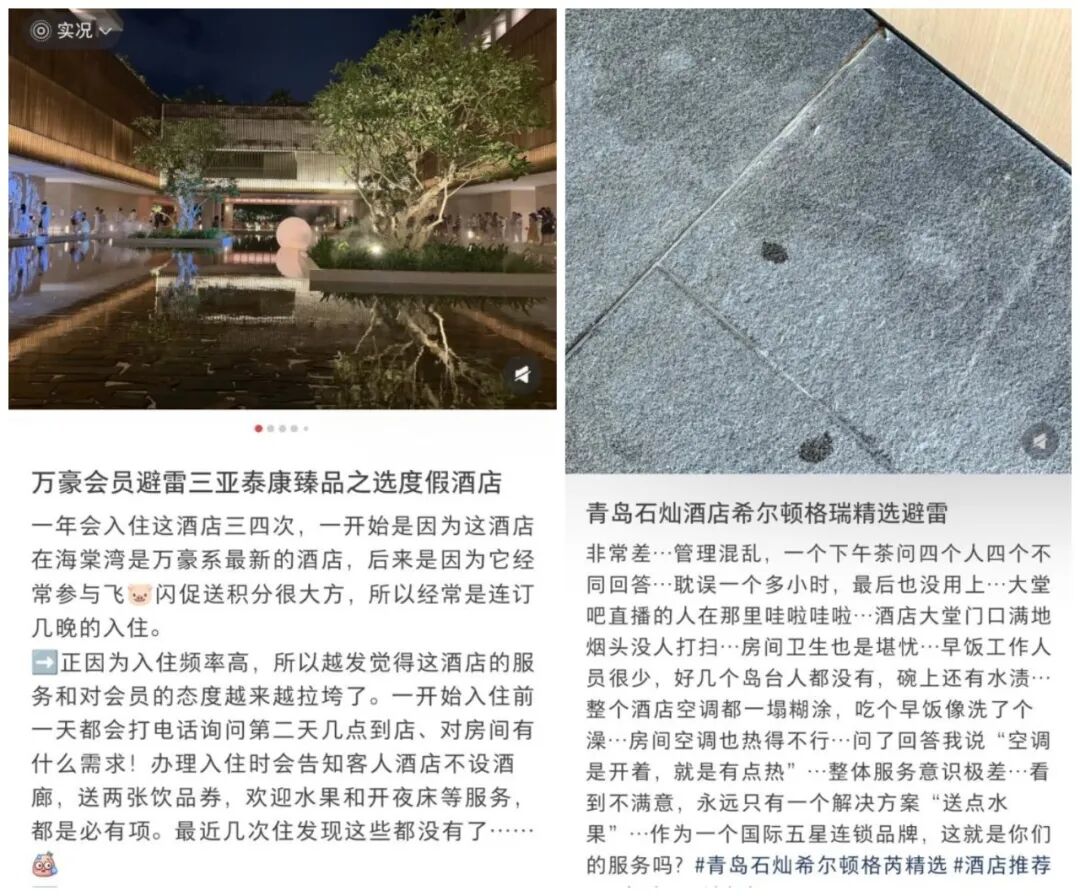
Source of image: Xiaohongshu
Soft brands are more about the group providing endorsement, and the hotels can share the membership system, but the degree of intervention of hotel groups in the daily operation of individual stores is much lower than that of hard brands, which often leads to loose management and consumer experience gap.
In addition, there are certain deviations in the fulfillment of member rights among different soft brand hotels.
The advantage of soft brands lies in being "light", but this is also their weakness.
For example, the biggest risk of these "Xuan" series brands in the current market in the future is brand homogenization.
After all, all the brand names contain the character "Xuan", and the brand descriptions are highly similar. Ordinary consumers can hardly distinguish the differences between Premium Selection, Selection, and Collection, so the brand recognition is very easy to be diluted.
The Chinese names directly translated from foreign languages also need to take into account the cognition of domestic consumers. Inappropriate translation will also hinder the building of brand mindshare.
Although soft brands are backed by large international hotel groups, most of them have much lower popularity in the Chinese market than their parent brands, and many consumers lack understanding of their concepts and advantages.
Hotel groups need to invest a lot of resources to improve consumer awareness to overcome the problem of low brand recognition.
In addition, soft brands do not have unified hardware standards. Under the same brand, the hardware of different hotels varies greatly, and the brand premium is highly dependent on the investment level of the individual property owner.
Although The Luxury Collection has been renamed to "Feishi Zhixuan", there is still a question that needs to be answered in the future:
How can the "Xuan" in the names of these "Xuan" series brands gain the trust of the market and property owners?
A hotel joining the soft brand of an international hotel