36Kr Exclusive | An associate professor from Shanghai Jiao Tong University develops optical computing chips. The startup he founded has obtained 5 consecutive rounds of investment from Yunqi Partners, Atom Ventures and other investors within half a year of its establishment, and the chip has been sent for tapeout.
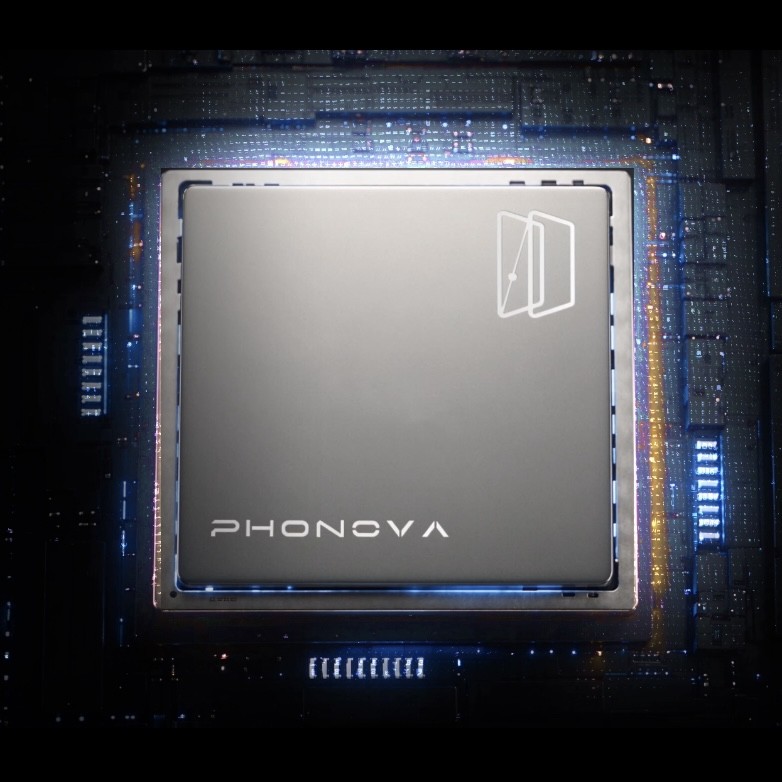
Source / Enterprise
This article contains approximately 3300 words, with a recommended reading time of 8 minutes
Author丨Ou Xue
Editor丨Yuan Silai
36Kr Hard Tech has learned that photonic computing chip company Zhizi Guangyuan has completed a seed round financing of several hundred million yuan. Since its establishment, the company has successively finished 5 rounds of seed financing, with investors including Haitong International Innovation Center, Yunqi Partners, Cathay Haitong, K2VC, Atomic Venture Capital, Tongxin Capital and Shanghai Jiao Tong University AI Future Fund. The raised funds will be mainly used for core chip R&D and tape-out iteration, high-end talent recruitment and team building, as well as application scenario expansion and ecological cooperation.
Zhizi Guangyuan was established in May 2026, focusing on the R&D of reconfigurable all-optical computing architecture and photonic processors. It uses the parallel computing characteristics of light to directly participate in AI operations, bypassing the bottlenecks of traditional electronic chips in process scaling, power consumption and heat dissipation, and promoting photonic computing to evolve from dedicated acceleration to a more general-purpose computing platform.
At present, Zhizi Guangyuan has formed a R&D team of nearly 50 people. Its core members have long been deeply engaged in the fields of photonic computing and chip design, and have cumulatively completed the design, tape-out and verification of dozens of optical chips, and published nearly 20 papers in Nature/Science series journals. Founder Cheng Yuan is an associate professor at the School of Artificial Intelligence of Shanghai Jiao Tong University. He has long been engaged in research on photonic chips and edge intelligence, and once served as co-founder/CTO of Simier Technology, leading the construction of the full-stack product system.
In terms of product layout, Zhizi Guangyuan has planned two product lines: server-side optoelectronic acceleration boards and end-side photonic computing chips. The first version of related chips for both products have been sent for tape-out, and deployable products are planned to be launched one after another within the next six months.
At present, the competition for AI computing power is shifting from simply pursuing peak computing power to how much effective intelligent output can be supported per kilowatt-hour of electricity. As AI evolves from single-round Q&A to continuous thinking, tool calling and task execution by agents, Token consumption is growing rapidly, and cost, power supply and heat dissipation are becoming practical constraints for computing power expansion.
Traditional electronic chips have approached the upper limit of Moore's Law, and it is difficult to keep up with the growth of demand only by process scaling. The idea of photonic computing is to map matrix operations to the interference and diffraction processes of light, and use the propagation of light itself to complete a large number of parallel multiply-add operations.
Cheng Yuan said that AI requires computing carriers that truly have low power consumption, do not rely on advanced processes, and can be implemented in engineering. Photonic computing has natural advantages in parallelism, latency and energy efficiency.
The current photonic computing industry is in the early stage of engineering implementation. Multiple technical routes are developing in parallel in China, and there are few available products on the market, most of which are small-scale dedicated computing, which are difficult to support real large-scale tasks and switch between different tasks.
"General-purpose photonic computing is the industry trend, but it requires the coordinated advancement of architecture, devices, processes, packaging and testing, and software systems," Cheng Yuan said.
Specifically, the technical route of Zhizi Guangyuan is a reconfigurable all-optical computing architecture. Through space-time reconfiguration, flexible adaptation to different models and computing tasks is realized; integrating the technical advantages of interference computing and diffraction computing, with the help of Chiplet, the interference and diffraction modules are placed in the same architecture, multiple photonic computing cores are cascaded in a single chip to expand the computing scale, taking into account computing accuracy and flexibility. In addition, the company is simultaneously promoting the "light transmission and light computing" and all-optical nonlinear technologies to reduce photoelectric conversion in key computing links, and improve computing accuracy and chip consistency through software and hardware collaborative calibration.
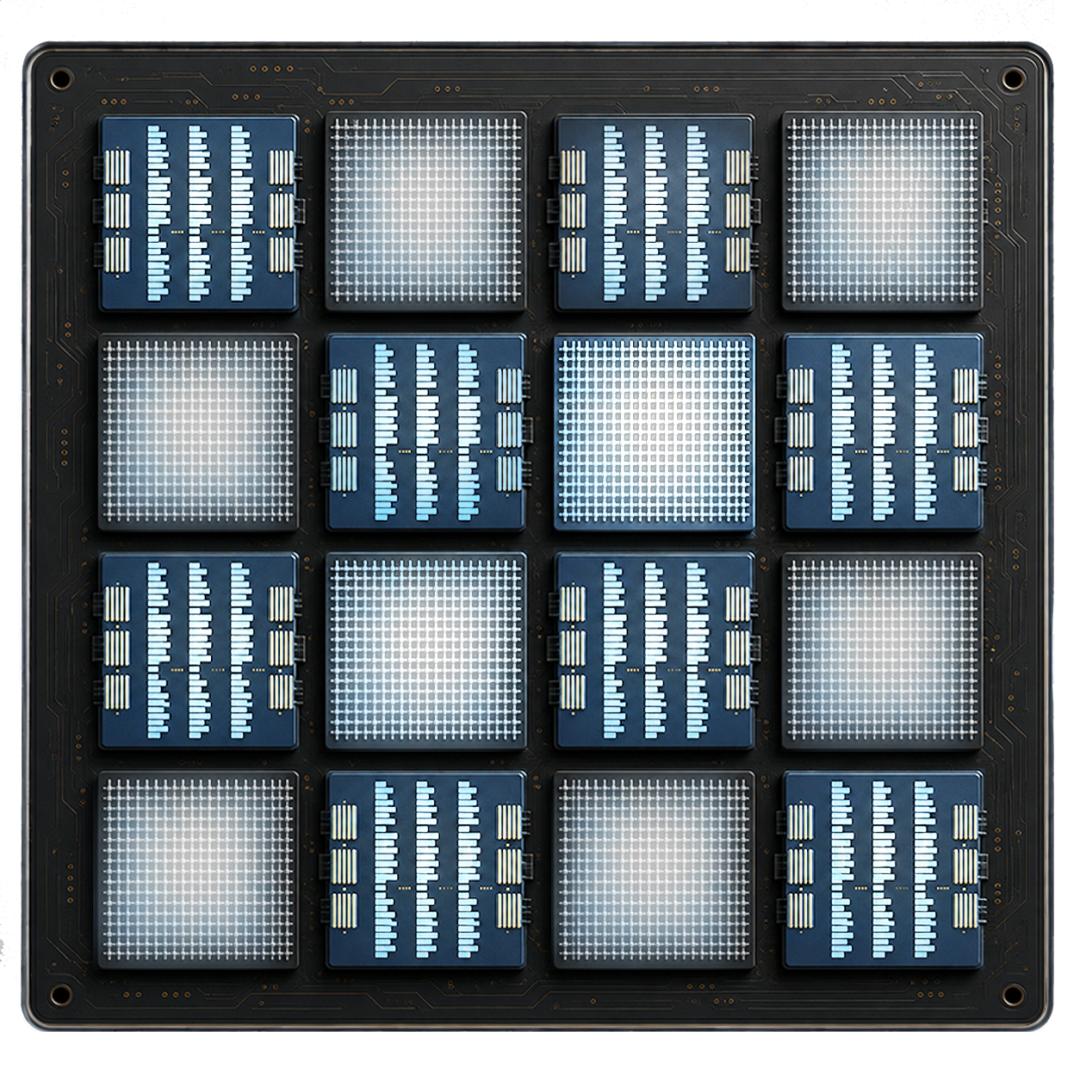
Reconfigurable: Interference x Diffraction x Chiplet (Source / Enterprise)
"Reconfigurability" determines how many tasks photonic computing can adapt to. Zhizi Guangyuan designs a space-time reconfigurable architecture from the bottom of the chip, modulates the computing relationship in space and time, and adapts when tasks change by reorganizing the optical path or adjusting the scheduling algorithm, without redesigning the chip for each application. "All-optical" points to energy efficiency: let communication light directly participate in the calculation, and keep key nonlinear operations in the optical domain, so that the photoelectric conversion in the computing link is close to zero.
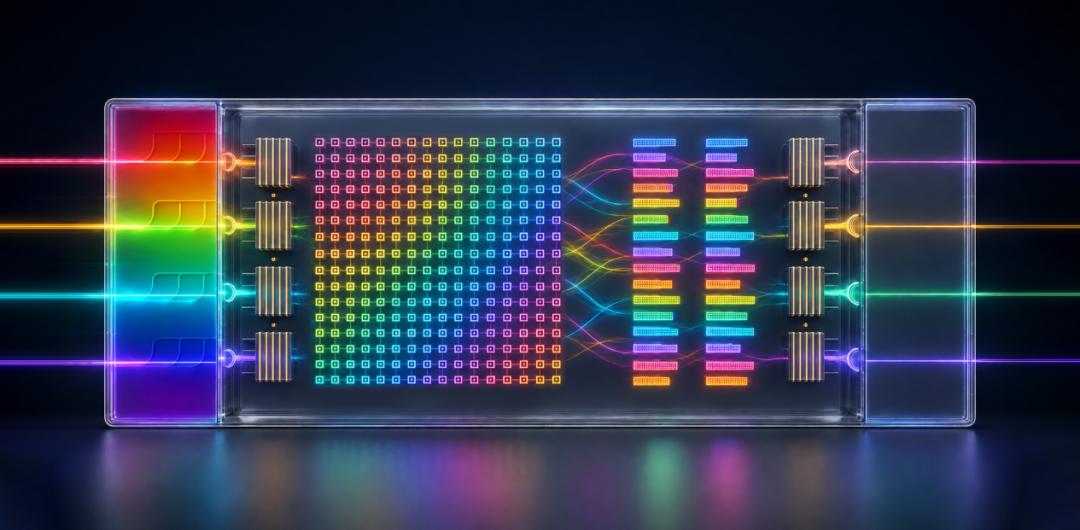
All-optical: Light transmission & light computing x Nonlinearity (Source / Enterprise)
At the product level, Zhulong OPU-08 is oriented to server computing acceleration, adopts the form of PCIe optoelectronic acceleration board, focuses on large-scale matrix operations in AI inference, with specifications of 256×256 computing cores and 150TOPS computing power. It can be connected to existing servers to provide "photonic tokens" for cloud deployment of large models. Xuanjian TOCU-07 is oriented to low-power intelligent devices on the edge side, with specifications of 128×128 computing cores and 100TOPS computing power. In addition to optoelectronic computing, it also supports collecting weak natural ambient light for direct computing, eliminating the photoelectric encoding on this input path.
Cheng Yuan said that Zhulong has the same form as the current mainstream server optoelectronic acceleration boards, and its highlight lies in more general matrix acceleration and model deployment capabilities; Xuanjian is oriented to low-power scenarios on the edge side, and there are few similar products on the market. The longer-term goal is a general-purpose photonic GPGPU integrating training and inference, and the first version is expected to be launched at the end of 2027 or early 2028.
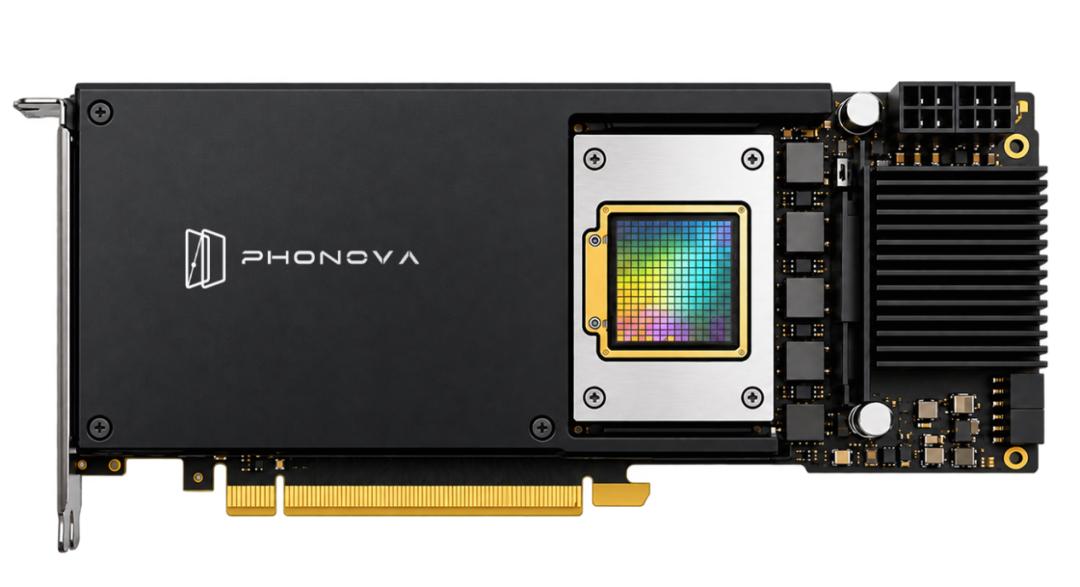
Server optoelectronic acceleration card Zhulong OPU-08 (Source / Enterprise)
In terms of engineering, photonic computing faces consistency problems such as device differences, noise, and temperature drift. Zhizi Guangyuan cooperates with software and hardware compensation modules, and adds an automated nanosecond-level calibration module to the optical chip. The company claims that it can reduce the matrix operation error to the level of 10^-6 to improve the accuracy consistency of mass-produced chips. The company is currently cooperating with domestic foundries and packaging and testing factories to promote mass production, but product performance still needs to be tested and verified after the chips are returned.
According to the company's plan, the recent priority is to complete the packaging and testing of Zhulong and Xuanjian, board joint debugging, model adaptation and customer verification to ensure that products are launched as planned; later, it will gradually promote larger-scale photonic computing boards and general-purpose photonic GPGPUs.
The company hopes to rely on the team's accumulation in cutting-edge technology R&D, chip engineering and system-level product deployment to speed up the landing application process of optical chips by 2-3 years. The realization of this goal still requires the collaborative support of the upstream and downstream industrial chains.
Cheng Yuan said that the company will also focus on upstream and downstream links such as AI computing power infrastructure, optical communication and silicon optical industry chain, as well as manufacturing and packaging testing. The maturity of the optical communication and silicon optical industry chain provides the device, process and packaging foundation for photonic computing; industrial cooperation will be carried out around process packaging and testing, server manufacturers, end-side application partners and model adaptation.
In the long run, Zhizi Guangyuan is committed to promoting the implementation of general-purpose photonic computing, so that the same set of hardware can adapt to different models and tasks within the computing range where light is good at, and finally build a photonic GPGPU integrating training and inference and supporting software systems.
"Dedication is the first step for photonic computing to move towards application, and general-purpose is the next step for photonic computing to become a computing power infrastructure," Cheng Yuan said.
The following is an excerpt of the interview between Hard Tech and Cheng Yuan, founder of Zhizi Guangyuan (edited):
Hard Tech: Why are there few players in the industry that mix interference and diffraction on a single photonic computing chip? Why did Zhizi Guangyuan choose this route?
Cheng Yuan: Mixing interference and diffraction on a single photonic computing chip is first and foremost an architecture-level innovation. The team has long promoted system-level model deployment from the reconfigurable architecture level, and its research is at the international cutting-edge level.
This technology is adopted to break through the limitations of traditional photonic computing architectures in flexibility and computing scale, complete reconfiguration inside the optical chip, and adopt an all-optical computing path based on interference and diffraction. Reconfigurability determines how many tasks photonic computing can adapt to, and the all-optical path opens up greater energy efficiency space, reducing the demand for photoelectric conversion to nearly zero. Only by completing reconfiguration and all-optical can the so-called general-purpose photonic computing be realized — adapting to different tasks and models on the same set of hardware. The difficulty lies in how to regulate the internal operations of photonic computing, implement reconfigurable algorithms inside the optical chip, and ensure that the performance of each chip is consistent at the same time, which requires the coordination of the entire industrial chain from architecture design, process to packaging and testing.
Hard Tech: The products have been taped out, what is the progress of customers and mass production?
Cheng Yuan: We have accumulated many intended customers. Some board manufacturers plan to launch an optoelectronic acceleration board, and our optical chip will function as a coprocessor acceleration module on its GPGPU. In terms of mass production, we have established cooperation with well-known domestic foundries and packaging and testing manufacturers, and are promoting relevant mass production work. At the same time, we cooperate with software and hardware calibration compensation modules to ensure the consistency of the output optical chips.
Hard Tech: What is the most difficult hurdle for photonic computing to move towards practical application?
Cheng Yuan: The hardest part is stable delivery and batch consistency. The experimental performance of a single chip must be transformed into the stable performance of mass-produced products in the customer's environment. Device differences, noise and temperature drift will all affect the calculation results, so we add a software and hardware collaborative nanosecond-level calibration module at the bottom, and advance packaging testing and model adaptation to the design stage, solving engineering problems from the source to avoid problems remaining in the delivery link.
Investor Views:
Yunqi Partners said: Yunqi is optimistic about the long-term development of photonic computing, which is expected to bring new breakthroughs to the AI computing power infrastructure. The Zhizi Guangyuan team has profound accumulation in reconfigurable all-optical computing architecture, and at the same time has industrial experience from chip R&D to large-scale delivery to key customers. We are optimistic about the long-term potential of Zhizi Guangyuan in the field of photonic computing, and look forward to the team promoting the large-scale application of the next-generation AI computing architecture in real scenarios.
Zhao Yang, Managing Director of Atomic Venture Capital, said: The next generation of AI computing power requires a new underlying architecture. We have long been optimistic about all-optical computing, and have been looking for teams that can truly promote the industrialization of this technology.
The original exploration of Zhizi Guangyuan in reconfigurable architecture and light transmission & light computing has shown us new technical possibilities. Professor Cheng Yuan and the team not only have many years of scientific research accumulation, but also have a complete entrepreneurial experience from chip R&D to large-scale product implementation; they can not only explore the boundaries of technology, but also know how to bring technology out of the laboratory. Such a founding team is extremely rare.
We look forward to working hand in hand with Zhizi Guangyuan to make China's original photonic computing technology go global and become an important force driving the next-generation AI computing power revolution.
Cathay Haitong said: The second half of the development of the AI computing power industry is moving towards the direction of reducing token cost. Photonic computing chips are expected to alleviate the shortage of AI computing power. We are optimistic that Zhizi Guangyuan's technical route has the core advantages of general-purpose, reconfigurable and large-scale computing capabilities, as well as successful experience from cutting-edge scientific research to semiconductor engineering implementation.
Haitong International Innovation Center said: We are optimistic about the innovation potential and technical advantages of the Zhizi Guangyuan team in the cutting-edge direction of photons, and will firmly accompany the team to deeply engage in technical research and industrial implementation. Relying on our own hard technology incubation ecological resources, we will continue to connect Zhizi Guangyuan with industrial partners, scientific research platforms and industry channels to help release technical value. We look forward to Zhizi Guangyuan making continuous breakthroughs, forming differentiated advantages in the photonic computing track, and jointly contributing to the construction of the domestic cutting-edge computing power industry ecosystem.