Head-to-head competition is unfolding in the AI office track: after the battle for user entry points, the subscription renewal period serves as the true testing window.
In 2026, China's domestic AI office track has ushered in a structural turning point. Multiple product lines that were previously tested in parallel within major internet giants have completed integration one after another in less than two months. The years-long "internal horse race" mechanism has been called off, and computing power, traffic and team resources are accelerating to converge toward the AI office entry. Together with Kingsoft Office, which has long included AI in its financial reports, five heavyweight players including Baidu, Alibaba, Tencent and ByteDance have crowded into this track.
Market data also confirms the explosive growth of the track. IDC predicts that the scale of China's enterprise-level AI agent market will increase from 21.2 billion yuan in 2025 to 332 billion yuan in 2029. China Securities Construction Investment estimates that the potential global AI office market size ranges from 300 billion US dollars to 1.56 trillion US dollars, and potential users will expand from programmers at the tens of millions level to 1 billion general white-collar groups. Behind the figures lies the all-round competition among capital, models, ecology and organizational capabilities.
As AI evolves from "being able to answer" to "being able to get things done", a hundred-billion-level battle for "the next generation productivity entry" is shifting from technical preparation to the stage of head-to-head competition. Whoever can turn the assistant into a workbench and turn the tool into an operating system will hold the "ticket" to the core enterprise process. No giant is willing to be absent.
Centralized Convergence, All Showing Their Cards
On October 31, Alibaba reached a cooperation with Apple to integrate Tongyi Qianwen into Apple Intelligence, allowing Chinese users to directly call Tongyi Qianwen's capabilities in text and image understanding, content generation and other aspects in Siri, writing tools and visual intelligence. These functions will be open for testing with the latest iOS developer Beta version starting from November 4, and will be launched for Chinese users when iOS 27.3 is officially released in December.
Some market analysis believes that Tongyi Qianwen is expected to become one of the first domestic large models to be implemented in Apple's China ecosystem, sinking light office capabilities such as writing, polishing and summarization to the native system level. At the same time, in the competition of "model as entry", relying on Apple's terminal distribution channels, Alibaba is expected to make up for its shortcomings in C-end reach. However, this cooperation is not exclusive, and there is still the possibility of introducing other large models into the Apple ecosystem in the future, so the competition pattern of the track still has variables.
On the already laid-out poker table, the five players have completely different entry methods, resource endowments and strategic paths, but their timelines are highly dense.
On July 20, Tencent merged QClaw into WorkBuddy. On July 30, ByteDance released an internal letter to integrate Feishu and Doubao; on August 24, ByteDance consolidated the TRAE and Coze product lines. On August 3, Alibaba's Tongyi Qianwen Office launched public beta, fully integrated from three products QoderWork, MuleRun and Wukong. Baidu merged dodo into Baidu Buddy on August 6.
Tencent is the first player to launch integration, and it also emphasizes the desktop entry the most. Public information shows that WorkBuddy was open for experience within Tencent in January 2026; it opened internal beta on February 6, positioned as a desktop workbench for workplace AI agents; it was fully launched in all scenarios in March, fully compatible with OpenClaw skills, and supports remote control of WeCom, QQ, Feishu, DingTalk and other platforms.
According to media reports, WorkBuddy is internally described as "Tencent's third strategic product after QQ and WeChat". Tencent founder Ma Huateng personally participates in product meetings, and most project requirements are approved quickly. Tencent's 2026 Q1 financial report states that in terms of daily active accounts, WorkBuddy is currently the most widely used efficiency AI agent service in China.
On September 2, the WorkBuddy open platform was officially launched, introducing more than 100 ecological partners in the first batch. It supports free switching between five major models including Hunyuan, DeepSeek, GLM, Kimi and MiniMax, following the path of "individual first", that is, to make a desktop assistant for everyone first, then penetrate into enterprises from bottom to top, following the "open ecology" route that Tencent has always adhered to.
Alibaba, on the other hand, bets its core chips on the enterprise-level track. Relying on millions of enterprise customers and organizational management data accumulated by DingTalk, Tongyi Qianwen Office is officially positioned as the industry's first product that covers three types of Agents on desktop, cloud and enterprise collaboration at the same time.
The organizational skill library launched by Tongyi Qianwen Office on August 12 allows employees to encapsulate working methods as Skills, which can be shared within the organization after review; on August 18, it was officially connected to WeCom, and had previously connected to DingTalk and Feishu, so far all three mainstream domestic collaborative office platforms are fully supported.
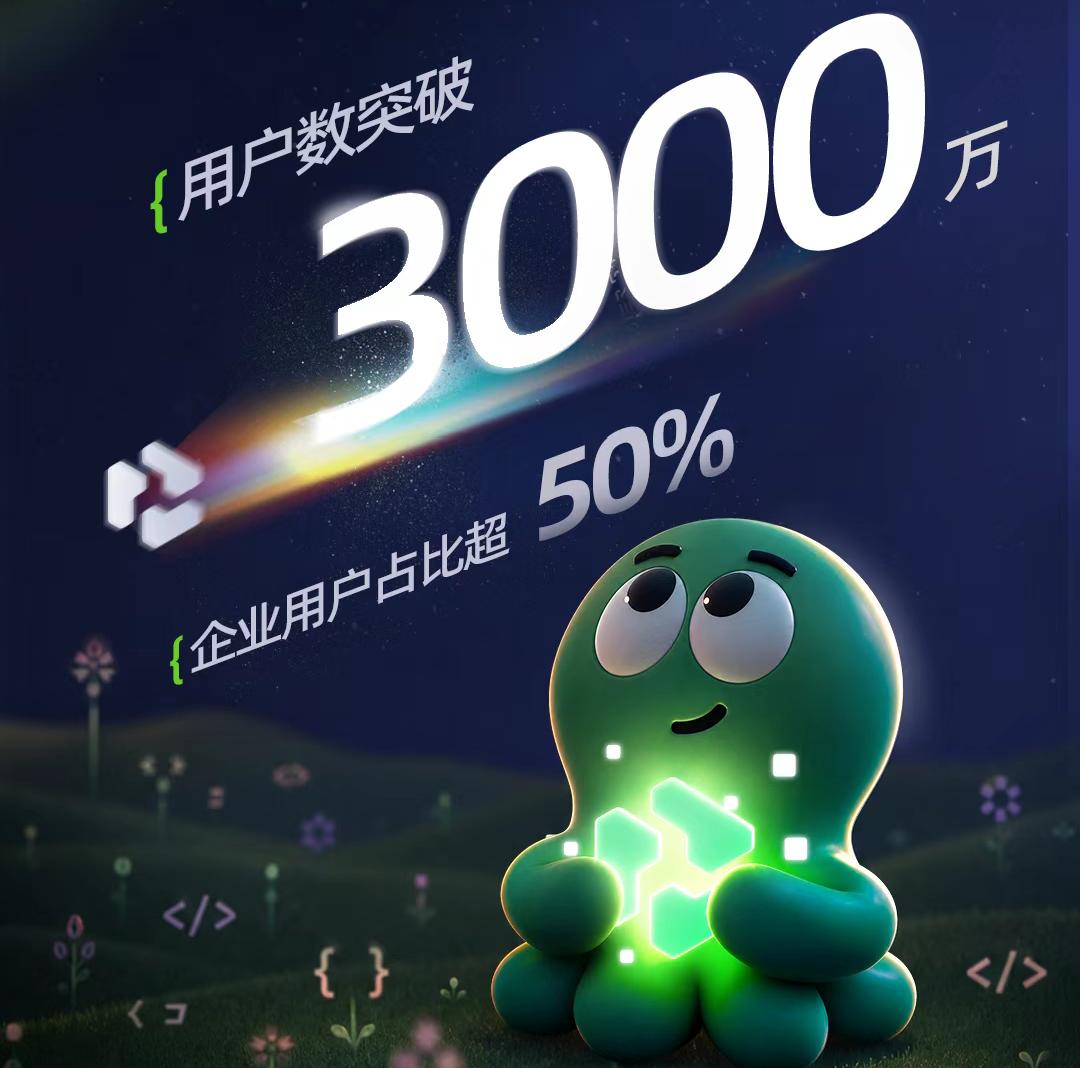
On September 4, Tongyi Qianwen Office announced that the number of users exceeded 30 million in the first month after launch, more than half of whom are enterprise users. In comparison, Microsoft disclosed in its financial report at the end of July that the paid seats of Microsoft 365 Copilot exceeded 30 million, relying on the foundation of more than 400 million commercial users of M365, and it took nearly two years.
ByteDance has the strongest integration efforts. On July 30, ByteDance released an internal letter, merging the Feishu product team and the Doubao product team to form a new Doubao product team, which is uniformly managed by Zhao Qi, the person in charge of Doubao. This is an important organizational adjustment for ByteDance's B-end business since it established six business units in 2021.
On August 24, the TRAE and Coze teams were fully merged into Doubao; on August 25, the "Doubao Work" brand was officially released, deeply connected with Feishu. In less than a month, all of ByteDance's AI products for productivity scenarios have been gathered under the Doubao banner.
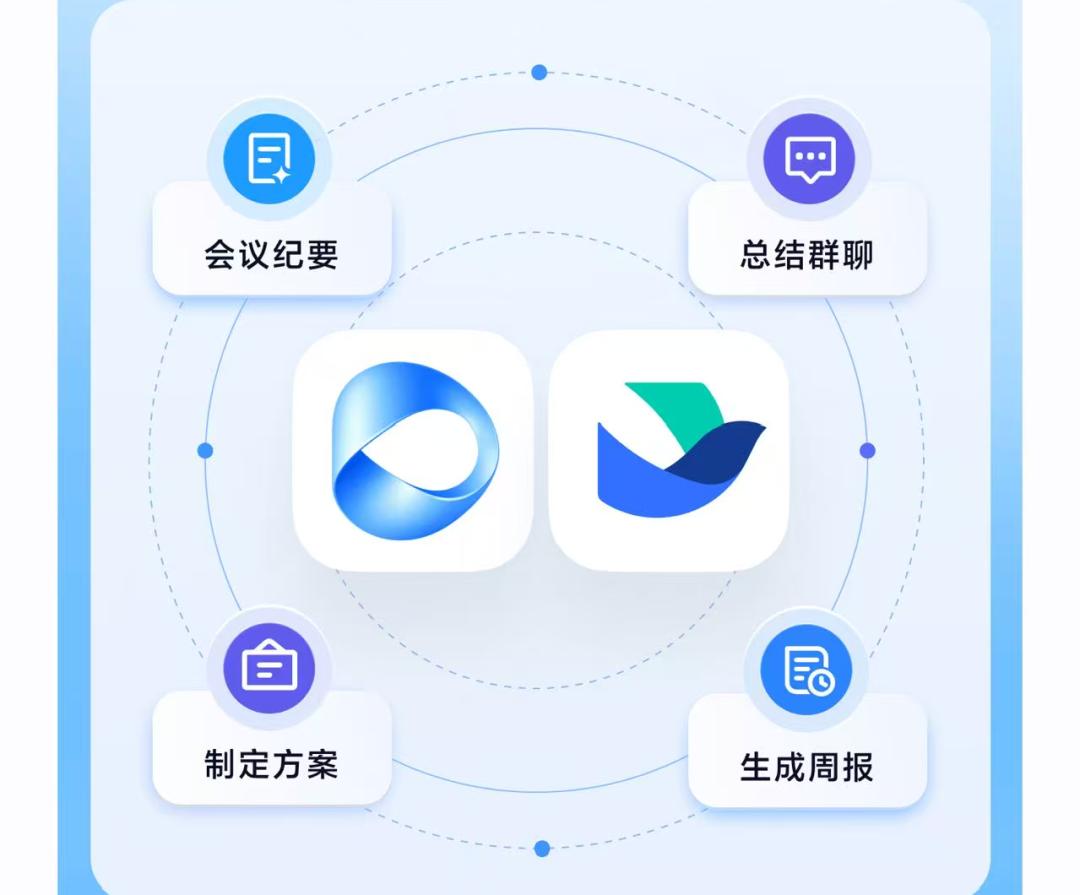
Doubao Work integrates Doubao's natural interaction capabilities and multimodal generation advantages accumulated on the C-end with Feishu's B-end organizational collaboration, document accumulation and permission system. It has launched more than 200 skills and connectors, and intensively updated functions such as remote computer control, Windows virtual desktop, and cloud computer. On September 2, Doubao Work launched the multi-Agent parallel function and the computer operation function under Mac system; on October 28, it further upgraded the computer operation capability.
Baidu follows a dual path of "internal integration + new vertical brand". Baidu Buddy was fully launched on March 22, and completed a package upgrade of personal version, enterprise version, professional suite and workbench on August 27. As of October 26, the user scale of Baidu Buddy increased 9 times month-on-month, enterprise customers increased by 83%, the demand for deliverables skyrocketed 4.3 times, and the month-on-month growth rate of monthly active users reached 1063.79%, ranking first in the growth list.
On August 14, GenFlow, the general agent for Baidu Wenku and Baidu Netdisk running in parallel with Baidu Buddy, officially announced its Chinese name as "Kuku AI", launching a full set of independent office products including PC client, web page, mini-program and enterprise version. Kuku AI focuses on cross-device and cross-time-space end-cloud task relay, which can continue to process tasks in the mini-program even when the computer is turned off. It is specially optimized for financial scenarios in the first phase, with built-in databases of global listed companies' quotes, financial reports, research reports, etc., and connects 1.8 billion professional documents of Baidu Netdisk and Wenku.
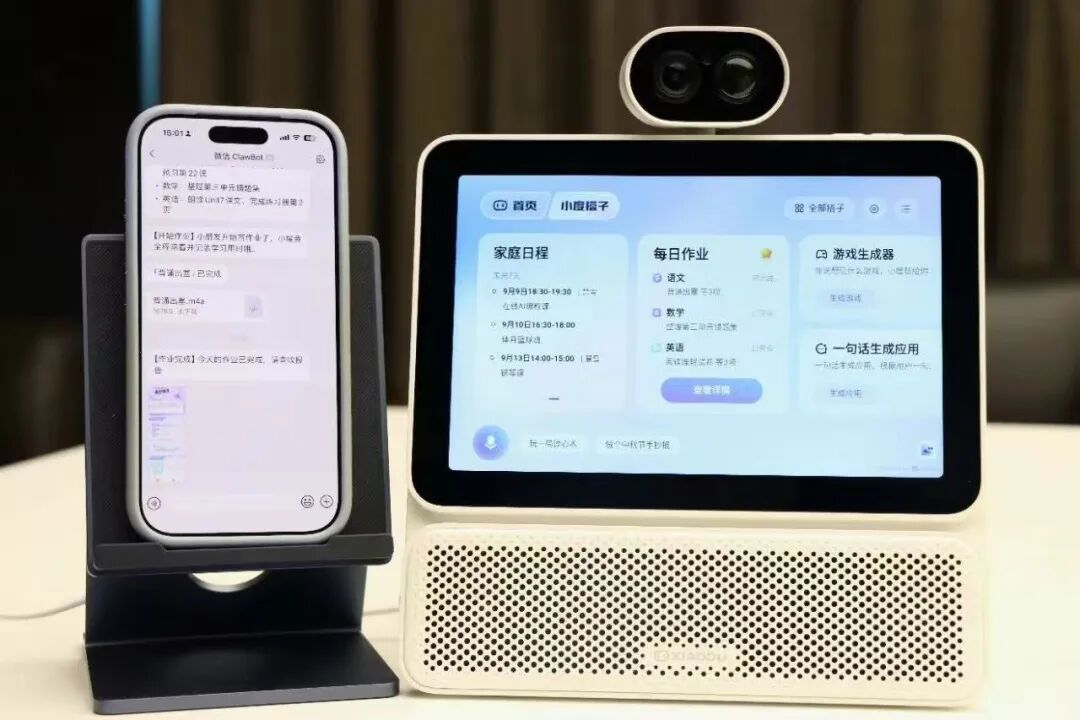
Another move by Baidu is to bring Agents into the home. On September 8, Baidu announced that Baidu Buddy is fully connected to Xiaodu hardware, and Baidu agents have settled in the home space, and simultaneously launched four new products: Tiantian Gui Mi Ji Ultra, Smart Screen X9 Ultra, Smart Camera C1500, and Smart Speaker Pro Max. Xiaodu has entered more than 55 million households across the country, providing a ready-made home scenario entry for Baidu Buddy. As a result, Baidu Buddy has expanded from "workflow" to "life flow", and the competition for entry is spreading from a desktop to a speaker and a screen.
Different from the logic of "building entry from 0 to 1" adopted by internet giants, Kingsoft Office chooses to grow AI capabilities on the basis of its existing office software base. It clearly put forward the strategy of transforming from "Office AI" to "AI Office" in the first half of 2026.
In mid-July, Kingsoft Office released two AI office agents in succession: "Lingxi Professional Edition" for individuals and "WPS Comate" for organizations. The former is positioned as a professional personal office assistant, while the latter is positioned as an organizational-level AI office entry.
The 2026 three-quarter report shows that Kingsoft Office achieved operating revenue of 5.08 billion yuan in the first three quarters, a year-on-year increase of 21.57%; the net profit attributable to shareholders was 2.637 billion yuan, a year-on-year increase of 123.77%. Among them, in the third quarter, WPS personal subscription realized revenue of 1.05 billion yuan, a year-on-year increase of 16.78%; WPS 365 realized revenue of 270 million yuan, a year-on-year increase of 33.83%. As of September 30, WPS Office had 678 million monthly active devices worldwide.
Competition Dimensions Are Shifting
Behind the intensive launch of products lies a more essential change: the core competition of office Agents is shifting from basic generation capabilities to task implementation and result delivery capabilities.
China Securities Construction Investment pointed out in its research report that office Agents are evolving from content generation tools to complex task execution platforms, and the core of industry competition has shifted from basic generation capabilities to task implementation and result delivery capabilities.
The research report of Industrial Securities also believes that the core qualitative change of AI office is shifting from "auxiliary tool" to "end-to-end work result delivery", and the delivery and implementation capability directly determines enterprise payment willingness and user retention level.
At present, the competition in the AI office field is at the stage where basic capabilities are aligned and differentiation has not yet been opened. As the general capabilities of mainstream large models continue to converge, the gap between various companies in basic functions such as content generation and information Q&A is narrowing, and the overall homogeneity is relatively high.
At the same time, market analysis also points out that most products have not yet been deeply embedded in real work processes and established solid user stickiness. This means that the current competition is no longer about "whether it can write", but about "whether it can get things done for you".
Evaluation data confirms this point. In May, Baidu Buddy topped the PinchBench agent evaluation benchmark, occupying 3 of the top 5 positions on the list. PinchBench covers 147 tasks in 23 real work scenarios, evaluating the multi-step reasoning, tool calling and task closed-loop capabilities of Agents. The two versions of Baidu Buddy took the top two positions on the list with 93.3% and 93.2% respectively, while the scores of Anthropic and OpenAI native frameworks in the same scenario were 89% and 91.6% respectively.
In July, according to the data of AI Product List · Desktop List (PC), WorkBuddy and Baidu Buddy ranked the top two in the total AI office agent list with monthly active numbers of 11.1523 million and 6.743 million respectively; ByteDance's TraeWork had 2.6599 million monthly active users, ranking third in the total list; Coze had 2.1733 million monthly active users, ranking fourth in the total list.
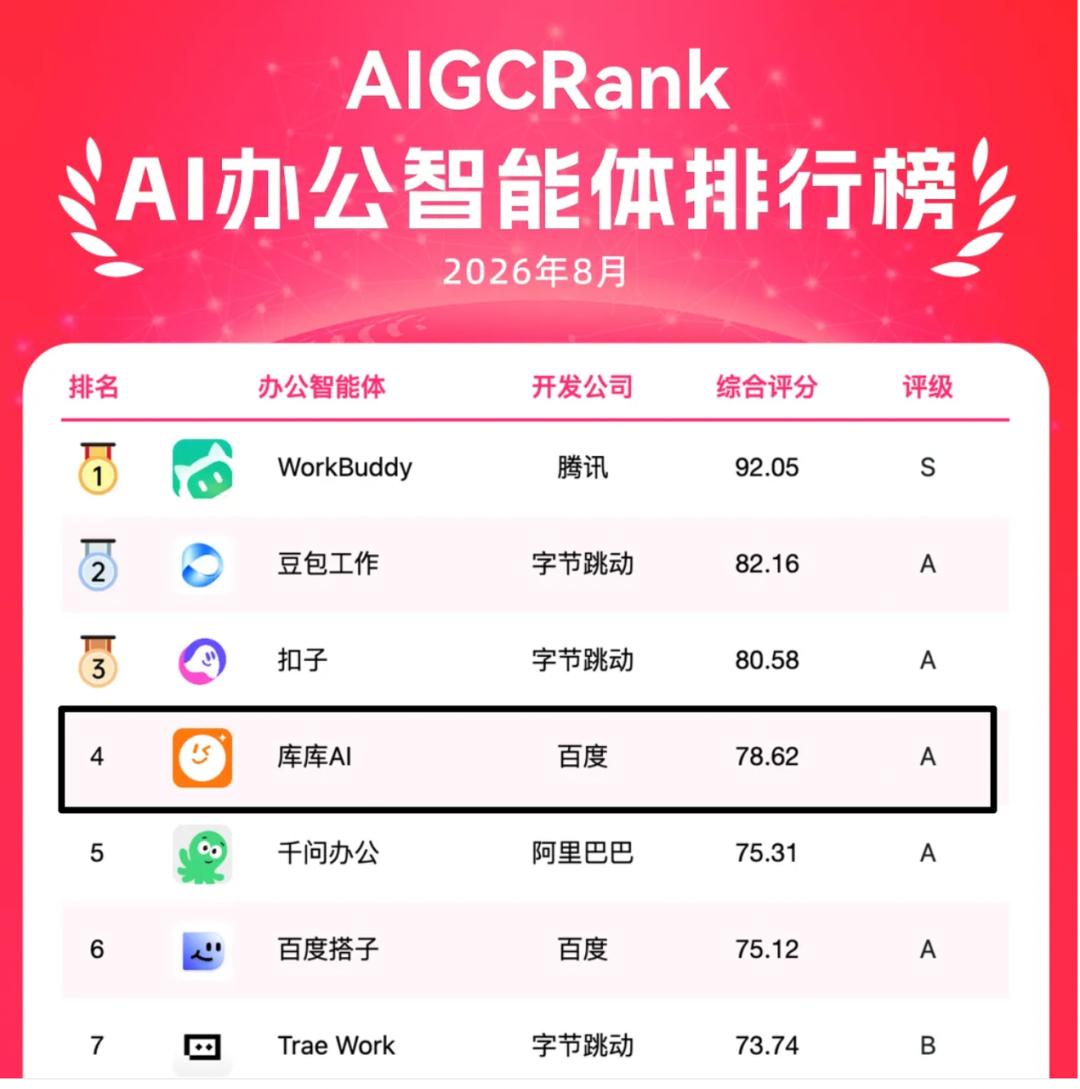
In August, in the "AI Office Agent Ranking" released by AIGCRank, Tencent WorkBuddy led with 92.05 points, followed by Doubao Work (82.16 points) and Coze (80.58 points), while Kuku AI, which was launched for less than a month, broke into the top four with 78.62 points, even surpassing Tongyi Qianwen Office and Baidu Buddy.
On October 20, QuestMobile released the Q3 AI application market report. In September, the total number of active users in the AI office track reached 142 million, a year-on-year increase of 50.6%. The top three in the typical office Agent list are Tencent WorkBuddy, Baidu Buddy and Alibaba Tongyi Qianwen Office, with active user scales of 32.353 million, 9.77 million and 7.905 million respectively.
The frequent change of ownership of the evaluation list just shows that the new front of "delivery capability" is far from being decided.
Cost control of long-horizon tasks is another watershed. On June 15, Baidu Buddy completed the core engine upgrade. Through the self-developed Harness engine and multiple engineering optimizations, the Token consumption during long-horizon task execution was reduced by 75%, which is the first time that domestic general agent products have achieved such a large reduction in consumption through engine optimization.
On August 26, Alibaba released the Qwen3.8-Flash model, and Tongyi Qianwen Office launched an exclusive version in cooperation with the model team. Official data shows that in real office scenario tests, the generation speed of a single task is increased by about 100%, and the average Token consumption is reduced by 75%. The reduction of cost is the prerequisite for users to use AI office on a large scale.
Users can realize full-link office work with just one mobile phone, process tasks in the mini-program even when the computer is turned off, and remotely control multiple computers in parallel. For products that want to embed Agents into real workflows, cost and connection capabilities are closer to the essence of "usable" than parameter scale.
At the Baidu Buddy product launch conference on August 27, Baidu put forward the new AI office standard of "deliverance that amazes at first sight". Shen Dou, Executive Vice President of Baidu Group and President of Baidu Intelligent Cloud Business Group, explained this concept, advocating that the evaluation criteria for AI office should shift from simple generation speed to comprehensive result delivery quality.
Tongyi Qianwen Office takes "context" as the key answer to practicality. On August 17, Tongyi Qianwen Office open-sourced the context infrastructure MyContext, which can convert massive heterogeneous work data into contexts that Agents can directly call. It received more than 3000 Stars on GitHub within a few weeks of open source. Combined with the deep connection with IM software such as DingTalk, Tongyi Qianwen Office can convert the information scattered in business processes such as messages, documents, approvals, emails and knowledge bases in enterprises into organizational contexts that Agents can understand and call.
In the implementation case of Changan Automobile, electrical engineers used Tongyi Qianwen Office to develop a harness selection calculation tool, compressing the original two-day one-by-one check to about 5 minutes; the 55-year-old logistics packaging administrator dismantled the review process involving