The "Red Fruit Time" that took the entire internet by surprise exposes the time poverty faced by ordinary people.
Hongguo Short Drama under ByteDance has rapidly risen as a national app, sparking a debate on "Hongguo addiction" that exposes ordinary people's anxiety over excessive screen time.
Statistics show that internet products are no longer satisfied with seizing users' spare time, and are trying every means to induce people to extend their usage time.
In the life experience of most people, time is a resource that is constantly taken away unilaterally. Studies take up a small part of it, work takes up the majority, and now even rest time is being taken away.
The controversy over "ByteDance Time" that has been trending on hot searches in recent days has seen the two parties argue over the status and responsibility of the industry leader, while ordinary people watching the debate are anxious about a completely different matter.
On October 26, media professional Qin Shuo cited data from Nomura Securities and put forward the assertion that "China's internet has entered the 'ByteDance Time' era". Among the top 50 mobile internet apps in China in July this year, ByteDance's total duration share reached 40.9%, among which the "Hongguo Time" — the average daily usage time per user of Hongguo Short Drama is about 125 minutes. Qin Shuo believes that this is a good data point for ByteDance, but it is not reassuring for users and society, because the cost of this "pleasure" is very high, which expresses his concern about short drama addiction.
This view prompted Li Liang, Vice President of Douyin Group, to post a series of articles in refutation, saying that the statement of "ByteDance Time" is "extremely imprecise and completely nonsense", pointing out that the data in the report is not rigorous, and "instant messaging, games, e-commerce and music all occupy a huge amount of users' time". The two sides had several rounds of back-and-forth debates on whether the concept of "ByteDance Time" is rigorous and what kind of educational responsibility the industry leader should take.
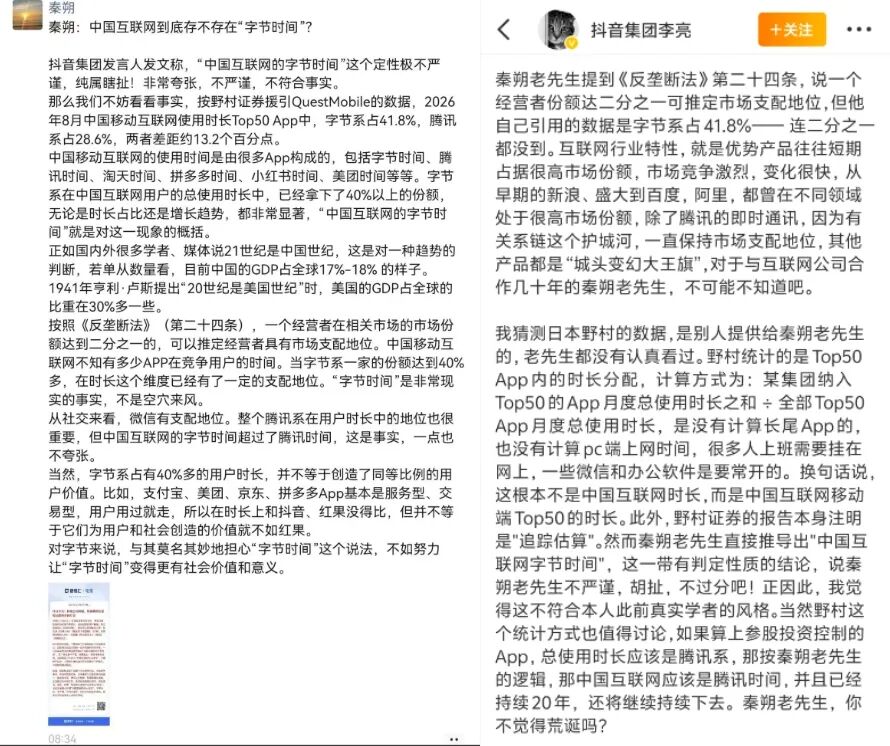
There were several rounds of public exchanges across platforms between media professional Qin Shuo and Li Liang, Vice President of Douyin Group. (Photo/Screenshot from social media platforms)
It is understandable that for enterprises, the label associated with industry monopoly is too big and heavy, and the fear of being the target of criticism for being a prominent leader always lingers. No enterprise dares to accept similar criticism at the moment.
This wave of controversy is a public relations battle for enterprises, but it has gradually evolved into a psychological warfare that rekindles people's anxiety over mobile phone usage time among netizens. Because whether it is Qin Shuo or Li Liang, both sides have acquiesced to a common premise in the debate — Chinese people's mobile phone usage time is indeed getting longer and longer.
The only point of disagreement between the two sides is which enterprise currently occupies the longest user time, and the legitimacy of owning this amount of time.
In the comment section of related discussions, some netizens posted their own mobile phone screen usage duration, shared the app that ranks first in the duration list on their page, to discuss whether they have "ByteDance Time" in their daily lives.
Some people found that they actually spend an hour watching short dramas every day recently, while many non-short-drama audiences said that although they do not have "Hongguo Time" in their lives, they have "Xiaohongshu Time", "XX Game Time"... Many people were shocked to find that mobile phone usage time of 7 to 8 hours is very common, and quite a few people spend more than 10 hours on their phones. After excluding sleep time and working hours, ordinary people's offline leisure life is left with very little time.
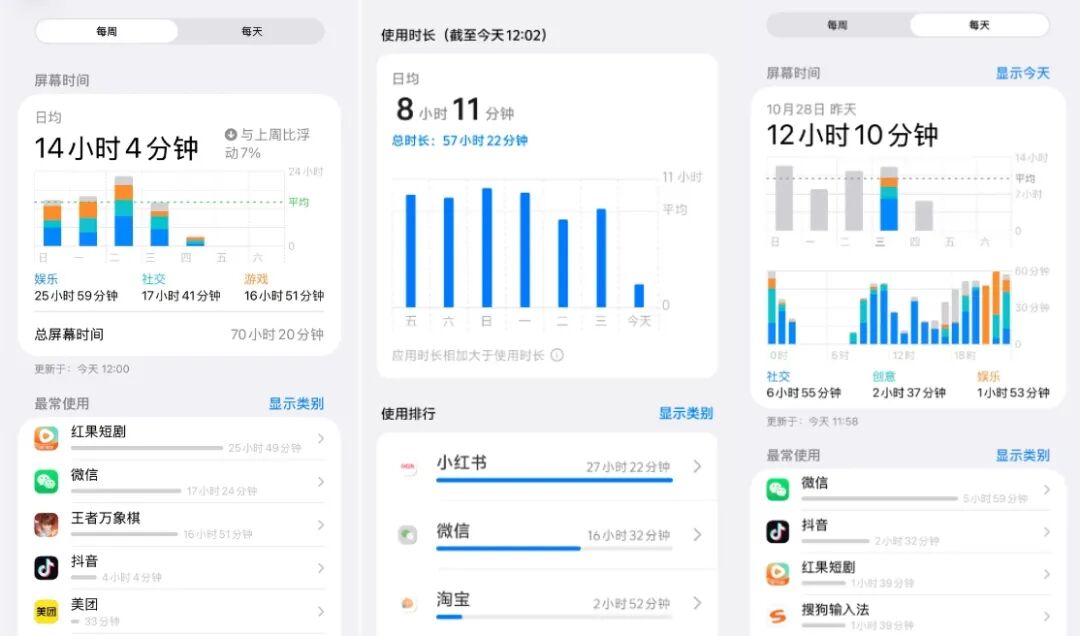
The top-ranked "XX Time" on everyone's mobile phone varies from person to person. (Photo/Screenshots of mobile phones from colleagues in the editorial department)
In the personal experience of many people, the time spent on mobile phones is constantly increasing, but this increase does not bring a corresponding rise in their own happiness index. On the contrary, more and more people are feeling "time poverty".
They feel that they have too little disposable time, and no time to do things of their own. Or they are frequently interrupted and cannot concentrate, and the efficiency of both work and pleasure is decreasing.
For the public, the focus of the "ByteDance Time" controversy is not actually which company it refers to, but how their own life order is quietly reshaped — Who takes away ordinary people's time? How has ordinary people's daily entertainment life been completely occupied by mobile phones and transformed into a business that flows to platforms?
When this happens, people even think it is "my own independent choice".
The time-grabbing business of the Chinese internet,
has reached a new node
Throughout the history of internet development, competing for users' attention is an open business, but it does not mean that people are completely insensitive to their time being occupied and divided. Every time an internet product takes away a part of the public's fragmented time, it has caused strong social controversy.
In 2008, the social game Happy Farm, whose core gameplay was planting and stealing vegetables, spread rapidly through social platforms such as Renren, Kaixin001 and QQ, setting off a years-long national craze for stealing vegetables, and discussions about how players were addicted to it were everywhere.
For example, according to a report from Hanwang, a 14-year-old junior high school student took on the important task of stealing vegetables for his mother during the winter vacation as a special way to show filial piety; in order to improve the efficiency of stealing vegetables, he even made a schedule for stealing vegetables. Some enterprises and institutions even set up special bans to prevent employees from logging in to Kaixin001 at work. At the end of 2009, some media published an article titled "Wasted in 'Vegetable Stealing' in 2009".
Tracing back, the vegetable-stealing craze is probably the first time that the public collectively discussed the experience of their fragmented time being taken away by the internet. Before that, most people's internet experience was more purposeful: people specially planned a period of time after work to turn on the computer to play games, browse forums or chat on QQ, and young people who surf the internet frequently might be labeled as having internet addiction. But the gameplay of stealing vegetables disrupted the original order. The social attribute drove more and more people to join the sequence of stealing vegetables, calculating that they would log in again to steal vegetables after an hour or two.
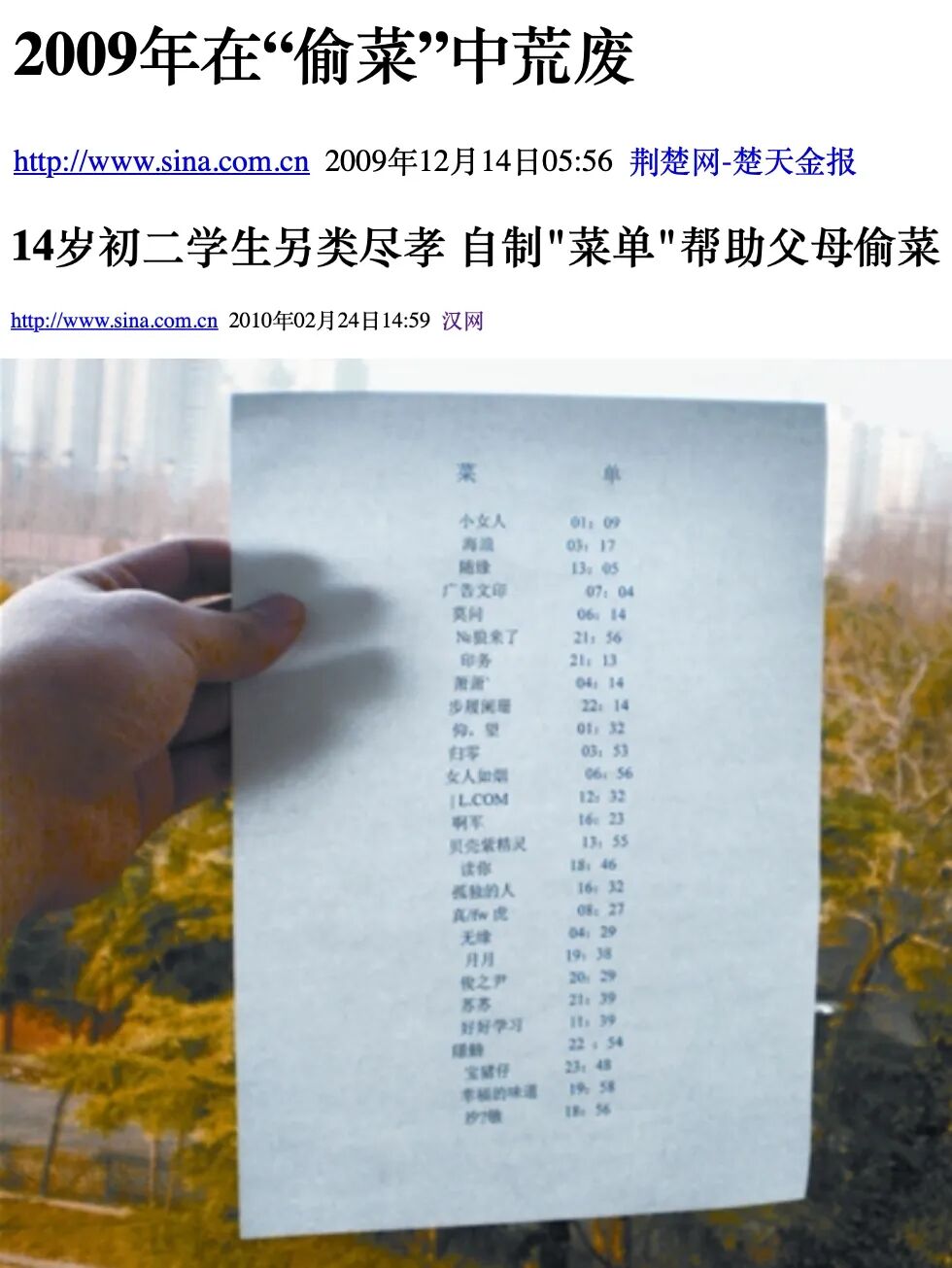
Reports related to the early vegetable-stealing craze. (Photo/Sina News)
During this period, both internet companies and the public began to vaguely realize that the truth in real life — "owning a person's time means having the power to dominate him" — also applies to the internet world. A few years later, the emergence of smartphones and more mature social media platforms made the internet's business of dividing up the public's fragmented time more concrete.
In 2016, Luo Zhenyu put forward the concept of "Gross Domestic Time" (GDT), pointing directly at the competition among large internet factories, which is essentially a game of competing for users' time. His estimate at that time was that with 1 billion netizens spending 5 hours a day per person, the total gross domestic time that the internet can exploit is about 1.825 trillion hours, and all internet companies are playing a zero-sum game around these 1.825 trillion hours.
The "ByteDance-Tencent War" in 2018, which refers to the controversy where Tencent and ByteDance sued each other for unfair competition on Children's Day 2018, is considered to have once again confirmed the "time-grabbing" theory. User duration directly determines the market size of a product and the commercial value of the company. Represented by QQ, WeChat and Honor of Kings, the Tencent system that reaps social and gaming time, and the Toutiao system represented by information, information flow and short videos that reaps content consumption time, represent the two major product directions of the Chinese internet.

It has long been a cliché that mobile phones blur the boundary between work and life. (Photo/*The Starry Love*)
At this stage, discussions on fragmented time erupted among people. Moments was once criticized as a meaningless time black hole, WeChat was criticized for invisibly extending people's working hours — a person may need to stay on WeChat for far more time than the working hours of a job. Early versions of Douyin and Kuaishou were criticized as "chaotic and meaningless". But at the same time, everyone unconsciously immersed themselves in them.
On the one hand, the information density of online content far exceeds that of real life, and higher information density naturally makes people feel that time does not seem to be wasted — I have seen a lot of news and laughed a lot. On the other hand, discussions about the realistic pressure of 996 work schedule and involution began to emerge, and the virtual online space gradually became an outlet to escape and vent the pressure from reality.
It can be said that behind every outbreak of internet time anxiety, there is a new product form that reshapes people's life order.
What is hidden behind this short drama time controversy is that the war for time in China's internet has actually moved from the stage of "dividing up time" to a new stage of "extending time".
As mentioned earlier, when Luo Zhenyu put forward the concept of gross domestic time in 2016, the estimated data he used was "5 hours per person per day". Ten years later, this figure is no longer applicable.
Data from Quest Mobile shows that in June 2026, the monthly average usage time per user across the whole network reached 189.3 hours, while back in April 2019, this figure was 128.2 hours. In 7 years, people's internet usage time has increased by about 47%, but the monthly active user data has only increased by about 12.9% in the same period — the monthly active user scale was 1.136 billion in June 2019, and 1.282 billion in June 2026.
This means that the number of active users has limited growth, while the time people stay on their phones each time they open it is getting longer.

Is the increasing mobile phone usage time a dilemma or an inevitable trend? (Photo/*Unexpected Vacation*)
In his book *24/7: Late Capitalism and the Ends of Sleep*, Jonathan Crary regards sleep as a kind of time that is difficult to be completely incorporated by the logic of production and consumption, because people cannot produce or consume when they are asleep. But now, many people delay their bedtime just to look at their phones for a little longer.
The public's attention preferences are quantified and decomposed into layers of data by algorithms. A hook every three seconds, constantly reversing plots... countless communication skills have been summarized to make users scroll for a little longer, and stay for 30 more seconds. In this context, users sometimes cannot put down their phones not necessarily because the content is "good and loved", but because their brains are constantly receiving stimuli: anger, anxiety, suspense, disdain... negative emotions can also become reasons for people to stay.
When the number of users tends to be saturated and the original division of internet time is coming to an end, under the profit-seeking business logic, internet products are destined to start the battle to extend users' usage time.
Ordinary people suffering from "time poverty",
are not only having their time stolen by mobile phones
Facing their "unhealthy" mobile phone usage time, the mentality of most ordinary people is actually tangled and awkward.
They know very well that web fictions, short dramas and funny videos do not have much nutritional value, but at the same time, after going to work and even working overtime, their almost crashed brains seem to only be able to accept direct, shallow dopamine supplements. Food delivery riders set up two mobile phones on their electric scooters: one for taking orders, the other for playing short videos or e-books. In this job with unfixed income but extendable working hours, entertainment outlets are transformed into snatching time to scroll through mobile phones while waiting for orders.
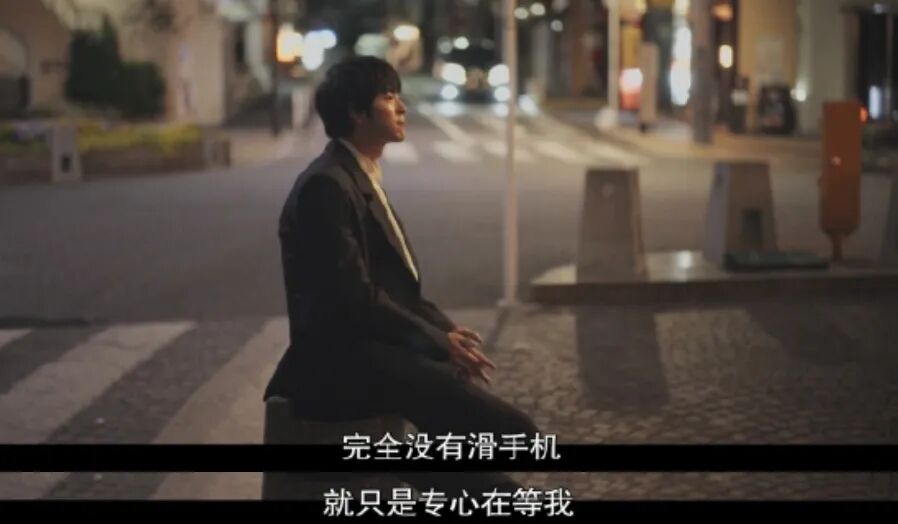
At the moment, not scrolling through mobile phones while waiting for someone can be called the highest level of waiting. (Photo/*Sister*)
German sociologist Hartmut Rosa once used "social acceleration" to explain the modern people's time dilemma. Technology was invented to save people's time, but in reality, the pursuit of efficiency improvement did not make people more free, but instead drove the society to accelerate, making people more likely to feel time scarcity.
No one's short drama time or game time is generated during work meetings. The extension of ordinary people's online entertainment time is mostly because life pressure needs an outlet, while the time cost and money cost required for offline entertainment are too high compared with online entertainment. Countless office workers have long been used to the 30-second advertisement after failing a mini-program game, and used to the skippable or non-skippable promotions that pop up while scrolling through short videos and short dramas.
People unconsciously get used to paying for content consumption with their time instead of money, because the change of numbers in their salary card will bring too intuitive and realistic impact.