A group of Smart cars are no match for a single Firefly.
In this year's passenger vehicle market, a decline is no longer news. The year-on-year drop has exceeded 5 million units, and the annual retail sales volume returning to the level of a decade ago is a foregone conclusion.
Even so, there are still two niche market segments that are seeing growth.
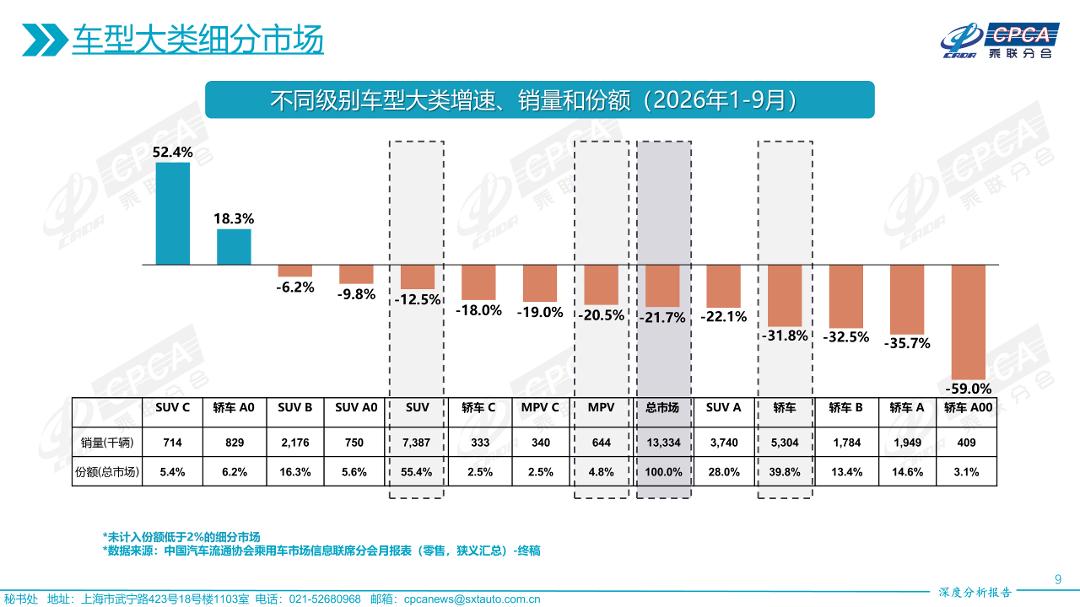
Retail data for January to September released by the China Passenger Car Association (CPCA) shows that C-class SUVs recorded retail sales of 714,000 units, accounting for a 5.4% market share, surging 52.4% year on year; the other growing segment is A0-class sedans, which posted retail sales of 829,000 units with a 6.2% market share, up 18% year on year.
Interestingly, even though both are growing tracks, the two markets present completely different landscapes.
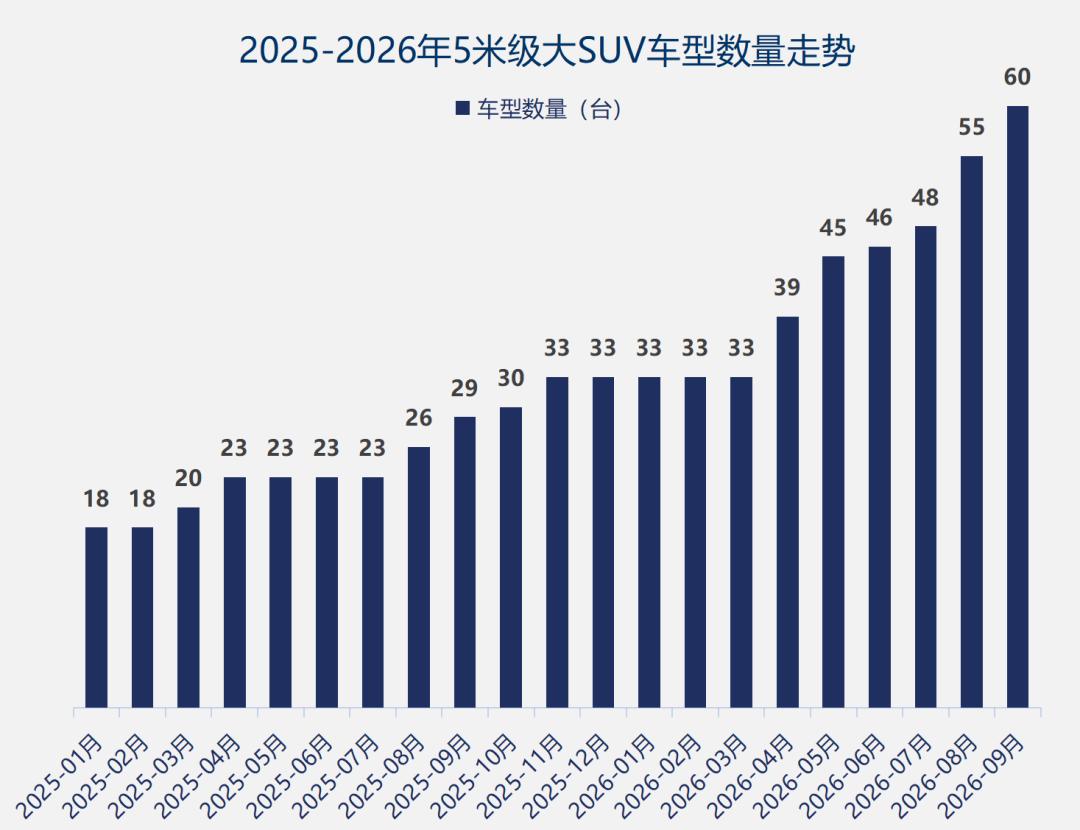
In the C-class large SUV track, models are densely gathered, with more than 60 products competing head to head. In the limited market capacity, the market share each model gets is getting smaller and smaller, while new models vying for a piece of the pie are still queuing up for launch.
In contrast, in the A0-class sedan segment, many models easily hit monthly sales of 30,000 to 40,000 units. Despite the seemingly huge sales volume, there are not many players entering the market, and this high-volume market has been largely ignored by many enterprises.
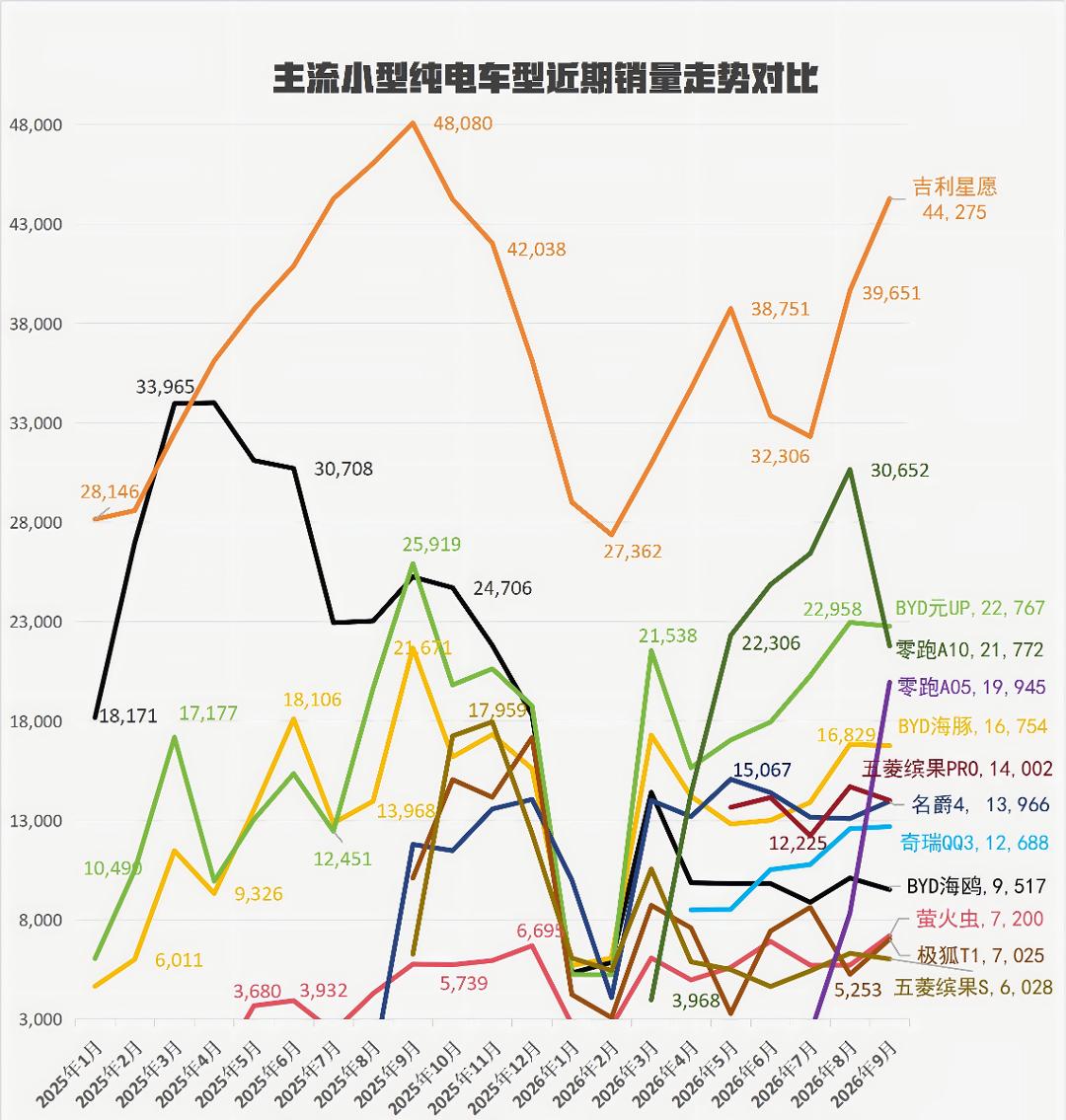
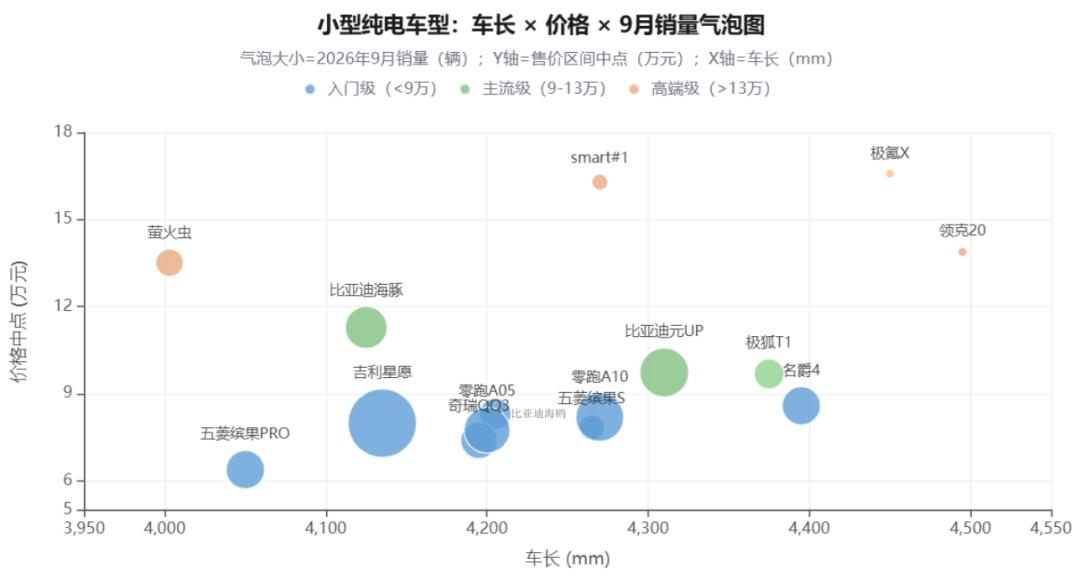
According to statistics, there are only about a dozen models that can achieve hit status (monthly sales of over 5,000 units), including Geely Starwish, BYD Yuan UP, BYD Dolphin, Wuling Bingo, Chery QQ3, Leapmotor A05, BYD Seagull, MG 4, NIO Firefly, Arcfox T1, all on the list.
A close look at the price range reveals a clear gap: the vast majority of models on the list are priced in the 60,000 to 90,000 yuan range, with the only exception being Firefly, whose official price is set at 120,000 to 150,000 yuan.
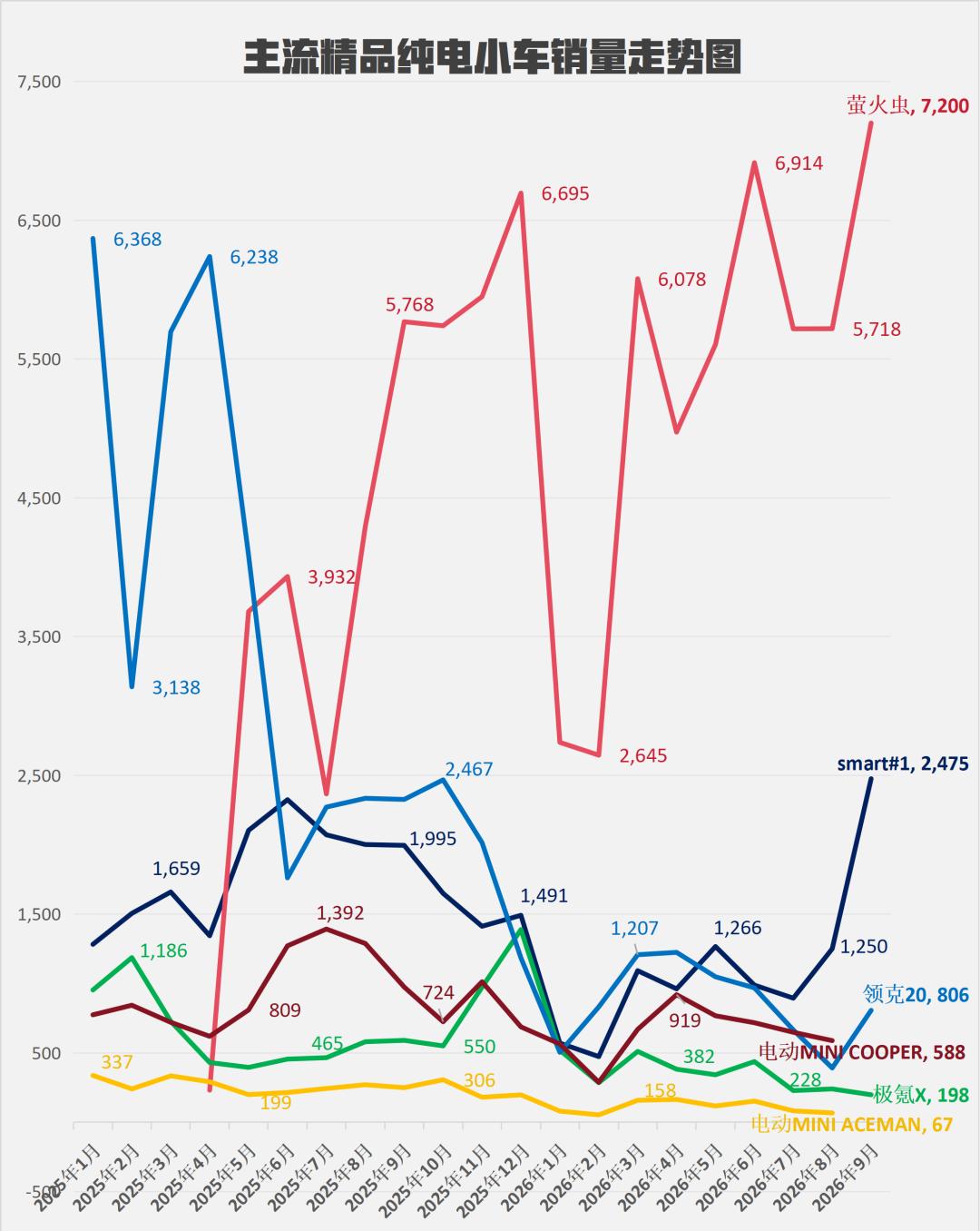
Scrolling further down, Smart #1, known as the representative of high-quality pure electric compact cars, recorded sales of only over 2,400 units in September, which is already its best performance in recent years after the annual model was updated and price reduced.
Other players that focus on the high-quality compact car route face even more difficult situations.
MINI's monthly sales have dropped below 1,000 units, the electric version of Audi Q2L was phased out long ago, and Volvo EX30's monthly sales are even only in double digits. Zeekr X, which also takes the high-quality compact car route, has never ranked high in sales. In addition, Lynk & Co 20 had decent sales in the early stage of its launch, then fell into a slump for a period. After the facelift and price cut, its cost-effectiveness has improved, leaving some room for expectation in the future.
In other words, in the high-quality electric compact car track, almost all players except Firefly have suffered setbacks.
Why can the combined sales of all the Smart models not beat Firefly? It is worth noting that when Firefly was first launched, many people criticized its appearance, and the battery swap function that was promoted in the early stage has not been implemented yet. But what makes it stand out from the crowd?
With this question in mind, we sorted out the competitive landscape of the pure electric compact car market. The purpose is not to brag about how well Firefly has done, but to explore against this industry and market phenomenon whether there is still a necessity for the high-quality pure electric compact car track.
Cars Are Getting Larger, Compact Cars Are Bound to Be Low-Priced
The entire industry is now competing to develop larger vehicles. As mentioned earlier, C-class SUV is the fastest growing track, but this growth is completely driven by the continuous launch of new models. According to statistics, more than 30 new C-class SUV models have been added in the past year. With so many new products entering the market, it is no surprise that total sales have increased.
The growing number of large vehicles and the increasingly fierce price competition have invisibly pushed compact cars into the price range below 100,000 yuan, making it increasingly difficult for them to move upmarket.
Why are car companies willing to develop large vehicles even at great cost, despite the extremely low probability of success, and even take the risk to try? In contrast, a well-priced compact car can almost always achieve explosive sales, but car companies are reluctant to enter this track?
From the perspective of car companies, it is not that they do not want to make high-quality compact cars, but that the market pattern, competitive pressure, and the inherent feature that "making compact cars is far more difficult than making large vehicles" have determined this situation.
Large vehicles have higher unit prices and thicker profit margins, so even if the competition is fierce, all manufacturers are willing to crowd into the large vehicle track, ranging from 150,000 yuan to 500,000 yuan.
Compact cars are different. Although they look small in size, they require the same number of components and complete vehicle verification processes, with only a small amount of material cost saved. As a result, the output value of compact cars is inherently relatively low. Taking entry-level compact cars with monthly sales exceeding 10,000 units as an example, the output value brought by selling more than 10,000 such units a month is equivalent to the output value generated by selling only 2,000 large vehicles priced at more than 300,000 yuan, and the difficulty level of the two is not on the same order of magnitude.
This also means that manufacturing compact cars must rely on huge scale to dilute costs, and only leading large manufacturers such as BYD, Geely, Wuling and Leapmotor have the confidence to lay out this track. Even for leading brands, the profit of compact cars is extremely thin, and the break-even line often reaches the level of 20,000 units per month.
Even new car-making forces can hardly get involved in this track. Their sales volume cannot support the business, and making compact cars is not profitable, which is not conducive to the development of the enterprise, nor does it help improve the brand image. Few enterprises are willing to make low-cost compact cars that will lower their brand value and public perception.
In fact, luxury brands including BBA are also gradually cutting ties with entry-level compact cars. Although entry-level compact cars can expand the brand's audience and popularity, it is not a cost-effective deal in any case to exchange the diluted and lowered brand value for the sales of tens of thousands of compact cars.
On the consumer side, this contrast is even more realistic. There is a very practical consumption logic: with a budget of 150,000 yuan, you can fully get a midsize SUV with advanced intelligent driving functions, which easily meets the travel needs of the whole family. Under this premise, asking consumers to spend 120,000 to 130,000 yuan on a compact car that is driven by only 1 or 2 people most of the time, many people's first reaction is that it is not cost-effective.
In the market-wide consensus that people are pursuing larger vehicles, high-quality compact cars are fundamentally trapped in an extremely narrow niche market.
Therefore, the high-volume A0-class compact cars on the market are basically concentrated in the 50,000 to 100,000 yuan range. Over time, the market consensus has become more and more deeply rooted: small electric vehicles should be priced at this level.
Once a brand jumps out and says it wants to make a more high-quality compact car that is 50,000 to 60,000 yuan more expensive than similar models, consumers will generally question that all electric compact cars share the same underlying logic of motor plus battery, so why is this model so much more expensive?
The market will not give ideal results as people expect, but instead give repeated lessons.
Therefore, all the compact cars that sell well now are cost-effective mass-market models, and a general consensus has gradually formed: A0-class compact cars with a length of about 4.2 meters and a wheelbase of 2.6 to 2.7 meters are mainly priced at 60,000 to 90,000 yuan. Once the price goes beyond this range, the market and consumers will not recognize it.
It Is Increasingly Difficult to Sell Compact Cars at Premium Prices
Firefly is an exception. It has maintained relatively restraint in product positioning and definition.
Most of the industry's analysis of Firefly's best-selling core is that it has found a unique play style and accurately captured its own target audience.
It bears the NIO brand name, with inherent luxury brand endorsement. The official price of 120,000 to 150,000 yuan does not look low, but most users choose the BaaS battery rental solution, which directly reduces the entry threshold to 80,000 to 90,000 yuan, putting it in the same transaction price range as Seagull and Starwish.
In other words, behind Firefly's hot sales, it is still inseparable from the keywords of "low price" and "cost-effectiveness".
The main demand of the compact car market is for commuting, which is closely related to the current consumption environment. To put it simply, consumers have a more pragmatic attitude and are more cautious with their money.
But users who buy Firefly are not the same group as those who buy Seagull and Starwish.
For users who choose Starwish and Seagull, their core demand is cost-effectiveness, their budget is fixed, and they prioritize space and price. At the same price, of course, the higher the configuration and the larger the space, the better. As for quality and safety, they naturally have to be secondary considerations.
Those who are willing to buy Firefly value quality, safety, personality, and the NIO brand endorsement. Even if it only uses a 400V architecture, the charging speed is not fast, and the configuration is not aggressive, it still has its target audience.
Of course, there is also the psychological advantage brought by BaaS: the battery does not belong to the owner, so users do not have to worry about battery degradation and residual value anxiety. After three to five years, they can replace it with a new battery, which greatly reduces concerns about range and vehicle condition. Even if they pay about 300 yuan more in battery rent every month, for this group of users, it is equivalent to the cost of a meal, with very little financial pressure.
This is also where Firefly is difficult to replicate. The product does not blindly compete on configurations, but is supported by NIO's years of brand accumulation, battery swap system and BaaS model. In addition, it got the best collision test result among compact cars in C-IASI, with reliable quality control and safety performance. With multiple advantages combined, this special case was created.
Apart from this special case, other high-quality small electric cars can hardly find a foothold. Especially in the era when electrification has just completed the penetration of entry-level compact cars, the threshold for high-quality compact cars to sell at high prices has become extremely high.
The launch price of Lynk & Co 20 last month is a very typical example. The old model was priced on the high side, and had no obvious advantages compared with Starwish and Seagull. The new model took the opposite strategy, equipped the whole lineup with 800V high-voltage platform and full lidar, comprehensively upgraded the hardware, and the official guide price was reduced by 12,000 yuan, with a maximum discount of 17,000 yuan after stacking all benefits.
The essence of this strategy is that Lynk & Co has seen the reality clearly: it is not feasible to sell compact cars at high prices. To achieve large sales volume, it must increase configuration and reduce prices. The current situation of the first batch of high-quality electric compact cars Smart and MINI also confirms this logic.
Not long ago, the annual updated version of Smart #1 lowered its price from the original 170,000-200,000 yuan to 140,000-150,000 yuan, and its sales rebounded significantly for a period, but it is still lower than its peak sales.
MINI has launched 3 to 4 pure electric models, but it no longer publishes relevant data in China. According to insurance registration data, the total sales of all these models are less than 1,000 units. The brand premium of Mercedes-Benz and BMW in the Chinese market is not as strong as before, and the premium support they can provide to Smart and MINI is getting weaker and weaker.
Looking back at Smart, its previous strategy of making vehicles larger has actually fallen into the endless involution of the Chinese market, and it has lost its own distinct characteristics that it should have had.
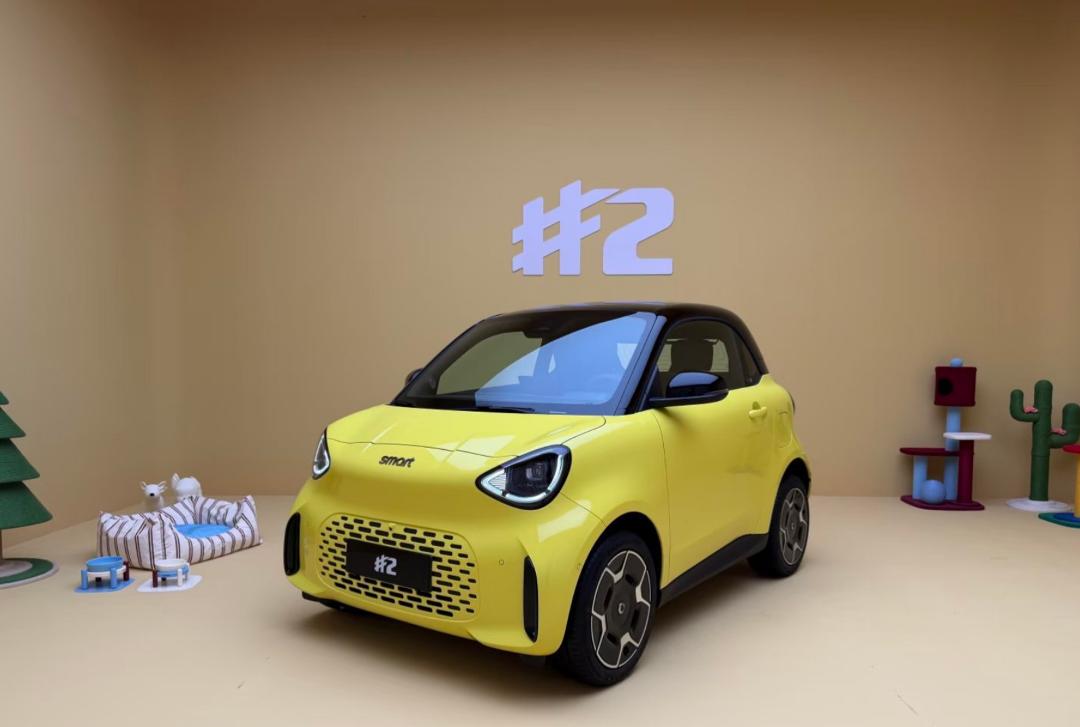
Next, Smart will launch a 2-seat 2-door micro electric vehicle #2. The limited edition has been sold out, with a price of 113,000 yuan. The estimated transaction price at the official launch will fall in the 80,000 to 100,000 yuan range.
But in this price range, there are Wuling Hongguang MINI and Geely Panda ahead, which can be obtained for only 30,000 to 50,000 yuan. Last year, with subsidies, they could easily achieve monthly sales of over 10,000 units. This year, after the subsidies were cancelled, their true sales level was exposed. For this 2-door Smart compact car, achieving monthly sales of 3,000 units after launch can already be regarded as a good result, and it is difficult to replicate the mass sales myth of low-cost commuter cars.
At the end of the day, in the electric era, it is increasingly difficult to rely on brand feelings to obtain high premiums for compact cars. The reason why Smart and MINI were popular in the past is the brand filter accumulated over a long time in the fuel vehicle era. The success