The confusion of a workshop director: We can achieve a purity of 99.9%, yet we cannot clearly explain why that 0.1% is of such great value.
A workshop director who has worked at a biomedical enterprise for more than ten years told me a rather distressing story a while ago.
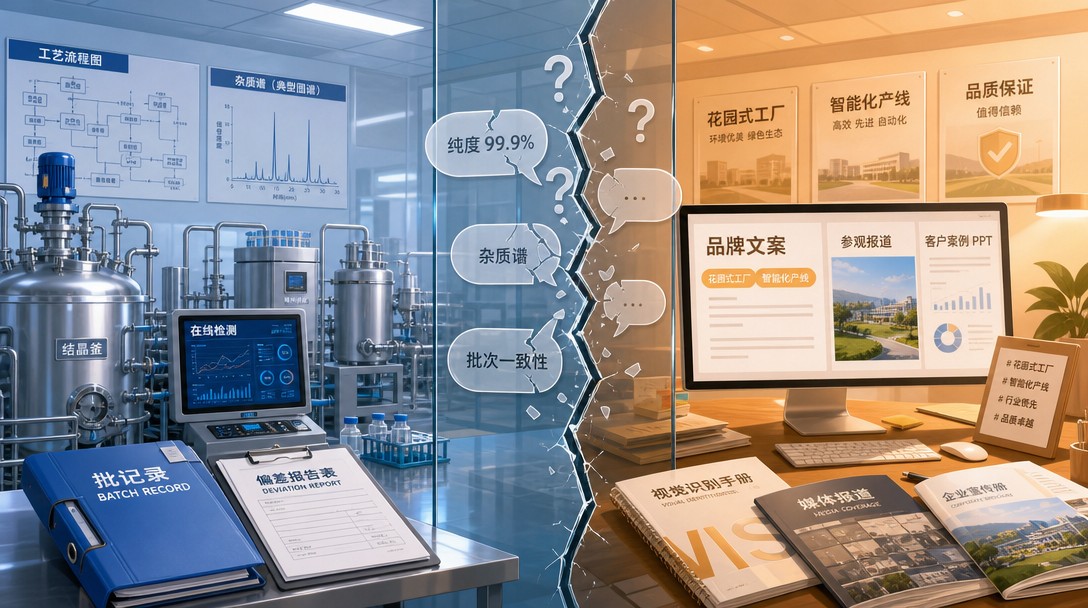
The active pharmaceutical ingredients (APIs) produced in their workshop can reach a purity of 99.9%, and their impurity profile control level ranks among the top in the industry. Last year, the company received a group of important customers for a visit. He prepared the presentation script a week in advance, covering from crystallization processes to refining steps, from in-line testing to deviation control. However, after the tour, the customers only left a comment: "The workshop is quite standard." Later, the visit report written by the marketing department was full of descriptions like "garden-style factory" and "intelligent production line", and none of the process details he had prepared appeared in the full text.
"The most valuable things we have never seem to be written down," he said.
This is not an isolated case.
Surveys show that more than 75% of biomedical manufacturing enterprises believe that processes and quality systems are their core barriers, but less than 12% of them can effectively translate manufacturing capabilities into customer recognition and commercial premium. The workshop operates silently in production, while the marketing team makes empty expressions, with an invisible wall standing in between.
On one side of the wall is the manufacturing team's self-appreciation, and on the other side is the customers' total indifference.
01 The Disconnection Between Manufacturing and Content: Processes Cannot Speak for Themselves, and the Marketing Team Cannot Translate Them Properly
The biomedical industry is unique in that it is not only a manufacturing industry with high technical barriers, but also a content industry featuring strict regulation and high trust requirements.
The competitiveness of a product comes half from molecular design and clinical data, and half from production processes and quality systems. However, the organizational structure of most enterprises naturally separates manufacturing from content creation.
What the production team in the workshop focuses on includes: crystallization yield, impurity profile, batch consistency, deviation rate, CAPA efficiency, and sterility assurance level. What the marketing team in the office focuses on includes: brand stories, visual tonality, customer cases, and meeting scripts. Both teams are very professional, but they do not speak the same language.
A biomedical enterprise once received a potential customer for a factory audit. The head of production explained the control logic of each step of the refining process in detail. After listening, the customer asked a question: "So compared with your peers, what exactly makes your batch stability better?" No one on site could answer this question in one sentence. It is not that there is no relevant data, but that the data has not been translated into expressions that customers can compare and perceive.
The problem does not lie in anyone's lack of effort, but in the absence of a "translator" between the manufacturing end and the content end.

02 What is FDE? Why Does Biomedical Manufacturing Need It?
FDE, the full name of which is Forward Deployed Engineer/Expert, refers to forward-deployed engineers or experts.
This concept first emerged in the technology industry, referring to roles that do not sit at the headquarters to write code, but are directly embedded in the customer's business site to understand real problems and deliver solutions quickly. They are not technical support staff, but business translators.
Dazhaoxiang is introducing the FDE model into the content service of the biomedical manufacturing sector.
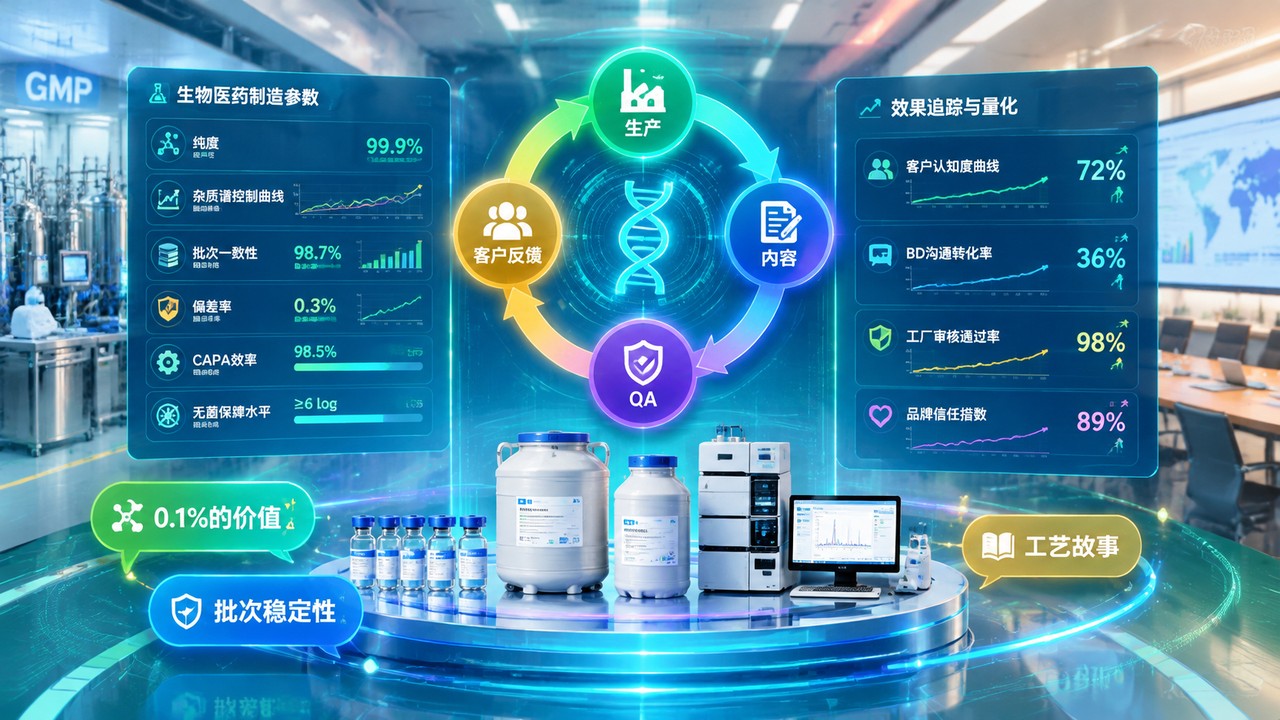
In short, the FDE content service provided by Dazhaoxiang means dispatching content experts to settle in biomedical enterprises, going deep into GMP workshops and frontline R&D sites. They are not writers waiting for briefs at their desks, but enter the workshop together with the production team, review batch records together with QA staff, and discuss process development together with R&D personnel. Then, they translate manufacturing language into brand language, and turn process details into stories that customers can understand, compare and trust.
Content is no longer top-down "packaging", but a kind of "expression" that grows out of workshops and production lines.
03 How Does Dazhaoxiang's FDE Content Service Work?
There are three steps: on-site diagnosis, co-creation of content, and closed-loop effect management.
On-site diagnosis. FDE experts spend one to two weeks going deep into production and R&D sites. They attend batch record review meetings, observe deviation handling processes, talk with workshop operators about the difficulties in aseptic operation, and even participate in process verification. The goal is to find the breakpoints between manufacturing and content: where the process advantages lie, what customers care about, and what content needs to be supplemented.
Content co-creation. It is not that FDE writes content behind closed doors, but polishes it together with the production, QA and marketing teams. Every piece of content can answer a real customer doubt, and every material can become a powerful asset for the sales and BD teams. A head of production at a biomedical enterprise said: "In the past, the marketing department delivered drafts and we put forward suggestions; now we discuss together. The content produced by the content team is considered professional by the production team and credible by customers."
Closed-loop effect management. After the content is released, track customer feedback and conversion data to see which process points are remembered and which expressions build trust. Use data to support content iteration, so that manufacturing investment can be truly recognized.
After an enterprise adopted the FDE model, customers' awareness of the factory's process capabilities increased by more than twice, and the communication efficiency of the BD team was significantly improved.

04 Who Needs FDE Content Services?
If the biomedical enterprise you work for meets any of the following conditions, FDE content service may be exactly what you need:
- Strong manufacturing strength, but weak brand expression, unable to clearly state process advantages;
- Severe product homogenization, hoping to build differentiated recognition through production processes and quality systems;
- High communication cost between the marketing department and the production department, leading to slow content output and frequent information distortion;
- Want to transform from "marketing-driven" to "manufacturing-driven + content-driven".
Biomedical CDMO enterprises, preparation manufacturers, high-end API enterprises, and innovative therapy manufacturers are all natural demanders for FDE content services.
05 The Next Stop of Content Services: From the Office to the Workshop
In the past, content services followed the model of "you put forward demands, and I write drafts". Now, the FDE content service of Dazhaoxiang follows the model of "I understand manufacturing, and we write together".
When content experts move from offices to GMP workshops and production lines, and transform from writers to process translators, the manufacturing content of the biomedical industry will no longer be a castle in the air, but a real expression supported by sterility assurance, backed by batch data, and traceable through verification documents.
Dazhaoxiang is now opening up cooperation opportunities for FDE content services. If you are also fed up with the disconnect between manufacturing and content, you are welcome to contact us for a discussion.
After all, high-quality biomedical content should not only be seen, but also believed.