You can keep grinding LeetCode as much as you want, top-tier AI companies are starting to remove LeetCode from their recruitment assessments.
After grinding LeetCode for so many years, people suddenly say that the coding test will no longer be required.
For a moment, I really don't know whether I should breathe a sigh of relief or feel emotional about it.
Just now, a post from Felix Rieseberg, Engineering Manager at Anthropic, instantly blew up the programmer community:
The coding interview is dead! At our company, the traditional coding test has been removed~
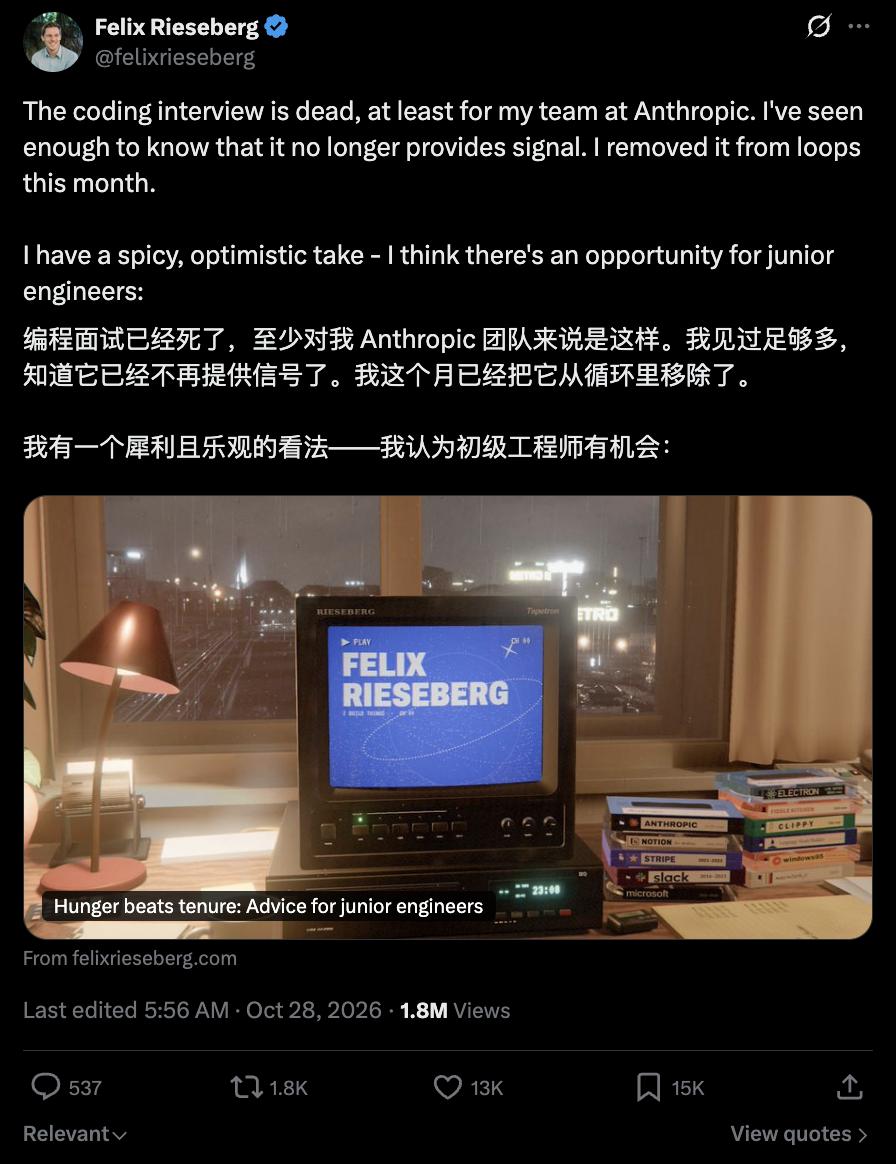
After interviewing so many candidates, Felix found that the classic coding test has become increasingly ineffective at judging the actual competence of candidates.
So this month, he simply removed it from Anthropic's interview process.
To be fair, the AI industry always manages to publish articles from time to time that precisely strike the chord of working professionals. At the time I took the screenshot, this post had already received 1.8 million views, which is incredibly impressive.
Thinking back in the past, countless developers stayed up day and night grinding LeetCode before interviews just to prove their coding ability.
But now, even interviewers at Anthropic have come out and said: No more coding tests!
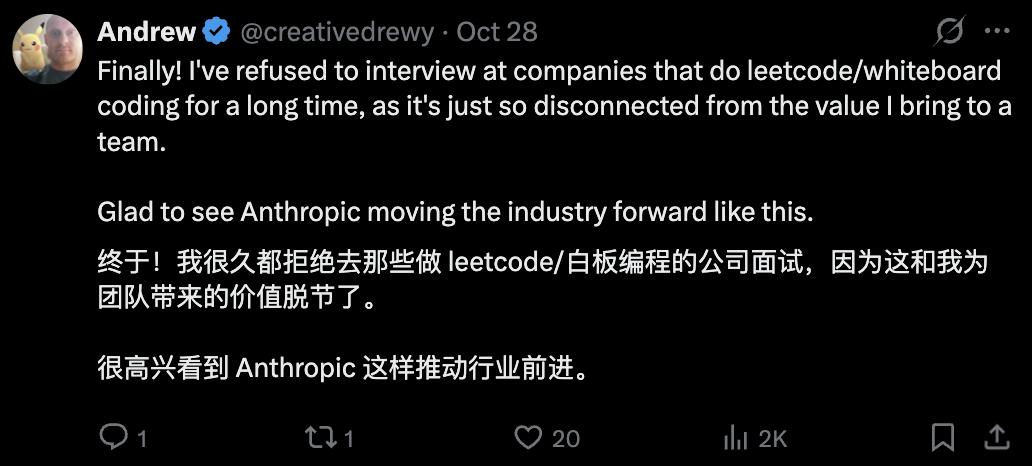
At this point, all I can say is: Good riddance, LeetCode.
Felix: You no longer need to be a coding test expert
To save everyone's time, in the long article attached to his post, Hunger Beats Tenure: Advice for Junior Engineers, Felix mainly talks about three points:
First, coding tests can hardly filter out top talents anymore
Claude is already very good at coding, and the people who can actually deliver valuable results in the team are not necessarily test-taking experts. The correlation between coding test scores in interviews and subsequent work performance is decreasing.
Therefore, forcing candidates to sit for timed coding tests during interviews now is more or less making things difficult for each other.
Second, newcomers do not necessarily have to wait passively for years to accumulate seniority.
In the past, it took a lot of time to get familiar with frameworks and accumulate development experience. Now AI can help make up for many implementation capabilities, so new engineers can turn their ideas into actual products much faster.
According to Felix, at Anthropic, some new engineers have already outperformed senior programmers who have better coding fundamentals and longer working experience.
It turns out that Anthropic also values "young prodigies".
Third, even if you have no seniority or say in the team, you can present tangible deliverables first.
Newcomers with great ideas often get stuck at the step of fighting for resources before they get the chance to show their technical skills.
Felix's suggestion is to find a problem that is valuable to the business, build a prototype with AI, and let everyone directly see whether the project is worth pursuing.
Rather than repeatedly explaining "I have an idea", it is better to just show everyone: Look, it is already running.

To illustrate this point, he also cited an internal case at Anthropic.
Anthony Morris and Alice Zhao, two engineers who joined the company not long ago, spent one weekend building the prototype of the Claude Code graphical interface, and the first public version was launched about eight days later.
In other words, while others are still thinking about how to clearly explain their ideas, they have already delivered the finished product.
From this perspective, young people do have an extra path to fight for opportunities by delivering tangible results.
But when working professionals read this far, their feelings may start to diverge.
Some people see it as: Finally, we don't have to grind test problems and wait for seniority any more.
Others may realize after a second: Wait a minute, one whole weekend?
Netizens: The question bank is removed, and then what?
To be honest, the three points Felix mentioned are all worth discussing.
After all, everyone can applaud the cancellation of the classic coding test first. But as for what to do after the cancellation, everyone has to think it through on their own.
For example, if the traditional coding test is no longer required, what will be tested instead?
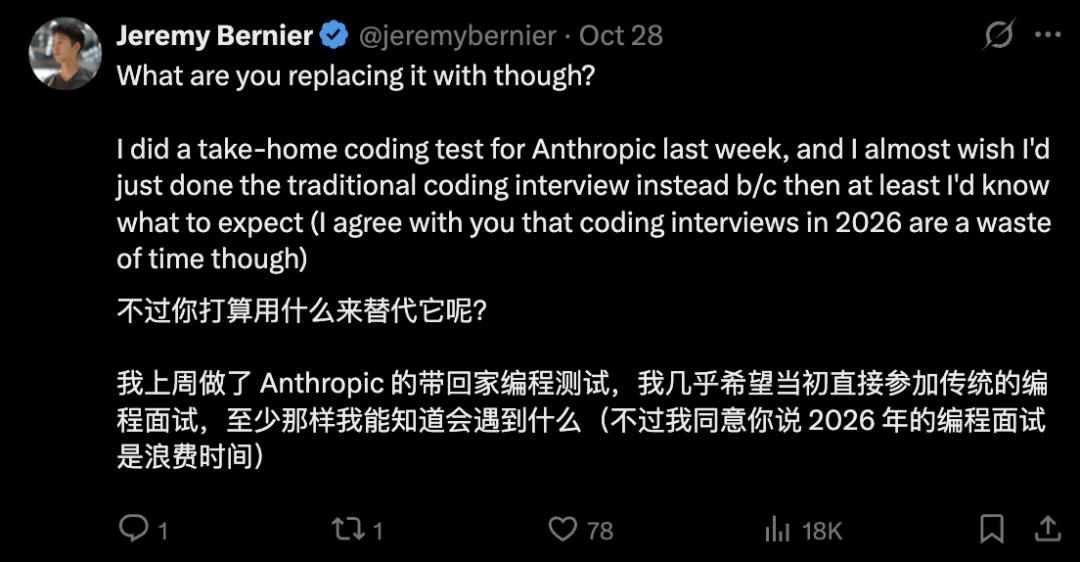
On the one hand, netizens have long held grudges against traditional coding interviews.
Reddit user bold_snowflake argues that solving a coding puzzle in 45 minutes can hardly prove whether a person can write maintainable, testable and production-ready code.
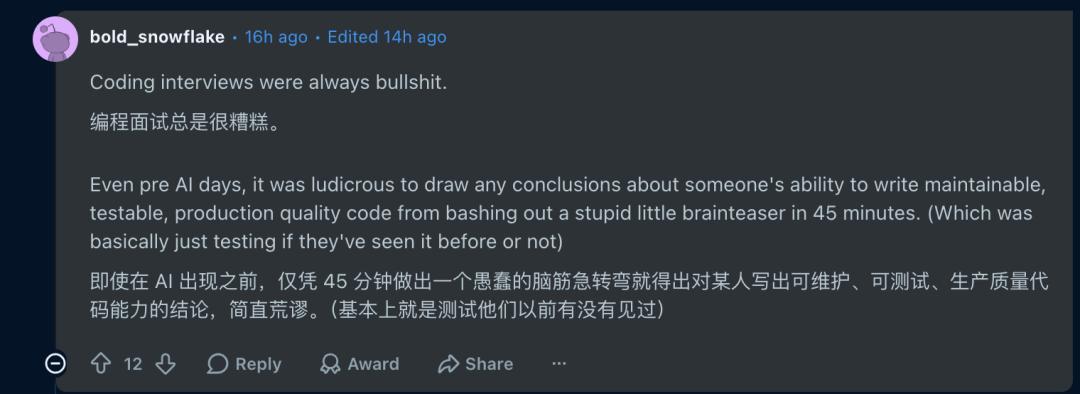
In most cases, the test only checks whether you have seen this specific problem before.
To put it plainly, companies are supposed to recruit people who can write code, but the process easily turns into checking how familiar the candidate is with the question bank.
On the other hand, even if the traditional coding test is removed, there must be a new evaluation method, right?
If the evaluation finally becomes judging by personal projects, personal taste and subjective feeling, the whole thing will be very vague and unpredictable.
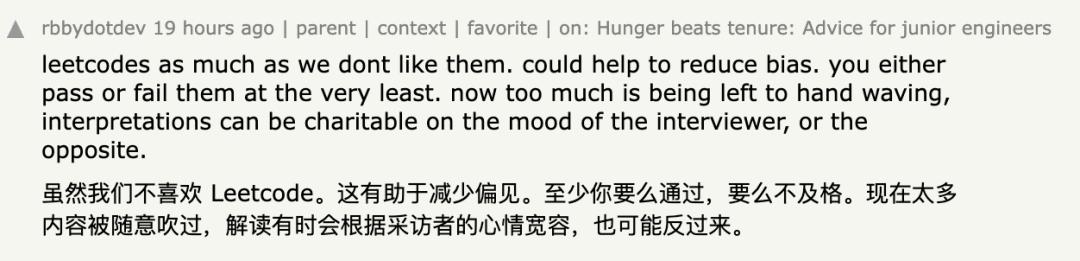
On this point, Felix himself admits that he has not fully figured out how to interview people who are good at leveraging AI to get things done.
Should we really build a personal IP and leave comments under the posts of industry leaders to get noticed?
In addition, Felix's view on young prodigies is very encouraging for young people, who feel that they can finally overtake on the curve.
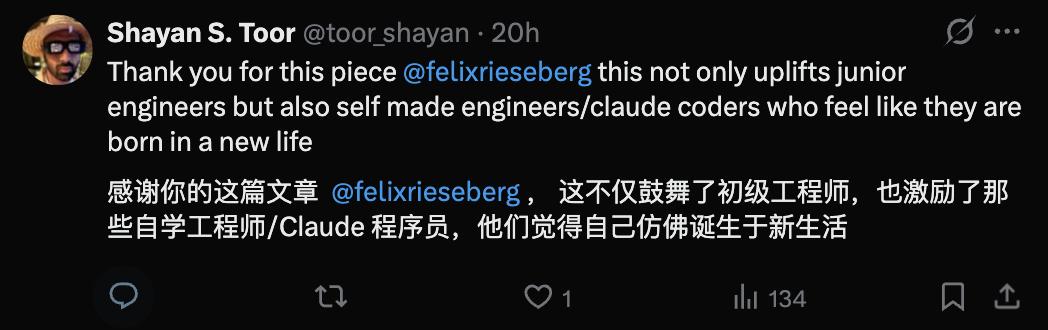
But when such words come from a hiring manager, working professionals can't help but wonder: Who exactly is this encouraging, and who is it targeting?
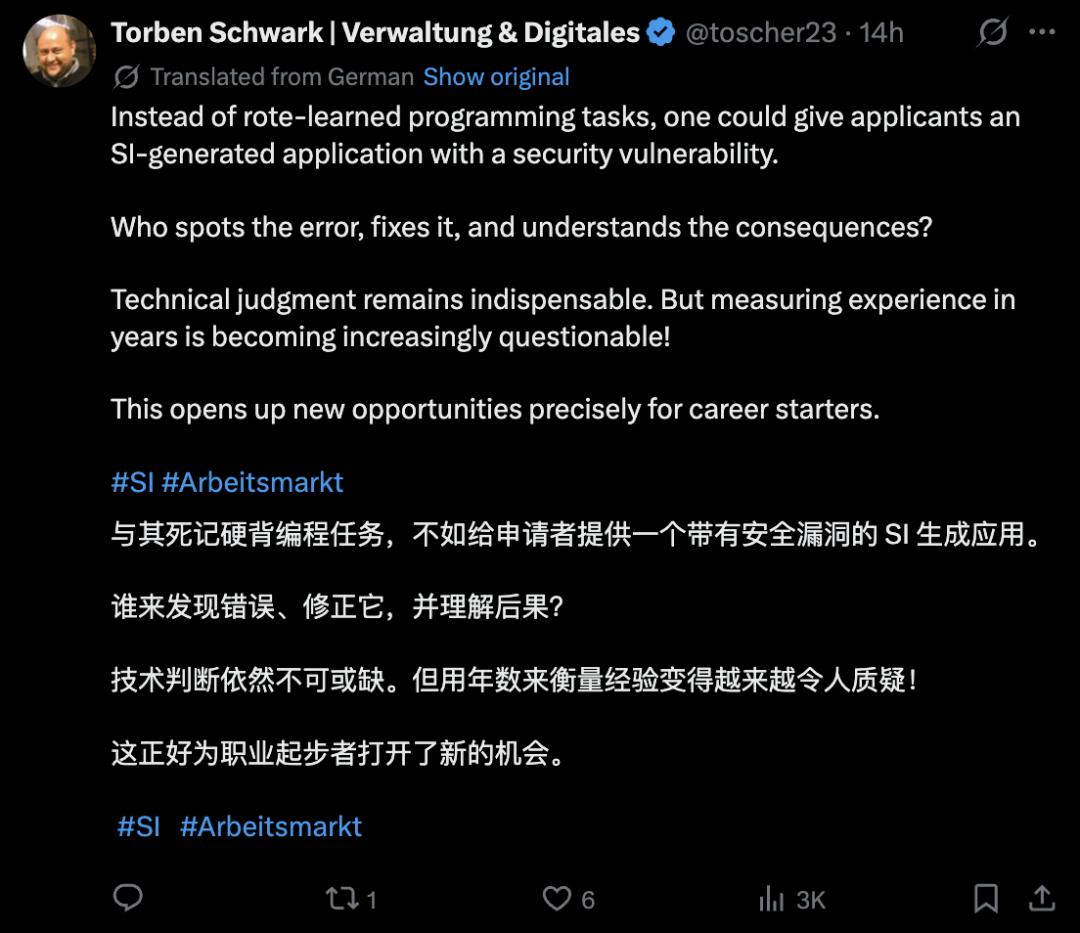
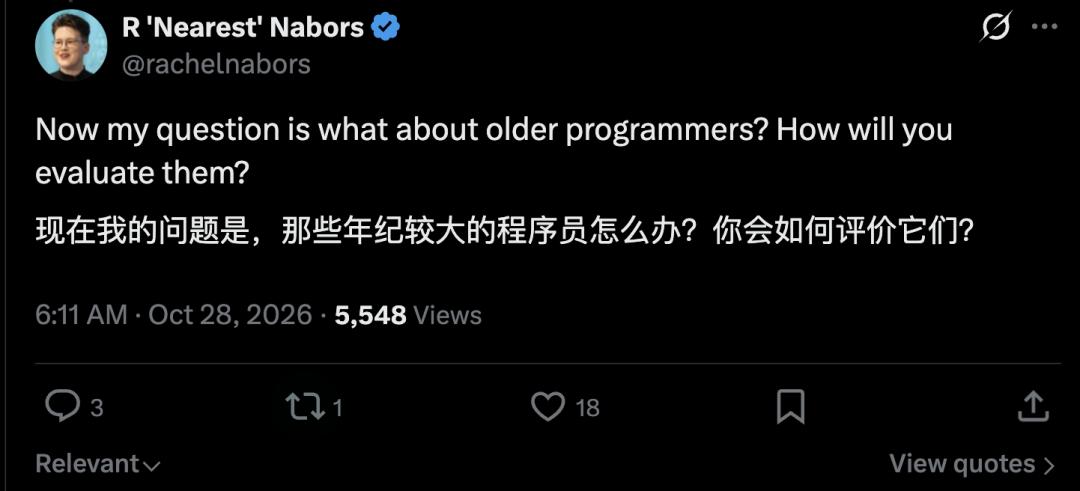
Who will take care of us veteran programmers? Can someone come and save us?
Finally, there is nothing wrong with proving your ability with prototypes, but do you really have to build the prototype over the weekend?
Some netizens said that they have worked on company projects all day long, and then they have to work on another personal project after getting home, and try to make a demo that impresses the leaders over the weekend.
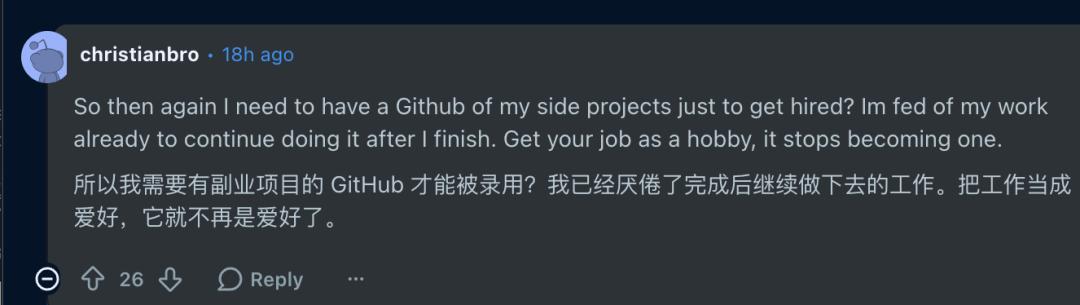
That's way too exhausting.
Moreover, even if you deliver a working demo, there is still a problem: The fact that a product can run does not equal that the person who built it is reliable.
Reddit user oguzhan431 says he has more than 6 years of Android development experience, and he recently used AI to build a PDF editor.
The project was finished, but he also went through a lot of trouble with repeated refactoring and unnecessary overcomplicated designs.
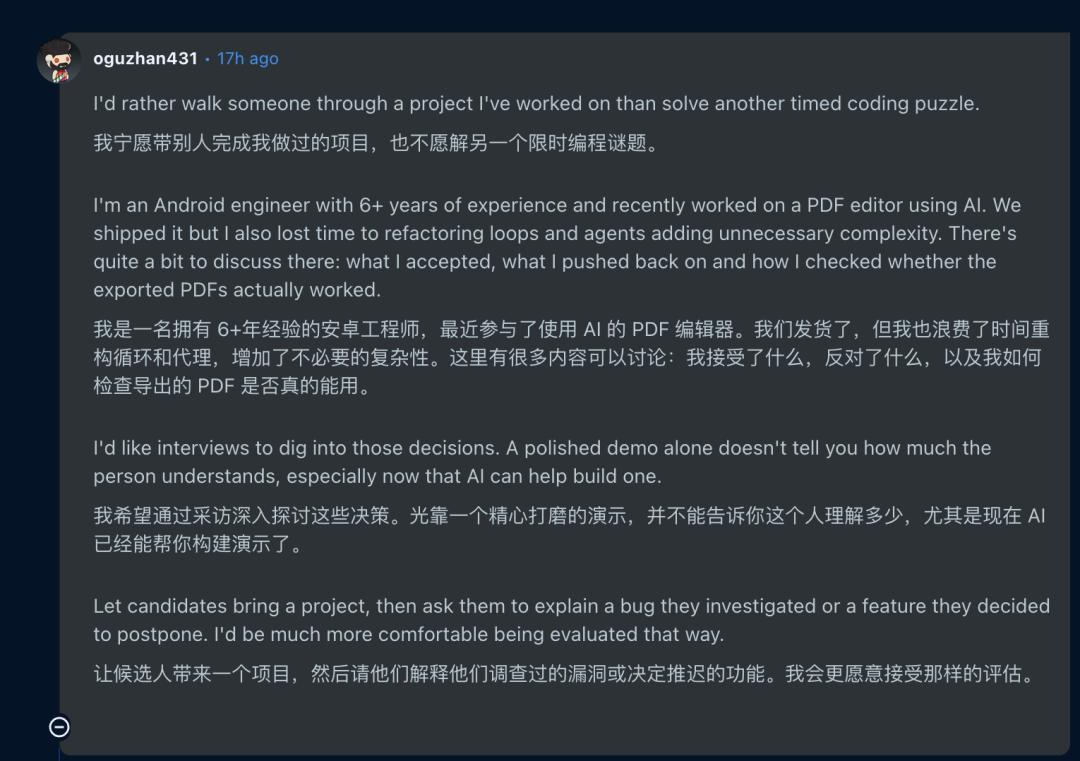
Therefore, rather than just showing a perfect finished product, he hopes the interview can focus more on the process:
What solutions provided by AI did he accept, and what did he reject? How did he troubleshoot bugs? How did he confirm that the final exported PDF is actually usable?
After going through all these discussions, people are not exactly missing LeetCode.
What they really want to know is: now that the old way of proving competence is removed, can the new evaluation system be transparent and predictable, instead of torturing working professionals in a different way.
One more thing
Last but not least, here is a real story.
At the end of 2024, a friend of mine who graduated from a well-known European university came back to China to look for a job, and he failed at the LeetCode stage in the interviews of many big domestic tech companies.
As he put it, he didn't want to memorize test problems on purpose, because he thought those problems were disconnected from real work and meaningless, so he failed the interviews again and again.
So when I first saw this news, I thought it came far too late.

Looking back at 2024, the most powerful coding tool at that time was Cursor, which only helped you autocomplete code by pressing the tab key.
Back then, LeetCode was almost a mandatory test for all AI and robotics related positions, but obviously no one thought AI would break through the industry threshold so soon.
It has only been more than ten months, and there are no more "manual coding artists" in the industry.
Therefore, it is not just that people who spent time memorizing LeetCode problems before wasted their effort, and it is not just that the current evaluation system should be more aligned with real work scenarios.
The real question is: when you have a very powerful AI assistant, how can people prove their skills, and prove that their skills are valuable, so that their talents will not be buried by outdated rules of the past.
Reference Link [1]https://felixrieseberg.com/hunger-beats-tenure-advice-for-junior-engineers/
This article is from WeChat official account "QbitAI", the author focuses on cutting-edge technology, and is republished with authorization from 36Kr.