AI "resurrects" 20-year-old games, and the "ghost" of copyright follows in its wake.
Recently, projects that use AI to "resurrect" old games have emerged continuously. For example, some developers ported the 2003 game *Command & Conquer: Generals* to Mac, iPhone and iPad, and a community-made version of *Halo: Combat Evolved* that can be played in web browsers has also appeared. Meanwhile, a developer stated that the AI-powered web version of *Call of Duty* they developed stopped being accessible after receiving a copyright takedown notice from Activision.
For players, their favorite old games now have new ways to be accessed. However, the fact that technology can make old games run again does not mean that people can arbitrarily modify and distribute them legally. Do players have the right to adapt the games they purchased? What legal risks will porting or remaking games with AI bring?
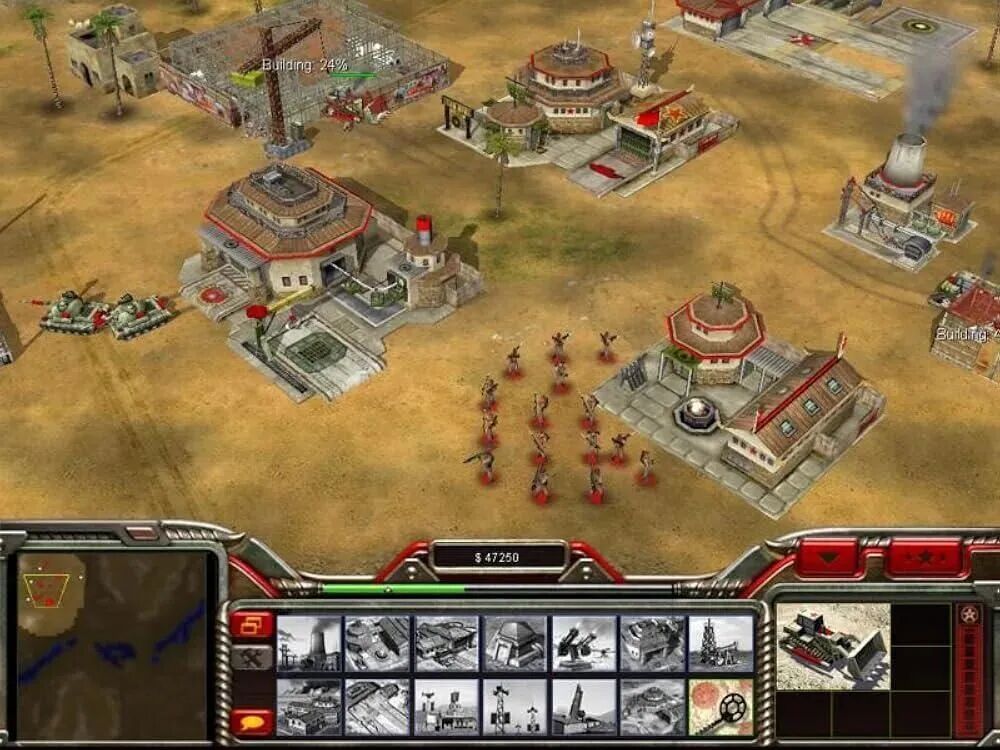
Figure: The interface of *Command & Conquer: Generals – Zero Hour* on iPad. Developers used AI tools to port the 2003 classic real-time strategy game to Apple devices.
01 If you buy a game, can you modify and port it on your own?
After purchasing a game, players may easily have this thought: "Since I have bought the game, it's my own business how to modify it." But in the legal relationship of digital games, after paying the price, players usually do not obtain the copyright of the game software, as well as the content such as artworks, music and characters. What players obtain is mainly the right to install, run and experience the game under specific conditions.
These terms of use are usually written in the End User License Agreement, or EULA that few people read carefully when installing games. At present, although the agreements of various game platforms and manufacturers have different expressions, their basic ideas are very similar. Taking Steam as an example, its user agreement clearly states that platform content and services are "licensed for use rather than sold", and players obtain a non-exclusive license for personal, non-commercial use. Unless otherwise permitted by the agreement, specific game terms or laws, players may not copy or distribute game content, nor may they reverse engineer, extract source code, modify the game or create derivative works. EA summarizes the relevant license as a "personal, limited, non-exclusive, non-transferable, revocable" non-commercial use license. Activision's agreement also imposes similar restrictions. In other words, what players buy is mainly the qualification to "play the game as agreed", not the full ownership of the game and all the content in it.
The "cracked version of *Muse Dash*" case heard by the Supreme People's Court drew this clear boundary. The managers of the involved platform removed the payment verification of the official game, made it into a so-called "free version", and then provided downloads to users through platform posts and Baidu Netdisk. The court, combining facts such as the management authority of the posting account, the relationship between the account and the platform, and the platform's long-term organization of personnel to release game resources, determined that the relevant acts should be held responsible by the platform operator. The court finally determined that cracking the payment verification and copying the game without permission, and allowing the public to choose the time and place to download it by themselves, has infringed on the copyright owner's right of reproduction and right of communication through information network. The so-called "free sharing" cannot be a reason for exemption. Once the modified results are publicly distributed, the behavior may escalate from violating the EULA to copyright infringement.
Therefore, in principle, players can install, run and experience the game normally, but they cannot just think that they have the right to extract source code and materials just because they have "paid", let alone port the game without permission, distribute modified versions, or put the game on web pages for others to play directly. Free distribution, marking the original author, or stating "for learning and communication only" usually cannot replace the authorization of the copyright owner. Of course, the EULA cannot exclude the rights explicitly granted to users by law. For example, the owner of a legal copy of software can make necessary backups, make necessary modifications for practical use, and study the design ideas and principles of the software. However, these exceptions mainly solve the problems of personal use and research, and do not naturally allow the modified programs or game materials to be provided to others.
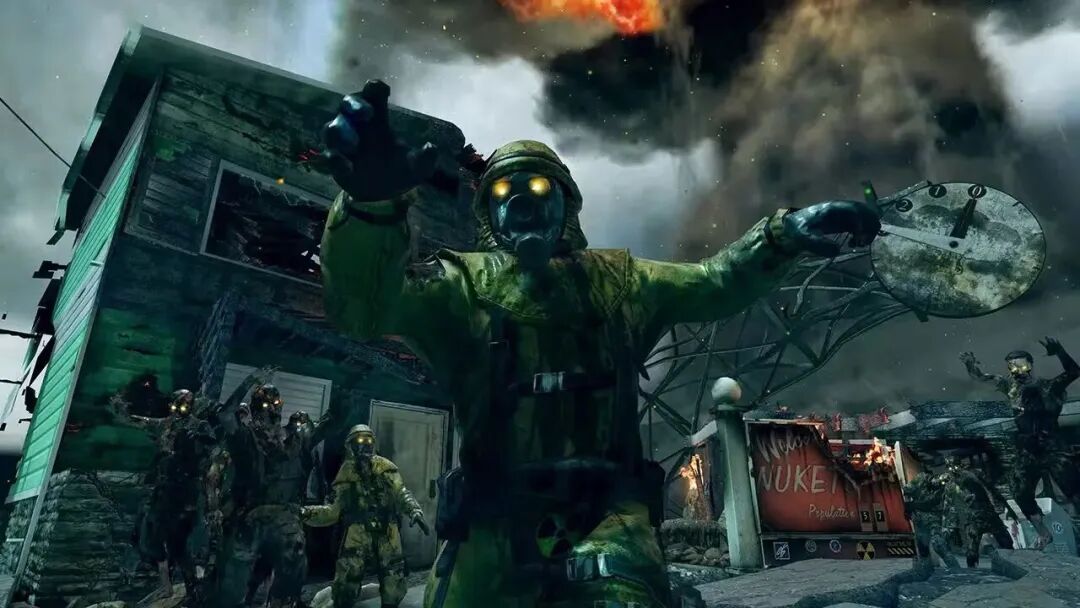
Figure: The screen of AI-powered web remake of *Call of Duty*. In October 2026, the web-based game of the *Call of Duty* series developed by the developer stopped operating due to copyright complaints.
02 Is decompilation an infringement? What does AI restoring source programs mean?
As mentioned above, most games do not allow players to port or modify the games. This leads to another question: if players use decompilation tools or AI to analyze game programs and try to restore the source code, will this behavior necessarily constitute infringement?
The so-called decompilation refers to reversely converting the compiled target program that can be run by a computer into a form close to the source code. In the past, this work often required developers to analyze the program structure, function relationships and operation logic section by section. Now AI can help identify the purpose of functions, complete variable names, explain assembly instructions, and even regenerate code with the same functions. The threshold of reverse engineering has thus been greatly reduced, and the speed has also been significantly improved.
From a legal perspective, "decompilation" is not equal to "cracking", and it is not necessarily illegal as long as reverse analysis is carried out. Article 6 of the *Regulations on the Protection of Computer Software* stipulates that software copyright protects the original expression of the program, but does not protect the ideas, processing procedures, operation methods or mathematical concepts used in software development. Article 17 of the Regulations also stipulates that for the purpose of learning and researching the design ideas and principles in the software, people can use the software by means of installation, display, transmission or storage. Article 50 of the *Copyright Law* also allows circumvention of technical measures for computer software reverse engineering research.
Therefore, studying how a game runs, analyzing how different modules cooperate, or understanding its file format and compatibility mechanism does not naturally constitute infringement. If developers only understand the functions and technical principles of the original game, and then independently implement similar functions with their own code without copying the original work's original expression, the copyright risk is usually low. Simply put, the fact that two programs can accomplish the same thing cannot directly prove that one copied the other.
However, these provisions do not grant players an unrestricted "right to decompile". Article 50 of the *Copyright Law* also clarifies that when conducting reverse engineering research, people may not provide others with technologies, devices or components used to circumvent technical measures, nor may they infringe other rights enjoyed by the copyright owner according to law. In other words, the law allows personal research within a certain scope, but does not allow copying and distributing games in the name of "research".
In practice, relevant behaviors can be judged by dividing them into three stages. The first is the analysis stage. The risk is usually relatively limited when players observe and test the legally obtained games to study the operation logic or solve compatibility problems. For example, analyzing configuration files to make old games recognize new monitor resolutions is obviously different in nature from extracting the entire set of code and releasing it publicly.
The second is the code reconstruction stage. If AI only rewrites code according to functional requirements, and the final code is independent in structure, statements and specific implementation methods, infringement generally cannot be determined just because the functions are the same. On the contrary, if AI directly reads the decompiled original program, retains a large number of original code structures, function organizations and special naming, and even retains the errors in the original program, it may constitute copying or partial copying of the original software.
Taking *Terraria* as an example, developers can learn from its abstract gameplay such as 2D exploration and construction, and then use AI to assist in writing a new set of code. The premise is that the new project is indeed completed independently, without copying the original game files, nor reproducing the protected specific expression of the original work.
The last is the result release stage. Decompilation or AI reconstruction usually can only solve the problem of program operation. To make the reconstructed game truly look like the original work, developers often use the original game's character images and scene maps, or extract materials such as textures, animations, music and cutscenes. After recompilation, the new version may be basically the same as the original work in visual effect, sound performance and overall gaming experience. These materials will not lose copyright protection just because they are loaded into "new code".
Copying the original work's materials into the reconstructed version without permission may separately infringe the right of reproduction of art works, music works, literary works or audiovisual works. Uploading the complete version to a website or code platform for users to download or play online may also infringe the right of communication through information network. That is to say, even if the underlying code is indeed rewritten by developers or AI, as long as the final product still uses a large number of original work's materials, it may still constitute infringement.
The case (2023) SPC Civil Final No.1148 for Intellectual Property Rights heard by the Supreme People's Court can illustrate this problem. In this case, the involved installation package had been deleted, and the court could not directly compare the source codes of the two games. However, the alleged "cracked version" was basically consistent with the original game in operation interface, character images and story plots. Its title directly indicated that it belonged to the cracked version of the original game, the author and game introduction were also the same as the original work, and the trademark of the copyright owner was retained in the operation interface.
The court held that if two games were developed independently, the possibility of being highly consistent in all these aspects at the same time is very low. These external performances are sufficient to confirm that the alleged game copied the copyrighted software. The court finally determined that the platform's act of providing downloads infringed the right of communication through information network. This case also shows that source code is not the only evidence to determine game infringement, and the final presented content of the game is equally important.
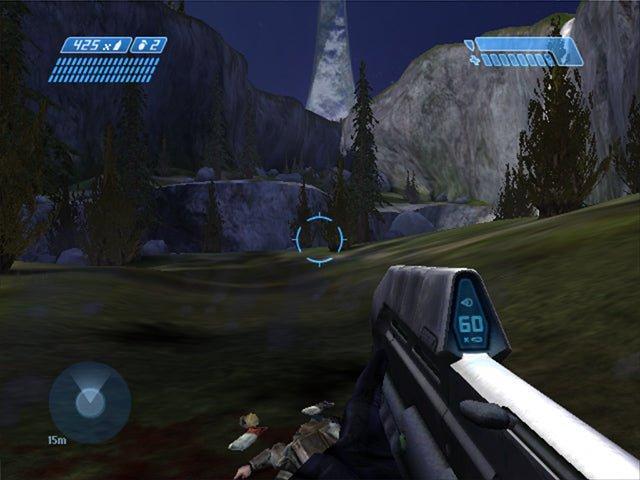
Figure: Screenshot of the browser version of *Halo: Combat Evolved*. Community developers brought the classic game to the browser, and decompilation and reconstruction technologies have triggered copyright discussions.
03 Making a new game based on the gameplay, is it considered "plagiarism"?
When discussing AI-made games, there is another common question: if you do not decompile the original game, nor copy the original code and materials, but just remake a game according to its gameplay, does it constitute infringement?
This question cannot be simply answered as "gameplay is not protected", nor can it be considered that "as long as it is similar, it is plagiarism". The key to judgment is to distinguish between the "gameplay idea" and "specific expression" of the game.
A game contains content of different levels. The first is gameplay rules and operation mechanisms. For example, eliminating the same tiles can get points, multiple players enter the same map to launch survival competition, or players collect resources and then build bases. These contents mainly belong to the ideas, systems, processing procedures or operation methods of the game. Article 6 of the *Regulations on the Protection of Computer Software* clearly stipulates that software copyright protection does not extend to the ideas, processing procedures, operation methods or mathematical concepts used in software development.
Therefore, the fact that a certain game first adopts a gameplay does not mean that other developers can no longer make similar games from then on. For example, tile elimination, route defense in tower defense games, and card drawing and deck building in card games cannot be permanently monopolized by one manufacturer through copyright. Developers can refer to the basic mechanism of existing games, then use their own written code, design new characters and scenes, and form products with their own characteristics. As long as they do not copy the protected specific expression, generally, copyright infringement cannot be determined just because "the gameplay is similar".
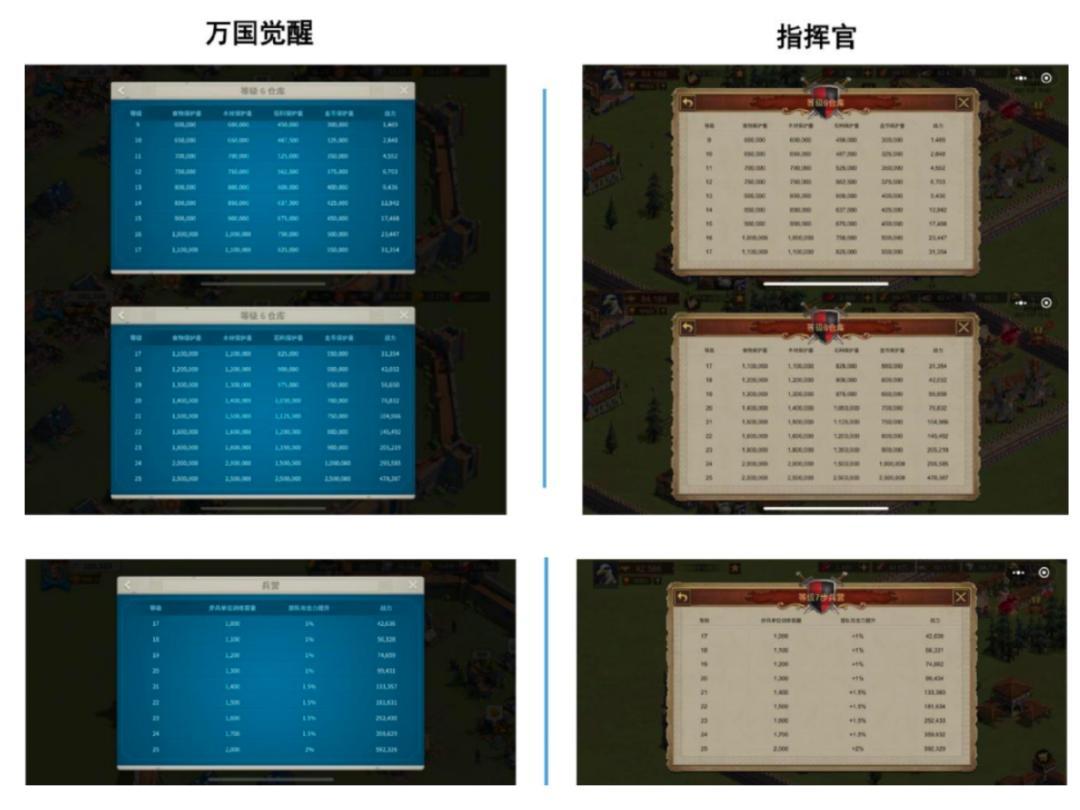
Figure: Comparison of interfaces between *Rise of Kingdoms* and *Commander*. Gameplay can be used for reference, but systematic copying may constitute unfair competition.
However, the fact that the gameplay itself is not protected by copyright does not mean that all content related to the gameplay can be copied. The text description of game rules, task dialogues and character images may be protected, scene maps, interface icons, animation effects and music sound effects may also constitute works, and the source code that implements the gameplay is also protected by law. If developers not only learn from the abstract gameplay, but also copy the original game's rule texts, interface layouts, art materials or code, even if the game name is replaced, they may still infringe the right of reproduction, adaptation or right of communication through information network.
When judging copyright infringement, it is also necessary to exclude the unavoidable common elements in similar games. For example, shooting games usually display health value, ammunition quantity, crosshair and weapon bar. Role-playing games also generally have systems of level, experience value, equipment and skills. These general designs, or content with very limited expression methods, usually cannot be exclusively owned by a certain manufacturer. What the court really needs to compare is the original specific expression of the original game, not the game theme, commercial ideas or basic gameplay itself.
A more complex situation is "reskin game". The so-called "reskin" usually refers to remaking characters and art materials, but almost copying the overall structure, growth route, resource system and numerical relationship of another game as they are. On the surface, the characters and pictures have been changed, so it may not constitute copyright infringement in the traditional sense. However, if the imitation goes deep into the overall design and a large number of details of the product, it may still violate the *Anti-Unfair Competition Law*.
In 2025, among the typical intellectual property cases of people's courts in 2024 announced by the Supreme People's Court, there is a representative game "reskin" dispute. In the case (2023) Guangdong Civil Final No.4326, the plaintiff claimed that the alleged game was highly similar to *Rise of Kingdoms* in overall structure, gameplay system and game values, only replacing the art and audiovisual materials. The Guangdong Higher People's Court held that content such as game structure, system and value planning belongs to gameplay mechanism design, which is not the expression in the sense of copyright law, so the relevant behavior does not constitute copyright infringement. The court also pointed out that the defendant's comprehensive imitation of the original game from the whole to the details has obviously exceeded the limit of reasonable reference, constituting unfair competition. The second instance finally upheld the judgment result of compensating economic losses of 10 million yuan and reasonable expenses of 500,000 yuan.
This case draws a relatively clear boundary. Learning a gameplay is not the same as copying a whole set of products. Developers can learn from core ideas, and then add their own rules, values, content and audiovisual expressions, which belongs to the normal iterative innovation of the game industry. If AI is only used to quickly replicate the system structure, growth path and numerical relationship of the original game, and then replace the name and art "skin", even if the original code is not directly copied, it may constitute unfair competition.
04 The game has been released for more than 20 years, hasn't its copyright expired?
For some classic games released at the end of last century, players may have such a question: the game has been released for two or three decades, and even the developer no longer exists, why can't it be freely copied, modified and distributed?
In fact, the copyright protection period of games is much longer than many people imagine. According to Article 14 of the *Regulations on the Protection of Computer Software*, the term of protection for software copyright enjoyed by