Ant Group led a 100 million-yuan financing round, with Juqiao Industrial helping electronic skin usher in the era of large-scale mass production.
Juqiao Industrial recently announced the completion of a 100-million-yuan Series A financing round, led by Ant Group, with existing shareholders Lingyi Venture Capital, Weihai Gangrong and Qingdao Hexin continuing to increase their stake, and Duowei Capital acting as the long-term exclusive financial advisor. The company will leverage the proceeds from this financing round to expand the production and delivery of textile electronic skin, advance the R&D of tactile and multimodal technologies, and accelerate the expansion of applications in robotics, home furnishing and health care products. Juqiao Industrial recently announced the completion of a 100-million-yuan Series A financing round, led by Ant Group, with existing shareholders Lingyi Venture Capital, Weihai Gangrong and Qingdao Hexin continuing to increase their stake, and Duowei Capital acting as the long-term exclusive financial advisor.
The products of this unique company are emerging in seemingly unrelated scenarios: data collection for cutting-edge overseas models, the palms and arms of robots, mattresses and seats used daily, and hospital wards that require continuous care. What connects all these scenarios is a type of fabric that can "sense" contact.
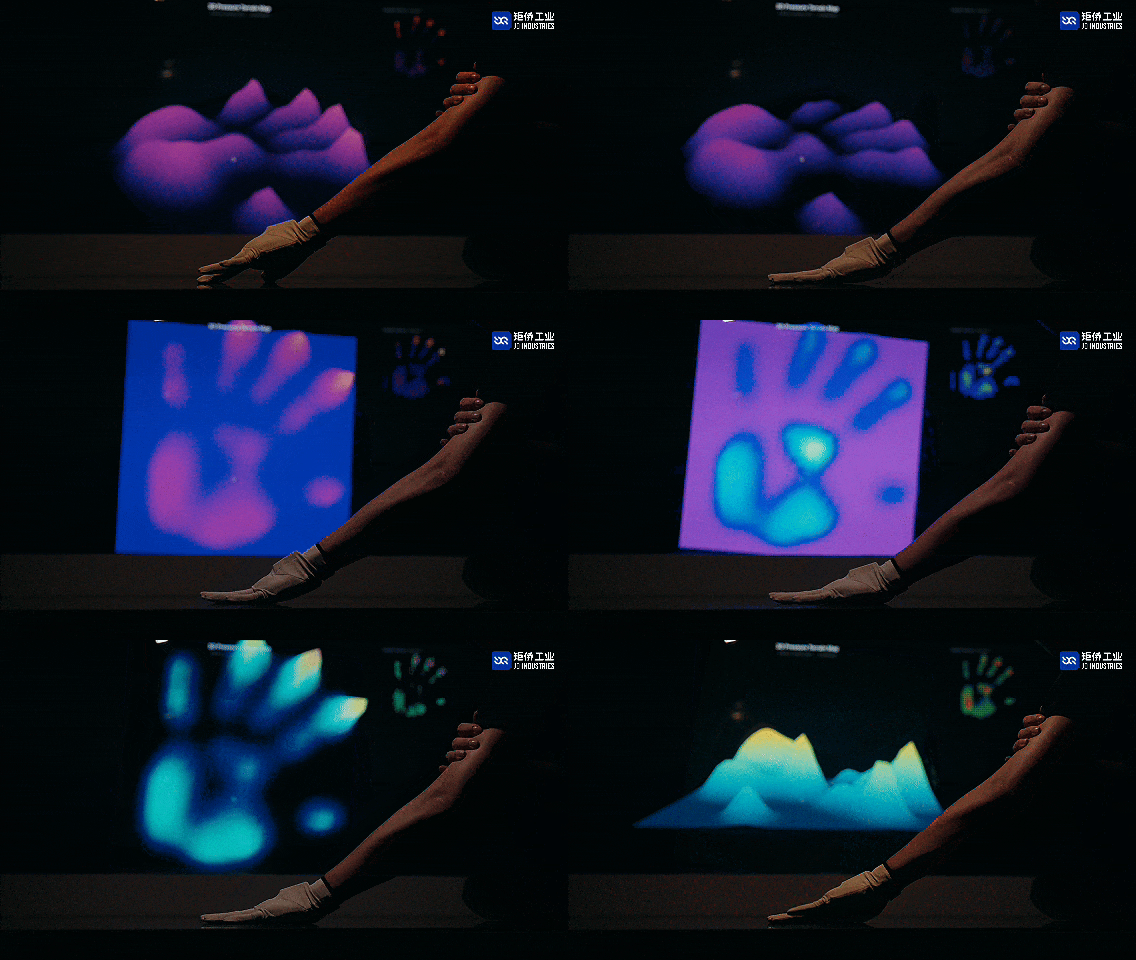
At present, Juqiao has served more than 400 customers, including over 200 clients in the embodied intelligence field, with the cumulative delivery of tactile gloves approaching 10,000 units. Material innovation embedded in a single fiber is growing into a business covering hardware, data and applications.
Today, as AI is accelerating its integration into real-world scenarios, the industrial value of tactile perception is gradually becoming clear: to perform tasks properly, machines need to know exactly what happens after contact. Juqiao is converting this type of information into physical data and infrastructure platforms that support batch collection and continuous use.
01 Behind cutting-edge models, is it the same pair of gloves?
When you hold a paper cup, your fingers adjust their force along with the deformation of the cup wall; when you insert a part into a hole, you correct the direction according to subtle resistance; after you pick up an item, the change of contact surface reminds your body to redistribute weight. These seemingly effortless movements contain a large amount of unspoken experience.
For physical AI models that learn to operate, these details are precisely the most critical. Motion trajectories can describe where the hand moves, and images can show how objects change, but the force, friction and slip during contact require additional perception to supplement. Especially in contact-intensive tasks, a small force adjustment may determine whether the operation is completed smoothly or fails halfway.
As world models go deep into real interaction, the requirements for data also increase accordingly. Training materials need to fully reflect the corresponding relationship between actions and physical feedback, so that the model can learn when to make contact, how to apply force, and how to respond after changes occur. Tactile perception has thus become a key link connecting human skilled operation and machine learning.
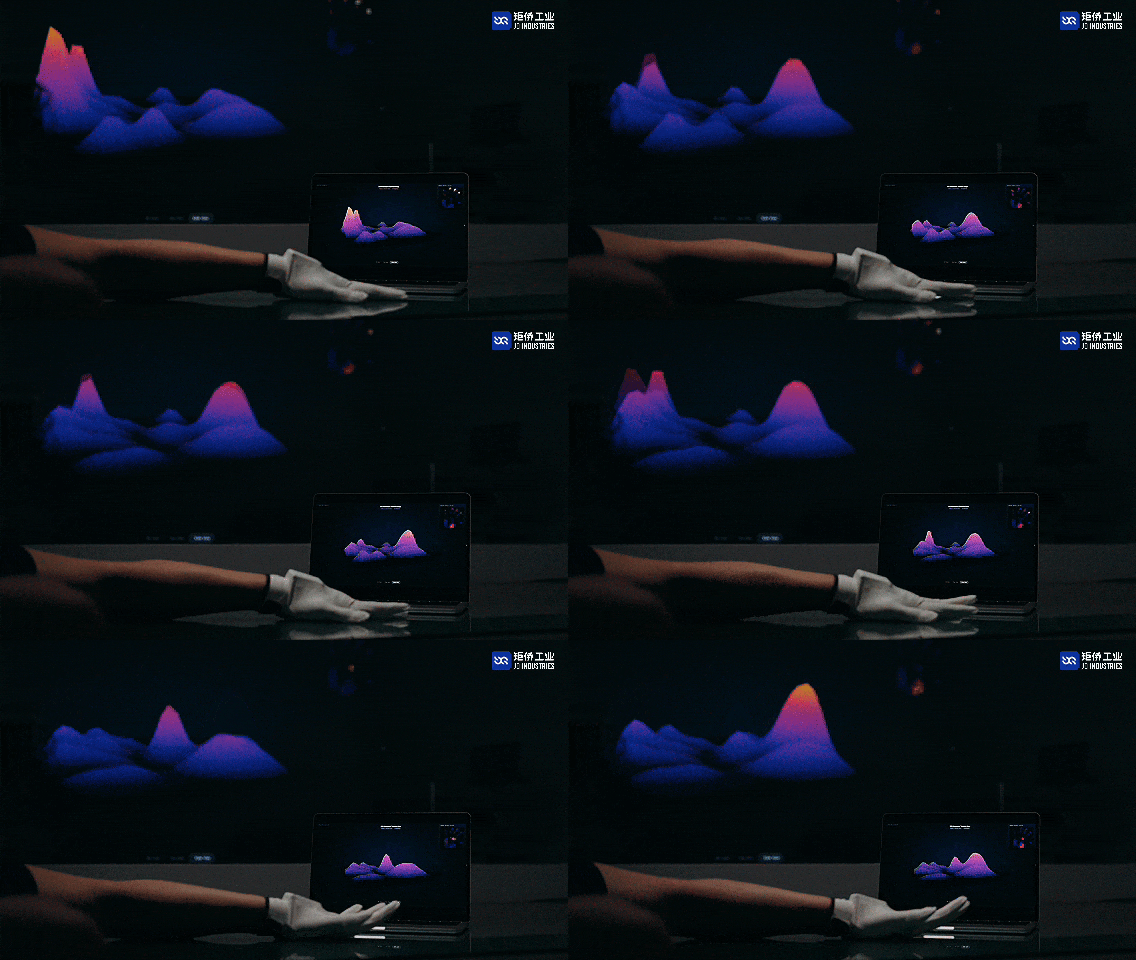
The multimodal data collected by Juqiao's tactile gloves is being adopted by a number of cutting-edge model research projects at home and abroad, and has entered large-scale tactile and visual fusion training. In the process where leading research teams around the world are constantly exploring physical interaction capabilities, the collection hardware provided by Juqiao has become an important channel for real contact experience to enter the model.
This value is reflected at the source of data generation. When a real person wears the glove to complete a task, the contact area, force changes and action details can be recorded together with the first-person perspective image. Information that originally could only be mastered by the operator's "hand feel" begins to be stored and analyzed in the form of data, and used for further exploration of model capabilities.
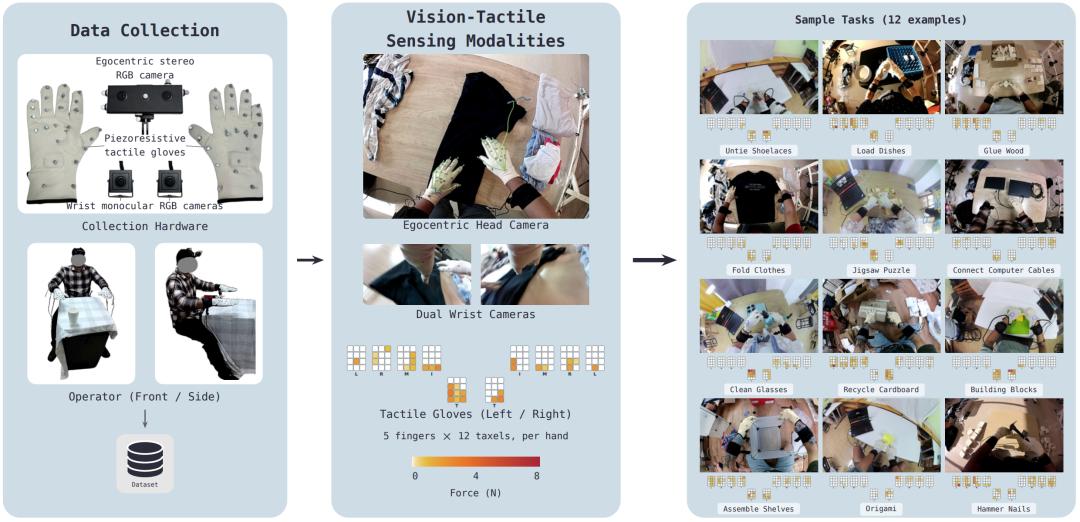
The role of materials and sensing hardware is being re-recognized. The physical experience required by the model comes from real interaction, and every piece of useful data needs reliable collection tools to support. Along this chain, Juqiao is extending product delivery to the data ecosystem of next-generation models.
It is reported that the company is also promoting a data collection system that integrates tactile perception with first-person vision, and jointly expands large-scale real-person collection scenarios with industrial partners. Centered on the usage needs of developers, SDK, visualization software and training adaptation tools are continuously improved to help partners connect collection, data processing and model verification. Making tactile perception easier to use is also expanding the range of models and tasks it can be applied to.
02 Solving the "impossible triangle" to make high-quality data generated from fibers
For tactile data to become large-scale training materials, the first threshold is the collection tool. If a pair of gloves makes people unable to hold tools stably or bend their fingers, the recorded movements will be distorted; if the signal becomes unstable after a period of use, subsequent data analysis will be affected.
The long-standing problem in the industry is to avoid interfering with natural operations, record rich details, and withstand repeated use at the same time. The three goals restrict each other: thickening or adding hard supports will easily affect the hand feel; improving softness requires handling the interference caused by deformation; arranging more contact points means more complex circuits, signal isolation and durability design.
Juqiao chose to return to the starting point of materials and structures, assign conductive, piezoresistive and load-bearing functions to fibers, and then form a sensing network through weaving. Contact causes local deformation, the conductive path changes accordingly, and after the circuit reads the signal, it is converted into tactile information through calibration and algorithms. The sensing capability is thus integrated with the fabric itself.
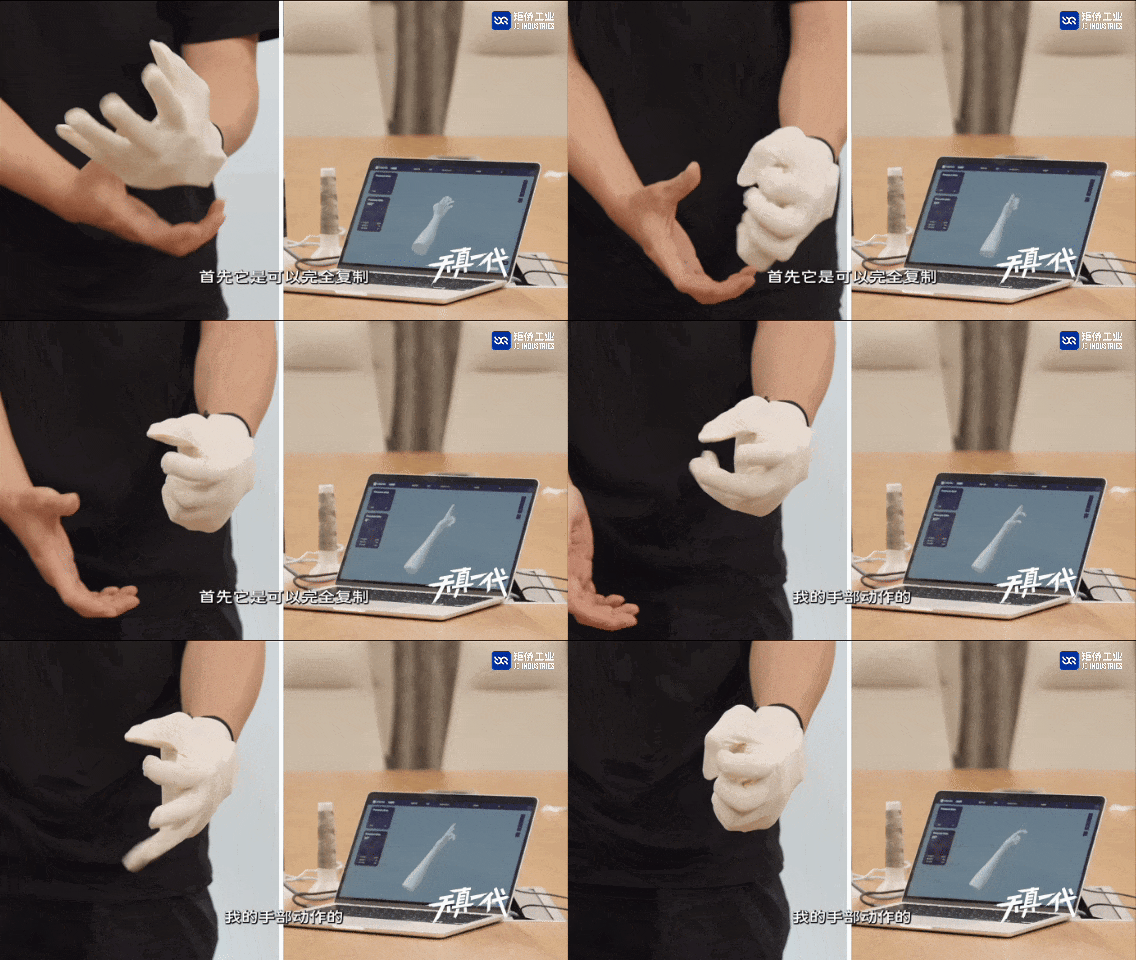
This approach brings different design space for flexible electronic skin. The fabric can fit along the contour of the hand and the movement of joints, and can also cover a larger curved surface while retaining air permeability. Juqiao then repeatedly optimizes the design of the inner and outer cores of the fiber, formula and weaving method to improve the recovery ability of the material after folding, kneading and repeated force, and controls interference through acquisition circuits and compensation algorithms.
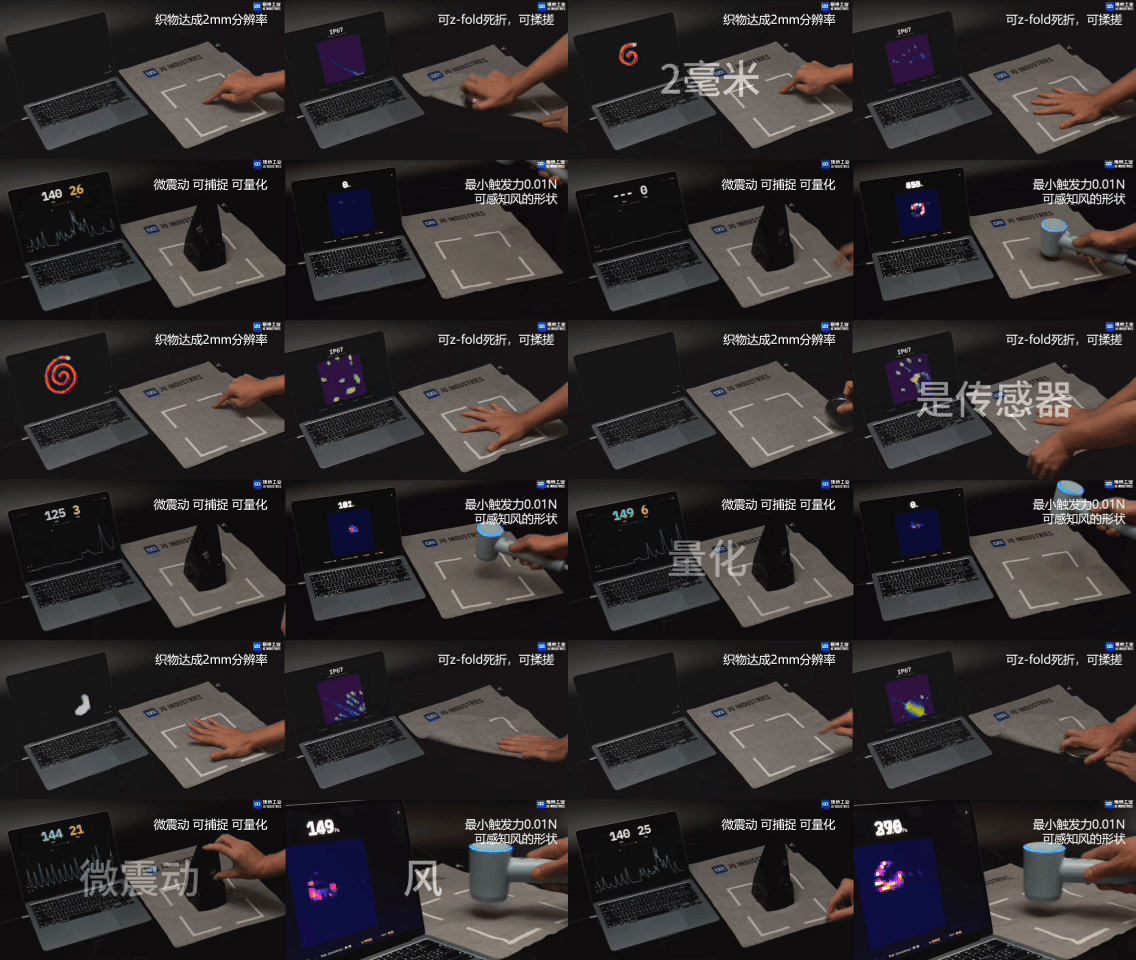
What is finally delivered to customers is a set of materials, hardware and algorithms that can work together. Juqiao's full-palm glove arranges hundreds of sensing points on each hand, with a minimum point spacing of 2mm, which can respond to a trigger force as low as 0.01N, and is compatible with motion capture and teleoperation at the same time. The high-density layout ensures that contact details can be retained, while the flexible structure makes the collection process as close as possible to normal human movements.
Focusing on fine interaction, Skin 2.0 combines new weaving design with model training, and adds perception of force direction, tangential force and sliding trend. The products continue to move towards thinner design: the thickness of the multi-layer sensor design is less than 0.8mm, and the thinnest single-layer flexible tactile product is less than 0.3mm, releasing more space for wearing and terminal integration.
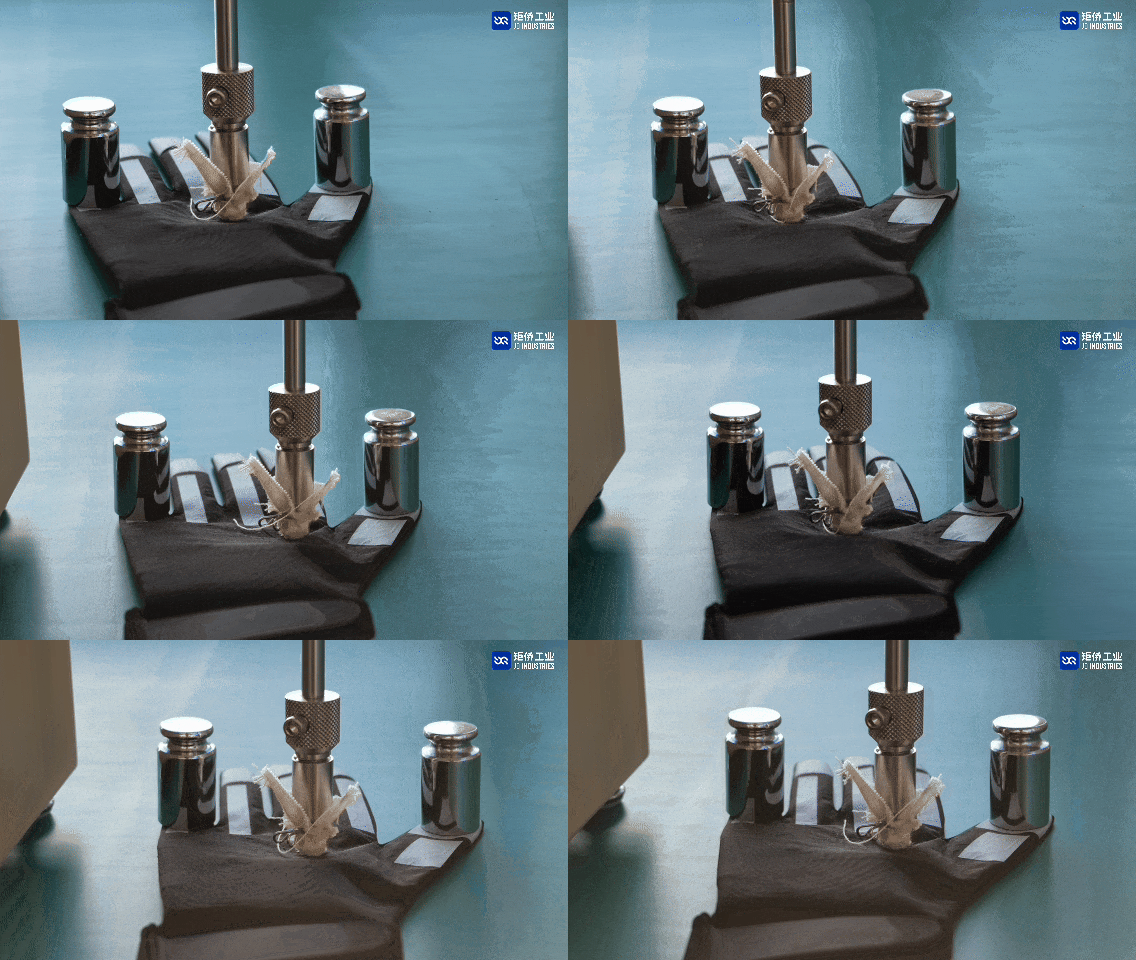
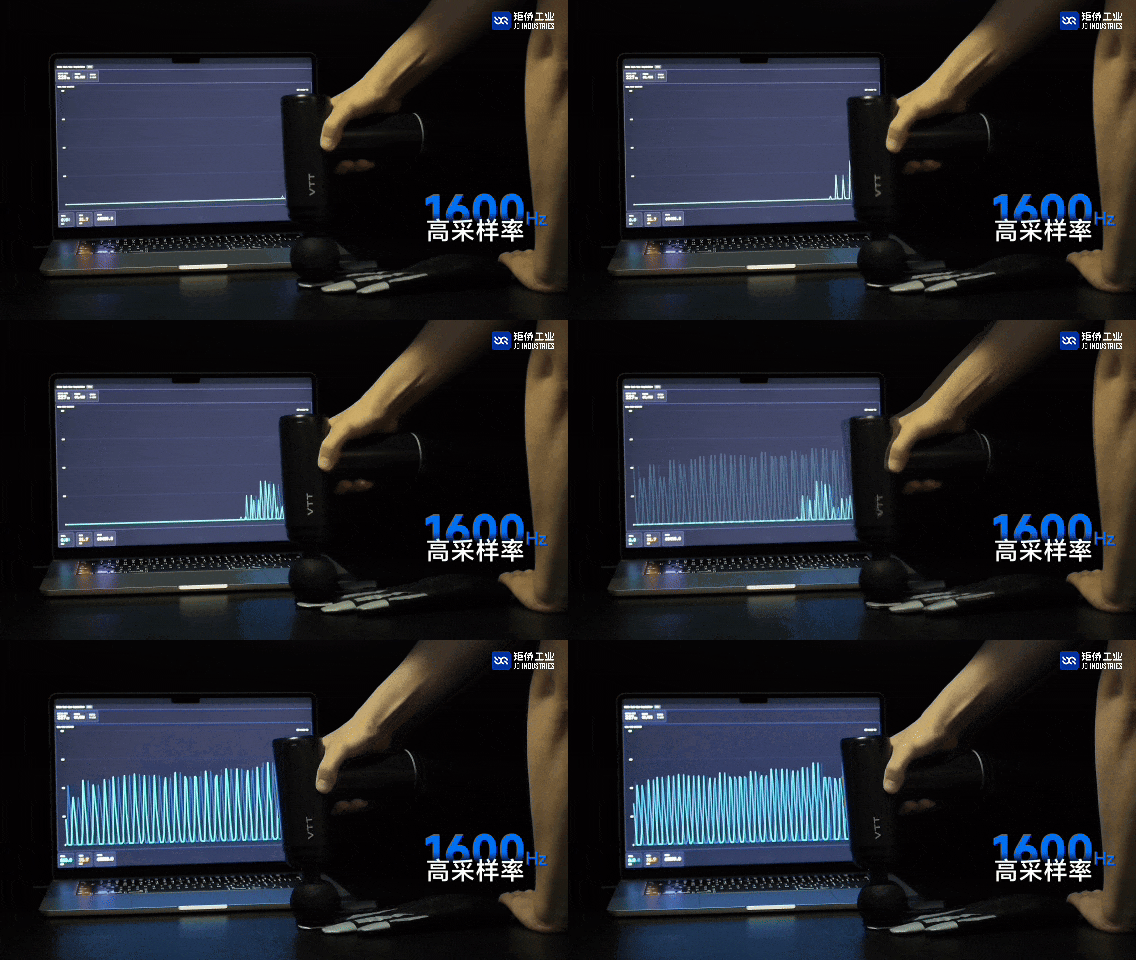
Customer demands are also pushing tactile perception from "having signals" to "having measurable values". Juqiao can provide a linear conversion formula that maps the acquisition value of a single measuring point to the mechanical value, with consistency reaching the level of ±5%, and continuously improves the influence of pre-pressure caused by wearing. The soft fabric thus has more specific measurement purposes, providing a basis for analyzing contact and training operation strategies.
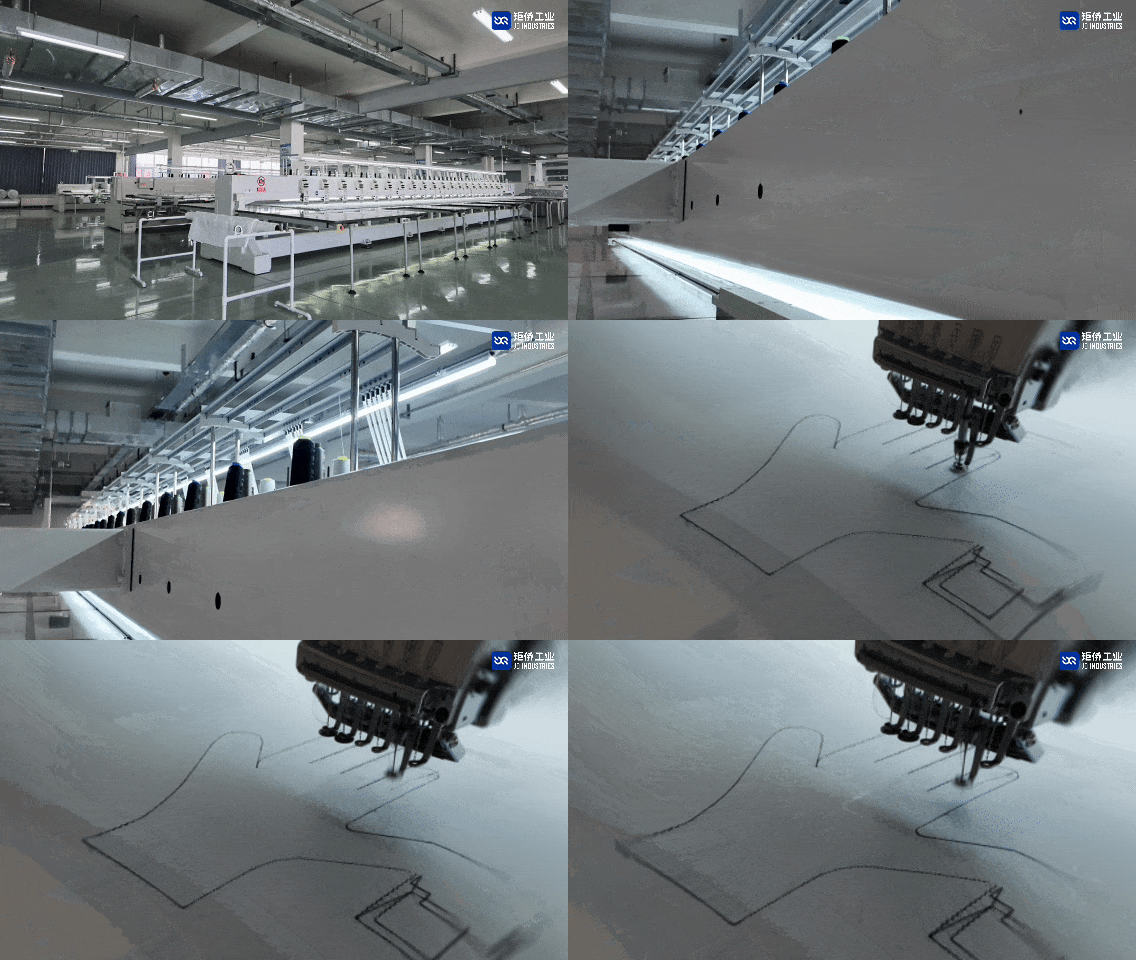
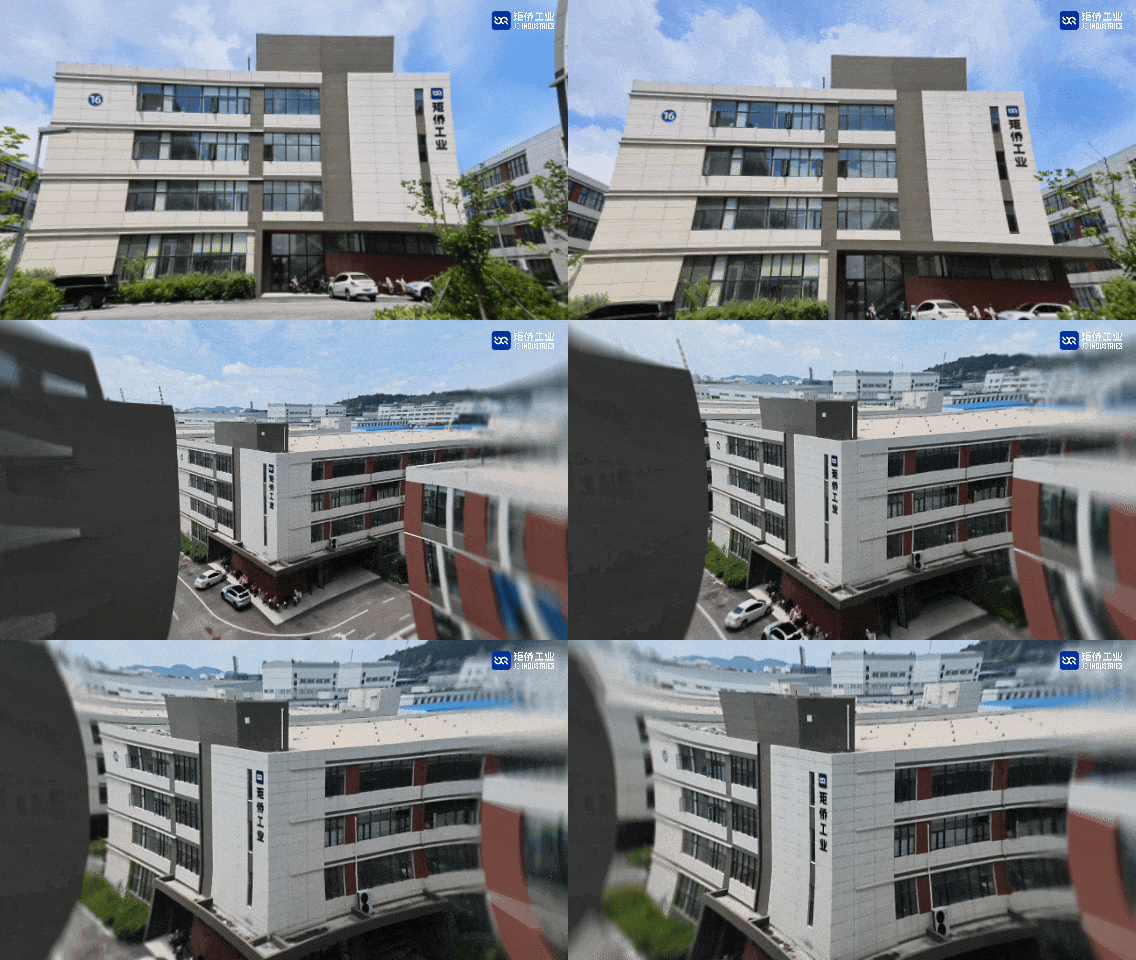
This technological breakthrough will ultimately be tested in factories. Juqiao has built its own production line in Weihai, transformed the spinning equipment, dyeing and finishing and weaving links, and completed thousands of proofing processes in cooperation with material development. At present, the production yield has exceeded 95%, and fast proofing can be completed within one day. The ability to produce stably and quickly adapt to new demands enables electronic skin to move from demonstration to continuous delivery.
The delivery of nearly 10,000 gloves has brought these capabilities into the daily use of different tasks and users. Wearing experience, long-term stability, batch performance and customer feedback are continuously fed back to the R&D end, driving products to continue to upgrade along real demands.
03 Equipping robots with a "sense of touch" to let the whole body participate in operations
Fingers are very dexterous, but to complete real-world tasks, robots can use far more body parts than just fingers. When carrying a large box, the forearm can support it, and the torso can assist in stabilization; when working in a compact space, the surface of the arm may touch the environment before the end effector. Only by incorporating these contacts into perception can robots obtain more complete on-site information.
Juqiao has launched robotic arm skin, and is expanding its product layout to areas such as the torso and plantar. The arm perception can send the pressure generated by touch into the control system, providing input for responses such as deceleration, avoidance and stop. For scenarios that require close-range collaboration, this is a more direct surface feedback.
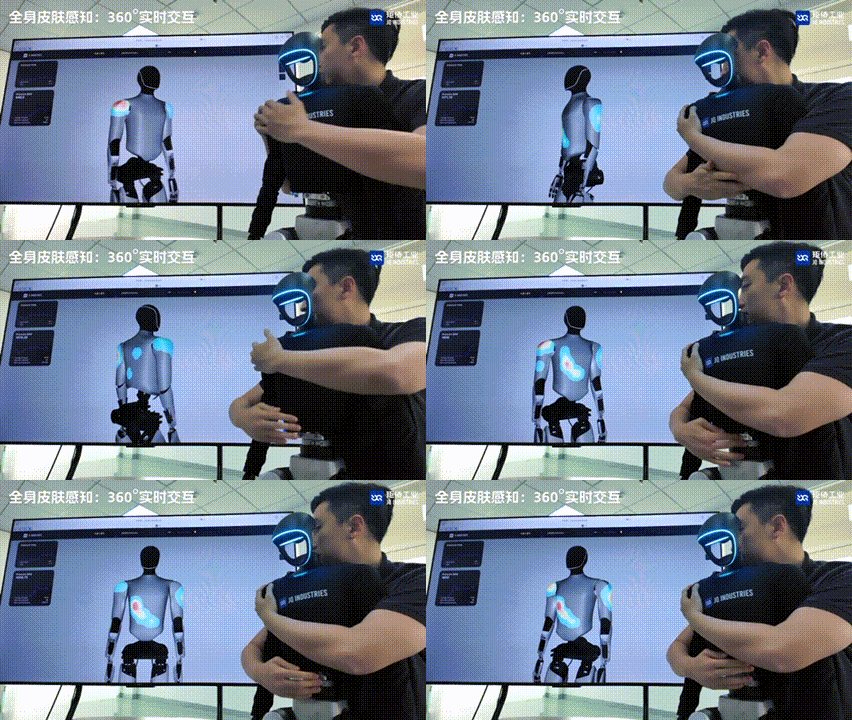
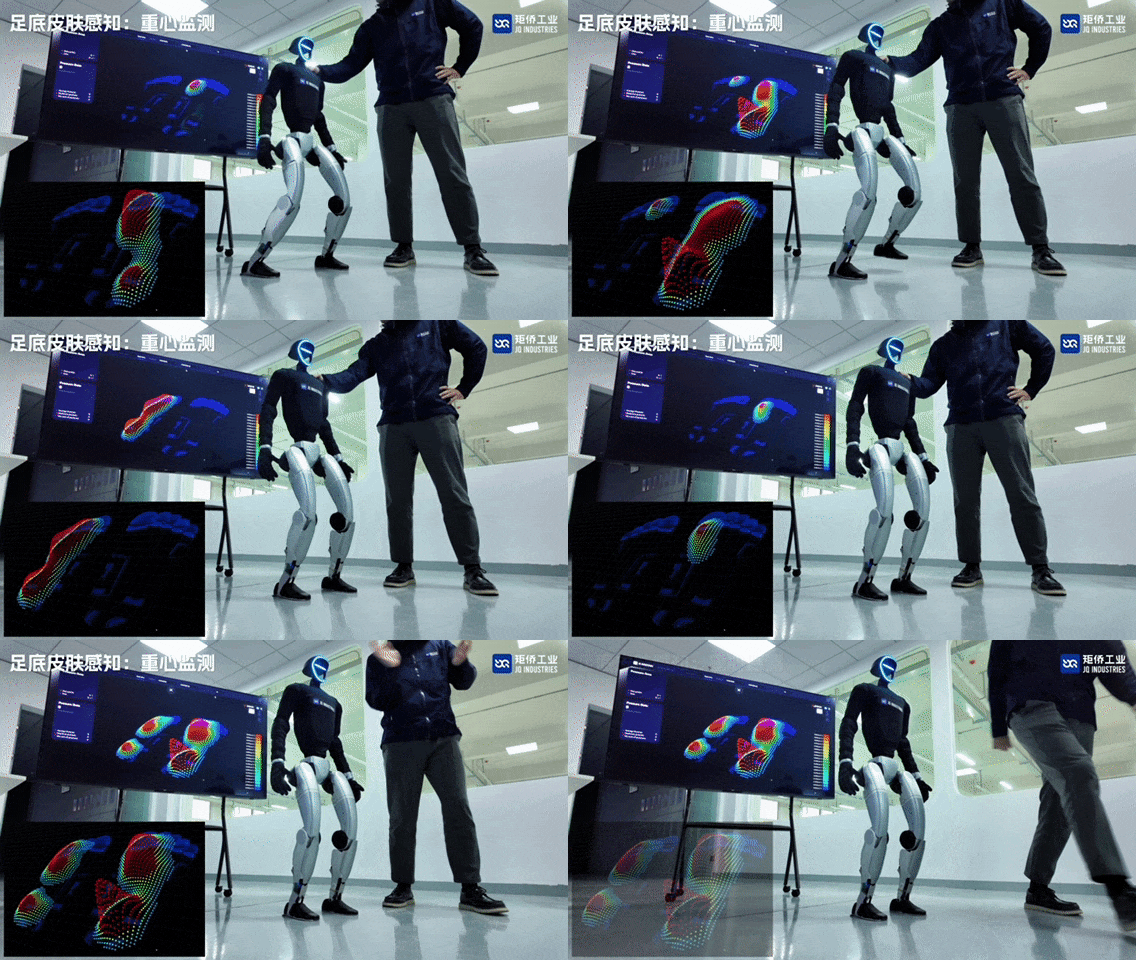
The potential of full-body skin also lies in allowing contact to participate in the task itself. When an object leans against multiple body areas at the same time, the robot needs to judge which positions bear the load, whether the posture should be changed, and whether the support is stable enough. Distributed tactile perception is expected to add basis for these judgments, enabling machines to make more effective use of their bodies to complete supporting and carrying within their rated capacity.
The expansion of perception scope will also affect the design of the ontology and control scheme. Whether a certain surface is suitable for supporting objects, how to judge the operation state when the line of sight is blocked, and when to adjust the contact method can all obtain new information sources. More areas of the robot's body will have the opportunity to become interactive surfaces that can participate in tasks.
This brings new data space for models. The cooperation between palms, arms and torso can present more complex physical relationships than single-point grasping. As real-person demonstration and robot-side perception gradually connect, tactile perception is also expected to support cross-ontology learning, helping models understand contact and operation under different body structures.
04 Beds and chairs start to understand you, and human body data entry points are hidden in daily life
The fabric that gives robots a sense of touch can also be laid into products that people come into contact with every day. A bed, a chair, a set of car seats, have long been in contact with the human body for a long time. By adding perception to these surfaces, intelligent services can start from the actual state of the user.
The smart sleep scenario is one of the important directions that Juqiao is expanding. The company cooperates with leading bed enterprises and sleep technology enterprises at home and abroad to explore the acquisition and application of signals related to body movement, posture, pressure and breathing. The force on different body areas can help the mattress judge the support demand, and then adjust the support through devices such as airbags to form a more personalized experience.
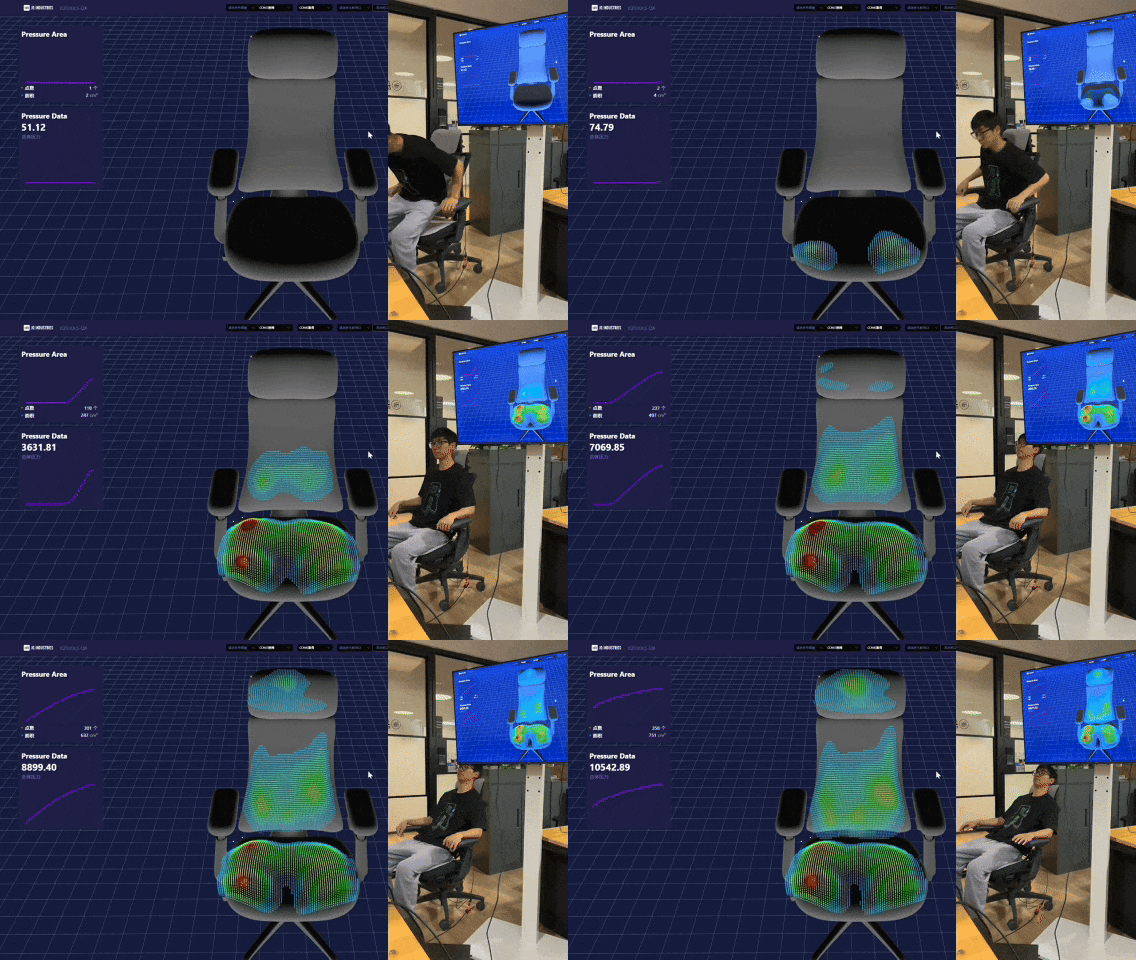
For ergonomic chairs, the value of perception is reflected in dynamic changes. When the user leans forward, leans back or moves the center of gravity, the pressure on the backrest and cushion will change. Juqiao cooperates with leading brands to use this type of information for comfort assessment and support adjustment, so that the seat can respond according to the user's state.
The automotive scenario also needs to understand how occupants sit and how their bodies are stressed. At present, Juqiao is cooperating with partners in the automotive industry chain to verify solutions such as occupant status monitoring, adaptive seats and pressure detection, providing perception input for massage, riding experience and cockpit interaction.
