Prices have plummeted, and the business logic of the Chinese mitten crab industry has changed.
Hairy Crab Prices Frequently Top Trending Searches
In the past month, hairy crabs have repeatedly hit trending lists, with topics ranging from "Hairy Crab Prices Plunge Faster Than Gold" to "Hairy Crab Prices Collapse Across the Board".
However, the price drop only appears in partial markets and certain hairy crab specifications. For instance, the prices of two types of hairy crabs, common-grade and selected common-grade, have seen dramatic fluctuations. "The price of common-grade 3-tael female hairy crabs was over 100 yuan per jin in previous years, but now it is only over 30 yuan per jin," said a crab farmer.
In addition, monitoring data released by Wuxi's development and reform authorities in mid-October shows that the average retail price of local hairy crabs has dropped by about 20% to 30% year-on-year. A business operator said that crabs weighing around 2.5 taels now sell for 12 yuan per piece, down from 15 yuan per piece before.
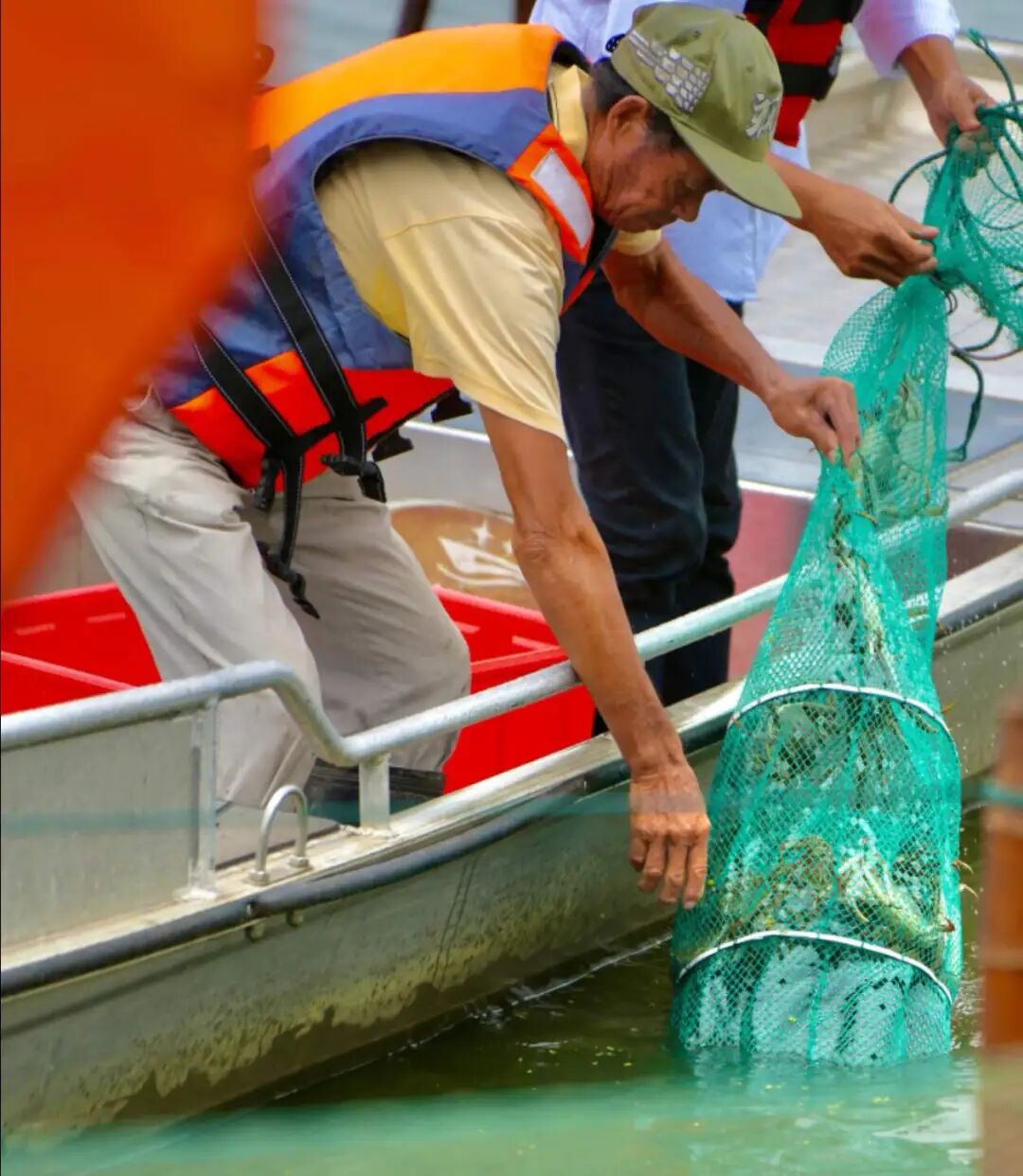
But "price drop" does not mean that all crabs cannot be sold at a good price.
The same set of monitoring also reminds that the prices of small and medium-sized crabs are relatively weak, while high-quality large crabs remain relatively firm. Confusing the promotional prices of crabs from ordinary ponds with high-quality crabs from producing areas such as Yangcheng Lake, people can easily misinterpret a structural price drop as a slowdown of the entire market.
In response to topics such as "Hairy Crabs Are Fully Unsalable" and "Crab Prices Have Been Cut in Half", Suzhou Yangcheng Lake Hairy Crab Industry Association issued a statement saying that the relevant online information confuses the market conditions of different producing areas, which does not conform to the actual supply and demand situation of Yangcheng Lake local producing area.
The price drop of common-specification crabs in local markets does not contradict the stable price of high-quality crabs with origin identification, grade certification and supply chain guarantee.
Price differentiation exactly means that consumers begin to distinguish more carefully "how much this crab is worth".
As for the reasons for the price drop, the most widely discussed factors are reduced demand and increased output.
On the demand side, the performance is mainly reflected in the ebb of the gift economy. "In the past, hairy crabs for gifting accounted for 70% of total sales, but now the proportion is only 30%." Public data shows that the proportion of enterprise group purchases has dropped from 60%-70% to less than 20%.
Moreover, crab cards have long had problems such as over-issuance, non-redeemability, and insufficient weight. There are more than 4,000 relevant rights protection records on the Black Cat complaint platform, and many consumers report that the reservation status is always "full", merchants lose contact, and the cards are as useless as waste paper. Crab cards are increasingly losing consumers' trust. Just like a crab card marked at 888 yuan, the probability that no one will pick up the goods in the end is very high, and it is easy for merchants to send poor-quality crabs as good ones.
The start of hairy crab fishing missed the consumption peak. Normally, Mid-Autumn Festival is the consumption peak of hairy crabs. Due to the weather this year, the start of hairy crab fishing is later than in previous years. For example, the fishing start time of Yangcheng Lake is at the end of September, which is just after the Mid-Autumn Festival.
According to public reports, with the expansion of hairy crab breeding scale, the output of hairy crabs in 2026 is expected to exceed 1 million tons for the first time, resulting in oversupply. Coupled with the rationalization of public consumption, the prices of a large number of common-specification crabs have dropped significantly in the competition.
On the catering side, brands engaged in "crab business" face relatively more complex pressures. In April this year, "Crab House", a crab-themed restaurant at Raffles City Hangzhou, announced its closure, and the direct reason was the expiration of the lease. It is worth noting that the store mainly sells deep-sea crabs, not hairy crabs. This cannot directly prove that the hairy crab business is in poor condition, but catering brands that focus on a single category of crab products are facing practical tests of site selection, off-season operation, and the operational dilemma of homogeneous single best-selling product.
Therefore, the hairy crab catering business is not unfeasible, but it is very difficult to run an independent store with a highly seasonal ingredient as the core, and the operational difficulty is hard to solve.
Hairy Crab Market Is Not Actually Cooling Down, People's Demand for Eating Crabs Still Exists
In fact, there are not many dedicated hairy crab restaurants or catering brands that operate hairy crab business:
One end is high-quality catering that takes crab feasts and crab roe dishes as selling points. Guests are willing to pay for the origin, specifications, crab dismantling service and dining scene, and crab is the protagonist of the whole table meal. Time-honored crab feast restaurants in Shanghai, Suzhou and other places still have their own customer groups, and Chinese restaurants in hotels will also launch limited menus in crab season. This type of business does not sell the raw material price of a single crab, but integrates crab selection, crab cooking and crab eating into a complete experience.
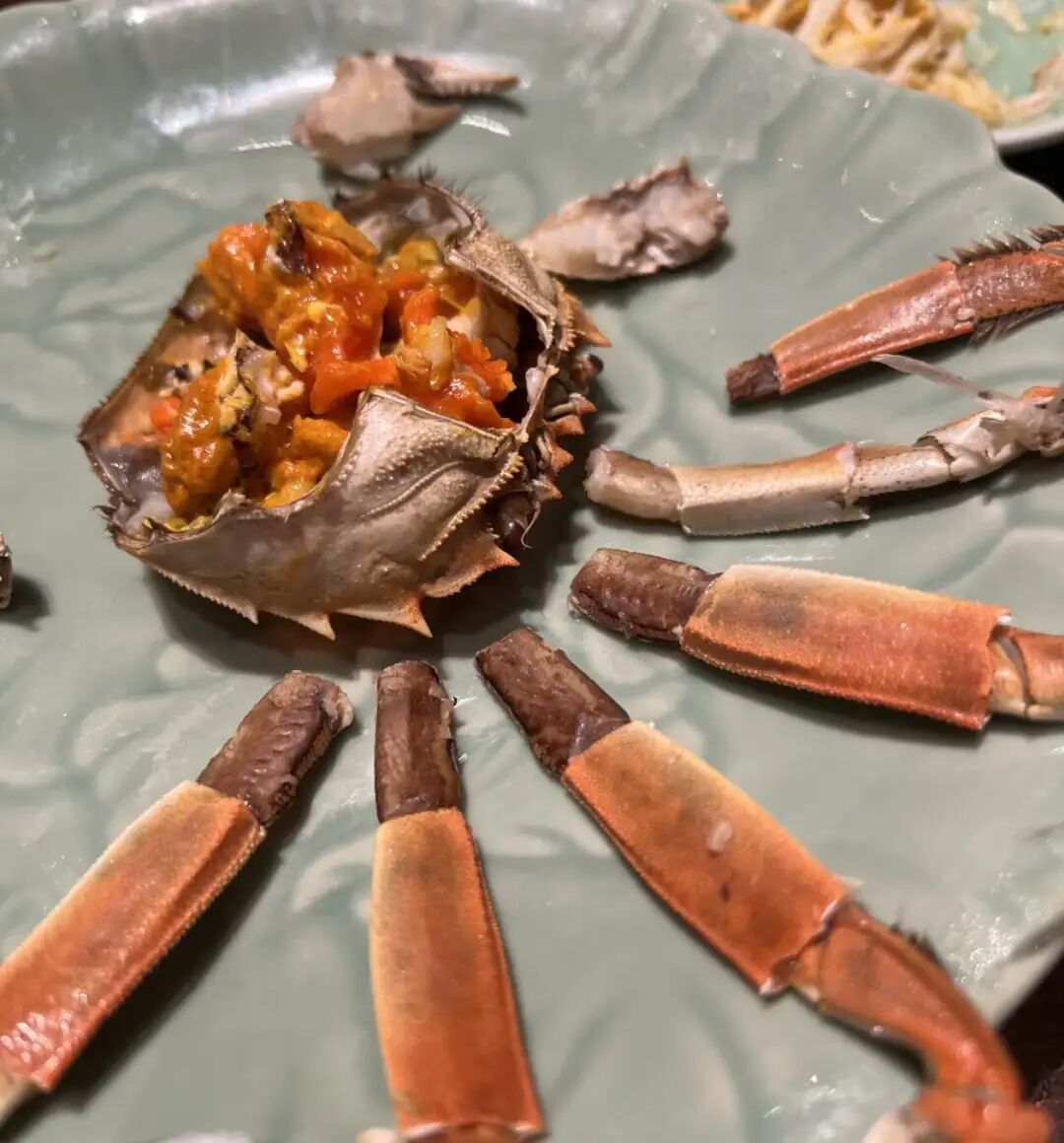
In the past, hairy crabs were often the protagonist of fine dining brands. Many brands would regularly hold crab feasts in autumn, and tasting events would also take crabs as the theme for design. Over the years, customers have developed aesthetic fatigue towards hairy crabs. The overall number of crab feasts has decreased this year, and hairy crabs have increasingly become one of the many seasonal autumn ingredients in fine dining restaurants, no longer a core role.
The other end is catering operations that are closer to mass consumption. Hunan restaurants, lobster restaurants, barbecue restaurants or seafood hot pot restaurants already have stable demand for regular meals and group dinners. Adding a steamed hairy crab, drunken cooked crab or crab roe dish in autumn can give old customers a reason to come again, and also provide a seasonal choice for family dinners. Crab here is not the only pillar for the whole year's operation, but a seasonal "bonus card".
In the past two years, as the seafood hot pot category has become popular, hairy crabs, as high-quality products, are commonly seen in seafood hot pot restaurants.
Previously, the first Haidilao food stall hot pot store in Wuhan put single-packaged live hairy crabs as an option at the seafood counter, priced at 22 yuan, and the discounted price after opening was 14.96 yuan. This promotion directly adds hairy crabs to the menu that already has bottom of pot, meat dishes, snacks and social scenes, giving people more reasons to come to the store to try new products, and the store does not have to bear the income of a whole table of meals alone.
Looking at the industrial side of the hairy crab industry, we can also see that people's enthusiasm for eating crabs has not changed, but the consumption pattern has changed.
During this year's National Day holiday, going directly to the producing areas to eat crabs has become the mainstream consumption, and this demand has been continuing.
On social platforms, many netizens shared content of going to the producing areas to catch and cook fresh hairy crabs on site.
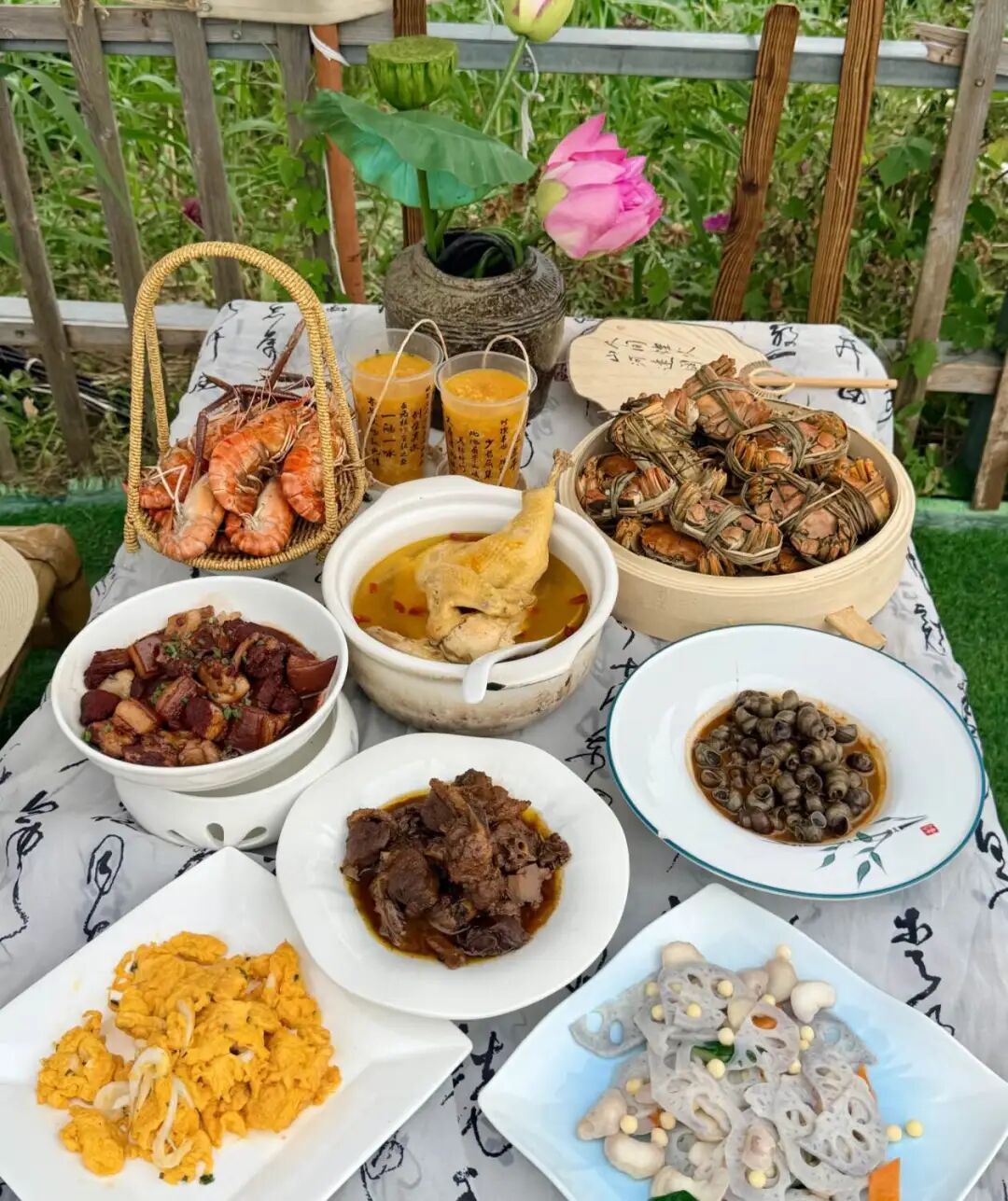
Suzhou Daily reported that on October 2, Yangcheng Lake Town received 38,000 tourists, and "Eighteen Stoves Local Cuisine Research Institute of the Land of Fish and Rice" was still turning over tables at more than 2 p.m., and hairy crabs were almost ordered at every table. The store owner said that hundreds of tables were almost fully booked every day during the long holiday, and the branch on Lianhua Island also had good passenger flow.
According to the report of Yidaokou Food Observation, the farm of Wang Xianji in Gaoyou Lake is full of people every day. Many people drive to the farmhouse and buy some crabs from the origin when they leave, which has become a lifestyle. Wang Xianji Farm may also start to renovate the farm, and there will be supermarkets, catering and accommodation in the future.
In the era of experience economy, the way of eating crabs in the producing areas, on the one hand, strengthens people's behavior of going to the origin, viewing the lake scenery, visiting the market, eating a farmhouse meal, and taking fresh crabs away. The original crab feast in the city has been extended to a half-day or even one-day consumption. On the other hand, for operators in the producing areas, a crab is not only a dish, but also a reason to attract people to visit.
Summary
It is undeniable that on the one hand, the operation threshold of dedicated hairy crab stores still exists, and highly seasonal products can hardly support the annual rent and passenger flow alone.
But looking at the larger catering market, hairy crabs are still core products for business formats such as fine crab feasts, mass restaurants and seafood hot pot, and even new business formats of eating crabs in the producing areas have been developed based on consumer demand.
Therefore, the hairy crab market is not actually cooling down, but the selling methods and demands have changed: from doing business by relying on sense of scarcity, gifting and ostentation, to letting customers see whether the origin, specification, quality and price match. From "selling face" to "selling cost-effectiveness", more attention is paid to quality and price ratio.
For hairy crab catering operators, whether crabs can be sold for a long time also depends on whether they adapt to the original customer group and store model, rather than how low the promotional price is this year.
This article is from the WeChat official account "Catering Enterprise Owner Internal Reference", written by Neicanjun, and published by 36Kr with authorization.