Apple is following in Xiaomi's footsteps
After many years, Apple has once again set its sights on the smart home track.
At its October 13 launch event, Apple unveiled the $299 HomeView home display, the $149 HomePod mini 2, and the new-generation Apple TV 4K. Consumers in Chinese mainland can only purchase the HomePod mini 2.
The HomeView is essentially an iPad mounted on a HomePod, equipped with the same A18 chip as the iPhone 16. The HomePod mini 2 comes with the same S8 chip as the Apple Watch S8, and the Apple TV 4K is powered by the same A19 chip as the iPhone 17, which clearly signals Apple's intention to clear out its existing chip inventory.
The Macbook Neo that is still using the A18 chip: My respects.
Displays, speakers, and TV set-top boxes cover several key usage scenarios in the home respectively, acting as a hub to connect other home appliances. The core highlight of the launch event is actually the family accessories launched by Apple in partnership with LG and Schneider, including cameras, doorbells, door locks, thermostats and other products.
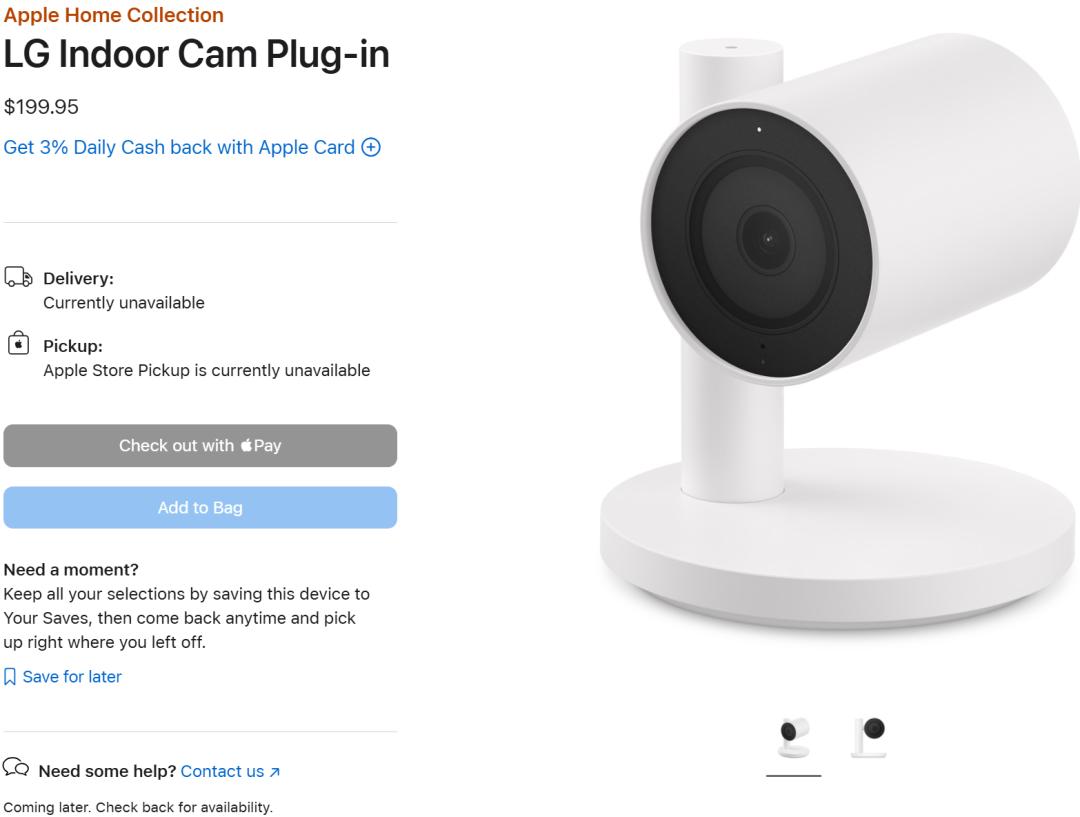
Apple does not manufacture home appliances itself. Instead, it is deeply involved in product definition, R&D, and distribution channels to help build a better smart home ecosystem. The products after Apple's empowerment are not cheap either. The picture below shows the $200 LG indoor camera:
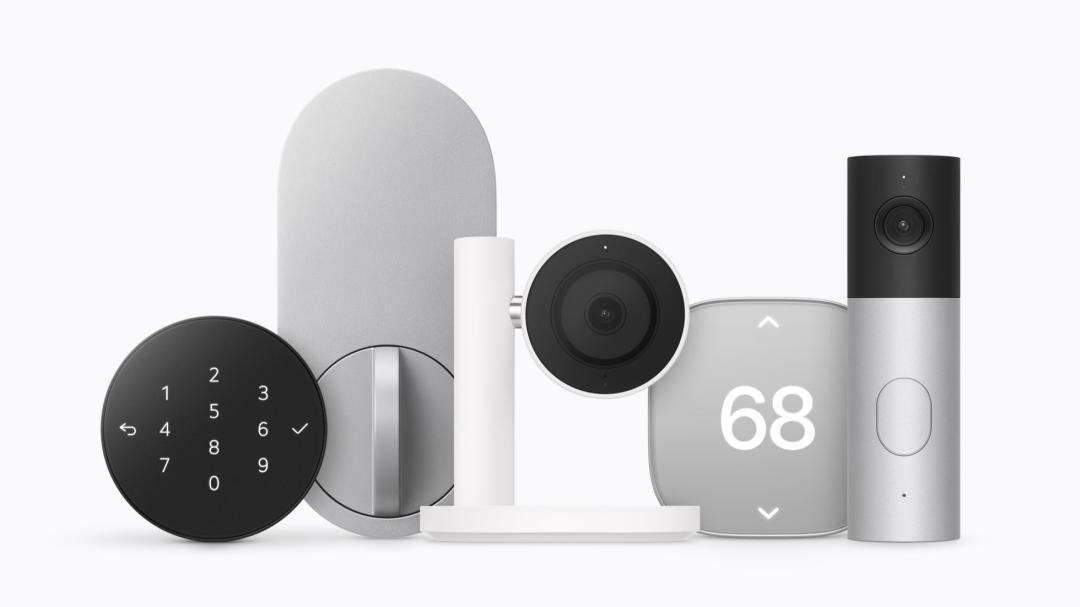
After users purchase the full set of ecosystem products, when a visitor presses the doorbell, HomeView will send a notification, the user can check the outdoor footage, unlock the door directly via iPhone and Apple Watch, and the thermostat system will automatically adjust the temperature according to daily activities.
In this system, Apple devices serve as the control center of the entire smart home ecosystem.
The newly appointed executive in charge indeed wants to make some big moves, but the smart home market seems to be a tough nut to crack.
Excessively High Price
When developing the smart home business, why do manufacturers usually start with smart speakers?
The foundation of smart home is the Internet of Things (IoT). To connect all home appliances in the house, a "hub device" is required to organize and coordinate other appliances. To be precise, it refers to components such as the Bluetooth Mesh gateway and Thread border router integrated in the hub device.
A simple gateway can hardly convince consumers to pay for it, and those technical terms are also highly discouraging for ordinary users. Therefore, integrating the gateway into a consumer-facing hub device can greatly lower the threshold for consumption decision-making.
Theoretically, any powered device can act as a hub, but speakers are the most perfect option.
To become the core control center of the whole family, the device needs to meet several conditions:
First, it needs to stay powered on and standby for a long time, so TVs that are frequently turned on and off are eliminated; second, it cannot be replaced frequently, which means mobile phones and tablets are not qualified for this role; third, the price needs to be affordable, and the entry cost cannot be too high. After all options are considered, only routers and smart speakers meet the requirements.
When Xiaomi first laid out its smart home business, it once considered using routers as the hub. However, most consumers already have routers at home and have little willingness to replace them. As a result, speakers entered the sight of major tech giants.
Speakers can stay on standby for a long time, are relatively cheap, can be popularized through various flexible channels such as giving away speakers when buying mobile phones, or being awarded as the third prize at company annual meetings. They also have the basic function of playing audio, with a low enough threshold, so many consumers "passively" enter the smart home ecosystem.
In February 2018, the first-generation Apple HomePod was launched. Apple had spent a full five years laying out the smart home market for this big plan.
In 2014, Apple launched HomeKit, setting unified standards for manufacturers to access, so that users can control lights, door locks, temperature and other devices with iPhone and Siri. At that time, Google and Amazon had not taken major actions, and Apple was the first major manufacturer in the observable universe to take action, which was completely different from its strategic attitude in the AI field.
In 2016, Apple launched the Home app to unify the software entry. In February 2018, the first-generation HomePod was launched, which can not only play music, but also understand Siri commands and control HomeKit home appliances, completing the last piece of the puzzle.
What about the results? It basically failed. According to Bloomberg's report, HomePod cut its order volume just one month after its launch, and its sales were significantly lower than expected.
The problem lies in the price. The HomePod was priced at $349, while the Amazon Echo Plus with a built-in Zigbee gateway only cost $150, and the Echo Dot and Google Home Mini were both sold for only $50.
The three products have their own advantages and disadvantages. Amazon gave away Philips light bulbs when users bought its speakers, which completed the smart home setup in one step; Google supported functions such as schedule management, commute information query and weather forecast; Apple won in strong sound quality, and Siri's voice was extremely natural.
American families usually live in large houses, and one speaker may not be enough. Amazon once launched promotions such as "buy five get one free" and "buy ten get two free". The money for one HomePod can almost buy seven Echo Dots.
At the end of 2018, CIRP counted the market share of smart speakers in the United States: Amazon Echo accounted for 70%, Google Home accounted for 24%, and HomePod only accounted for 6%. Globally, Apple also ranked at the bottom, even behind Baidu.
Apple obviously realized this problem. In 2020, Apple launched the HomePod mini, lowering the entry threshold to $99, but the effect was almost negligible. CIRP's survey this year shows that Amazon Echo still occupies about two-thirds of the US market.
Obviously, the problem is not limited to the speaker itself.
Access Cost
Speakers solve the entry threshold for consumers, and on the other end, manufacturers also need to reduce the access cost for home appliance makers.
Apple's HomeKit launched in 2014 set extremely high requirements and strict standards. If manufacturers want to access Apple's ecosystem, they must embed an Apple-certified MFi chip in their products, and then complete all tests and certification processes.
Apple's long-term partner Lutron, which makes smart lighting systems, used its own Smart Bridge gateway to allow users to control lights via mobile phones. To access Apple's ecosystem, Lutron launched the second-generation Smart Bridge, and specially emphasized on its official website:
Except for the newly added MFi chip, there is no change in product functions, and everything remains the same as before.
Another example is Philips. In 2015, to support HomeKit, Philips launched a new generation of bridge, and old users who wanted to control the lights via Siri had to buy the new version.
At the same time, Amazon took a software-based approach. As long as manufacturers completed software adaptation, their products could access Amazon's Alexa. Old products could obtain Alexa control capability through cloud docking, and there was no need to replace them with new versions.
Lessons make people progress. In 2018, Apple supported HomeKit software certification in iOS 11.3, lowering the threshold that forced manufacturers to modify hardware, and launched the first-generation HomePod at the same time. At this point, Amazon Echo's market share in the US smart speaker market was as high as 70%, and it had already occupied the core entry.
In 2019, the Chinese mainland version of HomePod was finally released, but by then China's smart home market had little connection with Apple.
Xiaomi Occupies the Whole Market
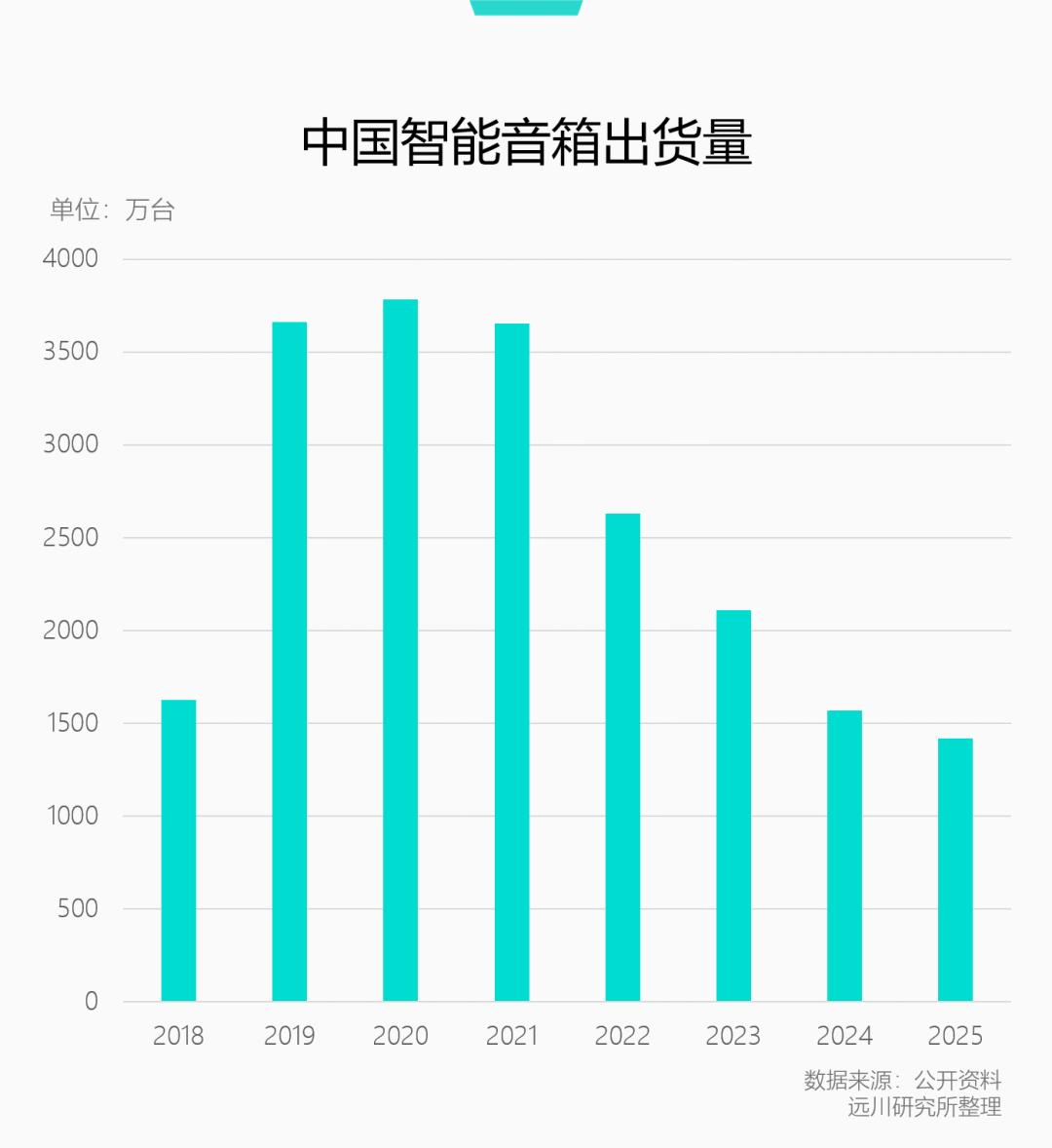
China's smart speaker industry started a little later and did not explode until 2017. Xiaomi's market share has remained above 60%. Although Xiao Ai once embarrassed Lei Jun at a launch event, Xiaomi still firmly occupied the speaker entry.
In the smart home track, Xiaomi faces a much more fierce competitive environment.
Different from the situation in the US where home appliance manufacturers actively adapt to Apple and Amazon, large Chinese home appliance manufacturers such as Midea and Haier will never lower their stance to access the Mi Home ecosystem. Chinese companies regard the word "entry" as sharks seeing blood, and have built their own closed ecosystems one after another.
For large home appliances such as refrigerators, air conditioners and televisions, Xiaomi did not have the ability to challenge Midea and TCL in the early days. But on the other hand, consumers are unlikely to replace their air conditioners just for smart home functions, so the breakthrough point falls on low-cost products such as night lights, weight scales and home cameras priced at around 100 yuan.
The corresponding market of these products is very scattered, and there are few large manufacturers that can compete with Xiaomi. Xiaomi has also invested in a large number of ecosystem enterprises, which produce niche products such as weight scales, desk lamps, smart doorbells and pet water dispensers.
These small enterprises do not have much psychological burden to access the Mi Home ecosystem, and fully support Xiaomi's smart home layout.
At the same time, the profit margin of these products is relatively low, which forces Xiaomi to reduce the access cost for manufacturers as much as possible.
Similar to Amazon, Xiaomi's approach is to fully standardize modules, development tools, device function definition and other links, and reduce the price of network modules (similar to Apple's MFi chips).
In 2014, the cost of a Wi-Fi module was around 60 yuan. By 2019, the price of Wi-Fi + Bluetooth dual-mode module dropped to 9.5 yuan, BLE Mesh module to 6 yuan, and Zigbee 3.0 module to 10.5 yuan, which greatly reduced the access cost for manufacturers.
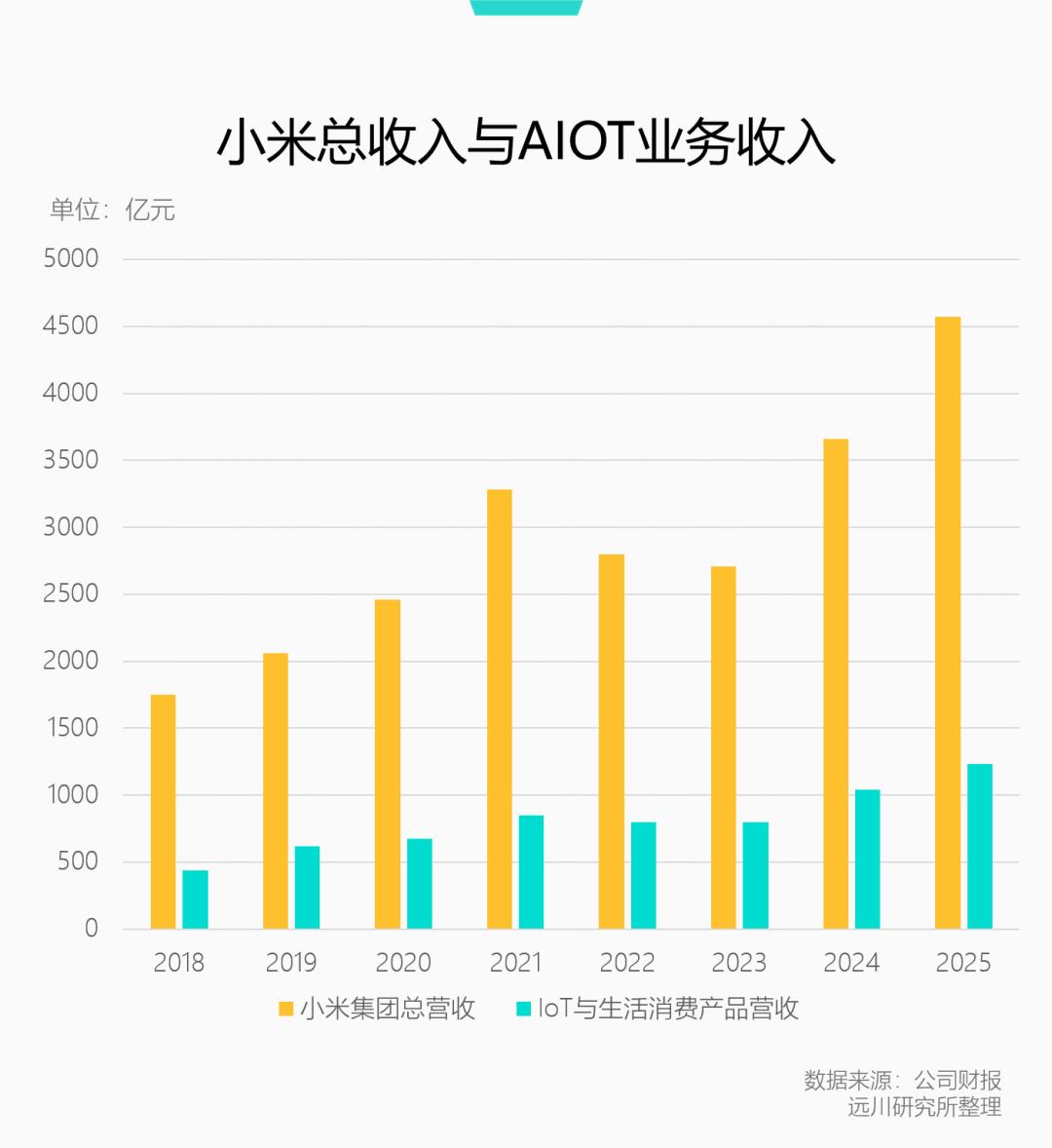
From 2018 to 2024, the number of devices connected to Xiaomi's IoT platform skyrocketed from 150 million to 900 million. During the same period, the revenue of Xiaomi's IoT business increased from 40 billion yuan to 104 billion yuan, and it has begun to set foot in the large home appliance market.
What was Apple doing during the same period? In 2022, Apple, together with Amazon, Google and Samsung, formulated the universal standard Matter.
This is a very uncharacteristic decision for Apple, which means that Apple no longer sticks to its own HomeKit ecosystem, and has accessed the unified Android ecosystem.
I Have Everything Apple Has
The core factor that drives Apple to re-enter the market is AI. According to Bloomberg, products such as HomeView were originally scheduled to be launched last year, but the extremely advanced new version of Siri was delayed in development, so the products were postponed for more than a year.
After accessing the large language model, users can send commands in natural language. When Google released Gemini for Home, it demonstrated the natural language command "turn on the light next to the stove".
In the past, to complete tasks such as "automatically turn on the light when the door is opened", users needed to set up automation commands manually, but now it can also be completed with natural language. Amazon took "creating multiple actions with voice" as the highlight of Alexa+.
Cameras are the place where the difference is most obvious. In the past, the mobile phone would pop up a notification, and users needed to click in to watch the video by themselves. Now users can directly ask "what time did the child get home", and the system will automatically filter the corresponding video clips, which Google has also demonstrated.
In 2019, Google launched the smart speaker with screen Nest Hub Max, and Amazon launched Echo Hub in 2024. Judging from the functions demonstrated at Apple's launch event, Apple is basically following the path explored by Google and Amazon.
This time Apple emphasizes Siri's understanding of user context. After HomeView is paired with iPhone or iPad, Siri can access information, calendars and other content; on the new Apple TV, the example given by Apple is to let Siri play the programs recommended by friends.
In other words, in the AI track, Apple has no first-mover advantage. Although Gemini has its own shortcomings, it is not a product that Apple can easily catch up with.
In addition, even in the AI era, the hub function of smart speakers has not changed.
As mentioned earlier, the biggest feature of speakers is that users will not replace them easily. The fact is that after buying a speaker, users rarely replace it and plan to use it for a long time, so the first-mover advantage can last for a very long time.
China's domestic smart speaker market peaked in 2021, with shipments reaching 36 million units, and last year the shipments dropped to just over 10 million units. The US market is larger, with shipments exceeding 70 million units in 2020, and currently around 20 million units.
Facing this level of decline, even the Hang Seng Tech Index will feel relieved.
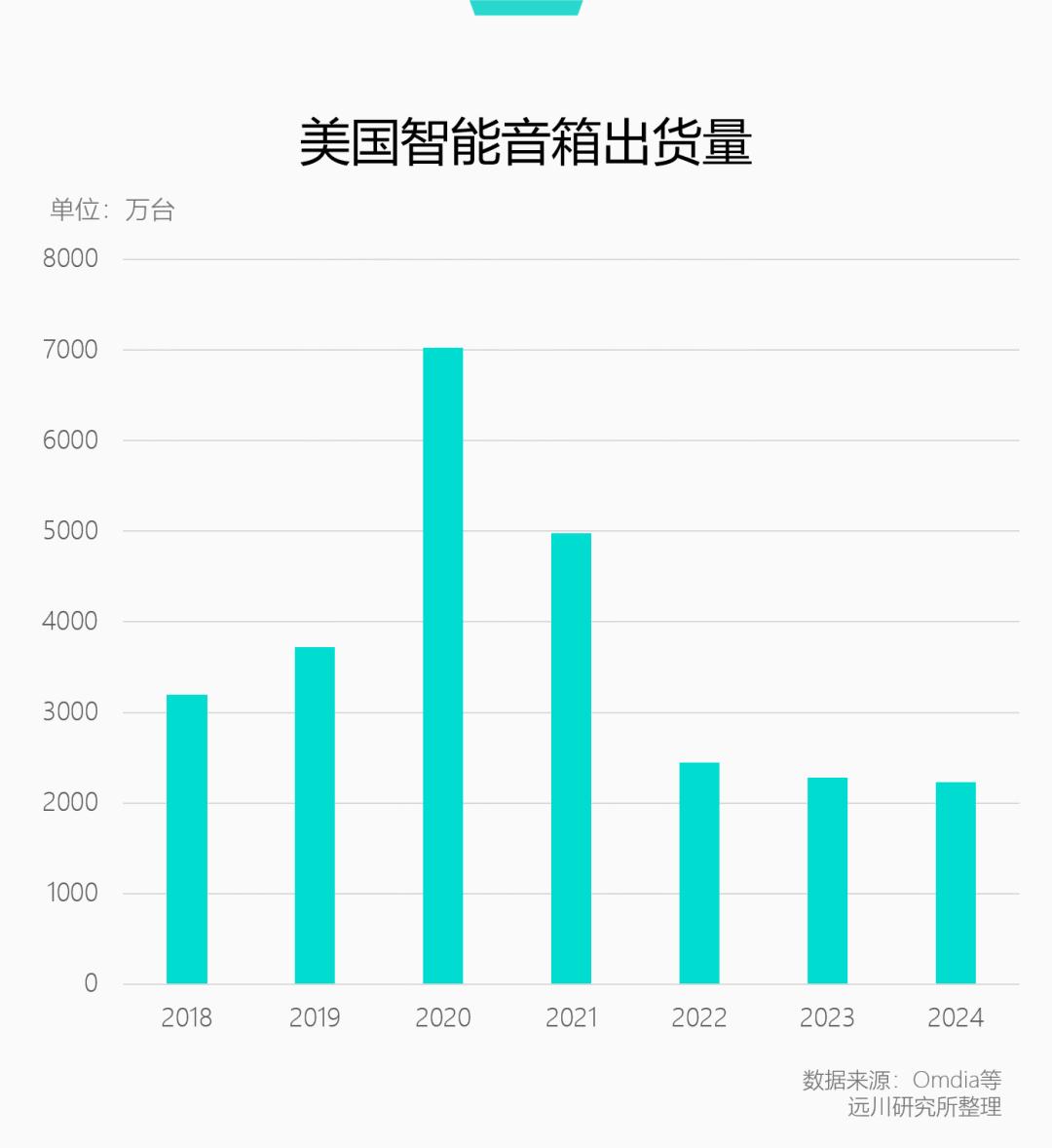
This is already a stock market. Once users enter an ecosystem, they will continuously accumulate sunk costs. The deeper the binding, the higher the decision cost to switch ecosystems. Considering that Apple's supporting devices are much more expensive than its competitors, it is hard to say how many new incremental users Apple can attract.
In addition, the brand new Siri is not yet available in Chinese mainland, and currently only supports English. Users who want to integrate into Apple's smart home ecosystem as soon as possible can start clocking in on Duolingo first.
References
[1] Meet Apple HomeView, a new way to enjoy entertainment and manage the home,Apple
[2] LG Electronics Announces New Smart Home Accessories, Designed in Collaboration With Apple for the Apple Home Collection,LG
[3] Schneider Electric and Apple introduce new Smart Thermostat for Apple Home Collection and Power Mount for Apple HomeView,Schneider
[4] Apple Releases iOS 8 SDK With Over 4,000 New APIs,Apple
[5] Apple Said to Lower HomePod Sales Forecasts as Its First Smart Speaker Stumbles,Bloomberg
[6] HomePod Struggling to Gain Market Share Alongside Cheaper Amazon Echo and Google Home Speakers,MacRumors
[7] Amazon Echo Sees a Little Less Dominance, But AI is Going to Change Everything,CIRP
This article is from the