Wang Xingxing Admitted His Mistakes Twice, Unitree's Market Value Surges by 110 Billion Yuan
Wang Xingxing's positive remarks on AI and his strategic exploration of the platform-based ecosystem have injected a strong stimulant into the turbulent Unitree Robotics, whose stock price has risen sharply for consecutive days recently. After all, this is a capital story with far greater imaginative space.
Two "Admissions of Mistakes", Emphasizing That AI Was Underestimated
After being listed under the aura of "the first humanoid robot stock", the market value of Unitree Robotics (hereinafter referred to as Unitree) once dropped from the peak of about 440 billion yuan to 163.8 billion yuan, which made many investors more restrained and sober. But now, investors' enthusiasm can no longer be held back.
On October 22, Unitree held the 2026 World Physical AI Conference and Unitree Partner Ecosystem Conference in Hangzhou. This is not only the first conference since Unitree's listing, but also the first industrial conference held in the 10 years since its founding, drawing a large number of upstream and downstream enterprises to attend. All participants are eager to know how Wang Xingxing, who has experienced the ups and downs of the capital market, views the development trend of embodied intelligence.
At the opening of the event, Wang Xingxing took the stage and delivered a keynote speech titled *Believe, Believe in AI as Much as Possible*, in which he talked more about AI besides robots.
In the speech, Wang Xingxing first talked about the public's cognitive gap on AI: "At present, there may be only thousands of people in the world who truly understand the potential of cutting-edge AI models. The vast majority of people have no idea what the real capability boundary of AI is."
Then Wang Xingxing made a self-review: "The biggest mistake I have made is that I did not believe in AI early enough. In recent years, my expectation for AI can still be multiplied by more than 10 times."
This is already the second public "admission of mistake" made by Wang Xingxing recently. 10 days before the conference, when he had a panel discussion with Wang Jian, academician of the Chinese Academy of Engineering, and Xiang Shaoqing, co-founder of Sharpa, Wang Xingxing also publicly reflected: "The biggest mistake I have made in the past decade is that I did not believe in AI enough."
"Many people are still not clear about how great the potential of AI is, or to what extent AI can develop in the next few years." Wang Xingxing said that he is thinking about an important question every day: if AI will subvert everyone's life in the future, where is the most important opportunity?
After long-term thinking, Wang Xingxing put forward a radical prediction. He believes that large models may "break through" physical AI in the future. Wang Xingxing judged optimistically that "by the end of this year or next year, robots are likely to complete tasks such as tidying up rooms according to instructions".
After Wang Xingxing put forward this view, Unitree's stock price rose again. On October 23, Unitree's stock price hit the 20% daily limit, and its total market value stood at 250 billion yuan again. On October 26, Unitree rose by 7.69% again, with a total market value of 271.8 billion yuan. Compared with the phased low of 163.8 billion yuan on October 15, Unitree's market value has soared by 108 billion yuan in just 7 trading days.
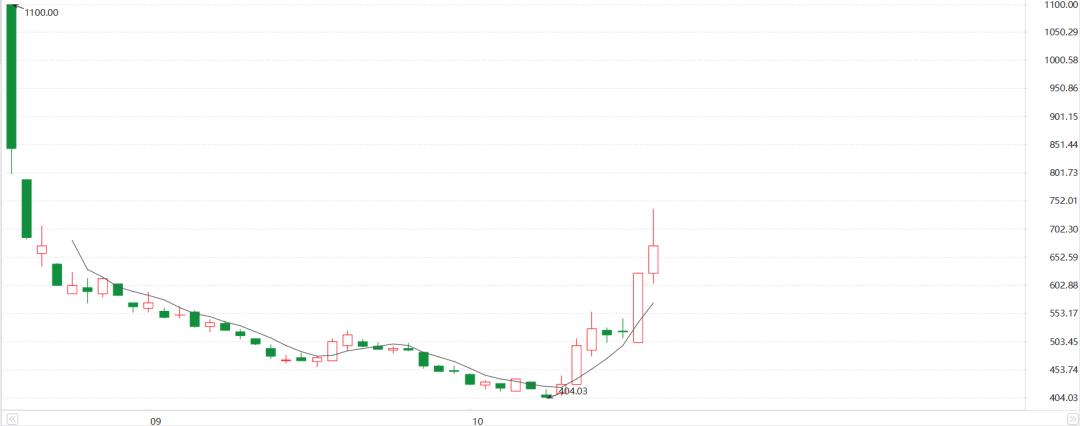
▲ Trend of Unitree's stock price after its listing on August 19
The market has once again given high expectations for Unitree's future. But to meet such expectations, Unitree needs to prove that it can not only create hit robots, but also enable these robots to understand and execute tasks better.
Compared with the popular "brain" narrative in the industry, Unitree's greater advantages are built on the more deterministic ontology (the physical and mechanical structure of robots), motion control and mass production capacity.
A primary market investor focusing on the embodied intelligence field told Lin Feng from *Caijing Tianxia* that the industry all knows that Unitree's previous investment in artificial intelligence was limited, and the help of AI to the underlying motion control of Unitree robots has not been fully reflected in the task execution capability that is easier for the outside world to perceive. For Unitree, the difficulty of developing self-developed brains far exceeds that of making robot bodies with different shapes.
Previously, Wang Xingxing once said bluntly that the success probability of Unitree's self-developed large robot model is less than 50%, "Unitree ranks first in the world in making robot bodies; but it is not easy to win the battle of making brains".
At present, as the price of robot ontology continues to drop to a new low, the investment logic of the capital market has undergone new changes. "In the primary market, some people will pay attention to hardware, but almost no one pays attention to the whole robot ontology." Lin Feng said to *Caijing Tianxia*.
"Unitree's current revenue still comes from selling hardware, which belongs to the manufacturing logic after all. But the manufacturing industry is very cruel, and it is impossible to maintain advantages forever. Even with hardware advantages, Unitree must actively embrace the 'brain' and figure out how to promote relevant layout." The above-mentioned person said.
Wang Xingxing's positive remarks on AI undoubtedly give the market new hope. If Unitree's robot ontology can be equipped with agile and powerful "AI brain", it will completely open up the imaginative space of this new favorite in the technology industry and tell a more attractive story.
"Afraid of Wasting Every Day", Integrate AI into the R&D Cycle
"I am really afraid of wasting every day." Wang Xingxing said that he has a lot of things to do every day and many new things to learn, but there is too little time. He believes that the robot market will have a huge space in the future, but the competition is also extremely fierce, and enterprises need to make progress every day.
Wang Xingxing, known as the "involution king", does not spread anxiety to the industry for no reason, because the impact brought by general models is indeed too great. Previously, Unitree's stock price was undervalued for a long time, but what really made practitioners anxious was the release of GPT-6 Astra (hereinafter referred to as GPT-6).
GPT-6 is called "the most intelligent model in the world that best conforms to human intentions". Although its release report does not mention the general robot model at all, it has topped the robot evaluation list for a long time, and even made many robot Benchmark (benchmark test) fail.
Lin Feng said, "Everyone has been much more cautious in investment in the past two months, and the main reason is the release of GPT-6. Because people previously expected that it might conflict with the multimodal large model, but they did not expect that the two lines would cross so soon."
In the past, large basic model teams usually divided general language models and multimodal models into two routes. Now the two are showing a convergence trend, and general models are beginning to further participate in the generation and execution of actions from understanding tasks and planning steps.
Especially after the launch of the GPT-6 model, many robot companies were shocked, and tests of using it to control robotic arms and dexterous hands to complete operation tasks emerged one after another. Even for small objects such as chopsticks, it can complete a series of actions.
After numerous tests, practitioners found that general large models such as GPT-6 are better at understanding, decision-making and reasoning, but in multiple dimensions such as cost, real-time performance and fine operation, the ceiling of GPT-6 is still clearly visible.
This brings new opportunities to embodied intelligence companies that focus on ontology like Unitree. With the enhanced capabilities of general models such as GPT-6, Unitree can directly use stronger general models to reduce the pressure of training "language understanding and task planning" from scratch.
"At present, most companies with high valuations will not be very happy, and the industry structure will be more differentiated in the future. However, GPT-6 has strengthened the valuation logic of ontology-focused enterprises like Unitree." Lin Feng said.
Although Unitree started a little later in the "brain" track, the gap with its peers is not unreachable. With the improvement of AI model capabilities, Unitree also has the opportunity to borrow external understanding and planning capabilities to connect its hardware to more diverse tasks.
At this conference, Wang Xingxing mentioned that he hopes to use the AI model to transform this process into a more automated and scalable training system, reducing the dependence of robot skill development on manual programming and debugging.
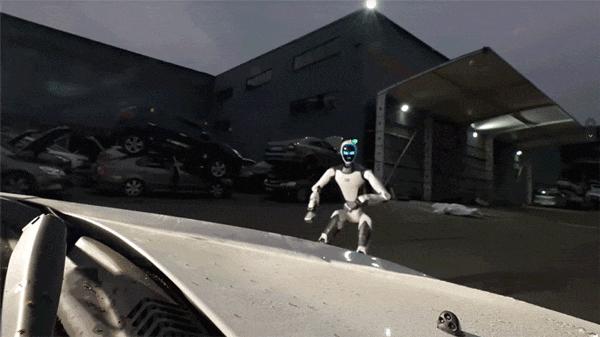
▲ On October 21, Unitree released the new robot "H2-X Kung Fu Legend Guardian"
In terms of the brain, Wang Xingxing said that Unitree is not only continuing to promote cooperation with large model companies at home and abroad, but also synchronously promoting its own physical AI system. At present, Unitree is developing a model system called "Physical AI Robot Self-Evolution V1".
Wang Xingxing explained the reason why Unitree developed this system. In his view, the stronger the basic model is, the stronger the self-evolution capability of robots will be. As more data is used for training, the scale effect of self-evolution will gradually appear.
When more robots are actually deployed, more real data will be generated to further promote model iteration. Through this cycle, robots can continuously accumulate and expand skills, and finally form a large-scale skill ecosystem.
However, making up for the short board of the "brain" is only part of Unitree's next layout. What Unitree wants to strengthen is not only the "brain" capability, but also its greater ambition to let more robot innovations take place on Unitree's platform, so as to build a stronger ecosystem.
Build Ecosystem, Compete to Become the Platform-type "Chain Leader"
For a long time, Unitree has established a strong hardware entry through self-developed motors, reducers, controllers, lidars and motion control algorithms, and has become an important "chain leader" in the industrial chain.
However, in terms of development tools, software services, data supply and application implementation, Unitree's hardware advantages have not been automatically transformed into equally strong platform influence. In other words, Unitree is still a distance away from becoming a comprehensive leader.
To get more teams to continuously develop around its robots, Unitree needs to expand to software, data and applications. It should not only provide easy-to-use machines, but also make it easier for developers to make products and get orders on these machines.
To this end, Unitree has taken the initiative to build a larger ecosystem, officially launched the "Unitree Creation Plan" to attract more entrepreneurs. At the same time, it also announced that it will hold the World Physical AI Competition, planning to invest tens of millions of yuan in bonuses every year, which is open to teams and individuals around the world.
The so-called "Unitree Creation Plan" refers to Unitree's plan to recruit entrepreneurs in the fields of robot ontology and core components, embodied intelligence algorithms, data and simulation platforms, industrial applications and solutions for teams that have established companies or have clear entrepreneurial directions.
Wang Xingxing proposed that in the next 5 years, Unitree hopes to incubate more than 200 high-quality ecological enterprises through this plan. He said that relevant enterprises will be provided with support in industrial capital, robot platforms, development tools, engineering mass production and application scenarios.
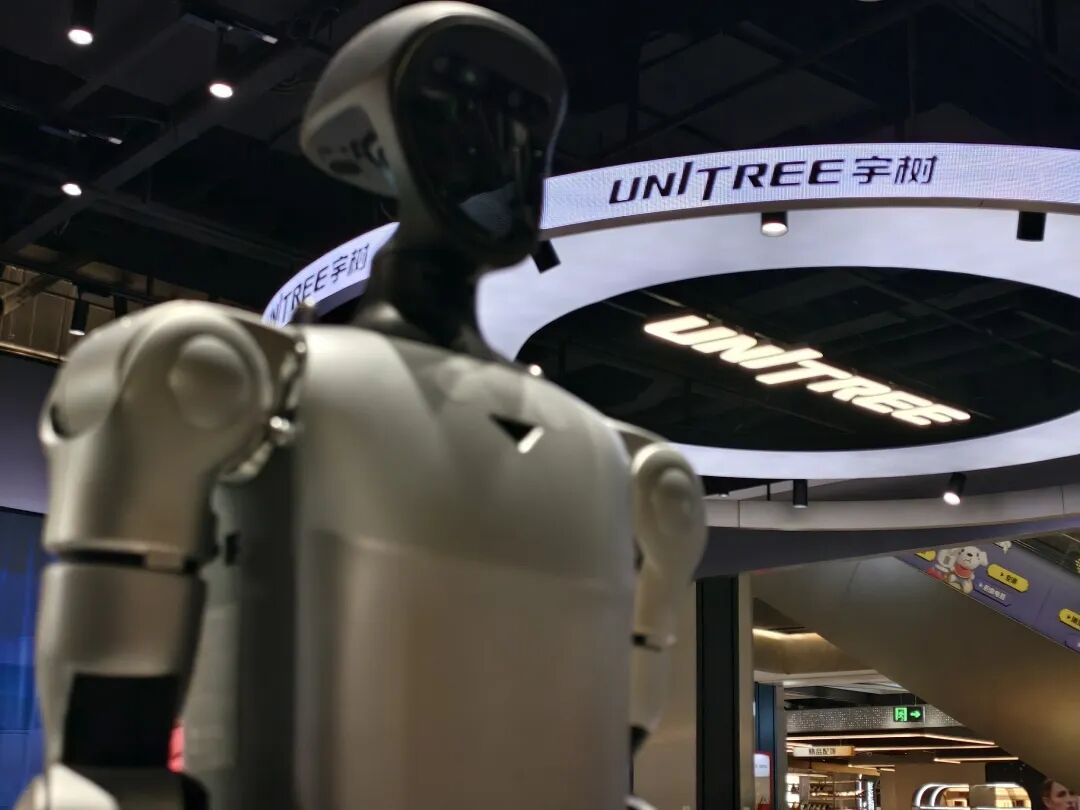
Previously, Unitree has open-sourced UnifoLM-WMA, VLA and multiple types of real machine data. Now, Unitree's competition and Unitree Creation Plan will further attract external teams to its platform, so that more developers can develop around Unitree robots.
Chen Yue, a senior practitioner in the embodied intelligence industry, said to *Caijing Tianxia* that Unitree's move is competitive and the direction is very correct, but its current competitiveness belongs to "potential platform capability" rather than a verified platform barrier.
"The strategic intention is very clear, but it is hard to say whether it can form a barrier in the end. The key still depends on the rules, interfaces, data and real commercial orders." Chen Yue said.
On the road of "robot companies building platforms", Unitree's unavoidable competitor is AgiBot.
Previously, AgiBot's AIMA platform clearly proposed to connect robot ontology, development tools, scenario applications and global developers; Lingqu OS tries to cover from hardware to underlying services, intelligent applications and development tool chains.
Moreover, AgiBot also announced the "Yuansheng" ecological plan in June 2026, planning to invest 20 billion yuan in the next 5 years, and simultaneously layout data co-creation, robot leasing, industrial partners and application ecology.
In contrast, Unitree's "Unitree Creation Plan" has only recently clearly pushed "platformization" to the forefront as a strategic action.
From single-machine competition to ecological competition, Unitree and AgiBot have different focuses, representing two different expansion paths.
AgiBot's advantage lies in its more complete platform design and more concentrated industrial coordination. It tries to attach importance to building data infrastructure, organize collection, annotation, training and deployment by itself, and then provide data capabilities as part of the ecosystem to the outside world.
Unitree's advantage lies in its wide hardware access and open ecosystem. It hopes to let more developers use its robots first, and then precipitate standards and data from the usage network.
In the end, who can win depends not only on the sales volume of robots or model parameters, but also on who can connect devices, data, developers and real orders into a continuously growing business closed loop.
For Unitree, how to let more people do business around its robots after selling the robots is the test that its platform capability needs to pass.
This article is from the WeChat official account "Caijing Tianxia WEEKLY", author: Caijing Tianxia, published with authorization from 36Kr.