Tesla is building a training cluster of 20,000 robots with a total investment of approximately 14 billion yuan.
On October 24 Beijing time, Saturday, reviewing Tesla's Q3 2026 earnings call, it was confirmed during the call that the mass production of Optimus has been postponed to around the end of 2027, and external deliveries will not start before that. All Optimus units produced earlier will be for Tesla's internal use only.
Before mass production, about 10,000 to 20,000 units will be manufactured for training and learning at the under-construction Optimus Academy of Tesla (which means building a data collection and training center with a scale of 20,000 robots, following the cluster concept of the data centers for current large AI model training, the Optimus Academy can be translated as "training cluster"). Tesla has significantly raised the success threshold for humanoid robots.
The reason for delaying the launch of mass-produced units is that Optimus has not been finalized yet, and the core difficulty still lies in the dexterous hand. Currently, the dexterous hand will be scrapped after one month of use, with insufficient durability for commercial use. The dexterous hand imposes extremely high requirements on mechatronic system design, and it is expected that these problems can be solved by the end of 2027.
Compared with the problem of the hand, the problem of Optimus's "brain" has been solved earlier. The AI5 chip will be mounted on Optimus in April 2027, and high computing power is extremely important for Optimus.
Elon Musk believes that Optimus and Robotaxi are the two pillars of Tesla's valuation, which shows the great importance of Optimus. However, since the mass production of Optimus has been confirmed to be postponed to around the end of 2027, according to Tesla's consistent track record, there is a high probability that the schedule may be further delayed.
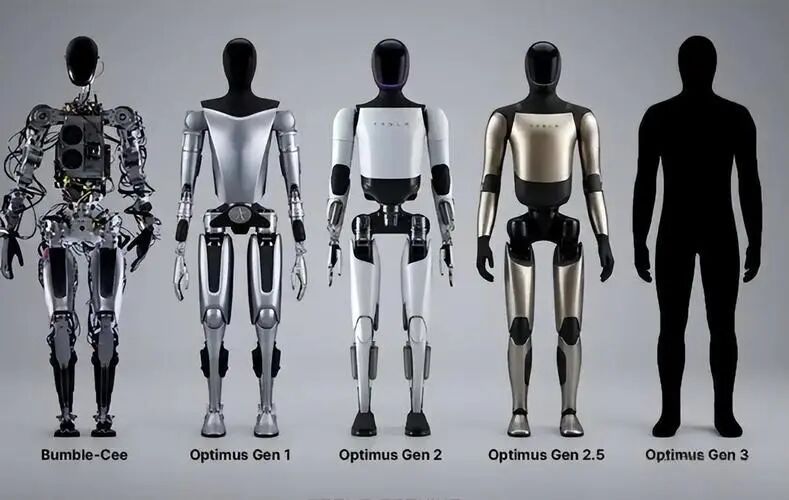
I. Reasons for the Postponement
Elon Musk explicitly stated that he wants to cool down everyone's expectations, because Optimus has not been finalized and there are still many problems to be solved. The delivered robots must be safe, reliable, and able to adapt for a long time, instead of being worn out and scrapped after one month of use (it can be seen that this is exactly the current situation: the units get worn out and scrapped after one month, and the durability is far from meeting the requirements for commercial use).
Optimus is a general-purpose humanoid robot. To truly complete open-ended tasks, the problems to be solved include AI, mechatronic design, reliability and service life (durability), etc.
At the same time, mass production also requires the establishment of a huge global supply chain and the construction of a very large factory in the United States. Most of the equipment required for the current production line with an annual output of 1 million units in the United States has already been in place at Fremont.
The fundamental reason for the postponement still lies in the dexterous hand. Previous reports have stated that Tesla's mass-produced Optimus will not be available until the dexterous hand problem is solved, and now it seems that this problem is still in the process of being resolved.
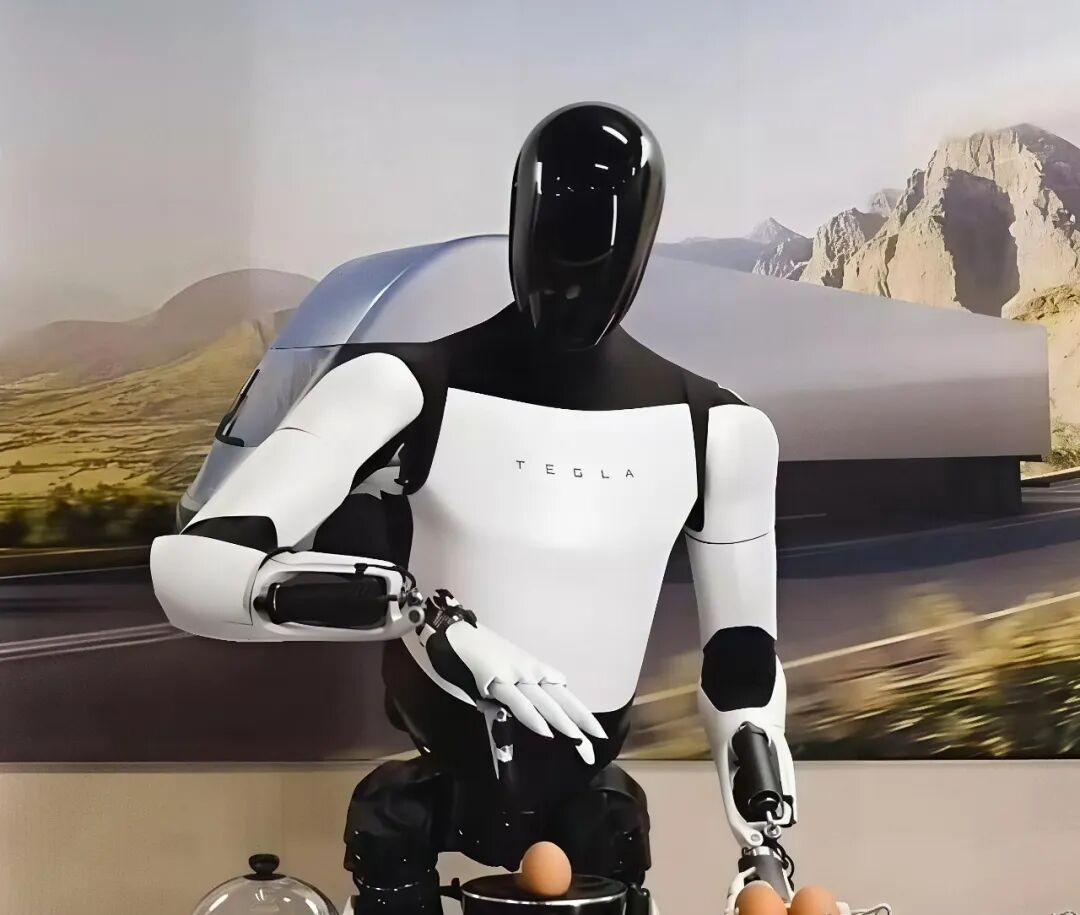
At present, most of the mechatronic systems of Optimus have converged to a scheme that works quite well. However, from the mechatronic perspective, the dexterous hand is more complex than things such as the actuators of the walking system. Tesla is still custom developing some components, mainly to solve the reliability problem. From the mechatronic perspective, the main difficulty lies in the dexterous hand.
Elon Musk gave an example to compare the dexterous hand of the robot with the human hand: the fingers of the human hand are soft, there are many sensors in the skin, and more importantly, the human hand can self-repair, which the robot hand cannot do yet. It is extremely difficult to manufacture a dexterous hand that can withstand a large amount of wear, is soft enough to pick up fine and fragile objects, and will not easily damage the sensors during various repeated movements. These details make you realize how incredible the human hand is.
II. How to Train Optimus
On the topic of training Optimus, Elon Musk shared an example of how humans grow up in the world. He said that anyone who has raised a child knows that the growth process of a toddler is from staggering around and not knowing how to do things, to finally learning to wipe their own butt (which is a real milestone), then learning to read and do all kinds of things. Toddlers learn through playing.
Therefore, Tesla plans to build a school - Optimus Academy to allow Optimus to conduct large-scale autonomous practice, so as to realize the completion of various tasks in the real physical world.
(When mentioning that a toddler learning to wipe their own butt is a milestone, Musk most likely thought of his own "outstanding eldest son", the pain of his life)
According to Tesla's plan, Optimus Academy is currently under construction, and all 10,000 to 20,000 Optimus units manufactured in the early stage will be placed in Optimus Academy for autonomous learning, to practice a very wide range of tasks, and the collected data will be put into a certain flywheel to make Optimus better and better at various tasks.
The core reason is that unlike FSD, which can use data from sold vehicles all over the world for training, Optimus needs to first manufacture 20,000 units to collect training data.
For 20,000 Optimus units, the cost of each unit is definitely not yet at the target cost of about 30,000 US dollars, and it may cost 50,000 to 100,000 US dollars per unit, which requires a cost of 1 to 2 billion US dollars. Plus other costs, the total is about 14 billion RMB. Can domestic embodied intelligence companies keep up with such a data collection center? At present, for domestic data collection centers supported by local governments, the number of robots in each data collection center is only at the level of dozens, with an investment of tens of millions of yuan.
Musk said that as far as he knows, no one in the field of general-purpose humanoid robots is close to Tesla.
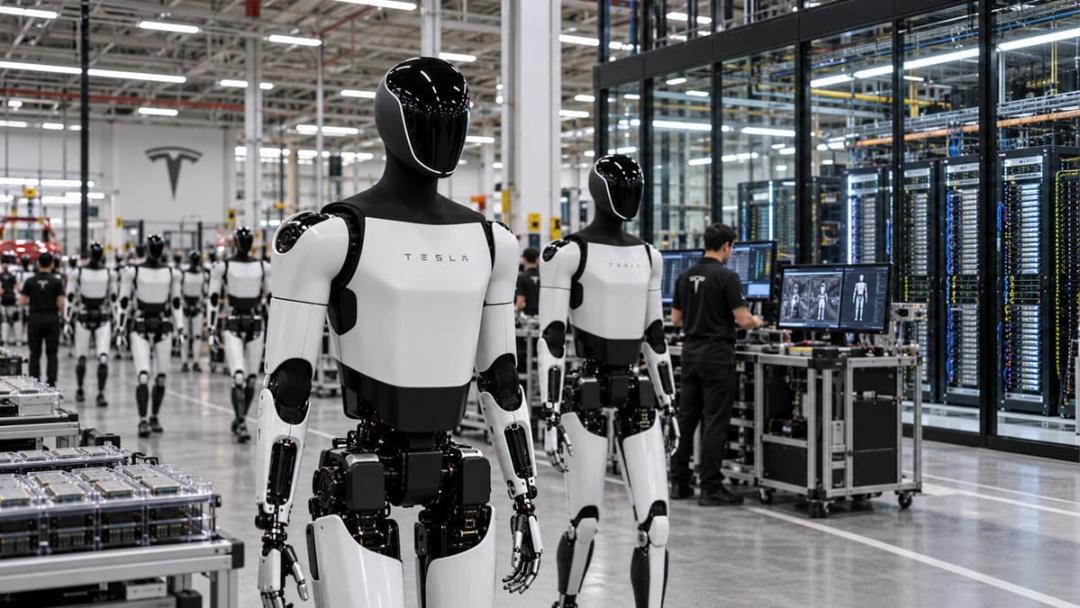
Ashok Elluswamy, Vice President of AI Software at Tesla, when talking about the role of Optimus Academy, said that since there is no existing similar carrier, Optimus must first observe how others complete tasks, and then start practicing on its own. Just like when people watch a football match, it does not mean they can play football, they still need to start practicing and get familiar with the sport gradually.
At present, Tesla is building a huge reinforcement learning loop: start with basic training from humans, then deploy the capabilities to Optimus, let it conduct a large amount of autonomous practice in the simulation and real world, and learn with Optimus's own body. It is believed that Optimus is very close to achieving very good results in this large loop.
Musk said, some amazing demonstrations of humanoid robots seen currently actually do not use any advanced AI, and are all performing pre-programmed deterministic tasks. In the next 1 to 2 months, a video of Optimus that is guaranteed not to be pre-arranged, that is, a real shot video, will be released to prove the real capabilities of Optimus.
III. The Computing Power of AI5 Chip is Extremely Important for Optimus
Elon Musk revealed that by around April 2027, all the parts of Optimus may be in place, including the dexterity of the mechatronic system that improves the body movement ability, ensuring that Optimus will not wear out and be scrapped after working for a long time, and completing the AI software, the most important thing is to integrate the AI5 chip into it.
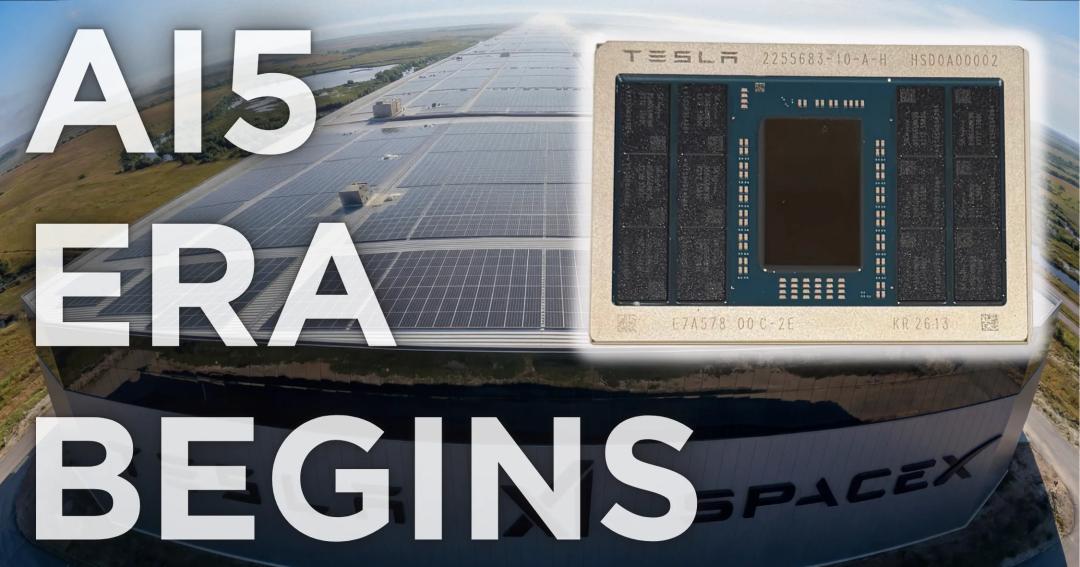
According to Tesla's plan, the AI5 chip, whose computing power is an order of magnitude higher than that of the AI4 chip, will be mounted on Optimus around April 2027, which will greatly help improve the capabilities of Optimus. Because humanoid robots need to handle far more degrees of freedom than cars (cars only have 2 degrees of freedom in the front and rear, while robots have about 100 degrees of freedom. The dexterous hand alone has at least 22 degrees of freedom, and the human hand has about 27 degrees of freedom).
It is really very difficult to integrate everything needed to control all degrees of freedom of Optimus and complete a wide range of tasks. After all, the things that humanoid robots need to do may be 1000 times more than what cars do.
The last part is about the target customers of Optimus. Apart from the first batch of about 20,000 Optimus units that will be sent to Optimus Academy for training, by the end of 2027, deliveries can be made to customers outside Tesla. At the initial stage, they will most likely be used for industrial applications, engaging in dangerous, repetitive and round-the-clock work. As the production volume expands, people will be able to buy them for home use.
This article is from the WeChat official account "Chezhi" (ID: invehc), author: Michael Yuan, published with authorization from 36Kr.