Just now, Kimi K3.1 Pro has broken into the global top four, ranking first in the Agent track.
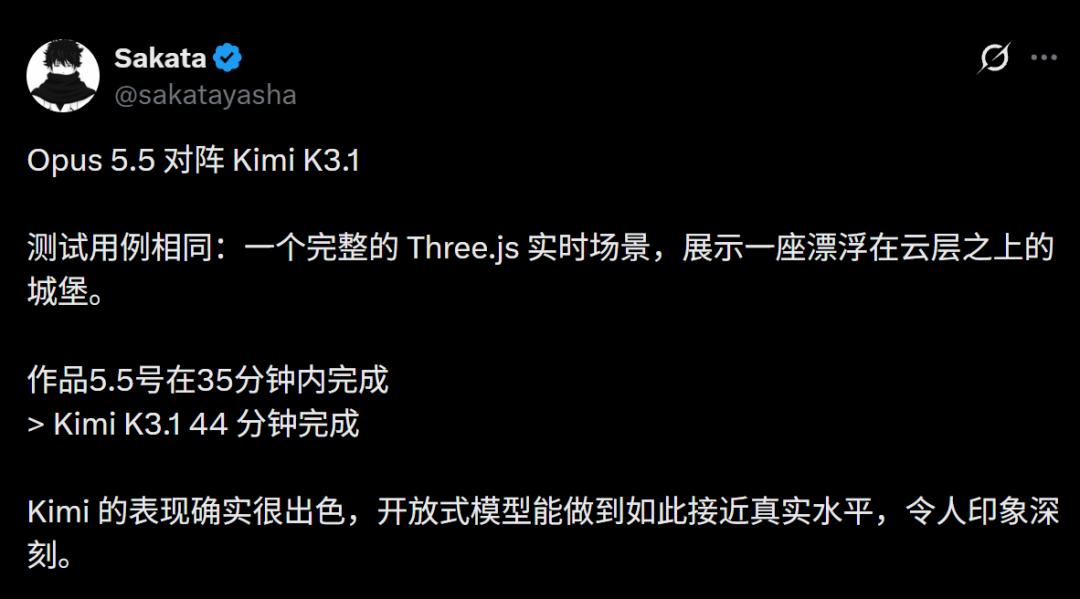
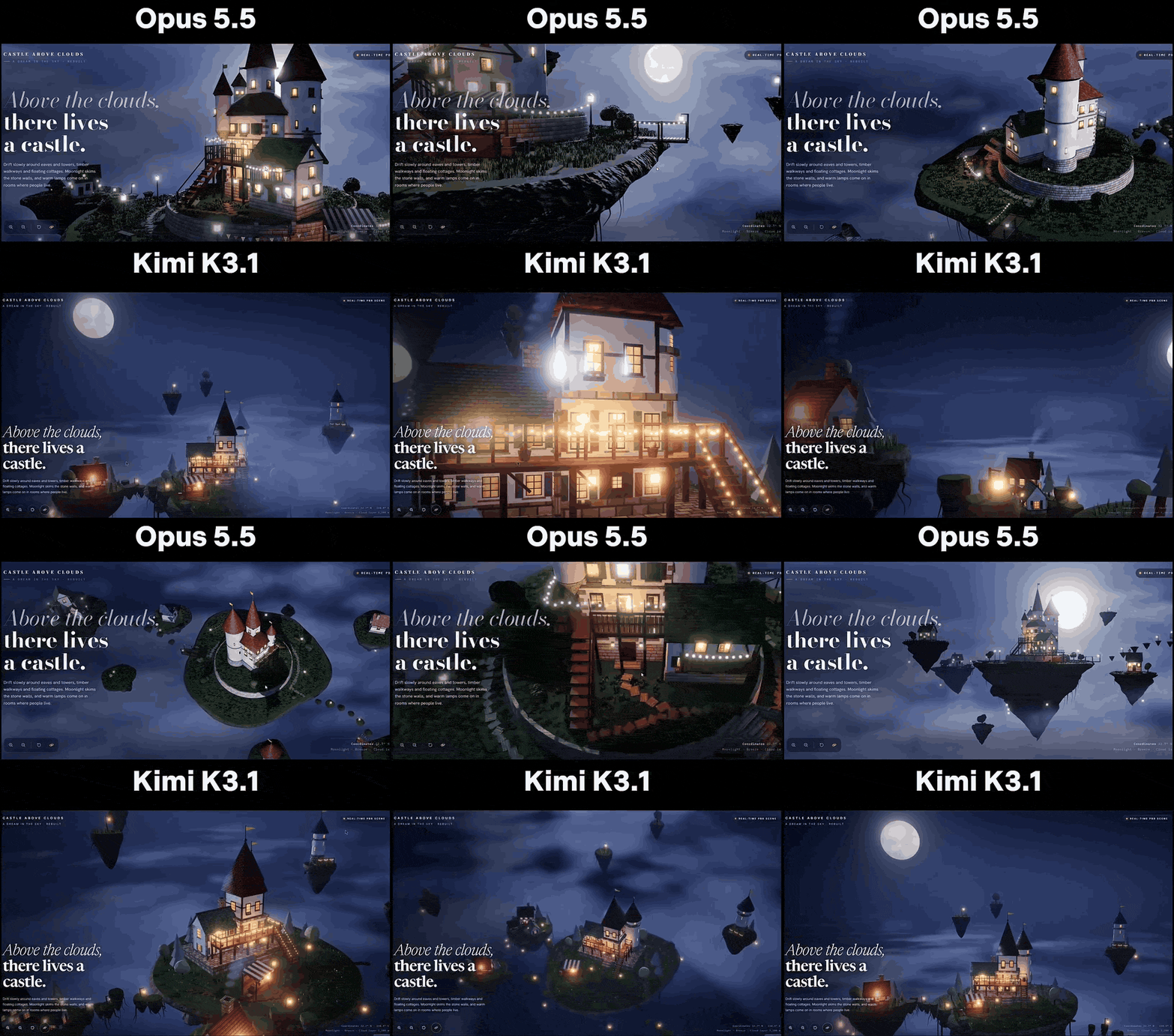
Last night, X was completely flooded by the newly released Kimi K3.1 Pro!
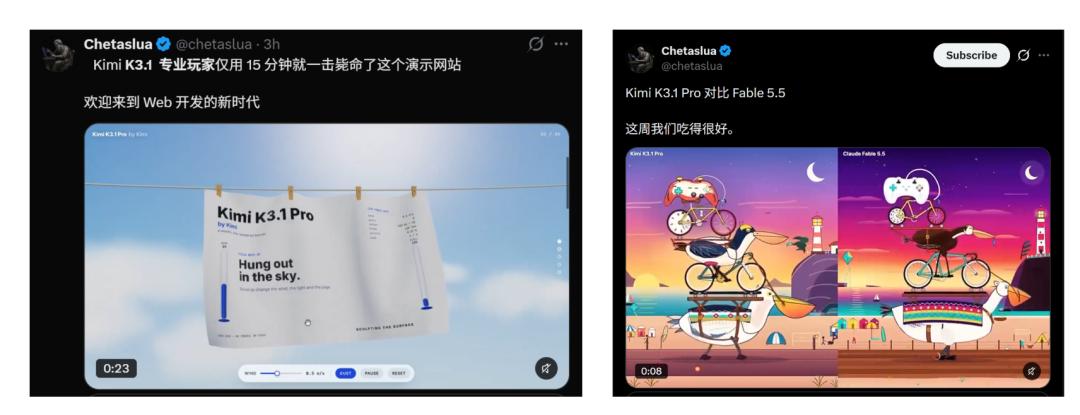
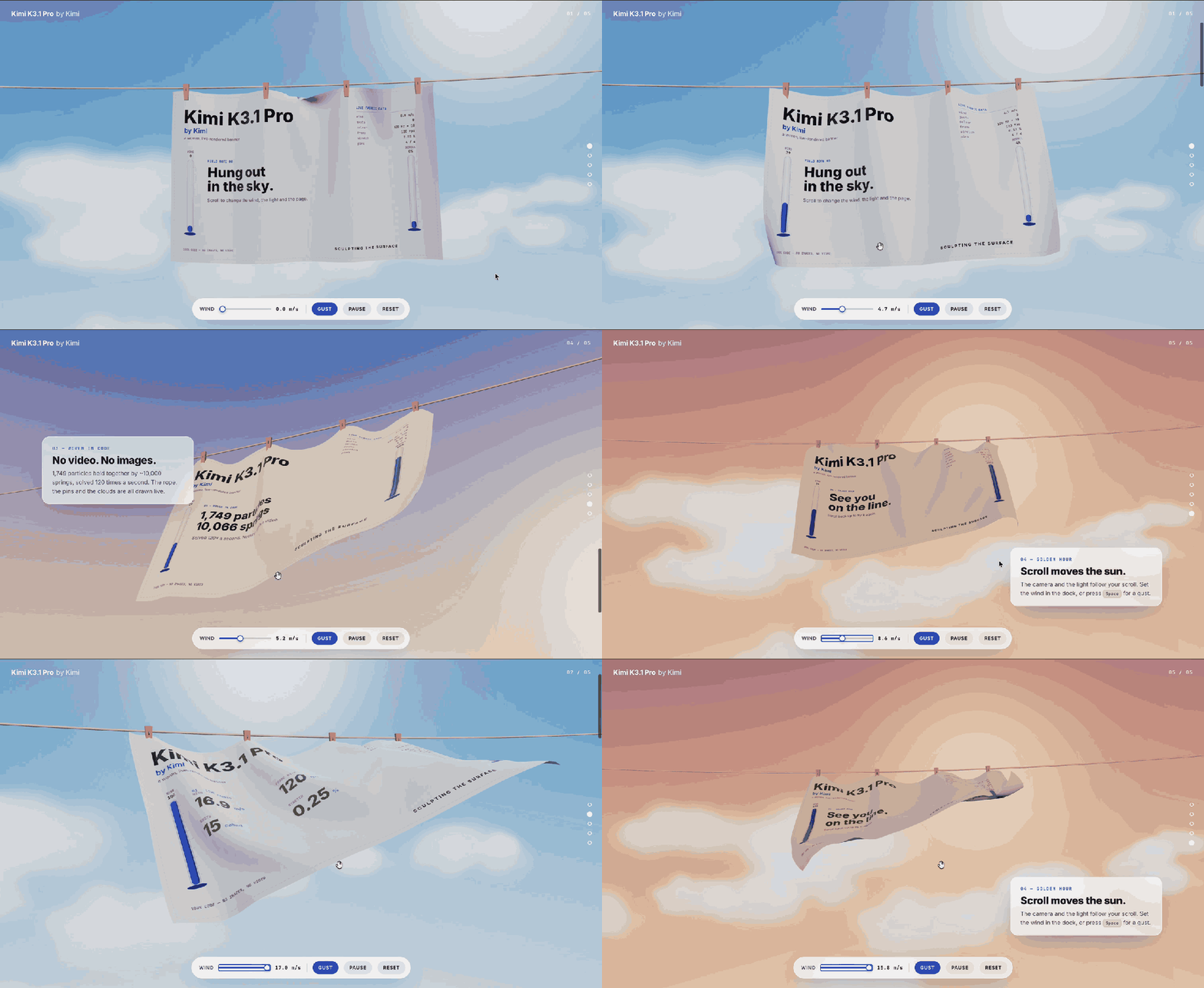
Foreign developers exclaimed: Welcome to the new era of 3D Web development.
Previously, the top 10 AI rankings were almost entirely dominated by US companies. In contrast, domestic large models from China had been relatively quiet for a period of time.
Some people sighed: All the domestic large models released recently are "Flash" models that focus on cost performance, where are the truly competitive "Pro" versions?
Many people are asking: Have domestic large models fallen behind?
Today, Kimi breaks the silence — Kimi K3.1 Pro is here!
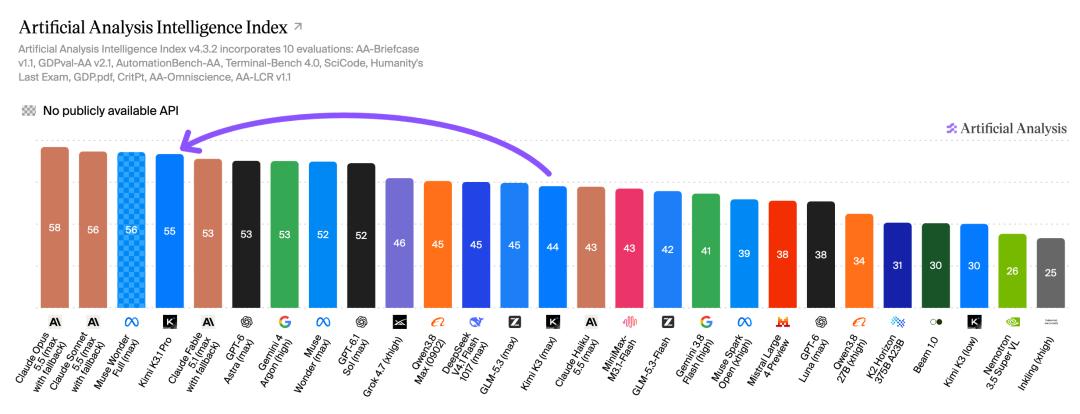
The well-known AI evaluation institution Artificial Analysis also released the results: K3.1 Pro ranks 4th in the Global Intelligence Index with a score of 55, a sharp increase of 11 points compared with the previous generation.
On Terminal-Bench 4.0, which tests the actual combat capability of Agent, its score even soared from 13% to 65.7%, less than 1% behind Opus 5.5!
Artificial Analysis also put forward a heavy judgment: Once the weights are released, K3.1 Pro will top the open-weight model list, and the gap between open-source and top closed-source models will shrink sharply from 12 points to 3 points!
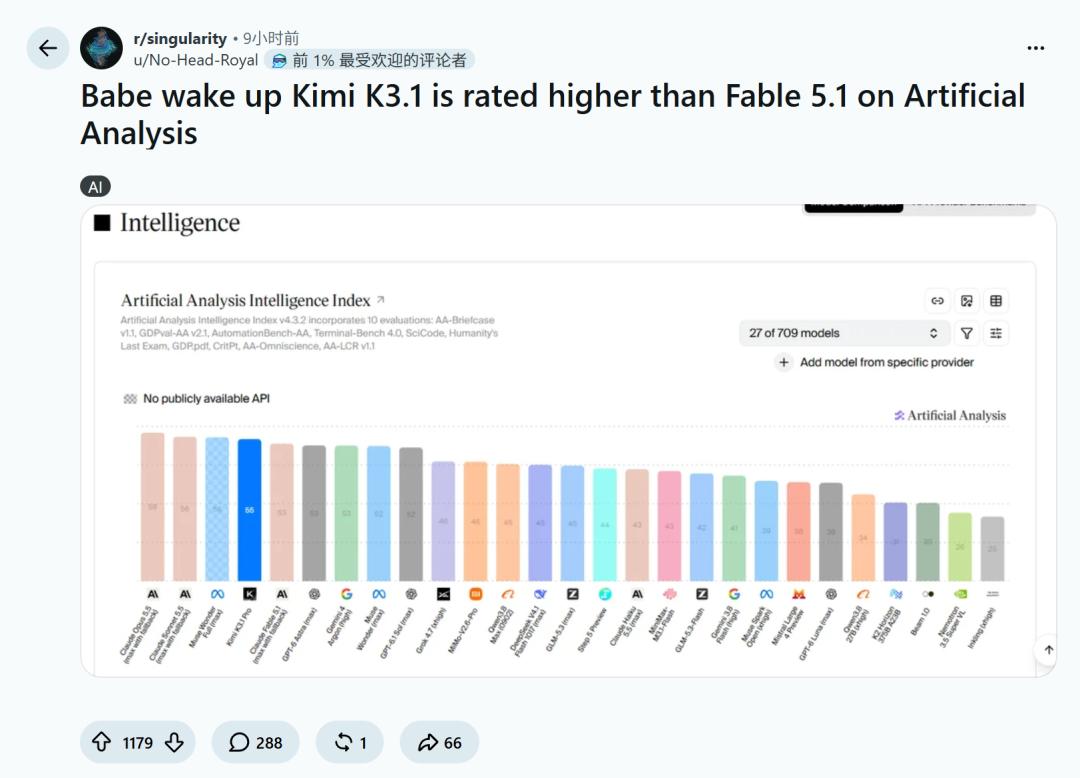
This morning, Reddit has been flooded with this benchmark result: Kimi K3.1 has surpassed Fable 5.1!
This time, domestic large models have really kicked open the door to the global first echelon.
The king of domestic large models is back!
What Kimi brought this time is not a transitional version, but a real hard core product.
This is the most powerful 3-trillion-parameter model to date, supporting a context window of up to 1 million tokens.
Its appearance tells the world: China is back, the king of domestic large models is back!
In various hardcore tests, the performance of K3.1 Pro is directly comparable to the top overseas model GPT-6 Astra! What's more surprising is that its cost is only one fifth of Astra's, which is 80% cheaper!
Therefore, the positioning of K3.1 Pro is very clear: to be the most rational choice among cutting-edge models.
Moreover, in real scenarios, to complete challenging tasks, you still have to rely on larger models. For example, although the benchmark test scores are close to Opus, in real scenarios, larger models like Fable often show stronger insight, creativity and writing ability.
After all, only highly difficult reasoning tasks can show the true ability of large models.
This time, K3.1 Pro is post-trained based on K3, and Moonshot AI has greatly increased the computing power investment in reinforcement learning.
In order to realize joint training across hundreds of downstream fields, they have polished the entire technical stack layer by layer, from the RL framework, long context reasoning, sandbox, to the scheduling system and environment quality inspection platform. The goal is to turn every additional unit of computing power into real capabilities.
As a result, on code, Agent and knowledge benchmarks, K3.1 Pro has reached or approached the level of the strongest closed-source models.
On Terminal-Bench 4.0, which examines Agent's ability to work independently in real terminals, it scored 65.7 points, and under three different thinking intensities, it all falls on the Pareto frontier of "performance vs. single task cost".
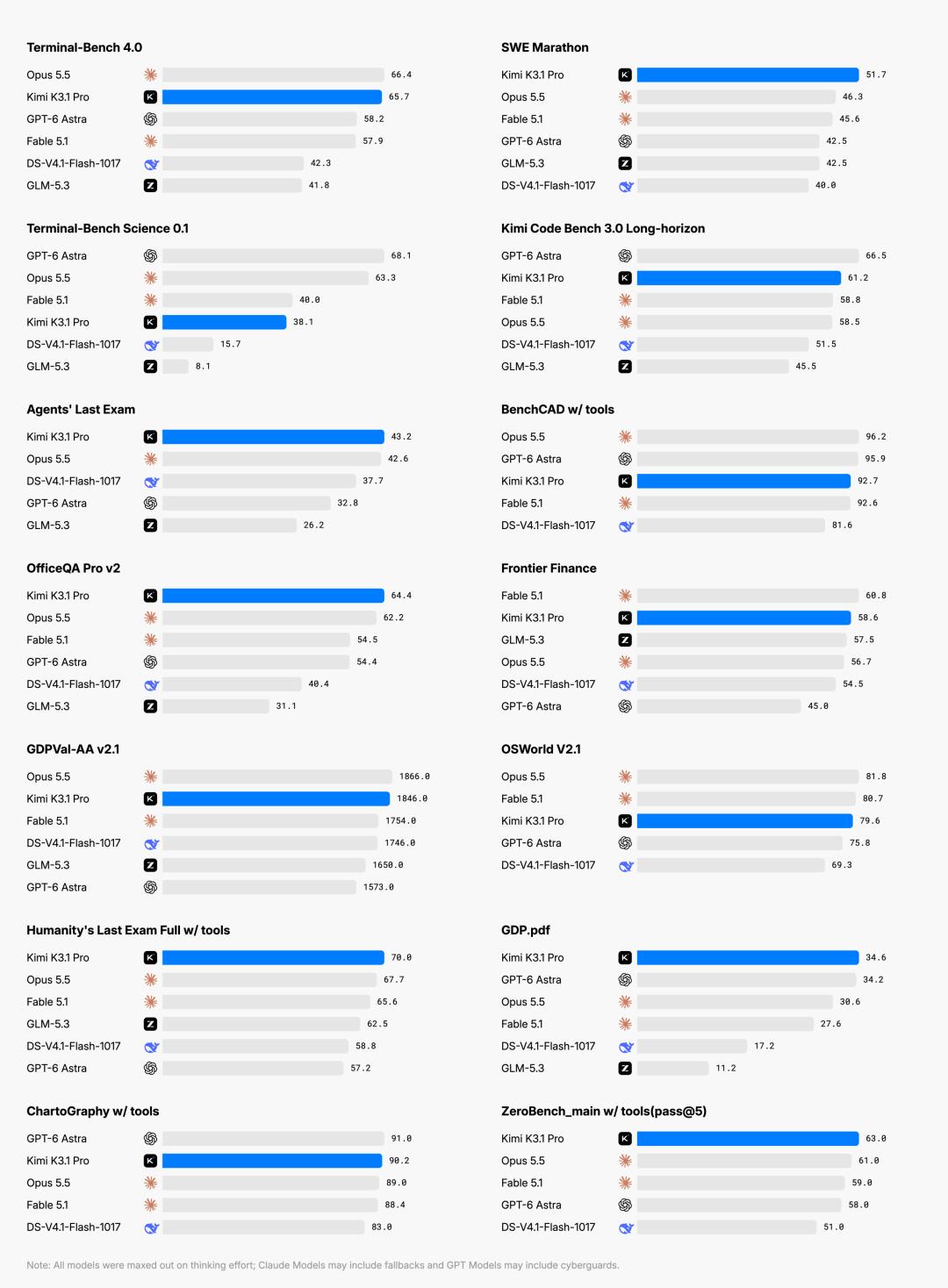
In other words, for the same cost, it can get the most work done; for the same task, it costs the least.
Kimi also thoughtfully launched the high-speed version model Kimi K3.1 Pro Highspeed, which maintains the same intelligence level but the output speed is directly increased by 3 times.
However, the benchmark score is only a ticket to the game. No matter how close the scores are on the ranking, the gap will be widened when it comes to real practical work —
The more difficult the task is, the more it depends on the inherent foundation of the model itself, which is exactly the home field of large models.
Next, let's take a look at how K3.1 Pro performs in the real workflow.
Code model, aesthetic experience greatly upgraded
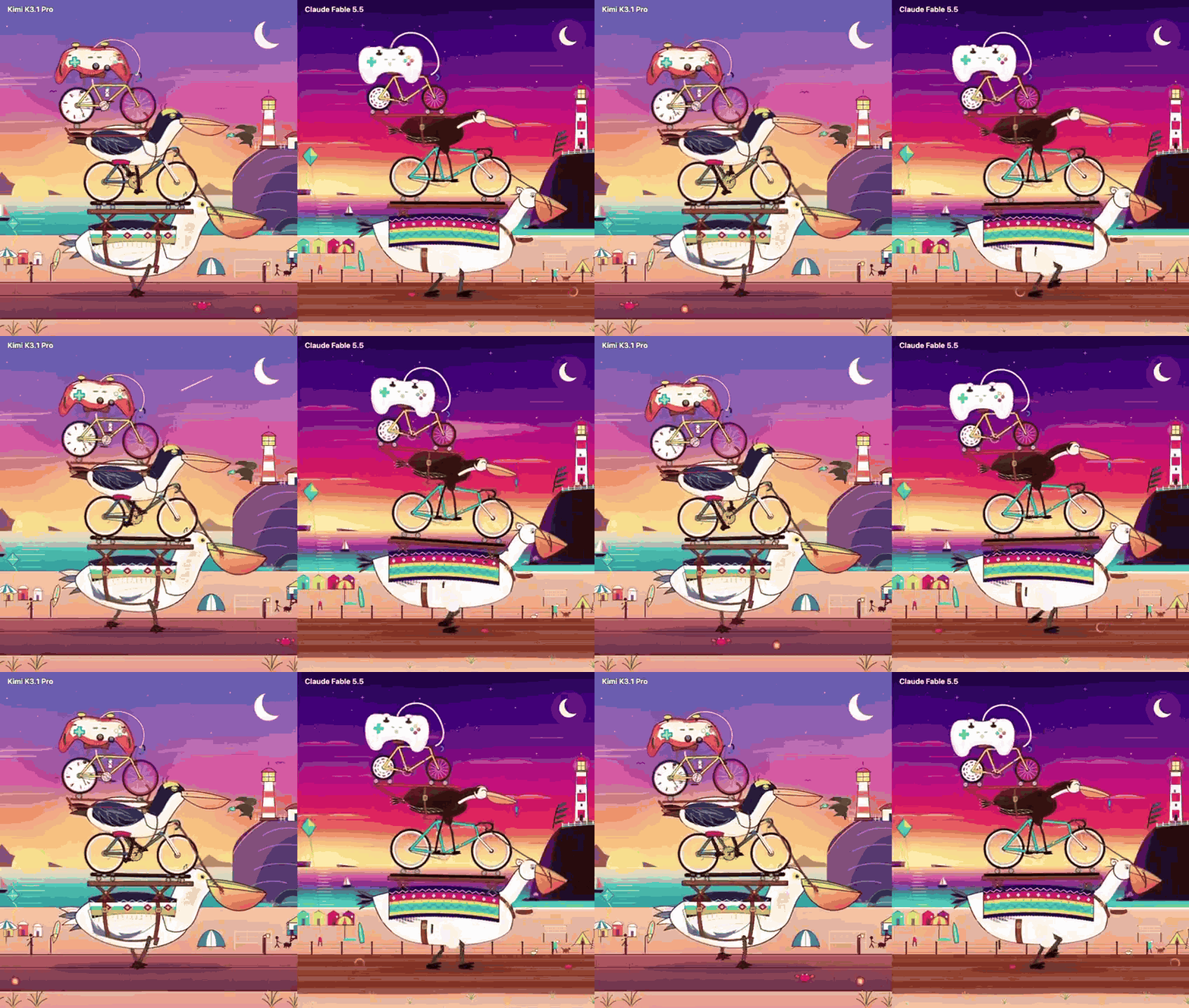
It is reported that there is a notable change in K3.1 Pro: Aesthetics has become a capability of the model.
The question Kimi wants to answer is — can the code model produce beautiful outputs?
This time, whether it is front-end pages, Three.js interactive scenes, or 3D assets, it has achieved significant improvements in composition, typesetting, dynamic effects and completion quality.
It can also use game engines such as Unity, Unreal Engine, and Godot. Without relying on the MCP connector, it can write scripts to directly drive Blender, SolidWorks, and Rhino for modeling.
Next, let's carry out a series of hardcore practical tests to see how capable the "large and aesthetic" K3.1 Pro really is?
Practical test: Text → Blender → Webpage, one-stop 3D asset generation
This is the new flagship feature of K3.1 Pro. The official says it can infer shape, proportion and spatial relationship from a piece of text, a sketch or a reference image, directly write Blender scripts for modeling, and then connect to Three.js or game engines.
Let's verify whether this entire workflow can be truly realized.
After inputting a hand-drawn three-view sketch, in 40 minutes, it outputs: 608 lines of Blender scripts, editable .blend file, 1.7MB GLB file, and a webpage that can be opened with a double-click.
The wingspan of 8.0, total length of 6.2, and total height of 2.4 written on the sketch are generated as 8.000, 6.199, and 2.400 respectively, with a difference of only 1 millimeter.
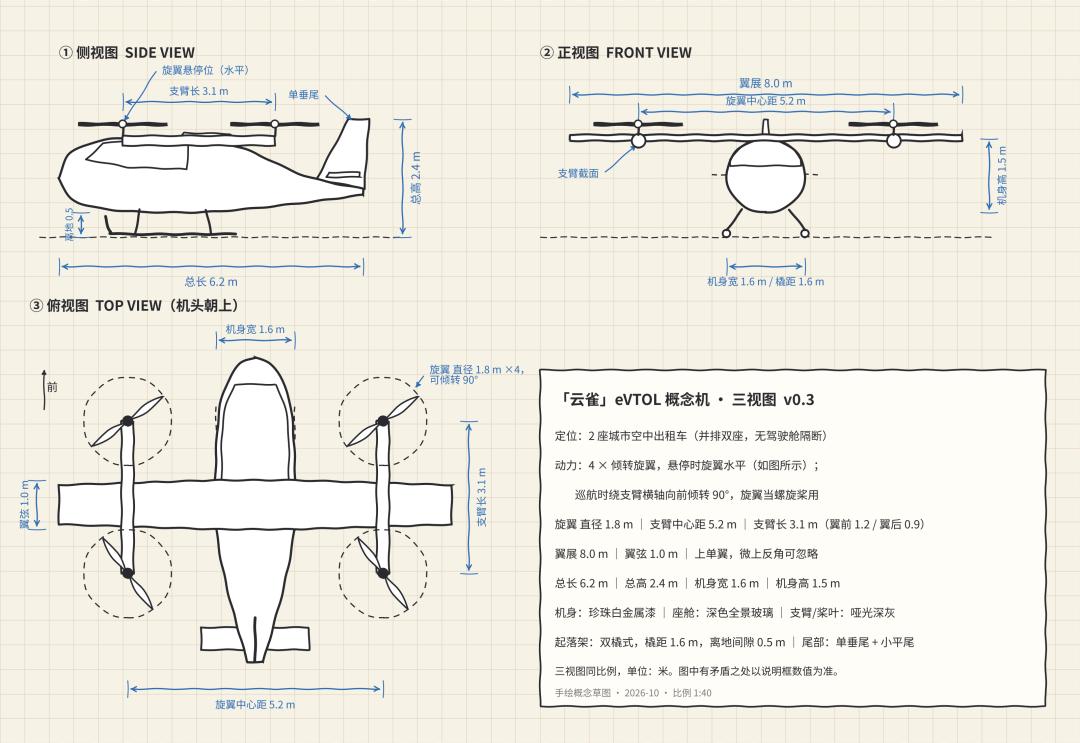
After that, it starts a series of smooth operations.
Before starting, K3.1 Pro will first test the new interface of Blender 5.2, and confirm that it is available before writing the official script; it directly writes the acceptance criteria as assertions, and the export will not be allowed if the rotor diameter difference exceeds 1 millimeter; after rendering, it will modify the result against the sketch for a round; after finishing the webpage, it even opens the browser to take two screenshots for itself, and only then considers the task completed.
It marks off the six to-do items one by one by itself.
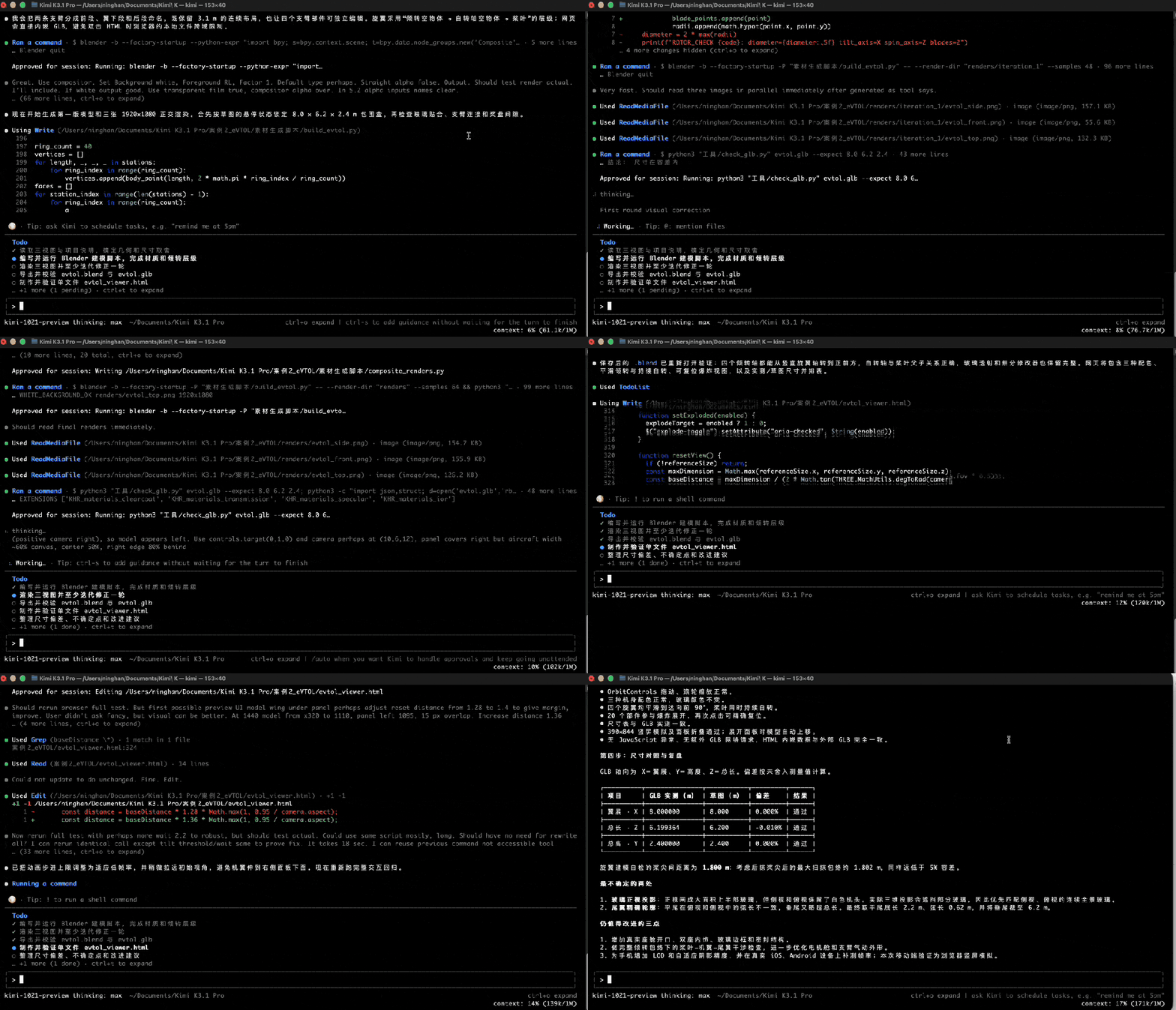
The fuselage is a streamline generated by spline interpolation, the cockpit glass is a curved surface attached to the fuselage, the blades are twisted, and the tilting hierarchy of the four rotors is perfectly consistent from Blender all the way to the browser. When you pull the slider to the end, the rotor will indeed tilt 90 degrees forward around the support arm.
Throughout the whole process, K3.1 Pro never touched MCP and did not use any external model libraries.
When it was halfway through writing, only 6% of the 1 million context window was used. 40 minutes is not its upper limit, it is just that the difficulty of this sketch is only at this level.
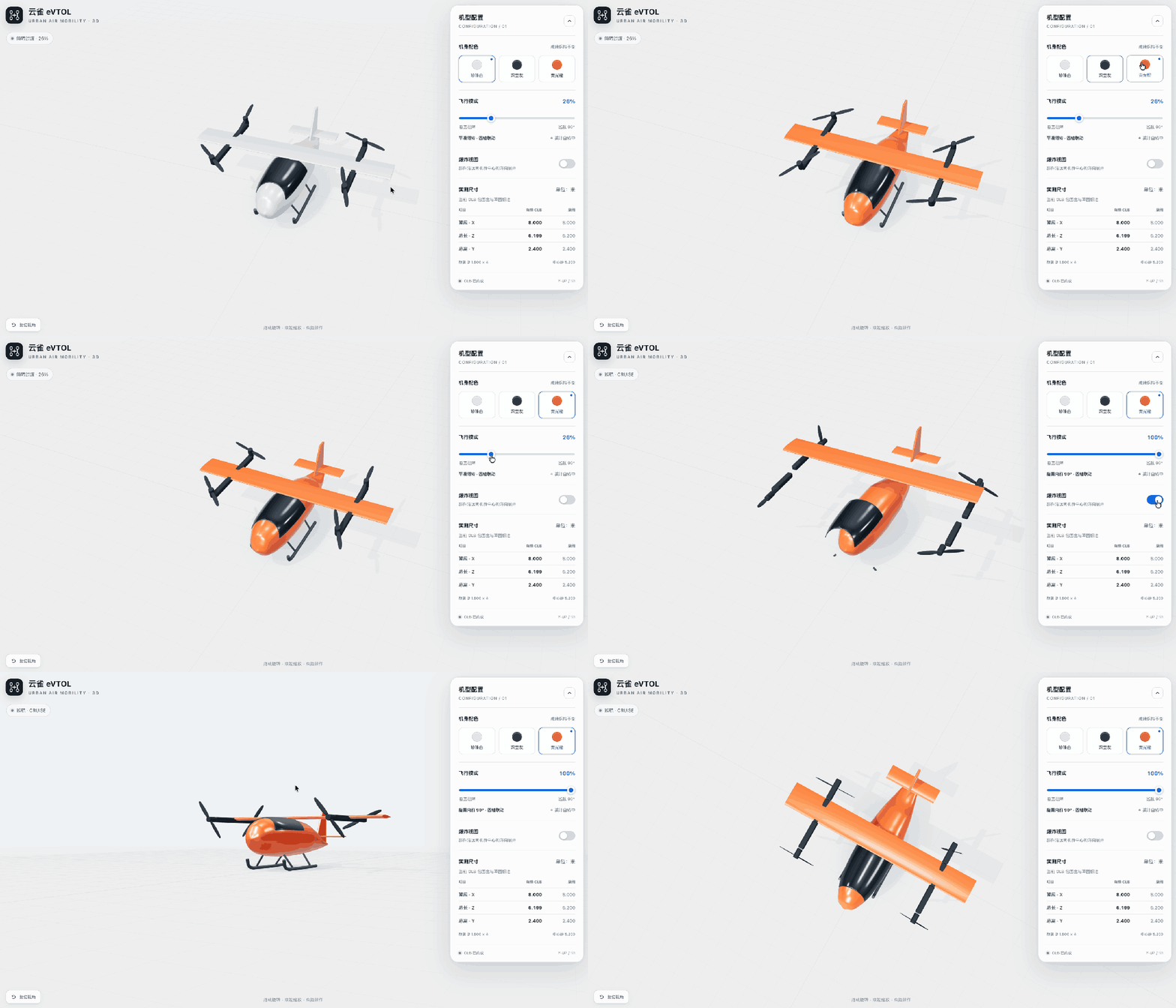
What is even more exciting is that this whole set of work can be done without installing Blender locally!
The 3D Make function has been launched synchronously on kimi.com and the Kimi app. Just throw the same sketch and materials directly into Kimi, and enter a command like "refer to these materials and make its 3D model", and it will start working in the cloud, which also took nearly 40 minutes this time.
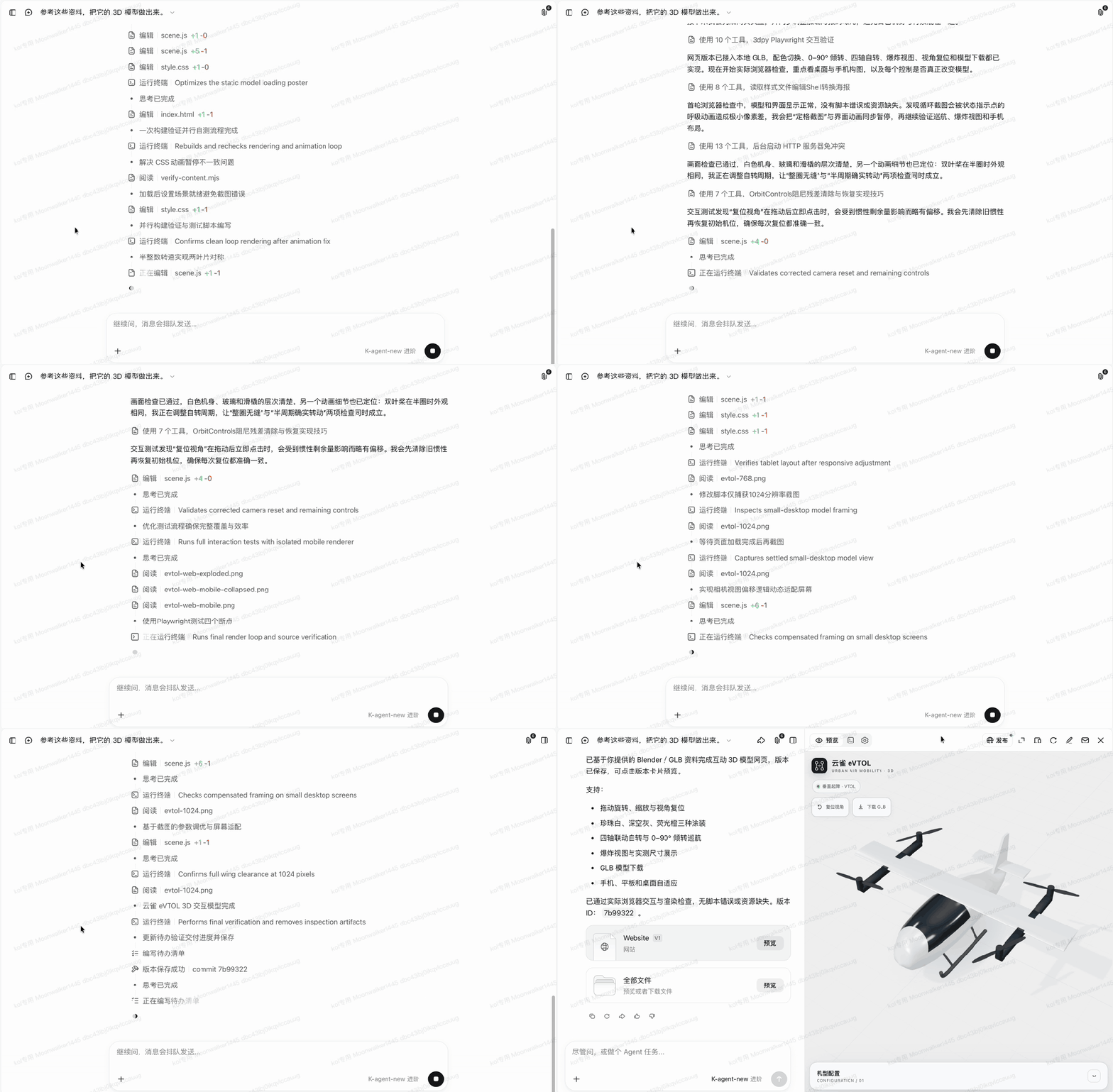
It modified scene.js and style.css, ran the terminal to rebuild, found that the two blades were asymmetric when rotating, and changed them to half-integer rotation speed; fixed the inconsistent pause of CSS animation; added a "ready" state before taking screenshots when the scene was not fully loaded.
Finally, it opened the browser to test everything, reported that "there are no script errors or missing resources", and then submitted the final version.
The finished work is in the right window, you can rotate it, change its color, drag the tilt slider, and if you are not satisfied, you can directly modify it in the conversation, and it will continue to adjust for you.
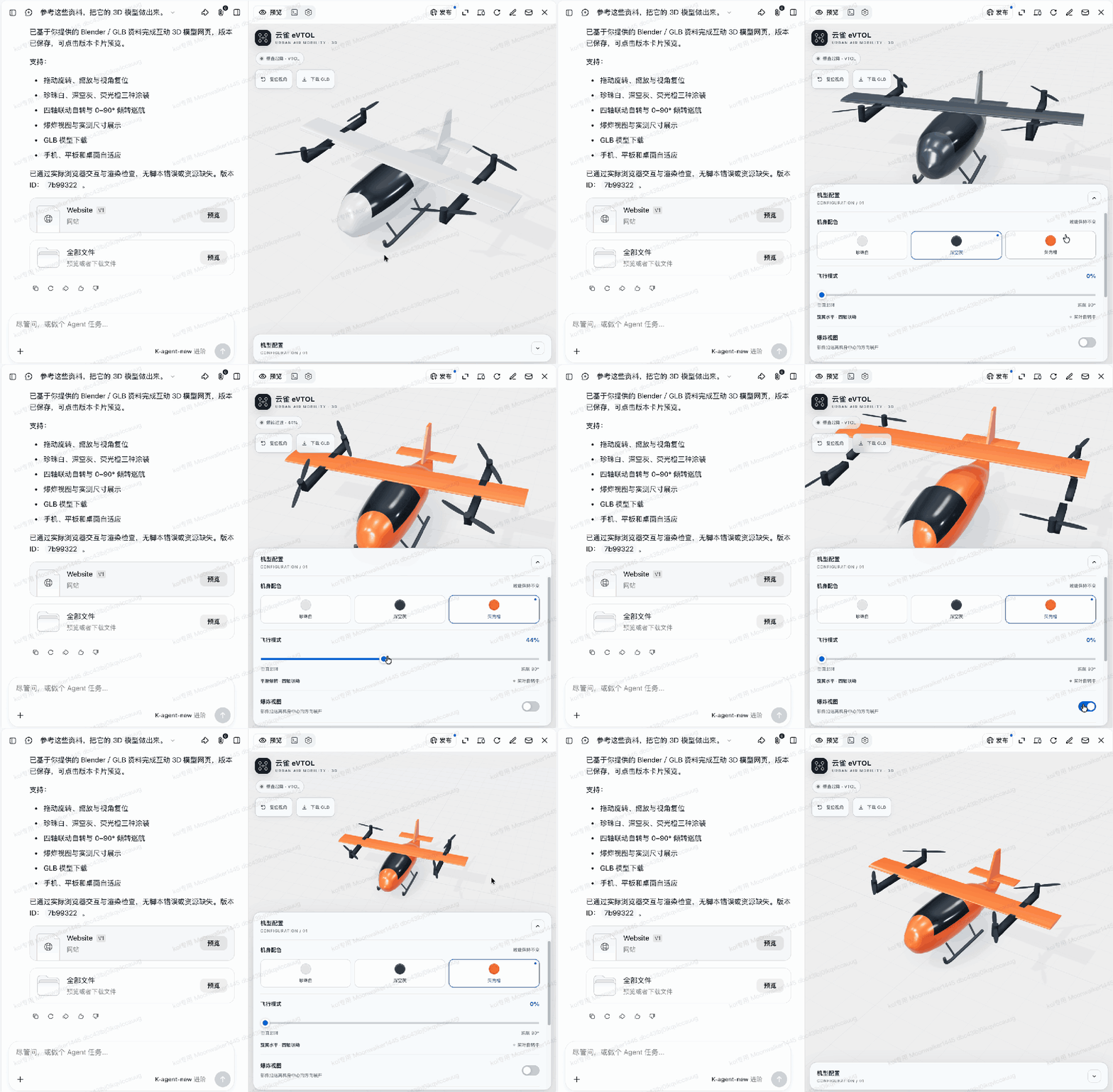
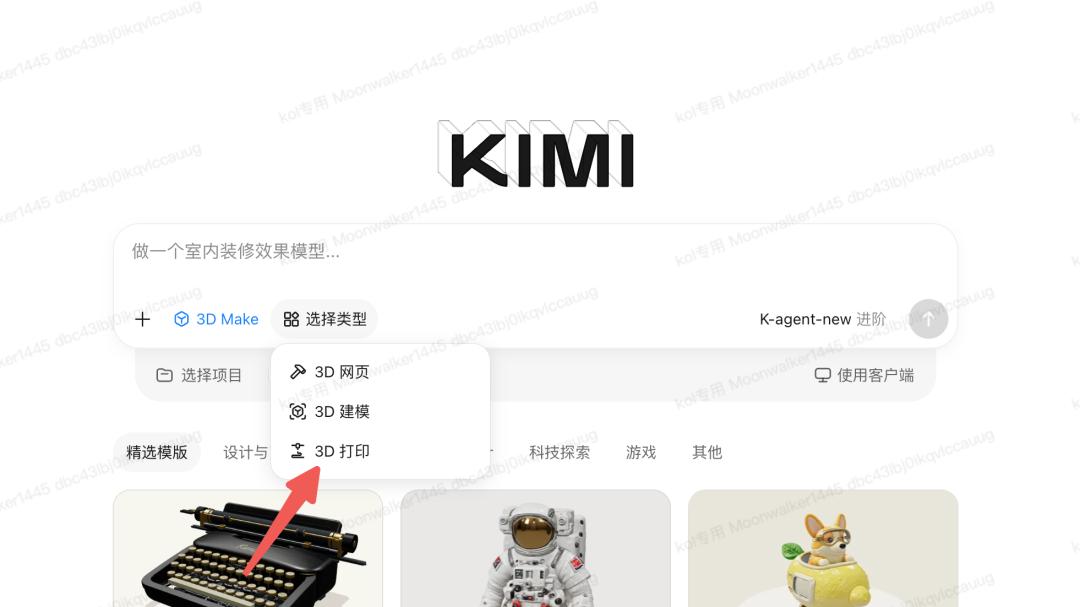
Using 3D Make, you can preview and edit online, publish it as a webpage with one click, download the GLB file for direct 3D printing, and also export videos or live photos to post on social platforms.
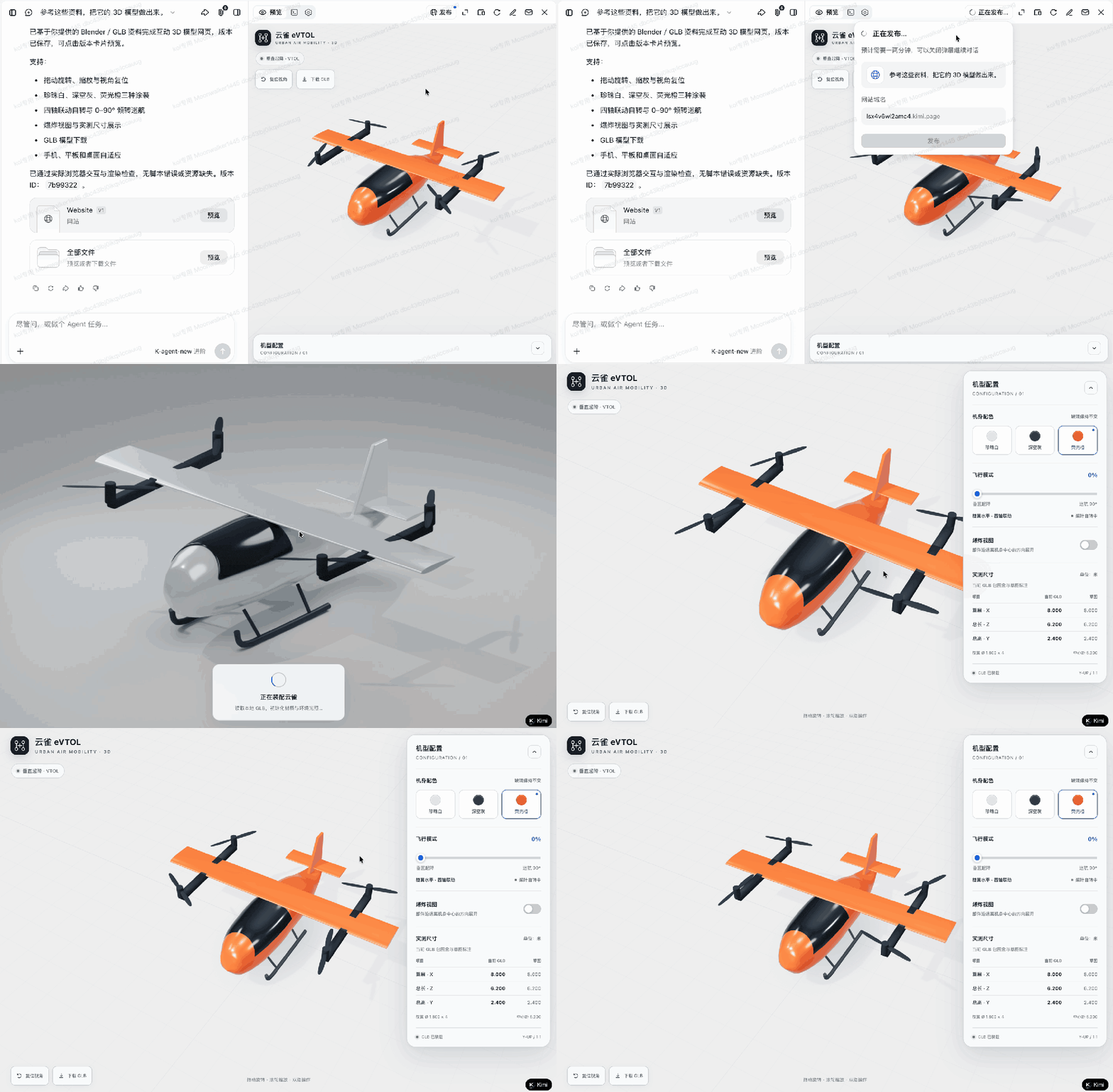
https://lsx4v6wl2amc4.kimi.page/
In the past, this required three people: a modeler, a front-end developer and an operator to complete, but now K3.1 Pro can finish all the work with just one input box.
A large number of users' practical tests have also proved that the aesthetic performance of K3.1 Pro is amazing.
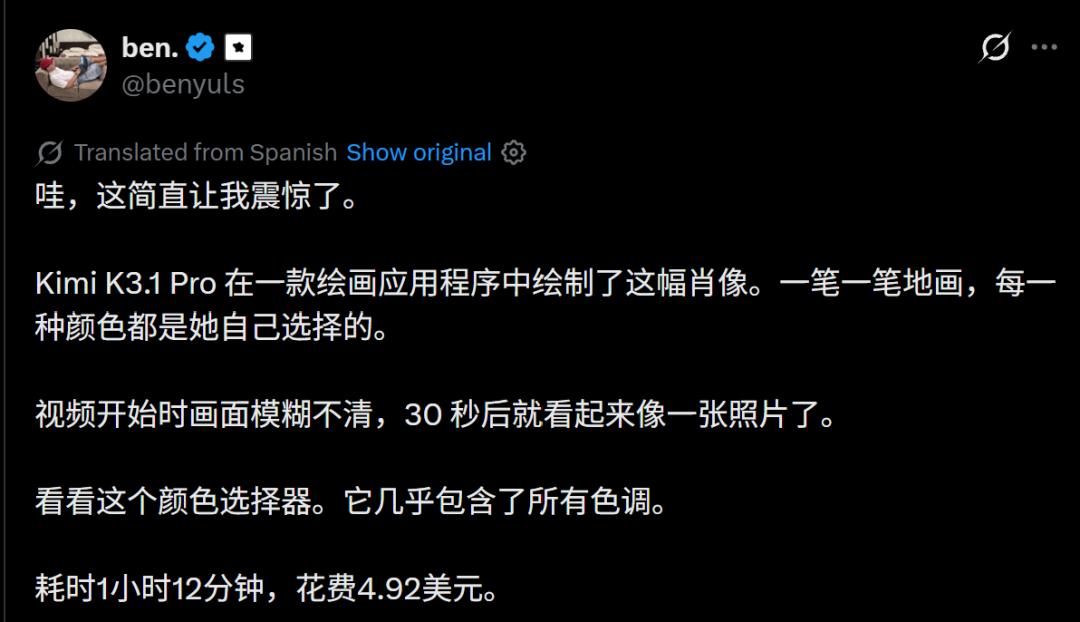
It only spent 4.92 US dollars to draw a portrait in a painting application.