The first AI theatrical film has garnered lackluster box office returns, yet ByteDance and Kuaishou are still pressing ahead to make inroads into the big screen market.
On October 23, *Sanxingdui: Past of the Future* was officially released in theaters across China. As the first AI hyper-realistic film in China to obtain the theatrical distribution license, it has carried high expectations from the industry ever since its release date was announced. However, these expectations have not translated into strong ticket purchasing enthusiasm by the time of its premiere.
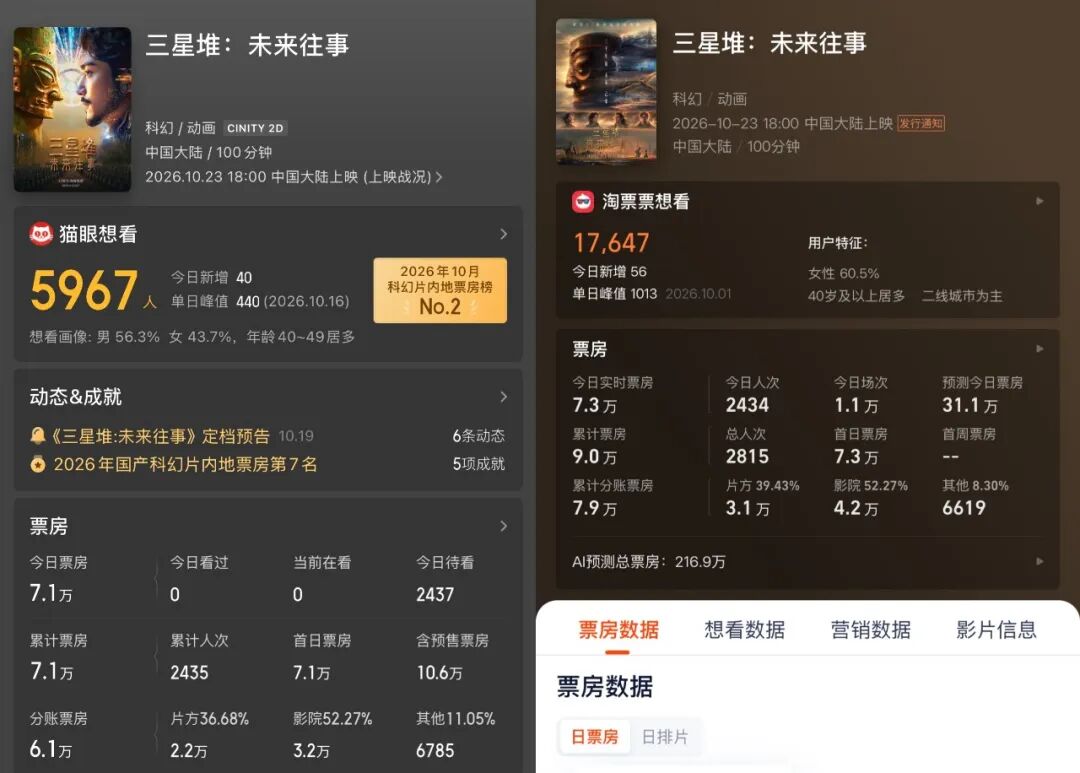
Prior to its release, the number of users marking "want to watch" on Maoyan was less than 6,000, and around 17,600 on Taopiaopiao. The total pre-sale box office of the two platforms was about 144,000 yuan, and Beacon Professional Edition predicted that the first-day box office would only reach 311,000 yuan, with a total box office of 2.169 million yuan. For a film with a production cost of tens of millions of yuan, such a forecast is obviously not optimistic.
The film's market performance forms a sharp contrast with the hype it received in the capital market. After the release date was officially announced at the end of September, Bona Film Group's share price once hit the 10% daily limit; after the National Day holiday, the company's share price continued to rise. The industrial imagination brought by AI films has received a round of market response, but whether audiences are willing to pay for them remains an unsolved problem.
Obtaining the "Dragon Label" (film public release license) means that there are reference cases for the production and review process of AI films entering theaters. However, whether a film can recover its costs still depends on whether the story, visuals, and promotion can impress the audience.
Looking across China, most of the AI film and television projects that have generated commercial revenue reach users through mature IP, revenue sharing on video platforms, or TV stations. The paid monetization path for AI film and television has not been fully established yet.
Even though the market performance of the first AI film released in theaters is lukewarm, video model companies such as ByteDance and Kuaishou have not given up on the big screen. They are striving to enter the film production process through higher-resolution generation capabilities, cooperation with professional studios and film and television IPs, to fully innovate the production methods of the film industry.
01
AI Films Land in Theaters
Capital Cheers, While Audiences Remain Cautious
*Sanxingdui: Past of the Future* is produced by Bona Film Group, with a runtime of 100 minutes and is filed as an animated film. In April this year, the film announced that it had obtained the film public release license issued by the National Film Administration.
Previously, AIGC has been applied to the production of short dramas, manhua dramas, and long dramas, but the official release of a full-length AI-generated feature film in national theaters is still a groundbreaking move.
To complete this film, Bona has invested nearly two years in technical exploration. According to media reports, the production team generated more than 1.2 million base images, carried out hundreds of full-version iterations, and set up 17 professional divisions including cinematography, lighting, and art by referring to the traditional live-action film crew, with nearly 100 participants.
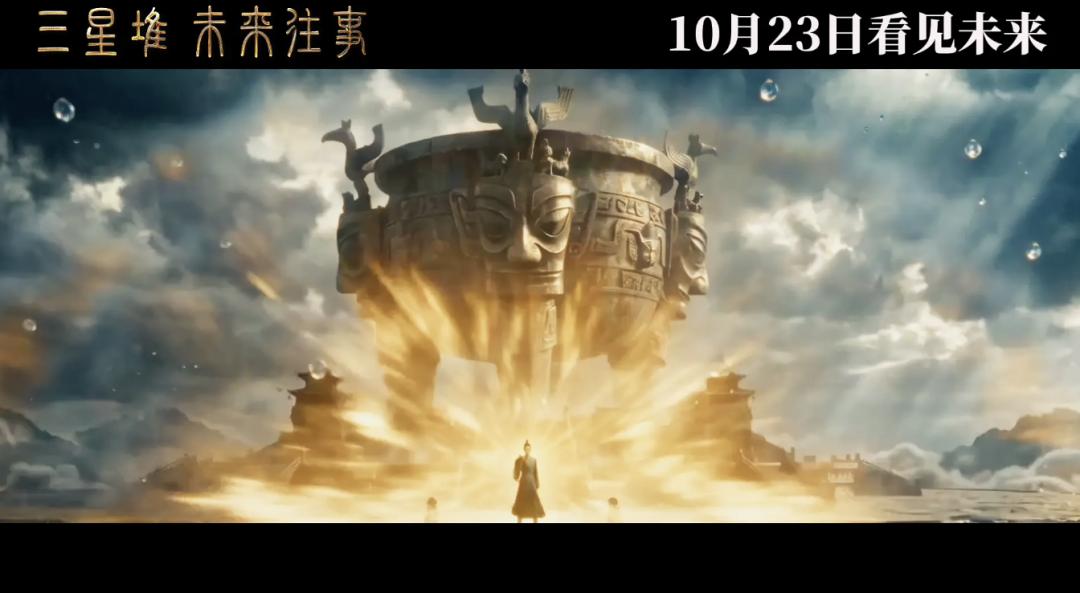
Quji Xiaojiang, head of Bona's AIGMS Production Center, once revealed to the media that this is a film with a cost at the level of tens of millions of yuan. He also said that if *Sanxingdui* was shot in the traditional live-action way, the cost could reach 800 million to 900 million yuan. The huge cost gap between the two production methods is an important starting point for Bona to try AI films.
However, AI generation technology has not made the production process simpler. After the team obtained the public release license, a new version of the model was launched, so they re-upgraded the film's visuals. From the submission for review in September 2025 to subsequent revisions, there were more than 100 minor adjustments.
The model can generate shots quickly, but the consistency of character images, shot transitions, and the overall audio-visual effect still require the team to repeatedly screen and adjust. The improvement in generation speed does not mean that the production cycle and manpower input can be greatly reduced.
Even though the film has just been released, Bona Film Group's share price has already seen a wave of gains in advance.
On September 27, Bona Film Group announced the release date of *Sanxingdui: Past of the Future*, and the company's share price hit the 10% daily limit the next day. After the National Day holiday, Bona Film Group's share price rose twice on October 9 and 12, with increases of 9.94% and 10.04% respectively on the two trading days. The label of the first AI theatrical film has brought new market imagination space to a film and television company under operating pressure.
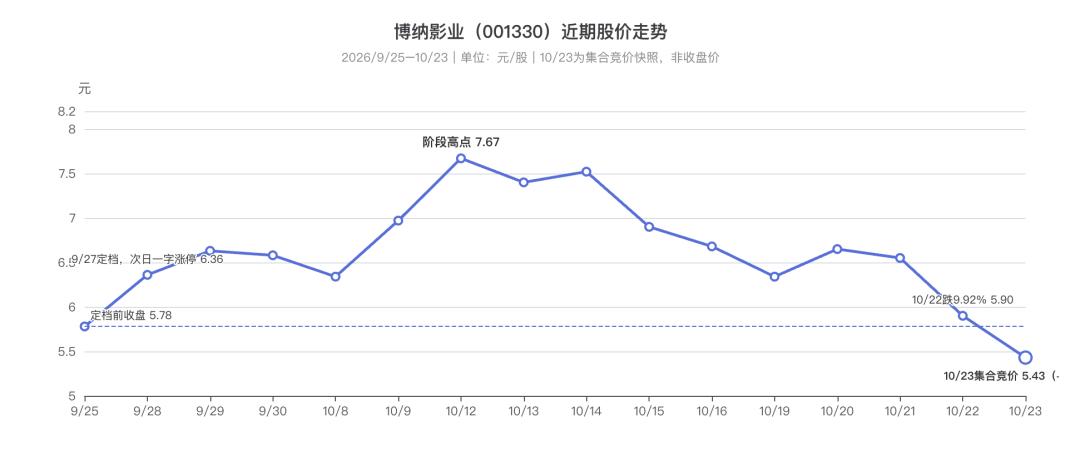
But this round of gains did not continue. As pre-sale results failed to improve for a long time, Bona Film Group's share price began to correct. On October 15, the company's share price fell by 8.24%; on October 22, it almost hit the limit down, dropping by more than 20% from the high point on October 12.
The capital market can trade the imagination space of AI films in advance, but for a specific film, it ultimately has to return to the market performance of the work itself.
At the same time, Bona has not slowed down its layout of AI films. In October, the company announced that the shooting of its next AI film *Off-Plan: Guanghan Operation* has started, and it is scheduled to be released in the first half of 2027. Before the first AI theatrical film has officially delivered its full box office results, new projects have already been launched, and the industry's exploration of this technical route is still ongoing.
From the production process to commercialization, AI films still need to cross several thresholds: whether the improvement of generation efficiency can bring stable finished film quality, whether the reduction of production costs can be transformed into actual cost advantages, and what can attract audiences to pay for the works after the technical novelty fades away.
*Sanxingdui: Past of the Future* has made it a reality for full-length AI films to enter theaters, but this is only a starting point for industrial development. For the entire industry, the next key is not only to continuously launch new works, but also to find a mutually supportive balance between technical capabilities, content quality, and commercial returns.
02
AI Film and Television That Profited From IP and Platforms
Cannot Support Theatrical AI Feature Films
According to the relevant report of DataEye Research Institute, the market size of domestic AI dramas and manhua dramas is expected to exceed 400 billion yuan in 2026, a year-on-year increase of 138%. The rapid expansion of the AI film and television industry is already an undisputed industry trend.
With the reduction of production thresholds, a large number of AI short dramas and manhua dramas have entered users' daily consumption through free or advertising-supported models. However, the novelty brought by AI can attract clicks, but it is difficult to become a reason for users to pay.
A survey jointly conducted by the Social Survey Center of China Youth Daily and Wenjuan.com shows that among 1,334 respondents, 75.6% have watched AI film and television dramas; among those who have watched them, 65.1% think the overall viewing experience is average, watchable but not amazing, and they occasionally get distracted from the plot. Empty expressions, unnatural images, and stiff lines are the problems mentioned more frequently by respondents.
This set of data shows that audiences do not lack opportunities to access AI film and television, but exposure does not mean they are willing to keep watching, let alone willing to pay extra for it.
The big theater screen will further amplify the shortcomings in production.
Director Li Tianang once gave an example in an exclusive interview that AI-generated characters may have the problem that the facial details change as soon as the camera moves. On small mobile phone screens, such problems are not necessarily easy to notice; after being projected on the big screen, the flaws in character faces, movements, and shot transitions will become more obvious.
The viewing scenarios of short dramas and manhua dramas are relatively relaxed, and audiences can swipe away at any time; movies require audiences to arrange their time in advance, buy tickets, and maintain their attention for a long time. The work needs to continuously provide visual and narrative attractiveness, and the audience's requirements for character performance, picture coherence, and plot completeness will naturally increase.
Looking back at the existing profitable AI film and television projects, most of them rely on mature IP and existing distribution channels, and reach audiences through platform revenue sharing or free coverage. Their commercial performance is inseparable from the original audience base and distribution channels of the works. This is a completely different business model from making audiences pay separately for AI works in cinemas.
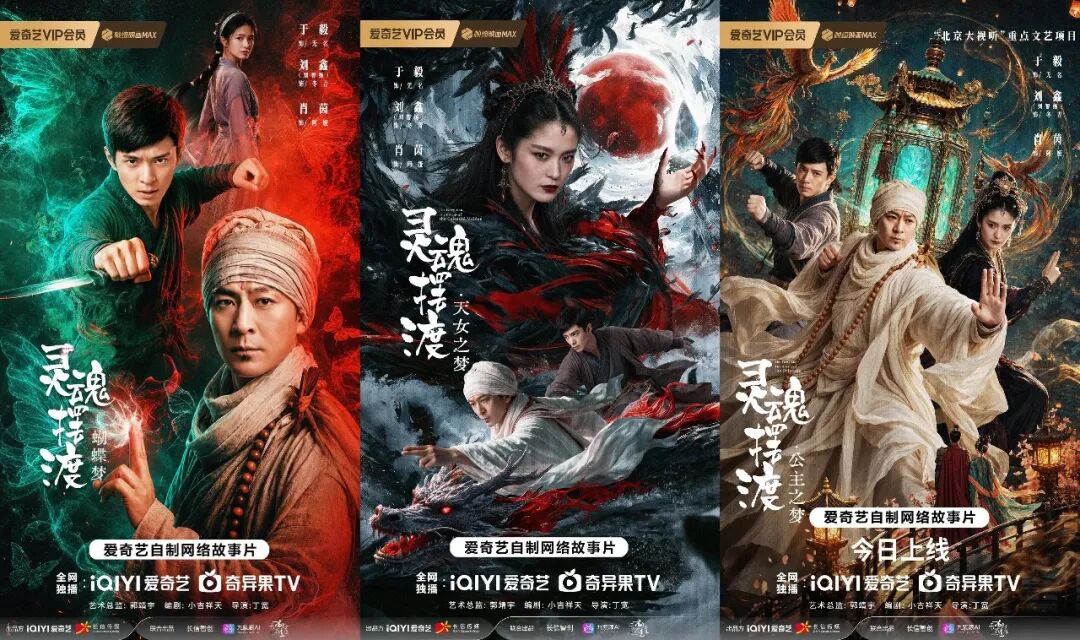
The "Floating Life Dream" series of *Soul Ferry* launched by iQiyi in cooperation with Changxin Media is a representative case. The series includes three AIGC network feature films: *Butterfly Dream*, *Heavenly Maiden's Dream*, and *Princess Dream*. According to the data released by iQiyi, as of October 3, the cumulative revenue-sharing box office has exceeded 10 million yuan, and the first two films recovered their production costs in the first week of their release.
This achievement is not only the result of AI production technology. The series is backed by the existing *Soul Ferry* IP, with Guo Jingyu as the art director, Xiao Jixiangtian in charge of screenwriting, and the original series actors also participating in image authorization and dubbing. It not only retains the audience base accumulated by the original work, but also reaches users through iQiyi's existing content distribution channels.
More importantly, it adopts the revenue-sharing model for online feature films, so audiences do not need to decide whether to pay for an unfamiliar AI film first as they do for new theatrical releases. The familiar IP and low threshold for first viewing provide a more favorable starting point for the work.
*Post-Journey to the West* provides another reference case.
This AI long drama was launched on Hunan TV's prime time and Mango TV on August 31, 2026. On the premiere night, the peak real-time viewing rate of Kuyun reached 0.3384%, ranking first among provincial satellite TV stations in the same time slot, becoming an important attempt for AI content to enter the traditional TV big screen.
However, TV ratings, nationwide online dissemination, and users actively following dramas are different sets of indicators. A September report from Beijing Youth Daily cited Yunhe Data showing that the online broadcast market share of *Post-Journey to the West* in early September was less than 1%. Although it received widespread attention with the label of "the first AI long drama broadcast on satellite TV", this popularity did not synchronously translate into the same level of online drama-watching performance.

After the series was broadcast, Mango Super Media hit the 10% daily limit for two consecutive trading days, with its market value increasing by more than 10 billion yuan. The market is paying attention to the technical capabilities and industrial prospects represented by the first AI long drama broadcast on satellite TV; whether audiences are willing to keep following the drama still needs to be answered by subsequent broadcast performance and word-of-mouth.
Putting these two cases together with *Sanxingdui: Past of the Future*, we can see that the consumption scenarios they face are different. *Soul Ferry* has mature IP and platform revenue-sharing channels, *Post-Journey to the West* gains coverage through satellite TV and video platforms; *Sanxingdui: Past of the Future* needs to attract audiences to the cinema with its original story, technical labels, and promotion before its official release.
These differences do not mean that AI films have no market, nor can they prove that free content will inevitably squeeze theatrical demand. But for a new film, the title of "the first AI theatrical film" can create attention, but it may not be enough to become a reason for audiences to buy tickets. How to turn technical demonstration into a paid viewing experience worth the money is still a question that needs to be answered.
03
Model Makers Target the Big Screen
Competing for Cinema-Grade Production Capabilities
While the theatrical box office of AI films remains to be tested, model manufacturers are looking for another path to enter the film and television industry. Instead of directly betting on whether an AI film will be a hit, it is better to embed generation capabilities into the existing production process first, provide more controllable creative tools for directors and professional studios, and then verify the usability of the technology through actual projects.
The recent product updates of Volcano Engine and Keling are reflecting this direction: the competition of AI videos has extended from generation effects to whether they can meet the requirements of professional film and television production.
The day before *Sanxingdui: Past of the Future* was released, Volcano Engine launched the first batch of enterprise trials for the Seedance 2.5 4K model, which was targeted to 20 studios and directors around the world, and bound to specific works to explore the film production needs for the big screen.

According to media reports, trial studios can first generate sample clips at 480P, and then regenerate the satisfactory shots at 4K to control production costs. In addition to improving picture details, this version also focuses on improving the naturalness of character performances, as well as the consistency between reference generation and editing.
These improvements correspond to some difficulties in AI film production: whether characters can remain stable in different shots, and whether the generated pictures can meet the big screen's requirements for details.
Volcano Engine has also been promoting AI film-related cooperation before. During the Pingyao International Film Festival on September 27, the company released the Seedance Film and Television Cooperation Plan, providing a maximum of 1 million yuan in Token subsidies for a single project to support projects such as feature films, series, animations, and creative short films.
In June this year, Volcano Engine also carried out AI video copyright cooperation with Boke Group, which is under Stephen Chow's banner. By establishing connections with film and television projects and classic film IPs, model manufacturers are also looking for opportunities to apply