With 100,000 jobs to be created in 5 years, JD is poised to tap into the "robot 4S store" business without following the conventional 4S store model.
Not content with vehicle repair, JD is determined to make a success of the "robot maintenance" business.
As early as a year ago, JD launched its robot maintenance service under the brand of "JD Service". After more than ten months of development, nearly 100 robot enterprises such as Agibot, Deep Robotics, and QD Robotics have reached after-sales maintenance cooperation with JD. JD has also launched the JoyRobocare brand for the European market, starting the global layout of its robot maintenance business.
The prerequisite for rolling out the robot maintenance business is to have a group of technicians with professional technical capabilities. JD plans to create 100,000 robot maintenance technician positions in the next 5 years, but for this emerging industry, maintenance technicians need to be trained from scratch.
In this regard, JD will promote front-line staff represented by couriers to participate in systematic training and transform into robot maintenance technicians. When robots can replace couriers to deliver parcels, letting couriers be responsible for the maintenance of robots can not only quickly build a huge maintenance team, but also provide a large number of jobs.
Elon Musk has publicly stated on many occasions that robots will be more popular than cars in the future. Now, countless enterprises have set their sights on the robot maintenance market, a budding blue ocean.
Will robot maintenance give birth to the next JD / Tuhu Auto?
Although the embodied intelligent robot industry is still immature, countless cases since the Industrial Revolution have provided sufficient references for its future development. In the field of third-party maintenance, the best example is undoubtedly the third-party auto repair shops. Making robot repair services as successful as JD Auto and Tuhu Auto is also the goal of practitioners.
After the Unitree robots made a stunning appearance at the 2025 Spring Festival Gala, Xinghuo Embodied Intelligent Robot (Jinan) Co., Ltd. targeted the robot maintenance track and quickly built a full-category robot maintenance technical system covering humanoid robots, quadruped robots (robot dogs) and other embodied robots. Enterprises including Pangtian Technology, Kaogong Cloud Record, and Pingyun Craftsman have also entered the market one after another, launching after-sales services such as robot installation and repair.
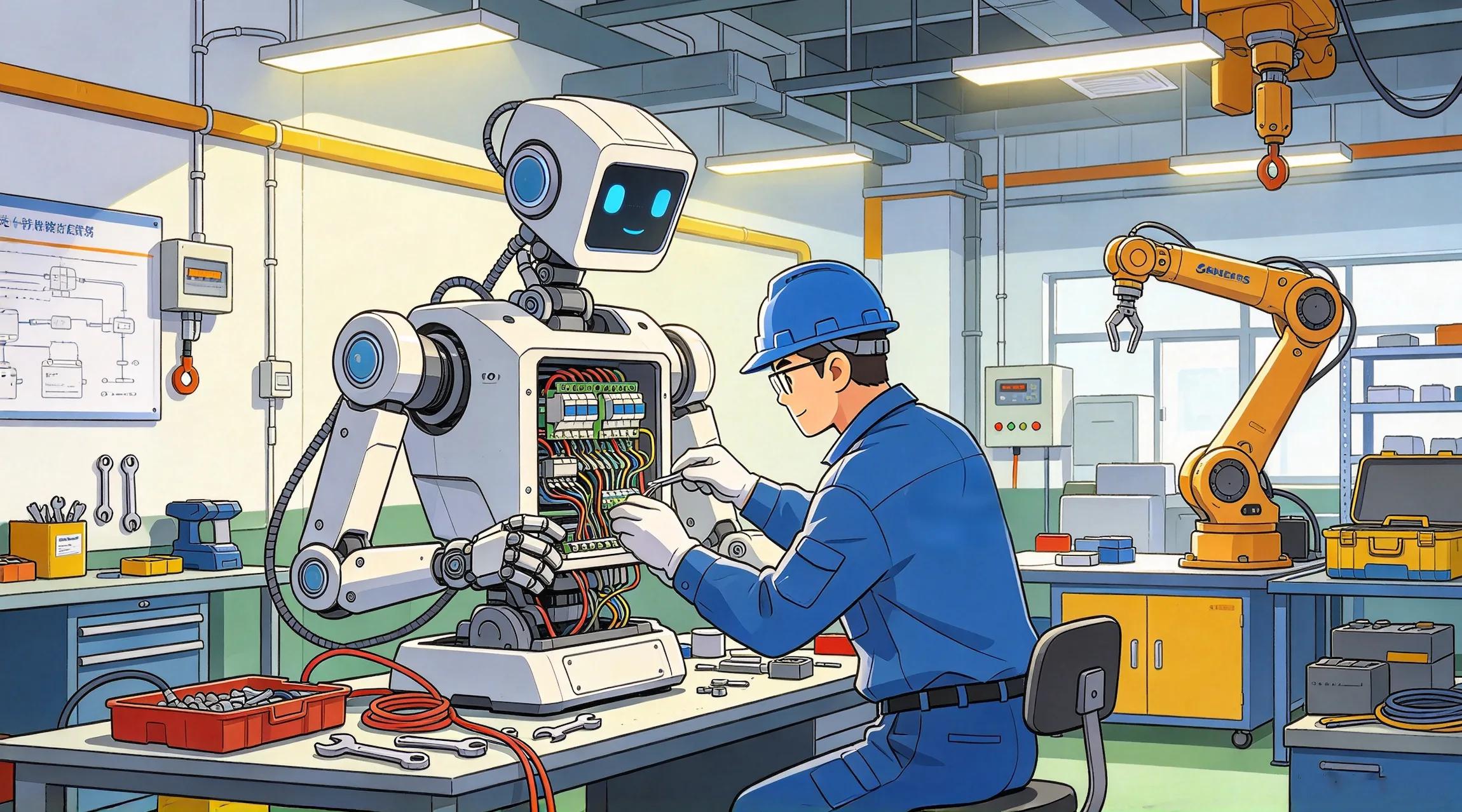
(Source: Generated by Doubao AI)
Even on video platforms, live streams selling robot repair courses have appeared, claiming that people can learn robot repair through short-term intensive training, take orders independently after graduation, and easily earn more than 20,000 yuan per month.
Indeed, the third-party robot maintenance is a huge blue ocean market, but it does not mean that you can make money as soon as you enter the market now. It should be noted that the current production capacity, ownership and popularity of robots are limited, and there are few robots that need repair.
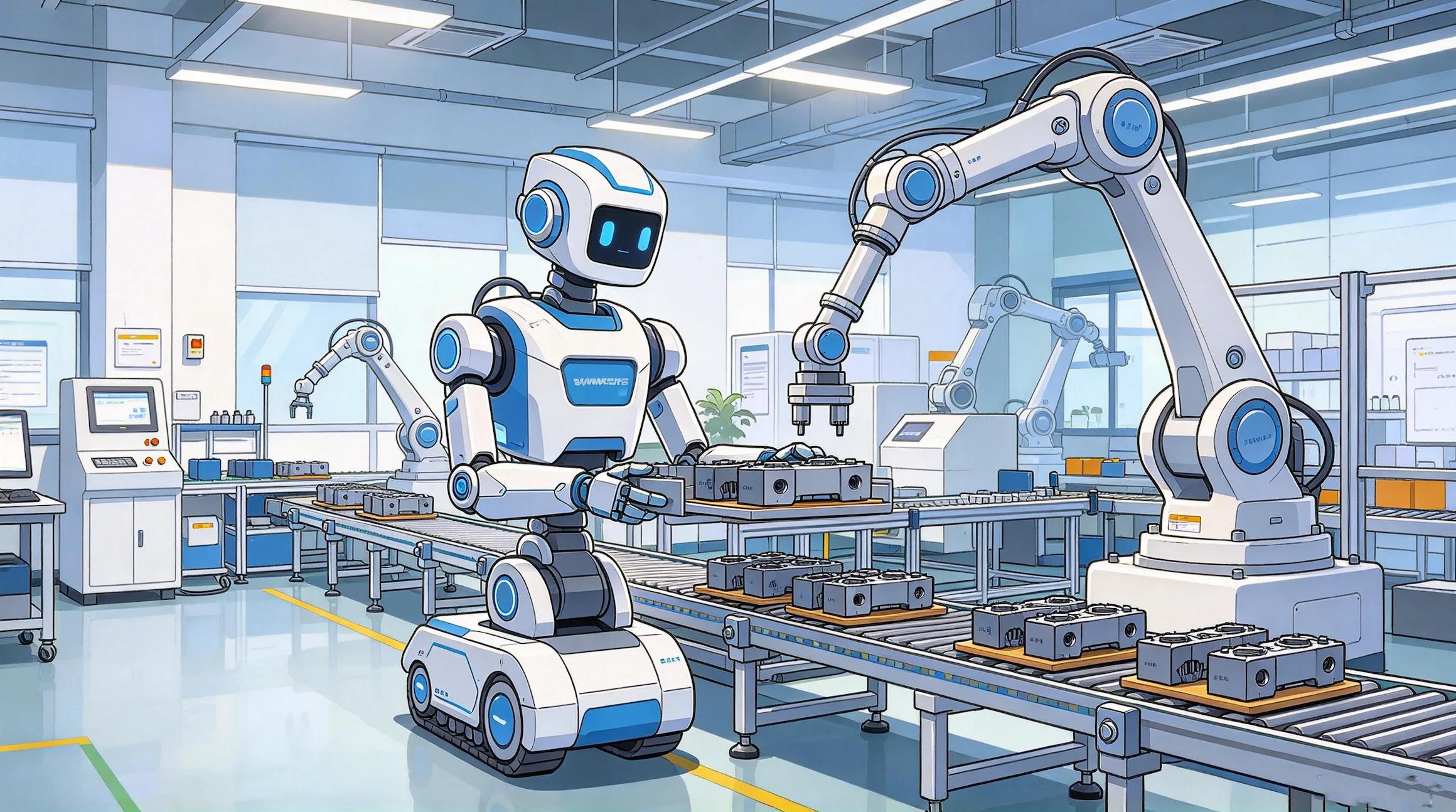
More critically, different from the mature automotive industry, the current robot industry has not yet formed a unified interface standard. Most of the core components of robots are custom-made exclusively by manufacturers and are not sold to the public, and they cannot be used across brands. Accessories are the key bottleneck for third-party maintenance organizations.
If third-party maintenance organizations can get authorization from robot enterprises, they still have a chance to purchase accessories, otherwise they can only find second-hand dismantled parts. Some enterprises will even grind off the model marks on the chips to prevent circuit board copying and reverse engineering, which further increases the difficulty for third-party organizations to repair robots.
Robot enterprises generally adopt a layered opening strategy: the underlying control system and encrypted chips are controlled by the manufacturers, and no debugging software or maintenance materials are open to the public. When encountering core failures, third parties cannot repair them at all. Moreover, many enterprises prohibit unauthorized maintenance, disassembly and modification of robots. After users use third-party maintenance services, they may lose the original factory warranty qualification.
(Source: Generated by Doubao AI)
Compared with other third-party maintenance organizations, JD's advantage is that it is one of the top three e-commerce platforms in China, and it is good at self-operated mode and service. Robot products for C-end scenarios need to be sold through online or offline channels after leaving the production line. If products are overstocked, it is not conducive for robot enterprises to recover R&D and production costs.
JD Platform can not only provide sales channels, but also the self-operated model can help robot enterprises share economic pressure, which kills two birds with one stone. That is why JD can reach cooperation with nearly 100 robot enterprises and dare to plan to provide 100,000 robot maintenance technician positions within 5 years.
As for third-party maintenance, enterprises and individuals do not need to be discouraged. The robot industry is in a stage of rapid development. Just like AI, the first group of people who made money were not those who used AI to create value, but those who sold courses and taught others to use AI. When the industry enters the mature stage and robots penetrate into industrial, household, education and other scenarios, there will be a large number of robots that need maintenance.
JD is running the robot 4S store business, but does not follow the 4S store model
Due to many problems such as accessories, underlying protocols and permissions, third-party maintenance cannot shake the status of original factory maintenance in the short term, but in the long run, the rise of the third-party maintenance industry is an inevitable trend.
We can still take the automotive industry as a case. In the past, there were also a large number of non-uniform interfaces and protocols in the automotive industry. Not only could accessories not be shared, but car companies also required vehicles to return to the store for maintenance during the warranty period, otherwise they would be regarded as giving up the warranty. Closed accessory channels and non-public maintenance technical data restricted the development of third-party maintenance services.
In 2014, 10 departments including the Ministry of Transport issued the Guiding Opinions on Promoting the Transformation and Upgrading of the Automobile Maintenance Industry and Improving Service Quality, which clearly broke the monopoly of maintenance accessory channels and implemented the public system of maintenance technical information.
Subsequently, the Anti-monopoly Guidelines for the Automobile Industry further stipulated the availability of "double-standard parts" for accessories and maintenance technical information; in 2026, 9 departments including the Ministry of Commerce issued the Notice on Several Measures to Cultivate and Expand Consumption in the Automobile Aftermarket, requiring car companies not to restrict consumers from independently choosing maintenance enterprises and refuse to bear the three-pack responsibilities, and guiding complete vehicle and power battery enterprises to open maintenance technical authorization.
After the restrictions were lifted, JD Auto and Tuhu Auto developed rapidly. Among them, by the end of 2025, the number of JD Auto stores had exceeded 4,000; by the first half of 2026, the number of Tuhu Auto stores reached 8,825, with a net increase of 1,620 stores in the past year.
The lower price than original factory maintenance has made JD Auto and Tuhu Auto deeply recognized by car owners. With the mentality of "join if you can't beat it", car companies such as NIO, Dongfeng Peugeot and Dongfeng Citroen have successively reached cooperation with Tuhu Auto this year, and will provide Tuhu with original factory accessories.
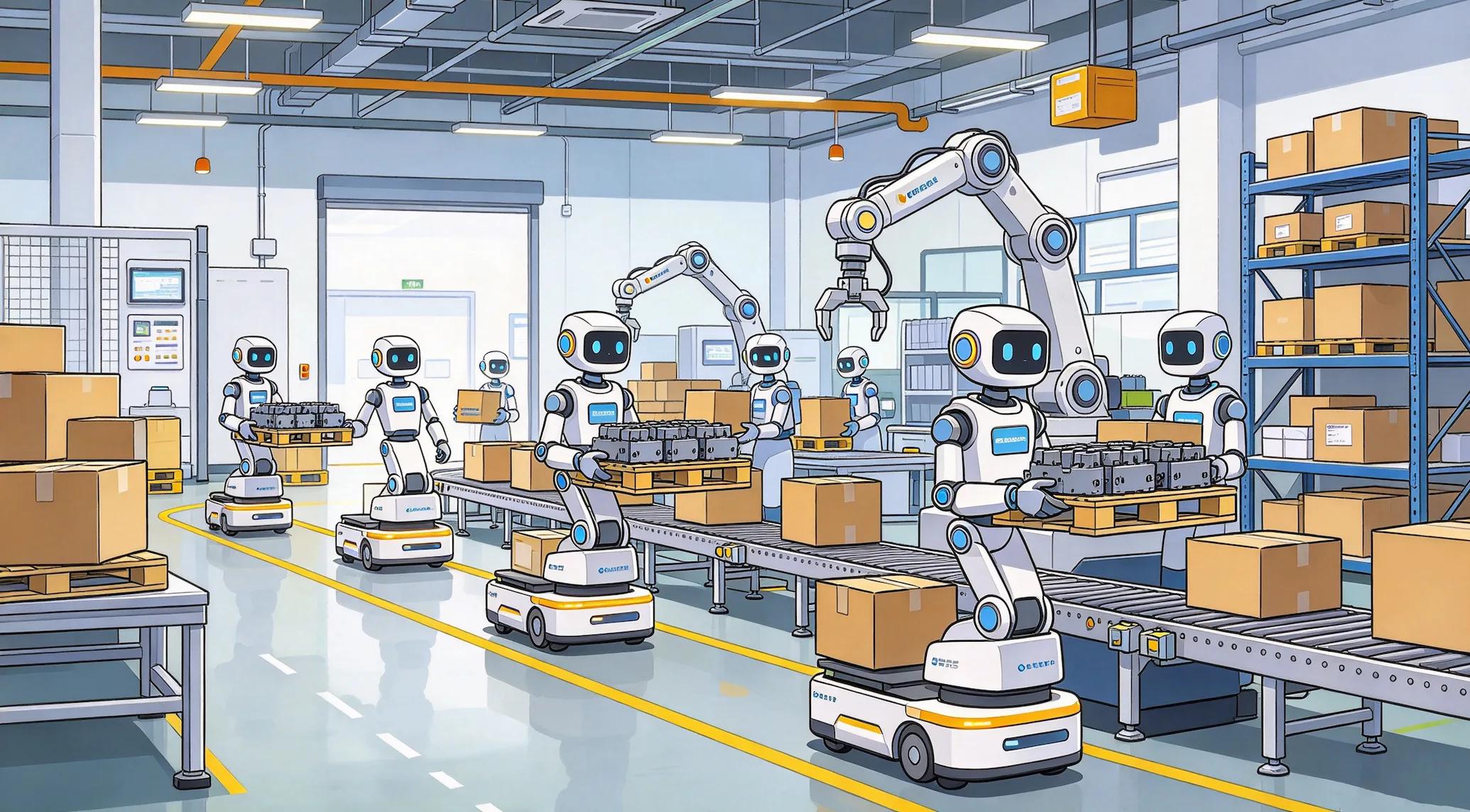
The development trajectory of the robot industry is the same. In the early stage, the industry grows wildly, the interface standards are not unified, enterprises will prevent technology leakage, add a large number of confidentiality measures to core accessories, and prohibit users from using third-party maintenance services. When the industry matures, interfaces and protocols will most likely be unified, and relevant departments will also issue a series of regulations to break the monopoly of enterprises.
(Source: Generated by Doubao AI)
Lei Technology (ID: dianchetong233) noticed that many media, when reporting that JD builds a 100,000-person robot maintenance team, will call it a "4S store model", but 4S stores generally only sign exclusive contracts with a single brand, which is completely different from JD Service.
From the perspective of Lei Technology, JD's robot maintenance service adopts the "sales - accessories - maintenance - information feedback" chain of the 4S store, doing the 4S store business, but follows the same path as JD Auto, that is, the IAM (Independent Aftermarket) model.
JD Service will not be limited to one robot manufacturer, but will give full play to JD's advantages in channels, warehousing, logistics, services and other fields to build an after-sales service system covering the world's mainstream robot brands.
Third-party and original factory will not replace each other, and coexistence is the trend
The big business of robot maintenance has just emerged, and many enterprises have entered the market. JD, which has a huge volume and numerous advantages, has reached cooperation with nearly 100 enterprises on the one hand, and is stepping up the formation of a robot maintenance technician team on the other hand, even launching the "robot ambulance" service to support on-site maintenance.
However, no matter how large the third-party maintenance platform is, it cannot completely replace the original factory maintenance, and coexistence is the mainstream trend of the industry. Permissions and algorithms are in the hands of manufacturers, and complex failures, major repairs, software upgrades, and data calibration cannot bypass the original factory. Third-party chains, with their network density and price advantages, can meet users' needs for high-frequency, low-difficulty daily maintenance, standard part replacement, on-site quick repair and other maintenance services.
The rapid development of the robot industry has also spawned many new positions, such as robot trainers, robot maintenance personnel, etc. Many of my friends are engaged in robot back-end development, data collection, data annotation and other work.
It should be noted that 100,000 positions are the target for 5 years later, not the reality today. With the current ownership and order density, a large number of third-party maintenance shops may only have a single-digit number of orders per month. If you expect to "earn 20,000 yuan a month" just by entering the market now, you will most likely fail.
For people who plan to set up a robot maintenance company or learn robot maintenance technology, the suggestion of Lei Technology is that you can do it. Entering the market now gives you the opportunity to take the lead in the vigorous development stage of the industry, but you don't need to invest too many resources in the initial stage, as the existing robot maintenance orders are not enough to support the profitability of the company or self-employed individuals.
This article is from "Lei Technology", authorized for release by 36Kr.