Embodied Intelligence Rushing Into the Market in a Haste: Who Is Chasing Public Hype and Who Is Carefully Counting Every Penny
The long holiday has passed for a while, but the holiday effect it triggered still lingers. People who travel extensively can hardly ignore that besides the crowds of people, there are some distinct new figures in scenic spots and shopping malls — those greeting guests at the entrance, making coffee skillfully, handing over drinks, serving a full table of delicacies, playing finger-guessing games with children... These are embodied intelligence robots. This group of "new generation workers" has appeared in batches in commercial service scenarios such as cultural tourism, retail and hotels, embedding into the daily life of ordinary people with a presence that cannot be ignored.
According to incomplete statistics, nearly 30 embodied intelligence and robotics enterprises have entered cultural tourism, retail and consumer service scenarios. Agibot deployed more than 300 units at one time in Hengqin Chimelong; Galaxy Universal has set up more than 200 space capsules in 50 cities across the country; Zhipingfang's "Zhi Mofang" has been deployed in cultural, business and tourism landmarks in more than ten provinces and cities across China, including Chaoyang Park in Beijing, Wuhan Huaxi LIVE·Wukesong, the Oriental Pearl Tower in Shanghai, MixC INNO100 in Shenzhen, Shenzhen Talent Park, Coastal City Park, Colorful Guizhou City in Guiyang, and Longjiang Years Beer Square in Zhangzhou; Guangzhou Zhidong Future's Xiao Zhi S3 has entered Datang Never Sleeps City in Xi'an and Wong Tai Sin Temple in Hong Kong, and deployed 16 robots at 8 key points across all venues of the 140th Canton Fair (divided into three phases), receiving a total of 189,000 merchants from all over the world (statistics only for the first phase from October 15 to October 20); there is also the 7×24-hour SMYZE smart drink bar that provides more than 100 full-category drinks with robotic arms, distributed in terminal buildings and subway stations in core first-tier cities including Beijing, Shanghai, Guangzhou and Shenzhen, as well as cultural tourism scenic spots such as Guangxi Museum and Wuxi Nianhuawan... At the same time, all relevant persons in charge have the unified statement that more cultural, business and tourism landmarks are still being continuously expanded.
The bustle is real. But behind the hustle, a more realistic question is emerging: are these silicon-based workers really competent? Besides, have they made any money yet?
With this question in mind, we talked with three enterprises: Zhidong Future, Zhipingfang, and SMYZE. The products of the three companies have different forms and focus on different scenarios at present, but their answers unexpectedly point to three common barriers.
From "Demonstrable" to "Deliverable": Is Embodied Intelligence Actually Doing Real Work?
The reason why embodied intelligence is flocking to commercial service scenarios is not complicated.
Robots in factories are doing work that "cannot go wrong". A slow cycle will drag down production capacity, and a drop in yield will result in real monetary losses, which cannot be fully handed over without several years of verification. The home scenario is at the other extreme, where environments vary wildly: today a child throws a toy on the floor, tomorrow an elderly person moves a chair, and robots have to deal with a mess that even humans would find daunting.
By comparison, scenic spots, hotels and shopping malls have become a relatively friendly "intermediate workplace": making a cup of coffee, handing over a bottle of water, giving directions, recommending a product... The task boundaries are clear, and small mistakes will not lead to production shutdown. Meanwhile, robots can accumulate data and polish products amid the onlooking and tolerance of tourists, and even achieve brand exposure and revenue generation at the same time.
But this is not just the industry's wishful thinking. A notable signal is the demand side's attitude towards robots. Last year, when robots entered scenic spots, most tourists stopped to watch the novelty and left after taking photos; this year when robots enter scenic spots again, some people have begun to ask, "Why don't you even have a reception robot here?" When "it's surprising that there are robots" turns into "there should be robots", when onlooking and taking photos becomes a norm, this public acceptance and expectation is a "qualitative leap" compared with last year.
In this regard, Gao Shan, Co-founder and CMO of Zhidong Future, told Xiaguang AI Lab: "In our own judgment, cultural tourism commerce is a very good scenario in the current stage of humanoid robot development. Customers have real demands and are willing to pay for them, and there is positive feedback between this and the market."
With real payment willingness, positive feedback, fault tolerance space and data accumulation — the first scenario for large-scale normalized deployment of embodied intelligence is selected in this way.
But "being selected" is only an admission ticket. The real first barrier is: can robots work continuously, stably and autonomously in a real commercial environment, instead of performing amazingly in demonstrations but breaking down as soon as they start working.
Zhipingfang's judgment is very clear: it lists "sufficiently stable products and services" as the first rule for robot retail to shift from novelty-driven to efficiency-driven. Whether it is coffee or ice cream, what consumers ultimately buy is the product itself. Robots must be able to complete operations continuously and stably to ensure product quality and service experience.
Take one detail as an example: in January 2026, Zhipingfang launched its first robot coffee shop (Zhi Mofang) in Shenzhen Talent Park. That robot is not only responsible for picking up finished products, nor is it just a vending machine with a robot shell. Instead, it directly operates coffee equipment to complete the entire production process. More than 9 months later, "that robot is still the same robot", and it has gradually learned to make ice cream, matcha drinks, milk tea, beer and cocktails, and can also sell lottery tickets, cultural and creative products and blind boxes.
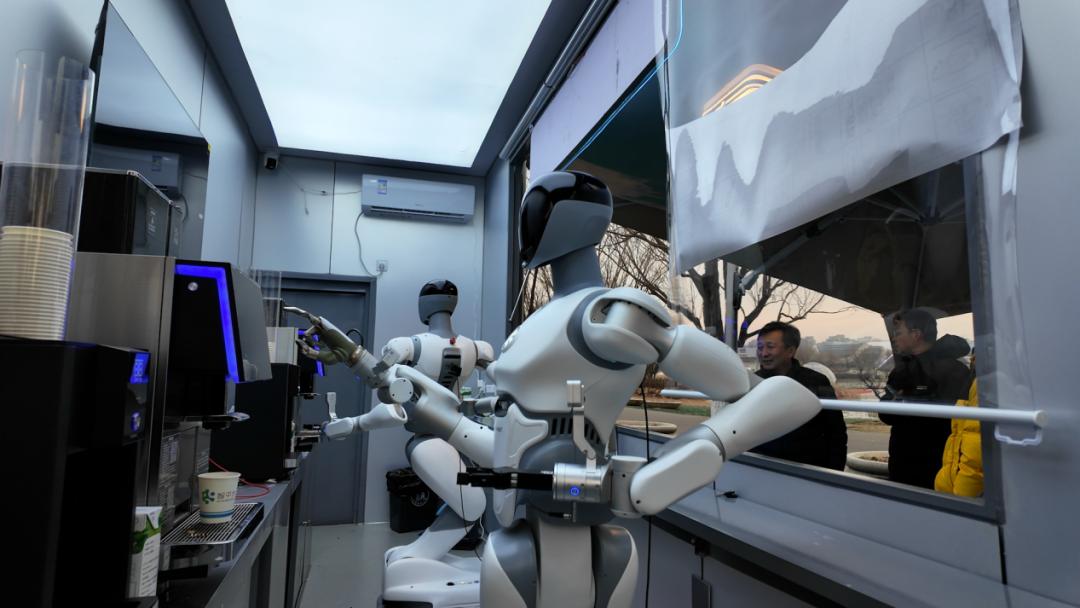
The picture shows Aibao, Zhipingfang's general intelligent robot, operating a coffee machine and an ice cream machine, sourced from Zhipingfang's official WeChat account
Cheng Xiaoyu, Senior Vice President of SMYZE, analyzed that many robot projects look cool in demonstrations and perform amazingly when executing a single task, but when they actually work 24 hours a day, the manpower allocated in the backend may exceed the manpower of the scenario they initially intended to replace. According to her introduction, the current comprehensive stability of SMYZE's drink production has an error rate of 1‰, that is, only one cup has a problem for every 1000 cups produced.
She specially emphasized that this stability does not only depend on the robotic arm, but on the entire system — the collaboration between the robotic arm and various modules, and the cooperation with the retail operation scenario. If you only look at the robotic arm and make it move to a certain coordinate point to perform an action, there will hardly be problems. The real difficulty lies in whether the collaboration between the robotic arm and other systems is reliable during non-stop operation.
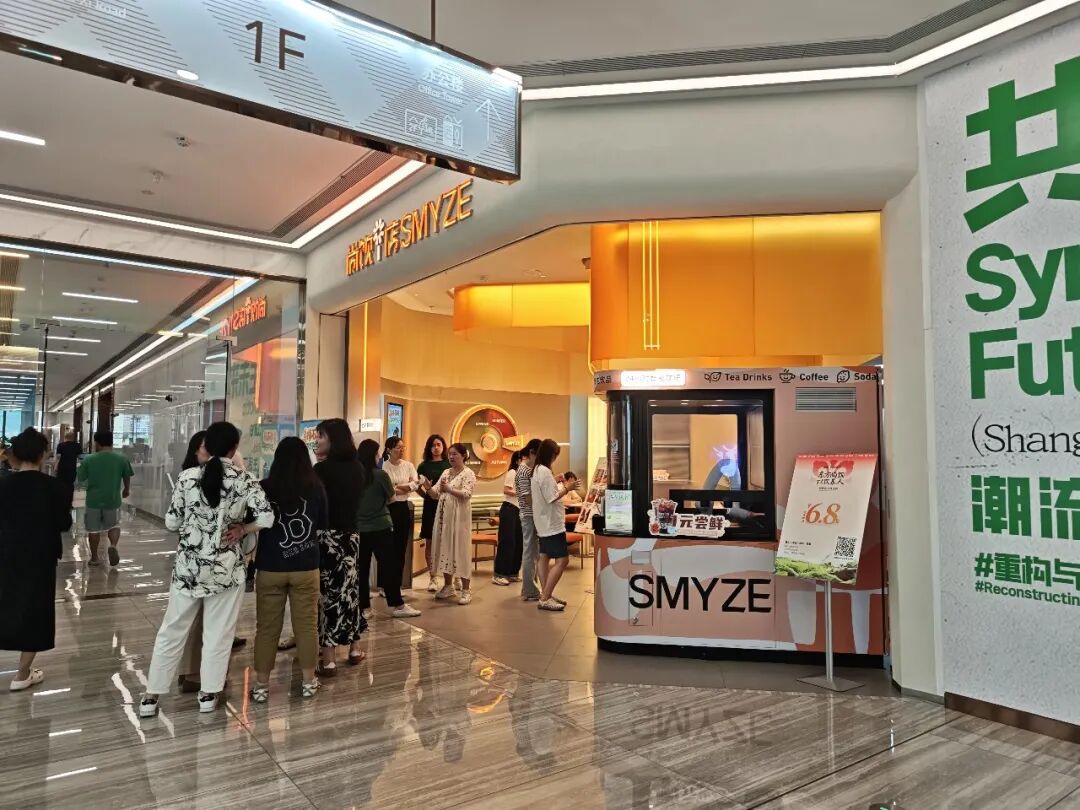
The picture shows the SMYZE experience store providing full-category drink services for consumers
But stability cannot be achieved only by running in the laboratory. Gao Shan said that Xiao Zhi from Zhidong Future is facing disturbances in real scenarios that can never be simulated in a simulation environment.
Stability is first reflected in the ability to work continuously for a long time. At this year's autumn Canton Fair, Xiao Zhi S3 from Zhidong Future worked at 8 points from opening to closing, continuously serving for more than 8 hours a day, receiving visitors, providing guided tours, handing over coffee, answering questions, and cannot break down halfway. Gao Shan said that this is also the practical reason why Zhidong Future currently chooses wheeled robots instead of bipedal ones — bipedal humanoid robots usually have a battery life of about one hour, which cannot support full-day tasks such as scenic spot services, restaurant waiter work, and the Canton Fair. Wheeled robots can currently achieve a battery life of more than 8 hours, which is the bottom-line requirement that Zhidong Future believes service robots should have.
But battery life alone is not enough. In the robot restaurant of the world's first global robot 6S store in Longgang, Shenzhen, Xiao Zhi S3 is facing another test, for example, a child suddenly runs over while serving dishes. This kind of situation cannot happen in the laboratory, but it often happens in real restaurants. At present, S3 will perform an emergency stop, wait for the child to pass, judge that the surrounding area is safe, and then continue to deliver food. "We dropped plates at the very beginning," Gao Shan laughed, "but after 6 months of stable operation, the phenomenon of dropping plates is now close to zero."
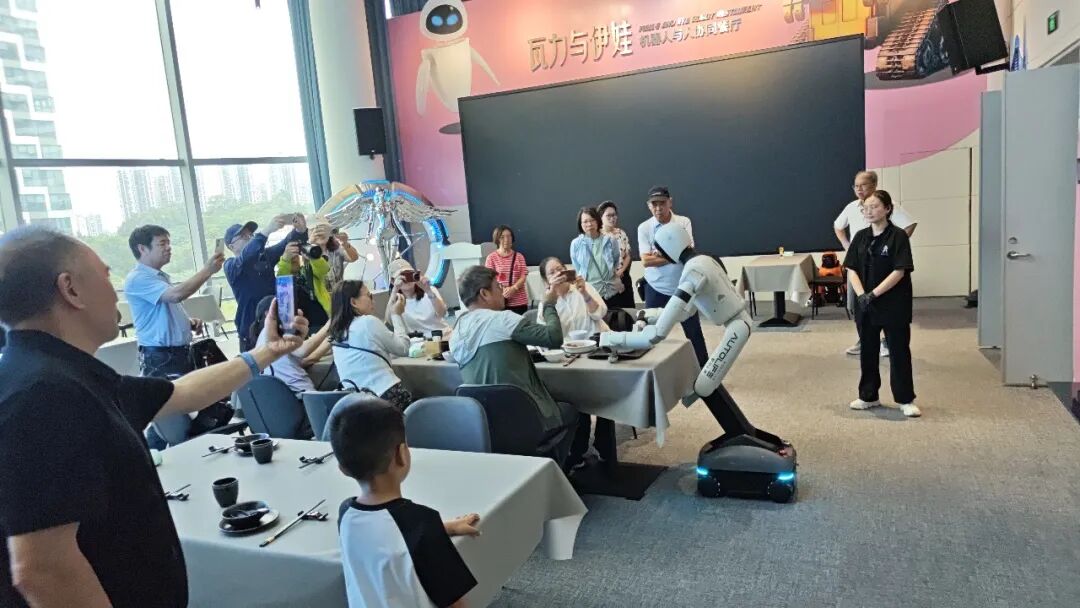
The picture shows Xiao Zhi S3 from Zhidong Future providing food serving services
Being able to work does not mean being able to deliver, and being able to deliver forms the real "job". The long-term stability, adaptability and non-standard processing capability of embodied intelligence in real scenarios are the first qualification certificate for robots to take up their posts.
Robots as Waiters: Who Does the Unseen, Dirty and Tiring Work Behind the Scenes?
After passing the first barrier, a more trivial problem emerges: after embodied intelligence becomes a "waiter", who does the dirty and tiring work behind it?
Cheng Xiaoyu shared a very vivid detail: capping cups.
Food safety regulations allow drinks for dine-in to be served without lids, but takeaway or quick-pickup orders must have lids fastened. For capping, the solution of all robotic arm companies is to use a joint to turn over and "hit" the cup lid. But the cup lid is hard and the cup body is soft, so hitting it easily knocks over the cup, which will cause the drink to spill on the table. The sugary liquid easily attracts mosquitoes, resulting in corresponding food safety risks that directly affect user trust and purchase rate.
SMYZE did not ask the robotic arm manufacturer to solve this problem, but solved it with another module in the entire drink station system. Cheng Xiaoyu emphasized: "We are the only company in the industry that has achieved a 100% capping success rate."
Capping sounds trivial, but it perfectly illustrates the real difficulty of service robot operation: it is not whether the robot can perform an action, but whether this action can be completed continuously, stably, safely and at low cost in the real operation scenario.
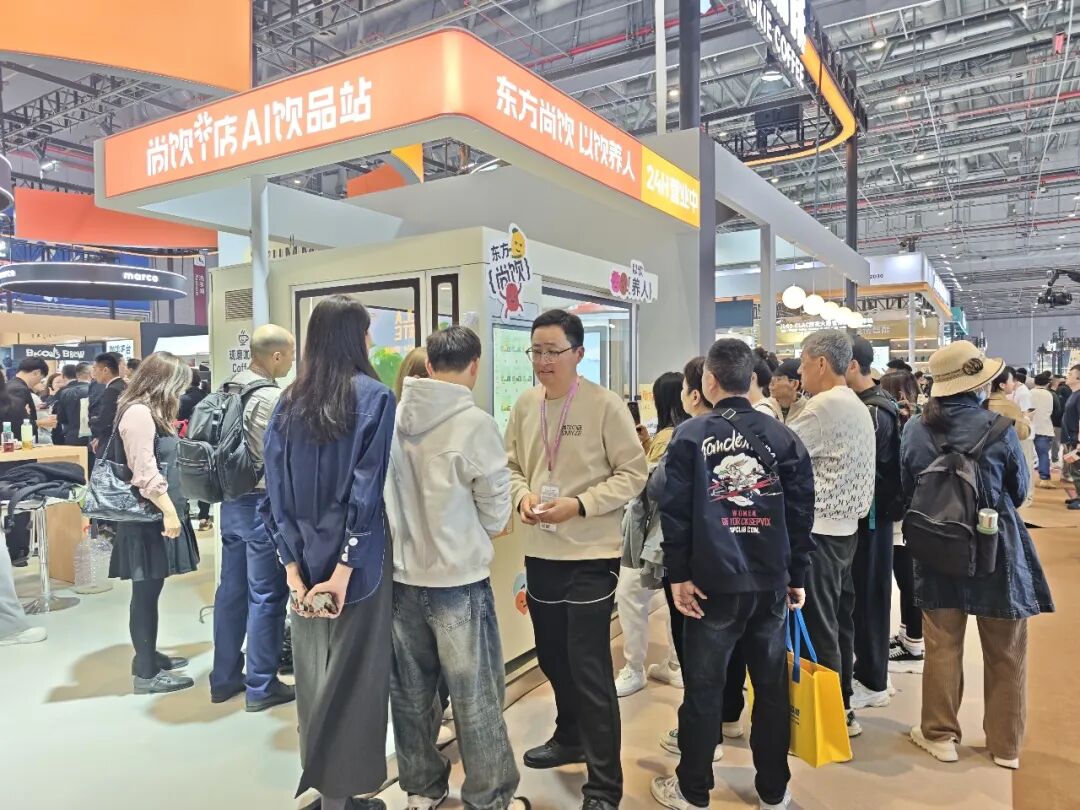
The picture shows the SMYZE AI drink station providing smart drink selection services for large crowds at exhibitions
"Problems that need to be solved on the robot side may only account for 30%~40% of all operation problems." Cheng Xiaoyu added that many problems cannot be completely solved by robots alone, but if these problems are not solved, the entire system cannot be scaled up. Without scalability, it will never become a mainstream compared with traditional manually operated stores. "If we simply do not want to do these very practical dirty and tiring tasks, robots may always stay in the performance stage, or just be a temporary trend."
Zhipingfang took the overseas expansion of "Aibao" as an example to confirm that the real challenge for robots going overseas is not to transport the equipment abroad, but to let robots adapt to the local environment and provide stable services for a long time. Scenario adaptation, operation adaptation, localized services, compliance and data requirements, each item needs to be implemented one by one. For "Aibao" to start working in Lan Kwai Fong, Hong Kong, every step from hardware customs declaration, customs clearance compliance, to accessing the operation of licensed local commercial venues in Hong Kong is a real threshold. Lan Kwai Fong itself is not a "friendly" scenario: high-density dynamic crowds, diverse cultures, noisy sound fields, complex lighting, plus immediate social demands, which are comprehensive tests for the robot's perception, decision-making and interaction. Sudden changes in lighting in bars, people blocking the view, and shaking wine glasses, every variable may cause action failure. Aibao is equipped with the NeuroVLA brain-like architecture, which can reduce the robot's motion jitter by more than 75% and achieve reflex response within 20 milliseconds after collision, so as to gain a firm foothold in this "one of the most difficult examination rooms".
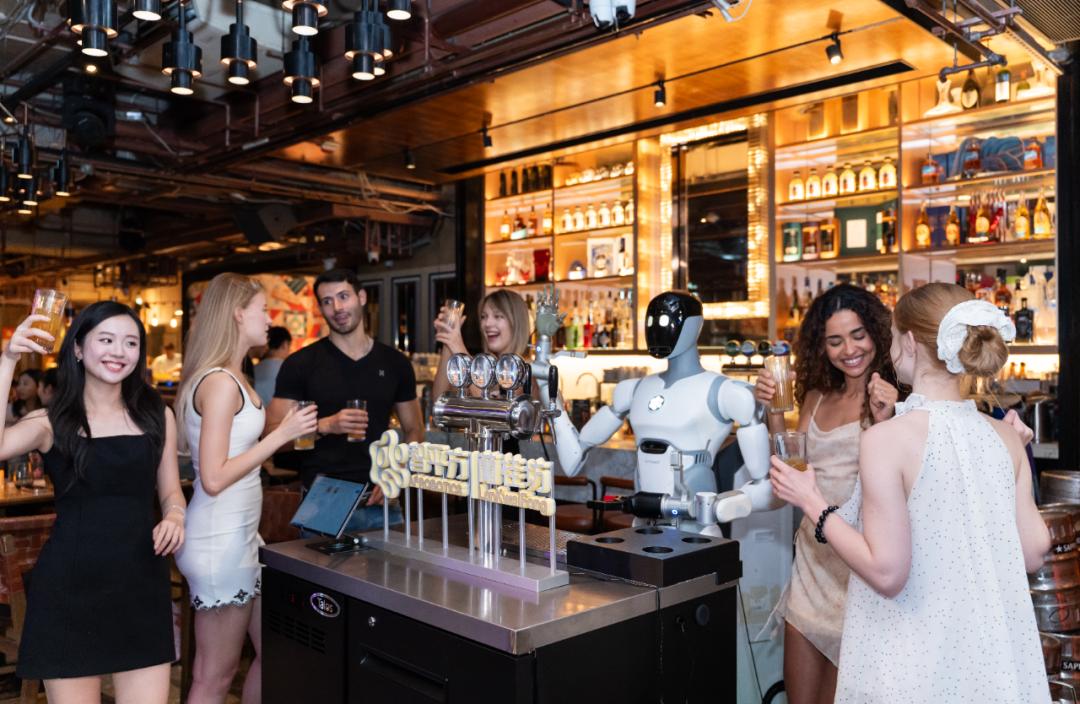
The picture shows Aibao from Zhipingfang providing cocktail making and interactive services for customers in Lan Kwai Fong, Hong Kong, sourced from Zhipingfang's official WeChat account
Gao Shan confirmed this from the delivery side. Zhidong Future makes work-oriented robots, which directly face scenario delivery without much room for trial and error. Gao Shan said, The biggest feature of cultural tourism scenarios is "non-standard", and each scenic spot requires secondary development, which means the delivery difficulty is extremely high.
For the Canton Fair case, Zhidong Future did not start by deploying a large number of robots at the Canton Fair, but provided lightweight services for three consecutive sessions from last spring, last autumn to this spring, accumulating experience and adjusting the process, before deploying 16 Xiao Zhi S3 robots at 8 points at this year's autumn Canton Fair, undertaking tasks such as retail, guided tours, coffee delivery, conference greeting, and even assisting band performances. This year's challenge is greater than in previous years — the number of overseas merchants has increased significantly, which requires the multilingual corpus of Xiao Zhi S3 to cover accents from dozens of countries, and voice interaction, navigation and tour guiding, and reception and seating guidance must all run through in real crowds. Gao Shan said that the Canton Fair is co-hosted by the Ministry of Commerce and the People's Government of Guangdong Province, and the entry screening and requirements are very high. Being able to provide continuous services from opening to closing in such a scenario is in itself a comprehensive stress test.
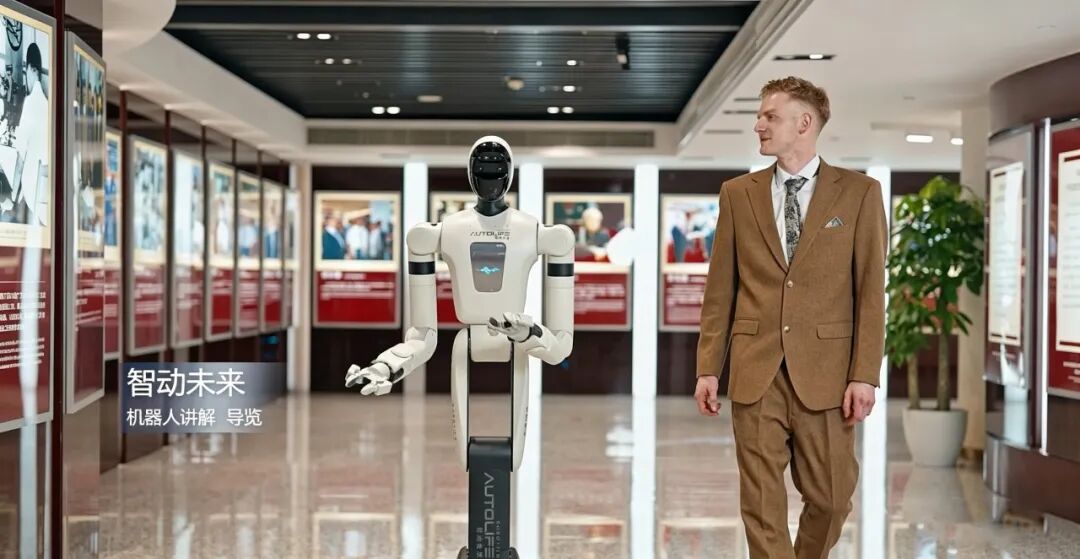
The picture shows Xiao Zhi S3, the humanoid robot from Zhidong Future, providing guided tour services at this year's autumn Canton Fair
Hotel scenarios are even more complex. Gao Shan revealed that Zhidong Future started debugging tests with hotels near the Canton Fair two years ago, and the lobby service has been fully connected, but for guest room sorting, it can currently only meet the scenario of making beds, "it is not enough to be deployed in all aspects