Is Tesla, whose profits have been halved, counting on rockets to bail it out?
Musk is telling a new story again, this time about the "merger" between Tesla and SpaceX.
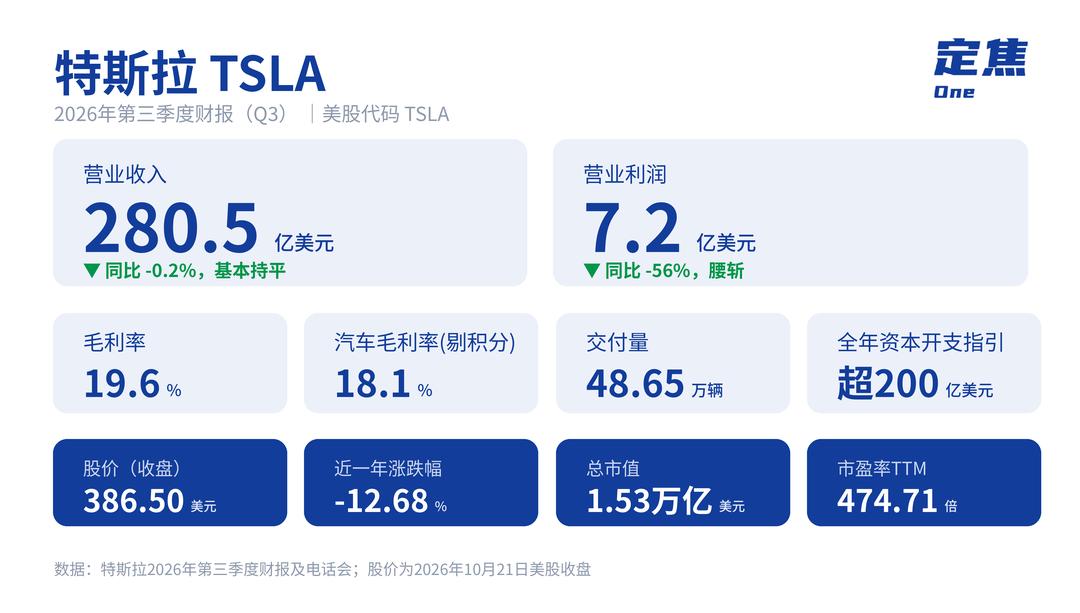
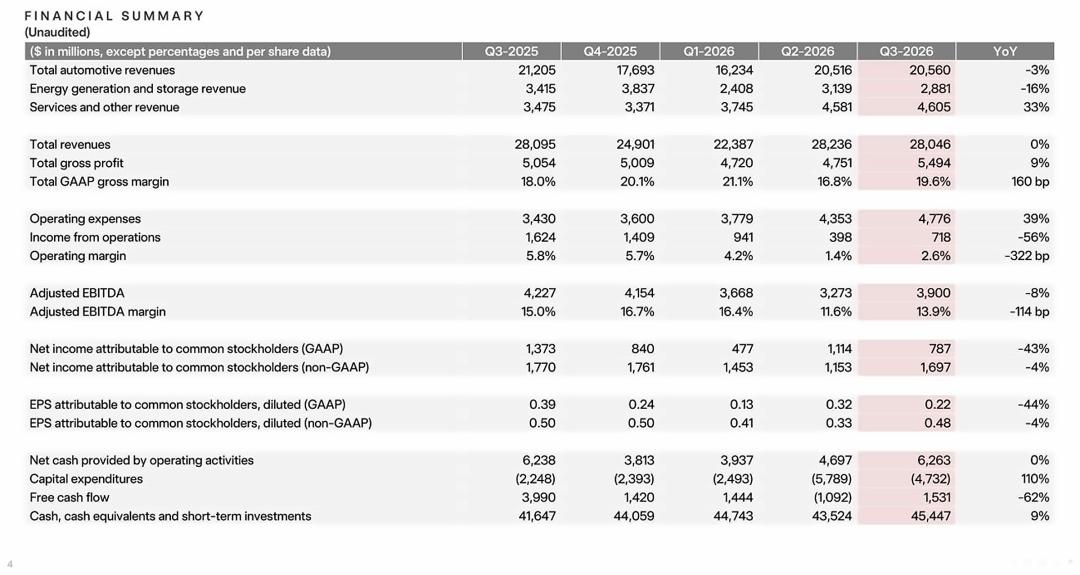
In the early morning of October 22, Beijing time, Tesla released its 2026 Q3 financial report: deliveries reached 486,500 units, about 5% higher than market expectations, but still down 2.1% year on year; total revenue hit 28.05 billion US dollars, almost the same as the same period last year; automotive revenue decreased by 3%; operating profit halved year on year to 720 million US dollars.
As for SpaceX, it just released its quarterly report with 161% revenue growth and a net profit of 4.4 billion US dollars, while its AI business revenue surged 830% year on year. Its stock price rose nearly 8% the next day, and JPMorgan Chase doubled its target price from 240 US dollars to 500 US dollars.
The day before Tesla released this financial report, Musk confirmed on SpaceX's earnings call that the boards of directors of the two companies have each set up a special committee to evaluate the merger. Musk listed five major synergy areas after the merger on the call: super-intelligent software, chip design, Terafab, robotics, and Starlink connectivity. Vehicles are just a data collection terminal in this puzzle.
When car sales fall into red ocean competition, the most rational strategy is not to cling to the battle, but to shift the battlefield to a field where it still has absolute advantages. This is Musk's tried-and-true strategy: whenever the car-selling business is questioned, he throws out a bigger story. When European sales collapsed in 2025, he talked about Robotaxi; when deliveries declined for the first time this year, he talked about mass production of Optimus; now that profits have halved, he is talking about merging with the rocket company.
Boosted by the "merger" news, Tesla's stock price rose 2.2% after the earnings release, but turned down after the call, and the after-hours decline once expanded to 2.5%. The main reason for the drop is that the full-year capital expenditure target on the call was lowered from over 25 billion US dollars back to over 20 billion US dollars; Tesla's capital expenditure this quarter was 4.73 billion US dollars, 40% lower than the market expectation of about 7.95 billion US dollars. There is also good news this quarter: free cash flow turned positive at 1.53 billion US dollars, while the market expectation was originally negative 4.99 billion US dollars.
How to understand the cut in capital expenditure? An investor focusing on Tesla told Dingjiao One that on the bright side, Tesla has started to live within its means and no longer spends lavishly; on the downside, the slower spending pace means that the profit timeline for these new AI businesses will also be pushed back.
No matter whether the merger can be completed or not, Tesla has to answer the old question of its main business: BYD's cumulative pure electric sales in the first three quarters are more than 300,000 units ahead of Tesla, and Xiaomi YU7 has surpassed Model Y several times in domestic market segments. How deep is the moat of its automotive business?
01. Gross margin rebounded, profit halved
Let's start with the conclusion. This financial report is not as bad as the market feared, and the gross margin is even better than expected, but Tesla's automotive business has stopped growing, and the money it earns is mainly used to support AI and robotics businesses.
Tesla Q3 2026 Performance
Total revenue this quarter was 28.05 billion US dollars, almost the same as the same period last year, but the business structure has changed. Automotive revenue decreased by 3%, dragged down mainly by the year-on-year decline in average price and lower deliveries, which was partially offset by additional sales driven by FSD subscriptions; energy storage revenue decreased by 15.6%, the only segment that fell short of expectations this quarter, but the earnings call revealed that the gross margin of energy storage rose from 20.4% to 33.1%, and the 2027 Megapack production capacity is almost sold out; services and other revenue rose 32.5% to 4.61 billion US dollars. The number of FSD subscribers reached 1.74 million, with a net increase of 260,000 in a single quarter, the fastest growth ever.
It is worth noting that the automotive delivery volume of 486,500 units this quarter exceeded expectations, but there is "moisture" in it. 22,000 units of that total were made up by digesting inventory, and the actual output was only 464,000 units.
The rebound in automotive gross margin is the biggest highlight. After excluding credit income, the gross margin of the automotive business reached 18.1%, up nearly 2 percentage points from the second quarter. More critically, the "easy money" carbon credit income was only 113 million US dollars this quarter, down 73% year on year, which means that the improvement in gross margin is almost entirely driven by car sales themselves.
A rough calculation on per-vehicle profit: after excluding credits, the gross profit per car sold is about 7,600 US dollars, about 700 US dollars more than the previous quarter. This is brought by the higher proportion of high-priced models such as the long-range version of Model Y and the improvement of product structure.
The profitability of car sales is rebounding, why did operating profit still halve? Because Tesla is "burning money" too fast. Operating expenses rose 39% year on year to 4.78 billion US dollars, of which R&D expenses soared 69% to 2.76 billion US dollars, burning an average of 30 million US dollars per day. This money goes to AI projects, Cybercab and mass production preparation for Optimus. There is also 1.165 billion US dollars in equity incentives, the bulk of which comes from the 2025 CEO compensation plan. Do the math: if the expenses are pulled back to the level of the same period last year, the operating profit this quarter will achieve positive growth.
On the earnings call, Musk's expectation management for Optimus was obviously conservative. He said the mass production ramp-up would be very bumpy, "10,000 things have to be done right, and the progress depends on the slowest one of them", and he expects these problems to be completely resolved by the end of 2027. The same is true for Robotaxi: Tesla repeatedly says that the premise of expansion is safety, but its competitor Waymo has already deployed self-driving cars in 15 cities in the United States, with a fleet of about 4,000 vehicles and 500,000 paid orders per week. The market has begun to doubt whether Tesla can no longer outrun its competitors.
Tesla is now in a situation where it is getting harder to make money from car sales, the new businesses it needs to support are burning more and more money, and the timeline for AI monetization may be pushed back. At the same time, Chinese automakers are approaching in an all-round way.
02. BYD, Xiaomi, Leapmotor: Chinese automakers are approaching in an all-round way
Fifteen years ago, in the Bloomberg TV studio, a reporter asked Musk what he thought of BYD as a competitor. Musk asked in reply, "Have you ever seen their cars?" Today, fifteen years later, BYD's pure electric sales have surpassed Tesla globally for two consecutive years, and its cumulative sales in the first three quarters of 2026 (1.63 million units) are more than 300,000 units ahead of Tesla (1.325 million units).
In addition to overtaking in sales, leading Chinese automakers are also accelerating their pace in profitability and product iteration speed.
The market previously regarded BYD as a "traditional automaker" and Tesla as a "technology company that redefines cars with software". But looking at the financial reports, BYD's automotive business gross margin in the first half of the year was 22.3%, while Tesla's figure this quarter after excluding carbon credits is 18.1%. A company valued under the traditional manufacturing system earns 4 percentage points more from car sales than a technology company, so what exactly supports Tesla's "technology premium"?
Why can Chinese automakers catch up so fast? The aforementioned investor told Dingjiao One that Chinese automakers have compressed the development cycle of a car to about two years, continuously launch facelifts and add configurations after listing, install intelligent driving hardware on the vehicle first, and activate the functions later, so that the products can keep a sense of freshness for one or two years. The structure of pure electric vehicles is much simpler than that of fuel vehicles, so modification is faster, and the cost also goes down with the expansion of scale. In contrast, Tesla still relies on classic models to occupy the market.
Tesla still has advantages in the global market, but the window of opportunity is narrowing.
Tesla has indeed rebounded in Europe, with EU sales up 65.9% year on year in the first 8 months, climbing out of the low point caused by Musk's political controversy. At the same time, the share of Chinese brands in Europe doubled from 5.3% to 11.3% within one year, and BYD's local registrations in the first two months of this year have continuously exceeded Tesla's.
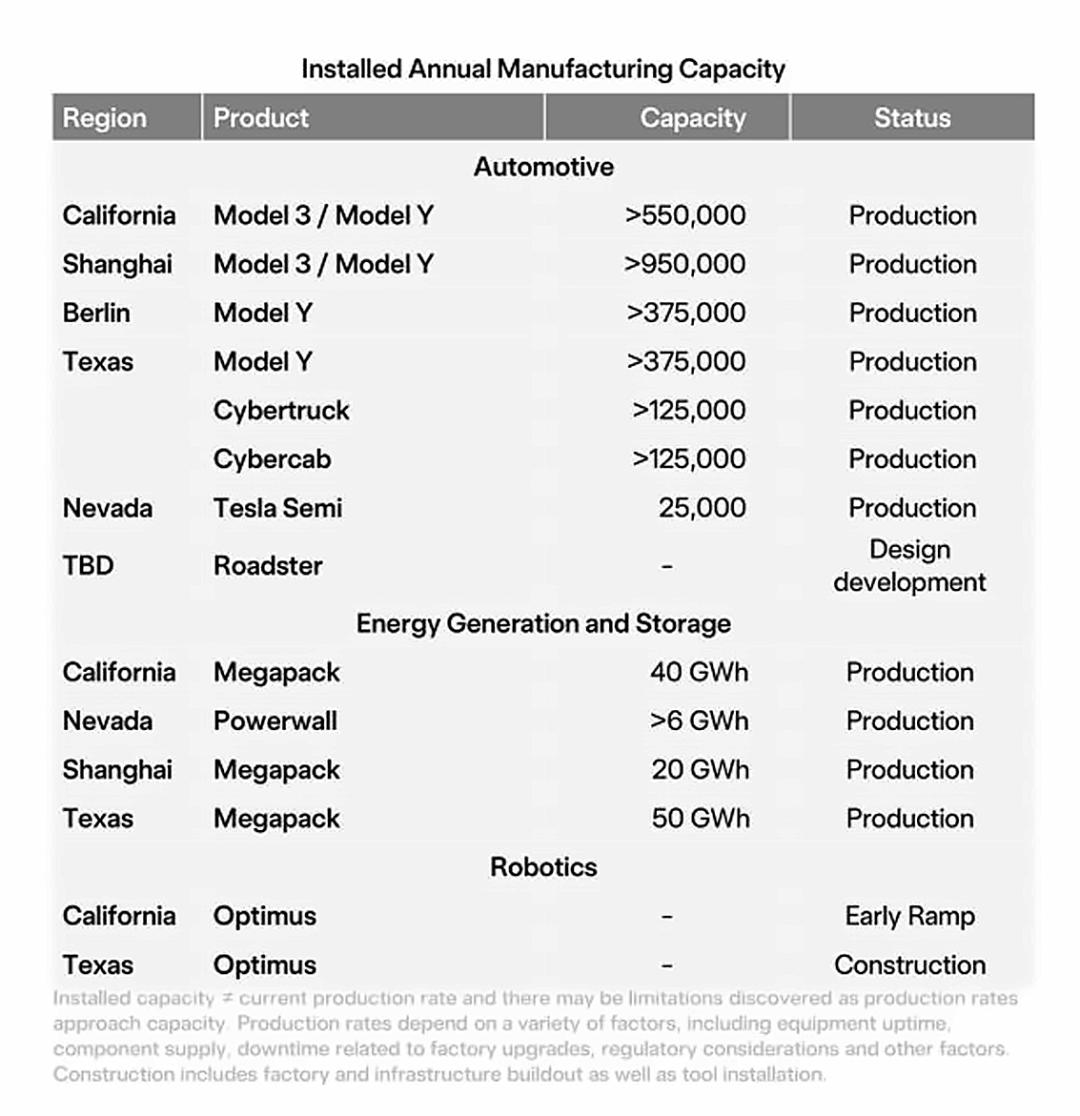
Tesla Global Production Capacity Table (950,000 units at Shanghai Gigafactory) Source / Tesla 2026 Q3 Financial Report
Not to mention the Chinese market: Tesla has been surpassed by Leapmotor and Harmony Intelligent Mobility in the domestic new energy vehicle retail ranking, falling to sixth place. Model Y still ranks first in domestic SUV terminal sales in the first 9 months of this year, but it was overtaken by Xiaomi YU7 in a single month in January. In the sedan market above 200,000 yuan where Model 3 is located, the first place has become Xiaomi SU7. The Chinese market can hardly drive Tesla's growth anymore: China's wholesale volume in September was 95,000 units, up 5% year on year, of which exports increased by 58%, while domestic retail sales fell by about 9%. The annual production capacity of the Shanghai Gigafactory exceeds 950,000 units, and more and more production capacity is serving overseas markets.
The only thing that can keep Tesla ahead is the FSD software ecosystem. It has 1.74 million active subscribers, up 67% year on year, with a subscription gross margin as high as 90%, and no Chinese automaker has equivalent recurring revenue. However, Chinese automakers are seizing this window with faster hardware iterations. When consumers find that they can buy vehicles with newer hardware and stronger configurations for less money, the software story has to be told in a different way.
03. Merging with SpaceX: a $3.5 trillion market capitalization management operation
When Tesla's valuation is dragged down by the cyclical nature of the automotive industry and increasingly fierce competition, Musk's topic of merging with SpaceX is undoubtedly another market capitalization management operation. The combined valuation of the two companies is about 3.5 trillion US dollars, and if the merger is completed, it will be the largest corporate acquisition in history.
On SpaceX's earnings call on October 20, Musk confirmed that the two boards of directors have each established a special committee of independent directors to evaluate the merger. He stated that he supports it, but avoided discussing it citing conflict of interest. The next day on Tesla's earnings call, he did not give more information. On Tesla's shareholder side, the merger needs the consent of more than half of all shareholders, which is a high threshold. Musk himself admitted that it is an overstatement to say that the merger is a done deal.
But the groundwork has been ongoing. The proxy statement for the December 3 general meeting of shareholders has been submitted. Director Ehrenpreis joined the SpaceX board of directors in February this year, Musk's compensation plan includes clauses that can be quickly cashed out in case of change of control, and Barclays predicts that the announcement may be made before the general meeting. The equity of the two companies has also been cross-held for a long time: Tesla invested 2 billion US dollars in xAI in January this year, which turned into about 19 million shares of SpaceX stock as xAI was merged into SpaceX.
What does it mean for Tesla shareholders if a car-selling company merges with a rocket-launching company?
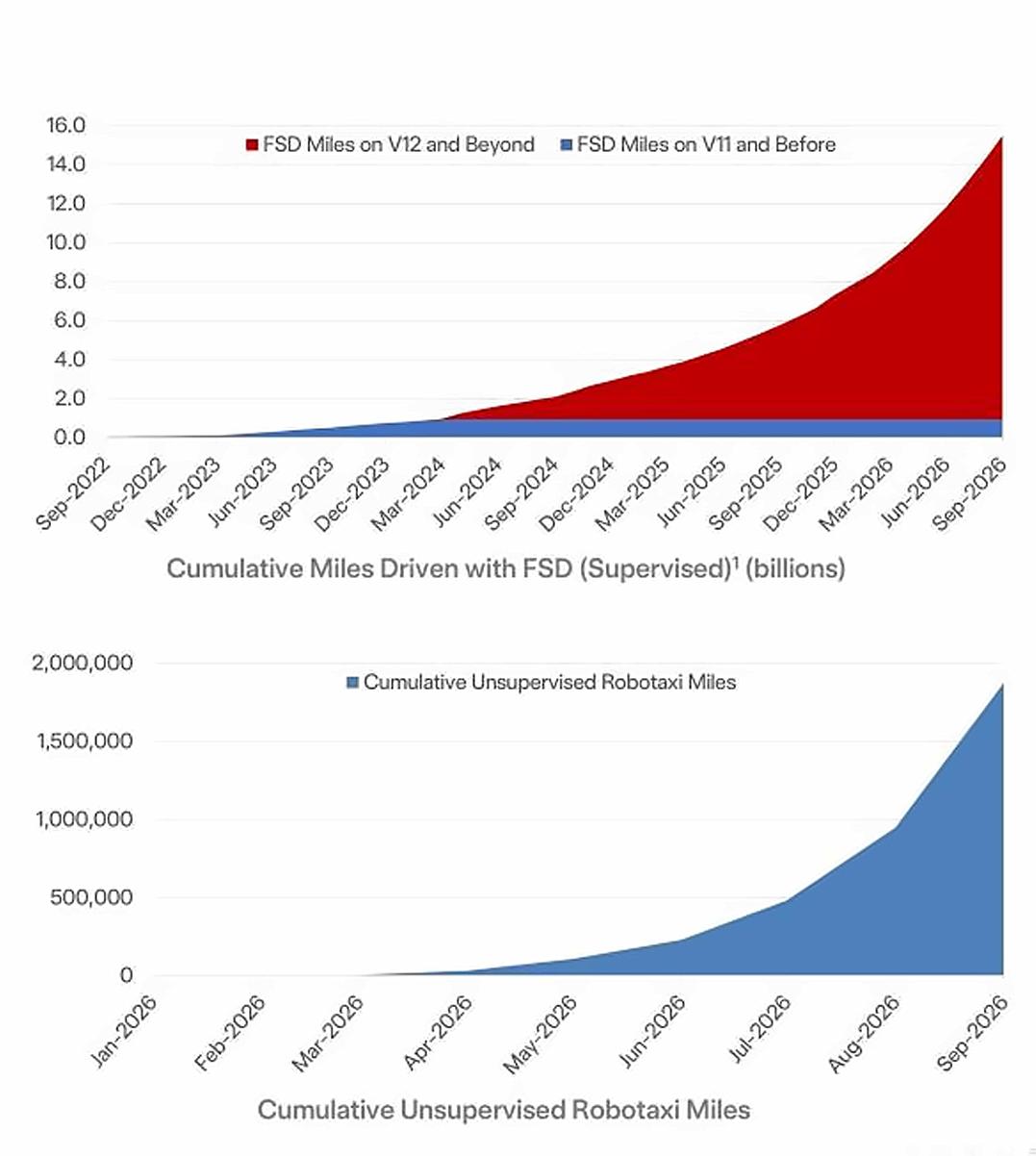
Robotaxi Mileage and Cumulative FSD Mileage Source / Tesla 2026 Q3 Financial Report
First let's look at what the two companies have. SpaceX holds computing power and computing power monetization: its cloud computing revenue in Q3 was 7.6 billion US dollars, which has exceeded the connectivity business where Starlink is located, becoming its largest segment, and the payback period of newly deployed computing power is less than one year. Tesla holds AI carriers in the physical world: hundreds of billions of kilometers of data generated by FSD, driverless operation of Robotaxi (cumulative mileage of about 2 million miles as of the end of this quarter), and the newly launched mass production line of Optimus. Combined, they form a full-stack layout from chips and computing power to robots and rockets.
For Tesla shareholders, this is an opportunity to replace an automaker with a 2.6% operating profit margin with AI assets, while the risk is handing over the automotive cash flow to a bigger gamble. Tesla still has about 45.4 billion US dollars in cash on its books. In contrast, SpaceX's capital expenditure in a single quarter is 19.6 billion US dollars, and its Q4 guidance is 35 billion to 40 billion US dollars, whose burning money scale is more than four times that of Tesla.
So the question now is: do you believe that after the dividend of the automotive business fades, Musk can rely on computing power and aerospace to build a new monopolistic barrier in a field far more cruel than the automotive industry, which is driven by huge capital expenditure?
* The cover image is from pexels.