Is NIO no longer alone? Huawei teams up with CATL to launch battery swapping services: diversified energy replenishment is the trend.
A few days ago, Huawei Yinwang Intelligent signed a cooperation agreement with CATL and CATL Digital Energy to jointly build an open intelligent battery swapping system.
Shortly afterwards, media outlets including LatePost Auto, CLSA, and Blue Whale Auto successively disclosed that the first batch of Yinwang's battery swapping models is tentatively set to five, which are planned to be launched in 2027. The first model will be under the Yijing brand co-developed by Dongfeng and Huawei, and Qijing, the brand jointly built by GAC and Huawei, has also arranged battery swapping models.
Earlier this year, BYD launched its super flash charging technology and the second-generation Blade Battery, which is claimed to "fully charge in 5 minutes, reach full capacity in 9 minutes, and only take 3 more minutes at -30°C". In April, CATL launched its third-generation Shenxing Super Charging Battery at its Super Science Day, with a peak charging rate of 15C and an equivalent 10C, which can be fully charged in 6 minutes at normal temperature.
Against the backdrop that the time gap between energy replenishment via charging and battery swapping is getting smaller and smaller, and fast charging stations are becoming increasingly popular, Huawei Yinwang has chosen to join the battery swapping model, probably because it has seen the deeper value of the battery swapping model.
Battery swapping is far more than just an energy replenishment solution
Speaking of battery swapping, NIO is the first car brand that most people will think of. On October 19, NIO officially announced that the number of its battery swapping stations has reached 4186. During the National Day holiday this year, NIO's charging and swapping facilities provided more than 2 million services in total. For users of battery swapping models, battery swapping is not only an energy replenishment solution, but also a more convenient, stable, and even "unnoticeable" energy replenishment experience.
Yinwang Intelligent follows the same logic. Huawei's Qiankun Intelligent Driving and CATL's Choco-Swap network carry out in-depth collaborative scheduling, and connect the vehicle end, station end and cloud end systems, so that the vehicle can independently determine the energy replenishment demand according to the real-time battery status and users' travel habits, realizing a full closed-loop process of independently finding stations, driving into stations, automatically aligning, completing 99-second fully automatic battery swapping, and driving away on its own.
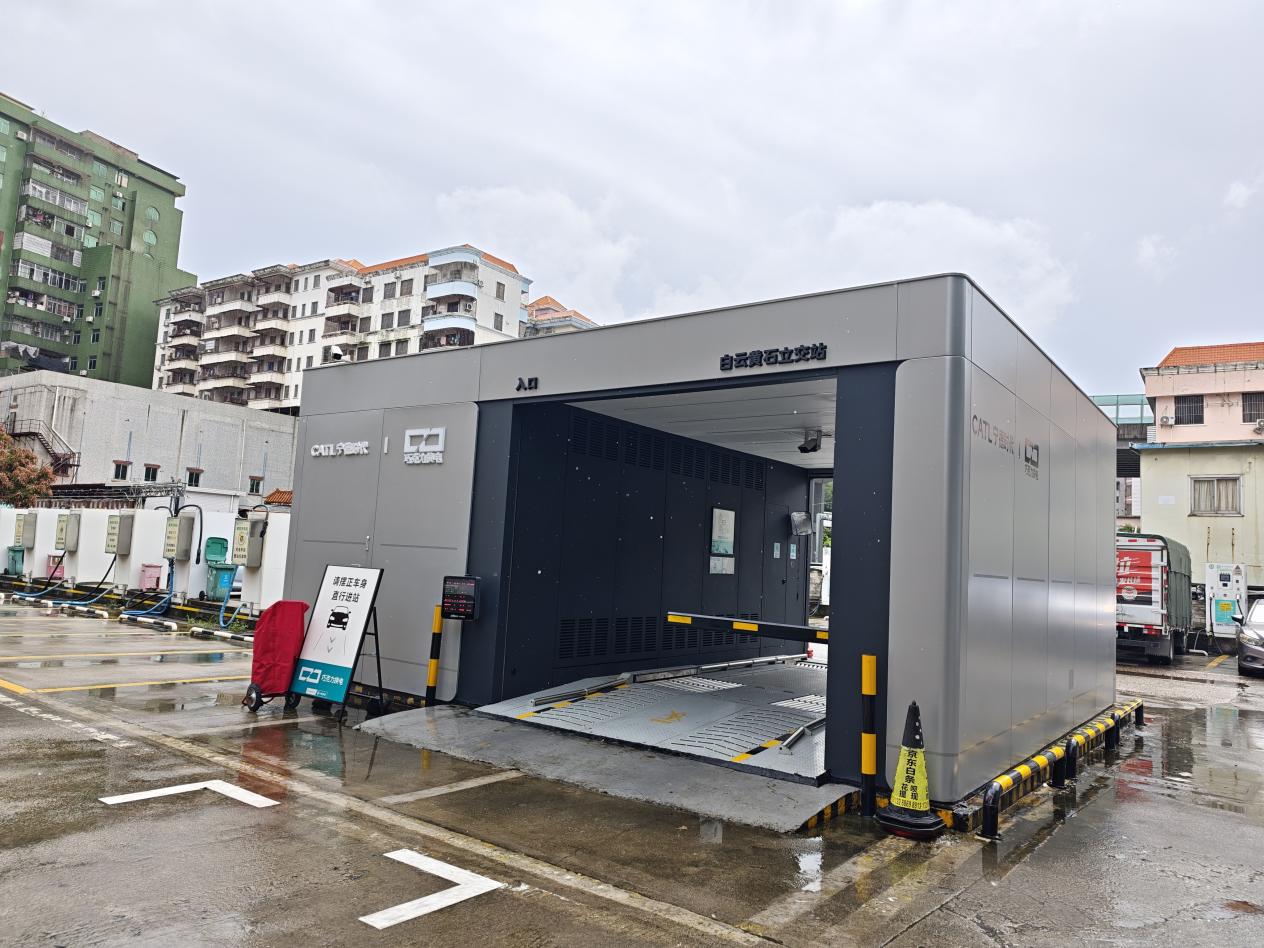
(Source: Photo by Dianchetong)
In the past, under the battery swapping model, users could quickly complete energy replenishment without getting off the vehicle. Now, users do not even need to consider the energy replenishment of their vehicles at all, as the system can handle everything. This sci-fi-like scenario has become a reality. In contrast, at charging stations, users still need to manually open the charging port and insert the charging gun, which has not completely got rid of the demand for manual operation.
In addition, battery swapping remains a shortcut to achieve differentiated competition. NIO has reached cooperation on the battery swapping model with many automakers including Changan, Geely, JAC, Chery, FAW and GAC. However, up to now, other automakers have not launched models adapted to NIO's battery swapping stations, and most non-NIO battery swapping models are commercial vehicles.
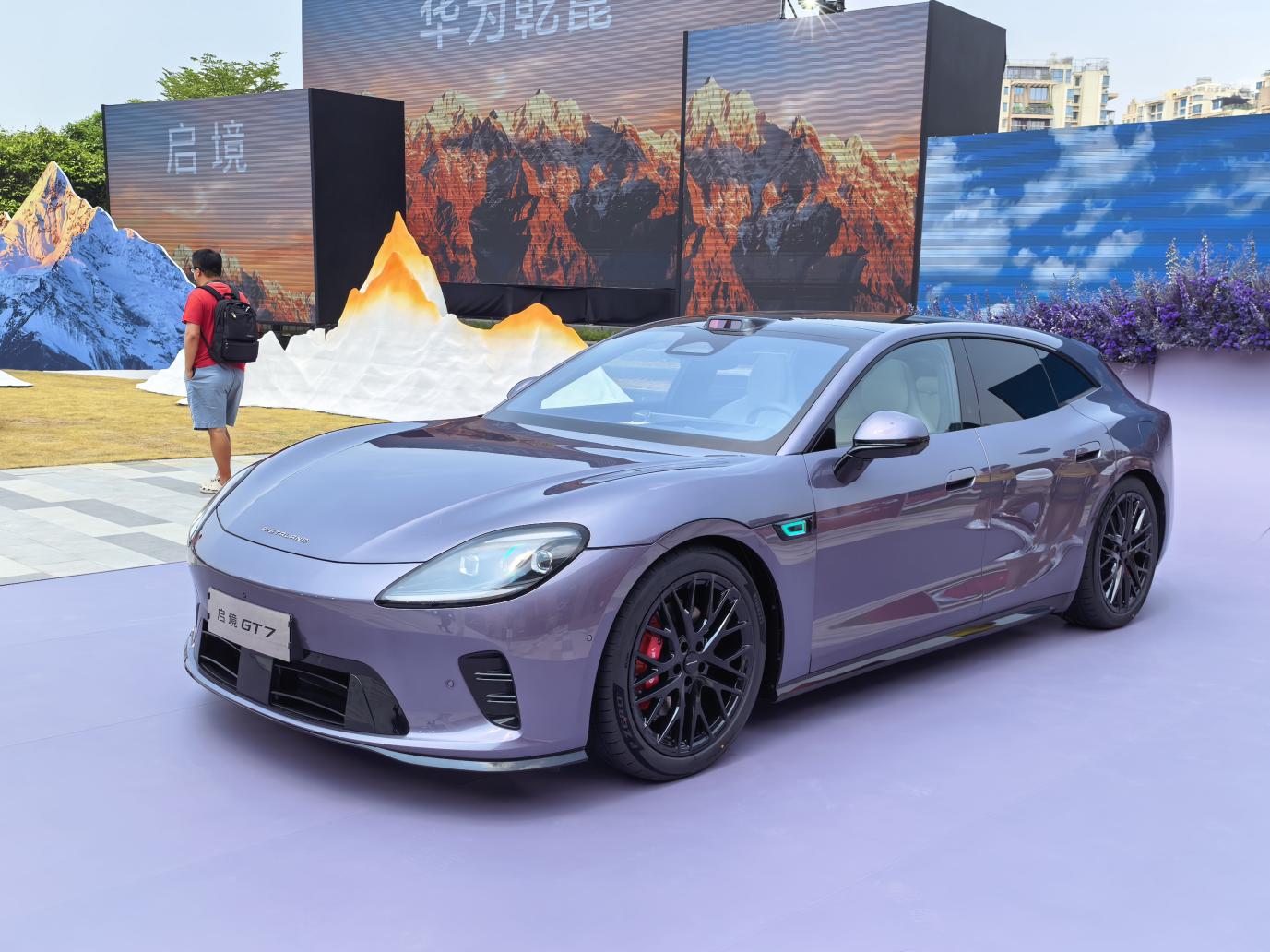
The number of household cars that support battery swapping is relatively small, and NIO is the only player in the high-end market. The two brands Yijing and Qijing, which are cooperatively developed by Huawei Yinwang, Dongfeng and GAC, can quickly achieve differentiated competition by matching the battery swapping model with Qiankun Intelligent Driving.
(Source: Photo by Dianchetong)
More importantly, at the recent performance meeting, CATL stated that more than 2500 Choco-Swap stations for passenger vehicles have been built, covering 200 cities across China, and the number will increase to 3000 by the end of the year. Unconsciously, the scale of CATL's battery swapping stations has been large enough to meet users' daily energy replenishment needs.
CATL is different from NIO. NIO is an automaker, and its battery swapping ecosystem is relatively closed. Although it is moving towards openness, there are still many restrictions, so many automakers are unwilling to join NIO's battery swapping ecosystem.
CATL is a battery manufacturer, and Choco-Swap is built on an open attitude. In addition to CATL building battery swapping stations itself, other enterprises can also independently build battery swapping stations based on CATL's standardized battery modules and construction standards. This cooperation model can rapidly expand the coverage of battery swapping stations after being recognized by partners.
Perhaps it is precisely because the battery swapping model has inherent advantages in energy replenishment and differentiated competition, coupled with the huge battery swapping ecosystem that CATL has built to meet the energy replenishment needs of users of Yijing and Qijing battery swapping models, that Huawei has firmly chosen to join the battery swapping ecosystem even when the charging speed is getting faster and faster.
It is never too late to join the marathon of battery swapping
It is undeniable that with the current increasingly fast charging speed, the advantages of battery swapping are shrinking, but considering the carrying capacity of the power grid, it is almost impossible for charging to be faster than battery swapping. The more stable and faster battery swapping will always have its value to exist.
In 2018, NIO's first battery swapping station was put into operation in Nanshan Science and Technology Park, Shenzhen. More than eight years have passed, NIO's battery swapping model has still not achieved break-even. Battery swapping is a marathon that not only competes in the speed of enterprises building battery swapping stations, but also in their accumulation and strength. This marathon will not end before leading enterprises achieve profitability.
While the penetration rate of new energy vehicles is increasing day by day, the proportion of models with different powertrains is also changing. Data from the China Passenger Car Association shows that in the first half of this year, the retail sales of domestic pure electric passenger vehicles reached 3.11 million units, down 6.6% year on year; the retail sales of plug-in hybrid passenger vehicles reached 1.155 million units, down 27.6% year on year; the retail sales of range-extended passenger vehicles reached 439,000 units, down 19.4% year on year.
Among these three new energy vehicle types with different powertrains, pure electric vehicles have the most stable market performance. When pure electric vehicles become the mainstream power choice in the market, the value of the fast-energy-replenishment battery swapping model will be further elevated. The Yijing and Qijing brands that integrate battery swapping and Huawei's Qiankun Intelligent Driving have turned energy replenishment from a problem that users need to consider whether to do it and when to do it, into a fully automated matter that does not require users' intervention at all.
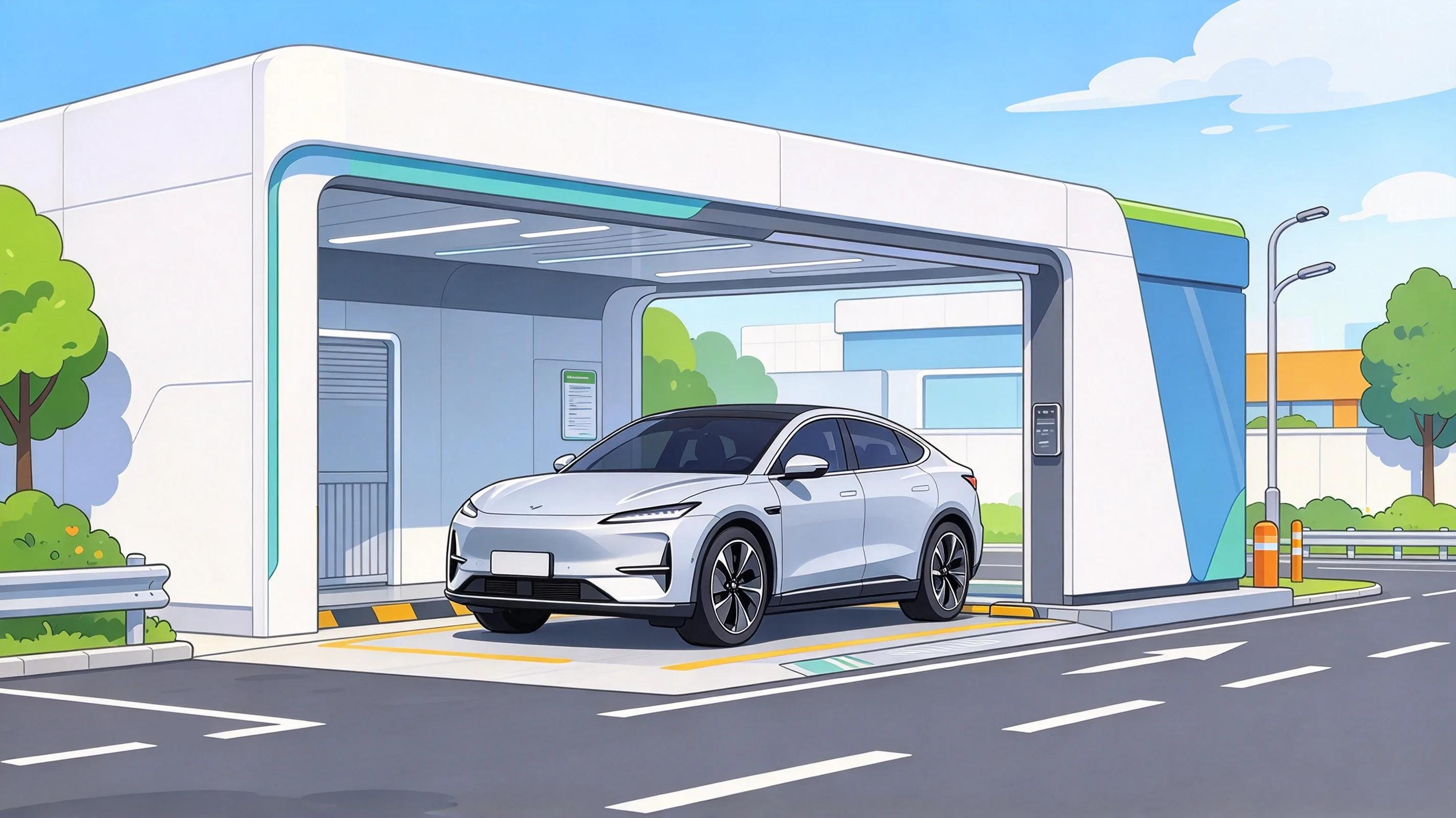
Moreover, the battery swapping model is naturally compatible with the battery rental scheme. At this stage, many consumers still have concerns about battery life, and the high cost of batteries also makes many consumers who target high-end models have to settle for less due to limited budget.
(Source: Generated by Doubao AI)
The battery rental model can separate the battery cost from the vehicle price. Combined with the battery swapping scheme, it can also solve the problem of battery life. All batteries are shared, so consumers do not need to worry about the sharp decline of battery life after their vehicles are used for several years.
The data of NIO ES8 36 hours after its release disclosed by chefans last year showed that the proportion of BaaS users was as high as 90%. During the live streaming event in September this year, Li Bin, CEO of NIO, once again revealed that 90% of current users choose the BaaS mode when buying cars.
At present, high-end pure electric vehicles are generally equipped with large batteries of around 100kWh. If users choose the BaaS scheme, the car purchase cost can be reduced by about 100,000 RMB immediately. For consumers with limited budget, the BaaS mode is the best solution to buy higher-end cars. Therefore, the proportion of NIO's BaaS users has been rising all the way in recent years.
Yijing and Qijing are originally positioned in the high-end market, with relatively expensive product prices. Adopting the combination of battery swapping and battery rental can achieve the effect of expanding to the mass market without reducing the overall vehicle price.
In the view of Dianchetong (ID: dianchetong233), Geely's capital injection into NIO Energy some time ago is essentially for roughly the same reason as Huawei Yinwang's cooperation with CATL and CATL Digital Energy, that is, to use the battery swapping + battery rental scheme to solve the current problems of pure electric vehicles such as high purchase cost and short battery life, and achieve differentiated competition.
The difference is that Huawei Yinwang has obviously stronger execution power. Right after the cooperation agreement is reached, five models are already under planning and will be launched in 2027. Perhaps soon, more automakers will join the battery swapping ecosystem, bind intelligent driving with battery swapping, and turn vehicle energy replenishment from "passive" to "active".
The era of the battery swapping alliance is coming
From beginning to end, the core focus of the battery swapping model is "standards", including the size standard of battery packs, interface standard, voltage platform standard, battery swapping process standard, financial and insurance standards, etc., which involve all aspects of the automotive industry.
If an enterprise builds battery swapping stations independently, it can control all the standards in its own hands, but it also means that the enterprise needs to invest huge resources. The long payback period may even drag down enterprises with insufficient capital. NIO's long-term losses are also closely related to the high investment in the construction of charging and swapping ecosystem.
At the 2024 Choco-Swap Ecosystem Conference, Zeng Yuqun, Chairman and CEO of CATL, once expressed his aspiration that CATL cannot go it alone in the battery swapping model, and will continue to promote standardization, cooperate with all parties including automakers and financial institutions to smooth out the battery swapping business model.
At present, many automakers have reached cooperation with CATL's Choco-Swap. Among them, brands such as BAIC, Changan and GAC have released models that support Choco-Swap, and the development of more than 20 other models is underway. It seems that the era belonging to the battery swapping alliance has arrived.
Compared with NIO, CATL's biggest advantage in the battery swapping field may be that it is a battery manufacturer and more neutral. When cooperating with NIO, automakers may worry about losing the initiative, and having difficulties in reaching agreements on rights, responsibilities and assets. When facing CATL, automakers do not need to have so many concerns.
Dianchetong believes that in the future, new energy automakers may no longer need to buy batteries from CATL and install them on their vehicles. Consumers will communicate directly with CATL for battery purchase or rental schemes, which will rewrite the rules of the new energy vehicle industry.
This article is from "Dianchetong", authorized by 36Kr for release.