Is Imoo "holding social features hostage to dictate terms to parents"? Apple is the predecessor in this regard, and the new national standard may offer a way to break the deadlock.
In the past two days, the Imoo children's smartwatch has once again been pushed to the forefront of public opinion, dominating the top trending searches.
Image source: Weibo
The cause of this situation is not complicated. Many parents have found that even if they buy children's watches of brands such as Huawei and Xiaomi for their kids, it is still difficult for their children to truly integrate into the "Imoo social circle" among their classmates. To allow their children to chat and interact with their friends, parents eventually have to pay for an Imoo watch.
This seemingly absurd phenomenon is the result of Imoo's years of operation in the children's social ecosystem.
In the domestic children's smartwatch market, Imoo has long occupied a leading position, followed closely by Huawei and Xiaomi. Compared with hardware functions such as positioning, call quality, and battery life, Imoo's unique competitive advantage lies in building a relatively closed children's social network through functions such as adding friends by "tapping each other", group chat, and friend moments.
There are very limited social options on children's smartwatches. Apart from Imoo's own social system, the main alternatives are the children's watch versions of WeChat and QQ, and even Xiaomi's Mitu chat function is gradually giving way to Imoo's system. The difference is that Imoo deeply binds social relationships with its own hardware. Children using other brands of watches can make calls and send text messages, but cannot truly participate in most of the social interactions between Imoo users.
For many people, switching to another phone brand will not make them lose their original WeChat friends. But for some primary school students, switching to another watch brand may mean they can no longer join the chats between their classmates.
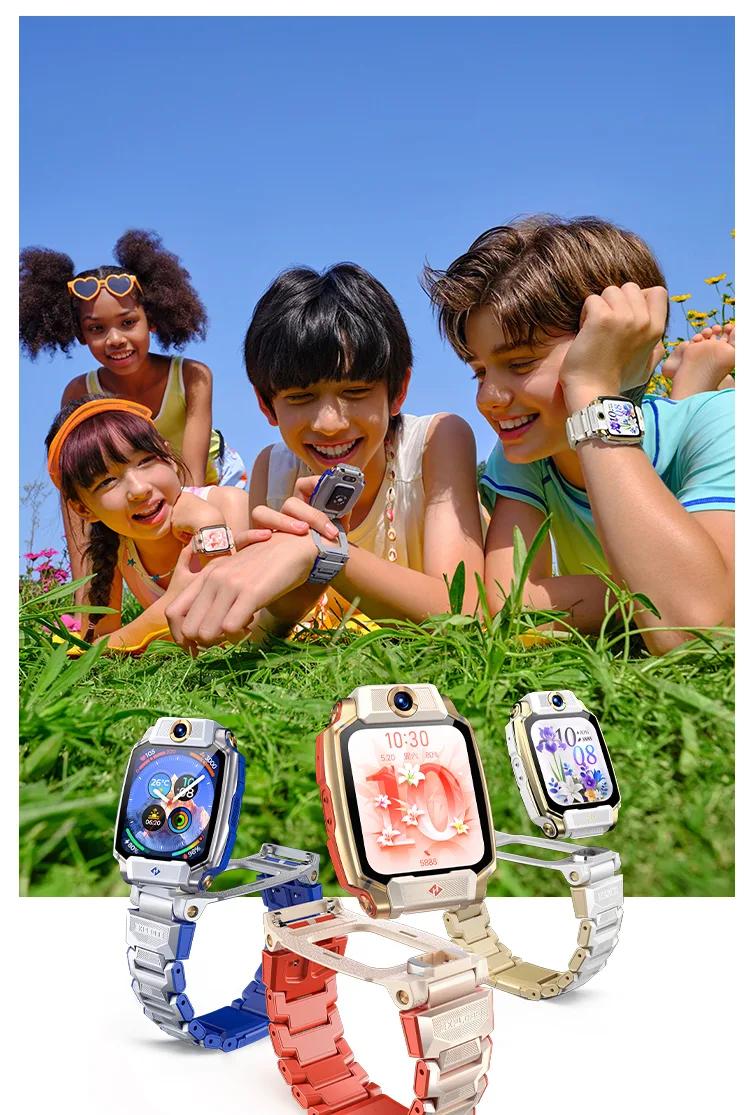
Image source: Imoo
It is no wonder that Imoo has more confidence in its product pricing. Both the Z12 and the Z12 Teen Edition are priced at 2699 yuan, which is more expensive than Huawei's Supernova X1 series (1598 yuan / 2298 yuan) and Xiaomi's first children's smartwatch (1399 yuan), both of which have raised their product positioning this year after adjusting their development strategies.
But this "social hegemony among primary school students" may be coming to an end... isn't it? The new national standard for children's smartwatches, which is set to take effect on January 1, 2027, will it become the key turning point of this change?
Apple has long proved that closed social ecology is a "profitable business"
Imoo's operation model is not new. Across the ocean, Apple, with the blue and green bubble feature of iMessage, has built a similar social barrier, or even a kind of "social shame" among American teenagers.
In 2022, when the WSJ reported on Apple's iMessage, it cited an example: 19-year-old American college student Adele Lowitz replaced her iPhone with an Android phone, and soon someone in her friend group chat asked:
"Who turned green?"
In Apple's iMessage, messages sent between iPhone users are displayed as blue bubbles, while messages sent to Android users are displayed as green. In the past, this was not just a difference in color, but also meant gaps in experience such as high-definition images, read receipts, and group chat interactions.
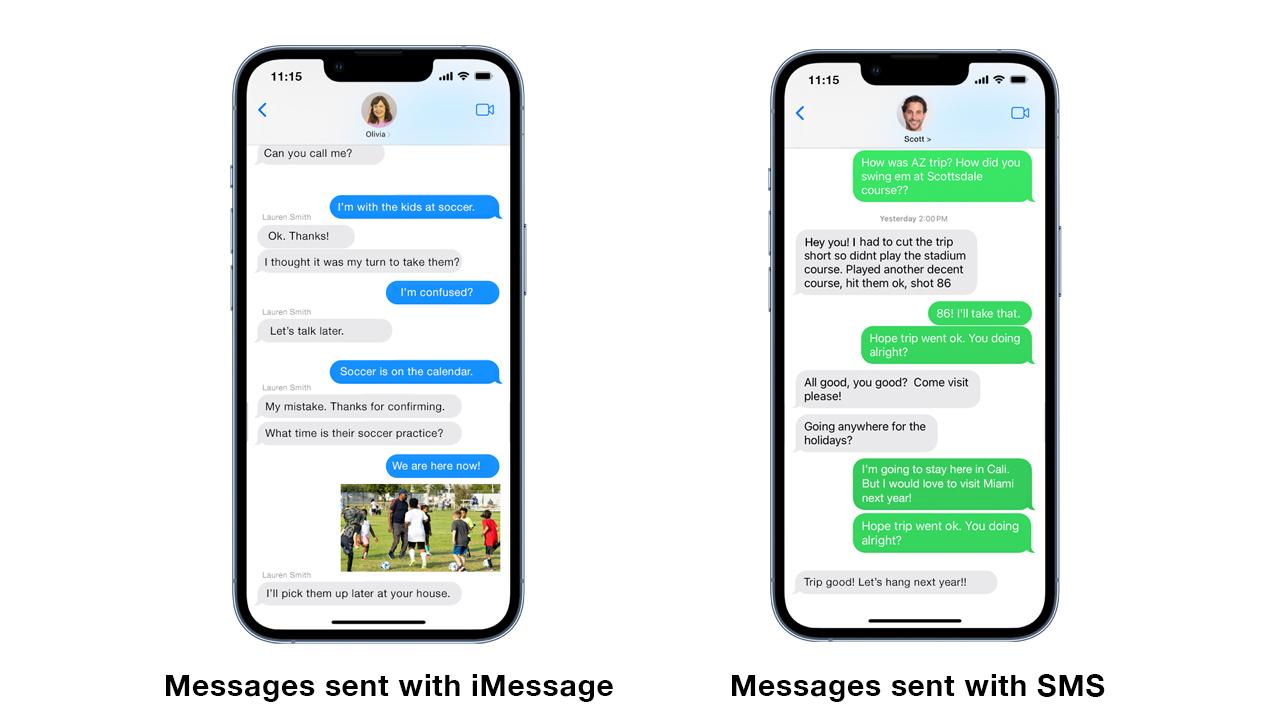
Image source: X
For young Americans who use iMessage, the addition of an Android user may even affect the entire group chat experience. Over time, the blue bubble has become a symbol of social identity, while the green bubble may mean being excluded, and even being ridiculed by peers.
Apple is certainly fully aware of the value of iMessage. In the lawsuit between Epic Games and Apple, a batch of internal emails revealed Apple executives' understanding of iMessage:
In 2013, Craig Federighi, Apple's head of software engineering, explicitly worried that bringing iMessage to the Android platform would remove one of the barriers that prevent iPhone-owning families from buying Android phones for their children.
In 2016, Apple's marketing chief Phil Schiller even said bluntly: "Bringing iMessage to Android will hurt us more than it helps."
This is actually a very successful part of Apple's product design. Through iMessage, Apple turned the interpersonal social relationships into a non-negligible competitive advantage for the iPhone. Users choose iPhone not just because it is easy to use, but also because all their friends around them are using iPhone.
Imoo's logic is exactly the same.
The functions of adding friends by "tapping each other", micro chat, and friend moments have indeed captured the real social needs of children, making children's smartwatches no longer just tools for parents to contact and locate their children. It is undeniable that Imoo has built a solid social network today.
In the final analysis, communication is a basic need of everyone, and hierarchical communication is also determined by human nature. Just like WeChat and QQ, Facebook and iMessage, there are always completely different social needs between teenagers and their parents, and Imoo has more thoroughly tapped into the special social needs of primary school students and even some middle school students.
Jin Zhijiang, CEO of Imoo Technology, once stated in an interview: "The core demand of children's watches is communication, with additional functions to solve children's positioning and safety problems. But from the perspective of long-term development, we think this positioning is wrong - if the public security in China gets better and better, will this demand cease to exist?"
From the perspective of results, Imoo is undoubtedly successful.
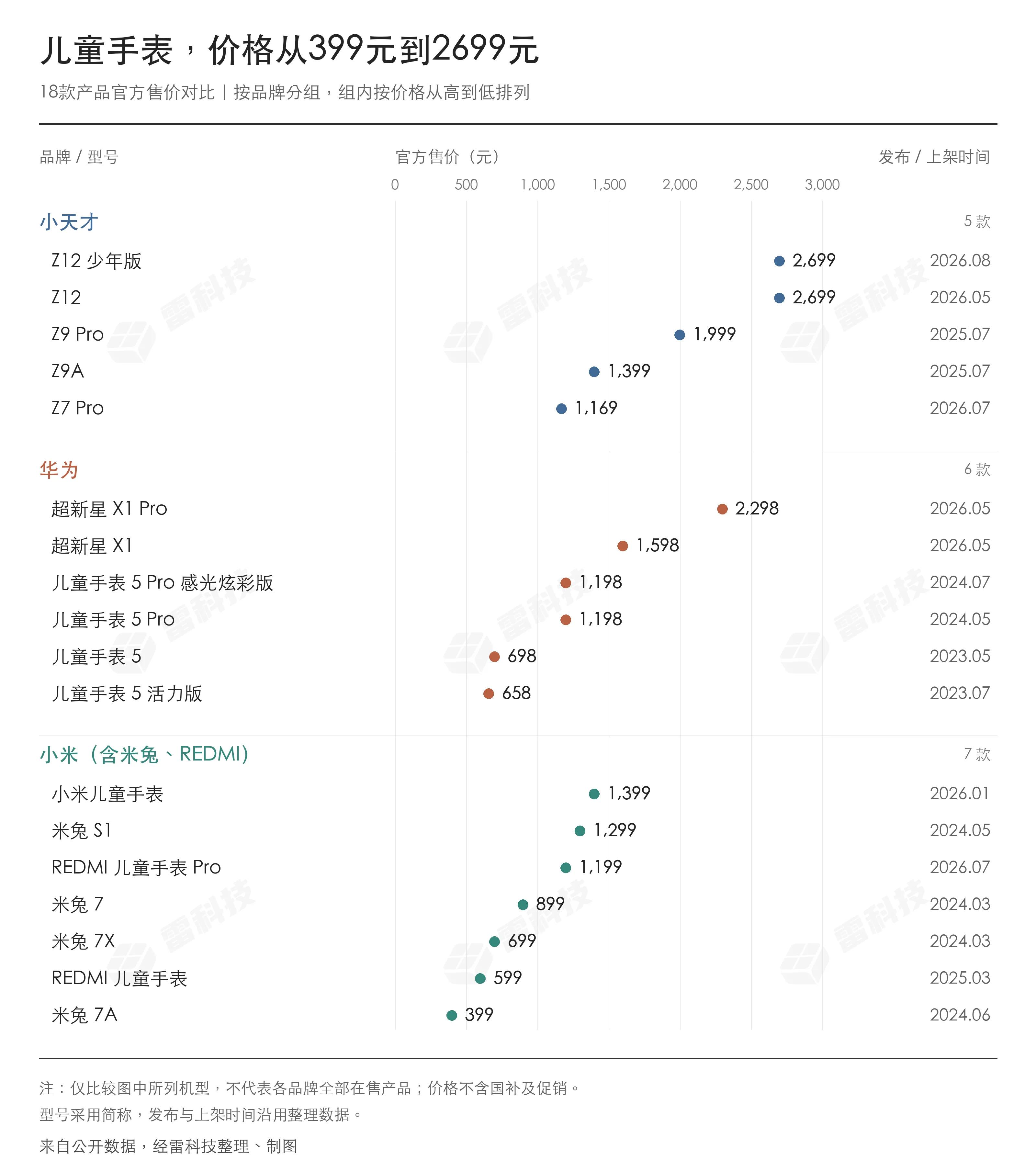
Image source: Lei Technology
In fact, before Xiaomi launched its first children's smartwatch under the Xiaomi brand and Huawei launched its Supernova series children's watches in 2026, there was a gap in pricing power between Huawei, Xiaomi and Imoo, and their sales could not catch up with Imoo at all.
According to data from Lu Tu Technology, the online sales volume of China's children's smartwatch market reached 11.224 million units in 2025 (a year-on-year increase of 7.5%). Imoo's market share was 30.3%, Huawei's market share reached 10%, followed by Xiaomi's market share of 9.4%. Even in the online market data of August, after Huawei and Xiaomi increased their efforts in this sector, Imoo still ranked first in both lists with a 27.8% sales volume share and a 52.6% sales revenue share.
Note that this only counts the online market, and a large part of Imoo's advantages lie in the offline channels not covered by the statistics.
However, no matter for Apple or Imoo, the success of product design cannot hide the other side: converting social relationships into hardware sales by restricting cross-brand communication is also a choice made after commercial consideration.
In the past few years, under years of criticism from the public and regulatory pressure, Apple has made some changes to its closed social system.
In 2024, Apple officially supported RCS in iOS 18, allowing iPhones and Android devices to exchange high-definition pictures and videos, and support functions such as read receipts and input status display. By May this year, Apple even cooperated with Google to launch cross-platform RCS end-to-end encryption in iOS 26.5, further eliminating the difference in social experience between users of the two systems.
But Apple did not open iMessage itself. This just shows that retaining unique product experience and realizing cross-brand basic communication are not mutually exclusive choices.
For Imoo, the question should not be whether to give up its own social network, but why it must limit the social relationships between children to the same watch brand.
The new national standard is not a silver bullet, but a good start
Great ice freezes not in one day.
Many parents have long expressed dissatisfaction with Imoo's "closed social" model. In 2024, China News Weekly published a report titled "How Many Children Are Trapped in Smartwatches?" which recorded the experience of a parent:
Because her son said that all the classmates in the class were using Imoo watches and he could not add friends without one, she finally bought an Imoo watch. It was not until she found that her son spent nearly two hours a day playing with the watch, devoting a lot of time to chat applications, that she realized the seriousness of the problem.
Similar complaints are not uncommon on social networks. Children's smartwatches are becoming more and more like mobile phones. Children are addicted to chatting and comparing the number of likes they get. Parents are not only worried that their children will be isolated, but also that they will be overly addicted. The children's watch originally bought for safety has become a new source of trouble.
By the end of 2025, this dissatisfaction from the market and the industry has promoted the release of the mandatory national standard "Safety Technical Requirements for Children's Watches" with the number GB 46859-2025 (hereinafter referred to as the new national standard for children's watches). In addition to requirements for personal information protection, content safety, anti-addiction, and payment control, there is a particularly noteworthy regulation:
Children's watches of different brands shall be able to exchange phone numbers and nicknames.
According to the announcement, the new national standard will be implemented on January 1, 2027, requiring all newly launched children's watches to support this function compulsorily. In fact, several leading manufacturers involved in the drafting of the new national standard have already taken actions. Take Huawei as an example, Huawei's children's watch 5 series and X1 series both support cross-brand contact adding, and the coverage basically includes the latest models of several leading brands.
This also includes the Imoo Z12.
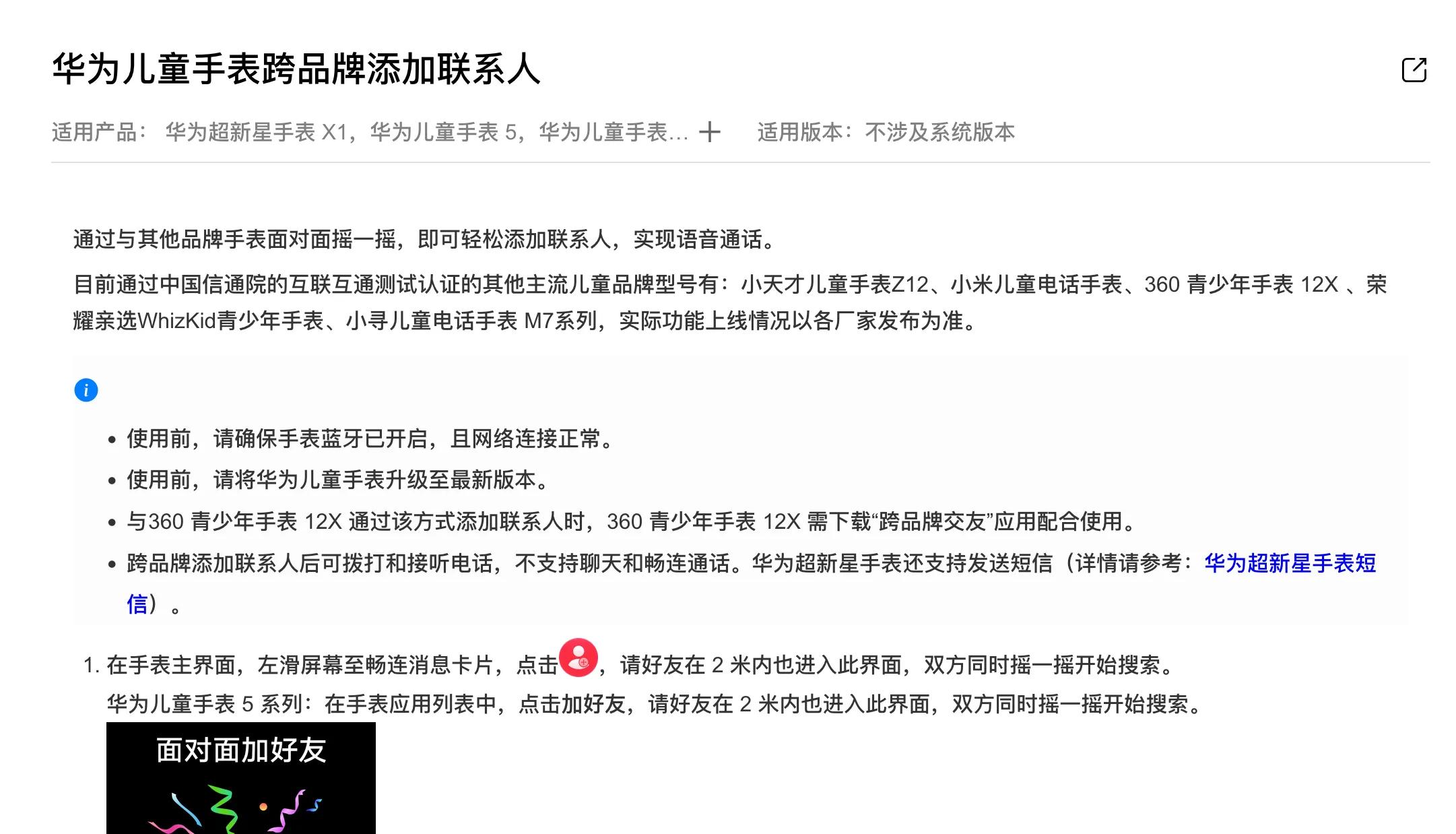
Image source: Huawei
However, there is still a long way to go to truly break Imoo's social barrier. What the new national standard promotes is mainly the interconnection at the address book level, and does not require the interconnection of social networks of different manufacturers. Even if the new national standard is fully implemented next year, children using Huawei and Xiaomi watches cannot join Imoo's micro chat groups or participate in the interaction of Imoo's friend moments.
This is obviously not the result that many parents and children are really looking forward to.
But from another perspective, at least this is a good start. Cross-brand contact exchange needs to solve problems such as identity verification, encrypted transmission, and parent management, and the new national standard has proved that major manufacturers can fully establish unified technical specifications around children's safety. Since phone numbers can be interconnected, why can't friend relationships, chat messages and even group chats reviewed by parents be interconnected?
Of course, further opening up the social network also needs to solve problems such as account system, content review, data protection and responsibility division. But these are more issues of technical implementation and industry collaboration, rather than sufficient reasons to maintain brand isolation.
In the final analysis, Imoo is not obliged to give up its own social ecosystem, and it can fully continue to attract children and parents through better product design and richer functions. But it has not proved why ensuring the safety of children's social interaction must be at the cost of restricting normal communication between different brands.
Apple's actions show that retaining unique social experience and improving cross-platform communication are not contradictory, and the new national standard has taken the first step for the domestic children's watch industry. Ultimately, what we hope to see is that children can finally freely choose their favorite watches, and at least do not have to choose a certain brand just to maintain a friendship.
This article is from "Lei Technology", authorized to be released by 36Kr.