It is very difficult for a fitness coach to earn 10,000 yuan per month.
"As a fitness coach, if you can't even earn 10,000 yuan a month, what's the point of doing this job?"
Similar remarks are not uncommon on social media.
Some coaches show off their income, telling newcomers that as long as they are willing to work hard, earning over 10,000 yuan a month is very normal; when discussing career development, some people also take 10,000 yuan as the minimum standard: if you earn less than 10,000 yuan, it means you are not good at sales, cannot maintain clients, or are simply not suitable to be a coach.
This kind of statement is very impactful.
For people who are preparing to enter the industry, it creates an expectation: since others can earn more than 10,000 yuan, after receiving training, getting certified, and finding a gym, they should not be far behind. For coaches who have already entered the industry but do not earn 10,000 yuan, it becomes a kind of pressure: everyone says this is the normal income, why do I only earn 5,000, 6,000, 7,000 or 8,000 yuan?
After being repeated for a long time, earning 10,000 yuan a month seems to have really become the passing line for the fitness coach profession.
But this assumption is invalid from the very beginning.
Earning 10,000 yuan a month has not been a common income in the past ten years, nor is it now. Especially in recent years when making money has become more difficult and consumers are more cautious about spending, being able to stably earn 10,000 yuan every month still means that one's income has exceeded a considerable part of the labor force in society.
Fitness coaches are certainly no exception.
01
In the whole society,
What level is 10,000 yuan exactly
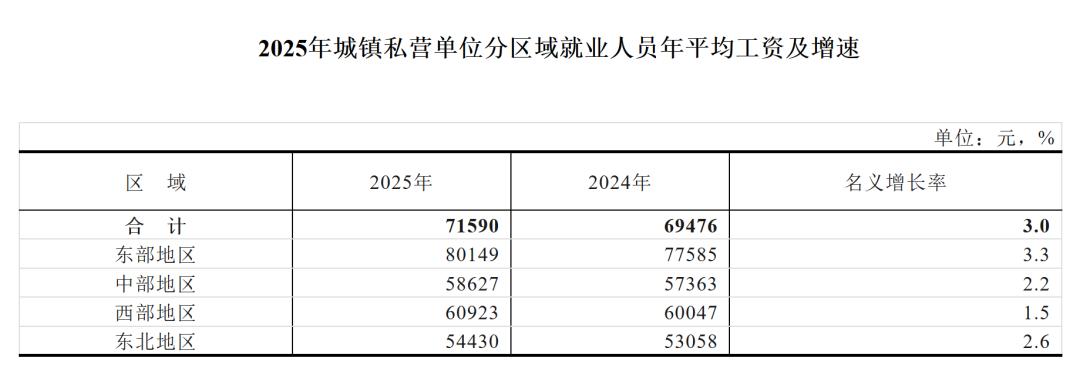
Data released by the National Bureau of Statistics shows that in 2025, the average annual salary of employees in urban private units nationwide was 71,590 yuan, equivalent to about 5,966 yuan per month.
Original data from the National Bureau of Statistics
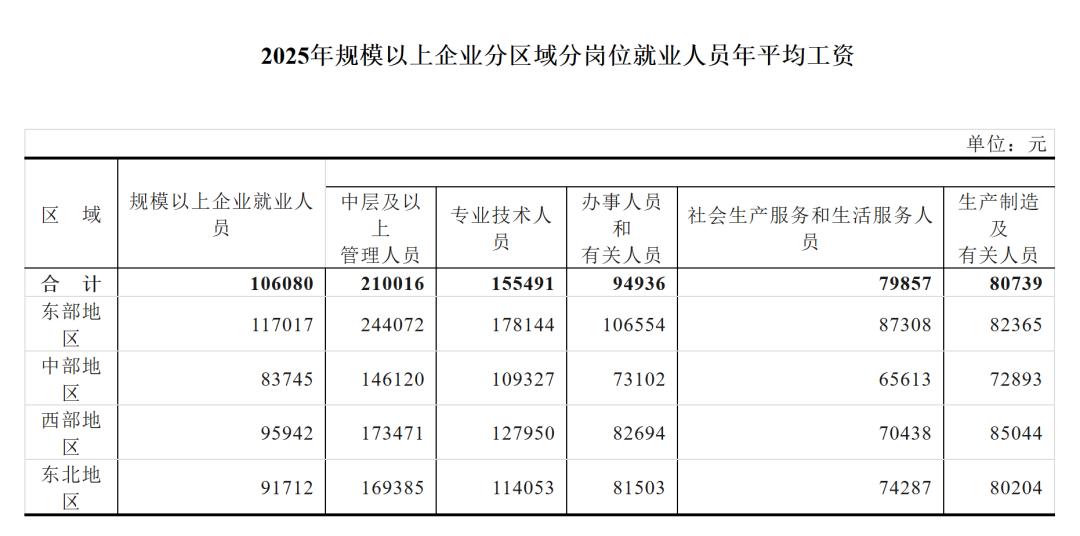
Among enterprises above designated size, the average annual salary of clerical and related personnel is 94,936 yuan, equivalent to about 7,911 yuan per month; the average annual salary of social production service and life service personnel is 79,857 yuan, with an average monthly salary of about 6,655 yuan. Even if managers, professional technicians and high-wage industries are included, the overall average monthly salary of employees in enterprises above designated size is only 8,840 yuan.
Original data from the National Bureau of Statistics
A monthly salary of 10,000 yuan translates to an annual income of 120,000 yuan. This figure is nearly 70% higher than the average salary of employees in urban private units nationwide, and also exceeds the overall average level of employees in enterprises above designated size.
The results presented by household income statistics are equally obvious. In 2025, the median per capita disposable income of national residents was 36,231 yuan. Even for the top 20% of households with the highest income, the average per capita disposable income is only 103,778 yuan, equivalent to about 8,648 yuan per month.
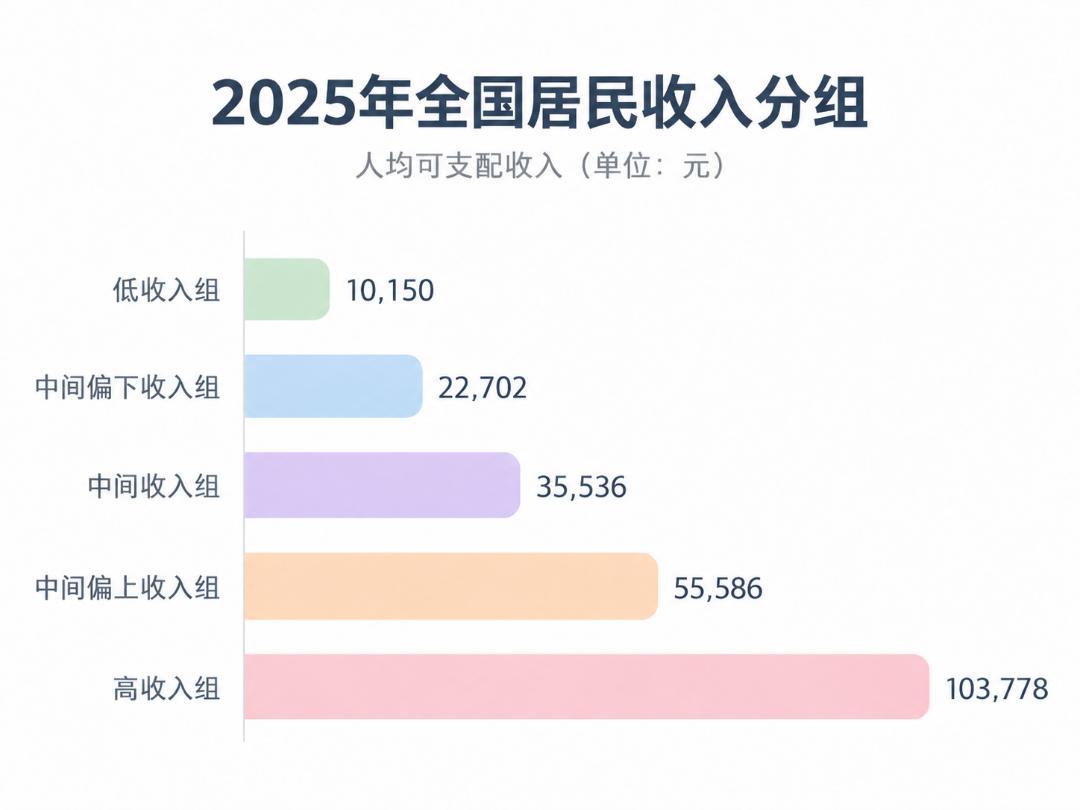
Per capita disposable income is not the same concept as personal wages and cannot be directly compared. But these figures at least show the real income level of society: people who can stably earn 10,000 yuan every month are by no means the majority.
Take a walk around an ordinary shopping mall, and you will find that except for a small number of high-end luxury salespeople, managers and employees with excellent performance, most front-line service personnel cannot earn 10,000 yuan.
Clothing shop assistants, restaurant waiters, beauticians, receptionists, cleaners, and ordinary salespeople all serve consumers every day, and also need to communicate, sell and deal with emotions, but very few of them can stably earn 10,000 yuan a month.
Fitness coaches are also part of the service industry.
Just because coaches have better figures, their working environment looks more decent, and their clients include company owners, financial practitioners and high-income white-collar workers, we cannot take it for granted that they should also earn more than 10,000 yuan a month. Serving high-income clients does not mean that service providers will automatically get high income.
Fitness coaches have long been in an environment that is prone to creating income illusions.
Every day, they are exposed to courses that cost hundreds of yuan per session, and members who buy course packages worth thousands or even tens of thousands of yuan at a time. From the coach's perspective, it is easy to think: clients are willing to pay two or three hundred yuan for an hour, so it seems natural to earn 10,000 yuan a month.
But what consumers pay is the price of the course, not the coach's salary.
The course revenue also needs to cover rent, equipment, customer acquisition, operation, management and platform costs. In the end, only part of it actually goes to the coach.
The fitness industry is particularly keen to show a small number of high-income earners. Coaches who earn 20,000 or 30,000 yuan a month are willing to share their experiences and are more likely to be packaged as success stories by institutions; coaches who only earn 4,000 or 5,000 yuan a month and leave after working for half a year usually will not make a special video to tell others that they have failed.
Those who leave their voices are often the people who have made money. A large number of people who have not made money just leave quietly.
Over time, a strange perception has formed in the industry: earning over 10,000 yuan is normal, and failing to earn that much means poor personal ability.
But public surveys do not support this judgment.
Relevant surveys on the fitness coach profession show that 5,000 yuan to 8,000 yuan is the income range with the largest number of full-time coaches. Roughly calculated according to different levels in the report chart, coaches with a monthly income of less than 10,000 yuan account for about 60%. Coaches with a monthly income between 10,000 yuan and 20,000 yuan account for more than 30%, indicating that there is indeed a group of high-income people in the industry, but it is far from the level of "everyone earns over 10,000 yuan". Moreover, this kind of survey with a small number of samples will naturally attract higher-income people to take the initiative to participate in the survey, thus presenting a result of higher income.
Of course, some people can achieve a monthly income of 10,000 yuan, but describing it as the universal income of fitness coaches obviously overestimates this industry.
More importantly, it is now more difficult for today's fitness coaches to earn 10,000 yuan than it was a few years ago.
02
In the past, it relied on high course prices and sales commissions
Now both sources of income are shrinking
In the period when traditional gyms had good income, a private lesson could be sold for 300 to 400 yuan. In first-tier cities and high-end clubs, it was not uncommon to see 500 to 600 yuan per lesson. At that time, the income of coaches was usually divided into several parts: basic salary, sales commission, and class hour fee. Some stores also set up renewal rewards and team bonuses.
Among them, sales commission is a very important source of income.
Assuming that a member buys 50 private lessons at a time, 400 yuan per lesson, the total amount is 20,000 yuan. The coach takes 10% sales commission, which is 2,000 yuan. After the member finishes all the lessons, the coach can continue to get the class hour fee.
Selling a large course package guarantees both sales revenue and class hour income for the next few months.
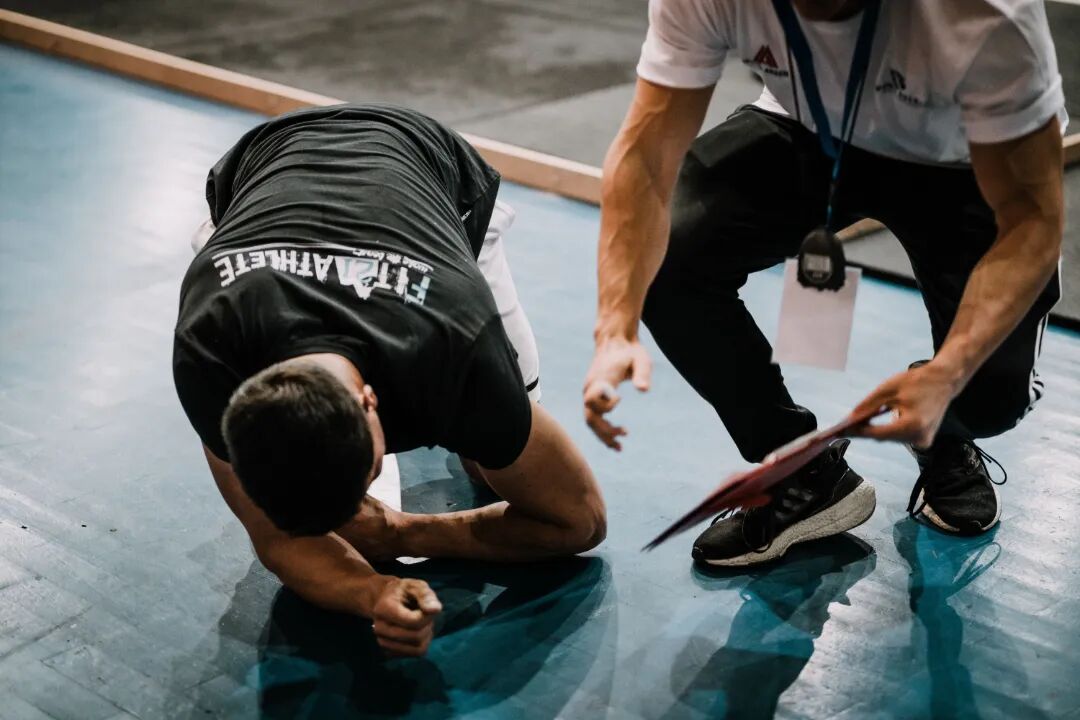
The problem with this model is also obvious. In order to recover cash quickly, gyms will require coaches to keep selling courses; in order to complete performance, coaches can only keep selling to members. The hard-selling that is most disliked by consumers in the industry is largely forced out by this income structure.
In the past few years, more and more fitness brands have begun to emphasize "no sales promotion", and sales commissions have been reduced or even cancelled directly.
Not all gyms have no sales commissions now. There are still great differences in compensation methods between traditional clubs, personal training studios and different chain brands. But the direction of the industry has changed: some platforms hand over customer acquisition and transaction to dedicated sales staff or departments, and coaches get a share according to the actual number of classes they teach; other stores lower sales rewards and shift the assessment focus to class hour consumption, renewal and customer retention.
For consumers, less forced course selling is certainly a good thing. But for coaches, a once very important part of their income is missing.
While sales commissions are shrinking, the price of private lessons is also falling.
In the past, private lessons could easily be sold for 400 yuan or more, which is now rarely seen. The actual transaction price of private lessons in the mass fitness market now mostly ranges from 200 yuan to 300 yuan. A few high-end stores can still sell for more than 400 yuan, but there are very few gyms that can sell at this price.
In 2025, a consumer bought 50 private lessons at an affordable chain gym. The marked price of the course was 220 yuan, and the total price after discounts was 8,850 yuan, with an average of 177 yuan per lesson. In another report, the regular private lessons purchased by consumers are 200 yuan per lesson, and rehabilitation courses are 300 yuan per lesson.
A media visited more than 30 gyms in Beijing in 2025 and also found that about 70% of the stores have adjusted their charging methods. Some stores have reduced the preferential price of private lessons to 200 yuan per lesson. If you buy 50 lessons at a time, with various discounts, the total cost can also be controlled within 10,000 yuan.
Private lessons priced at 300, 400, 500 or 600 yuan per lesson have not completely disappeared, but in the mass market, 200 yuan to 300 yuan is becoming a more common price range.
After the course price drops, the coach's class hour fee will naturally drop accordingly.
In the past, a lesson was sold for 400 yuan. According to a 30% class hour commission, the coach could get 120 yuan after teaching a lesson. Assuming the basic salary is 3,000 yuan, without calculating the sales commission, completing about 59 classes a month can bring the income close to 10,000 yuan.

Now a lesson is sold for 250 yuan. According to the same 30% ratio, the coach can only get 75 yuan per lesson. With a basic salary of 3,000 yuan, about 94 classes are needed to reach 10,000 yuan.
From 59 classes to 94 classes, the number of classes has increased by nearly 60%.
This does not even take into account the loss caused by the reduction of sales commissions. If in the past you could still get 1,000 or 2,000 yuan from course sales, but now you only have basic salary and class hour fees, coaches can only make up for the income by teaching more classes.
If the course price drops to 200 yuan, the 30% class hour commission is only 60 yuan. With a basic salary of 3,000 yuan, you need to complete about 117 classes a month to earn over 10,000 yuan.
117 classes, an average of nearly 30 classes per week. Coaches not only need to sell the courses, but also ensure that members come to the store on time to actually consume these courses.
The so-called "it's easy to earn over 10,000 yuan a month" is hardly valid when you do the math.
03
Large course packages are getting harder to sell
Thirty lessons can already be regarded as a large order
The drop in course prices is not the whole story.
In the past, traditional gyms were used to selling private lessons of dozens or even hundreds of sessions to consumers. Collecting a large amount of prepaid fees at one time can not only solve the cash flow of the store, but also allow coaches to lock in sales commissions and future class hours in advance.
Now consumers are increasingly reluctant to pay in this way.
Problems such as gym closures, transfers, coach turnover and difficulty in refunding have made many people wary of large amounts of prepaid fees. Regulatory policies are also promoting gyms to provide prepaid products with smaller amounts and shorter terms. The relevant measures implemented in Shanghai in 2025 clearly guide operators to provide "small-amount, short-term" prepaid consumption services.
In actual sales, the change is very obvious.
Now many members prefer to buy 8 or 12 lessons first, and renew after they think the coach is suitable. Buying 30 lessons at a time is already a pretty good order in many ordinary stores.
<