The electric vehicle industry is fully saturated, the "de-CATL" movement is gaining momentum, is CATL really finished this time?
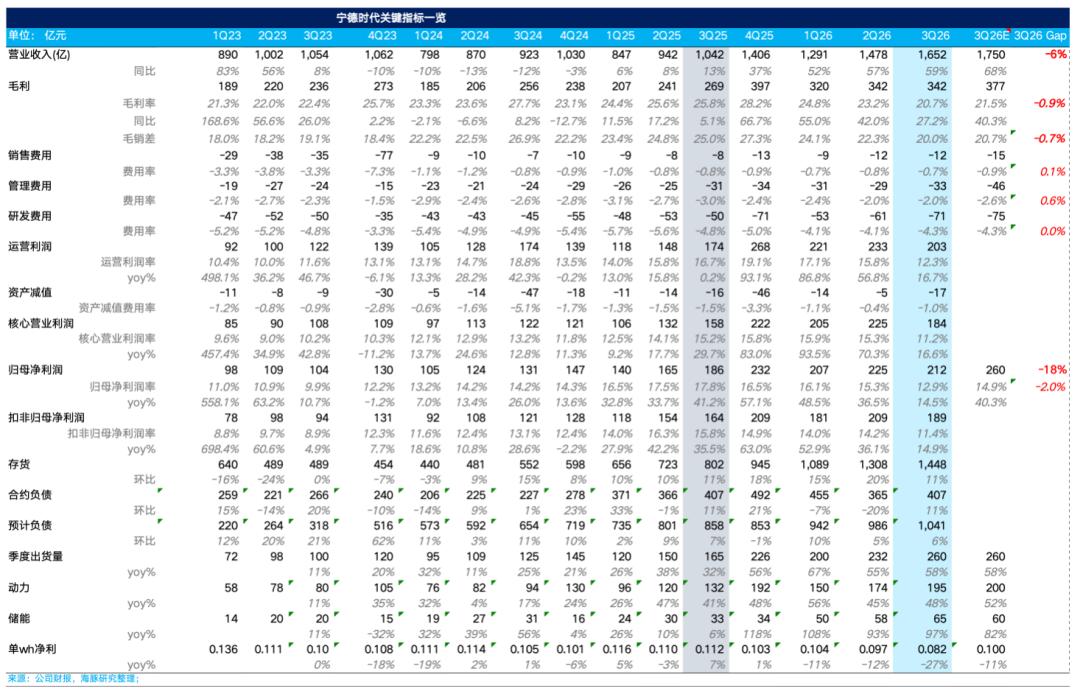
On the evening of October 20, 2026, CATL released its financial results for the third quarter of 2026. The key highlights are as follows:
1) Revenue continues rapid growth but falls short of market expectations: In the third quarter of 2026, CATL's single-quarter revenue reached 165.2 billion yuan, a year-on-year increase of 59%, but lower than the market expectation of 175 billion yuan.
The high growth in revenue is still driven by shipment volume — the third quarter is the traditional peak season, coupled with downstream customers' advance pick-up of goods before the battery consumption tax was levied starting from September 1.
2) Shipment volume continues rapid growth, broadly in line with expectations: In the third quarter, the company's battery shipments recognized in revenue exceeded 260GWh, representing a year-on-year increase of approximately 58% and a quarter-on-quarter increase of around 12%, which was largely in line with market expectations.
By breakdown, power battery shipments reached about 195GWh (up roughly 48% year on year). Against the backdrop of negative year-on-year growth in domestic new energy vehicle sales, the growth mainly comes from the accelerated electrification in Europe (new energy vehicle sales in nine European countries in September rose 51% year on year, with penetration rising to 43.2%), surging exports from Chinese self-owned brands, electrification of commercial vehicles, and continuous increase in electricity consumption per vehicle.
Energy storage battery shipments reached about 65GWh (nearly doubling year on year), growing faster than power batteries. Global energy storage demand remains highly prosperous, and the decline in lithium carbonate price has also improved the economy of energy storage projects.
3) Revenue per Wh stays flat quarter on quarter, product structure hedges lithium price linkage: In the third quarter, the company's revenue per Wh (total revenue / shipment volume) was about 0.57 yuan/Wh, basically flat compared with the second quarter.
Lithium carbonate price entered a new round of sharp decline since May, with a cumulative drop of 39% by the end of September. The lithium carbonate linkage mechanism for power batteries (transmission cycle of about 1-2 months) makes the decline of lithium price begin to be reflected in the selling price; however, the energy storage business is extending from DC-side cells to AC-side systems, and changes in product structure have hedged the linked price reduction.
4) Gross profit margin drops significantly quarter on quarter, below expectations: In the third quarter of 2026, the company's consolidated gross profit margin was 20.7%, lower than the market expectation of 21.5%, down about 2.5 percentage points from 23.2% in the second quarter, and has declined for three consecutive quarters. Accordingly, gross profit per Wh dropped from about 0.148 yuan/Wh in the second quarter to about 0.131 yuan/Wh.
Gross profit amounted to about 34.2 billion yuan, basically flat quarter on quarter; revenue rose by nearly 12% quarter on quarter, but did not bring about an increase in gross profit.
The quarter-on-quarter decline in gross profit margin is mainly due to:
a. Product structure — according to the management, the proportion of products with lower added value and relatively simpler manufacturing increased this quarter, and there were more projects requiring urgent delivery. The impact of this factor is greater than that of taxes and fees;
b. Although the reduction of export tax rebate (from 9% to 6%) was implemented from April 1, it was fully reflected in the third quarter based on the shipment caliber;
c. Raw materials and semi-finished products hoarded at high prices in the second quarter were consumed intensively during the period of falling lithium prices.
5) Net profit is nearly 20% lower than expected, net profit per Wh drops to 0.08 yuan: The attributable net profit in the third quarter was 21.25 billion yuan. While revenue increased by 59% year on year, net profit only increased by 14.5% year on year, and even fell by 6% quarter on quarter, which was even lower than the lowered market expectation of 22-24 billion yuan.
Calculated based on shipments exceeding 260GWh, net profit per Wh is about 0.082 yuan/Wh (about 0.097 yuan/Wh in the second quarter), down roughly 15% quarter on quarter.
Dolphin Capital believes that the drag on the profit side mainly comes from:
a. The quarter-on-quarter decline in gross profit margin;
b. The 2% battery consumption tax levied since September — taxes and surcharges jumped from 690 million yuan in the second quarter to 2.21 billion yuan, an increase of about 1.53 billion yuan in just one month, which is much higher than the 800 million yuan previously estimated by Dolphin Capital. The management confirmed that the increment mainly comes from the consumption tax; the consumption tax is a price-inclusive tax, and the sharing plan with customers has not been finalized. Before the agreement is reached, the cost will be borne by the company, and the fourth quarter will see the full-quarter impact;
c. R&D expenses continue to rise to 7.14 billion yuan (6.1 billion yuan in the second quarter);
d. Due to the rapid decline in lithium prices, asset impairment losses increased by 1.2 billion yuan to 1.7 billion yuan quarter on quarter, mainly from inventory depreciation.
Overall view of Dolphin Capital:
Overall, CATL delivered a "shocking" performance in the third quarter. While revenue still grew by 59% year on year, the attributable net profit only increased by 15% year on year, far below expectations. Gross profit margin, net profit per Wh and operating cash flow are all weakening simultaneously, with net profit per Wh dropping from 0.097 yuan/Wh in the second quarter to about 0.082 yuan/Wh.
The biggest drag still comes from factors such as the consumption tax (fully recorded before the negotiation with customers is completed), the reduction of export tax rebate, and the rise of asset impairment.
However, it should be noted that the consumption tax only affected one month in the third quarter, and the fourth quarter will see the full-quarter impact; if the sharing plan with customers still cannot be agreed, the management admitted that the unit profit pressure in the fourth quarter will be similar to that in the third quarter.
But since the release of the second quarter financial report, CATL's Hong Kong stock price has fallen from about HK$622 to around HK$412, and its A-share price once dropped to 259 yuan; during this period, the company continued to implement share repurchases (repurchase actions were still taken on September 18).
Dolphin Capital believes that the pullback of stock price mainly stems from the following concerns, and the sharp drop in net profit per Wh this time has once again aggravated market concerns:
① The sharp drop in lithium carbonate prices leads to rising uncertainty on the demand side: the market is worried that the prosperity of lithium battery industry has peaked, and the impact of unit price decline and inventory impairment on per-Wh profitability;
② Concerns that domestic demand will weaken in 2027 (domestic passenger vehicles, domestic energy storage), while production capacity on the supply side will be released intensively;
③ Worried about the "de-CATL" trend among automobile manufacturers, which will reduce CATL's market share and bargaining power;
④ The downward space of net profit per Wh under the triple pressure of consumption tax, export tax rebate and rebates.
Specifically:
① Sharp drop in lithium carbonate prices: Lithium prices fall rapidly, and uncertainty on the demand side is rising
Contrary to the market concern in the second quarter that "rising lithium prices erode profits and trigger negative demand feedback", lithium carbonate entered a new round of sharp decline in the third quarter: the spot price has fallen by 39% cumulatively since May, with a decline of more than 23% in September alone to 120,000 yuan/ton, and further dropped to around 100,000 yuan/ton in mid-October, which is one of the stages with the fastest decline rate in history.
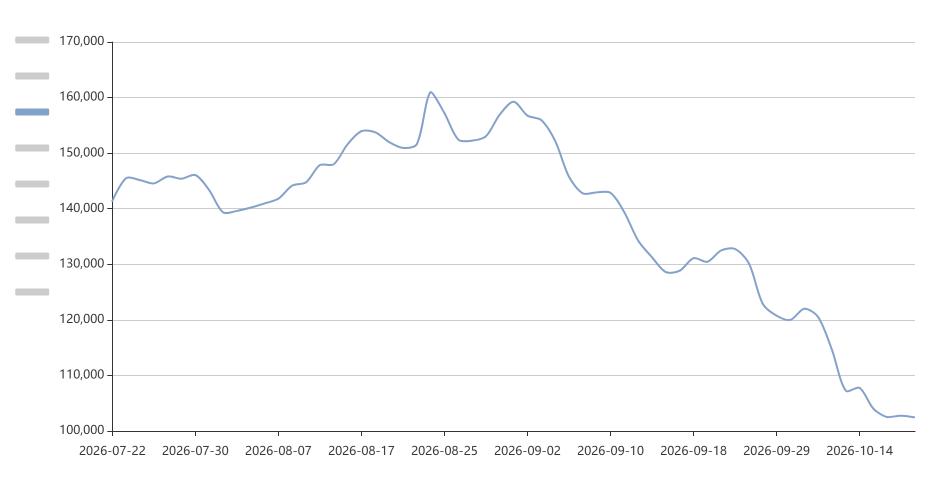
Behind the sharp decline is the simultaneous shift of narratives on both supply and demand sides:
a. Supply side accelerates recovery: Production capacity under maintenance resumes production intensively, and domestic lithium carbonate output in September is expected to rebound by about 11% quarter on quarter; the arrival of Zimbabwean concentrates is expected to increase (Huayou's Zimbabwe mine has a 2027 shipping target of 100-120kt LCE, but the export ban may be tightened from January 1, 2027); the resumption of production at the Jianxiawo lithium mine is also advancing.
b. Demand side weakens marginally: According to industry chain tracking, the production pipeline of the top 5 battery manufacturers in September was revised down from +7% quarter on quarter to +2%, mainly due to CATL's downward revision — CATL's September output expectation was cumulatively lowered by 14% to -5% quarter on quarter, and rebounded by 6% in October to 112GWh;
Coupled with the downward revision of production schedules for energy storage customers in the third quarter, many leading battery and material manufacturers lowered their production schedule guidance for the fourth quarter and 2027, as well as rumors of order cuts in the energy storage sector, the market began to worry that the growth rate of energy storage will slow down significantly in 2027, lithium will shift from shortage to surplus, and the expectation of loose supply has been priced in advance.
Dolphin Capital believes that the fall in lithium prices cannot be simply interpreted as a "cost benefit" — price is the result of supply and demand.
When lithium prices rose in the second quarter, downstream production schedules were full and energy storage stocking was active; while in the third quarter, lithium prices fell sharply while supply recovered, and marginal demand (especially domestic energy storage and domestic passenger vehicles) may have failed to keep up with the pace of supply recovery, the uncertainty on the demand side is rising significantly.
For CATL, the fall in lithium prices will also lead to lower selling prices and higher risk of inventory impairment:
a. Linked reduction of selling prices: Power battery selling prices are linked to lithium carbonate on a 1-2 month cycle. The third quarter began to reflect the downward trend of lithium prices from May to August, and the decline in September was the largest, so the linked price reduction will be more obvious in the fourth quarter.
b. Inventory impairment risk: The average lithium carbonate price in the third quarter fell by about 14% quarter on quarter. The company's inventory at the end of the second quarter was at a historical high of about 131 billion yuan, and further rose to 144.8 billion yuan at the end of the third quarter. During the period of rapid decline in lithium prices, the consumption of this part of high-priced inventory will compress the current unit gross profit and lead to a rise in inventory depreciation reserves.
Asset impairment losses in the third quarter were 1.71 billion yuan (about 5 billion yuan in the second quarter), higher than the consensus expectation of 1.26 billion yuan, with a significant quarter-on-quarter rebound. If lithium prices remain at 110,000-120,000 yuan/ton in the fourth quarter, there will still be certain impairment pressure.
Sharp drop in lithium prices is often accompanied by CATL's valuation correction, but the key lies in whether demand can hold up:
Looking back at history, lithium carbonate fell from its peak of about 600,000 yuan/ton in November 2022 to about 100,000 yuan/ton at the end of 2023; CATL's market value dropped all the way from the high point of about 1.6 trillion yuan at the end of 2021, and the lowest point was about 600 billion yuan when its valuation bottomed out at the end of January 2024, and its PE (TTM) was once compressed to 14 times.
But 2024 is a counterexample: The upstream price drop brought cost dividends, net profit per Wh stabilized at about 0.11 yuan, coupled with energy storage becoming the second growth curve, CATL's performance continuously exceeded expectations, and its valuation and market value recovered accordingly, with the market value nearly doubling compared to the lowest point.
However, it should be noted that when lithium prices fell in 2024, energy storage demand was exploding, and the cost dividends were realized as profits; while this round of lithium price decline is accompanied by concerns about demand in 2027 — whether the cost dividends can be converted into profits depends on whether demand can stabilize.
② 2027: Weakening domestic demand vs concentrated release of supply
Since August, investors' concerns have expanded from "slower demand growth in 2027" to "overcapacity, declining utilization rate, and a new round of price wars", and some investors even worry that energy storage will see negative growth in 2027 just like this year's photovoltaic installed capacity. Specifically:
Total volume: Dolphin Capital expects the growth rate of battery shipments in 2027 to drop from about 40% to 20%-25%, with the structure showing "domestic slowdown, overseas taking over"
Global lithium battery demand is expected to grow by about 36%-45% in 2026, and Dolphin Capital expects it to slow down significantly to about 20%-25% in 2027.
By breakdown, the slowdown in growth mainly comes from the domestic market — domestic passenger vehicles and domestic energy storage shift from high growth to low growth, while overseas energy storage, overseas power batteries and domestic commercial vehicles still maintain growth of 20%-50%, becoming the main incremental contributors:
a. China's power battery sector: growth rate of about 15% in 2027, passenger vehicles stay flat, commercial vehicles take over
Passenger vehicles: The penetration rate of domestic new energy vehicles has exceeded 60%, and the market has entered stock competition. From January to September, domestic retail sales of new energy vehicles fell by 12.8% year on year, but battery demand significantly outperformed the whole vehicle sector:
From January to September, domestic power battery installation volume rose by 17% year on year, and power battery sales (including exports) increased by 38% year on year, mainly driven by the increase in electricity consumption per vehicle — the average electricity consumption per new energy vehicle from January to September was 69.5kWh, up 32% year on year, among which pure electric and plug-in hybrid vehicles increased by 17% and 44% respectively. The trend of larger batteries for pure electric models and "large battery + small fuel tank" for extended-range vehicles has taken shape.
Looking ahead to 2027, the marginal effect of the increase in electricity consumption per vehicle will weaken, which can only hedge the decline in vehicle sales. Although the purchase tax will still be halved at 5% in 2027 and will not return to 10% until 2028, which may advance part of the 2027 demand, under conservative circumstances, it is expected that CATL's domestic passenger vehicle battery sales in 2027 will be roughly flat year on year;
Commercial vehicles: The penetration rate of electric heavy trucks rose from 13% in 2024 to 34% in the third quarter, with an electricity consumption per vehicle of about 220kWh, more than 3 times that of passenger vehicles (about 69kWh), showing a significant "leverage effect of high electricity consumption per vehicle"; since the beginning of this year, CATL's commercial vehicle battery installation volume has increased by 53% year on year, and CATL's