With eight consecutive quarters of decline and its market value slumping by hundreds of billions, has Asia's "Beer King" lost steam?
The former "King of Asian Beer" is undergoing a round of valuation adjustment.
Recently, Budweiser APAC disclosed an announcement that tax expenses arising from internal restructuring of its mainland China subsidiary and provision for receivables accrued for its Indian business are expected to have a negative impact of about 82 million US dollars on its third-quarter profits.
In 2019, Budweiser APAC was listed on the Hong Kong Stock Exchange, riding the wave of China's beer consumption upgrading. At that time, Budweiser APAC, which held international brands such as Budweiser, Corona and Hoegaarden, was the largest high-end beer company in the Asia-Pacific region.
However, seven years later, the former halo is fading. As of October 12, 2026, the closing price of Budweiser APAC was HK$5.79, down about 78.6% from the issue price of HK$27. Compared with the market value of over 400 billion Hong Kong dollars at its peak, the company's current market value has shrunk by more than 300 billion Hong Kong dollars.
In 2024 and 2025, Budweiser APAC's revenue and sales volume declined for two consecutive years. The latest semi-annual report shows that the group's net profit attributable to shareholders has increased, but revenue and core operating profit still declined, and the Chinese market, which once contributed important growth momentum, has not yet come out of the adjustment period.
While Budweiser is losing growth momentum, the story of high-end development of China's beer industry is in full swing.
As beer consumption scenarios change and more and more local players pour into the high-end market, the competitive advantages that Budweiser relied on for survival in the past are facing brand new tests.

8 consecutive quarters of declining sales volume
The slowdown of Budweiser APAC has a clear track long before. By the end of 2025, in terms of quarterly caliber, the company's beer sales volume and revenue have declined year-on-year for 8 consecutive quarters.
From a longer-term perspective, from 2024 to 2025, Budweiser APAC saw both sales volume and revenue decline for two consecutive years, with the Chinese market facing obvious pressure.
In 2025, Budweiser China's sales volume dropped by 8.6% year-on-year, becoming the main "drag" on the group's performance. Cheng Yanjun, CEO of Budweiser APAC, also stated bluntly in the annual performance report that the performance of the Chinese market is "below our potential".
However, focusing on the industry, also in 2025, Chinese beer enterprises generally faced pressures such as differentiated consumer demand and slower-than-expected recovery of catering scenarios, but China Resources Beer's annual sales volume still increased by 1.4% year-on-year to 11.03 million kiloliters, and the sales volume of high-end and above products continued to maintain a mid-to-high single-digit growth. Tsingtao Brewery's sales volume also increased by 1.5% year-on-year, with the sales volume of mid-to-high-end and above products growing by 5.2%.

This means that the industry environment can explain part of the pressure on Budweiser APAC, but it can hardly explain all of it.
In 2026, this differentiation has not ended. In the first half of the year, Budweiser China's sales volume continued to drop by 6.0%; the decline in the second quarter further expanded to 9.7%. Continuous loss of sales volume is more worthy of vigilance than short-term revenue fluctuations.
A more obvious signal comes from the profit side.
In the first half of 2026, Budweiser APAC's overall sales volume decreased by 2.2% year-on-year, revenue decreased by 1.4%, and normalized EBITDA decreased by 8.9%; in the second quarter, revenue in the Chinese market decreased by 8.6%, while normalized EBITDA decreased by 15.9%. While sales volume has not yet stabilized, profitability is under greater pressure.
Beer is a business that values scale. When sales volume declines, fixed costs such as production, logistics and channel maintenance will not decrease synchronously; at the same time, in order to seek new growth, enterprises have to continue to invest in marketing expenses. In the first half of 2026, Budweiser APAC's sales and marketing expenses increased from 524 million US dollars in the same period of the previous year to 584 million US dollars. The company also mentioned that the increase in commercial investment and operating deleveraging are one of the reasons for the pressure on normalized EBITDA.
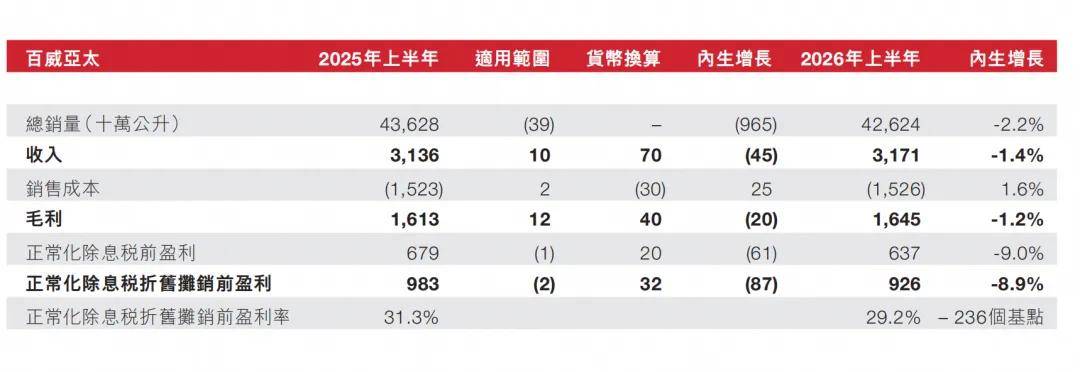
This has led to a realistic situation: sales volume has not recovered, but the cost of seeking new sales volume is increasing.
In the first half of 2026, Budweiser APAC's net profit attributable to shareholders rose to 473 million US dollars, a year-on-year increase of 15.6%, but normalized EBITDA, which reflects the main operating capacity, is still declining. For the capital market, the latter is obviously more illustrative.
What Budweiser is facing now is no longer just a fluctuation of the demand cycle. A deeper problem has surfaced: whether the growth model established in the past relying on high-end brands, high gross profit margins and strong channels can still adapt to today's Chinese beer market?
Glories of the past, costs of the present
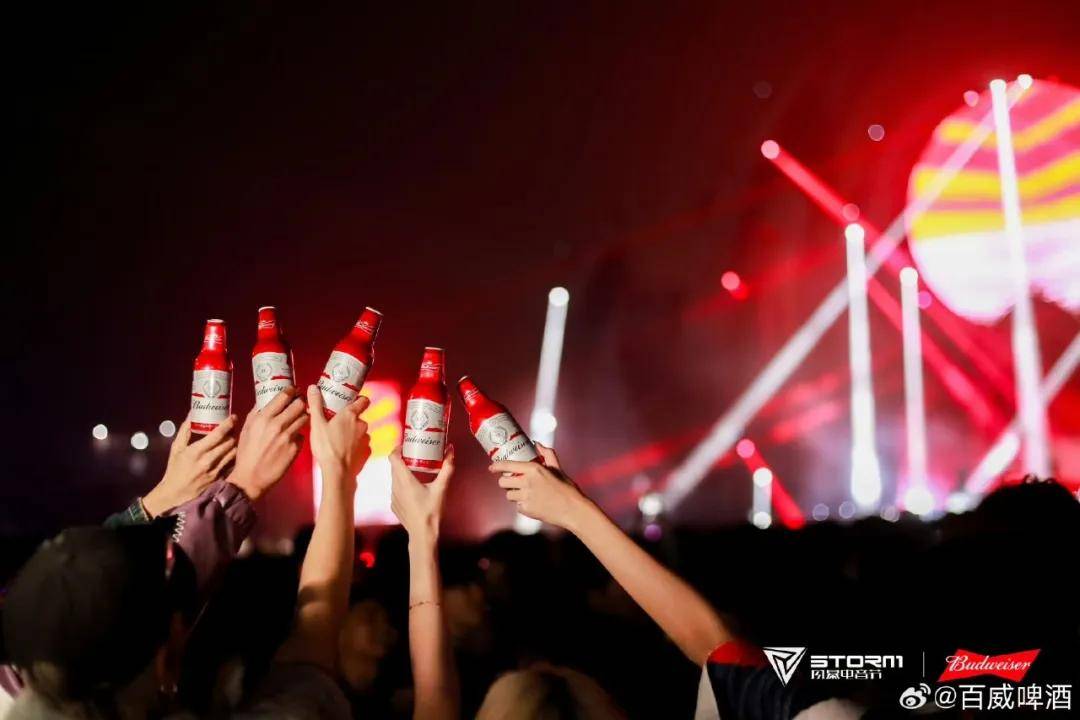
A bottle of iced Budweiser and a bottle of Corona with a slice of lemon on the mouth were once the most common choices in bars, KTVs and music festivals. But their prices are often much higher than the same products in convenience stores.
This price difference exactly hides the most important business logic of Budweiser in the Chinese market in the past.
Consumers are not just buying a bottle of beer, but also paying for the social atmosphere and brand image. With long-term operation of on-premise channels such as catering and nightclubs, Budweiser converted the cognitive advantage brought by international brands into higher brand premium.
Budweiser's product matrix also provides enough "weapons" for this model. At present, Budweiser APAC operates more than 50 beer brands in the Asia-Pacific region, ranging from the main brand Budweiser, to higher-positioned Corona, Hoegaarden and Chang, to Harbin which covers the mass consumer market, forming a product portfolio spanning different consumer groups and scenarios.
In the days when China's beer consumption upgrading was the most rapid, this portfolio was once very effective. In 2015, Budweiser APAC's share in China's high-end beer market once reached 49.1%, nearly half of the total market.
But the trend of channels is changing. According to data cited by Industrial Securities from Euromonitor, in 2024, the sales volume of on-premise and off-premise channels in China's beer industry accounted for about 48% and 52% respectively, and off-premise channels had overtaken on-premise channels.
By 2025, Budweiser's management disclosed at the performance meeting that the proportion of off-premise channels in China's beer industry has risen to about 60%, while Budweiser's own proportion is only slightly higher than 50%. The company's management also admitted that its layout in channels such as household consumption and O2O lags behind the industry level.
The channel structure that once benefited Budweiser thus showed its other side of "burden".
In bars, a bottle of beer can get a premium with the help of lights, music and social atmosphere, but in convenience stores, supermarkets or instant retail platforms, consumers are faced with products whose price, specification and promotion intensity can be directly compared. Shifting from on-site consumption to drinking at home is not just a change of sales location, but also means that brands need to re-prove the rationality of their high prices.
What's more troublesome is that Budweiser has no advantage in the new trend price band. At the end of 2025, Che Qi, Chief Marketing Officer of Budweiser APAC, mentioned at the company's sales conference that mid-to-high-end products priced at around 8 yuan have accounted for about 15% of China's beer sales volume, but Budweiser "hardly has representative products" in this price band. This is precisely the fiercely competitive area for local products such as Snow Draft and Tsingtao Classic 1903.
Making up for the missed lessons has been put on the agenda. Budweiser APAC has increased investment in off-premise and O2O channels, and its digital sales platform BEES has covered more than 320 cities in China; in the first half of 2026, China's O2O business achieved double-digit growth. At the same time, Budweiser Black Crown has accelerated its national expansion, and Corona has also expanded household consumption scenarios through new packaging such as cans.
However, channel transformation takes time and costs. In the fourth quarter of 2025, Budweiser China's sales volume decreased by 3.9%, but its revenue decreased by 11.4%, and revenue per hectoliter dropped by 7.7%. The company explained that one of the reasons is the increased investment to support distributors and activate brands in off-premise and emerging channels.
This forms a delicate situation: the better you were at nightclubs and high-end catering in the past, the heavier the task of adjusting the channel structure now.
The former advantages have not completely disappeared, but after the change of consumption scenarios, they no longer naturally mean growth. What Budweiser needs to do is to re-enter the new scenarios where consumers are migrating while maintaining the high premium of its high-end brands. And there, what awaits it is not only channel changes, but also a group of local competitors that are far stronger than before.
The "King of Chinese Beer" has changed hands, and the high-end dividend is no longer exclusive to Budweiser
Where Budweiser used to be the strongest is exactly where the competition is the fiercest today.
More than ten years ago, China's beer market was still dominated by mass products, and high-end beer was only a small part. From 2013 to 2018, the consumption share of high-end and super high-end beer increased from 10.9% to 16.4%, growing rapidly, but far from becoming the mainstream.
It was at this stage that Budweiser took the lead in occupying the high-end market.
Relying on international brands such as Budweiser, Corona and Hoegaarden and occupying on-premise consumption channels such as nightclubs and catering, Budweiser established obvious brand and price advantages before domestic beer enterprises made large-scale upward breakthroughs. In 2019, by sales volume, Budweiser's share in China's high-end beer market was about 40%, while Tsingtao Brewery's share was about 6.7% in the same period.
This means that what Budweiser initially enjoyed was not so much the dividend of "the whole industry's high-end development", but the first-mover advantage formed when the supply of high-end beer in China was still insufficient.

However, as the beer industry shifted from incremental growth to stock competition, local giants collectively moved upward.
China Resources, Tsingtao and Yanjing have all taken mid-to-high-end products as their core growth direction in the past few years. In the first half of 2026, the sales volume of China Resources' sub-premium and above beers increased by more than 10% year-on-year, accounting for more than 26% of the total sales volume, of which Heineken's sales volume increased by more than 20%; in the same period, the sales volume of Tsingtao Brewery's mid-to-high-end and above products reached 2.044 million kiloliters, a year-on-year increase of 2.6%.
A rather symbolic change has also taken place in the overall ranking of the industry.
In the first half of 2025, China Resources Beer achieved a turnover of 23.942 billion yuan, while Budweiser APAC's revenue was 3.136 billion US dollars, equivalent to about 22.3 billion yuan. Calculated on the combined caliber of the two listed companies, China Resources overtook Budweiser APAC in revenue for the first time, taking the first place in revenue among major domestic listed beer companies.
This comparison is not exactly of the same caliber — Budweiser APAC's revenue also includes markets such as South Korea and India, while China Resources includes a small amount of liquor business. But it still sends a clear signal: Budweiser, which used to obtain higher revenue scale by relying on high-end products, is being caught up by local leading enterprises that have both scale advantages and high-end growth capabilities.
By the first half of 2026, this trend continued, and the number of players in the high-end market kept increasing.
In addition to leading beer enterprises, some regional brands have also begun to impact the traditional pattern. A typical example is Jinxing Beer. After launching "Chinese Craft Beer" in 2024, its sales volume grew rapidly. In the first three quarters of 2025, the revenue of related products reached 867 million yuan, accounting for 78.1% of the total revenue; the company's total revenue in the same period reached 1.11 billion yuan, a year-on-year increase of 191.2%.
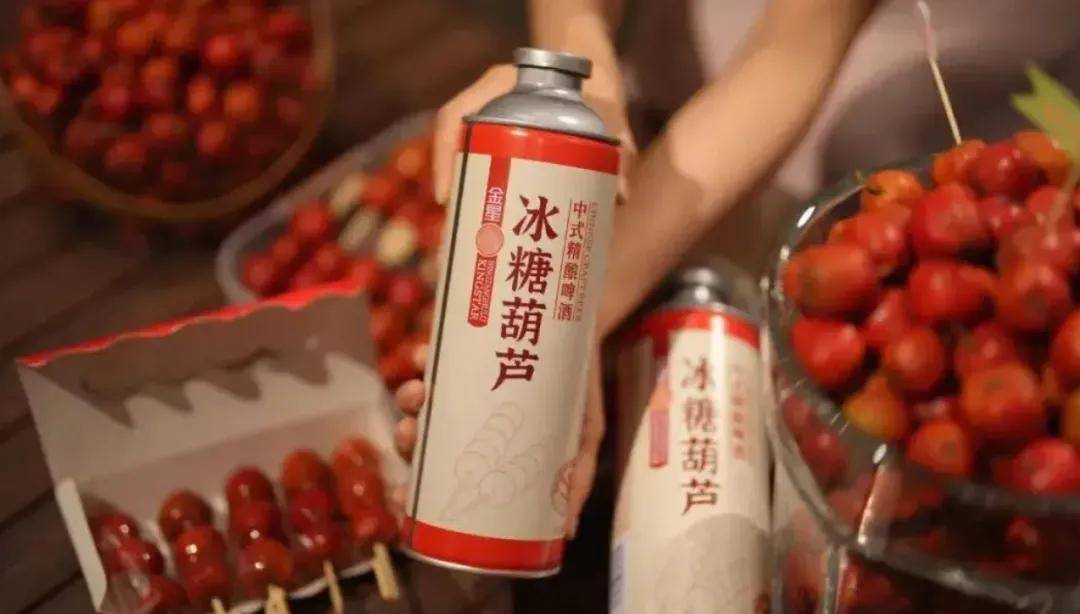
The volume of such enterprises is still not comparable to Budweiser and China Resources, but they show that there is no longer only one way to play in the high-end beer market.
In the past, when consumers upgraded from mass beer to higher-end products, international brands often came to their minds first; today, classic large single products priced above 8 yuan, as well as fresh beer, craft beer and flavored beer are emerging constantly, and high-end consumption has been divided into more segmented demands.
Budweiser still occupies a leading position in its advantageous markets. Euromonitor data shows that its share in China's high-end beer market is still about 40%, but it has dropped significantly compared with 49.1% in 2015.