Celebrities' dogs are starting to land commercial collaborations, how do you properly operate the pet IP business?
Even celebrities' dogs can now get brand endorsements?
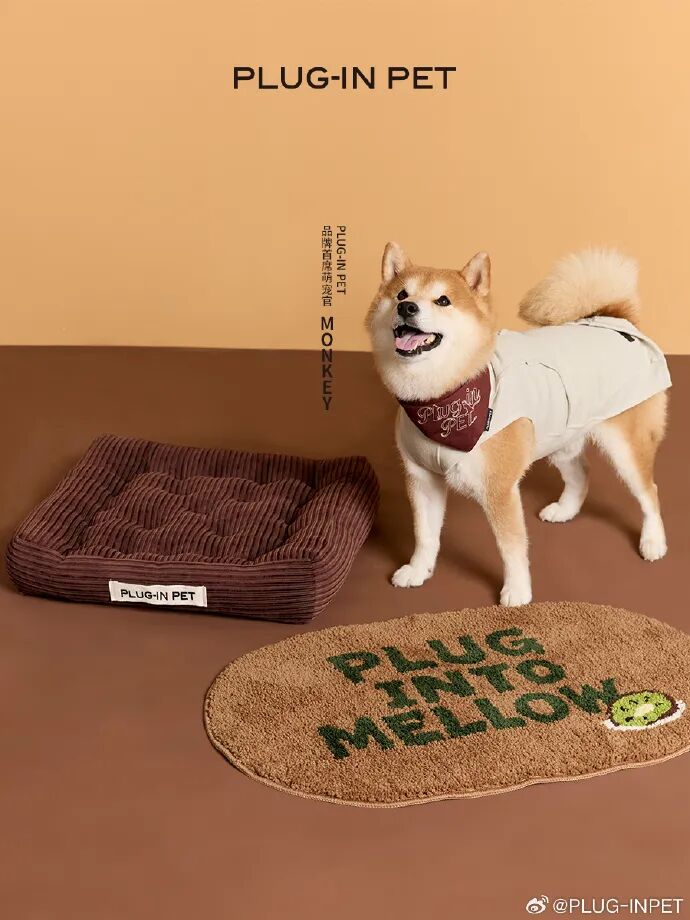
On October 15, pet brand PLUGINPET officially announced Hou Minghao as its global brand spokesperson, and his Shiba Inu Monkey was appointed as "Chief Cute Pet Officer".
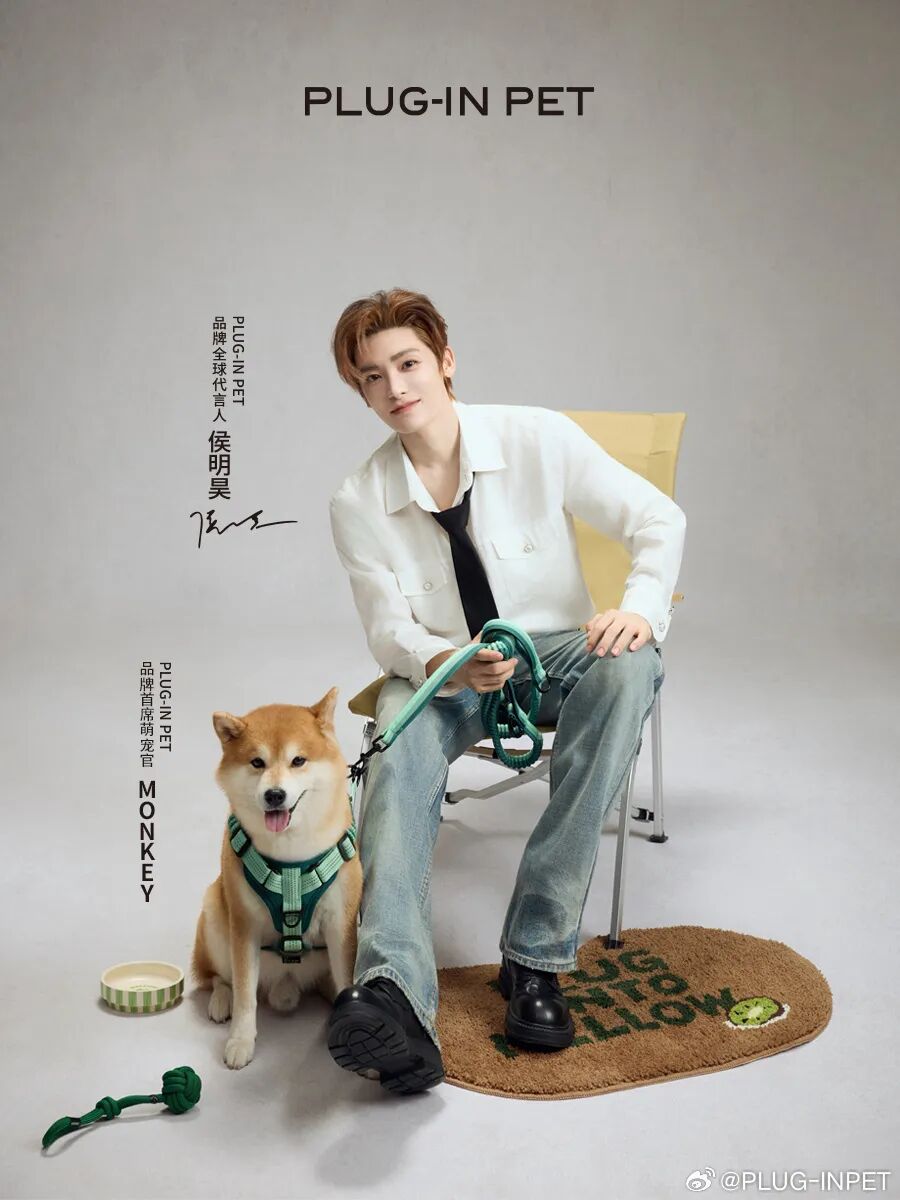
It is not uncommon for celebrities to get endorsement deals, but it is indeed quite rare in the commercial endorsement field for a dog to receive an official title. What's more, the brand did not just give Monkey a title and a spot as a prop on posters, but an independent title, independent social media accounts, independent content schedule and peripheral merchandise system.
When a dog is operated according to the logic of IP, what exactly is the brand purchasing?
1
One official announcement, two titles
It is standard practice in the industry for brands to invite celebrities as spokespersons, but PLUGINPET splits the endorsement structure into two layers: Hou Minghao serves as the global spokesperson, taking charge of brand credibility and commercial endorsement; Monkey acts as the Chief Cute Pet Officer, responsible for emotional connection and social communication.
This move itself sends a signal: Brands are beginning to allocate celebrity traffic and pet emotional assets as two independent production factors.
In the past, most brands' pet marketing campaigns featured celebrities shooting advertisements together with pet models. For example, another spokesperson of PLUGINPET, Yu Shuxin, shot the advertisement poster together with a group of cute pet models. Even if a celebrity brings their own pet to appear in the content, at most they will shoot a set of warm flat photos or videos, where the pet only plays the role of atmosphere creator or prop.
But Monkey is different. It has its own content schedule, peripheral merchandise system, and order-sharing activities. This is not a one-time exposure of endorsement materials, but a complete set of infrastructure for IP operation.
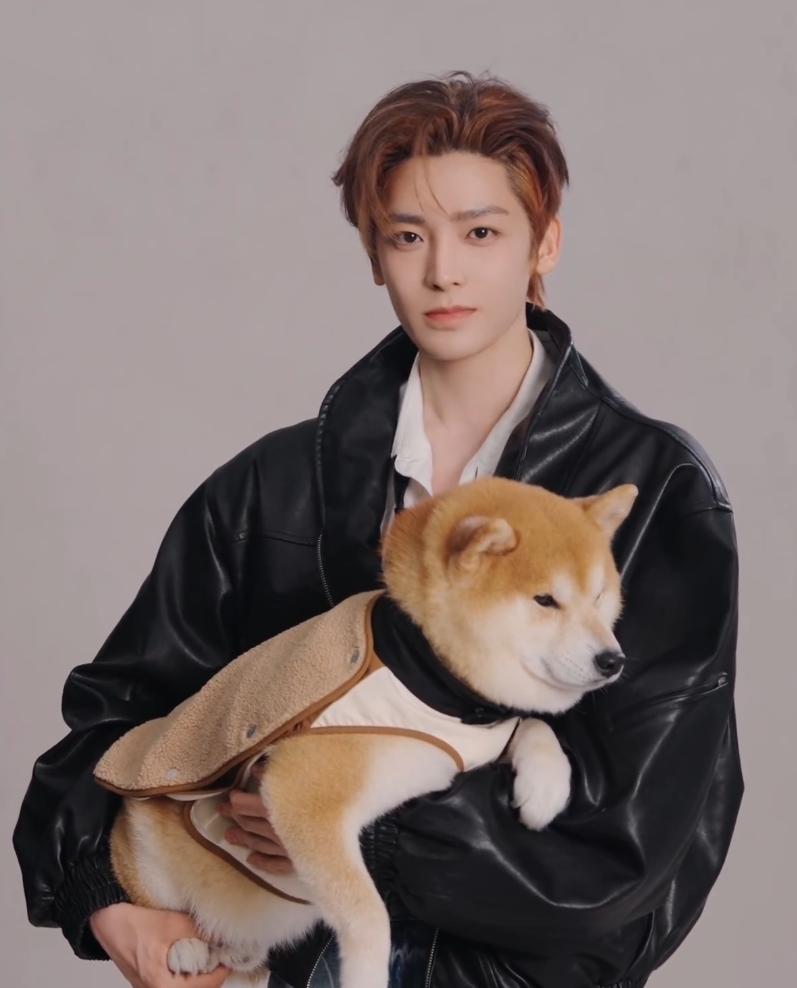
The premise for the brand to do so is that Monkey itself has accumulated sufficient emotional assets. It has been "raised" for a fairly long period of time through long-term appearances in Hou Minghao's daily content, live stream interactions, and fans' secondary creations, so fans' familiarity and favorability towards it do not need to be built from scratch.
By giving it an official title at this node, the brand is not so much creating a new IP as confirming an already existing IP and connecting it to the commercial system.
PLUGINPET itself is a pet clothing brand inspired by the core concept of "You · Pet · City". It has previously held guide dog fashion shows, and its founder sponsored industry forums in the name of the brand at the pet industry retail conference. The brand's genes are inherently embedded with a strong tendency of emotional narrative. Choosing Hou Minghao and Monkey is more like a brand that already favors emotional narrative finding a more accurate emotional entry point than traditional advertisements.
The significance of this incident does not lie in "a pet getting an endorsement", but in that brands have begun to seriously think about whether there is a lighter, softer, and more self-explanatory type of traffic outside of celebrity traffic that can be systematically operated.
2
The definition of rigid demand is being redrawn
It would be hard to imagine five years ago that a dog could get a brand endorsement.
Categories such as pet clothing, accessories, and travel gear have long been in a marginal position in the overall pet consumption market. The brand's willingness to invest endorsement-level budget in a pet IP indicates that the market structure is changing.
In 2025, the consumption market size of dogs and cats in Chinese urban areas reached 3.126 trillion yuan, a year-on-year increase of 4.1%. Among them, pet food accounts for 53.7%, medical care accounts for 27.6%, and supplies and services combined account for less than 20%.
Food and medical care are typical rigid demand categories, with a functional decision-making logic: consumers look at ingredients, compare prices, and follow veterinarians' advice. Therefore, the role of endorsement in these categories is very limited, and consumers will not change their dog food brand just because a dog is cute.
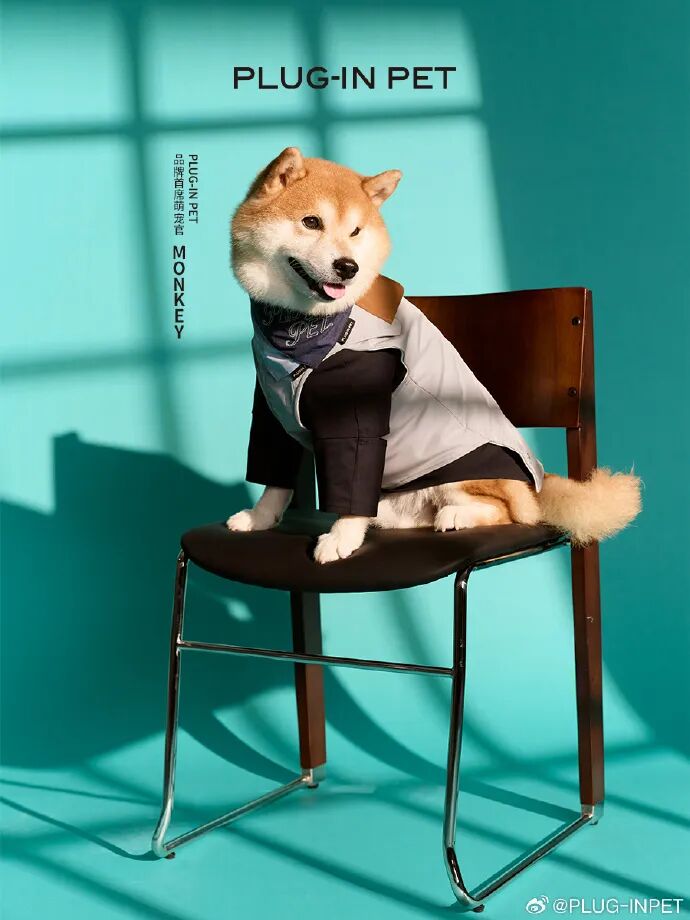
But the decision-making logic for pet clothing, accessories, and travel gear is completely different. Consumers buy these products not to solve the basic needs of their pets, but to pay for an emotion.
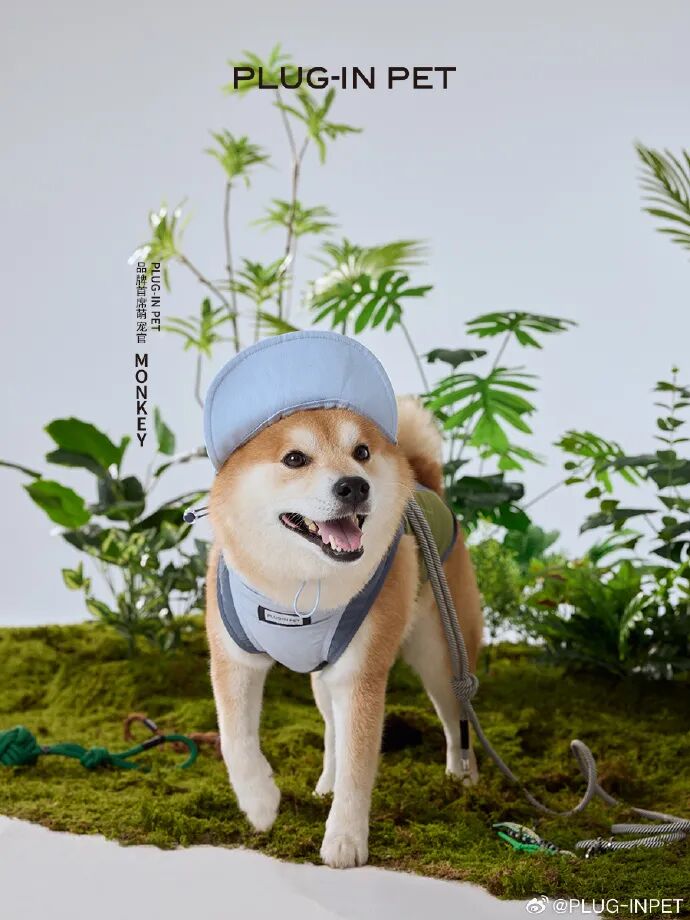
Owners are willing to spend money on their Shiba Inu wearing PLUGINPET, because they feel happy when seeing their pets in clothes, and feel that the little life that accompanies them is taken seriously. This sense of satisfaction itself is emotional value, and the clothes are only the carrier.
The definition of rigid demand in the pet economy is being redrawn. Feeding and medical care are still rigid expenditures, but they are no longer the protagonists of the growth story. The real growth comes from categories where consumers are willing to pay for emotions.
The data of the emotional consumption market corroborates this point. According to CCTV Finance, the size of China's emotional consumption market rose from 1.63 trillion yuan in 2022 to 2.31 trillion yuan in 2024, reached 2.72 trillion yuan in 2025, and is expected to exceed 4.5 trillion yuan in 2029; more than 90% of young people recognize emotional value, and nearly 60% are willing to pay directly for it.
Pet, trendy toy, and IP consumption share the same underlying logic: Consumers are not buying products, but emotions.
The calico cat "Da Kai Men" became popular across the whole network with its interactive video of "radish tissue", and quickly won the global pet ambassador title for cleaning home appliance brand Uwant, and the "Miao Miao Recommendation Officer" title for Deeyeo. Its cooperative brands cover Estée Lauder, MINISO, Luckin Coffee, HONOR and other brands, involving multiple fields such as home furnishing, beauty, games, food and beverage.
A cat has entered consumption scenarios that are completely outside the pet industry. Its commercial value does not lie in the good sales of pet supplies, but in allowing the brand to complete an emotional reach to consumers in just a few seconds.
Clothing brands are also accelerating their entry into this track. Li-Ning's "China Li-Ning" has launched a pet series in collaboration with Tyakasha, adidas has launched a limited-edition New Year collection for pets, and Hongdou Co., Ltd. has collaborated with the "Scruffy Dog" IP. Brands are attracted by the high resonance between these IPs and young groups.
These actions are scattered in different industries, but point to the same judgment: in an environment where young people are increasingly hard to be impressed by traditional advertisements, cute pet IPs are one of the few emotional entry points that do not require explanation or persuasion.
Pet endorsements and cute pet IP collaborations are evolving from scattered marketing events into a recognizable industry model.
3
What remains after the hot search is the real business
However, the value of emotional entry points and the value of emotional business are two different things.
Popularity can be achieved by a dog, but repurchase depends on products. Under PLUGINPET's official announcement Weibo post, the typical reaction of fans is "Monkey is so cute". This reaction is good for brand awareness, but it is a signal that needs vigilance for brand conversion.
Emotional reach has made consumers notice you, but making consumers remember you and keep buying requires product strength itself, including fabric, version, comfort, which have nothing to do with how cute the dog is.
This is also the structural challenge of the pet supplies business. Out of the 3.126 trillion yuan market size, pet supplies only account for 12.2%, scattered in multiple sub-categories such as clothing, toys, cleaning and care, and travel gear.
The position of pet clothing is particularly awkward. The size change of pets does not have a stable size system like human clothing, the season change frequency is high but the repurchase cycle is unstable, and the standardization is difficult. This leads to the fact that a brand collaboration can drive a wave of pulse sales, but building a user relationship with continuous repurchase is far more difficult than that of pet food.
A greater challenge comes from the life cycle of the IP itself. Monkey's commercial value comes from the daily content support from Hou Minghao. Its social accounts, live stream interactions, and fans' secondary creations all depend on Hou Minghao's continuous content output and public exposure.
This is the structural feature of all celebrity pet IPs. Once the popularity curve of the owner changes, the activity of the pet IP will decline synchronously. The advantage of celebrity pets is that they have a high starting point and fast cold start; the disadvantage is that their ceiling is determined by the owner's career curve.
The explosion of pet IP is essentially the result of emotional consumption looking for an outlet on the supply side, but emotion can bring traffic, traffic can bring exposure, but exposure cannot automatically turn into repurchase. From a dog being on the hot search to a brand being continuously purchased, there are three barriers: product strength, repurchase mechanism, and IP life cycle management.
Celebrities' pets getting endorsements shows that the emotional economy has reached a stage where even dogs can be commercialized, but what really tests brands is never whether they can get a dog on the hot search, but what consumers still remember about the brand after the hot search fades, and what they are still willing to pay for.
This article is from WeChat official account "Mou Yu", author: Mou Yu, published with authorization from 36Kr.