The embodied intelligence sector is undergoing a drastic paradigm shift, and dexterous hands are no longer fiercely competing over degrees of freedom: the "brain" cannot keep pace, and effective cost control remains out of reach.
Some time ago, Boston Dynamics unveiled a brand new dexterous hand purpose-built for its humanoid robot Atlas. Unlike the common industry anthropomorphic five-finger design, this dexterous hand has only four fingers: the thumb boasts 4 degrees of freedom (DoF), and the other three fingers each have 3 DoF, adding up to a total of 13 DoF, which is nearly double the 7 DoF of the previous generation. If the five-finger design had been retained, the number of degrees of freedom could have been further increased.
In common terms, without counting the wrist, the human hand has 21 degrees of freedom, and 22 degrees of freedom if the micro-movement of the palmar arch is included. If the wrist is added, the total number of degrees of freedom reaches 27.
Over the past few years, many enterprises have launched dexterous hands with high degrees of freedom. For example, the Y-Hand M2 developed by Yuequan Bionics has 38 DoF, the F-series rope-driven bionic dexterous hand from Zhongke Huisi has 37 DoF, and the scientific research version of LinkerHand from Lingxin Qiaoshou has a maximum of 42 DoF, all exceeding the number of degrees of freedom of the human hand.
Dexterous hands are the core for humanoid robots to perform complex tasks, and the number of degrees of freedom is the key to whether a dexterous hand can perform fine operations. However, the pursuit of higher degrees of freedom by enterprises has slowed down significantly in the past two years. Not only did Boston Dynamics "remove" one finger from Atlas, but the Dex5-S dexterous hand product released by Unitree Robotics in September also has only 22 degrees of freedom.
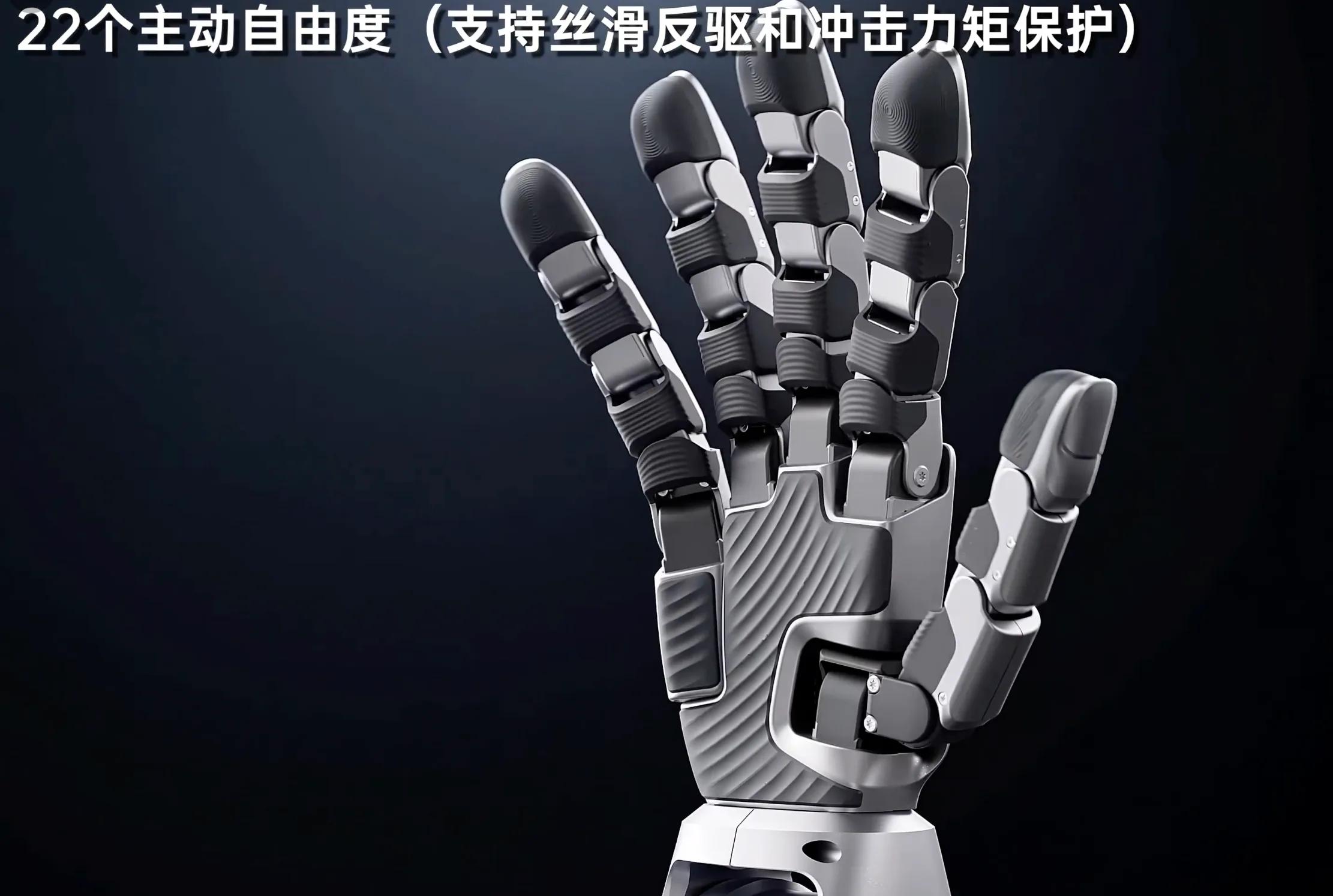
(Image source: Unitree Robotics)
According to Leitech (ID: Leitech), the entire industry voluntarily reducing configurations may be a signal that the whole track is shifting from "parameter competition" to "pragmatism".
No matter how high the degrees of freedom are, the dexterous hand may not be able to perform practical tasks
Embodied intelligence is now at a critical node of scenario-based and large-scale implementation, and the market demands robot products that can actually work. Although dexterous hands with ultra-high degrees of freedom boast high flexibility, their actual performance may not be much better than that of dexterous hands with lower degrees of freedom, and there is a marginal effect on the number of degrees of freedom.
Fu Yuancheng, Head of Capital Market at Sino Future, revealed that when the number of degrees of freedom exceeds 25, the marginal effect of dexterous hands will decrease, while the marginal cost will rise. For example, the Dex5-S from Unitree Robotics is priced starting from 39,900 yuan, while dexterous hands with higher degrees of freedom will cost more than 100,000 yuan, even millions of yuan, due to the increased number of motors and sensors.
Zhang Tianyi, CEO of Zhongke Siliconji, said that three-finger dexterous hands, which fall between two-finger and five-finger designs, combine the opposing gripping capability of two-finger hands and the general gripping capability close to that of five-finger hands, with relatively lower cost, so they are most recognized by customers.
In addition to the cost issue, the mainstream industry solution to ensure the flexibility of high-DoF dexterous hands is full motor drive. Unitree Robotics has equipped the Dex5-S with as many as 22 motors. The higher the number of active degrees of freedom, the more motors are required. The heat dissipation and energy consumption during motor operation, as well as system integration, are all difficult problems facing enterprises.
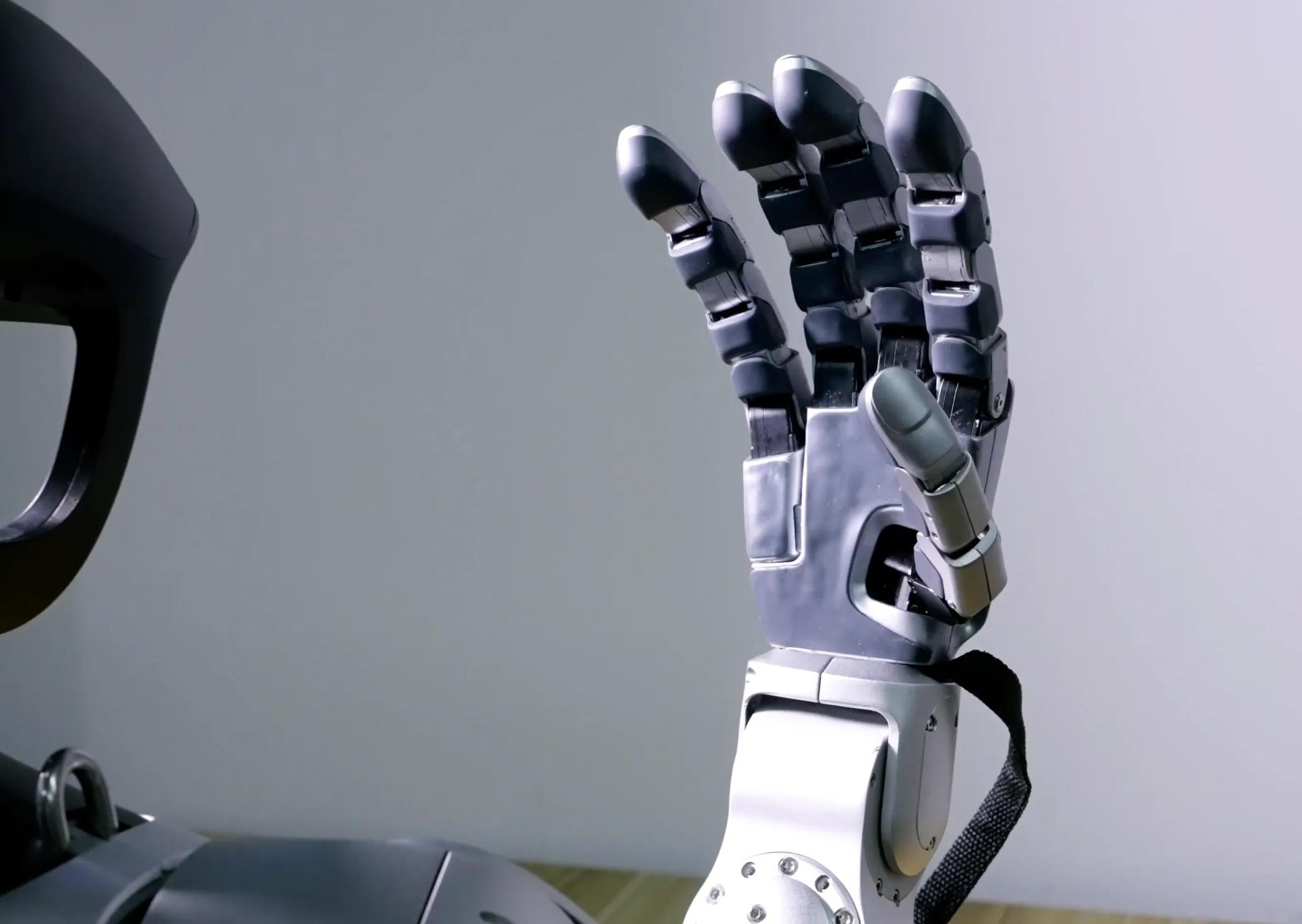
(Image source: Unitree Robotics)
The most critical point is that there is not yet a sufficiently powerful "brain" that can drive a dexterous hand with 20 to 30 degrees of freedom. Fu Yuancheng from Sino Future said that the existing VLA model can only output about 10 motion control vectors at the same timestamp, and the software capability restricts the upper limit of hardware, so many precise movements need to be realized through remote control.
To put it simply, the dexterous hand industry no longer blindly pursues higher degrees of freedom, which is attributed to the cost problem on the one hand, and insufficient software capability on the other.
The higher the number of degrees of freedom, the more motors and sensors the dexterous hand requires. Coupled with issues such as product consistency and reliability, the cost will grow exponentially. Compared with five-finger designs, three-finger and four-finger dexterous hands have the advantage of lower cost. Economy is still a major problem plaguing the large-scale implementation of embodied intelligent robots.
Zhang Tianyi pointed out that the gap in the hardware level of dexterous hand products among leading enterprises is not very large. The problem of insufficient software capability requires enterprises to invest more resources in training large models, and the key to all this lies in data.
The human hand is the best template for dexterous hands
2026 is known as the "first year of tactile sensing" in the embodied intelligence field. Dexterous hands are rapidly equipped with tactile sensors, which can perceive whether an object is soft or hard, slippery or rough, and the magnitude of the applied force, enabling more fine operations.
At the 2026 World Robot Conference held in August this year, many dexterous hand enterprises set up independent booths instead of attaching to the humanoid robot exhibition areas. Four leading enterprises, namely In-Time Robotics, Lingxin Qiaoshou, BrainCo, and Critical Point, are collectively called the "New Four Little Dragons of Chinese Dexterous Hand Industry", and exhibited a number of products based on rope drive, rod drive, full motor drive, and mixed multi-scheme drive.
However, considering the cost and software capability, Leitech believes that dexterous hands with 7 to 15 degrees of freedom are the most suitable products for the current market. Its upper limit is close to the current control capability of VLA models, and it can cover the vast majority of industrial gripping, assembly, and loading/unloading tasks, while also having the advantage of low cost.
As for how many degrees of freedom dexterous hands can reach in the future, Leitech believes that in theory, dexterous hands can be more flexible and have a higher upper limit than human hands. However, if dexterous hands are configured with extra degrees of freedom beyond the scope of human hands, it will be difficult to collect high-quality training data.
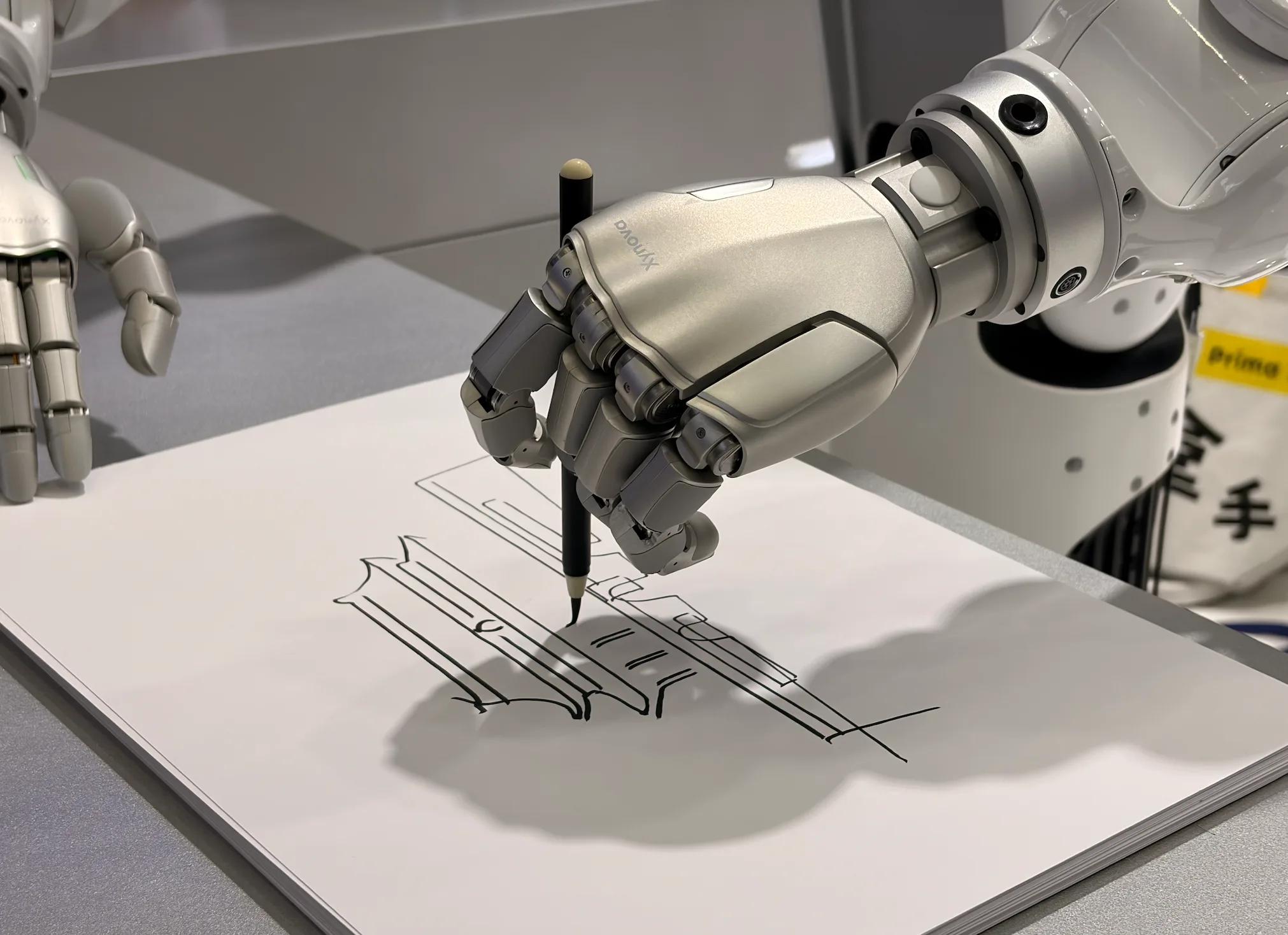
(Image source: Leitech shooting)
The current training data for dexterous hands mainly consists of four parts: simulation synthetic data, teleoperation real robot demonstration, first-person egocentric video, and real robot autonomous rollout + reinforcement learning. Among them, teleoperation real robot demonstration, where the operator wears an IMU motion capture glove or VR hand tracking device to map the real human hand movements to the dexterous hand through kinematic retargeting, is the most core data in the industry.
The first-person egocentric operation video captures the operator's hand movements through the camera, then uses visual hand pose estimation algorithms (such as HaWoR) to solve the 21 DoF skeleton of the human hand from the video, and then performs human-to-dexterous hand motion retargeting to convert it into a trajectory executable by the dexterous hand. The direct source of these two types of data is the human hand.
Simulation synthetic data and real robot autonomous rollout + reinforcement learning are suitable for repeated simulation training in long-tail scenarios or difficult scenarios.
In late September this year, Leitech was invited to participate in the "DATA FOR AI — Everyone Can Be a Teacher" event held by Mifeng Technology. The purpose of this event is to allow everyone to become a robot trainer through devices such as MEgo View and MEgo Gripper, to collect data that can be used for robot training. At the event site, Mifeng Technology demonstrated to Leitech how the device collects users' hand data.
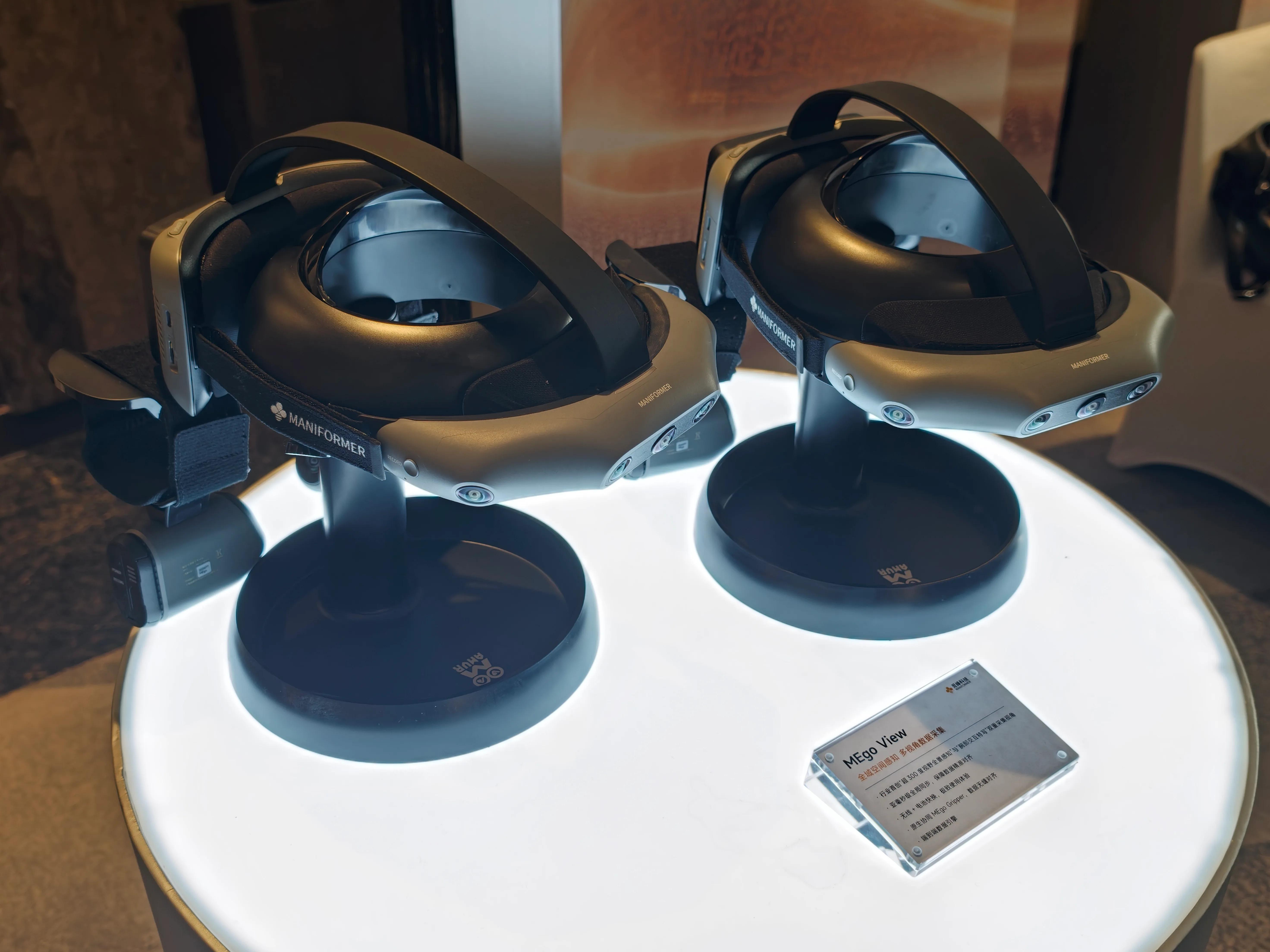
(Image source: Leitech shooting)
The human hand has already set a good example for dexterous hands, and 20-25 degrees of freedom, close to that of the human hand, will most likely eventually become the mainstream choice of the industry. As a pioneer in the robot industry, Unitree Robotics' Dex5-S adopts a 1:1 human hand size design, with a structure whose degrees of freedom are close to that of the human hand.
A hand suitable for the scenario is a good hand
The future development of dexterous hands should be analyzed from both short-term and long-term perspectives. In the short term, limited by cost and software capability, low-DoF three-finger and four-finger dexterous hands, as well as inflexible end effectors such as grippers and suction cups, will remain the mainstream. In the long run, for general-purpose humanoid robots, the degrees of freedom of their dexterous hands will be similar to that of human hands.
The final number of degrees of freedom of dexterous hands and even the whole robot depends on the usage scenario. When the target scenarios of robots are factories, warehouses and structured environments, the bionic aesthetic sense brought by adding a little finger cannot offset the increased cost, power consumption and failure rate. That is why Boston Dynamics dared to remove the little finger from the Atlas for industrial scenarios.
Even if the software capability reaches the standard, industrial scenario robots that do not pursue all-round performance may not choose high-DoF dexterous hands in the future. In many cases, enough degrees of freedom are sufficient. Humanoid robots for household scenarios perform more complex tasks, and will most likely use dexterous hands with higher degrees of freedom in the future to realize fine operations.
In the next few years, the real watershed in the dexterous hand industry will by no means be which company releases a new product with 30 degrees of freedom. The key lies in who can stably deliver a hand with 15-25 degrees of freedom, paired with a VLA brain, to scenarios such as factories, warehouses and homes. The numbers on the specification sheet will eventually fade, and what will always remain are the hands that can get the work done in the right scenarios.