The end of AI is loans
In October this year, Bloomberg cited sources familiar with the matter saying that Tencent is considering issuing up to $5 billion in offshore bonds. As soon as the news came out, the public immediately linked it with AI.
Tencent only issued a $4.7 billion bond in June, the largest scale since 2020. After the new round of fundraising is fully completed, the total amount of the two fundraisings is close to $10 billion[1]. ByteDance has made even bigger moves: Reuters reported in September that 30 banks provided ByteDance with a $29.6 billion syndicated loan for AI investment.
Even Tencent, which has always been known for its prudence, has begun to frequently raise funds, which shows how capital-intensive AI is. But on a global scale, a $5 billion bond is no more than playing a trivial low card in a casual card game.
In February this year, Alphabet, Google's parent company, issued $31.5 billion in bonds, the most notable one being a 100-year sterling bond[3]. Amazon issued $37 billion in bonds in March and raised about $25 billion in financing in July, which is quite a remarkable story in the tech circle.
In order to purchase GPUs and build data centers, cloud computing companies have exhausted their free cash flow. Every well-known AI giant is basically drowning in debt.
According to the prospectus obtained by Reuters: Anthropic will spend $125.2 billion on computing power leasing in the next five years, but it does not have that much money on hand. Chip supplier Broadcom generously offered a $42 billion loan to let the cash-strapped Anthropic spend as needed.
Broadcom is not being foolish. Lending money to customers to buy its own products and lock in big clients in advance is a common practice for chip companies, which both NVIDIA and AMD have done. It follows the same logic that the higher you climb in your career, the better the future of your family will be.
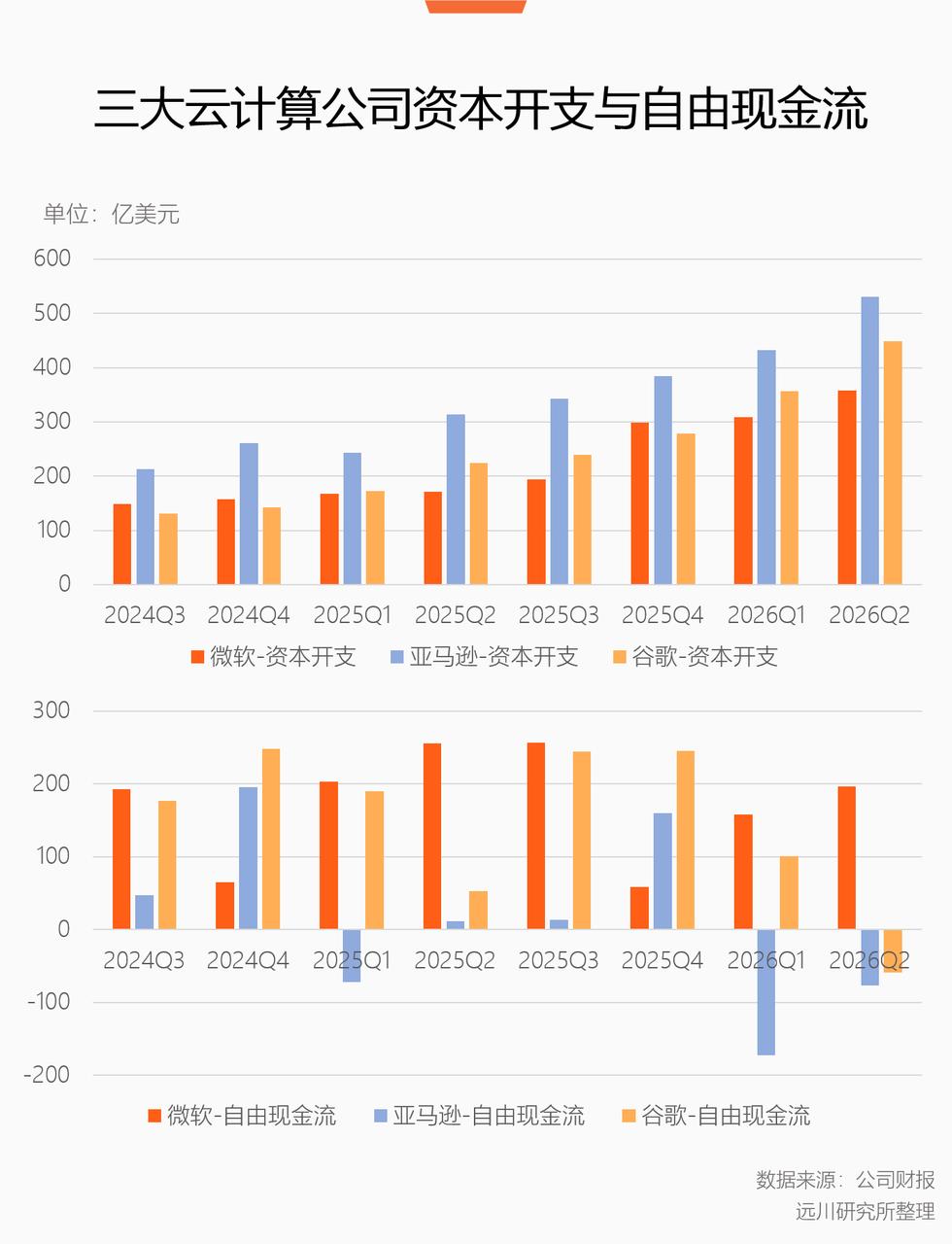
Morgan Stanley estimates that by September this year, global AI-related debt issuance has reached about $450 billion, more than double the full-year figure of last year[6].
It remains unknown whether the end of the universe is Tieling, but it is self-evident that the end of AI is loans.
Starting with a Bill
In September this year, FT obtained an internal roadshow material of OpenAI:
OpenAI expects to generate $36 billion in revenue in 2026, which is not very impressive compared to its valuation. But by 2030, the company's revenue will reach $3500 billion, with a cumulative total of $8400 billion from 2026 to 2030.
However, things are not that simple. To earn this $8400 billion in revenue, OpenAI will need to invest a cumulative $856 billion in computing power and infrastructure construction, which means it is still losing money after offsetting revenue and expenditure.
This leads to an estimated cumulative negative free cash flow of $278 billion for the company from 2026 to 2030. This is already a relatively optimistic figure: the same metric was $305 billion in May this year, and after a series of efforts, the company has closed a $27 billion funding gap[7].
In short, OpenAI expects its revenue to surge nearly tenfold in the next five years, but the cost of investment will be even higher. This also explains a question: Why is OpenAI always raising funds?
On the one hand, the large model industry follows the rule that the strong get stronger while the weak get eliminated. All model manufacturers are upgrading their products, so OpenAI also has to keep investing. The training and testing of models happen before revenue generation, which itself creates a continuous cash flow gap.
On the other hand, serving existing users also costs money, and the company has to maintain customer stickiness through subsidies, making it hard to raise revenue.
According to the calculation of SemiAnalysis, in Anthropic's revenue structure, the main revenue comes from API customers who pay on a usage basis. Claude subscription users occupy 41.7% of the computing power but only contribute 10% of the revenue, which is completely unbalanced.
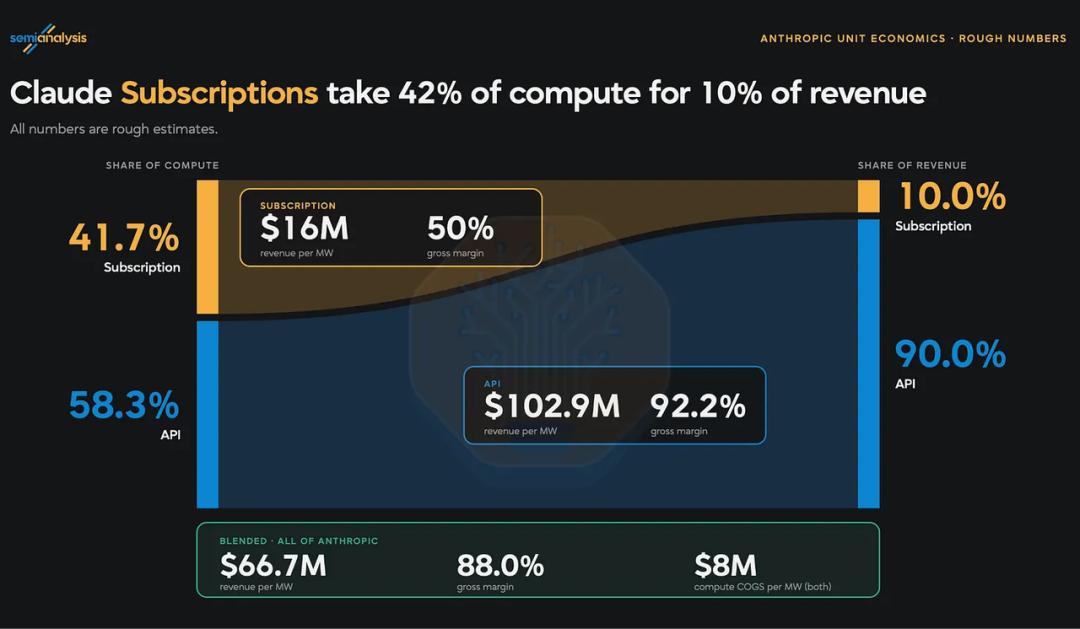
Image source: SemiAnalysis
In addition, data centers, power supply, chips and network facilities cannot be invested in after demand appears, and capacity arrangement must be made several years in advance, and computing power resources also need to be planned many years in advance.
The contract for advance investment is a one-time expense, but user revenue cannot be collected 90 years in advance. This difference creates a $278 billion financial gap.
OpenAI does not have money, so it can turn to its "patron" SoftBank for funds. But SoftBank's money is not its own either.
Endless Loans
In September this year, SoftBank issued $11.1 billion in bonds at one go, with an interest rate range of 7.125% to 9.75%, which is not cheap. After getting the money, SoftBank immediately transferred it to OpenAI[8].
As a professional risk-taker, Masayoshi Son of SoftBank has bet on many industry trends, and goes all in every time. It can be said that he has invested in many projects wholeheartedly, and he is especially devoted to OpenAI.
In 2025, SoftBank invested $30 billion in OpenAI in two installments. In February this year, SoftBank promised to add another $30 billion in investment, which will be paid in three installments of $10 billion each.
SoftBank does not have much cash on hand. To raise the investment, SoftBank applied for a $40 billion credit line from banks in March, withdrew $10 billion and transferred it to OpenAI in April, and gave another $10 billion in July. The bond issued in September is the last installment.
This bond is rated BB+, which belongs to non-investment grade junk bonds, with the highest annual coupon rate reaching 9.75%.
What does this mean? According to the coupon rate, SoftBank has to pay about $1.03 billion in interest every year, and will start repaying the principal gradually from 2030 to 2034. It is just like parents who sell all their belongings to support their children's education.
SoftBank's borrowing cost is 2%-3% higher than that of comparable bonds with the same rating. Wall Street pays for Masayoshi Son's AI dream, but does not forget to charge a little more risk premium.
Adding up all previous investments, SoftBank has invested a total of $64.6 billion, in exchange for 13% equity of OpenAI[9], completing the "support for love".
SoftBank's investment logic is that the growth of its equity assets exceeds the debt financing cost, while retaining enough cash to cover the maturing bond repayment for at least two years. It can be understood as borrowing money to invest in stocks, similar to the logic of investing in real estate: keep some money to pay the mortgage, as long as the house price increase rate exceeds the debt level.
SoftBank's assets include stocks of listed companies such as Arm, and equity of unlisted companies such as OpenAI. When OpenAI will go public, when SoftBank will exit, and how much the equity value will eventually rise are all unknown, but the interest is real and must be paid.
If the investment return is delayed, asset valuation falls, and refinancing becomes more expensive at the same time, the debt pressure will be extremely huge. Of course, to put it another way, if you lose money borrowing to invest in stocks, you will lose sleep; if SoftBank loses money borrowing to invest in stocks, the banks will lose sleep.
SoftBank has to wait for OpenAI's revenue scale to expand, and OpenAI has to wait for Amazon and Microsoft's data centers to be completed, so the pressure falls on cloud service providers.
Computing Power Orders are Being Delivered
Large model companies are the largest computing power buyers in the world. In 2025, OpenAI reached a cooperation agreement with Oracle for 4.5GW of computing power, with a total amount of more than $3000 billion. OpenAI did not treat Microsoft badly either. Last October, the two sides announced that OpenAI would make an additional $2500 billion purchase of Microsoft Azure cloud services.
In February this year, OpenAI and Amazon announced that on the basis of the existing $38 billion agreement, they would expand their cooperation by another $1000 billion in the next eight years.
Microsoft, Amazon and Oracle are all cloud computing companies. They build computing power and then lease it to large model companies such as OpenAI and Anthropic. Computing power is in short supply, and large model companies all want to get computing power in advance, so they rush to sign long-term contracts with cloud service providers to lock in future computing power supply.
However, the construction of data centers takes time, and cloud computing companies have to spend money first; they can only get revenue after the data centers are put into operation. The time difference in between also forms a huge financial gap.
Take Oracle as an example. In fiscal year 2026, Oracle's revenue reached $67.4 billion and its net profit was $17 billion, but the capital expenditure generated by data center construction was as high as $55.7 billion, which dragged the annual free cash flow down to negative $23.7 billion[10].
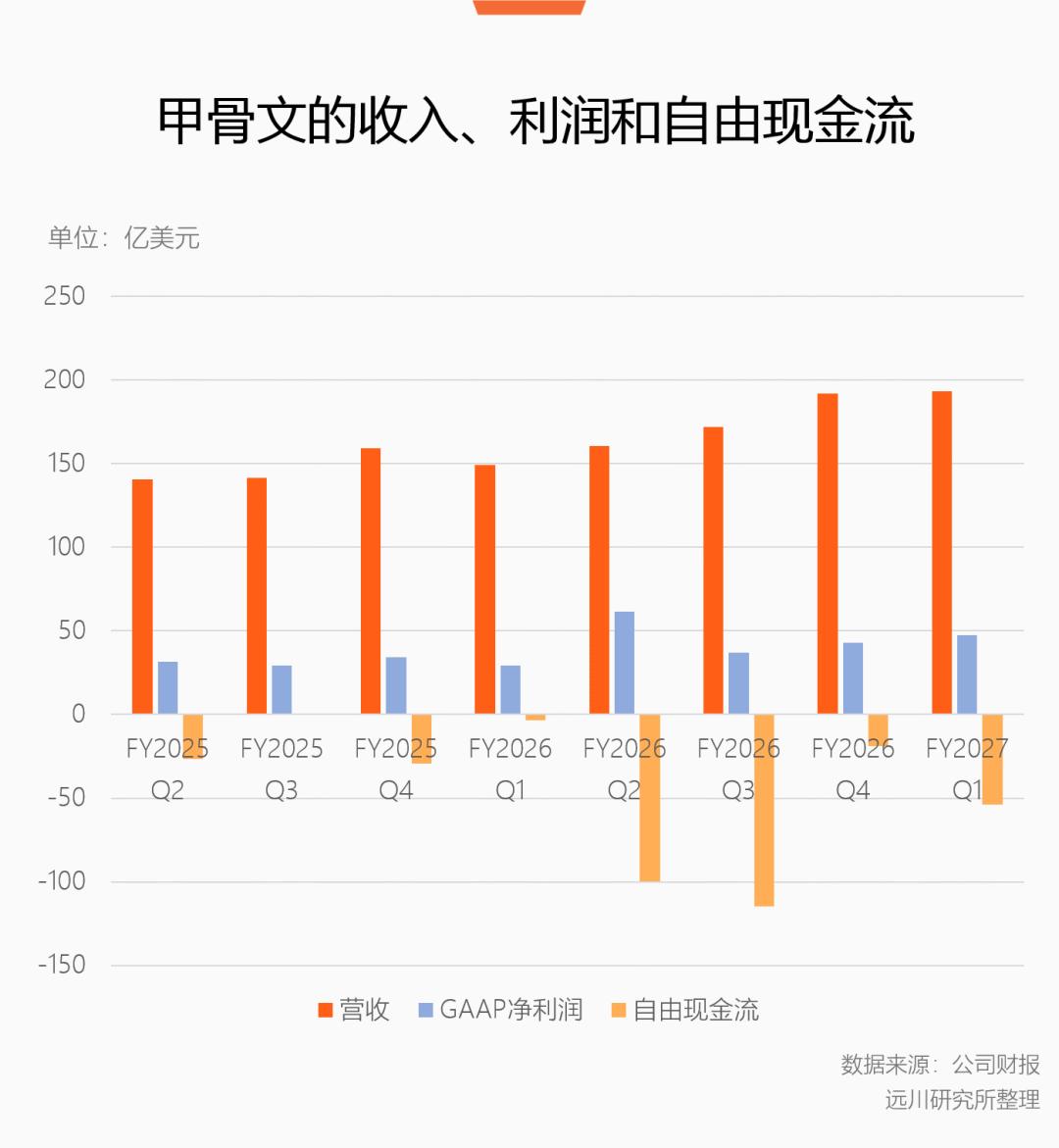
Net profit calculates the profit on the book, while free cash flow is the actual money in hand. Oracle's $55.7 billion capital expenditure is not included in the cost. After the data center is put into operation, it will be depreciated year by year according to the service life. But the cost of buying GPUs and building factories cannot be paid in installments in reality, which brings huge capital pressure.
That's not all. Entering fiscal year 2027, in the first quarter alone, Oracle invested $28.5 billion in capital expenditure, more than three times that of the same period of the previous fiscal year, and the full-year budget is as high as $95 billion.
Where does the money come from? Borrow.
Since 2025, Oracle has completed three public bond issuances, with a total principal of $50.7 billion. On April Fool's Day this year, Oracle also laid off employees to release about $10 billion in free cash flow (their salaries are quite high), vowing not to quit the game.
But unlike companies such as Google and Microsoft, Oracle is a long-established high-tech company, a living fossil in Silicon Valley, which lacks strong cash flow business to provide blood transfusion. It also has to use part of the newly borrowed money to pay off old debts, so its financial health is in a mess, and even usurers dare not act recklessly.
Therefore, on the Project Jupiter data center project in cooperation with OpenAI, Oracle has carried out a series of innovative financial operations.
According to the plan, this data center will provide 2.45GW of computing power and be put into operation in 2028. But Oracle cannot afford so much money for the time being, so it found a private equity fund to take a stake in the developer, and then raised $18 billion in bank loans, which are borne by the Project Jupiter entity.
Oracle promised to lease the data center for a long time, which is equivalent to changing its role from the property owner to a sublessor, greatly reducing the debt pressure. However, the data center has not been connected to water and electricity yet, so Oracle cannot get the rent from OpenAI for the time being.
Carrying a lot of debt in exchange for a bunch of unpowered GPUs. Is such aggressive investment really worth it?
The Prize Pool is Still Accumulating
On paper, it is extremely cost-effective.
Computing power is the productivity of large model companies. Whoever gets more computing power can train larger models. Cloud computing provides computing power. If Amazon's computing power centers are built slowly, orders will flow to Microsoft and Google, so cloud computing companies are all sparing no effort to build computing power.
In plain language, every stage of education from kindergarten to high school is a key node, and we have to start running ahead of time.
It takes time for computing power to be built and delivered. The potential revenue is close but cannot be obtained immediately, which is recorded as the remaining performance obligations in the financial reports of various companies. Judging from the financial reports, the remaining performance obligations of various cloud service providers are still growing, with no sign of stopping.
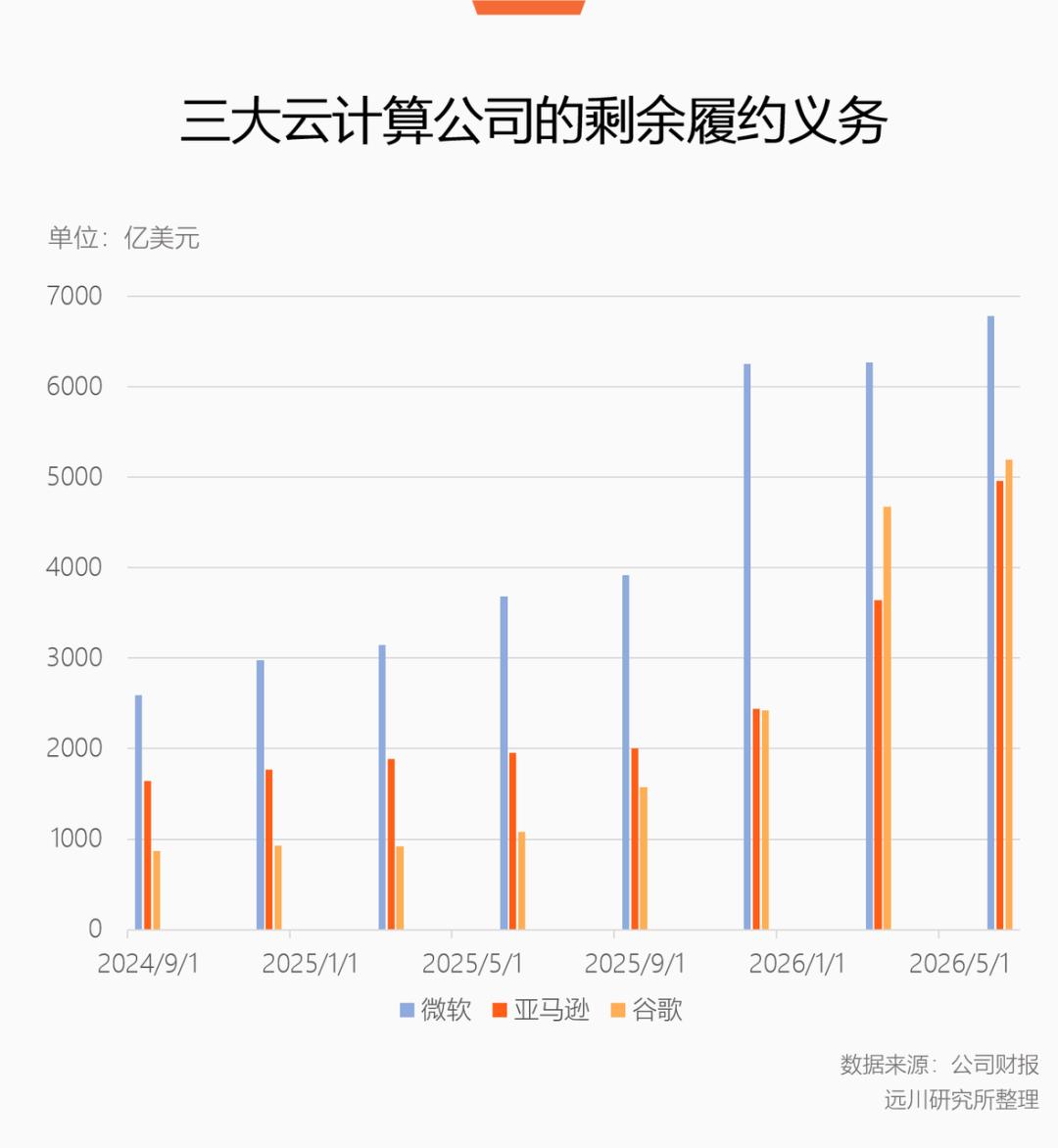
In April this year, Anthropic signed a new agreement with Amazon to purchase $100 billion of new computing power with a maximum of 5GW from Amazon in the next ten years[12]. OpenAI also signed a sky-high contract with Oracle very early.
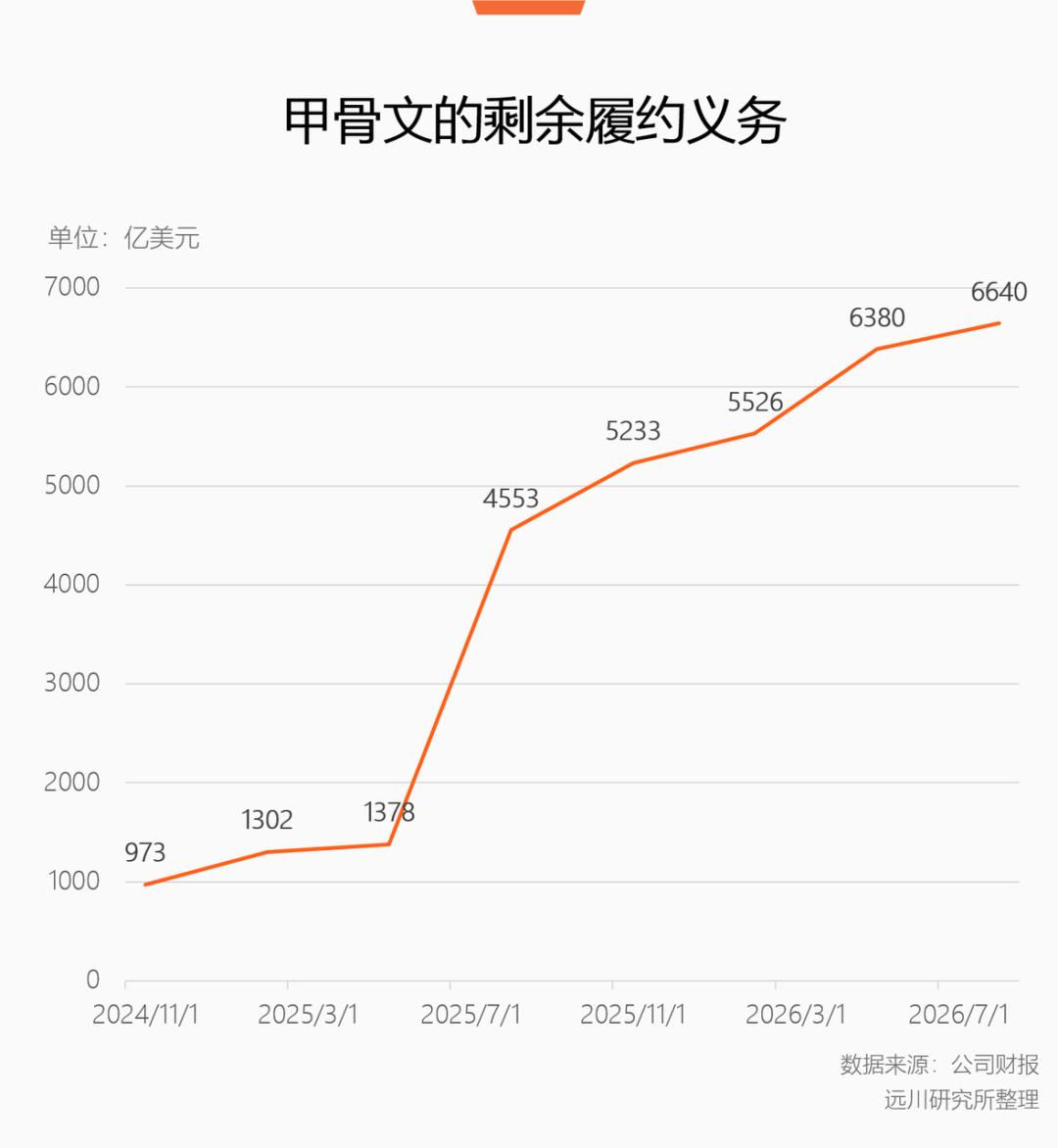
Cloud service providers borrow money with the support of remaining performance obligations, large model companies raise funds with ARR growth and future revenue forecasts, and SoftBank then uses these roadshow materials to borrow money for investment. One end is the current investment, the other end is the long-term expectation, and the gap in between is filled by loans.
So many people are eating at this table, who will pay the bill in the end?
AI Coding is the first large market that has been verified, and it has taken the lead in realizing commercialization. But the industry generally believes that if there is only one trillion-dollar-level large market for Coding, the current capital expenditure intensity is already sufficient.
AI for Science and RSI (model recursive self-improvement) are also highly anticipated directions. The former aims to create a silicon-based Newton, which has recently made many mathematicians amazed, and the latter is to let electric vehicles invent autonomous driving technology by themselves.
Model research on mathematics requires computing power, and AI self-training also requires computing power. Both of them belong to the narrative of computing power consumption, and have little to do with commercial realization.
So the first people to make money in this field may still be NVIDIA and SK Hynix. In the second quarter of this year, NVIDIA's data center business revenue reached $89 billion, a year-on-year increase of 117%, and the company's overall gross profit margin was as high as 75%.
No matter how good the shovel business is, someone has to dig out gold to make it profitable. Enterprise-level AI is the key direction of current implementation. The domestic AI office competition has been extremely fierce, and the disturbing advertisements in communities and office buildings have made Focus Media the first winner.
Theoretically, enterprise-level AI is a larger market than programming, but there is no quantifiable standard, which can only be roughly estimated by the