With all flights fully booked and airfares rising, why did China Southern Airlines still suffer a loss of 3.7 billion yuan?
The just-concluded National Day Golden Week saw the civil aviation market stage a nationwide carnival as usual, with tickets for popular routes in short supply and flights fully booked... To outsiders, major airlines are raking in huge profits from passenger transport business, and China Southern Airlines (600029.SH) is firmly in the top tier of the industry, maintaining a consistently high level of public attention.
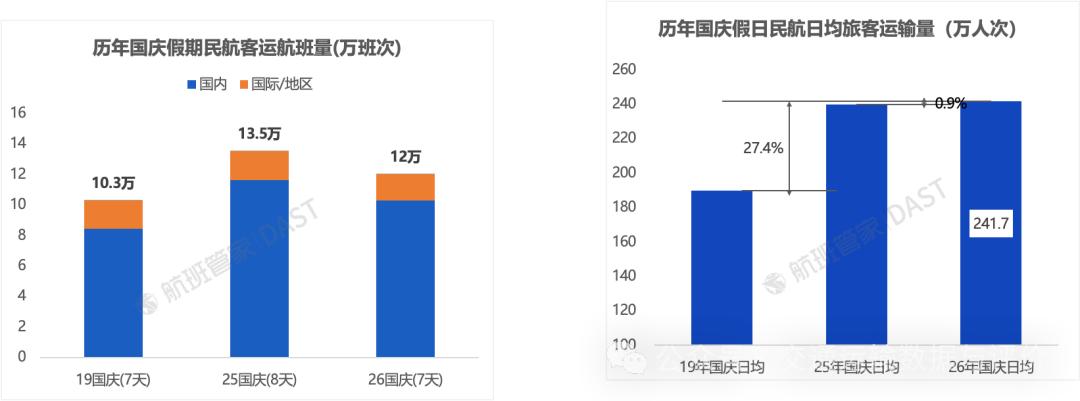
This is no illusion. Statistics from the Civil Aviation Administration of China show that during the seven-day National Day holiday this year (from October 1 to 7), the national civil aviation sector guaranteed a total of 120,000 flights, averaging 17,000 flights per day; it transported 16.92 million passengers, averaging 2.42 million passengers per day, which is basically the same as the same period last year. While passenger flow remained flat, ticket prices rose by nearly 10% — data from Flight Butler shows that the average domestic economy class ticket price during the holiday was about 931 yuan (including fuel surcharge), up 9.5% year on year and 8% higher than the same period in 2019. China Southern Airlines still put in the largest capacity, with its group planning to operate more than 27,000 flights around the holiday, averaging nearly 3,000 flights per day, ranking first among all airlines.
Beneath the seemingly prosperous passenger transport surface, few people know that the passenger transport business of this civil aviation giant is only prosperous on the surface, but has long been under pressure and bleeding losses, and secretly relies on its cargo transport business to sustain its operation.
Although the cargo transport business is low-profile, its revenue in the first half of the year exceeded 10 billion yuan, with steadily rising profits. Relying on emerging cargo sources such as cross-border e-commerce and imported fresh produce, it has firmly supported the group's profit base.
This high-quality asset that can generate sustainable profits had long been prepared for independent listing, but it finally withdrew its application documents and gave up the "solo flight" helplessly. On one hand, the cargo transport business enjoys industry dividends and has strong profitability; on the other hand, the loss-making passenger transport business continuously drags down the overall performance. This contradictory business logic of China Southern Airlines reflects the hidden operational dilemmas commonly faced by leading domestic airlines.
1. The booming passenger flow cannot fill the deficit caused by surging oil prices
Who could have imagined that for China Southern Airlines, the larger the business scale, the more losses it incurs.
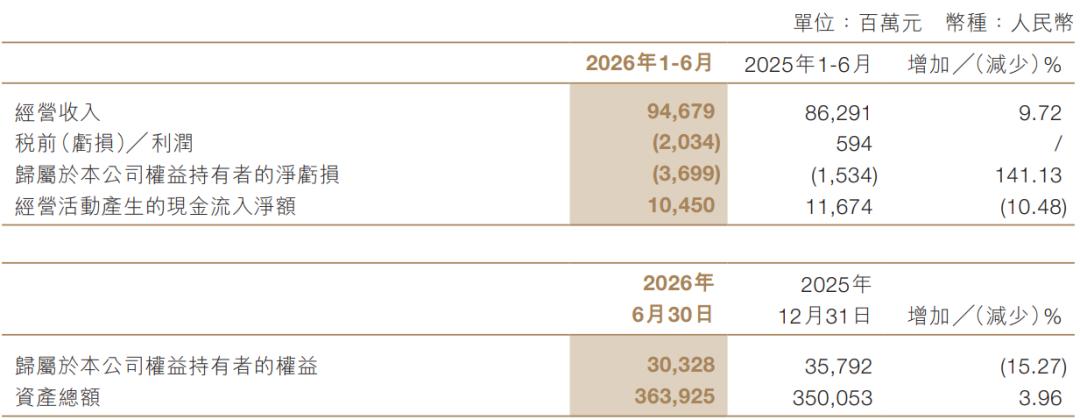
In the first half of 2026, China Southern Airlines recorded a total revenue of 94.679 billion yuan, with passenger flow and flight volume continuing to recover. However, dragged down by high rigid costs such as aviation fuel, leasing and labor, its attributable net profit stood at a loss of 3.699 billion yuan, 141.10% larger than the loss of 1.533 billion yuan in the same period of the previous year. Excluding non-recurring gains of 1.014 billion yuan (including 818 million yuan of fair value change gains from convertible bond derivatives), its non-recurring net loss reached 4.71 billion yuan.
From the perspective of timeline, the losses are highly concentrated in the second quarter: seven listed airlines made a total profit of 8.1 billion yuan in the first quarter, but suffered a total loss of 14.8 billion yuan in the second quarter under the impact of skyrocketing oil prices. The unit aviation fuel cost rose by about 32% year on year, directly eating up all the profits.
National Day ticket prices rose by less than 10%, but the unit aviation fuel cost rose by more than 30% — The rising speed of ticket prices is far behind the surge of oil prices, and the culprit dragging down performance is exactly the passenger transport business that is burdened with high oil prices.
The dilemma of "large revenue but zero profit" in passenger transport is not uncommon. It is against the background of continuous losses in the passenger transport industry that the value of the cargo transport business has become prominent, and has become an important profit driver for China Southern Airlines.
2. Cargo transport, the hidden cash cow
Since passenger transport is a bottomless pit of losses, what does China Southern Airlines rely on to stabilize its overall operation? The answer lies in cargo transport — it is the real profit base of China Southern Airlines that can truly go through economic cycles.
In the first half of the year, the revenue of China Southern Airlines' cargo and mail transport business reached 10.77 billion yuan, up 18.65% year on year, with a growth rate far exceeding that of the passenger transport segment. Its core asset China Southern Airlines Logistics delivered an outstanding performance, recording a net profit of 1.906 billion yuan, up 19.05% year on year.
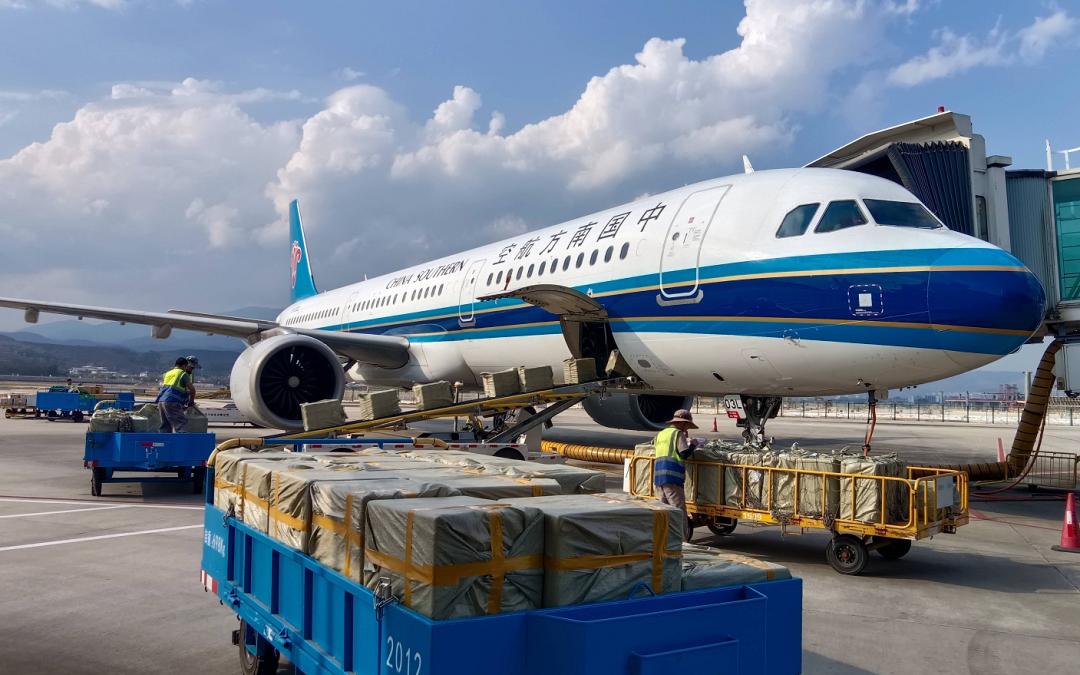
Against the backdrop of sluggish profitability across the entire civil aviation industry, this counter-trend growth is by no means accidental. China Southern Airlines Cargo has built a profit-making system that combines both offensive and defensive capabilities and features risk complementarity.
The first part of this system is the self-controlled cross-border dedicated route operated by full cargo planes. At present, China Southern Airlines Logistics has 19 Boeing 777F heavy full cargo planes in service, with a fleet size ranking among the top in China, which are specially deployed for European and American trunk lines and Southeast Asian cross-border routes.
This type of heavy cargo plane has a long range and large cargo capacity. Routes to Europe and the United States mainly carry cross-border e-commerce goods and precision industrial accessories, while Southeast Asian routes undertake imported fresh produce, cold chain goods and e-commerce small parcels. This precisely customized cargo transport layout has greatly reduced the factor of "being at the mercy of circumstances" for China Southern Airlines. Even if the domestic passenger transport market fluctuates, cross-border cargo transport can still maintain steady revenue growth.
To continuously lock in the foreign trade dividends, in June this year, China Southern Airlines Logistics' subsidiary China Southern Cargo signed a firm order for 2 777F and 5 new-generation 777-8F cargo planes, and secured options for another 3 planes, with a total list price of 3.618 billion US dollars, which is the first order for 777-8F among domestic airlines. These new cargo planes will be delivered in batches from 2027 to 2034 to continuously expand cross-border transport capacity.
The second part of the system is the belly hold cargo transport of passenger planes, which is also the key to stabilizing profits. Different from the heavy asset investment model of pure cargo airlines such as SF Airlines, China Southern Airlines relies on its huge passenger fleet to obtain incremental revenue with almost zero marginal cost. Among them, wide-body passenger planes are responsible for long-haul cross-border high-margin cargo sources, while the new generation of narrow-body passenger planes support the basic cargo volume with dense flight schedules.
One aircraft, with tickets sold in the passenger cabin and cargo transported in the belly hold, earns double profits from one flight. If the full cargo planes operate according to pre-planned schedules, the belly hold of passenger planes operates in a more flexible way. The combination of the two parts forms an almost all-coverage cargo transport network of China Southern Airlines Logistics.
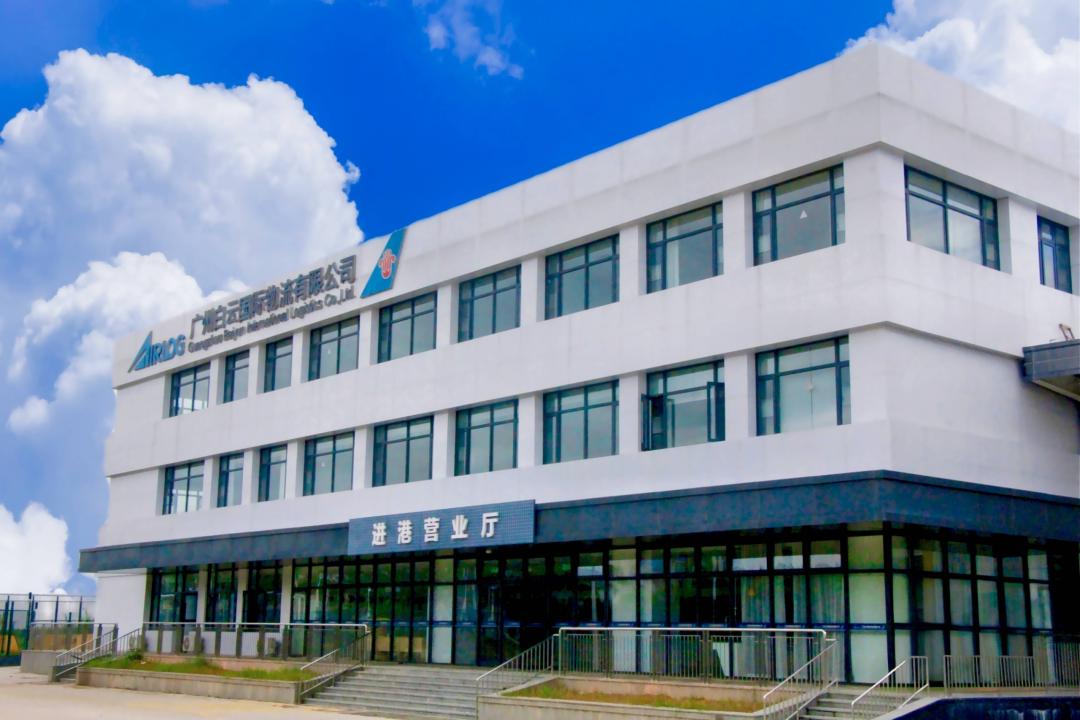
But the real key to making this system run faster lies in the ground operation. At the end of August this year, China Southern Airlines put into use a new international inbound cargo terminal in Guangzhou. This is the first time that China Southern Airlines has applied AI algorithms to the entire process of air logistics, with intelligent stereoscopic warehouses, AGV unmanned forklifts and ETV container stereoscopic warehouses all put into operation. The effect is remarkable: the processing time for a single shipment is shortened from 75 minutes to 60 minutes, and the single-day peak processing capacity of the cargo terminal reaches 1600 tons.
3. Failed independent listing, facing fierce competition from all sides
China Southern Airlines Logistics once planned to go public independently to further strengthen its cargo transport business, but the process went through many setbacks. In March 2023, the board of directors of China Southern Airlines passed the resolution to spin off China Southern Airlines Logistics for independent listing, planning to raise 6.08 billion yuan, which was mainly used to purchase full cargo planes. The application was accepted by the Shanghai Stock Exchange on December 31 of that year, but there was no further progress after the first round of inquiry in January of the next year. In February 2025, the company announced the withdrawal of the application, with the official reason being "changes in the market environment".
The real hard barrier is the financial threshold. According to the *Rules for the Spin-off of Listed Companies (Trial Implementation)*, the parent company needs to achieve continuous profitability in the latest three fiscal years, and the accumulated attributable net profit after deducting the net profit of the proposed spin-off subsidiary shall not be less than 600 million yuan in three years. However, China Southern Airlines has suffered losses for consecutive years, failing to meet both thresholds. It is even more poignant that its peers have taken a step ahead: in June 2021, China Eastern Airlines Logistics was listed on the Shanghai Stock Exchange, becoming "the first share of civil aviation mixed ownership reform"; in December 2024, Air China Cargo was listed on the Shenzhen Stock Exchange, surging by more than three times on the first trading day, which was the largest IPO on A-share market that year. Among the logistics companies under the three major state-owned airlines, the most profitable China Southern Airlines Logistics has become the only one that failed to achieve independent listing.
More fundamentally, its business scale is always inseparable from the overall leadership of China Southern Airlines. In addition to full cargo planes, its capacity is highly dependent on the belly holds of more than 900 passenger planes of China Southern Airlines — this is exactly its core resource that distinguishes it from SF Airlines and Air China Cargo, and also the root cause why it cannot operate independently. Which route the passenger plane flies, the belly hold cargo has to move accordingly: in the first half of the year, China Southern Airlines' international ASK rose by 13.06% year on year, while the domestic ASK only increased by 0.80%. It can only follow where the capacity is tilted; once impacted by geopolitics, natural disasters and other emergencies, if the passenger transport of a certain route is shrunk, the belly hold capacity will collapse accordingly.
A more realistic problem is the profit ownership. The cash flow earned from cargo transport must be uniformly incorporated into the group's capital pool, and its primary task is to make up for the losses of the passenger transport business, rather than to carry out its own iteration. In 2025, some investors asked: the gross profit margin of cargo transport is as high as 31.1%, will more resources be allocated to it in the future? The company only responded that it will "firmly implement the dual-main business development strategy of both passenger and cargo transport" — "strengthening support" and "allowing logistics companies to raise funds independently" are, after all, two completely different things.
The external market is also facing fierce competition: domestic cargo flight slots are highly concentrated in the hands of SF Airlines and China Postal Airlines, with the two accounting for a combined 75.5% in June this year; on international routes, foreign airlines account for 53.3% to 56.2% of the cargo flight slots, occupying half of the market.
The bustling scene on the stage during the Golden Week belongs to tourists, while what the capital market is focusing on is the deep-rooted structural contradiction of China Southern Airlines: Cargo transport is indeed a good business, but this profit-making asset is tightly bound and cannot expand at full speed; the passenger transport business that has long been under pressure is not only difficult to turn losses into profits, but also drags down the cargo transport business in turn.
This structural deadlock has become a long-term unsolvable dilemma for China Southern Airlines. Whether China Southern Airlines Logistics can truly release its value depends not only on foreign trade orders, but also on when the parent company's passenger transport business can get rid of losses. The rising passenger cabin fares cannot catch up with the surging oil prices, and the profit-making cargo holds cannot break free from the loss-making passenger transport business — this is exactly the answer behind the 3.7 billion yuan loss.
This National Day, China Southern Airlines' passenger planes are still shuttling busily on the busiest routes across the country. Passengers may not realize that the fully occupied passenger cabin does not necessarily make profits, and the real profit-making business is hidden in the cargo hold under their feet.
This article is from the WeChat Official Account "Caijing Wuji" (ID: caijwj), written by Xiang Guang, and published with authorization from 36Kr.